You rely on lifting equipment to move heavy loads safely and efficiently. A lifting equipment inspection checklist helps you identify hazards and maintain compliance with industry standards. Regular inspections protect your team and ensure reliable operation.
Regulatory agencies recommend checking lifting accessories every six months, other equipment every twelve months, before first use, after repairs, and anytime equipment is moved or modified.
Inspection Type | Frequency |
|---|---|
Lifting accessories and equipment used to lift people | Every 6 months |
All other lifting equipment | Every 12 months |
Before first use (if no valid certificate) | Before first use |
After significant repairs or part replacements | After repairs |
If moved, modified, or involved in an incident | As needed |
Key Takeaways
Regular inspections of lifting equipment are crucial for safety. Check lifting accessories every six months and other equipment annually to prevent accidents.
Always perform a visual inspection before using lifting equipment. Look for signs of wear, damage, or malfunction to catch problems early.
A competent person must conduct thorough inspections. This individual has the training and authority to identify hazards and ensure compliance with safety standards.
Document all inspections and findings. Keeping detailed records helps prove compliance and improve safety over time.
After repairs or modifications, always inspect equipment before returning it to service. This ensures safety and compliance with regulations.
Why Lifting Equipment Inspection Matters?

Safety and Accident Prevention
You face serious risks every time you use lifting equipment. Injuries like strains, sprains, and hernias often happen when you lift heavy loads without proper checks. Overexertion can lead to fatigue and accidents. Musculoskeletal disorders may develop from repetitive motions or poor lifting techniques.
These injuries can cause pain, lost workdays, and even permanent disability.
A thorough lifting equipment inspection helps you spot hazards before they cause harm. You reduce the risk of accidents by checking for worn parts, faulty mechanisms, or improper setups. Proper training and regular inspections keep your team safe and your operations running smoothly.
Powerful Machinery designs every product to meet strict safety standards, making it easier for you to maintain safety and compliance in your workplace.
Tip: Always follow the inspection checklist before each use. This simple step can prevent costly injuries and equipment damage.
Legal and Compliance Reasons
You must follow strict laws and regulations when you operate lifting equipment. Most countries require you to perform inspections at different stages. The table below outlines the main inspection points:
Stage of Inspection | Description |
|---|---|
Pre-Operation (Initial) Inspection | Check equipment upon arrival or installation to confirm compliance with national regulations. |
Periodic Inspection | Perform annual checks to ensure ongoing safety and detect wear or damage. |
Post-Repair or Major Modification Inspection | Inspect after repairs or changes to certify safety and compliance. |
Key Inspection Checks | Verify load-bearing structures, wires, hydraulic systems, safety mechanisms, and documentation. |
You must also meet industry standards such as OSHA and ASME. These rules require a qualified person to perform annual inspections and ensure rigger qualifications. Failing to meet safety and compliance requirements can result in unlimited fines or even prison sentences.
Powerful Machinery supports your safety and compliance efforts by providing certified lifting solutions. Each product undergoes rigorous compliance assessment and meets international safety standards. You can trust Powerful Machinery to help you pass every compliance assessment and keep your workplace safe.
Lifting and Rigging Equipment to Inspect
Common Lifting Machines
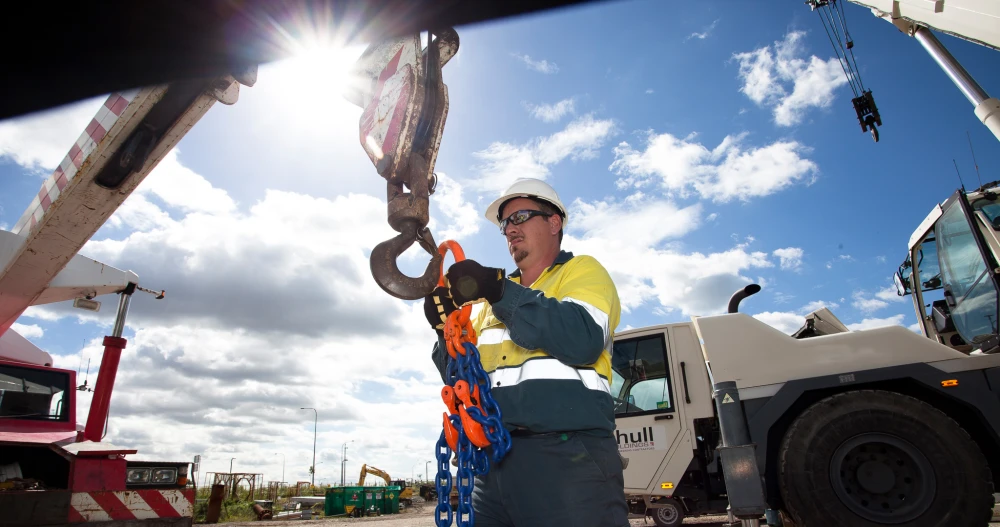
You encounter many types of lifting machines in construction and manufacturing. Each machine plays a vital role in moving heavy loads safely. You must inspect these machines regularly to maintain safety and efficiency. The most common lifting and rigging equipment includes:
Cranes move large materials across job sites.
Forklifts transport pallets and heavy items in warehouses.
Hoists lift loads vertically with chains or wire ropes.
Lifting tables and platforms raise equipment or supplies to different heights.
Hydraulic elevators provide vertical movement for goods.
Scissor lifts offer stable platforms for workers and tools.
Boom lifts reach elevated areas for maintenance or installation.
Cherry pickers help you access hard-to-reach spots.
Telehandlers combine lifting and moving functions for versatile tasks.
Strand jacks handle precise lifting operations.
Stackers organize and move goods in storage facilities.
Powerful Machinery’s lifting and rigging equipment, such as wire rope pulling hoists and chain pulley blocks, fit seamlessly into these categories. You benefit from their robust construction and certified safety features, which support reliable lifting equipment inspection routines.
Accessories and Rigging Gear
You rely on lifting accessories and rigging gear to secure loads and ensure safe lifting and rigging procedures. Items like slings, shackles, and I Beam Hoist Clamps require careful inspection before each use. The table below outlines the inspection requirements for these essential components:
Inspection Type | Description |
|---|---|
Visual Inspection | Conducted before each use to check for wear and tear. If damage is found, it must be reported. |
Periodic Inspection | Conducted by qualified inspectors at regular intervals, depending on equipment usage and wear. |
OSHA Inspections | Unannounced inspections by OSHA to ensure compliance with safety regulations regarding rigging. |
Documentation | Detailed records of inspections, including methods and findings, are essential for compliance. |
Powerful Machinery’s lifting and rigging equipment, including high-tensile chains, master links, and I Beam Hoist Clamps, is engineered for easy inspection and long-term reliability. You can trust these products to meet the demands of your lifting equipment inspection checklist and keep your workplace safe.
Who Performs Lifting Equipment Inspection?
Competent Person’s Role
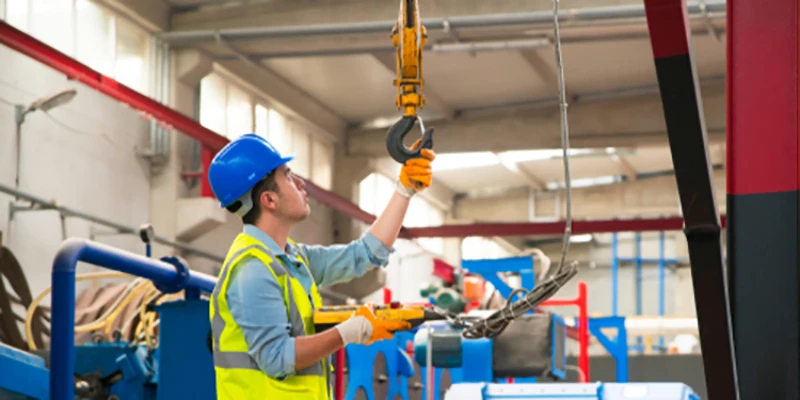
You must rely on a competent person to carry out a thorough lifting equipment inspection. This individual brings specialized knowledge, training, and experience to the task. A competent person understands the standards set by OSHA compliance and industry regulations.
You can expect them to identify hazards, assess risks, and ensure every piece of equipment meets safety requirements. According to recognized standards, a competent person must:
Possess the necessary knowledge to inspect lifting equipment.
Complete formal training in inspection procedures and safety standards.
Gain experience in identifying damage and evaluating risk factors.
Demonstrate authority to take corrective actions when hazards arise.
Maintain up-to-date certifications relevant to lifting equipment inspection.
A competent person’s responsibilities extend beyond basic checks. They perform periodic inspections, certify equipment, and document findings for OSHA compliance. You depend on their expertise to keep your workplace safe and compliant.
Role | Description |
|---|---|
Competent Person | Has the knowledge, skills, and authority to identify hazards and take corrective actions. |
Operator | Focuses on the actual operation of the lifting equipment, ensuring safe and effective use. |
Operator’s In-Service Inspection
You play a key role in daily safety by performing in-service inspection before each use. Operators check for visible damage, wear, or malfunction. You look for issues such as frayed wire ropes, bent hooks, or loose bolts. In-service inspection helps you catch problems early and prevent accidents.
You must report any faults immediately and remove unsafe equipment from service.
Operators can perform in-service inspection for routine checks. However, you need a competent person for periodic inspections, certification, or when equipment undergoes repairs or modifications.
Training programs such as Rigging Equipment Inspector, Crane Operator Training, and Rigger Training prepare you for these responsibilities. These courses cover OSHA compliance, inspection procedures, and hands-on practice.
Powerful Machinery supports your commitment to safety by offering products designed for easy inspection and maintenance. You benefit from their dedication to training and OSHA compliance, ensuring your lifting equipment inspection routine meets the highest standards.
Note: Always consult a competent person for periodic inspections or when you encounter complex safety concerns.
Inspection Checklist and Recordkeeping
A strong inspection routine keeps your lifting operations safe and compliant. You need a clear checklist for both daily and periodic reviews. Good recordkeeping helps you track issues, prove compliance, and improve safety over time.
In-Service Inspection Steps
You should perform in-service checks before each use. These steps help you catch problems early and keep your team safe. Follow this checklist every day:
Visual Inspection: Look for cracks, corrosion, missing fasteners, or worn parts on all load-bearing components.
Operational Checks: Test all controls, safety devices, and emergency stop features.
Documentation Review: Check logbooks and maintenance records for recent repairs or issues.
Load Capacity and Rating: Confirm that load ratings are visible and correct for the task.
Wire Rope/Chain Inspection: Examine for broken wires, kinks, poor lubrication, or loose terminations.
Hook and Attachment Points: Check for bent hooks, damaged latches, or loose connections.
Electrical Components: Inspect for exposed wires or faulty connections.
Hydraulic Systems: Look for leaks or damaged hoses.
Environment and Surroundings: Remove hazards and ensure good lighting.
Operator Training: Make sure you and your team know how to use the equipment safely.
Emergency Preparedness: Confirm that emergency equipment is available and procedures are clear.
Regulatory Compliance: Ensure all checks meet local and national regulations.
Tip: Use a printed or digital checklist to make sure you never miss a step.
Powerful Machinery’s Lifting Equipment, such as chain pulley blocks and I Beam Hoist Clamps, features clear markings and robust construction. These features make your daily inspections faster and more reliable.
Periodic Inspection Steps
You need to schedule a periodic inspection at set intervals, such as monthly, quarterly, or annually. These inspections go deeper than daily checks and often require a competent person. The table below shows the main differences:
Inspection Type | Frequency | Focus Areas |
|---|---|---|
Daily In-Service Check | Daily/Pre-use | Surface-level issues like visible wear and tear |
Periodic Inspection | Monthly/Quarterly/Annually | Deep checks of electrical systems, brakes, and structure |
During a periodic inspection, you should:
Disassemble key components for a closer look.
Test brakes, limit switches, and overload protection devices.
Inspect the structural integrity of frames, beams, and welds.
Check for hidden corrosion or fatigue cracks.
Review all identification tags and certificates for accuracy.
Verify that all repairs and modifications meet safety standards.
Cranes, hoists, and slings each have unique points to check. For example, cranes need a close look at structural integrity and load limits. Hoists require checks on control markings and safety mechanisms. Slings must be free from excessive wear and have clear load ratings.
Powerful Machinery’s products are designed for easy disassembly and inspection. You can access critical parts quickly, which reduces downtime and supports thorough periodic inspection.
Handling Faults and Documentation
When you find a fault during any lifting equipment inspection, you must act fast:
Remove the equipment from service immediately.
Tag the equipment as “Out of Service” and report the issue to your supervisor.
Record the fault in your inspection log with details about the problem and actions taken.
Schedule repairs or replacements as needed.
Only return the equipment to service after a competent person verifies the repair.
Common faults include missing identification tags, worn chains, bent hooks, or unauthorized repairs. Never ignore minor wear or homemade modifications.
Good documentation is essential. Use the following table to organize your records:
Type of Record | Description | Retention Period |
|---|---|---|
Thorough Examination Reports | List defects and corrective actions | Life of machinery or 2 years for accessories |
EC Declaration of Conformity | Confirms compliance with safety regulations | Life of equipment |
Records of Inspection | Log in-service checks and findings | Until the next report is made |
Note: Incomplete records can lead to legal trouble and increase the risk of accidents.
You can use digital tools like Papertrail or OnSiteForm to automate recordkeeping and get instant reports. These platforms help you stay organized and compliant.
Powerful Machinery’s Lifting Equipment comes with clear documentation and easy-to-read identification tags. This makes your recordkeeping process simple and helps you meet all regulatory requirements.
Inspection Frequency and After Repairs
Routine and Periodic Intervals
You must set a clear schedule for inspecting your lifting equipment. The frequency depends on several factors, including how often you use the equipment, the type of machinery, and the conditions in which you operate. For most workplaces, you should follow these guidelines:
Perform a routine inspection daily or before each use. Check for visible damage, leaks, or malfunctioning parts.
Schedule frequent inspections every week or month. Focus on operating mechanisms, hooks, chains, and hydraulic systems.
Conduct periodic inspections every 1 to 12 months. Examine structural components, bolts, welds, and safety devices.
The table below summarizes the main influences on inspection intervals:
Factor | Impact on Inspection Frequency |
|---|---|
Equipment Type | Specialized machines may need more checks |
Usage Frequency | Heavy use requires shorter intervals |
Service Conditions | Harsh environments increase inspection needs |
History of Failures | Past issues demand closer monitoring |
You should always document each lifting equipment inspection. Use digital tools or cloud-based logs to track schedules and findings. Automated reminders help you stay compliant and prevent missed inspections.
Tip: A consistent routine inspection program reduces downtime and extends equipment life.
Post-Repair and Modification Checks
After you repair or modify any lifting equipment, you must complete a thorough inspection before returning it to service. This step ensures the equipment operates safely and meets all regulatory standards. Health and safety officials require proof of these inspections, so keep detailed records.
Your post-repair inspection should include:
A comprehensive check of all critical components, including up to 120 inspection points for complex machinery.
Verification that repairs meet manufacturer and industry standards.
Confirmation that identification tags, serial numbers, and load ratings remain clear and accurate.
You can rely on Powerful Machinery for ongoing support. Each product features unique serial numbers and steel-engraved tags for easy tracking. Certified technicians provide professional inspection and repair services, restoring your equipment to full working condition.
These services help you maintain compliance and ensure reliable operation after any repair or modification.
Note: Never use equipment after repairs until a competent person completes a full inspection and signs off on its safety.
Conclusion
You protect your team and boost productivity when you follow a thorough lifting equipment inspection checklist. Regular checks help you spot issues early, reduce downtime, and extend equipment lifespan. Certified products from Powerful Machinery deliver reliable performance and support compliance.
Benefit | Description |
|---|---|
Improved Safety | Identify hazards before failures occur |
Lower Costs | Reduce repairs and avoid fines |
Increased Efficiency | Minimize breakdowns and lost time |
Injury Prevention | Protect workers from accidents and fatigue |
Stay proactive with inspections and choose certified lifting solutions for a safer, more efficient workplace.
FAQ
What should you do if you find damage during inspection?
You must stop using the equipment immediately. Tag it as “Out of Service.” Report the issue to your supervisor. Schedule repairs with a qualified technician. Only return the equipment to service after a competent person approves it.
Tip: Never ignore even minor damage.
How often should you inspect lifting accessories?
You should inspect lifting accessories every six months. Daily visual checks help you catch problems early. Schedule periodic inspections with a competent person to ensure compliance and safety.
Inspection Type | Frequency |
|---|---|
Visual Check | Before each use |
Full Inspection | Every 6 months |
Who qualifies as a competent person for inspections?
A competent person has formal training, hands-on experience, and knowledge of safety standards. You must rely on someone who can identify hazards and take corrective action. Certification from recognized organizations adds credibility.
Can you use lifting equipment after repairs without inspection?
You cannot use the equipment after repairs until a competent person completes a full inspection. This step ensures safety and compliance. Always document the inspection results before returning equipment to service.
Where can you find certified lifting equipment for your workplace?
You can visit Powerful Machinery’s official website to explore certified lifting equipment. You will find products that meet international safety standards and support reliable inspection routines.