Powerful Machinery supplies chain products for lifting, cargo securement, marine service, and general industrial use. Choose from Grade 80 and Grade 100 alloy lifting chains, Grade 70 transport chain, standard link chains, chain sling assemblies, anchor chains, and selected utility chains.
Each family has its own rating basis and intended use; start with the job the chain must do, then confirm the exact product specification.
If you are sourcing for a distributor, equipment brand, or industrial project, send the required application, standard or grade, size, load requirement, and quantity. We can review the matching chain family and the details needed for a quotation.

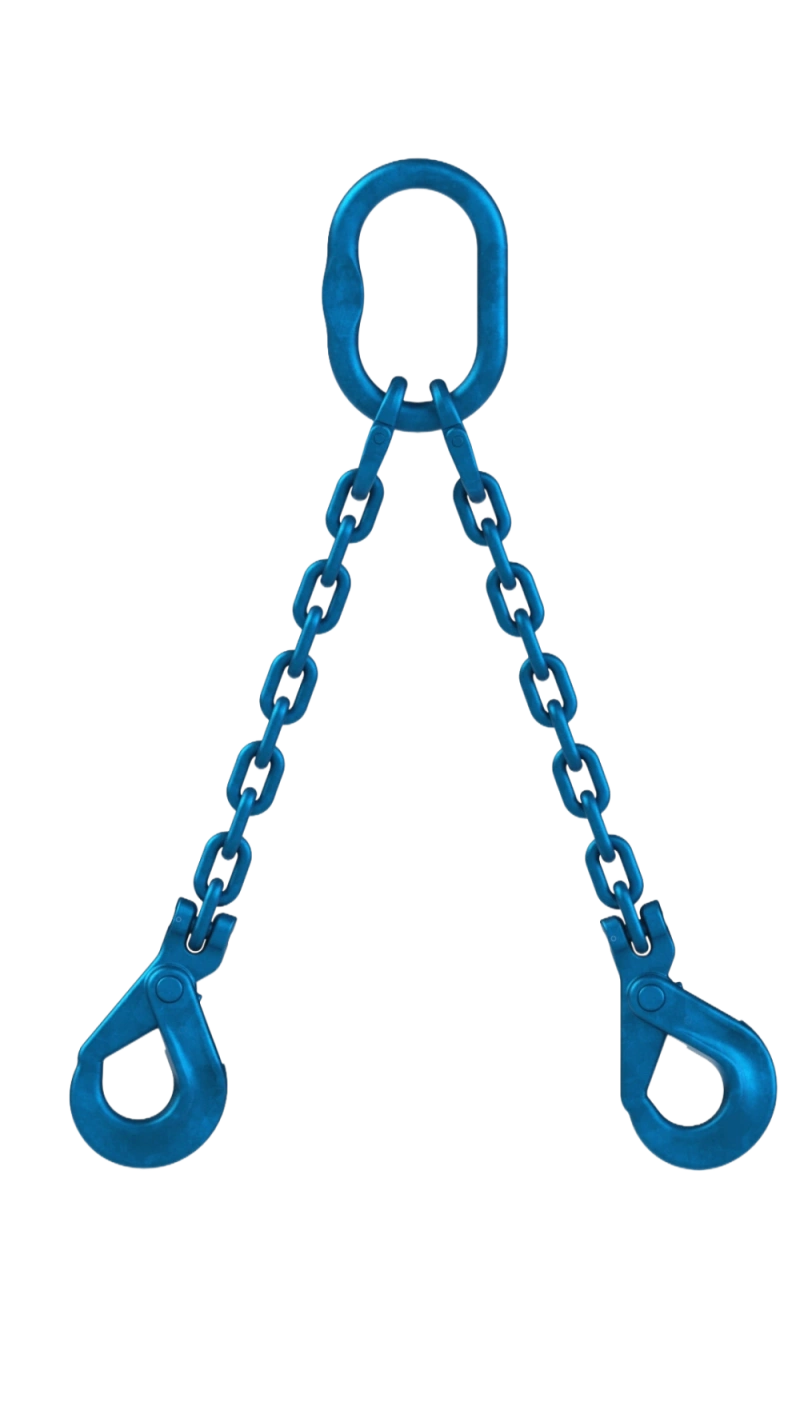
For an overhead lift, start with Grade 80 lifting chain or Grade 100 short-link lifting chain specified for that service. Alloy steel chain is also available in the U.S. NACM 2010 Grade 80 range. Confirm the applicable standard, nominal diameter and rated load for the exact product. A finished sling must be assessed as an assembly: leg count, hitch, angle, hooks, master link and the lowest-rated part can change its working load limit. Buyers needing a complete assembly can review chain slings and chain components.
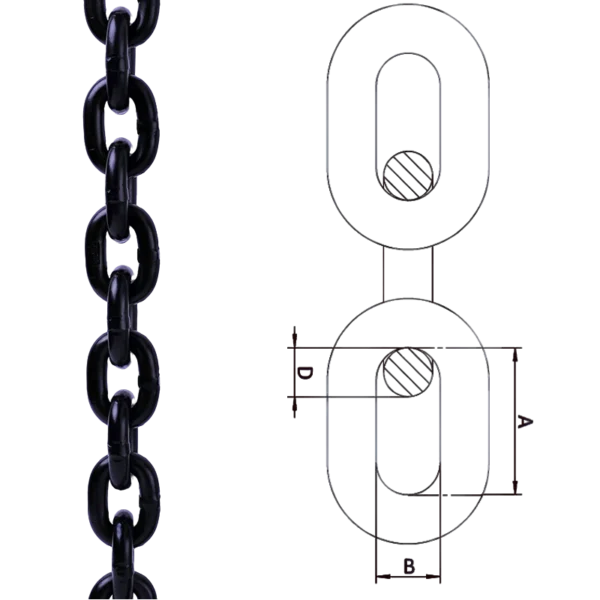
If the chain runs through a hoist, use the load chain range as the starting point and give the hoist maker, model, chain dimensions and original specification. Do not substitute a general-purpose or sling chain merely because its diameter appears to fit; compatibility with the hoist’s load wheel and the specified chain is essential.
Our Grade 70 transport chain and catalogue-listed Grade 80 long-link lashing chain serve cargo securement specifications, subject to the exact product documentation. Match the chain to its hooks and load binder and check the complete system rating. Transport and lashing chains are not interchangeable with overhead lifting chains.
For vessels and marine structures, begin with anchor chains or the mooring chain range. Specify the required chain form, size, grade, joining components, corrosion protection and any project-specific inspection or class documentation. Marine chain requirements should be reviewed against the relevant vessel or project specification, rather than inferred from a general industrial link-chain listing.
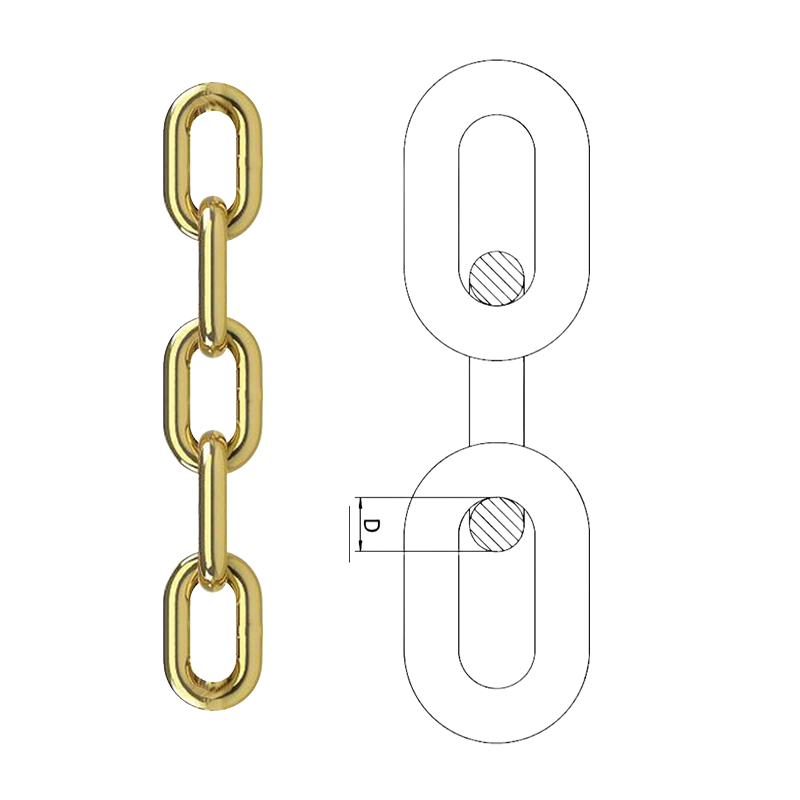
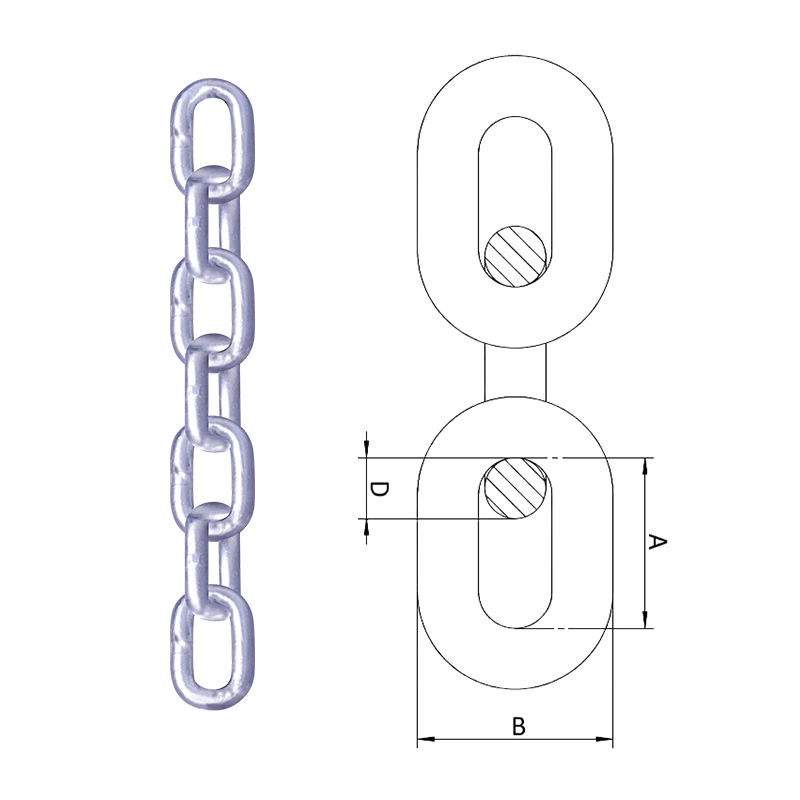
For applications specified to regional chain standards, explore DIN standard link chains, U.S. standard and ASTM chain options, UK standard link chains, Australian standard link chains and Korean standard link chains. These are different product families with different specifications; the presence of a familiar standard name is not proof of suitability for lifting. For utility or barrier uses, review weldless chains and plastic chains only within their stated applications.
| Your Application | Start With | Confirm Before Ordering |
|---|---|---|
| Overhead lifting or sling fabrication | Grade 80 / Grade 100 lifting chains | Exact chain standard, grade, diameter, chain WLL and matched assembly components |
| Chain running through a hoist | Load chains | Hoist model, load-wheel compatibility and original chain specification |
| Vehicle or cargo securement | Transport chain | Chain and binder ratings, fittings and applicable securement requirements |
| Marine anchoring or mooring | Anchor chains | Chain form, dimensions, grade, joining hardware and project documentation |
| Regional chain standards | DIN chains / U.S. chains | Exact standard designation, link geometry, finish and required rating |
For a comparison of grade, marking and rating terms, see chain grades and markings. Product-specific tables remain on the linked pages.
Alloy steel chain is used where a specified chain grade and rated performance are required, particularly for lifting chain and sling procurement. The catalogue lists EN 818-2 Grade 80 lifting chain, Grade 100 short-link chain for lifting purposes, and a U.S. NACM 2010 Grade 80 alloy chain. Each listing has its own dimensions and load data. Specify the exact product and standard required; “alloy steel chain” alone does not define a complete lifting specification.
When sourcing alloy steel chain, provide the chain designation, nominal size, link geometry, stated working load limit and minimum breaking force where applicable, together with the marking and documentation required for the order. If you are purchasing an assembled sling, also specify the leg count, reach, end fittings, and use configuration. See the Grade 80 alloy chain range and Grade 100 chain range for product-specific specifications.
If a chain is to form part of a sling, use the more detailed chain sling RFQ guide. For WLL and breaking-force terminology, see working load limit versus breaking strength.
Powerful Machinery supplies lifting, transport, regional standard, weldless, plastic, and anchor chains within one product range. Buyers can compare relevant chain families and request matching hooks, links, or sling components within the same enquiry. Product availability, finishing options, quantities, lead time, and documentation should be confirmed for the exact item and order; they are not uniform across every chain listed.
Lifting chain must be specified and rated for the intended lifting system or sling. Transport chain is selected for cargo securement. A Grade 70 transport chain should not be used for overhead lifting simply because it has a stated WLL. Check the chain identification and complete assembly rating.
No. Grade alone is not a complete application approval. The catalogue separately lists Grade 80 lifting chain and Grade 80 long-link lashing chain. Confirm the exact product designation, relevant standard, manufacturer rating and intended use before specifying it for a lift.
No. Working load limit is the rated load permitted under the specified conditions of use, while minimum breaking force is a separate strength value. Use the rating provided for the exact product and do not treat a breaking-force figure as a working load limit.
No. A regional standard designation or material description alone does not establish suitability for overhead lifting. The exact chain and its matched components must be rated, marked and documented for the intended lifting service.
Depending on the chain family and required assembly, matching hooks, links and other components can be included in the enquiry. Specify the chain grade, size, application and required fittings so component compatibility and ratings can be checked before quotation.
After downloading the product catalogue, our dedicated technical experts will provide you with one-on-one service.