A chain hoist safety factor describes a design margin associated with a defined component or strength criterion. It does not increase the load that may be lifted. During operation, the complete hoist must remain within its marked rated load and all limits stated in the manufacturer’s manual.
There is no single safety factor that can be applied to every chain block, load chain, hook, brake, and lifting arrangement. A chain-strength ratio also does not establish the capacity of an assembled hoist. Before relying on a figure such as 4:1 or 5:1, verify what it represents, how it was determined, and which equipment and standard it applies to.
This guide focuses on conventional hand-operated chain hoists used for vertical lifting of materials. It does not provide design calculations for mining hoists, brake torque, personnel lifting, or other special applications. Powered chain hoists and lever hoists are subject to their own applicable requirements and manufacturer instructions.
The Terms You Need to Keep Separate
| Term | Meaning | What It Does Not Mean |
| Rated Load or WLL | The manufacturer-assigned maximum load for the complete hoist under stated conditions. | Permission to lift at a higher test or breaking value. |
| Design Factor | A relationship between a specified strength criterion and the corresponding design load or stress. | A universal multiplier for the whole lifting system. |
| Minimum Breaking Force | A specified minimum rupture force for a defined component under a specified test method. | A load that an operator may apply to the hoist. |
| Proof Load or Test Load | A controlled verification load applied under a specified procedure. | An increased service rating or permission to repeat overload tests. |
| SWL | The safe working load assigned to equipment for a stated use or configuration. | Permission to exceed the applicable manufacturer rating. |
Documents may use rated load, WLL, and SWL differently. Read the definitions supplied with the equipment and the applicable local requirements. If an approved operating limit is lower than the nameplate rating, use the lower applicable limit.
Is the Safety Factor 4:1 or 5:1?
A quoted factor cannot be separated from the component, service classification, and design basis to which it applies. A figure quoted for sling chain cannot automatically be used for a hoist load chain, and a load-chain figure cannot be assigned to every part of the hoist.
For example, RUD’s published data for its hardened and tempered hoist chains lists a factor of 4 for the hand-operated classification and 5 for M3 in the same table. These are manufacturer examples for the chain and classifications shown, not universal ratings for complete chain hoists. The table illustrates why the shortcut ‘all lifting chains use the same factor’ is unreliable.
EN 818-7 concerns hoist chains. References to that standard do not, by themselves, establish the rating or compliance of a complete hoist. Confirm the chain type, dimensions, service classification, chain-wheel compatibility, and traceable documentation for the exact equipment.
How to Read a Safety Factor Calculation?
Where a component specification defines a breaking-force-based design factor, the basic relationship is:
Design factor = specified minimum breaking force / corresponding permitted working force
Both values must refer to the same component and use compatible force units. A chain breaking force in kilonewtons cannot be divided directly by a hoist capacity stated in tonnes. Tonnes describe mass; kilonewtons describe force. The load in the chain also depends on the approved reeving and load path.
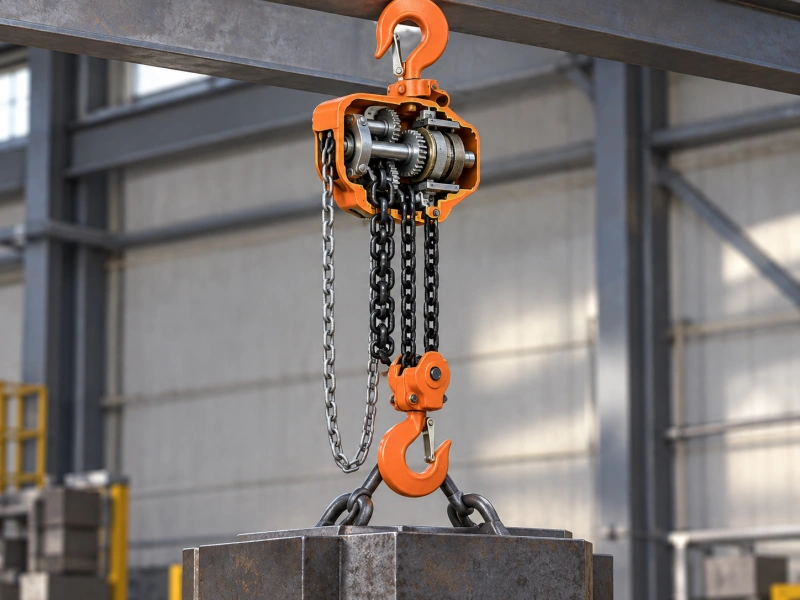
As an arithmetic example only, a component with a specified minimum breaking force of 40 kN and a corresponding permitted working force of 10 kN has a ratio of 4:1. This example is not a Powerful Machinery product specification and does not establish the rating of any assembled hoist.
Do not calculate operating capacity from chain diameter, material grade, or a guessed breaking value. The brake, hooks, frame, gears, load wheel, chain anchorage, and suspension also form part of the load path. Use the rating assigned to the complete hoist and supported by its documentation.
Rated Load Remains the Operating Limit
A hoist rated at 1 t is not permitted to lift 4 t because a document mentions a 4:1 chain factor. The design margin belongs to the design and verification process; it is not available as spare operating capacity.
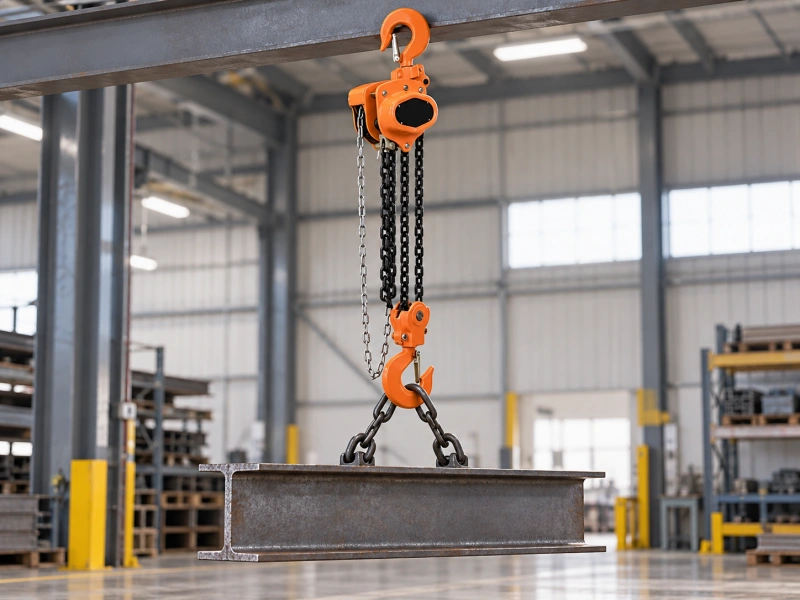
Check the total load carried by the bottom hook, including the payload and below-the-hook attachments. Verify the supporting structure and connected lifting equipment separately. A suitable hoist cannot make an unsuitable beam, trolley, sling, or connection safe.
For load calculations and capacity selection, use the chain hoist capacity guide. This article explains how to interpret strength and test figures without repeating the full capacity-selection process.
A Proof Test Is Not a Higher Capacity Rating
A proof or load test verifies equipment under defined conditions. Its purpose and acceptance criteria differ from those of a breaking test. Passing such a test does not reveal the failure load of every component or authorize lifting at the test load during service.
A higher test value shown in a datasheet must be read together with the exact procedure and model information. Do not apply one model’s test multiplier to another model, another capacity, or another standard.
Do not perform an improvised overload test to determine the remaining safety factor of a used hoist. HSE notes that routine load testing is not required for most lifting equipment during thorough examination and that some overload tests can damage equipment. Where testing is required, the competent person determines its nature using risk assessment and manufacturer information. [3]
Match the Requirements to the Equipment and Location
Hoist Standards in the United States
ASME B30.16 covers overhead underhung and stationary hoists, including hand chain-operated and powered hoists for lifting and lowering freely suspended material loads. Its published scope excludes special uses such as personnel lifting and non-vertical service. ASME B30.21 addresses lever hoists separately.
Identify the applicable standard and edition for the equipment and project. A supplier should be able to explain which requirement a claimed factor addresses. Simply citing ASME or OSHA does not demonstrate that a model has been assessed against the relevant requirements.
Workplace Lifting in Great Britain
Where LOLER applies, the equipment must be suitable for the lifting task, marked with its safe working load, and managed through appropriate planning and examination. These workplace duties are separate from a component’s breaking-force ratio. Check the applicable requirements for the location and use.
Information to Check Before Buying a Chain Hoist
A technically useful quotation identifies the exact model and configuration. Ask for the following information before accepting a safety-factor claim:
- Rated load, capacity units, lift height, headroom, and chain configuration.
- The component or design criterion to which the stated factor applies.
- The applicable standard and edition, plus the relevant manufacturer documentation.
- Test records that identify the model or unit and explain the test basis.
- The operating manual, inspection criteria, environmental limits, and duty information.
- Traceable identification and any conformity documents required for the destination.
An ISO 9001 certificate concerns a quality management system; it does not, by itself, verify a particular hoist’s rated load or design factor. Likewise, a general reference to a testing organization is insufficient without a document that identifies the assessed product and scope.
Use the chain hoist manufacturer evaluation guide to compare supplier documentation. When the operating requirements are clear, review the manual chain block range and request documentation for the exact configuration being offered.
When to Stop Using the Hoist?
A design factor does not make damaged equipment acceptable at a guessed lower load. Remove the hoist from service if the rated-load marking is missing or unreadable, the load chain is damaged or twisted, a hook is visibly deformed, the brake slips, or the mechanism jams or operates abnormally.
A suspected overload, shock-load event, severe corrosion, or other incident that may affect integrity requires assessment before further use. Do not assign an informal reduced capacity or weld, splice, reshape, or substitute load-chain components to keep the equipment in service.
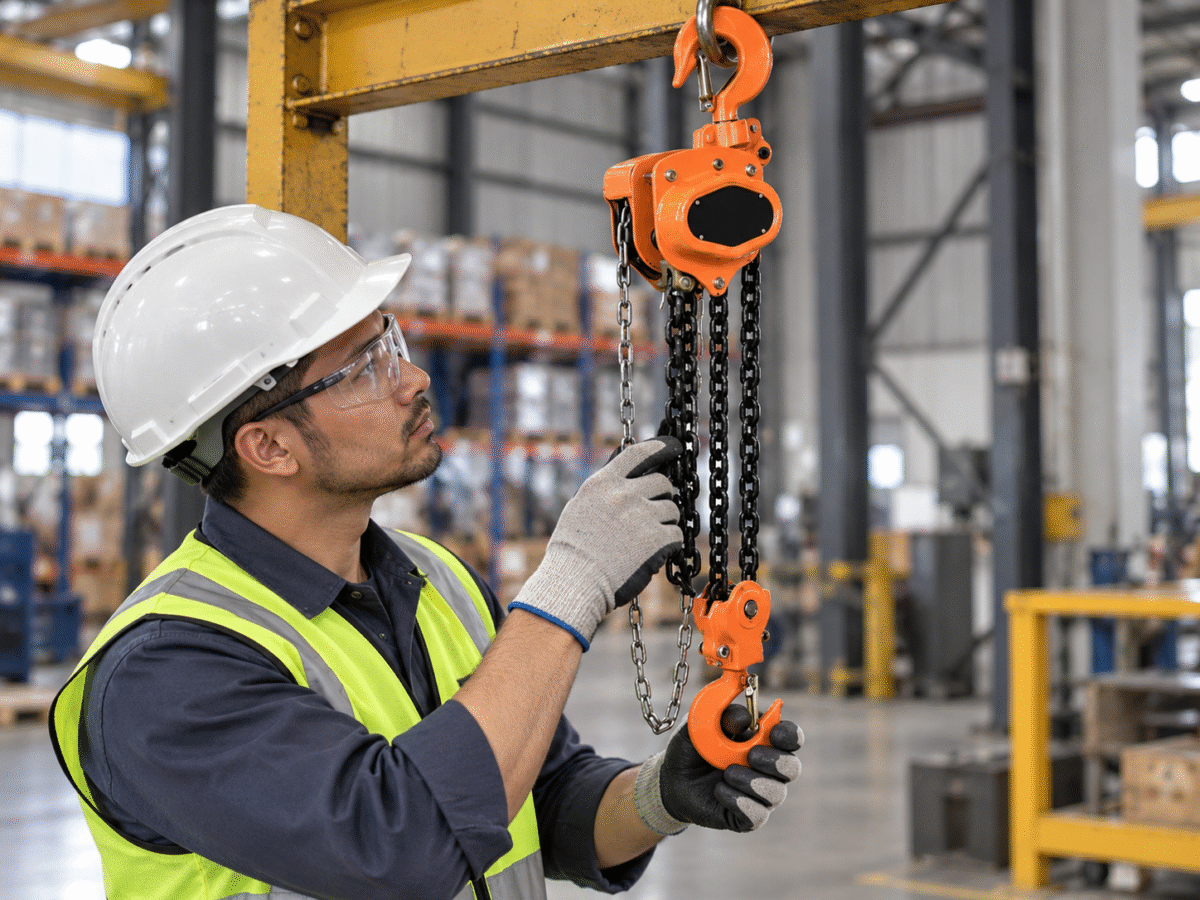
Use the chain block inspection checklist to organize pre-use checks. Abnormal operation or damage should be handled through a controlled technical assessment and repair process; the chain block repair guide explains when further assessment is required. Repairs and return to service must follow the manufacturer’s instructions and the applicable inspection or testing procedure.
Inspection and Maintenance Do Not Recalculate the Safety Factor
Inspection and maintenance help manage deterioration; they do not prove that a used hoist still retains its original breaking-strength margin. Measurements, acceptance limits, lubrication requirements, and inspection intervals must come from the exact manual and the applicable inspection program.
There is no universal monthly, quarterly, or annual interval suitable for every hoist and jurisdiction. Service frequency, environment, manufacturer requirements, and local obligations all matter. Use the chain block maintenance guide for care planning without treating maintenance as a substitute for examination or technical assessment.
FAQ
What Is the Safety Factor of a Chain Block?
It depends on the component, design criterion, and applicable requirements. Do not assign a single ratio to the whole chain block based on its chain grade. Ask for the exact model documentation and continue to operate within the marked rating.
Does EN 818-7 Mean Every Hoist Has a 4:1 Factor?
No. EN 818-7 concerns hoist chain, not the complete hoist assembly. Published chain factors depend on the stated classification and working basis. A chain-related ratio cannot be transferred to the brake, hooks, frame, or entire lifting arrangement.
Can I Calculate WLL from Breaking Strength?
Only where the applicable component specification defines that relationship and both values refer to the same component and conditions. Operators must not use a chain-strength calculation to create a new rating for an assembled hoist.
Can I Lift at the Proof Load?
No. A proof load belongs to a controlled test procedure. Normal operation remains limited by the marked rated load and any lower applicable operating limit.
Does a Higher Factor Prevent Damage from Shock Loading?
No factor is permission to shock-load equipment or exceed its rating. Sudden loading, unsuitable connections, and deterioration can create hazards that a quoted strength ratio does not resolve.
Which Documents Should I Request?
Request the exact model datasheet, operating manual, identification, and relevant test or conformity documents. If a factor is quoted, ask which component and standard it refers to. A general certification logo is not a substitute for that explanation.