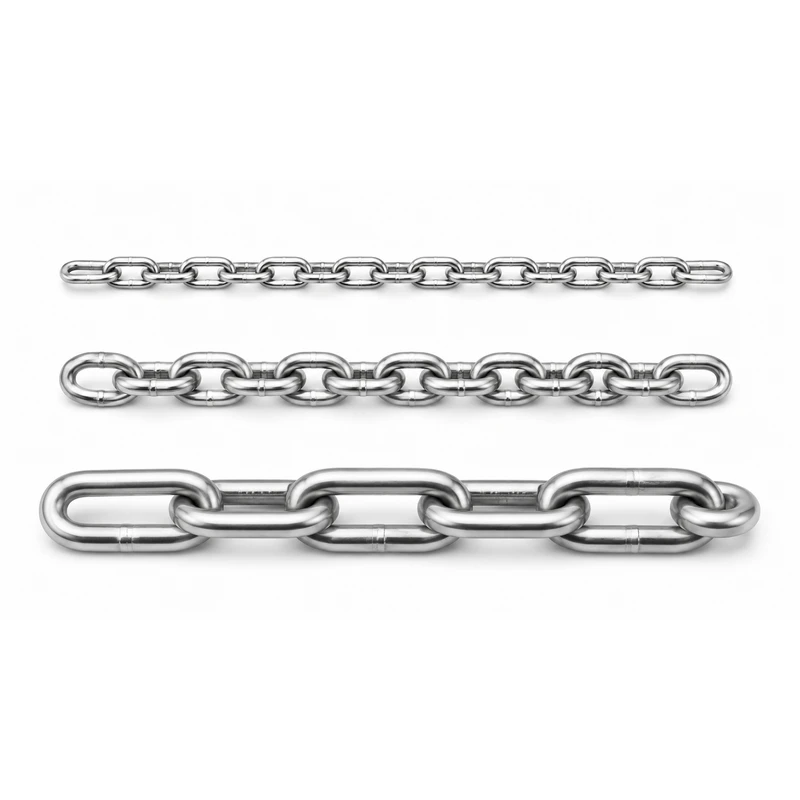
The difference between break strength and tensile strength is crucial to understand: break strength is the maximum force a material can withstand before it fails, while tensile strength refers to the maximum stress a material can endure before breaking.
Recognizing the distinction between break strength and tensile strength is essential when selecting lifting or rigging chains, as improper choices can result in severe workplace incidents.
Between 2011 and 2017, crane-related accidents led to an average of 42 deaths each year, often due to improper rigging and misunderstanding of break strength vs tensile strength.
Proper training and careful selection, with attention to break strength vs tensile strength, help prevent serious injuries and equipment damage.
Industry | Importance of Tensile Testing |
|---|---|
Construction | Ensures structural stability of materials like beams and columns under various stresses, highlighting the need to understand break strength vs tensile strength. |
Maritime | Certifies materials for ship components to withstand harsh sea conditions, ensuring crew and operational safety through proper evaluation of break strength vs tensile strength. |
Automotive | Guarantees that vehicle components can endure stresses during operation, essential for driver and passenger safety, and relies on accurate knowledge of break strength vs tensile strength. |
By understanding the critical properties of break strength vs tensile strength, you ensure safety and compliance, especially when working with Powerful Machinery‘s Chains.
Key Takeaways
Break strength is the maximum force a material can withstand before it fails. Understanding this helps prevent accidents in lifting operations.
Tensile strength measures the maximum stress a material can endure before breaking. This knowledge is crucial for ensuring safety in construction and rigging.
Always check both break strength and tensile strength when selecting chains. This practice ensures you choose the right product for your lifting needs.
Regularly inspect your chains for wear and damage. This step is vital for maintaining safety and compliance in lifting operations.
Use appropriate safety margins when lifting. Never exceed the working load limit to protect your team and equipment.
Break Strength vs Tensile Strength Explained
What Is Break Strength?
You need to understand break strength when selecting chains for lifting or rigging. Break strength refers to the maximum force a material can withstand before it ruptures or fails. International standards organizations, such as ASTM and ISO, define break strength through specific testing methods.
For example, ASTM D1578 and ASTM D5034 outline procedures for measuring the breaking strength of yarns and fabrics. These standards focus on the force required to break the material, ensuring consistency in measurement.
Standard | Description |
|---|---|
ASTM D1578 | Determines the breaking strength of yarn in skein form, expressed in units of force. |
ASTM D5034 | Measures breaking strength and elongation of textile fabrics using a grab test, focusing on the force to break. |
In industrial settings, you will see break strength expressed in units such as megapascals (MPa), pounds per square inch (psi), or newtons per square millimeter (N/mm²). The value represents the stress at which the material breaks or ruptures.
When you compare break strength vs tensile strength, break strength always refers to the point of complete failure.
Type of Strength | Description |
|---|---|
Yield strength | The stress at which a material begins to deform plastically. |
Ultimate strength | The maximum stress a material can endure. |
Breaking strength | The stress at which a material breaks or ruptures. |
Units of Measurement | Expressed in stress or force per cross-sectional area (MPa, psi, N/mm²). |
What Is Tensile Strength?
Tensile strength is a critical property you must evaluate when choosing chains for lifting or securing loads. Tensile strength refers to the maximum tensile stress a material can endure before it fails or breaks.
This property helps you assess how materials perform under load, which is essential for applications in construction, manufacturing, and transportation.
You measure tensile strength in laboratory settings using tension tests. These tests provide information about the strength and ductility of materials under uniaxial tensile stresses. You will find that standards such as ASTM, JIS, and EN guide these procedures.
Testing equipment, like a 22,000-pound Instron frame, pulls a sample at a constant rate until it separates. The machine records instantaneous stress and strain continuously.
You manufacture a dog-bone-shaped sample, either flat or round.
You machine the ends for gripping by the tensile test machine.
You mount the sample in the test frame and pull it at a constant rate until it separates.
The machine records stress and strain throughout the test.
Tensile strength indicates the maximum load or pulling force a material can withstand across a specific area before it permanently deforms or breaks. You must distinguish tensile strength from yield strength, which marks the point just before permanent deformation begins.
When you discuss break strength vs tensile strength, tensile strength reflects the material’s inherent ability to resist pulling forces.
You will encounter several mechanical properties during tensile testing:
Yield Strength
Ultimate tensile strength
Elongation
Young’s Modulus
Poisson’s ratio
Ultimate tensile strength is the highest stress a material can endure before breaking. This value is crucial for determining the safe working limits of chains and other lifting products.
Why the Difference Matters?
You must recognize the difference between break strength and tensile strength to ensure safety and reliability in lifting operations. Confusing these terms can lead to unsafe practices and equipment failure.
Break strength is the maximum force an item can withstand before failure, while tensile strength reflects the material’s inherent strength.
If you misunderstand break strength vs tensile strength, you risk catastrophic equipment failure, serious injuries, and damage to cargo control products and property. You need to select chains with appropriate ultimate tensile strength and break strength for your specific application.
This approach helps you prevent workplace accidents and maintain compliance with safety standards.
Tip: Always check the product specifications for both break strength and ultimate tensile strength before using chains in lifting or rigging operations. This practice ensures you choose the right product for your needs and protects your team and equipment.
When you compare break strength vs tensile strength, you gain a deeper understanding of material limits. You make informed decisions, reduce risks, and improve overall safety in your workplace.
Tensile Testing and Material Limits
How Tensile Testing Works?
You must follow precise steps to ensure accurate results when you perform tensile testing on industrial chains. This process helps you determine the tensile strength of each chain, which is critical for safety and reliability. The procedure involves several key stages:
Prepare and condition the specimen. You must check that the test sample matches the required dimensions. Any flaw can cause premature failure.
Set up and calibrate the testing machine. You need to confirm the Universal Testing Machine (UTM) is accurate.
Install the appropriate grips and fixtures. These components hold the chain securely and prevent slipping.
Mount and align the specimen. Proper alignment avoids bending and ensures valid results.
Configure test parameters. You program the UTM with the chain’s dimensions and the relevant standards.
You use specialized equipment for tensile strength evaluation. The WAL Series Computer-Controlled Electro-hydraulic Horizontal Tensile Testing Machine is suitable for both long and short samples.
Grips and fixtures, including manual, pneumatic, wedge, and hydraulic types, help you secure the chain during testing. The following table summarizes the equipment:
Equipment Type | Description |
|---|---|
WAL Series Computer-Controlled Electro-hydraulic Horizontal Tensile Testing Machine | Suitable for a variety of long and short sample tests, especially for large samples. |
Grips and Fixtures | Essential for holding specimens securely during testing to prevent slipping or damage. |
Manual and Pneumatic Grips | Commonly used for metals and plastics, providing ease of use and consistent pressure. |
Wedge and Hydraulic Grips | Designed for higher loads, ensuring secure holding of metallic specimens. |
Specialized Fixtures | Customized for delicate or flexible specimens like ropes and textiles. |
Note: ASTM A906 and ASTM E8 are important standards for testing the tensile strength of alloy steel chains.
Stress, Deformation, and Failure Points
You observe how chains respond to increasing loads during tensile testing. The stress-strain curve reveals the material’s behavior from initial loading to failure. You see the chain stretch, deform, and eventually break. The tensile strength marks the highest point on the curve before the chain fails.
Different models predict how high-strength alloy chains behave under stress. For example, the Ludwik-Hollomon model shows a deviation of 48 MPa at 50% true strain.
The W-Temper (Ludwik-Hollomon) model reaches 56–59 MPa at the same strain level. These values help you understand the limits of tensile strength in various chain grades.
Model | Deviation at 50% True Strain | Deviation at 60% True Strain |
|---|---|---|
Ludwik-Hollomon | 48 MPa (13%) | 68 MPa (19%) |
W-Temper (Ludwik-Hollomon) | 56–59 MPa (16–17%) | 77–79 MPa (21–23%) |
Hockett-Sherby | 15 MPa (4%) | 20 MPa (5%) |
Ghosh | 47 MPa (13%) | 67 MPa (18%) |
You must pay close attention to the point where the chain reaches its maximum tensile strength. This point signals the limit before permanent deformation or breakage. By understanding these failure points, you select chains that meet your operational needs and maintain safety.
Breaking Load vs Tensile Strength in Chains
Powerful Machinery Chains: Strength Standards

You must understand how breaking strength and tensile strength affect your choice of chains for lifting and rigging. Powerful Machinery designs chains to meet strict international standards, including ISO 3076 and ASTM A391.
These standards guarantee that each chain undergoes rigorous testing for safety and performance. You can trust that every chain meets or exceeds the requirements for industrial use.
When you compare chain grades, you see clear differences in breaking strength and tensile strength. The table below shows the values for Powerful Machinery’s most popular chain types. You should use this information to match the right chain to your application.
Chain Type | Break Strength (kN) | Tensile Strength (kN) |
|---|---|---|
G43 | 34.6 – 122.6 | N/A |
G70 | N/A | Highest tensile strength among carbon-steel |
G80 | N/A | High-tensile strength alloy steel |
G100 | N/A | Alloy steel for heavy-duty rigging |
You notice that G43 chains provide a specific range of break strength. G70 chains offer the highest tensile strength among carbon-steel chains. G80 and G100 chains use alloy steel to deliver superior tensile strength for demanding tasks.
You must select chains with the right breaking strength and tensile strength to ensure safety and reliability.
You should also consider how different chain grades perform under extreme load conditions. The table below summarizes the performance of each grade:
Chain Grade | Description | Performance Under Load |
|---|---|---|
Grade 30 | General-purpose economical chain; low tensile strength; prone to stretching under heavy loads. | Not suitable for extreme loads due to low tensile strength. |
Grade 43 | Stronger than Grade 30; better resistance to wear and tear. | More suitable for moderate loads but may not withstand extreme conditions. |
Grade 70 | Higher strength, heat-treated carbon steel; load rating approximately 20% higher than Grade 43. | Better performance under heavy loads, but not specifically tested for extreme conditions. |
Grade 80 | High-strength, heat-treated alloy chain; economical choice for overhead lifting. | Suitable for heavy-duty applications, but extreme load performance is not specified. |
Grade 100 | High-strength, heat-treated alloy chain; approximately 25% higher strength than Grade 80. | Designed for heavy lifting, but extreme load data is not provided. |
Grade 120 | Ultra-premium high-strength chain; approximately 50% higher strength compared to Grade 80. | Best suited for rigorous overhead lifting applications, but lacks specific extreme load testing data. |
You see that higher grades, such as G80 and G100, provide greater tensile strength and breaking strength. These chains are ideal for overhead lifting and heavy-duty rigging. Lower grades, like Grade 30 and Grade 43, may not offer the strength at break needed for extreme conditions.
Note: Powerful Machinery’s chains are certified to meet or exceed international standards. You can rely on their breaking strength and tensile strength for critical lifting tasks.
Choosing the Right Chain for Your Application
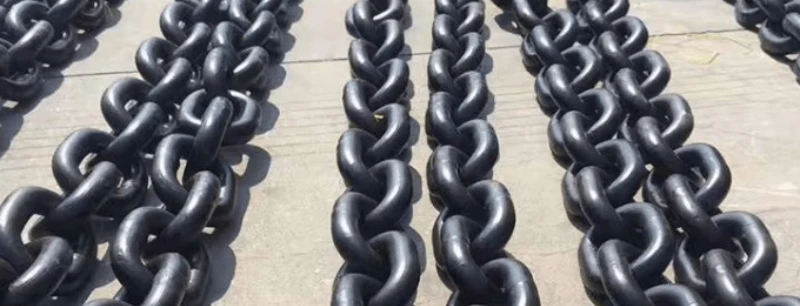
You must evaluate several factors when selecting a chain for your lifting or rigging needs. Break strength and tensile strength are the most important properties. You need to match the chain’s strength at break to the maximum load you expect to lift. Tensile strength tells you how much force the chain can handle before it stretches or fails.
You should always consider the working load limit and safety factor. The weakest link in your lifting system determines the overall safety. The table below shows recommended safety margins for different regions and standards:
Region | Safety Factor | Notes |
|---|---|---|
North America | 5:1 | General lifting and rigging |
Europe | 10:1 or higher | Especially for lifting people |
Asia | Lower | For simple pulling or lashing tasks |
ISO Standards | 4:1 | Minimum design factor for chain slings |
You must inspect your chains regularly to maintain safety. Visual inspection should occur before each use. Periodic inspection by a qualified person is necessary, based on usage and service conditions. Remove the chain from service if you see elongation over 5%, cracks, or link thickness below 90%.
Inspect alloy steel chain slings regularly.
Inspection frequency depends on how often you use the sling, the severity of service, and the nature of lifts.
You must inspect chains at least once every 12 months.
When you select a chain, you must consider the material composition. Alloy steel chains provide higher tensile strength and breaking strength compared to other materials. You should choose chains that meet or exceed the intended load and comply with international standards.
You must also account for the specific application. For overhead lifting, you need chains with high breaking strength and tensile strength, such as G80 or G100. For transport or lashing, G43 or G70 may be sufficient. Always check the product specifications for breaking strength and tensile strength before use.
Tip: You should never exceed the working load limit or rely solely on the strength at break. Always use a safety margin and inspect your chains regularly.
You ensure safety and performance when you select chains with the appropriate breaking strength and tensile strength. Powerful Machinery’s chains offer certified reliability for every lifting and rigging scenario.
Common Misconceptions and FAQs
Break Strength vs Tensile Strength Myths
You may encounter several myths in the rigging and lifting industry. These misconceptions can lead to unsafe practices and equipment misuse. Understanding the truth helps you make better decisions and protect your team.
Many believe break strength is the same as the allowable load. This is incorrect. Break strength represents the maximum force a chain or sling can withstand before failure. You must use a design factor to determine the working load limit, which is always much lower than the break strength.
Some think that if a system operates within the working load limit, it remains safe under all conditions. Unexpected factors, such as counterweight imbalance, accidental impacts, or future expansions, can push the system closer to its actual limits. You need to account for these risks when planning lifts.
A common myth suggests that any kink in a wire rope sling means it has been overstressed and must be removed. Not every kink indicates a loss of integrity. You should inspect the sling carefully and follow manufacturer guidelines before deciding on removal.
Note: You should never use break strength as the sole measure for safe operation. Always rely on the working load limit and safety factors.
Practical Tips for Material Selection
Selecting the right chain or sling for your application requires careful attention to break strength and other properties. You can improve safety and efficiency by following these tips:
Review product specifications for break strength. Choose chains with a break strength well above your maximum expected load.
Confirm compliance with international standards. Powerful Machinery’s chains meet ISO and ASTM requirements, ensuring reliable performance.
Inspect equipment before each use. Look for signs of wear, deformation, or damage. Remove any chain that shows elongation or cracks.
Use the correct grade for your task. For overhead lifting, select high-grade chains with superior break strength. For transport or lashing, lower grades may suffice.
Apply proper safety margins. Never operate at or near the break strength. Use recommended safety factors to determine your working load limit.
Consult with experts if you have doubts. Powerful Machinery provides support to help you choose the best product for your needs.
Tip: You increase workplace safety and reduce risk when you prioritize break strength, inspect equipment regularly, and follow industry standards.
Conclusion
You must distinguish break strength from tensile strength when selecting lifting chains. The table below highlights their differences:
Aspect | Tensile Strength | Break Strength |
|---|---|---|
Definition | The maximum tensile stress a material can withstand before permanent deformation. | The maximum force a material can endure before breaking into pieces. |
Stage of Failure | Focuses on the point of deformation before breaking. | Focuses on the point of complete breakdown. |
Focus of Measurement | Measures resistance to deformation. | Measures resistance to breaking. |
Application | Critical for applications requiring resistance to pulling forces. | Important for knowing the maximum force before failure. |
You should always consult product specifications and standards. Neglecting this step can lead to costly accidents and injuries. Use the working load limit as your guideline, choose the correct chain grade, and inspect equipment regularly.
Powerful Machinery’s chains meet strict safety requirements, giving you confidence in every lift.

FAQ
What is the difference between break strength and tensile strength?
Break strength shows the maximum force before a chain fails. Tensile strength measures the highest stress a chain can handle before breaking. You should check both values to ensure safe lifting.
How do I choose the right chain grade for my application?
You need to match the chain grade to your load requirements. For overhead lifting, select G80 or G100. For transport or lashing, G43 or G70 may work. Always review product specifications.
Why is the working load limit lower than the break strength?
Manufacturers set the working load limit much lower than the break strength to provide a safety margin. You must never exceed the working load limit during use.
Are the Powerful Machinery chains certified to international standards?
Yes. Powerful Machinery chains meet or exceed ISO, ASTM, and other major standards. You can trust their reliability for lifting and rigging tasks.
How often should I inspect my lifting chains?
You should inspect chains before each use. Schedule a thorough inspection at least once every 12 months. Remove chains showing wear, cracks, or elongation.