Tensile strength is the maximum tensile stress a material can withstand during a pull test. In lifting and rigging, it helps describe the strength of the steel used in wire rope, chain, hooks, shackles, and other components. It is not the same as a product’s working load limit (WLL) or rated capacity, so you should never use tensile strength alone to decide what a component can lift.
Key Takeaways
- Tensile strength is a stress value, not simply a force or a load rating.
- The term usually refers to ultimate tensile strength (UTS), the highest engineering stress reached in a tensile test.
- Yield strength, breaking load, proof load, and WLL describe different limits or stages; they are not interchangeable.
- A material can have high tensile strength while a finished component has a much lower permitted working load because geometry, construction, connections, service conditions, and design requirements also matter.
- For lifting equipment, select by the manufacturer’s product-specific WLL or rated capacity and instructions—not by a raw material-strength number.
What Is Tensile Strength?
The simplest accurate tensile strength definition is: the maximum tensile stress a material reaches while it is being pulled. For metals, “tensile strength” normally means ultimate tensile strength, or UTS. It is found from the highest load recorded during a standardized tensile test, divided by the specimen’s original cross-sectional area.
Ultimate tensile strength = maximum tensile test force ÷ original cross-sectional area
Because area is included, tensile strength lets you compare materials without treating a thick part and a thin part as if they were equivalent. It is commonly stated in megapascals (MPa), newtons per square millimetre (N/mm²), pounds per square inch (psi), or thousands of psi (ksi). One MPa equals one N/mm².
This definition also explains why a value in MPa should not be compared directly with a minimum breaking load in kilonewtons. MPa describes stress in the material. Kilonewtons describe force on a specimen or finished item. The units answer different questions.
Tensile Stress vs Tensile Strength
Tensile stress is the pulling force divided by the original cross-sectional area at a particular point in a test or calculation. It changes as the applied force changes. Tensile strength is the maximum engineering tensile stress recorded before the engineering stress begins to fall or the specimen fractures, depending on the material’s behaviour and the reporting convention.
In short, tensile stress is a changing condition; tensile strength is a measured material property. If a data sheet uses the word “strength” without a clear definition, check the test method, the units, and whether the value applies to the material, an individual wire, or the finished product.
Tensile Strength vs Yield, Breaking Strength & WLL
Strength terminology becomes easier when you separate material properties from product ratings. The following table is a quick guide; the manufacturer’s data and the applicable product standard remain the controlling sources for an actual lift.
| Term | What it means | Typical units | How to use it |
| Yield strength | Stress at which permanent deformation begins under the stated test convention. | MPa, N/mm², psi, ksi | Material and component design property; not a lifting rating. |
| Ultimate tensile strength | Highest engineering tensile stress reached in a tensile test. | MPa, N/mm², psi, ksi | Compare materials or nominal wire-strength grades when specifications use it. |
| Breaking load / MBL | Force at which a specimen or product breaks; MBL is the stated minimum breaking load/force. | N, kN, lbf, tonnes-force where specified | A failure-related product value, not the normal operating limit. |
| Proof load | Specified force applied in a proof test without intended failure. | N, kN, lbf, t | Verification value under a defined product standard or procedure; not automatically the WLL. |
| Working Load Limit (WLL) | Maximum load assigned by the manufacturer for stated service and configuration. | kg, t, lb, N, kN | The operative selection limit for normal use, subject to configuration and instructions. |
For a fuller comparison, see tensile strength vs working load limit. If the distinction between stress and the force at failure is your main question, read breaking strength vs tensile strength. For a three-way product-rating reference, use proof load vs WLL vs MBL.
Why Tensile Strength Matters in Lifting & Rigging?
Lifting and rigging components carry tension, but material strength is only one part of their performance. A finished item also has bends, contact surfaces, pins, threads, welds, terminations, and changes in cross-section. Each feature changes how load travels through the component. Manufacturing route, heat treatment, tolerances, and condition can also affect the result.
That is why a higher tensile-strength grade does not automatically mean a complete assembly can lift more. The product’s construction, dimensions, fittings, loading direction, sling angle, hitch, temperature, corrosion, abrasion, wear, and dynamic loading may control the usable rating. The weakest compatible component or the most severe configuration can govern the whole assembly.
Wire Rope
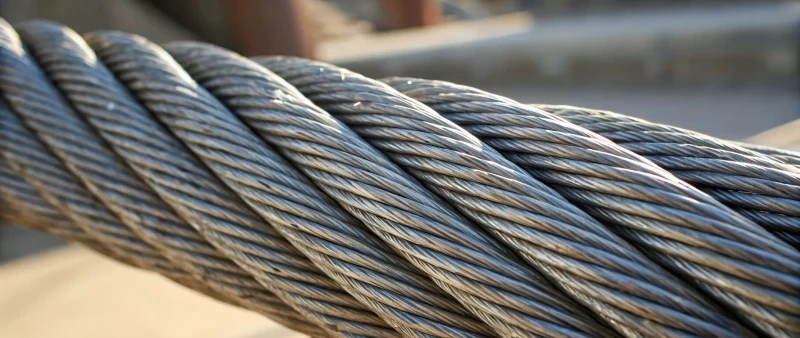
For wire rope, nominal wire tensile-strength grade is one input to strength. Diameter, construction, core, metallic area, lay, and terminations also influence the minimum breaking force and operating behaviour. A rope table may therefore show an MPa grade beside a kN minimum breaking force; they are related, but they are not the same value. The dedicated guide to wire rope tensile strength covers those rope-specific relationships in detail.
Chain

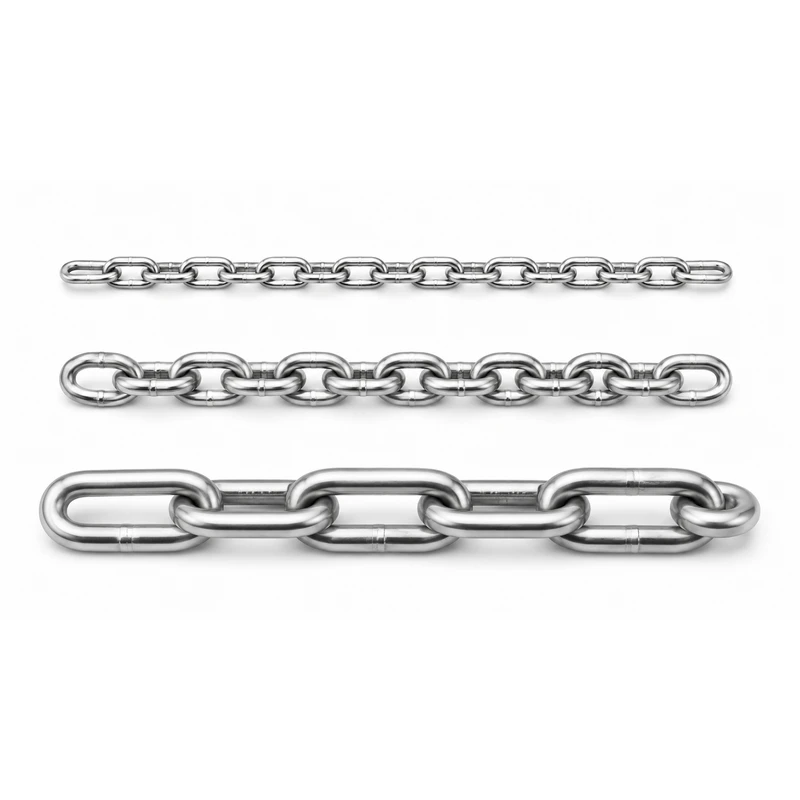
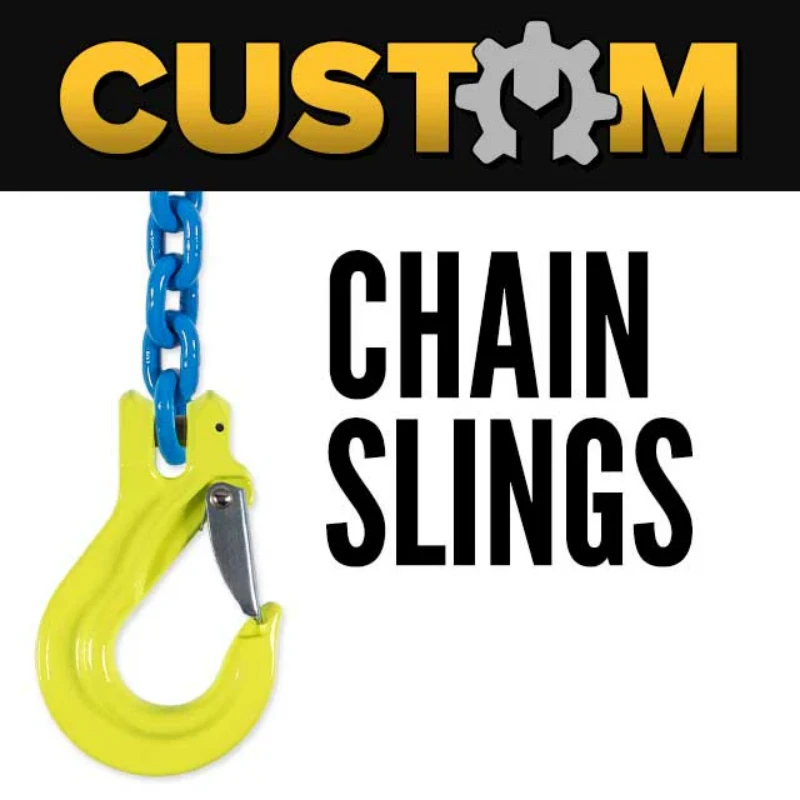
For lifting chain and chain sling components, grade and nominal size help identify a product system, but the complete assembly must still be rated for its actual hitch and angle. Catalogues commonly separate WLL, proof or manufacturing proof force, and minimum breaking force. Select from the stated assembly WLL rather than dividing a breaking figure by a guessed factor. Explore the Chains product category for available product families.
Hooks, Shackles, Links, and Other Hardware
Hooks, shackles, links, eye bolts, and turnbuckles have geometry-specific load paths. Opening size, pin diameter, thread form, load direction, side loading, and connection compatibility can matter as much as the base material. Use the marked or documented product rating and the manufacturer’s restrictions.
The Hardware Accessories category provides the relevant product path without turning this definition page into a hardware catalogue.
How Tensile Strength Appears in Wire Rope & Chain Specifications?
Reading a Wire Rope Specification

A wire rope specification may include nominal diameter, construction, core, finish, lay, nominal tensile-strength grade, and minimum breaking force. Read those fields together. The grade in MPa describes the strength class of the wire; the minimum breaking force in kN applies to the stated rope construction and diameter. Changing diameter, construction, or core can change the breaking force even when the nominal tensile-strength grade stays the same.
Do not copy a breaking-force value from a different construction simply because the diameter matches. Confirm the exact table row and any notes. If you are comparing the underlying material rather than the rope, use the separate guide to the tensile strength of steel. For available constructions and product data, visit the Steel Wire Rope category.
Reading a Chain or Rigging-Hardware Specification
A chain or hardware table may list nominal size, grade, dimensions, WLL, proof load, and breaking load or minimum breaking force. Here, the WLL is the normal selection value for the specified item and conditions. Proof and breaking values serve different verification or performance purposes; they are not alternative working capacities.
For an assembly, confirm that the master link, chain legs, shortening devices, connectors, hooks, and lifting points form a compatible system. Then confirm the assembly rating for the intended hitch, leg count, and angle. A component table cannot by itself establish the capacity of a complete sling in every configuration.
Selection rule: Never convert an MPa tensile-strength value directly into a lift capacity. Use the manufacturer’s stated WLL or rated capacity for the exact product, configuration, and service conditions.
How to Read a Strength Specification?
Start with the Units
First decide whether the document reports stress, force, or mass. MPa, N/mm², psi, and ksi are stress units. N, kN, and lbf are force units. Kilograms, tonnes, and pounds are mass units unless the document clearly uses force notation or a locally defined rating convention. Do not treat equal-looking numbers with different units as comparable.
Confirm What the Number Describes
Ask whether the value belongs to a raw material coupon, an individual wire, a rope, a chain link, a separate fitting, or a complete assembly. Then check the grade, diameter, construction, heat treatment, finish, and test basis. A number without its product identity and test context is incomplete.
Use This Five-Step Check
- Identify the exact term: UTS, yield strength, breaking load/MBL, proof load, WLL, or rated capacity.
- Check the units and convert only like quantities—stress to stress, force to force, or mass to mass.
- Match the value to the exact product size, grade, construction, and configuration.
- Read footnotes for angle, hitch, temperature, finish, termination, or other reductions and restrictions.
- Use the WLL or rated capacity and the manufacturer’s instructions for selection; obtain clarification if the data sheet is ambiguous.
How Is Tensile Strength Measured?
In a material tensile test, a prepared specimen is gripped in a testing machine and pulled at a controlled rate. The machine records force while extension is measured. Dividing force by the specimen’s original cross-sectional area produces engineering stress; dividing extension by the original gauge length produces engineering strain. The peak engineering stress is reported as ultimate tensile strength. The same test can also provide yield strength and elongation when the method calls for them.
A destructive breaking test on a finished rope, chain, or component answers a different question: what force caused that specimen to fail under the specified setup? A proof test is different again because it applies a defined load without intentionally breaking the item. Always read the applicable product standard or manufacturer’s procedure before comparing results from different tests.
What Buyers Should Check?
If you are preparing an enquiry or comparing lifting products, start with the application rather than a target tensile-strength number. Provide enough information for the supplier to identify the exact product and rating basis.
- Maximum gross load, including below-the-hook rigging and any attachments.
- How the load is applied: vertical lift, hitch, number of legs, sling angle, side load, shock, or cyclic loading.
- Required product type, size, grade, rope construction, core, fittings, and connection dimensions.
- Operating environment, including temperature, corrosion, chemicals, abrasion, crushing, and outdoor or marine exposure.
- The required WLL or rated capacity for the exact configuration, plus any applicable standard or site rule.
- Identification, inspection information, certificates, reports, or traceability documents that your project actually requires.
- Manufacturer confirmation of compatibility, rating, restrictions, and any deviations from the enquiry.
This approach keeps tensile strength in its proper role: a useful material property within a larger product-selection decision. It also avoids assuming that two products with similar material grades have the same working capacity.
FAQ
What is tensile strength in simple terms?
Tensile strength is the highest tensile stress a material reaches while it is being pulled. It is normally measured in MPa or psi and is usually used as another name for ultimate tensile strength.
Is tensile strength the same as breaking strength?
No. Tensile strength is a stress value based on force divided by original area. Breaking strength or breaking load may refer to the force at which a specimen or finished item fails. The exact terminology depends on the product and test method, so check both the definition and units.
Is higher tensile strength always better?
Not by itself. Higher tensile strength may support a strength requirement, but stiffness, ductility, toughness, fatigue, bend performance, corrosion resistance, construction, and compatibility can also control product performance. The best choice is the product rated for the actual application.
Can tensile strength be used as a working load limit?
No. Tensile strength is not a WLL. A WLL is assigned to a specific product for stated conditions and accounts for more than the raw material’s UTS. Use the manufacturer’s stated WLL or rated capacity and follow all configuration limits.
Why are wire rope grades shown in MPa but breaking force in kN?
The MPa value describes nominal tensile-strength grade, which is a stress. The kN value describes minimum breaking force for a stated rope diameter and construction. The rope’s metallic area and construction connect the two, but they are not interchangeable units.
What information should I provide when requesting lifting products?
Provide the load, loading method, geometry, product type, dimensions, service environment, required WLL or rated capacity, applicable standard, and documentation needs. Ask the supplier to confirm the exact rating and restrictions rather than requesting only “high tensile strength.”
Conclusion
Tensile strength tells you the maximum tensile stress a material reaches in a pull test. It helps explain the material behind wire rope, chain, and rigging hardware, but it does not replace breaking-load data, proof-load requirements, or a product-specific WLL. When you compare specifications, identify the term, units, product, configuration, and service conditions before making a selection.
Powerful Machinery supplies product families across steel wire rope, chains, and rigging hardware. Share your load, configuration, environment, and documentation requirements through the contact page so the enquiry can be matched to the appropriate product data.