Swivel hooks let you lift, secure, and rotate loads safely without twisting your gear. Picking the right one keeps your team and equipment safe, especially in busy places like construction or marine sites. Powerful Machinery stands out as a trusted source for certified swivel hooks built for tough jobs.
You’ll find these hooks in everything from mining to logistics, where strict safety standards matter. Knowing the types of swivel hooks helps you match the right hook to your project, boosting both safety and efficiency.
Key Takeaways
Swivel hooks allow for 360-degree rotation, preventing twisting and tangling of ropes or chains during lifting.
Choosing the right swivel hook enhances safety and efficiency, reducing wear on equipment and lowering accident risks.
Different types of swivel hooks, like barrel, ball bearing, and snap swivels, serve specific purposes and environments.
Regular inspection and maintenance of swivel hooks are crucial for safety; check for wear, rust, and proper function frequently.
Powerful Machinery offers customizable swivel hooks that meet strict safety standards, ensuring reliability for tough jobs.
Swivel Hook Overview
What Are Swivel Hooks?
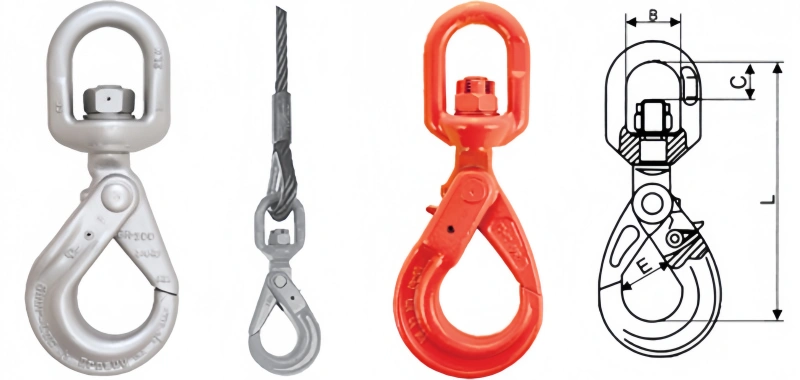
You might see swivel hooks in action on construction sites, shipyards, or warehouses. These hooks let you lift and rotate heavy loads without twisting your chains or ropes. The secret is in their design.
Swivel hooks have a rotating connection that allows for smooth 360-degree movement, even when carrying a full load. This means you can align your cargo easily and avoid dangerous tangles.
Let’s break down how swivel hooks work and why they matter in tough jobs:
Function/Principle | Description |
|---|---|
Reduced Twisting | Ball-bearing swivels allow 360° rotation, preventing torsion during lifting. |
Load Stability | Enables smooth load rotation without tangling, improving control. |
Extended Equipment Life | Minimizes wear on components by distributing rotational forces evenly. |
Safety Enhancement | Prevents jerks or snaps from twisted lines, crucial for overhead lifting. |
Swivel hooks stand out from other hooks you might use. Here’s a quick look at the differences:
Hook Type | Design Features | Installation and Use Impact |
|---|---|---|
Clevis Hooks | U-shaped attachment point with a pin for quick connections. | Great for jobs where you need to change hooks quickly. |
Eye Hooks | Closed loop for a permanent connection. | Offers better movement and positioning, but you must replace the whole sling if damaged. |
Swivel Hooks | Rotates to prevent twisting, useful in tight spaces. | Helps align loads and reduces wear on your equipment. |
Why the Right Swivel Hook Matters?
Choosing the right swivel hook can make your project safer and more efficient. When you pick the right hook, you get:
360-degree rotation that stops twisting and tangling during lifting.
Smooth movement that gives you better control over heavy loads.
Less stress on your rigging gear, which means your equipment lasts longer.
You also lower the risk of accidents. A good swivel hook keeps your team safe by preventing sudden jerks or snaps from twisted lines. You’ll notice your workflow improves, and you might even cut down on costs because your gear doesn’t wear out as fast.
When you understand the types of swivel hooks, you can match the right one to your job. This helps you work smarter, not harder, and keeps your lifting operations running smoothly.
Types of Swivel Hooks
You have a lot of choices when it comes to the types of swivel hooks. Each one has its own strengths and fits different jobs. Let’s break down the most common types so you can pick the right hook for your project.
Barrel Swivel Hooks
Barrel swivels are the classic choice for preventing line twist. You’ll see them everywhere—from fishing to heavy lifting in factories. These hooks use a barrel-shaped body that rotates smoothly, keeping your cables and ropes straight. You can count on barrel swivels for seamless movement and less mechanical stress.
Here’s a quick look at their features:
Feature | Description |
|---|---|
Materials | High-end models use corrosion-resistant coatings like nickel plating or marine-grade stainless steel. |
Design | Precision-engineered for seamless rotational movement, preventing line twist and reducing mechanical stress. |
Load Capacity | Available in various sizes, with ratings from micro swivels for finesse fishing to heavy-duty models capable of handling several tons. |
Applications | Used in fishing, marine operations, industrial rigging, and aerospace applications. |
Functionality | Enables continuous rotation between connected elements without causing torsional stress. |
You’ll find barrel swivels in many industries. Check out where they shine:
Industry | Use Case |
|---|---|
Cranes and Hoists | Used for lifting heavy loads in factories and job sites, ensuring safety and efficiency. |
Marine and Rigging | Essential for rigging systems, preventing torsion in ropes/chains in dynamic marine environments. |
Towing and Recovery | Maintains cable alignment during vehicle recovery, ensuring strength and integrity of cables. |
Warehouse and Logistics | Enhances efficiency in moving goods with overhead cranes and automated systems. |
Furniture and Engineering | Provides aesthetic appeal and functional articulation in high-end furniture and installations. |
Barrel swivels are reliable and versatile. You can use them for everything from fishing lines to crane cables. If you need a hook that keeps your gear from twisting, barrel swivels are a solid pick.
Ball Bearing Swivel Hooks
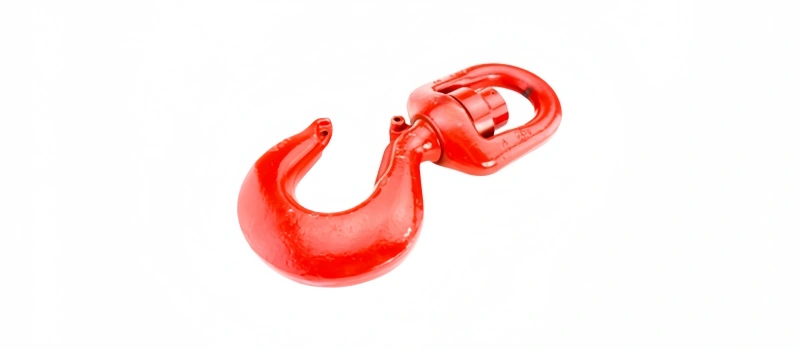
Ball bearing swivels take things up a notch. You get smooth rotation even under heavy loads. These hooks use internal ball bearings to cut down friction, so you can lift and move big objects without worrying about binding or seizing.
Let’s compare ball bearing swivels to other types:
Advantage | Ball Bearing Swivels | Other Swivel Hooks |
|---|---|---|
Reduced Friction | Yes | No |
Higher Load Capacity | Yes | Limited |
Durability | Longer lifespan with maintenance | Wears out quicker under heavy loads |
Consistent Performance | Reliable rotation after extended use | May seize or bind over time |
You’ll notice ball bearing swivels last longer and handle bigger jobs. If you work in marine environments, you need to keep these hooks clean and lubricated. Here’s what you should do:
Maintenance Task | Description |
|---|---|
Cleaning | Regularly clean to prevent dirt buildup using a brush or compressed air. |
Lubrication | Lubricate bearings with suitable oil, like WD-40; frequency depends on usage and environment. |
Regular Inspections | Inspect for wear, pitting, or bearing failure; replace if compromised. |
Material Selection | Use corrosion-resistant materials like marine-grade stainless steel or anodized aluminum. |
Sealed Bearings | Opt for sealed bearings to prevent water ingress. |
Grease Fittings | Look for grease fittings for easier maintenance. |
Corrosion Prevention | Regular maintenance helps prevent corrosion and ensures smooth operation. |
Ball bearing swivels are perfect for jobs where you need reliable rotation and high strength. You’ll see them in offshore rigs, cranes, and anywhere you need to lift heavy loads without twisting.
Snap Swivel Hooks
Snap swivel hooks are all about speed and convenience. You can attach or release them in seconds. These hooks are great for setups where you need to switch gears fast, like fishing or light rigging.
Here’s why snap swivel hooks stand out:
Strongest connection type (no weak snap)
Eliminates potential snag points
Superior line twist reduction
Ideal for light line and sensitive setups
You can choose snap swivel hooks for different jobs. Take a look at their load limits:
Type of Snap Hook | Material | Working Load Limit (WLL) | Common Applications |
|---|---|---|---|
Light-Duty | Aluminum, Brass | 50–200 lbs (22–90 kg) | Camping, light towing, decorative rigging |
Heavy-Duty | Stainless Steel, Forged Steel | 500–1,500 lbs (225–680 kg) | Marine rigging, construction, safety lines |
Industrial Grade | High-Tensile Steel | 2,000–5,000+ lbs (900–2,270+ kg) | Crane rigging, heavy lifting, and industrial safety |
Snap swivel hooks give you quick-release action and strong connections. You can use them for everything from fishing to industrial safety lines.
Three-Way Swivel Hooks
Three-way swivel hooks are built for complex rigging. You can connect multiple lines and rotate them without tangling. These hooks use tough materials and smart designs to handle big loads.
Check out their features:
Feature | Description |
|---|---|
Durable Materials | Constructed from high-strength materials like stainless steel, alloy steel, or forged steel for exceptional tensile strength and resistance to deformation. |
Swiveling Capability | Allows 360-degree rotation, minimizing twisting forces on slings and enhancing safety during dynamic lifting. |
Heavy Load Bearing | Engineered to support substantial weight capacities, often rated from several tons to over 50 tons. |
Safety Latch Mechanism | Equipped with a spring-loaded latch to prevent accidental disengagement of loads during lifting. |
You can use three-way swivel hooks for lifting, towing, or any job where you need to keep multiple lines moving smoothly. They make complex rigging safer and easier.
Crane Swivel Hooks
Crane swivel hooks are the heavy hitters among swivel hooks. You’ll see them on construction sites and in factories. These hooks meet strict safety standards and help you lift massive loads without twisting cables.
Here’s what you need to know about their certifications:
Standard | Requirement |
|---|---|
OSHA 1926 | Compliance required |
ASME B30.10 | Compliance required |
Crane swivel hooks give you better maneuverability and keep your cables safe. Take a look at their safety benefits:
Safety Benefit | Explanation |
|---|---|
Improved maneuverability | Leads to fewer delays and reduced risk of on-site accidents. |
Reduces strain on crane cables | Enhances the longevity of equipment and prevents failures. |
Prevents cable twisting | Minimizes the risk of accidents during lifts on rolling decks. |
You can trust crane swivel hooks for big jobs. They help you move heavy loads safely and keep your equipment in good shape.
Specialized Swivel Hooks
Some jobs need special hooks. Specialized swivel hooks are designed for unique tasks and tough environments. You’ll find them in oil rigs, rescue operations, and heavy equipment installations.
Here are some examples:
Oil & Gas Rig Operations: Used to handle drill pipes and heavy equipment, preventing cable twisting and enhancing safety.
Emergency and Rescue Operations: Helps lift and maneuver injured persons or debris, ensuring better control and reducing strain.
Heavy Equipment Installation: Facilitates smooth rotation during the lifting of large machinery, improving installation efficiency.
Shipping and Cargo Handling: Secures containers and cargo, minimizing damage risk and improving stacking efficiency.
Manufacturing of Large Components: Assists in assembly by allowing orientation adjustments for precise fitting.
Specialized swivel hooks help you tackle unique challenges. You can rely on them for safety and efficiency in demanding industries.
You have many options when it comes to the types of swivel hooks. Barrel swivels, ball bearing swivels, snap swivels, three-way swivels, crane swivels, and specialized swivels all serve different purposes. You can match the right hook to your project and keep your team safe.
Powerful Machinery Swivel Hook Features

360° Rotation and Load Alignment
You want your lifting operations to run smoothly and safely. Powerful Machinery swivel hooks give you true 360° rotation, so your load always lines up with the direction you need. This feature lets the hook move freely, which means your slings, cables, or chains won’t twist or tangle.
You’ll notice less wear on your gear and fewer headaches on the job. When loads shift or move, the swivel keeps everything aligned, reducing the risk of equipment failure and making your work safer.
Tip: 360° rotation is especially helpful when you’re working in tight spaces or handling awkward loads. It keeps your rigging equipment in top shape and helps prevent accidents.
High-Grade Alloy Steel Construction
You need hooks that can handle tough jobs. Powerful Machinery uses high-grade alloy steel for every swivel hook. This material gives you exceptional strength and durability, even when you’re lifting heavy loads day after day.
The steel resists fatigue, so it stands up to repeated use without failing. You also get peace of mind knowing these hooks meet strict safety standards.
Benefit | What It Means for You |
|---|---|
Exceptional strength | Handles heavy lifting without bending or breaking |
Fatigue resistance | Lasts longer, even with repeated use |
Durability | Stays reliable in harsh environments |
Safety compliance | Meets OSHA and ASME standards |
Safety Latch and Bearing-Assisted Design
Safety always comes first. Every Powerful Machinery swivel hook includes a safety latch that locks your sling or chain in place. This latch keeps your load secure, so you don’t have to worry about accidental drops.
The bearing-assisted design means the hook rotates smoothly, even under heavy loads or sudden stops. You get more control and confidence during every lift.
Feature | How It Helps You |
|---|---|
Safety latch | Prevents accidental release of your load |
Bearing-assisted swivel | Smooth rotation, less effort, more control |
Secure connection | Keeps everything locked in, even if things get bumpy |
Customization and Certification
Every project is different. Powerful Machinery offers custom swivel hooks to fit your exact needs. You can choose the right size, connection type, and finish for your job.
Plus, these hooks come with certifications like ISO, ASME, CE, EN13001-3-5:2016, and ANSI. These certifications help you meet industry regulations and give you confidence that your equipment is up to the task.
Note: Custom options and certifications make it easy to stay compliant, especially if you work in regulated industries like construction or marine.
Pros, Cons, and Best Uses
Barrel Swivel Hook Applications
You might reach for barrel swivel hooks when you want something simple and affordable. These hooks work well for light-duty jobs, like basic rigging or fishing. They spin easily and help keep your lines from twisting. If you need a hook for heavy lifting, though, you may want to look at other options.
Barrel swivels can lock up under strain or corrode in saltwater.
Pros | Cons |
|---|---|
Effective for light-duty use | Poor performance under heavy load |
Inexpensive and widely available | Susceptible to corrosion in saltwater |
Simple design for basic tasks | Friction can cause locking under strain |
You’ll find these hooks in toolboxes everywhere, but they shine most in simple, dry environments.
Ball Bearing Swivel Hook Applications
Ball bearing swivel hooks really stand out when you need smooth rotation under tough conditions. You’ll see them on offshore cranes, especially where wind and waves keep loads moving.
They handle long lifts and odd-shaped cargo with ease. If you need to control the way a load turns, ball bearing swivels give you that precision.
Offshore crane operations with constant load rotation
Lifting uneven or asymmetrical loads
Long-span lifts where rotation matters
Multi-point lifts with spreader bars
Precision placement jobs
You can count on these hooks for reliability and control in demanding environments.
Snap Swivel Hook Applications
Snap swivel hooks make your life easier when you need to switch gears fast. You can use them for fishing, camping, or light rigging. They let you attach and release lines in seconds. If you work with safety lines or need to change connections often, snap swivels save you time. They work best for lighter loads and quick setups.
Three-Way Swivel Hook Applications
When you need to connect more than two lines, 3-way swivels are your go-to. You can use them for complex rigging, like lifting with multiple slings or spreading loads. These hooks help you keep everything untangled and moving smoothly.
You’ll see 3-way swivels in construction, marine, and rescue work where you need flexibility and safety.
Crane Swivel Hook Applications
Crane swivels are built for the big jobs. You’ll find them on construction sites, shipyards, and factories. They let you lift heavy loads without twisting cables. Crane swivels meet strict safety standards, so you can trust them for critical lifts.
You get better control, less wear on your gear, and safer operations. If you handle large machinery or cargo, crane swivels are a must-have.
Tip: Always check the certification on your crane swivels before starting live lifts.
Specialized Swivel Hook Applications
Specialized swivel hooks solve unique problems. You might use them on oil rigs, in rescue operations, or for installing heavy equipment. These hooks handle tough environments and special tasks. If your project has unusual demands, a specialized swivel hook can give you the safety and performance you need.
Choose the Right Swivel for Your Project
Assessing Load and Safety Requirements
You want your lifting job to go smoothly and safely. Start by looking at these key factors:
Load characteristics: Know the weight, shape, and balance of your load.
Working load limits (WLL): Always check the hook’s WLL and never exceed it.
Environmental conditions: Think about where you’ll use the hook—indoors, outdoors, or near water.
Safety standards: Make sure your hook meets industry rules and has safety features like latches.
Here’s a quick checklist to help you choose the right swivel:
Check the WLL for your application.
Train your team on proper hook use.
Test the hook with a proof load before regular use.
Inspect and maintain hooks often.
Use custom attachments if your lift needs extra safety.
Tip: Regular inspections and training keep your team safe and your gear in top shape.
Considering Environment and Material
The place you work affects your hook choice. For marine jobs, pick stainless steel because it fights off rust and handles saltwater. For indoor or light-duty work, zinc-coated steel works well. Extreme temperatures or lots of dust can also change how your hook performs, so match the material to your environment.
Material | Best For |
|---|---|
Stainless Steel | Marine, offshore, humid places |
Zinc-Coated Steel | Indoor, dry, light-duty jobs |
Matching Swivel Hook Type to Application
You need the right hook for your project. Use this table to match your needs:
Selection Factor | Recommended Option | When to Use | Avoid If |
|---|---|---|---|
Load Type | Double Swivel Hook | Heavy, uneven, or rotating loads | Light, static loads |
Environment | Galvanized Alloy Steel | Outdoor, marine, or humid conditions | Indoor, dry environments |
Attachment Speed | Clevis Swivel Hook | Fast rigging changes | Permanent setups |
Rotation Control | Eye Swivel Hook | Precise load positioning | High-torque or twisting loads |
If you need something special, Powerful Machinery offers custom swivel hooks and full certifications. You can always choose the right swivel for your project, no matter how tough the job.
Maintenance and Safety Tips
Inspection and Cleaning
You want your swivel hooks to last and keep your team safe. Start with regular inspections. Look for dirt, rust, or anything that might block the swivel action. Use a clean rag to wipe away dust and grime.
For tough spots, a soft brush works well. If you see any buildup, clean it off right away. You can use mild soap and water for most hooks. Dry them completely before you put them back to work.
Tip: Make inspection part of your daily routine. A quick check can catch problems before they get serious.
Lubrication and Storage
Swivel hooks need smooth movement. Lubricate the moving parts with a light machine oil. Focus on the swivel joint and latch. Don’t use too much oil—just enough to keep things moving without sticking. Wipe off any extra oil to avoid attracting dust.
When you finish for the day, store your hooks in a dry place. Hang them up or keep them in a toolbox. Avoid leaving them outside or in damp areas. Good storage keeps rust and corrosion away.
Task | How Often | What to Use |
|---|---|---|
Lubrication | Monthly or as needed | Light machine oil |
Cleaning | After each use | Rag, soft brush |
Storage | Daily | Dry, clean area |
Recognizing Wear and Replacement Needs
You need to know when it’s time to replace a swivel hook. Watch for these common signs:
Material loss or rust, especially if you see more than 10% worn away at stress points.
Bending, stretching, or cracks in the hook or swivel.
Markings that you can’t read, like load limits or manufacturer info.
Broken or missing parts that affect how the hook works.
Swivel action that feels stiff, stuck, or wobbly.
If you spot any of these issues, take the hook out of service right away. Don’t risk safety. Replace damaged hooks to keep your lifting operations running smoothly.
Remember: A safe hook means a safe job. Regular checks and quick action help you avoid accidents and downtime.
Conclusion
Choosing the right swivel hook keeps your team safe and your project running smoothly. When you know the different types, you can match the perfect hook to your job. Powerful Machinery stands behind every certified swivel hook with a focus on quality and safety.
Need help picking the best swivel hook? Reach out to our experts for custom solutions.
Ready to get started? Visit Powerful Machinery’s website for more info or to request a quote!
FAQ
What is a swivel hook, and how does it work?
A swivel hook lets you lift or secure loads without twisting your gear. The hook rotates 360°, so your chain or rope stays straight. You get smooth movement and less risk of tangles.
How do you choose the right swivel hook size?
You need to check your load weight and the working load limit (WLL) on the hook. Pick a size that matches or exceeds your heaviest lift. If you’re unsure, ask an expert for help.
Can you use swivel hooks outdoors or in marine environments?
Yes, you can! For outdoor or marine jobs, choose stainless steel or corrosion-resistant hooks. These materials handle moisture and saltwater. You get a longer life and safer lifts.
How often should you inspect or replace a swivel hook?
Check your hooks before every use. Look for rust, cracks, or stiff movement. If you see damage or the hook feels rough, replace it right away. Regular checks keep you safe.