You may wonder which option offers greater reliability in your operation—chain or cable. Recent industry tests show a Chain-Vey chain reached a breaking strength of 18,049 lb, while the top cable conveyor broke at 4,723 lb, making the chain 3.8 times stronger.
However, chain vs cable strength depends on your application, environment, and safety requirements. Powerful Machinery delivers certified, high-performance solutions for every industrial challenge. Consider your unique needs as you explore your best choice.
Key Takeaways
Chains are significantly stronger than cables, with a breaking strength of up to 18,049 lb compared to cables at 4,723 lb. Choose chains for heavy-duty lifting.
Consider the specific application and environment when selecting between chains and cables. Chains excel in rugged conditions, while cables offer flexibility.
Always check the working load limit and breaking strength before using lifting equipment. This ensures safety and prevents accidents.
Select the right chain grade and material for your needs. Higher grades provide better performance and safety in demanding environments.
Regularly inspect chains and cables for wear and corrosion. Early detection of issues can prevent accidents and extend the lifespan of your equipment.
Chain vs Cable Strength Overview
Breaking Strength Comparison
When you compare chain vs cable strength, you see clear differences in how each performs under heavy loads. Chains and cables both play vital roles in industrial lifting, but their breaking strengths and working load limits set them apart. You need to understand these numbers to make the right choice for your operation.
Here is a table that shows typical breaking strength values for chains and cables used in industrial applications:
Sling Type | Working Load Limit (WLL) | Breaking Strength | Design Factor |
|---|---|---|---|
Wire Rope | 10,000 lb | ~50,000 lb | 5:1 |
Chain | 10,000 lb | ~40,000 lb | 4:1 |
You can see that both wire rope and chain can handle similar working loads, but wire rope often has a higher breaking strength due to its design factor. Chains, especially those from Powerful Machinery, offer consistent performance and reliability. The grade of the chain also matters. For example:
Chain Grade | Minimum Breaking Strength | Working Load Limit (WLL) |
|---|---|---|
Grade 80 | 8,000 lbs | 2,000 lbs |
Grade 100 | 10,000 lbs | 2,500 lbs |
You should always select the right grade and size for your application. Powerful Machinery provides chains that meet or exceed international standards, giving you confidence in every lift.
Tip: Always check the working load limit and breaking strength before using any lifting equipment. This ensures safety and prevents accidents.
Industrial Applications
You will find that chain vs cable strength becomes even more important when you look at real-world industrial applications. Each solution has unique advantages depending on the environment and task.
Chains excel in environments where you need ruggedness and easy inspection. You often use them in fire brigades, water utilities, and confined spaces. Chains resist water and fire damage, and you can quickly check them for wear.
Cables, especially wire ropes, perform well in applications that require flexibility and high breaking strength. You see them in wind turbine hoists, electric power utilities, and elevator shaft maintenance. Specialty cables handle extreme conditions, while armored cables add extra protection for harsh environments.
Here is a table that highlights where chains and cables work best:
Application Area | Recommended Solution | Key Considerations |
|---|---|---|
Wind Applications | Cable Hoists | Cables are essential for fall protection and lifting in wind turbine structures. |
Electric Power Utilities | Cable Solutions | Cables are wear-resistant and necessary for high-elevation work. |
Elevator Shaft Maintenance | Wire Ropes | Durable and can withstand welding damage; suitable for lifelines. |
Fire and Rescue Operations | Wire Ropes | Common for self-retracting lines, allowing controlled movement. |
Municipal Teams | Wire Rope Hoists | Must comply with OSHA regulations; vital for hoisting heavy equipment. |
Work in Confined Spaces | Manual Lever Chains | Provides extensive lifting capabilities in narrow spaces. |
Fire Brigades and Water Utilities | Chains | Rugged and resistant to water and fire damage; easy to inspect for wear. |
Mechanical durability is crucial for industrial cables, as it influences their strength and performance in different environments. Specialty and armored cables ensure safety and reliability in extreme conditions. Chains, on the other hand, offer unmatched toughness and are easy to maintain.
When you choose between chain and cable, always consider the specific demands of your application. Powerful Machinery’s expertise ensures you get the right solution for every scenario.
Powerful Machinery Chains—Features & Grades
Chain Materials and Grades
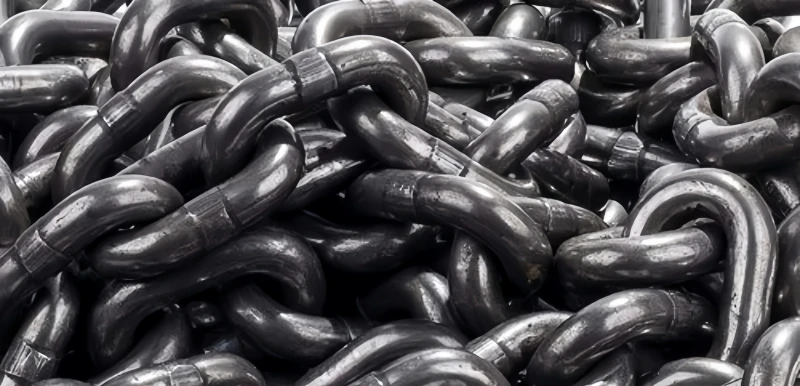
You need to select the right chain grade and material for your industrial application. Powerful Machinery offers a comprehensive range of chain grades, each designed for specific tasks and environments. The table below shows the mechanical properties and typical uses for each grade:
Chain Grade | Material | Working Load Limit | Typical Uses |
|---|---|---|---|
Grade 43 | Mild Steel | Not approved for overhead lifting | Agriculture, construction, trucking, container securement, logging, farming, towing, and marine applications |
Grade 80 | Alloy Steel | High working load limit, approved for overhead lifting | Lifting slings, hoists, rigging |
Grade 100 | Alloy Steel | Construction, manufacturing, heavy transport | |
Grade 120+ | High-strength alloy steel | 50% higher than Grade 80, 20% higher than Grade 100 | Rigorous and demanding overhead lifting |
You can choose between alloy steel and stainless steel chains. Alloy steel chains deliver improved strength and perform well in heavy-duty environments. Stainless steel chains provide exceptional corrosion resistance, making them ideal for marine, food processing, and medical industries.
Property/Aspect | Alloy Steel Chains | Stainless Steel Chains |
|---|---|---|
Strength | Improved strength, suitable for heavy-duty applications | Not as strong in high-stress environments |
Corrosion Resistance | Susceptible to corrosion without treatment | Exceptional corrosion resistance, ideal for moist environments |
Industrial Suitability | Used in automotive, construction, and heavy-duty industries | Common in marine, food processing, and medical industries |
Advantages | High wear resistance, heat resistance | Low maintenance, high durability |
Durability and Corrosion Resistance
You want your chains to last and perform reliably, even in harsh conditions. Powerful Machinery chains use high amounts of chromium and nickel in stainless steel types like 304 and 316.
These chains resist corrosion, acids, and saltwater, making them perfect for maritime, chemical, and food processing environments. Stainless steel chains maintain their structural integrity over time, so you can trust them in applications where rust is a concern.
Material: High chromium and nickel content
Feature: Highest resistance to corrosion, acids, and saltwater
Application: Maritime, chemical plants, food processing, and medical industries
Compliance with International Standards
You need assurance that your chains meet strict safety and quality requirements. Powerful Machinery chains comply with major international standards, which guarantee performance and reliability in industrial settings.
Standard | Description |
|---|---|
OSHA | Ensures compliance with safety regulations for lifting equipment |
ASME B30.9 | Requires proofloading of alloy lifting chain assemblies before initial use |
NACM | Specifies chain specifications and requirements for safe use |
ASTM | Sets standards for materials and performance of chains used in lifting |
Certifications such as UL, RoHS, and REACH confirm that Powerful Machinery chains have passed rigorous safety and quality tests. These certifications help prevent equipment failures and reduce maintenance costs. You can rely on certified chains to enhance operational efficiency and minimize risks in your facility.
Note: When you compare chain vs cable strength, always consider the grade, material, and certification of your chains to ensure maximum safety and performance.
Industrial Cables—Types & Performance
Cable Construction and Materials
You encounter a wide variety of industrial cables, each designed for specific tasks and environments. The construction and materials of these cables determine their performance and suitability for your application.
Power cables transmit electrical energy and use copper or aluminum conductors with robust insulation.
Control cables help you manage machinery and equipment efficiently.
Data cables support high-speed data transmission, which is essential for modern IIoT systems.
Signal cables carry low-voltage signals and require strong anti-interference properties.
Hybrid cables combine power and signal transmission, often used in advanced vehicles.
Bare cables, without insulation, serve in specialized safety environments.
Camera cables enable long-distance video surveillance.
Instrument cables transmit precise signals for monitoring.
Thermal cables withstand high temperatures.
Fiber optic cables excel in long-distance communication.
Coaxial cables handle video and radio frequency signals.
You often see steel, stainless steel, and galvanized steel as the main materials for industrial cables. Stainless steel resists corrosion, making it ideal for marine use. Galvanized steel, coated with zinc, offers higher breaking strength for demanding industrial settings. Vinyl coatings add extra protection and visibility.
Flexibility and Load Capacity
You must consider both flexibility and load capacity when selecting cables for industrial use. The choice of insulation and construction impacts how a cable performs under stress.
Material | Features | Impact on Flexibility and Load Capacity |
|---|---|---|
PVC | High mechanical firmness, good insulation, and flexibility | Reasonable flexibility at a low cost, suitable for many uses |
PUR | Microbe resistance, high abrasion resistance, and tensile strength | Good flexibility and durability under dynamic conditions |
PP | Excellent insulation, high strength, low density | Lighter and more flexible, reduces space and energy needs |
Cables twisted in layers have smaller diameters and are easy to strip. Cables twisted in bunches provide higher stability against torsion, which is important for complex machinery.
Cable Chain Systems in Industry
You rely on cable chain systems to protect and guide cables in dynamic industrial environments. These systems must withstand millions of cycles, high speeds, and harsh chemicals.
Metric | Specification |
|---|---|
Durability | Up to 10 million cycles |
Speed | Up to 5 m/s |
Acceleration | Up to 50 m/s² |
Path Length | Very lengthy paths |
Maintenance | Low requirements |
Enhanced insulation and jackets give you greater resistance to oils and coolants. Increased chemical resistance extends service life and reduces downtime. When you compare chain vs cable strength, you see that cable chain systems offer high performance for dynamic, Industry 4.0-ready applications.
Tip: Choose cable chain systems with advanced materials for reduced maintenance and longer service life in demanding environments.
Factors Affecting Strength & Longevity
Wear and Abrasion
You face significant challenges from wear and abrasion in industrial environments. Chains and cables both experience surface damage when they rub against machinery, concrete, or other materials. This friction can remove protective coatings and weaken the structure over time.
For cables, abrasion often damages the outer sheath, which can expose insulation and conductors. This exposure may lead to electrical faults and reduced performance.
High abrasion resistance helps maintain the integrity of both chains and cables, extending their service life and reducing maintenance costs. You should always inspect your equipment for visible signs of wear to prevent unexpected failures.
Tip: Regular inspections and proper handling can help you catch early signs of abrasion before they become serious problems.
Corrosion and Environment
Environmental factors play a major role in the longevity of chains and cables. You must consider temperature, pH, dissolved oxygen, and other elements that can accelerate corrosion. The table below shows how different conditions impact corrosion rates:
Environmental Factor | Impact on Corrosion Rates |
|---|---|
Temperature | Affects the rate of chemical reactions involved in corrosion. |
pH | Lower pH levels increase acidity, accelerating corrosion. |
Dissolved Oxygen Levels | Higher levels enhance the electrochemical reactions leading to corrosion. |
Total Dissolved Solids (TDS) | Increased TDS can lead to more aggressive corrosion conditions. |
Flow Rate | Influences the movement of corrosive agents and oxygen. |
Electrical Conductivity | Higher conductivity can accelerate corrosion processes. |
Oxygen Diffusion | Directly affects the cathodic reaction in corrosion. |
You should select materials like stainless steel or galvanized steel for harsh environments. These materials resist corrosion and maintain strength, even when exposed to moisture, chemicals, or saltwater.
Loading Conditions
Loading conditions directly affect the safety and lifespan of your chains and cables. The way you use your equipment—such as the type of terrain, frequency of use, and the amount of weight applied—can change how quickly it wears out. The table below compares how chains and cables respond to different loading scenarios:
Aspect | Chains | Cables |
|---|---|---|
Wear Rate in Rocky Terrain | 30% more wear due to heavier construction | Lower wear rate but less effective traction |
Performance in Abrasive Conditions | Double the wear rate compared to smoother surfaces | More durable but less traction |
Impact of Terrain Changes | Rigid design increases risk of fatigue | More adaptable but may stretch or deform |
Heat Buildup | Can lead to material fatigue | Less prone to heat issues |
Traction on Thin Snow | Better grip due to weight | Less effective in thin snow coverage |
You must also consider common failure modes. Environmental exposure, physical damage, poor installation, and over-bending can all shorten the lifespan of your equipment.
Good maintenance practices—such as regular inspections, proper handling, and adherence to load specifications—help you maximize the operational life of your chains and cables. When you evaluate chain vs cable strength, always factor in these real-world conditions to make the best choice for your application.
Choosing Between Chain and Cable
Key Decision Factors
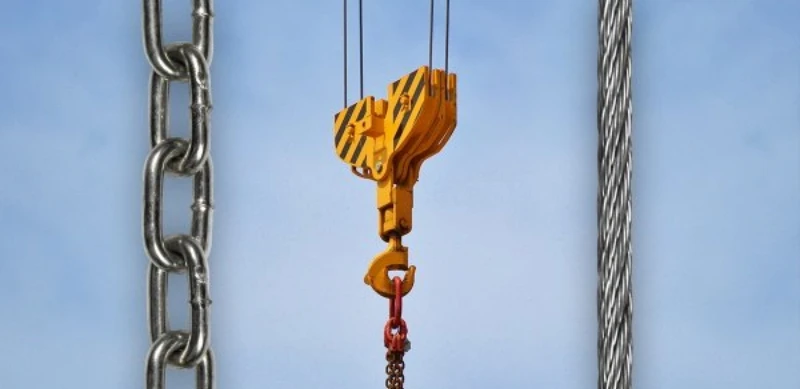
You face many choices when selecting between chain and cable for your industrial needs. You must consider several factors to ensure safety, efficiency, and long-term performance. The right decision depends on your application, the environment, and the specific demands of your operation.
Here is a table that outlines the main types of cable chains and their strengths:
Type of Cable Chain | Pros | Cons | Ideal Applications |
|---|---|---|---|
Plastic (Polymer) | Lightweight, corrosion-resistant, low noise | Lower load capacity may degrade under UV | Cleanroom environments, electronics assembly |
Steel | High tensile strength, excellent durability | Heavier, prone to rust, noisier | Construction equipment, cranes, outdoor setups |
Stainless Steel | Exceptional corrosion resistance | Higher cost, limited flexibility | Food processing, pharmaceuticals, marine use |
Hybrid | Balanced strength and weight | More complex to maintain | Specialized transport systems, hybrid machinery |
You should ask yourself these questions before making a choice:
What is the maximum load you need to lift or secure?
Will the equipment face harsh weather, chemicals, or moisture?
Do you need flexibility or rigidity in your lifting solution?
How important is ease of inspection and maintenance?
What are the safety standards for your industry?
You must match the chain or cable to your working load limit and breaking strength requirements. You also need to consider the frequency of use and the risk of abrasion or corrosion. When you compare chain vs cable strength, you see that each option has unique advantages for different scenarios.
Tip: Always review your project’s safety requirements and consult with a certified supplier before making a final decision.
When to Choose Powerful Machinery Chains?
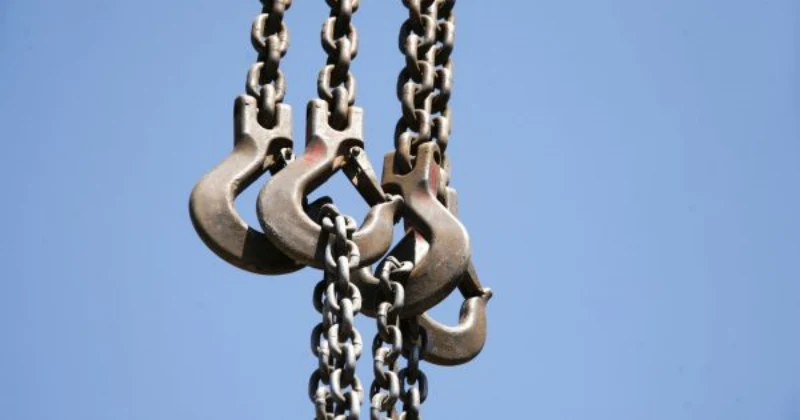
You should choose Powerful Machinery Chains when your operation demands maximum strength, reliability, and compliance with international standards. These chains excel in heavy-duty lifting, securing, and rigging tasks.
You benefit from a wide range of grades, including G43, G70, G80, and G100, each designed for specific load capacities and environments.
Select Powerful Machinery Chains if you need:
Overhead lifting in construction, manufacturing, or logistics
Securing heavy cargo during transport
Rigging solutions for cranes, hoists, or winches
Equipment that must withstand high temperatures or abrasive conditions
Products that meet or exceed standards like OSHA, ASME, and NACM
You gain peace of mind knowing that every chain is tested and certified. You can rely on alloy steel for strength or stainless steel for corrosion resistance. You also receive expert support and custom solutions tailored to your project.
Note: Powerful Machinery Chains offer easy inspection and maintenance, which helps you reduce downtime and improve safety.
When to Choose Industrial Cables?
You should choose industrial cables when your application requires flexibility, high breaking strength, or resistance to bending and twisting. Cables work well in dynamic environments where movement and vibration are common. You find them essential in wind turbine hoists, elevator shafts, and electric power utilities.
Choose industrial cables if you need:
Flexible lifting solutions for confined or complex spaces
High-performance wire ropes for elevators, cranes, or rescue operations
Corrosion-resistant options for marine or chemical environments
Specialty cables for data, signal, or power transmission
Cable chain systems for guiding and protecting cables in automated machinery
You can select from materials like galvanized steel, stainless steel, or advanced polymers. Each material offers unique benefits for specific environments. You also benefit from advanced insulation and coatings that extend service life and reduce maintenance.
Tip: Regularly inspect your cables for signs of wear, corrosion, or damage to ensure safe and reliable operation.
Chain vs Cable Strength—Summary
Key Differences Recap
You need to understand the main differences between chains and cables before you make a decision. The table below highlights how each option performs in industrial environments:
Feature | Chains | Wire Ropes |
|---|---|---|
Load Capacity | High load capacity, ideal for heavy-duty lifting | High load capacity, strength varies by diameter |
Flexibility and Movement | Limited flexibility, best for vertical lifts | More flexible, suitable for dynamic applications |
Durability | Excellent abrasion resistance, durable in harsh environments | Susceptible to wear, requires maintenance |
Corrosion Resistance | Available in corrosion-resistant materials | Can be galvanized but prone to internal corrosion |
Weight and Portability | Heavier, less portable | Lighter, easier to handle |
Cost | Higher upfront cost, longer lifespan | More affordable initially, may need frequent replacement |
Maintenance Requirements | Easier to inspect and maintain | Requires detailed inspections |
Common Applications | Industrial lifting, hoisting in tough environments | Cranes, pulleys, and marine applications |
You see that chains offer unmatched durability and are easy to inspect. Cables provide flexibility and lighter weight, which helps in dynamic or confined spaces. When you compare chain vs cable strength, you must consider your specific application, environment, and safety needs.
Selection Checklist
You can use this checklist to guide your decision:
Determine the maximum load you need to lift or secure.
Assess the environment for moisture, chemicals, or extreme temperatures.
Decide if you need flexibility for dynamic movement or rigidity for vertical lifting.
Check if easy inspection and maintenance are important for your operation.
Review industry safety standards and certifications required for your project.
Consider the total cost of ownership, including maintenance and replacement frequency.
Consult with a certified supplier for technical advice and custom solutions.
Tip: Always match your choice to your operational needs and safety requirements. This ensures reliable performance and reduces risk in your facility.
Conclusion
You have seen how chain vs cable strength, durability, and flexibility impact your industrial operations. Always review technical data and safety standards, such as proper cable routing, even weight distribution, and correct installation distances.
Choose certified, high-quality products from Powerful Machinery for reliable performance. If you need a custom solution, you can collaborate with experts who design tailored energy chains and cable systems for your unique requirements. Reach out for guidance that ensures safety and efficiency in every application.
FAQ
What factors should you consider when choosing between chain and cable?
You should evaluate load requirements, environmental conditions, flexibility needs, and safety standards. Always check certifications and consult technical data before making your decision.
How do you determine the correct chain grade for your application?
You must match the chain grade to your load and safety requirements. Grade 80 and Grade 100 chains work best for overhead lifting. Lower grades suit general securing or towing.
Can you use Powerful Machinery chains outdoors?
Yes. You can use alloy steel or stainless steel chains from Powerful Machinery outdoors. Stainless steel chains resist corrosion, making them ideal for marine or harsh environments.
How often should you inspect chains and cables?
You should inspect chains and cables before each use. Look for wear, corrosion, or damage. Regular checks help you prevent accidents and extend equipment life.