You will notice a distinct difference between clevis pins and cotter pins in how they secure machinery. Clevis pins support significant loads, while cotter pins lock connections and prevent accidental loosening. You rely on both in safety-critical environments such as marine and industrial settings.
Cotter pins and marine fasteners play a vital role in boat rigging and heavy equipment. Regular inspection ensures proper fit and helps you maintain safety. Powerful Machinery delivers certified solutions that meet strict industry standards.
Key Takeaways
Clevis pins serve as strong connectors for load-bearing applications, allowing movement and quick assembly.
Cotter pins act as locking devices, preventing clevis pins from loosening and ensuring safety in machinery.
Regular inspection and maintenance of clevis and cotter pins are crucial for safety and reliability in industrial and marine environments.
Choose the right size and material for clevis and cotter pins to match your specific application and environmental conditions.
Always replace cotter pins after removal to maintain their locking strength and ensure secure connections.
Clevis Pins and Cotter Pins Explained
What is a Clevis Pin?
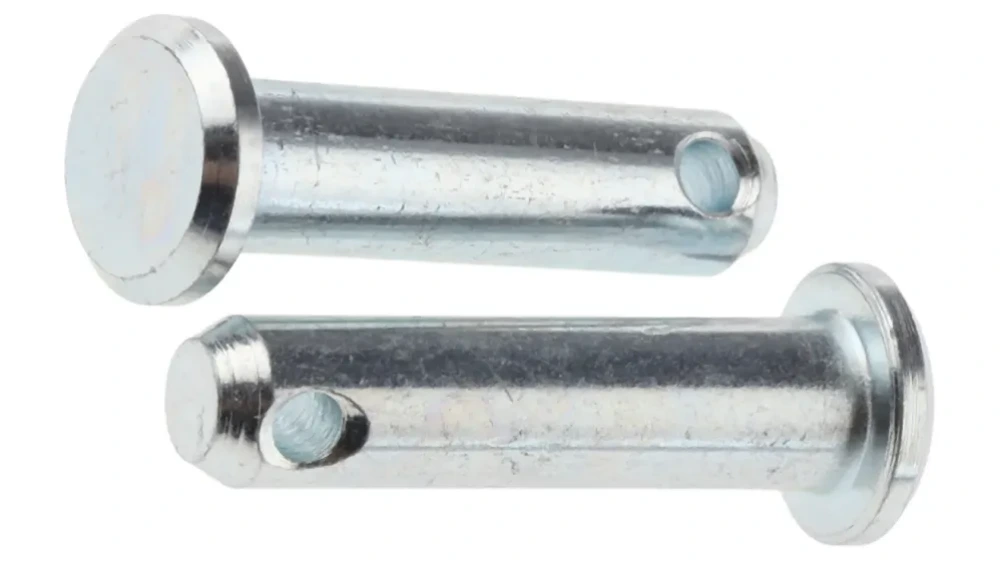
You encounter clevis pins in many industrial and marine applications. These fasteners feature a cylindrical body with a flat head on one end and a hole on the other. You insert the pin through aligned holes in two components, then secure it with a cotter pin or similar retainer.
Clevis pins provide a reliable pivot or connection point for moving parts. You see them in towing, construction, farming, factories, rigging, and aviation. Clevis pins support heavy loads and allow quick assembly and disassembly.
You select clevis pins based on material and size. Manufacturers use carbon steel for strength and stainless steel for corrosion resistance. You find standard SAE sizes and custom lengths available. The table below shows typical materials and dimensions:
Material Type | Dimensions (inches) | Notes |
|---|---|---|
Carbon Steel | Standard SAE sizes | Cold-formed for strength |
Stainless Steel | Various lengths | Available upon request |
1/4″ x 2 1/4″ | 1/4 (Diameter) x 2 1/4 (Length) | Plain Finish, 300 Series Stainless Steel |
You rely on clevis pins for secure connections in harsh environments. Extreme temperatures and high humidity can affect performance. In corrosive conditions, you choose corrosion-resistant materials or protective coatings. Cold weather makes metal brittle, so you avoid overloading.
What is a Cotter Pin?

You use cotter pins and marine fasteners to lock clevis pins and other hardware in place. According to engineering standards, a cotter pin is a pin or wedge that passes through a hole to securely fasten parts together. You bend the ends of the cotter pin after insertion, which prevents accidental loosening.
Cotter pins and marine fasteners play a vital role in securing shackles, hooks, and other rigging components.
You find cotter pins and marine fasteners in boat rigging, heavy equipment, and machinery. You select the right size and material to match your application. Stainless steel cotter pins and marine fasteners resist corrosion in saltwater environments.
You inspect cotter pins and marine fasteners regularly to maintain safety and reliability.
Key Differences
You notice several key differences between clevis pins and cotter pins, and marine fasteners. Clevis pins act as the main connector or pivot, while cotter pins and marine fasteners serve as locking devices. You use clevis pins to join components and allow movement.
You use cotter pins and marine fasteners to prevent the clevis pins from slipping out.
Tip: Always match the clevis pins and cotter pins, and marine fasteners to the load and environment. You avoid failure by choosing the correct size and material.
You encounter common failure modes in heavy machinery:
Improper sizing leads to premature failure.
Material choice affects strength and wear.
Lack of maintenance causes wear and potential failure.
You prevent these issues by inspecting clevis pins and cotter pins, and marine fasteners regularly. You lubricate moving parts and replace worn hardware. You select corrosion-resistant clevis pins and cotter pins, and marine fasteners for marine and outdoor use.
You see clevis pins in load-bearing connections, while cotter pins and marine fasteners provide safety by locking the assembly. You understand that both play essential roles in marine and industrial environments.
You ensure safety and reliability by choosing the right clevis pins and cotter pins, and marine fasteners for your application.
Clevis Pin vs Cotter Pin: Functions and Uses
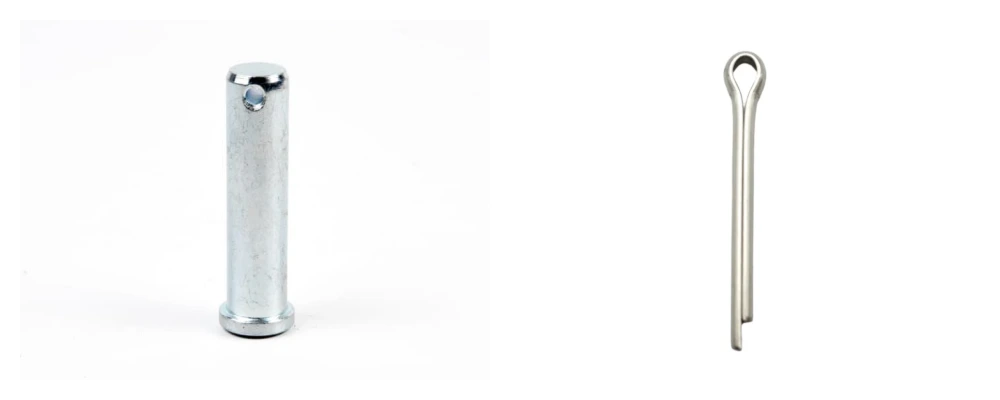
You encounter clevis pins and cotter pins in many Powerful Machinery products designed for marine and industrial environments. Each fastener plays a unique role in securing equipment and maintaining safety.
Clevis Pins in Powerful Machinery Products
Clevis pins provide a simple and cost-effective fastening solution. You use them to allow quick connections and disconnections, which is essential when you need to assemble or dismantle equipment rapidly. These pins offer versatility for various configurations with different fasteners.
You benefit from the freedom of movement they provide in temporary applications.
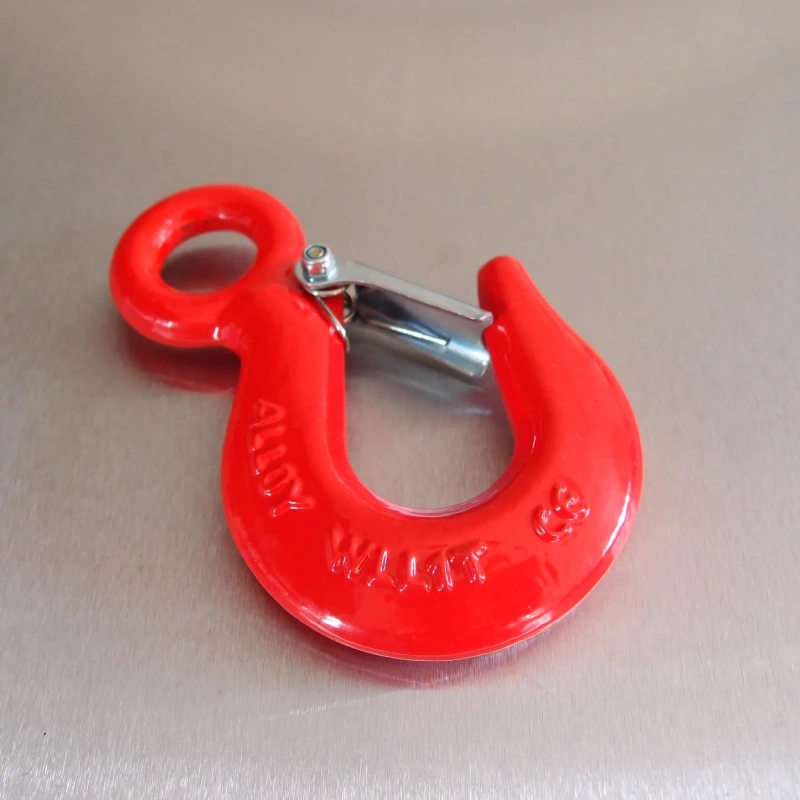
Clevis Grab Hook: You rely on clevis pins to secure the hook to the chain, ensuring a strong connection for load binding and cargo control.
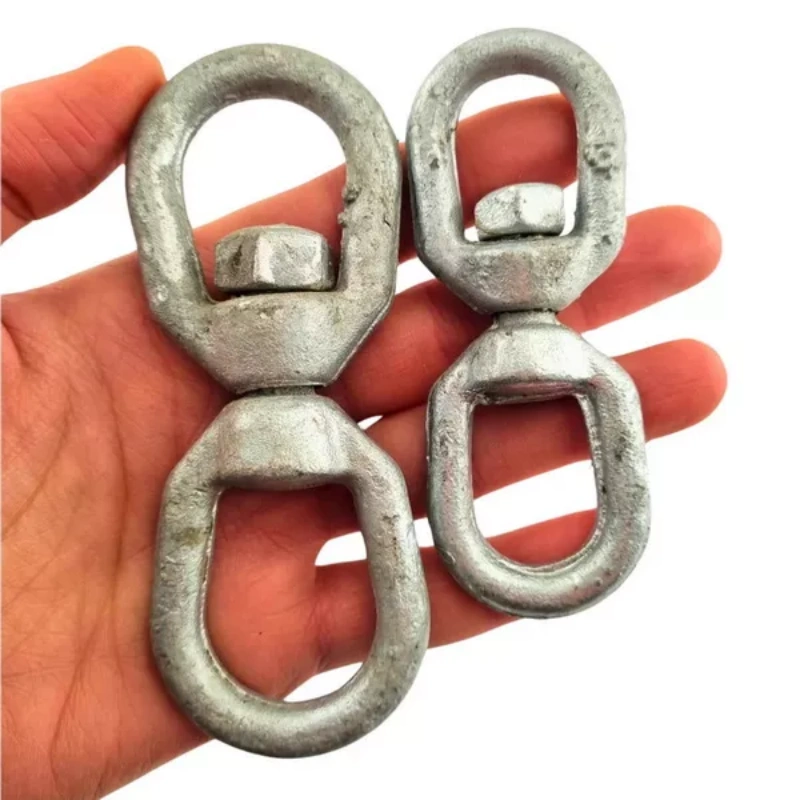
G209 Shackle: You use clevis pins to connect the shackle body and pin, allowing easy attachment and removal in rigging setups.
Clevis Slip Hooks: You depend on clevis pins for attaching the hook to chains, providing reliable load handling and quick release when needed.
Cotter Pins in Powerful Machinery Products
Cotter pins serve as locking devices that prevent accidental loosening of clevis pins and other fasteners. You find cotter pins in applications where safety and reliability are critical. When you install a cotter pin, you bend its ends to secure the connection.
You must select the correct size and material to match your application, especially in harsh environments.
Industry | Primary Functions of Cotter Pins |
|---|---|
Agriculture | Fastening elements in farming machinery, securing components in tractors, including steering and hydraulic systems. |
Marine | Securing clevis pins, turnbuckles, and components in marine engines and rigging systems. |
Military | Fastening components in weapons, vehicles, aircraft, and portable gear used in operational settings. |
Aerospace | Securing critical components like landing gear and control linkages in aircraft. |
Automotive | Used in suspension systems, steering linkages, and securing critical parts for vehicle safety. |
You see cotter pins used in Clevis Grab Hooks and Clevis Slip Hooks to lock the clevis pin in place. This prevents the pin from working loose during operation. You also find cotter pins in G209 Shackles, where they secure the screw pin and maintain the integrity of the lifting system.
Importance of Correct Pin Selection
You must choose the right type of fastener for each application. Clevis pins and cotter pins are essential for securing various components of a vessel, impacting overall safety and reliability. Proper sizing and material choice are critical.
For marine applications, you select stainless steel to prevent corrosion. Cotter pins must fit snugly to avoid failure, and clevis pins should fill the hole to prevent wear and potential failure.
You maintain the integrity of the lifting system by using the correct pin.
You avoid mixing pins from different manufacturers, as this can compromise safety.
ASME standards prohibit the use of round pin shackles for overhead lifting due to safety concerns.
Using the wrong type of pin can lead to equipment failure and serious safety hazards.
You only use the original manufacturer-supplied pin and never substitute pins from other shackles or components.
Note: Always inspect cotter pins and clevis pins before use. You check for signs of wear, corrosion, or deformation. You replace any damaged fastener immediately to maintain safety.
Regulatory Requirements for Pin Selection
You must follow strict regulatory requirements when selecting pins for safety-critical industries. The table below summarizes key clauses:
Clause | Description |
|---|---|
1910.147(c)(5)(i) | Employers must provide locks, tags, chains, and other hardware for isolating and securing machines from energy sources. |
1910.147(c)(5)(ii) | Lockout and tagout devices must be singularly identified and not used for other purposes. |
1910.147(c)(5)(ii)(A) | Devices must be durable and withstand environmental exposure. |
1910.147(c)(5)(ii)(B) | Devices must be standardized in color, shape, or size. |
1910.147(c)(5)(ii)(C) | Lockout devices must be substantial enough to prevent removal without excessive force. |
1910.147(c)(5)(ii)(D) | Devices must indicate the identity of the employee applying them. |
Practical Tips for Using Cotter Pins and Clevis Pins
You encounter several types of cotter pins, such as split pins, hairpin cotter pins, and spring cotter pins. You select the type based on the specific requirements of your equipment. When you install a cotter pin, you ensure it fits tightly and bends the ends securely.
You may need to remove a cotter pin during maintenance or replacement. You use pliers to straighten the ends and pull the pin out. In some cases, you remove a cotter pin with a specialized tool for tight spaces.
You find cotter pins and clevis pins in many Powerful Machinery products. You rely on these fasteners to maintain safety and reliability in marine and industrial environments. You understand that proper selection, installation, and inspection of cotter pins and clevis pins are essential for optimal performance.
Clevis Pin vs Cotter Pin Comparison Table
Features and Benefits
You need to understand the unique features and benefits of clevis pins and cotter pins before selecting the right fastener for your application. Clevis pins and cotter pins serve different purposes in machinery and rigging. Here is a quick overview:
Clevis Pins: You use these cylindrical pins with a capped head to allow axial movement and rotational freedom. Clevis pins handle high loads and work well in bicycles, agricultural machinery, and industrial equipment. You benefit from their strength and versatility.
Cotter Pins: You rely on these simple wire pins with two prongs to hold machine parts together and prevent loosening. Cotter pins provide a secure lock for clevis pins and other fasteners, ensuring safety in critical connections.
You see clevis pins and cotter pins in Powerful Machinery products such as Clevis Grab Hooks, G209 Shackles, and Clevis Slip Hooks. Each component is designed for durability and reliability in demanding environments.
When to Use Each Pin?
You must consider installation procedures and best-use scenarios when choosing between clevis pins and cotter pins. The table below highlights the differences:
Pin Type | Installation Steps | Tools Required |
|---|---|---|
Clevis Pin | 1. Align the holes. 2. Insert the pin. 3. Secure with a retainer (cotter pin). | Basic hand tools |
Cotter Pin | 1. Bend tines to lock in place. | Pliers (for bending) |
You install clevis pins when you need a strong, removable connection that supports movement. You use cotter pins to lock clevis pins or other hardware, preventing accidental loosening.
Tip: Always match the pin type to your application. Clevis pins work best for load-bearing joints and moving parts. Cotter pins excel as locking devices in safety-critical assemblies.
Certifications and Standards
You want assurance that your fasteners meet industry standards. Powerful Machinery clevis pins and cotter pins comply with rigorous certifications, ensuring quality and safety:
Certification/Standard | Description |
|---|---|
DIN 71752 | Specifies dimensions, tolerances, and materials for grooved clevis pins, ensuring compatibility and interchangeability in industrial applications. |
ISO 8140 | Related to the specifications for clevis pins. |
IATF 16949 | Quality management standard for automotive production and relevant service part organizations. |
ISO 9001 | International standard for quality management systems. |
You trust Powerful Machinery to deliver certified products that meet global requirements. You protect your equipment and personnel by choosing fasteners that comply with international standards.
Conclusion
You rely on clevis pins for secure pivot points and cotter pins for strong mechanical locks. The table below highlights their roles in safety and reliability:
Feature | Clevis Pins | Cotter Pins |
|---|---|---|
Design | Secure pivot points in machinery | Used to lock clevis pins |
Locking Mechanism | Requires cotter pins for security | Provides a strong mechanical lock |
Resistance to Vibration | High resistance to movement | Reliable against vibration |
Installation | Requires tools for secure fitting | Requires tools for installation |
You should inspect and replace cotter pins every 3–5 years, and clevis pins every 10 years. Powerful Machinery offers certified products that meet OSHA standards. Always use properly rated pins, bend cotter pins fully, and check for corrosion to maintain safety.
FAQ
What is the main difference between a clevis pin and a cotter pin?
You use a clevis pin as a load-bearing connector. You use a cotter pin as a locking device to secure the clevis pin in place. Each serves a unique function in mechanical assemblies.
Why use cotter pins in rigging and machinery?
You use cotter pins because they prevent fasteners from loosening during operation. Cotter pins provide a simple, reliable way to lock clevis pins and other hardware, which helps you maintain safety in critical applications.
Are cotter pins reusable after removal?
You should not reuse cotter pins. Once you bend and remove them, they lose their original strength and shape. Always replace cotter pins with new ones to ensure secure locking and safety.
How do you select the right clevis pin for your application?
You choose a clevis pin based on load requirements, material compatibility, and environmental conditions. Always match the pin size to the hole and select corrosion-resistant materials for marine or outdoor use.
What maintenance do clevis pins and cotter pins require?
You inspect both pins regularly for signs of wear, corrosion, or deformation. Replace damaged or worn pins immediately. Lubricate moving parts as needed and always use the correct size and type for your equipment.