You rely on d rings and snap hooks with a minimum tensile strength to keep your equipment secure and your safety uncompromised. OSHA, ANSI, EN, ISO, and AS/NZS require that each piece of equipment withstand a minimum tensile load of 5,000 pounds and pass proof testing at 3,600 pounds.
These d rings and snap hooks’ minimum tensile strength standards prevent failures during falls and protect you when using PPE.
Powerful Machinery ensures every piece of equipment exceeds these critical d rings and snap hooks’ minimum tensile strength requirements, delivering unmatched safety and performance in your equipment.
Key Takeaways
D-rings and snap hooks must meet a minimum tensile strength of 5,000 pounds to ensure safety during falls.
Always check certification labels on your equipment to confirm compliance with safety standards like OSHA and ANSI.
Proof testing at 3,600 pounds is essential for verifying the reliability of your fall protection equipment.
Select locking snap hooks for fall protection to prevent accidental disengagement and enhance safety.
Regularly inspect and maintain your fall protection equipment to ensure it remains in safe working condition.
D Rings and Snap Hooks Minimum Tensile Strength Overview
Key International Standards Comparison
You need to understand how international standards shape the requirements for d-ring and snap hook minimum breaking strength. These standards set the baseline for fall protection equipment and ensure your safety in demanding environments.
The table below compares the minimum breaking strength and testing requirements for d-rings and snap hooks across major standards:
Standard | Minimum Breaking Strength | Proof Test Load | Application Scope |
|---|---|---|---|
OSHA (USA) | 5,000 lbs | 3,600 lbs | Fall protection equipment |
ANSI (USA) | 5,000 lbs | 3,600 lbs | PPE, d-ring, snap hooks |
EN (Europe) | 22 kN (~4,946 lbs) | 15 kN | PPE, fall protection |
ISO (Global) | 22 kN (~4,946 lbs) | 15 kN | Safety equipment |
AS/NZS (Aus/NZ) | 15 kN (~3,372 lbs) | 11 kN | Fall protection equipment |
You see that most standards require a minimum breaking strength close to 5,000 pounds for d-ring and snap hook components. These requirements guarantee that your equipment can withstand high tensile loading during a fall event. Meeting these standards is essential for reliable fall protection ppe.
Tip: Always check the certification label on your equipment. This confirms compliance with international standards and ensures your safety.
Essential Terms: Tensile Strength, PPE, Fall Protection
You encounter several technical terms when selecting fall protection equipment. Understanding these helps you make informed choices:
Tensile strength refers to the maximum load your equipment can handle before it fails. This value is critical for d-ring and snap hook components.
PPE stands for personal protective equipment. You use PPE to shield yourself from hazards in the workplace.
Fall protection describes the systems and equipment designed to prevent injuries from falls. You rely on fall protection ppe to keep you secure when working at height.
Minimum breaking strength is the lowest load at which your equipment will break. You must ensure your d-ring and snap hook meet or exceed this value for safety.
You protect yourself and your team by choosing equipment that meets these standards. Reliable fall protection equipment reduces risk and increases confidence in hazardous environments.
Standards for D Rings and Snap Hooks
OSHA and ANSI Fall Protection Standards
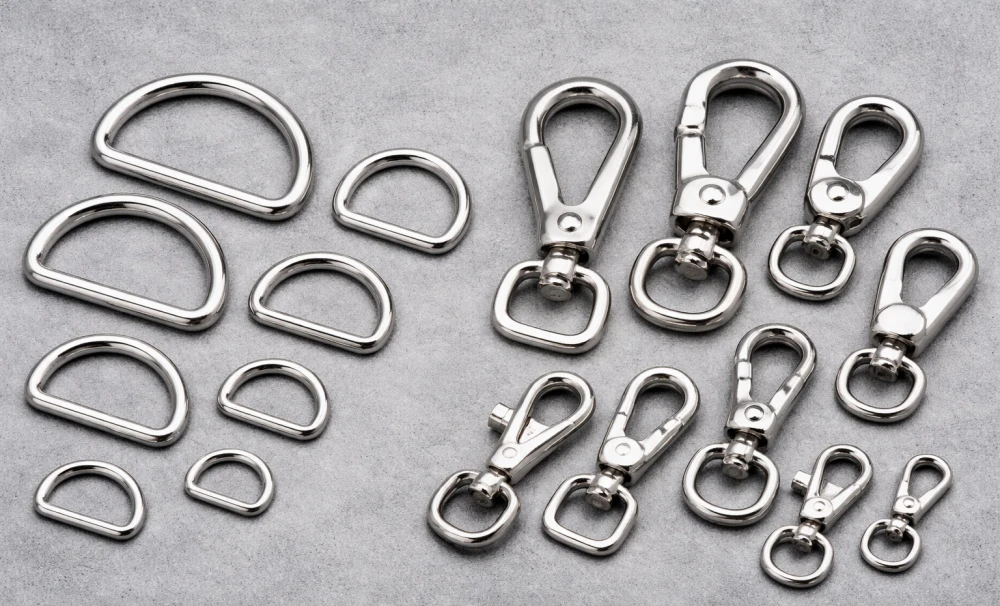
You must follow strict standards when selecting d-ring and snap hook equipment for fall protection. OSHA standards require that each snap hook and d-ring used in fall protection systems have a minimum tensile strength of 5,000 lbs. This regulation ensures your equipment can handle the forces generated during a fall.
ANSI standards align closely with OSHA, also demanding a minimum breaking strength of 5,000 lbs for these components. Both OSHA and ANSI require proof testing at 3,600 lbs to confirm the equipment’s reliability.
Snap hooks must have a minimum tensile strength of 5,000 lbs.
D-rings must meet or exceed a minimum breaking strength of 5,000 lbs.
Equipment must pass a proof load test of 3,600 lbs.
You protect yourself and your team by choosing equipment that meets these fall protection standards for ppe. Powerful Machinery designs and tests every snap hook and d-ring to exceed OSHA and ANSI requirements. This commitment to compliance gives you confidence in the safety and performance of your equipment.
EN and ISO Requirements
You may work in environments where European or international standards apply. EN and ISO standards set the minimum breaking strength for d-rings and snap hooks at 22 kN, which is about 4,946 lbs. These standards also require a proof load test of 15 kN.
EN and ISO focus on the safety and reliability of equipment used in ppe and fall protection systems.
Standard | Minimum Breaking Strength | Proof Load Test |
|---|---|---|
EN | 22 kN (~4,946 lbs) | 15 kN |
ISO | 22 kN (~4,946 lbs) | 15 kN |
You ensure compliance by checking that your equipment meets or exceeds these requirements. Powerful Machinery manufactures snap hooks and d-rings that not only meet EN and ISO standards but also undergo rigorous in-house testing.
This process guarantees that your equipment delivers consistent strength and safety in demanding conditions.
AS/NZS Standards
If you operate in Australia or New Zealand, you must follow AS/NZS standards for d-ring and snap hook equipment. These standards require a minimum breaking strength of 15 kN, which equals about 3,372 lbs. The proof load test for these components is set at 11 kN.
AS/NZS standards focus on the safety and reliability of equipment used in fall protection and ppe applications.
You maintain safety by selecting equipment that meets these standards. Powerful Machinery ensures that every snap hook and d-ring complies with AS/NZS requirements. The company’s commitment to quality and compliance means you can trust your equipment to perform under load and in critical situations.
Note: Always verify the certification and compliance of your equipment before use. This step helps you meet safety standards and reduces risk in the workplace.
Powerful Machinery Snap Hooks and Compliance
Product Features and Testing
You need snap hooks that deliver consistent performance in every fall protection system. Powerful Machinery designs each snap hook to handle the toughest conditions you face on the job. You can trust these snap hooks to secure your harness and lanyard, even when you work at height or in demanding environments.
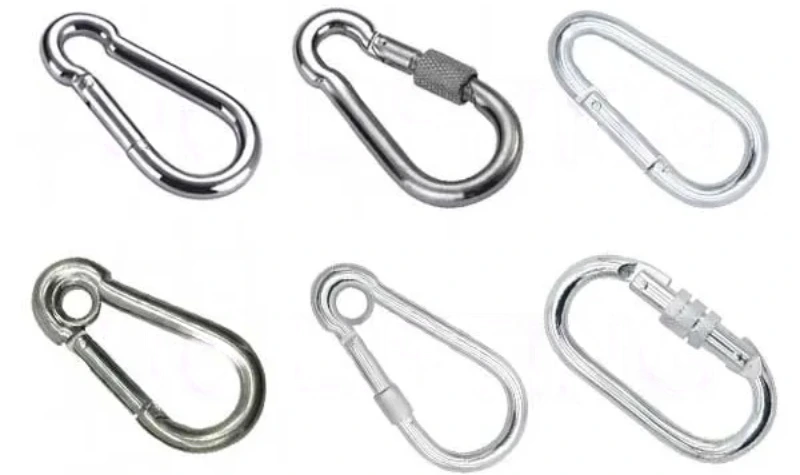
You see a range of snap hook designs that fit different personal fall arrest systems. Each snap hook features a robust steel body, a smooth gate action, and a secure locking mechanism.
You can choose from bolt, spring, trigger, or swivel snap hooks to match your specific equipment needs. The fixed eye design keeps your harness and lanyard aligned, reducing the risk of accidental disengagement.
You benefit from rigorous in-house testing on every snap hook. Powerful Machinery tests each product for tensile strength, working load, and gate integrity. You can rely on these results because the company uses calibrated machines and follows strict procedures.
Every snap hook must pass a proof load test that simulates real-world forces in fall arrest scenarios. This process ensures your equipment will not fail when you need it most.
You also gain from the attention to detail in manufacturing. Powerful Machinery controls the finish and dimensions of every snap hook. You get equipment that resists corrosion and maintains its performance over time.
You can use these snap hooks with safety belts, lifelines, and lanyards, knowing they will support your fall protection PPE.
Tip: Always inspect your snap hook before each use. Check for smooth gate operation and verify that the locking mechanism engages fully.
Certifications and Safety Standards
You want assurance that your equipment meets the highest safety standards. Powerful Machinery provides snap hooks that comply with OSHA, ANSI, EN, ISO, and AS/NZS requirements.
You can find certification markings on each snap hook, which confirm compliance with international regulations for fall protection equipment.
You protect yourself and your team by choosing snap hooks that exceed the minimum requirements for personal fall arrest systems. Powerful Machinery’s snap hooks undergo third-party certification and regular audits. You can trust that each product supports your harness and lanyard in critical situations.
You also benefit from comprehensive training resources. Powerful Machinery offers guidance on proper use, inspection, and maintenance of your fall protection system. You learn how to select the right snap hook for your harness and lanyard, and you understand the importance of regular training for everyone who uses personal fall protection systems.
You can rely on Powerful Machinery’s commitment to safety and compliance. The company’s snap hooks are designed for use in fall arrest, fall protection, and ppe applications. You get equipment that supports your training goals and helps you maintain a safe work environment.
Note: Always verify the certification and compliance of your snap hooks before adding them to your fall protection system. Proper training and equipment selection reduce risk and improve safety for everyone on your team.
Differences in Fall Protection Standards
Variations in Minimum Tensile Strength
You notice that fall protection standards differ across regions and industries. These differences affect the minimum tensile strength required for your equipment. For example, OSHA and ANSI demand a minimum breaking strength of 5,000 pounds for snap hooks and d-rings.
EN and ISO set their minimum at 22 kN, which is about 4,946 pounds. AS/NZS requires 15 kN, or roughly 3,372 pounds. These numbers show that not all fall protection equipment meets every standard worldwide.
When you select a harness or lanyard, you must check the label for compliance with the relevant fall protection standards. Some regions require higher strength ratings for personal fall arrest systems. You protect yourself by choosing equipment that matches or exceeds the minimum tensile strength for your work environment.
This step ensures your harness and lanyard will perform as expected during a fall arrest.
Note: Always verify that your equipment meets the correct fall protection standards before use. This habit supports your safety and compliance on every job.
Impact on PPE Selection
You face important choices when selecting ppe for your fall protection system. The differences in fall protection standards influence which harnesses, lanyards, and connectors you can use.
You must ensure that every component, from safety belts, lifelines, and lanyards to snap hooks, meets the required strength and compliance levels.
When you build personal fall protection systems, you need to match the harness and lanyard to the positioning systems used on your site. Some positioning systems require specific equipment with higher strength ratings. You also need to consider the type of work, such as fall arrest or positioning, to select the right equipment.
Proper training helps you understand these requirements. You learn how to inspect your harness and lanyard, check for compliance, and use the equipment correctly. Training also covers the importance of using certified fall protection equipment and maintaining personal fall arrest systems.
You improve safety for yourself and your team by following these guidelines.
🛠️ Tip: Regular training and equipment checks keep your fall protection ppe in top condition and ensure compliance with all relevant standards.
Practical Guidance for Choosing D Rings and Snap Hooks
Verifying Compliance with Standards
You must verify that your fall protection equipment meets all relevant standards before use. Start by checking the certification labels on your harness, lanyard, and connectors. These labels confirm compliance with OSHA, ANSI, EN, ISO, or AS/NZS requirements.
Inspect each snap hook and d-ring for a corrosion-resistant finish and smooth surfaces. This helps prevent damage and ensures long-term safety.
You should confirm that your connectors are made from drop forged, pressed, or formed steel or materials with equivalent strength. Proof testing is essential. Each snap hook and d-ring must sustain a minimum tensile load of 5,000 pounds and pass a proof test at 3,600 pounds without damage.
Always ensure that your snap hooks are compatible with the connected member to avoid accidental disengagement. Non-locking snap hooks should not be used in configurations that risk unintentional release.
🛡️ Tip: Regular inspections and proper maintenance help you keep your fall protection equipment in compliance and ready for use.
Selecting the Right Hardware for Fall Protection
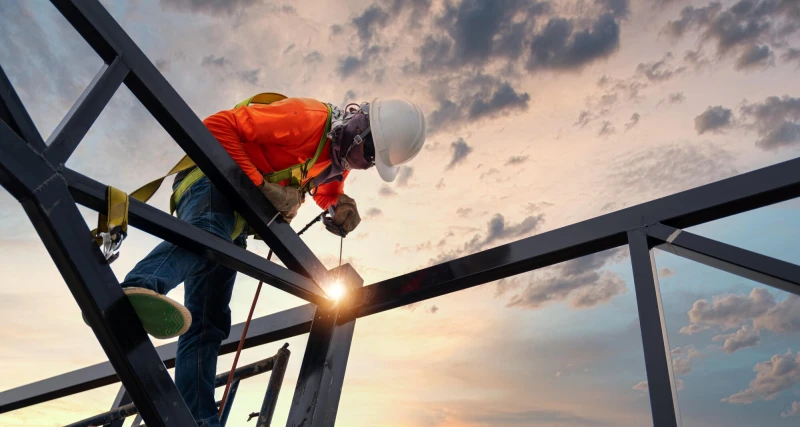
You need to choose d-rings and snap hooks that match your specific application and work environment. Consider the hazards present, such as electricity or weld spatter, and select connectors designed for those risks. Evaluate the weight ratings of your equipment, including the weight of the worker and any tools carried.
This ensures your harness and lanyard can handle the load safely.
When building your fall protection system, select hardware that maintains the integrity of the connection between your harness, lanyard, and anchorage point. D-rings and snap hooks with a minimum tensile strength of 5,000 pounds provide a reliable safety margin.
You must also consider the positioning systems used on your site. Some applications require connectors with higher strength or specific features.
Follow best practices for maintaining your equipment. Store your harness, lanyard, and connectors in a clean, dry place. Schedule regular training for your team to reinforce inspection procedures and proper use.
Training helps you understand how to select, inspect, and maintain fall protection equipment, ensuring ongoing compliance and safety.
Understand the application and hazards.
Select connectors designed for specific risks.
Evaluate weight ratings for the worker and the equipment.
Maintain regular training and inspection routines.
Ensure compatibility between hardware components.
🏗️ Note: Proper selection and maintenance of your harness, lanyard, and connectors protect you and your team in every positioning and fall protection scenario.
Conclusion
You protect yourself and your team by choosing equipment that meets strict tensile strength standards. Meeting the minimum requirement of 5,000 pounds for D-rings and snap hooks ensures your equipment will not fail during a fall.
Powerful Machinery delivers equipment that exceeds international safety standards, giving you confidence in every application. You should always check certifications and consult standards before selecting equipment for your fall protection system.
This approach helps you maintain safety and reliability at every job site.
D-rings and snap hooks must meet a minimum tensile strength of 5,000 pounds.
Proof-testing to 3,600 pounds without deformation is essential for equipment reliability.
Only locking snap hooks are allowed in construction to enhance safety.
FAQ
What is the minimum tensile strength for snap hooks and d-rings?
You must use snap hooks and d-rings with a minimum tensile strength of 5,000 pounds. This requirement ensures your equipment will not fail during a fall, providing reliable safety in demanding environments.
How do you verify that your equipment meets international standards?
You should check the certification label on each piece of equipment. Manufacturers like Powerful Machinery provide documentation that confirms compliance with OSHA, ANSI, EN, ISO, and AS/NZS standards for safety.
Why is proof testing important for fall protection equipment?
You rely on proof testing to confirm that your equipment can handle real-world forces. This process ensures each snap hook and d-ring will perform as expected, supporting your safety during critical operations.
Can you use non-locking snap hooks for fall protection?
You should avoid non-locking snap hooks in fall protection systems. Locking snap hooks provide extra security and help prevent accidental disengagement, improving overall safety for you and your team.
How often should you inspect your fall protection equipment?
You need to inspect your equipment before each use. Regular checks help you identify wear, damage, or corrosion, ensuring your safety and extending the life of your equipment.