You want to know whether electric pallet jacks or forklifts fit your business best. Your choice depends on operational needs, space, budget, workload, and maintenance.
Electric forklifts now make up 64% of the North American lift truck market, showing a strong shift toward electric solutions.
Industry reports reveal that the high upfront cost of electric forklifts, about 20% more than traditional models, often stops small and medium businesses from investing, even though these machines offer long-term savings and suit indoor environments. Modern warehouses focus on efficiency, safety, sustainability, and ease of use:
Trend | Description |
|---|---|
Efficiency | Electric pallet trucks boost workflow speed and reduce manual effort. |
Safety | They lower the physical strain for operators and support safer material movement. |
Sustainability | Battery-powered operation matches cleaner practices and regulatory goals. |
Ease of Use | Simple controls help new staff learn quickly, increasing productivity. |
You will see that Electric Pallet Jacks vs Forklifts offer distinct advantages depending on your specific requirements.
Key Takeaways
Electric pallet jacks are ideal for tight spaces and lighter loads, making them cost-effective for small operations.
Forklifts excel in heavy lifting and high stacking, making them suitable for large warehouses and demanding tasks.
Consider your warehouse layout and operational needs when choosing equipment to maximize efficiency.
Budget for both initial costs and ongoing maintenance to ensure long-term value from your equipment.
Using both electric pallet jacks and forklifts together can enhance productivity and streamline workflows.
Key Differences: Electric Pallet Jacks vs Forklifts
Comparison Overview
When you compare electric pallet jacks vs forklifts, you see clear differences in performance, cost, and operational needs. Electric pallet jacks excel in tight spaces and handle loads up to 5,500 pounds.
Forklifts offer much higher lifting capacity, reaching up to 50,000 pounds and lifting loads to heights over 30 feet. You need to consider your warehouse layout, the type of goods you move, and your budget.
Here is a summary table to help you understand the key differences:
Consideration | Electric Pallet Jack | Forklift |
|---|---|---|
Initial Investment | Low | High |
Maintenance Costs | Minimal | Complex and costly |
Operational Speed | Slower, limited range | Fast, covers large areas |
Training Requirements | Minimal training | Extensive certification needed |
Suitability | Small-scale, limited needs | Heavy-duty, large warehouses |
Efficiency with Heavy Loads | Limited to lighter loads | Excellent |
Powerful Machinery provides reliable solutions for both electric pallet jacks and forklifts, ensuring you get certified equipment that matches your operational demands.
Main Distinctions
You must look at several factors when choosing between electric pallet jacks vs forklifts:
Capacity: Electric pallet jacks work best for loads under 5,500 pounds. Forklifts handle much heavier loads, from 3,000 to 50,000 pounds.
Space: Electric pallet jacks are compact and maneuver easily in tight warehouse aisles. Forklifts require more space but offer advanced control for precise load placement.
Cost: Electric pallet jacks have a lower initial cost and minimal maintenance. Forklifts require a higher investment and ongoing maintenance.
Training: Both types require OSHA-compliant training, but forklifts need more extensive certification.
Use Cases: Electric pallet jacks suit small warehouses and retail environments. Forklifts fit large-scale operations and heavy-duty tasks.
Tip: If you operate in a small warehouse with limited space and lighter loads, electric pallet jacks offer a cost-effective solution. For heavy lifting and large areas, forklifts provide unmatched power and efficiency.
You can trust Powerful Machinery to deliver high-quality material handling equipment for every application.
Electric Pallet Jack: Definition and Use Cases
What is an Electric Pallet Jack?

You use an electric pallet jack to lift and move pallets in your warehouse or distribution center. This equipment, sometimes called a powered pallet jack, relies on a rechargeable battery to power its lifting and movement functions.
You control the jack with simple buttons for lifting, lowering, and steering, which makes operation straightforward. Many models include ergonomic handles, safety features like automatic braking, and even built-in scales for weighing loads. These features help you reduce physical strain and improve efficiency.
You can rely on an electric pallet jack to minimize manual labor, speed up material movement, and create a safer work environment.
An electric pallet jack improves efficiency and reduces worker fatigue.
It allows for faster movement of goods, which is crucial in busy settings.
Safety features and ergonomic design help you work longer without discomfort.
Typical Applications
You will find electric pallet jacks in many logistics and distribution environments. Their versatility makes them ideal for a range of tasks, especially in areas where space is limited. The table below shows common types and their applications:
Type of Electric Pallet Jack | Application Description |
|---|---|
Electric Walkie Pallet Jack | Moves materials efficiently, reducing strain and improving ergonomics in warehouses. |
Electric Rider Pallet Jack | Best for large warehouses, letting you ride while moving goods over long distances. |
Center Rider Electric Pallet Truck | Offers maneuverability and visibility in tight spaces like cold storage or narrow aisles. |
Electric Walkie Pallet Stacker | Bridges manual labor and automation for vertical storage in tight corners. |
You can use an electric pallet jack in small warehouses, retail stores, and loading docks. Its compact size and ability to handle tight spaces make it a top choice for businesses that need to move goods quickly and safely.
Powerful Machinery Pallet Trucks Features
Powerful Machinery Pallet Trucks stand out for their performance and reliability. You benefit from powered operation, which eliminates manual pumping and reduces fatigue. Power steering gives you precise control, especially in tight spaces and narrow aisles.
Safety features like emergency stop buttons, anti-rollback technology, and electric disk brakes help prevent accidents. The ergonomic design ensures comfort during long shifts, while the compact build allows you to navigate tight corners with ease.
These pallet trucks offer cost-effective solutions for small to medium operations, combining durability, maneuverability, and versatility for your daily needs.
Note: If you need a pallet truck that delivers consistent performance in tight spaces, Powerful Machinery provides a trusted, certified option for your business.
Forklift: Definition and Use Cases
What is a Forklift?
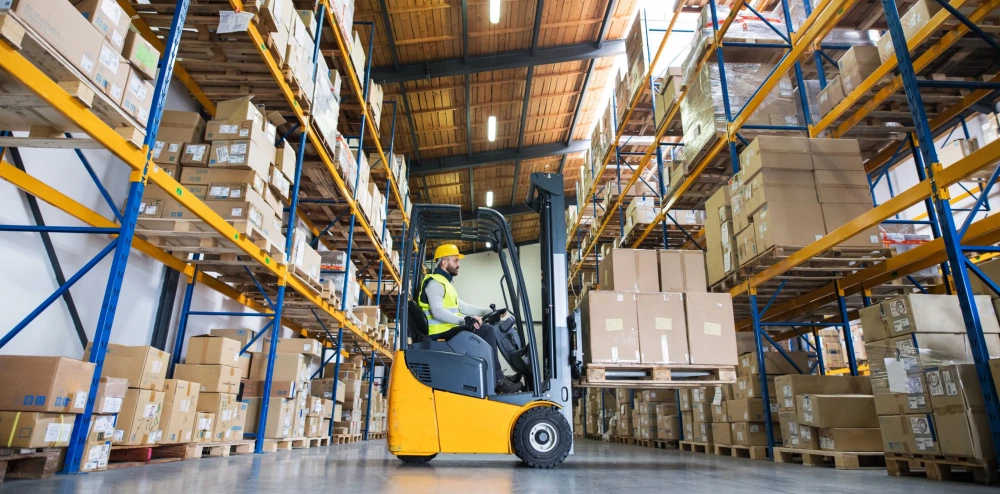
You use a forklift when you need to move, lift, or stack heavy materials in your facility. A forklift, also called an industrial lift truck, is a powered vehicle with metal forks at the front. These forks slide under pallets or containers, allowing you to lift loads vertically and transport them horizontally.
Forklifts run on different energy sources, including electric batteries and fuel oil. You rely on this equipment for material handling, loading, unloading, and stacking tasks in warehouses, factories, construction sites, and ports.
The main advantages of a forklift include its high lifting capacity and ability to handle heavy lifting with ease.
Common Applications
You will find forklifts in a wide range of industries. Their versatility and strength make them essential for many tasks:
Warehousing and distribution: Move pallets, stack items on shelves, and unload trucks efficiently.
Construction: Transport heavy materials like steel beams and concrete blocks across job sites.
Manufacturing: Move raw materials and finished products, supporting production and logistics.
Retail: Shift bulk stock from delivery areas to the shop floor.
Recycling operations: Move large quantities of recyclable materials to processing areas.
Dockyards and ports: Handle containers and cargo, ensuring smooth loading and unloading.
You benefit from forklifts in environments where you need to maximize storage, move goods quickly, and support inventory management. Forklifts also help you complete time-sensitive tasks and improve workplace safety.
Key Features
Forklifts offer features that support heavy lifting and high-capacity operations. Powerful Machinery designs forklifts with advanced technology and robust construction to meet your toughest demands. The table below highlights the key features you should consider:
Feature | Description |
|---|---|
Engine Power and Efficiency | Powerful engines deliver the torque and horsepower needed for large loads, balancing performance and emissions. |
Durable Construction | Heavy-gauge steel frames and robust hydraulics withstand extreme environments and long hours. |
Advanced Safety Features | Overload sensors, stability controls, and operator restraint systems keep you safe during operation. |
Maneuverability and Precision | Advanced hydraulics and tilt controls allow you to handle loads in tight spaces with smooth steering. |
Ergonomic Design | Comfortable cabins and controls reduce fatigue and boost efficiency. |
Maintenance and Serviceability | Easy access for maintenance ensures long-term reliability and protects your investment. |
You can choose from electric forklifts for indoor use or fuel-powered models for outdoor and heavy-duty applications. Powerful Machinery brings decades of expertise in lifting and rigging solutions, ensuring you get equipment that delivers both safety and performance for every heavy lifting challenge.
Advantages and Disadvantages: Electric Pallet Jacks vs Forklifts
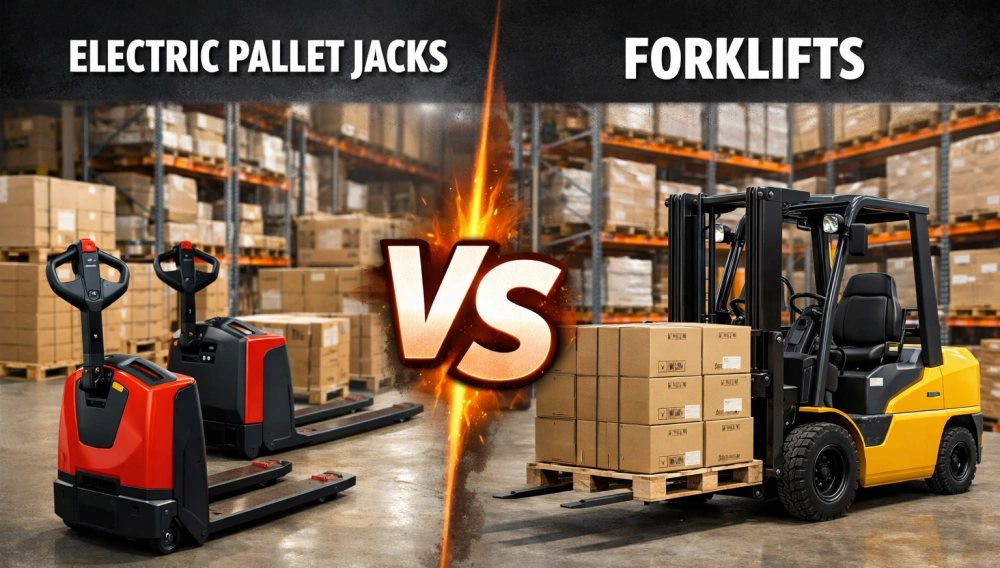
When you evaluate material handling equipment, you need to weigh the advantages and disadvantages of each option. Your decision will impact your warehouse efficiency, budget, and daily workflow. Below, you will find a clear breakdown of what you gain and what you might give up with each type.
Electric Pallet Jack Pros and Cons
An electric pallet jack offers you a practical solution for moving pallets in tight spaces. You benefit from easy operation, reduced physical strain, and improved productivity. Many businesses choose this equipment when they want to streamline movement without investing heavily.
Advantages | Disadvantages |
|---|---|
Ease of use reduces operator fatigue | Higher initial cost than manual models |
Increases productivity and speed | Requires regular battery maintenance |
Environmentally friendly and quiet | Limited range due to battery charge |
Compact size fits narrow aisles | Not ideal for very heavy loads |
You will notice that an electric pallet jack is ideal if you want to minimize manual labor and maximize efficiency in a smaller warehouse. The electric operation means you can work longer shifts with less fatigue, and the quiet, emission-free design supports indoor use.
However, you need to plan for battery charging and consider the initial investment in your budget.
Forklift Pros and Cons
A forklift gives you unmatched lifting power and versatility. You can handle large, heavy loads and reach high shelves, making this equipment essential for many industrial settings.
Advantages | Disadvantages |
|---|---|
High lifting capacity for heavy loads | Higher purchase and operating costs |
Versatile for various applications | Needs more space to maneuver |
Can stack and reach high shelves | Requires certified operators |
Suitable for large warehouse tasks |
You should choose a forklift if your operations demand frequent heavy lifting or stacking at height. The robust design and advanced features help you manage complex tasks efficiently. Keep in mind that forklifts require a larger budget, more space, and operator certification.
Tip: Always match your equipment choice to your workload, warehouse layout, and budget for the best results.
Ideal Use Cases: Choosing the Right Equipment
When to Use an Electric Pallet Jack?
You should consider an electric pallet jack when your operations focus on ground-level tasks and require efficient movement in tight spaces. This equipment excels in environments where you need to load or unload trucks, especially inside trailers with limited room.
You can move pallets across short distances within your warehouse quickly and safely. The compact design allows you to navigate crowded aisles and handle lighter loads, typically under 4,500 to 6,000 pounds.
You benefit from lower costs and minimal maintenance, making it a practical choice for businesses that prioritize economy and simplicity. Delivery applications also favor electric pallet jacks, as you can transport products into locations where forklifts cannot operate.
Loading and unloading trucks in confined spaces
Short-distance transport of pallets
Maneuvering in tight aisles or crowded areas
Handling lighter loads for standard pallets
Reducing operational costs and maintenance
Delivering products to locations without forklift access
Tip: Powerful Machinery Pallet Trucks offer reliable, cost-effective solutions for ground-level material handling. Their ergonomic design and robust construction help you maximize productivity in small to medium operations.
When to Use a Forklift?
You need a forklift when your business demands heavy lifting and high storage capabilities. This equipment is essential for environments with tall racks and large items that require vertical stacking.
Forklifts excel in transporting thousands of pounds across uneven surfaces, making them suitable for outdoor operations and large warehouses. Their powerful engines and advanced hydraulics allow you to reach high shelves and optimize storage space.
Companies with robust material handling needs rely on forklifts for versatility and efficiency. You can navigate narrow aisles and handle complex tasks that go beyond the capabilities of pallet jacks.
Forklifts provide the strength and reach necessary for demanding workloads. You can lift heavy loads, store products at elevated levels, and maintain operational efficiency in busy warehouse settings. Powerful Machinery’s expertise ensures you receive equipment designed for safety and performance in every application.
Note: Choose a forklift if your operation involves frequent heavy lifting, high stacking, or outdoor transport. Powerful Machinery delivers certified forklifts built for reliability and long-term value.
Decision Guide: Selecting for Your Needs
Choosing the right material handling equipment for your business requires a careful look at several core factors. You need to match your equipment to your facility’s space requirements, budget, workload, and maintenance needs.
This guide walks you through each step so you can make an informed decision that supports your operational goals.
Space and Layout Considerations
Your warehouse layout plays a major role in equipment selection. You must assess the physical characteristics of your facility before making a choice.
Measure the narrowest aisles in your warehouse. Compare these measurements with manufacturer specifications for turning radius and overall dimensions.
Pallet jacks offer compact designs that excel in tight spaces. If your aisles are narrow or congested, models with 90-degree steering capabilities provide excellent maneuverability.
Forklifts require more room to operate. Wide aisles and open layouts suit forklifts best, especially when you need to move large loads or stack items at height.
Consider travel distances within your facility. Shorter distances may favor economical walkie pallet jacks, while longer routes could benefit from ride-on models.
Evaluate your space requirements for both current and future needs. If you plan to expand, choose equipment that adapts to changing layouts.
Tip: Pallet jacks work well in facilities with limited space, while forklifts shine in larger warehouses with wide aisles.
Budget and Cost Factors
You must balance your budget with the capabilities you need. Initial purchase price and ongoing operational costs vary widely between equipment types.
Equipment Type | Initial Purchase Price Range | Ongoing Operational Costs |
|---|---|---|
Electric Pallet Jacks | $3,500 – $12,000 | Higher maintenance due to complex parts |
Sit-Down Electric Forklifts | $25,000 – $45,000 | Varies based on usage and maintenance |
Manual Pallet Jacks | $200 – $2,500 | Lower maintenance, simpler mechanisms |
Electric pallet jacks offer a budget-friendly solution for small to medium operations. Forklifts require a larger investment but deliver higher lifting capacity and versatility. You should factor in not only the upfront cost but also ongoing expenses such as maintenance, repairs, and operator training.
Note: Powerful Machinery provides options for every budget, helping you find the right balance between cost and performance.
Workload and Task Complexity
Your daily workload and the complexity of your tasks determine which equipment fits best.
Criteria | Forklift Benefits |
|---|---|
Heavy Loads are Frequent | Can handle much heavier loads than electric pallet jacks, essential in high-weight limit industries. |
High Reach Capabilities | Can lift to significant heights, crucial for high-rack storage and stacking. |
Versatility | Able to transport loads on different terrains and reach varied heights for diverse tasks. |
If you move heavy loads often or need to stack items at significant heights, forklifts provide the power and reach you require. Electric pallet jacks suit ground-level transport and lighter loads. You should analyze your workflow to see if your tasks demand the advanced capabilities of a forklift or the simplicity of a pallet jack.
Tip: For complex operations with varied tasks, forklifts offer unmatched versatility. For straightforward, repetitive movement, electric pallet jacks deliver efficiency.
Maintenance and Training
Proper maintenance and operator training keep your equipment safe and reliable. You must follow safety regulations and manufacturer guidelines.
Conduct pre-use inspections to check for wear, battery charge, fork condition, and overall readiness.
Practice safe driving and load handling. Keep loads centered, maintain a safe speed, and avoid pulling the machine.
Prepare for emergency procedures. Know how to respond to blocked paths, spills, or mechanical failures.
Require hands-on demonstrations for operators. Ensure proficiency in docking, maneuvering, and braking.
Operators must be at least 18 years old to use forklifts in non-agricultural settings. Specialized training and certification are mandatory for forklift operators.
Electric pallet jacks need regular battery checks and basic mechanical inspections. Forklifts demand more comprehensive maintenance and specialized training. You should plan for ongoing maintenance and ensure your team receives proper instruction.
Note: Powerful Machinery offers expert guidance and certified equipment to support your safety and maintenance needs.
If you need help matching equipment to your space, budget, workload, or maintenance requirements, consult Powerful Machinery for tailored solutions. Their team can recommend the best options for your unique operational environment.
Maintenance Essentials for Safety
Electric Pallet Jack Maintenance
You keep your electric pallet jack running smoothly by following a regular maintenance routine. Start with a visual inspection. Look for wear, leaks, or loose components. Test all controls to make sure buttons and levers work without sticking.
Check the battery for a full charge and clean terminals to prevent corrosion. Inspect the wheels for chips or cracks. Examine the hydraulic system for leaks or damage. Lubricate moving parts as recommended by the manufacturer. Listen for unusual noises during operation.
Wipe down the jack to remove dust and debris. Store the pallet jack in a dry, secure area to protect it from moisture.
Tighten nuts and bolts to secure any loose fasteners.
Replace worn hydraulic seals to prevent leaks.
Clean and inspect the battery every month.
Test the lifting and lowering mechanism for smooth movement.
Replace damaged wheels to maintain stability.
Clean the forks to ensure proper lifting performance.
You improve safety and reliability in your warehouse by performing these tasks regularly. Powerful Machinery designs pallet trucks for durability and ease of maintenance, helping you reduce downtime and keep your operations safe.
Forklift Maintenance
You maintain forklift safety by following a detailed checklist. The table below outlines essential maintenance procedures:
Maintenance Task | Description |
|---|---|
Brake Fluid Check | Make sure the brakes engage properly. |
Radiator and Air Filters | Clean radiator and replace air filter as needed. |
Hoses and Belts | Inspect for cracks and wear; replace damaged belts. |
Battery Water Levels | Maintain water levels in lead-acid batteries. |
Sulfur Deposits | Clean regularly to prevent efficiency loss. |
Propane Tank | Confirm proper mounting and check for leaks. |
Tire Condition | Inspect for wear and punctures to ensure stability. |
Brake Function | Test brakes for prompt response. |
Steering Responsiveness | Check for smooth handling. |
Safety Devices | Ensure seatbelts and alarms work for operator safety. |
You also benefit from hands-on training sessions and regular performance evaluations. Understanding safety protocols keeps your team prepared for emergencies. Powerful Machinery supports your maintenance efforts with certified equipment and expert guidance, ensuring your forklifts operate safely and reliably.
Tip: Consistent regular maintenance protects your investment and helps prevent accidents in your warehouse.
Using Both for Maximum Productivity
Complementary Roles
You can achieve higher productivity in your warehouse by using both electric pallet jacks and forklifts together. Each type of equipment serves a unique purpose. Electric pallet jacks handle lighter, quick-moving tasks. You use them to move palletized goods efficiently to staging areas or for low-level order picking.
Forklifts take on heavy lifting and high stacking. You rely on them for transporting large loads and reaching elevated storage racks. When you combine these machines, you optimize space and workflow. You assign electric pallet jacks to areas with tight aisles and frequent movement.
Forklifts operate in zones where bulk transport and vertical stacking are required.
Electric pallet jacks excel at moving goods quickly across short distances.
Forklifts manage heavy loads and maximize vertical storage.
Using both types of equipment enhances overall productivity and space utilization.
Operational Efficiency
You improve operational efficiency by leveraging the strengths of both machines. Electric pallet stackers reduce physical effort for workers. Their ergonomic design lowers fatigue and minimizes the risk of injuries. Controlled operation allows your team to work longer shifts with less strain.
Advanced safety features on both electric pallet jacks and forklifts create a safer workplace. You see fewer accidents and smoother workflows. Logistics studies show that this synergy boosts order fulfillment speed and accuracy. You can stage goods, pick items, and transport bulk loads without bottlenecks.
Tip: Powerful Machinery offers a full range of material handling solutions. You can select certified electric pallet trucks and forklifts to match every task in your warehouse. This approach helps you streamline operations, protect your team, and maximize productivity.
Conclusion
You must weigh several factors before selecting material handling equipment.
Assess weight capacity and lift height for your daily tasks.
Evaluate battery life and charging time to reduce downtime.
Consider maneuverability and safety features for your workspace.
Certification/Standard | Description |
|---|---|
International Safety Standards | Powerful Machinery products exceed global safety and reliability benchmarks. |
Quality Control System | Every stage of production meets strict quality requirements. |
Comprehensive Testing | Each batch undergoes chemical analysis and proof-load testing. |
Choose Powerful Machinery for certified, dependable solutions that support your business growth.
FAQ
What is the main difference between an electric pallet jack and a forklift?
You use an electric pallet jack for ground-level transport of lighter loads. You rely on a forklift for lifting heavier items and stacking them at greater heights.
How do I choose between a pallet jack and a forklift for my warehouse?
You should assess your space, load weight, and workflow. Pallet jacks suit tight spaces and lighter loads. Forklifts work best for heavy lifting and high stacking.
What maintenance does an electric pallet jack require?
You need to check the battery, inspect the wheels, and lubricate moving parts regularly. Clean the jack and test controls before each use to ensure safe operation.
Do I need special training to operate a forklift?
You must complete certified training to operate a forklift safely. OSHA requires operators to pass both written and practical tests before using forklifts in the workplace.
Can Powerful Machinery help me select the right equipment?
Yes! You can contact Powerful Machinery for expert advice. Their team will recommend certified solutions tailored to your operational needs.