Steel wire rope strength tells you how much force a wire rope can handle before it breaks. You need to know this value to make sure your lifting or rigging job stays safe and efficient. According to engineering standards, you should consider several key terms:
Tensile strength: The force needed to pull a material until it breaks.
Yield strength: The stress a material can take before it changes shape for good.
Ultimate strength: The highest stress a material can handle.
Breaking strength: The stress at the point where the rope snaps.
Choosing the right Steel wire rope depends on understanding these strengths. Powerful Machinery provides certified, high-performance steel wire rope solutions you can trust for critical applications.
Key Takeaways
Steel wire rope tensile strength indicates how much force a rope can handle before breaking. Always check this value for safe lifting.
Select steel wire rope based on material, diameter, and construction. These factors directly affect its strength and performance.
Use a steel wire rope with a tensile strength that exceeds your maximum expected load. This practice enhances safety and equipment longevity.
Regularly inspect the steel wire rope for damage or wear. This step helps prevent accidents and ensures safe operations.
Choose steel wire rope from trusted manufacturers like Powerful Machinery. Certified products meet high safety and performance standards.
Understanding Steel Wire Rope Tensile Strength
What Is Steel Wire Rope Tensile Strength?
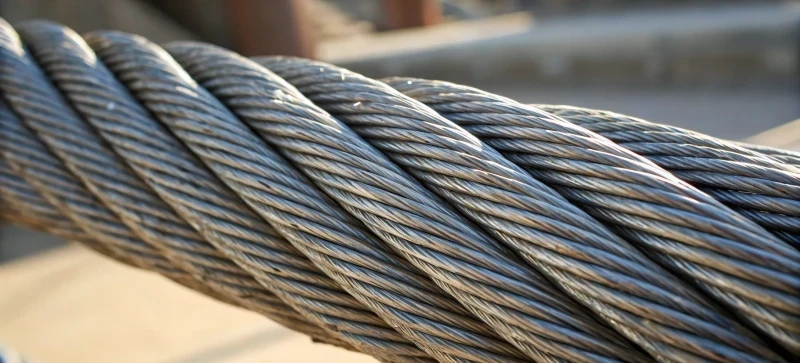
Steel wire rope tensile strength measures the maximum force a wire rope can withstand before it breaks. You rely on this value to determine if a wire rope is suitable for your lifting, rigging, or hoisting application. Engineers use specific measurements and units to define wire rope tensile strength.
You often see these values expressed in megapascals (MPa) for nominal tensile strength, kilonewtons (kN) for minimum breaking tension, and millimeters (mm) for wire rope diameter.
Here is a quick reference table to help you understand how wire rope tensile strength is measured:
Measurement Type | Unit |
|---|---|
Nominal tensile strength | MPa |
Minimum breaking tension | kN |
Wire rope nominal diameter | mm |
When you select a wire rope, you need to consider several factors that directly affect wire rope tensile strength. These include the material, diameter, construction, and safety factor. The table below summarizes these key factors:
Factor | Description |
|---|---|
Material | The type of material used in the wire rope significantly affects its strength. |
Diameter | The thickness of the wire rope influences its tensile strength. |
Construction | The way the wire rope is constructed (e.g., strand configuration) impacts strength. |
Safety Factor | Engineers apply a safety factor to determine the Working Load Limit (WLL). |
You can find typical tensile strength values for common wire rope constructions in the following table:
Construction Type | Diameter | Breaking Strength (kg) |
|---|---|---|
1×19 | 6mm | 2300 |
7×7 | 6mm | 2000 |
7×19 | 6mm | 1900 |
Wire rope tensile strength gives you a clear indication of the rope’s ability to handle heavy loads. You must always check these values before starting any lifting or rigging operation.
Why It Matters for Safety and Performance?
Steel wire rope tensile strength plays a critical role in keeping your operations safe and efficient. You need to know the exact strength of your wire rope to avoid accidents and equipment failure. When you use a wire rope with the correct tensile strength, you protect your team and your assets.
The following characteristics show how wire rope tensile strength impacts safety and performance:
Characteristic | Impact on Safety and Performance |
|---|---|
Strength | Determines the maximum load the rope can safely handle. |
Flexibility | Affects the rope’s ability to bend without breaking. |
Abrasion resistance | Reduces wear and tear, prolonging rope life. |
Crushing resistance | Prevents damage under heavy loads. |
Fatigue resistance | Ensures durability under repeated loading cycles. |
Corrosion resistance | Protects against environmental damage. |
Rotation resistance | Maintains stability during lifting operations. |
Tip: Always choose a wire rope with a tensile strength that exceeds your maximum expected load. This practice helps you maintain a safe working environment and extends the life of your equipment.
Wire rope tensile strength also determines the Working Load Limit (WLL) and Minimum Breaking Strength (MBS). You need a rope strong enough to handle the loads you encounter. Higher wire rope tensile strength improves fatigue resistance, which is vital in dynamic applications such as cranes and hoists.
You benefit from enhanced reliability and performance when you select a wire rope with superior tensile strength.
You should always verify the wire rope tensile strength before each use. This step ensures your lifting and rigging operations remain safe, efficient, and compliant with industry standards.
Measuring Tensile Strength in Steel Wire Rope
Key Terms: Yield, Ultimate, and Breaking Strength
You need to understand several key terms when you evaluate wire rope strength. Each term describes a different stage in how a wire rope responds to force. The table below helps you see the differences:
Term | Definition |
|---|---|
Yield Strength | The stress a rope or material can withstand without permanent deformation. |
Ultimate Strength | The maximum stress a rope or material can withstand. |
The stress coordinate on the stress-strain curve at the point of rupture. |
When you test a wire rope, yield strength marks the point where the rope starts to deform and cannot return to its original shape. Ultimate strength shows the highest stress the rope can handle before necking occurs. Breaking strength is the final value, where the rope actually fails.
Yield strength is the point at which the material begins to deform plastically.
Ultimate strength is the maximum stress before necking.
Breaking strength is the stress at which the rope fails and breaks.
Breaking Load vs Tensile Strength
You often see both breaking load and tensile strength listed in wire rope specifications. These values help you select the right rope for your job. The table below compares the two:
Aspect | Tensile Strength | Breaking Strength |
|---|---|---|
Definition | The maximum stress a material can withstand while being stretched before failing. | The maximum force a material can withstand before it fractures or breaks. |
Measurement Units | Measured in stress units (MPa or psi). | Measured in force units (N or lbf). |
Material Behavior | Undergoes permanent deformation but does not necessarily break immediately. | Completely fractured and can no longer function as intended. |
Failure Stage | Represents the stage where the material begins to deform permanently. | Represents the stage where the material has failed. |
Flexibility and Range | A range of values provides flexibility in material selection. | A single value indicating the exact point of material failure. |
Applications | Critical in applications needing to withstand stretching without permanent deformation. | Important in applications where the maximum force before breaking is a concern. |
Manufacturers use destructive testing to determine breaking strength by pulling the rope until it fails. Proof load testing checks performance under load without damaging the rope. You should look for ropes tested to standards like EN 12385-1, ISO 3108, and ASTM A1023/A1023M.
Tip: Always check technical datasheets for minimum safety factors. For lifting, industry standards recommend a safety factor of 5:1.
Tensile Strength vs Breaking Strength
You may wonder how tensile strength and breaking strength differ in wire rope specifications. Tensile strength refers to the rope’s inherent ability to resist stretching. Breaking strength is the force at which a new rope fails under controlled conditions.
Manufacturers report both values in technical datasheets, following standards such as ISO 2408 and EN 13411. You should set your working load limit at one-third to one-fifth of the breaking load to ensure safety.
When you compare wire rope strength, always consider both ultimate strength and breaking strength. These values help you choose the right rope for your application and keep your operations safe.
Factors Affecting Steel Wire Rope Strength
Material and Construction
You must consider both the material and the construction method when evaluating wire rope strength. The type of steel, such as carbon or stainless, directly affects mechanical strength and corrosion resistance. Galvanized ropes, made from high-carbon steel, often deliver higher raw tensile strength.
Stainless steel ropes maintain their strength in corrosive environments, making them ideal for marine or outdoor use.
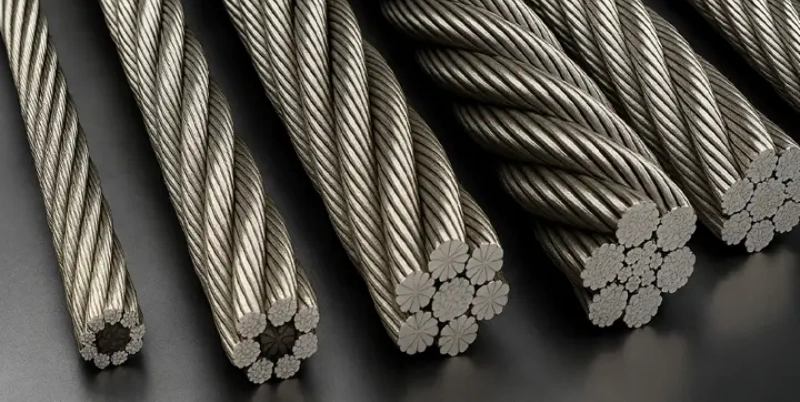
The arrangement of wires and strands also plays a key role. For example, a wire rope with a steel core increases load capacity by about 15% compared to a fiber core. Steel cores are best for heavy lifting, while fiber cores offer greater fatigue resistance for dynamic tasks.
Powerful Machinery’s Steel Wire Rope uses high-grade steel and advanced strand configurations to maximize both strength and flexibility.
Tip: Choose the core type based on your application—steel for maximum strength, fiber for flexibility.
Diameter and Design
Diameter is a critical factor in wire rope selection. As the diameter increases, both breaking strength and tensile strength improve. Larger diameters allow you to handle heavier loads and provide greater safety margins.
Diameter (mm) | Minimum Breaking Strength (kN) |
|---|---|
6 | ~2.4 |
12 | ~9.6 |
Design features such as non-rotating construction and fill factor also enhance tensile strength. Powerful Machinery’s Steel Wire Rope and Galvanized Steel Wire Rope offer multiple configurations and diameters, ensuring you find the right fit for demanding applications.
Fiber core: Flexible, absorbs shock.
Wire strand core: Durable, higher tensile strength.
Independent wire rope core: Maximum strength, crush resistance.
Manufacturing Quality and Standards
Manufacturing quality and adherence to international standards guarantee reliable wire rope performance. You should look for products tested to EN 12385, ASTM A1023, and API 9A specifications, which require minimum tensile strengths up to 1960 N/mm².
Manufacturers must conduct prototype, tensile, and torsion tests, with at least 10% of spools tested for compliance.
Powerful Machinery demonstrates a strong commitment to quality, safety, and certification. Their wire ropes meet or exceed ISO, TUV Rheinland, and other global standards. This dedication ensures you receive wire ropes with consistent tensile strength and proven reliability, even in the toughest environments.
Note: Always verify certifications and test reports before selecting wire rope for critical lifting or rigging tasks.
Why Tensile Strength Matters?
Safety and Application Suitability
You must select wire rope with the right tensile strength to keep your operations safe. When you match the rope’s strength to your application, you prevent failures that could cause serious accidents.
If you use wire rope with insufficient tensile strength, you risk wire breakage, dropped loads, and equipment damage. These failures can lead to injuries and costly downtime.
Industry guidelines recommend that you choose wire rope based on specific criteria. For example, ASME B30.5-2004 requires a minimum design factor for different rope types.
Rotation-resistant ropes need a design factor of 3.5, while other types require a factor of 5. These standards help you ensure that your wire rope can handle the maximum load expected in your operation.
Tip: Always check the expected load and select a wire rope that meets or exceeds the recommended minimum breaking force. This practice protects your team and your equipment.
Consider the following points when choosing wire rope for safety and suitability:
Tensile strength prevents catastrophic failures in lifting and rigging.
Different jobs need different tensile strengths based on load and environment.
Overloading the wire rope can cause injuries and property damage.
Longevity and Fatigue Resistance
Wire rope with higher tensile strength lasts longer and performs better under repeated use. You need a wire rope that can withstand constant bending over sheaves and drums. This ability is called fatigue resistance. It allows the rope to endure many cycles of loading and unloading without breaking.
Studies show that wire ropes with more outer strands have better bending fatigue life. The University of Stuttgart found that increased outer strands improve service longevity.
Fatigue resistance depends on the quality of the wires and the rope’s ability to handle periodic stress changes. When you use wire rope with excellent tensile strength, you benefit from greater resistance to metal fatigue and longer service life.
High fatigue resistance lets the wire rope endure gradual fatigue damage.
Quality wires improve bendability and fatigue resistance.
Strong wire ropes withstand high tension loads, which increases longevity.
Note: Choose wire rope with proven fatigue resistance for applications with constant movement or cyclic loading. This choice helps you avoid unexpected failures and extends the life of your equipment.
Choosing the Right Steel Wire Rope
Assessing Application Needs
You need to evaluate several factors before selecting a wire rope for your project. Start by considering the design factor, which is the ratio of the minimum breaking force to the maximum working load. This ratio ensures your wire rope can handle the load with a safety margin.
You must also review the operating characteristics, such as speed of operation, acceleration, and deceleration. The length of rope, number and size of sheaves and drums, and rope attachments all influence the rope’s performance requirements.
Pay attention to resistance to bending, strength-resistance to breaking, and resistance to crushing. Environmental conditions, including corrosion and abrasion resistance, play a significant role in wire rope longevity. Always assess the danger to human life and property when choosing the right product.
Regular inspections and maintenance help you maintain the minimum breaking force and ensure safe operations.
Tip: Always match the minimum breaking force of your wire rope to the highest expected load, plus a safety margin.
Product Selection: Powerful Machinery Steel Wire Rope
Powerful Machinery’s Steel Wire Rope delivers high minimum breaking force and meets strict performance requirements. You benefit from high-quality raw materials and advanced construction, which enhance strength and durability.
The non-rotating design prevents twisting under load, improving safety and extending service life. Multiple configurations allow you to select the best fit for your operating characteristics.
The steel wire rope’s abrasion resistance and flexibility make it ideal for demanding lifting and rigging tasks. Each rope undergoes rigorous testing to ensure it meets or exceeds the minimum breaking force listed in technical datasheets.
You can rely on this wire rope for consistent performance in construction, shipping, and manufacturing environments.
Product Selection: Galvanized Steel Wire Rope
Galvanized steel wire rope from Powerful Machinery offers high minimum breaking force and excellent corrosion resistance. The protective zinc coating ensures durability in harsh or outdoor environments.
This wire rope stands out for its wear resistance and ability to maintain strength even when exposed to moisture or chemicals.
You can choose from a wide range of constructions and diameters to match your specific operating characteristics and performance requirements. Galvanized steel wire rope is cost-effective for industrial applications where high tensile strength and minimum breaking force are essential.
Custom options are available to meet unique project needs.
Note: Consult Powerful Machinery for certified wire rope solutions tailored to your application. Their team will help you select the right product based on minimum breaking force, fatigue resistance, and your project’s operating characteristics.
Conclusion
You need to understand wire rope tensile strength to keep your lifting and rigging operations safe and effective. Powerful Machinery’s certified wire ropes help you meet the highest safety and performance standards. You can trust their products because:
Powerful Machinery wire ropes carry ISO, TUV Rheinland, and EURO CERT certifications.
Each batch comes with certification documents for compliance.
Customers report high satisfaction and reliability in demanding projects.
Choose wire rope with proven strength and quality for every application.
FAQ
What is the difference between tensile strength and working load limit?
Tensile strength measures the maximum force a wire rope can handle before breaking. Working load limit (WLL) is the safe maximum load you should apply during use. Always select wire rope with a WLL that exceeds your application’s requirements.
How often should you inspect wire rope for safety?
You should inspect the wire rope before each use. Look for broken wires, corrosion, kinks, or wear. Regular inspections help you prevent accidents and extend the life of your equipment.
Can you use galvanized steel wire rope outdoors?
Yes. Galvanized steel wire rope resists corrosion and performs well in outdoor or marine environments. The zinc coating protects the rope from moisture and harsh weather.
Why should you choose Powerful Machinery wire rope?
You get certified quality, high tensile strength, and reliable performance. Powerful Machinery wire ropes meet international standards and undergo strict testing. You can trust them for demanding lifting and rigging tasks.