You interact with several basic lift table parts every time you operate hydraulic lift tables. These include the platform, scissor mechanism, hydraulic cylinder, and control valve. Knowing each part helps you spot potential issues quickly and ensures safe, efficient material handling.
Studies show that ergonomic design and regular maintenance prevent equipment failure and accidents, boosting operational efficiency.
Aspect | Impact on Safety and Efficiency |
|---|---|
Ergonomic Design | Reduces physical strain and mental fatigue, enhancing worker well-being and productivity. |
Safety Standards | Compliance with safety standards prevents accidents and ensures the safe operation of lift tables. |
Maintenance Practices | Regular maintenance prevents equipment failure and accidents, ensuring operational efficiency. |
Always refer to official manuals for accurate maintenance, troubleshooting, and repairs. Powerful Machinery’s hydraulic lift table parts are engineered for durability and safety, supporting your goal of optimal performance and a longer service life.
Key Takeaways
Understand the key parts of hydraulic lift tables, including the platform, hydraulic cylinder, and control valve, to ensure safe and efficient operation.
Regular maintenance and inspections are crucial. Daily checks can prevent equipment failures and enhance operational efficiency.
Always refer to the correct manual type—user, service, or parts—to find accurate information for operation and maintenance tasks.
Test safety features like emergency stops and limit switches daily to maintain a secure workspace and comply with safety standards.
Use certified replacement parts from Powerful Machinery to ensure reliability and extend the lifespan of your hydraulic lift table.
Key Hydraulic Lift Table Parts Overview
Platform and Base Frame
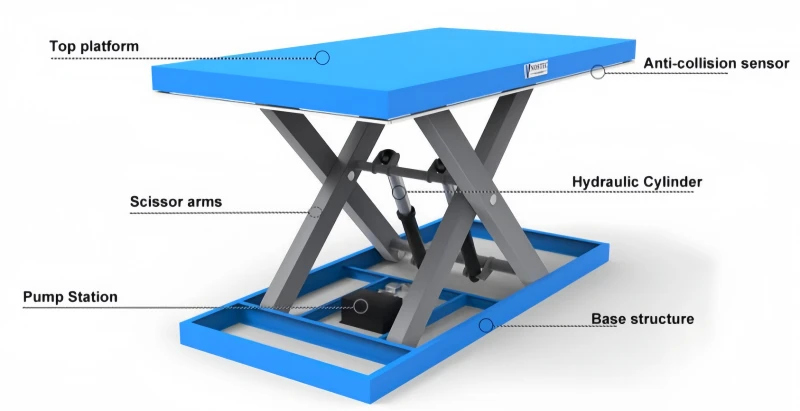
You rely on the platform and base frame as the foundation of every hydraulic lift table. The platform supports your materials during lifting, while the base frame anchors the entire structure for stability.
Powerful Machinery uses heavy-duty metals for both components, ensuring long-lasting performance in demanding environments. The base frame can feature simple or complex designs, depending on your operational needs.
Component | Material Used |
|---|---|
Base Frame | Durable, heavy-duty metals |
Platform | Heavy-duty materials |
These basic lift table parts provide the strength and reliability you need for safe material handling.
Hydraulic Cylinder
The hydraulic cylinder powers the vertical movement of your lift table. It converts hydraulic pressure into a lifting force, raising and lowering the platform smoothly. Common issues include fluid leaks, reduced performance, and unusual noises.
You can prevent most problems by inspecting seals, hoses, and the cylinder body regularly. Powerful Machinery designs cylinders for durability, minimizing downtime and supporting efficient operations.
Fluid leaks may result from worn seals or damaged hoses.
Reduced performance can signal internal wear or mismatched components.
Unusual noises often indicate air entrapment or misalignment.
Scissor Mechanism
The scissor mechanism forms the core of your lift table’s lifting action. Crossed arms open and close in a scissor-like pattern, guiding the platform straight up and down. This design keeps the platform stable and prevents sideways movement.
You benefit from enhanced lifting capacity and robust support, especially when handling heavy loads. The scissor mechanism ensures your lift table operates safely and efficiently.
Hydraulic Pump and Power Unit
The hydraulic pump and power unit generate the pressure needed to move the platform. Electric-powered units deliver smooth, consistent lifting for heavy-duty tasks. Built-in power units save space and boost efficiency.
The design of the hydraulic system—including the cylinder and oil pipes—affects both lifting speed and load capacity. Double-acting cylinders allow you to control both rising and descending speeds, giving you precise handling for different material handling tasks.
Aspect | Description |
|---|---|
Power Unit Type | Built-in or external units affect efficiency and performance. |
Cylinder and oil pipe design influence lifting speed. | |
Control of Descent Speed | Double-acting cylinders enable adjustable speeds for load handling. |
Control Valve and Controls
Control valves direct hydraulic fluid, regulate pressure, and manage flow rates. These functions let you control the movement and speed of your lift table with precision. Powerful Machinery’s control systems meet international safety standards, including ISO and EN guidelines.
You can trust these controls to deliver reliable performance and keep your operations safe.
Standard Organization | Key Safety Standards for Control Systems |
|---|---|
BSI | BS EN 1570-1 for lift table safety |
EN | Overload protection and control system guidelines |
ISO | ISO 3691-5:2014 for electrical control systems |
Safety Features and Limit Switches
Safety features protect you and your team during every lift. Overload protection, emergency stops, and limit switches come standard on Powerful Machinery’s hydraulic lift table parts.
Limit switches prevent the table from exceeding its maximum height, keeping loads stable and reducing accident risks. These features ensure your lift table meets strict safety requirements for industrial environments.
Tip: Always test safety features before each use to maintain a secure workspace.
Wheels, Casters, and Mobility Components
Wheels and casters make your lift table easy to move across different work areas. Mobility design improves usability, allowing you to position the table wherever you need it.
Ergonomic handles and locking wheels reduce strain and prevent injuries. You can rely on these lift table parts to enhance efficiency and safety in any material handling setting.
Maintenance Bar and Accessories
The maintenance bar locks the lift table in place during repairs, protecting you from accidental movement. Accessories such as non-slip pads and locking wheels add extra stability and functionality. Powerful Machinery offers a range of accessories to help you customize your lift table for specific tasks.
Accessory | Purpose |
|---|---|
Non-slip pads | Prevent slipping and enhance stability |
Locking wheels | Keep the lift table stationary during use |
You can also choose foot pump assemblies for manual operation, giving you flexibility in environments where electric power is not available. Foot pump assemblies provide reliable lifting and precise control, making them essential basic lift table parts for many applications.
Lift Table Parts, Function, and Maintenance
Platform: Uses and Care
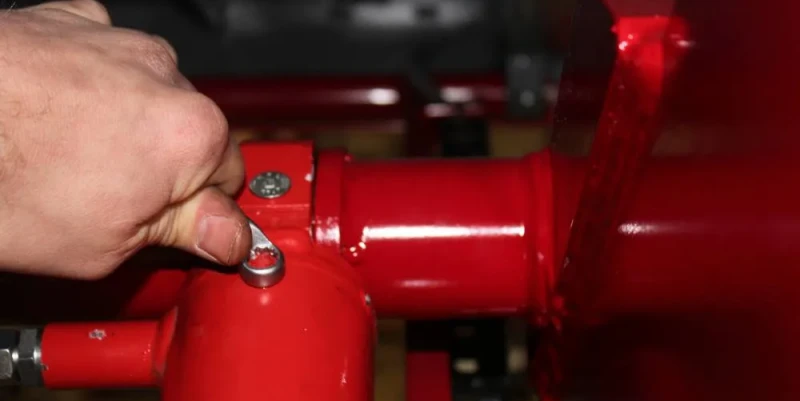
You depend on the platform for safe support of materials during lifting and lowering. The platform must withstand heavy loads and frequent use in demanding environments. You should inspect the platform daily for signs of wear, cracks, or deformation. Routine inspections help you detect issues early and prevent failures.
Inspection Type | Frequency |
|---|---|
Daily Inspection | Recommended for detecting potential issues |
Routine Inspections | Essential for ongoing maintenance and wear detection |
Regular inspections are crucial for identifying wear and preventing failures.
Daily checks can help catch problems early.
Clean the platform regularly to remove debris and spilled fluids. If you notice excessive wear or damage, replace the platform with certified replacement parts from Powerful Machinery. This practice ensures your lift table parts remain reliable and safe for material handling.
Hydraulic Cylinder: Common Issues
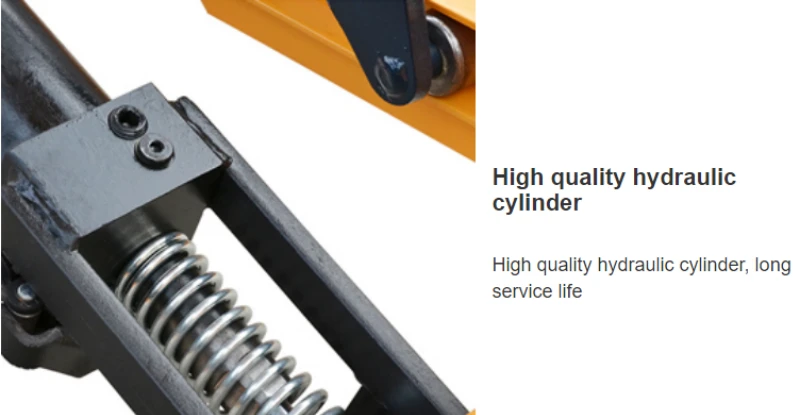
The hydraulic cylinder powers the vertical movement of your lift table. You must keep the cylinder in top condition to avoid downtime and maintain smooth operation. Common issues include fluid leaks, corrosion, and reduced lifting performance.
Inspect the cylinder rod for scoring, pitting, or corrosion.
Clean the rod with a mild solvent and a cloth.
Apply lubricating oil to reduce friction and protect against corrosion.
Lubricate moving parts, including the piston, cylinder bore, and rod.
Perform pressure testing to check for weaknesses.
Regularly inspect and replace worn components like seals and gaskets.
Check and adjust cylinder alignment to prevent uneven wear.
Implement preventive measures against contaminants and harsh conditions.
Analyze hydraulic fluid for contaminants and degradation.
You can prevent most problems by following these maintenance steps. Powerful Machinery designs hydraulic cylinders for durability, but regular care extends their lifespan and keeps your lift table parts functioning efficiently.
Scissor Mechanism: Inspection Tips
The scissor mechanism provides a stable lifting action. You must inspect this component before each shift to ensure safe operation.
Check fluid levels and inspect for leaks.
Inspect the machine’s battery and charge level.
Check tires, including tire pressure.
Inspect lower-level controls.
Test the machine’s steering and brakes.
Verify horns, lights, backup alarms, and gauges are working.
You should also examine operating and emergency controls, personal protective devices, cable and wiring harnesses, and guardrails. Inspect hydraulic, air, pneumatic, fuel, and electrical systems.
Look for missing or unreadable placards, warnings, or operational markings. Check mechanical fasteners and locking pins. Inspect outriggers, stabilizers, and other structures. Identify loose or missing lift table parts.
The pre-operation inspection is a visual check performed before each work shift. Function tests confirm that all machine functions operate correctly. If you find any malfunctions, tag the machine and remove it from service until repairs are made.
Pump and Power Unit: Troubleshooting
The pump and power unit generate hydraulic pressure for lifting. You must troubleshoot these components promptly to avoid operational delays.
Check for leaks in lines or hoses.
Ensure proper oil levels in the reservoir.
Inspect electrical components for faults.
Clean the suction screen if clogged.
Tighten any loose fittings in the suction line.
Remove and clean the breather holes in the reservoir fill plug.
Verify the motor voltage and wiring.
Check for structural binds in the lift.
Ensure the manual lowering device is not engaged.
You can resolve most issues by following these steps. Powerful Machinery’s hydraulic lift table parts feature robust pumps and power units, but regular maintenance keeps them performing at their best.
Control Valve: Replacement Guide
Control valves regulate hydraulic fluid flow and pressure. You must recognize signs of failure to maintain safe and efficient operation.
Sign of Failure | Description |
|---|---|
Loss of Hydraulic Power and Performance | Noticeable loss of force or sluggish response due to internal leakage or blocked flow path. |
Erratic or Slow Operation | Jerky or delayed movements indicate a stuck spool or fluid restriction. |
Unusual Noises | Changes in noise, such as whining or knocking, indicate cavitation or worn-out components. |
Fluid Leaks and Pressure Drops | Visible leaks and sudden pressure drops, often due to faulty seals or O-rings. |
Overheating of the Hydraulic System | Excessive heat indicates the valve is forcing the pump to work harder, leading to fluid breakdown. |
If you notice any of these signs, replace the control valve with certified replacement parts. Powerful Machinery offers high-quality valves that meet international safety standards.
Safety Features: Regular Checks
Safety features and limit switches protect you during every lift. You must test these components frequently to ensure reliable operation.
Maintenance Frequency | Task Description |
|---|---|
Annual (Every 2000 Hours) | Verify and recalibrate all limit switches |
Weekly (Every 40 Hours) | Test all safety features, including toe guards |
Daily (Every 8 Hours) | Test emergency stop functionality |
Daily | Test safety locks and limit switches |
You should test emergency stops, safety locks, and limit switches daily. Weekly and annual checks help you maintain compliance with safety standards. Powerful Machinery’s lift table parts include advanced safety features for maximum protection.
Tip: Always document your safety checks to track maintenance history and support compliance audits.
Mobility Components: Wear and Replacement
Wheels, casters, and mobility components make your lift table easy to move. You must inspect these parts regularly for signs of wear, flat spots, or loose fittings. Replace worn wheels and casters promptly to prevent accidents and maintain smooth operation.
Check wheel alignment and locking mechanisms.
Inspect handles for ergonomic comfort and secure attachment.
Replace damaged or worn mobility components with certified lift table parts.
You can enhance efficiency and safety in material handling by keeping mobility components in top condition.
Maintenance Bar: Safe Repairs
The maintenance bar locks the lift table in place during repairs. You must engage the maintenance bar before performing any maintenance tasks. This practice prevents accidental movement and protects you from injury.
Inspect the maintenance bar for wear or damage.
Ensure the bar locks securely in place.
Replace the bar if you notice any defects.
Powerful Machinery provides durable maintenance bars and accessories to support safe repairs. You can rely on these lift table parts to maintain a secure workspace.
Understanding Hydraulic Lift Tables Manuals
Types of Manuals: User, Service, Parts
You will encounter three main types of manuals when working with hydraulic lift tables. Each manual serves a unique purpose:
User Manual: Guides you through daily operation, safety instructions, and basic troubleshooting.
Service Manual: Provides detailed maintenance procedures, advanced troubleshooting, and repair instructions.
Parts Manual: Lists every component with diagrams and part numbers for ordering replacements.
You should always check the manual type before starting any task. This practice ensures you use the correct information for safe and efficient work.
What Manuals Include?
Manuals from Powerful Machinery follow strict documentation standards. You will find:
Section | What You Learn |
|---|---|
Safety Instructions | How to avoid accidents and use equipment safely |
Operating Procedures | Step-by-step directions for daily use |
Maintenance Schedules | When and how to inspect or service parts |
Troubleshooting Guides | Solutions for common problems |
Parts Diagrams | Visuals and numbers for every component |
You can rely on these manuals to keep your equipment running smoothly and safely.
How to Read Manuals Effectively?
You should read manuals with focus and attention to detail. Here are some tips:
Start with the table of contents to find the section you need.
Study diagrams closely. Match each part in the image to its label.
Follow the step-by-step instructions in order. Do not skip steps.
Look for safety warnings and notes. These highlight critical actions.
Keep the manual nearby during maintenance or repairs for quick reference.
Tip: If you have questions, contact Powerful Machinery’s support team or visit the official website for more resources.
You will find that clear manuals help you maximize the performance and safety of hydraulic lift tables.
Finding and Using the Right Manual
Sourcing Manuals from Powerful Machinery
You can access official hydraulic lift table manuals directly from Powerful Machinery. The manufacturer provides comprehensive documentation for every model, ensuring you have the correct information for operation and maintenance. Visit the official website or contact the support team for printed or digital manuals.
For online access, you can find the official manual for hydraulic lift tables at Hydraulic Lift Table Manual. This resource gives you step-by-step instructions, safety guidelines, and detailed diagrams. You should always use manufacturer-supplied manuals to guarantee accuracy and compliance with industry standards.
Online Resources for Manuals
You have several options when searching for hydraulic lift table manuals online. Manufacturer websites offer downloadable PDFs and interactive guides. Industry forums and material handling websites sometimes provide troubleshooting tips and parts lists.
You can also find specialized resources for accessories such as foot pump rebuild kits, which help you maintain manual lift tables. Always verify that online manuals match your specific model and come from trusted sources.
Using official documentation ensures you follow proper procedures and keep your equipment safe.
Troubleshooting with Manuals
Manuals help you diagnose and resolve common hydraulic lift table issues. You will find troubleshooting sections that address frequent problems, including:
The system does not operate, runs too slowly or quickly, or performs unpredictably.
The oil foams or overheats.
The control valve binds, drops load, or leaks.
The cylinder leaks, knocks, or lowers incorrectly.
You can use these guides to pinpoint faults and determine the best repair strategy. Manuals also include instructions for maintaining components such as foot pump rebuild kits, which restore manual lift tables to peak performance.
Repair Guidance from Manuals
You rely on manuals for safe and effective repairs. Step-by-step instructions walk you through replacing worn parts, adjusting hydraulic systems, and calibrating safety features. Diagrams show you how to install accessories like foot pump rebuild kits, ensuring proper fit and function.
Manuals also highlight safety precautions, helping you avoid accidents during maintenance. If you need additional support, Powerful Machinery’s technical team stands ready to assist you with expert advice and documentation.
Tip: Keep your manuals organized and accessible. Quick reference during maintenance saves time and prevents mistakes.
Maintenance and Troubleshooting for Hydraulic Lift Tables
Routine Maintenance Steps
You keep your hydraulic lift table in top condition by following a regular maintenance schedule. Start each day with a visual inspection. Look for leaks, worn parts, or loose bolts. Clean the platform and remove any debris.
Check the hydraulic fluid level and top it off if needed. Lubricate moving joints and the scissor mechanism to reduce friction and prevent wear.
Weekly Checklist:
Inspect hoses and fittings for cracks or leaks.
Test all safety features, including emergency stops and limit switches.
Tighten any loose fasteners.
Examine wheels and casters for smooth movement.
Monthly Tasks:
Change hydraulic fluid if it appears dirty or contaminated.
Inspect the hydraulic cylinder for corrosion or pitting.
Review the maintenance bar for secure locking.
Tip: Always use certified replacement parts from Powerful Machinery to maintain safety and performance.
Common Troubleshooting Scenarios
You may encounter issues during operation. Recognize these common problems and address them quickly:
Problem | Likely Cause | Solution |
|---|---|---|
The table will not lift | Low fluid, faulty pump | Check fluid, inspect pump |
Slow or jerky movement | Air in the system, worn seals | Bleed system, replace seals |
Platform drifts down | Leaking cylinder or valve | Inspect and repair leaks |
Unusual noises | Misalignment, lack of lube | Realign, lubricate joints |
If you notice persistent issues, stop using the table and consult your manual for detailed troubleshooting steps.
Using Manuals for Safe Repairs
You rely on your manual for safe and effective repairs. Manuals from Powerful Machinery provide step-by-step instructions and clear diagrams. Always read the safety warnings before starting any repair. Follow each step in order and use the recommended tools.
Note: Never bypass safety features or attempt repairs without locking the maintenance bar in place.
Keep your manual within reach during maintenance. If you have questions, contact Powerful Machinery’s support team for expert guidance. This approach ensures you maintain a safe workspace and extend the life of your hydraulic lift table.
Conclusion
You gain confidence and efficiency when you understand every part of your hydraulic lift tables and use the right manuals. Proper care and regular maintenance help you avoid downtime and keep your equipment safe.
Powerful Machinery designs each table for reliability and long service life. Always consult your manuals and contact our expert team for support when you need it.
FAQ
What should you do if your hydraulic lift table will not lift?
First, check the hydraulic fluid level. Inspect the pump and look for leaks or damaged hoses. If the problem continues, consult your manual or contact Powerful Machinery’s support team for expert help.
How often should you perform maintenance on your lift table?
You should inspect your lift table daily and perform routine maintenance weekly. Monthly checks help you catch early signs of wear. Always follow the maintenance schedule in your manual for best results.
Where can you find replacement parts for Powerful Machinery hydraulic lift tables?
You can order certified replacement parts directly from Powerful Machinery’s website. The parts manual provides diagrams and part numbers to help you select the correct components.
Why is it important to use the official manual for repairs?
Official manuals give you accurate instructions, safety warnings, and detailed diagrams. You reduce the risk of mistakes and injuries by following the manufacturer’s guidelines.
Can you customize your hydraulic lift table for specific tasks?
Yes, you can request custom features such as:
Extended platforms
Enhanced controls
Increased load capacity
Mobile designs
Contact Powerful Machinery for tailored solutions that fit your operational needs.