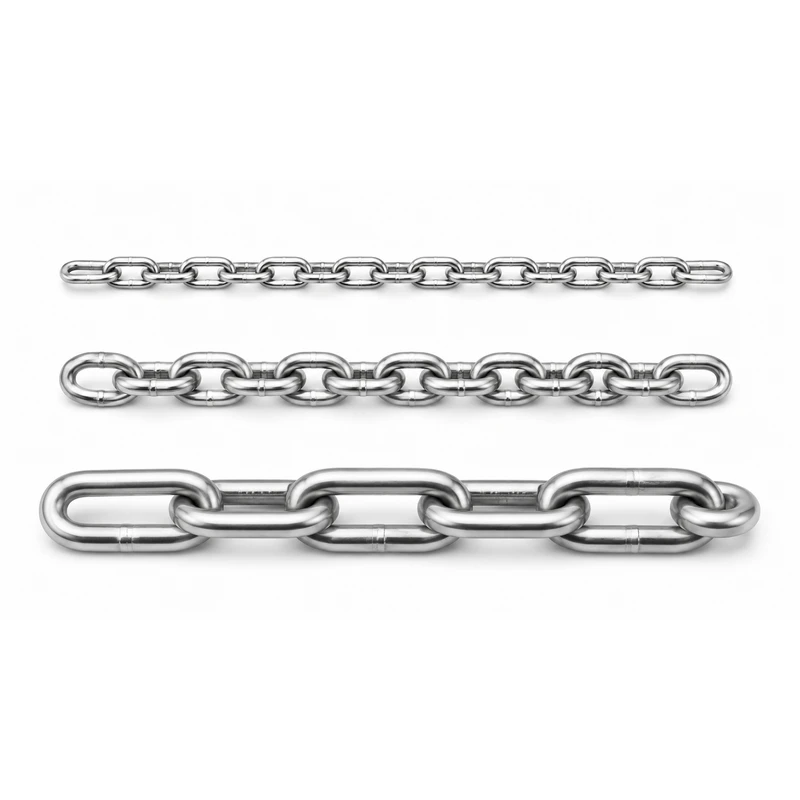
When you haul timber, tow heavy loads, or secure lumber for transport, you need to match the chain grade to your job’s strength and safety needs. Choosing the right log chain grades prevents sudden failures and keeps your work efficient.
If you overlook proper inspection or mix chain types, you risk dangerous breaks and uneven stress. Powerful Machinery delivers high-quality logging chains trusted by professionals worldwide. Always consider the type of work and the required load limits to ensure safe, reliable results.
Key Takeaways
Understand chain grades to match the right chain to your job’s strength and safety needs.
Always check the load rating before selecting a chain to prevent accidents and equipment damage.
Regularly inspect chains for wear and damage to ensure safety and extend service life.
Choose the correct chain grade based on your specific application, such as logging, towing, or lifting.
Consult with experts to customize chains for your needs, improving safety and efficiency.
Understanding Log Chain Grades
What Are Chain Grades?
You need to understand what chain grades mean before you select the right equipment for your job. Chain grades classify the strength and performance of a chain based on its material composition and manufacturing process.
Industry organizations such as ASTM, NACM, and OSHA set strict standards for these grades. The following table summarizes the main standards that guide the production and use of log chain grades:
Standard | Description |
|---|---|
OSHA | Ensures compliance with safety regulations for lifting equipment. |
ASME B30.9 | Requires proofloading of alloy lifting chain assemblies before use. |
NACM | Specifies chain specifications and requirements for safe use. |
ASTM | Sets standards for materials and performance of chains used in lifting. |
ASTM uses specifications like A413, A391, and A973 to define how manufacturers must test and rate chains. Chain grades are determined by measuring the ultimate breaking strength of the chain material. This process helps you identify which chain grades fit your application.
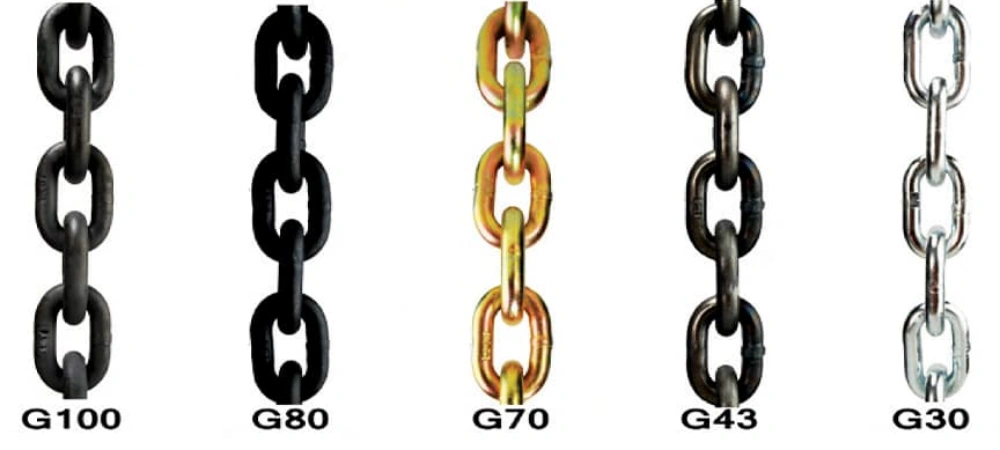
Powerful Machinery manufactures a full range of logging chains, including Grade 30, Grade 43, Grade 70, Grade 80, and Grade 100. You can choose from various sizes, materials, and accessories to match your specific needs.
Why Chain Grades Matter?
Choosing the correct log chain grades is critical for safety and efficiency. Each grade offers different properties and is designed for specific tasks. The table below shows how different chain grades perform in real-world applications:
Chain Grade | Properties | Applications |
|---|---|---|
Grade 30 | General-purpose, low tensile strength | Light construction, agriculture, and marine |
Grade 43 | Stronger, better wear resistance | Container securement, logging, and towing |
Grade 70 | Higher strength, heat-treated | Load securement, towing by truckers/loggers |
Grade 80 | High-strength, economical for overhead lifting | Sling component, heavy-duty towing |
Grade 100 | 25% stronger than Grade 80 | Lifting in construction and manufacturing |
You cannot use the same chain grade for every job. For example, using Grade 30 for critical lifting can cause catastrophic failure. Overloading any chain or skipping regular inspections increases the risk of accidents and equipment damage.
Powerful Machinery’s expertise ensures you receive chains that meet or exceed international standards. You get reliable products for forestry, construction, marine, and cargo handling. When you understand chain grades, you make safer and more efficient choices for your work.
Log Chain Grades Comparison
Grade 30 and 43 Overview
You often see Grade 30 and Grade 43 chains in general-purpose and moderate-duty tasks. Grade 30 chains use low-carbon steel. They work well for light construction, agriculture, and marine jobs.
Grade 43 chains use medium-carbon steel. They provide higher strength and better wear resistance. You can use them for container securement, logging, and towing.
Tip: Always check the load rating before you select a chain for your job. Using the right grade prevents accidents and equipment damage.
Here is a quick comparison:
Chain Grade | Load Rating | Breaking Strength | Typical Use Cases |
|---|---|---|---|
Lower than Grade 43 | Not specified | Light construction, marine, and agriculture | |
Higher than Grade 30 | Not specified | Logging, towing, and securement |
Powerful Machinery offers both grades in multiple sizes and with popular fittings. You can customize chain length and accessories to match your equipment and safety needs.
Grade 70, 80, and 100 Uses
You need higher-grade chains for demanding jobs. Grade 70 chain is the industry standard for heavy-duty load securement and transport. Truckers and loggers use it to secure cargo. Grade 70 chain is not suitable for overhead lifting, but it delivers higher performance than lower grades.
Grade 80 chains are made from high-strength alloy steel. You can use them for overhead lifting, rigging, and tough construction jobs. Grade 100 chains offer up to 25% more working load limit than Grade 80. They are the best choice for critical lifting and rigging in industries like oil and gas.
Chain Grade | Recommended Use | Key Features |
|---|---|---|
Grade 70 | Heavy-duty load securement, transport | Higher performance, not for overhead lifting |
Grade 80 | Overhead lifting, rigging | Standard for industrial lifting |
Grade 100 | Critical lifting, rigging | Up to 25% higher working load limits |
You can order these chains from Powerful Machinery in custom sizes, lengths, and with specialized hooks or links. This flexibility ensures you get the right chain for your application. Customization improves safety and efficiency in the field.
Note: Always match the chain grade to your job’s requirements. Consult with Powerful Machinery for expert advice and tailored solutions.
Choosing the Right Log Chain Grades for Your Job
Assessing Application Needs
You must start by understanding your job’s unique requirements before selecting log chain grades. Each application—whether forestry, towing, or construction—demands a specific approach. Consider these factors:
Type of welding and material used in the chain
Grade and strength needed for the task
Durability for heavy-duty operations
The specific application, such as agriculture, material handling, or lumber work
You should also evaluate the environment. Chains used outdoors or in marine settings face moisture, temperature extremes, and chemical exposure.
Stainless steel chains, especially those made from Grade 316, resist corrosion and perform well in harsh conditions. Grade 304 stainless steel works for general outdoor use, while Grade 316 is best for saltwater environments.
Tip: Always match the chain’s grade and material to the job and environment. This prevents premature wear and ensures long-term reliability.
Powerful Machinery offers a wide range of chains and accessories. You can customize length, grade, and fittings to fit your equipment and safety needs. Their team will help you evaluate your application, load capacity, and environmental challenges.
Common Mistakes and Consequences
Selecting the wrong chain can lead to serious problems. Review this table to avoid common errors:
Common Mistakes | Consequences |
|---|---|
Improper sizing/selection | Operational issues, failures, and reduced service life |
Overloading | 40% of premature failures, mechanical breakdowns |
Uneven loading | Misalignment, increased wear, sudden failure |
You should always use the correct chain for load securement and never mix different grades in one setup.
Working Load Limits
The working load limit is the maximum force you can safely apply to a chain. You must never exceed this value. To calculate the working load limit, divide the chain’s minimum breaking strength by the safety factor.
For most lifting and transport chains, the safety factor is 4:1. For example, a chain with a breaking strength of 20,000 lbs has a working load limit of 5,000 lbs.
Follow these steps to determine the right chain:
Identify the grade, length, and link diameter required.
Check the working load limit for your chosen grade and size.
Consider extra factors like wind, shock, speed, and abrasion.
Never exceed the working load limit. Doing so is illegal and unsafe.
Here is a quick reference table for working load limits by chain size and grade:
Chain Size | Grade 30 | Grade 43 | Grade 70 | Grade 80 | Grade 100 |
|---|---|---|---|---|---|
1/4″ | 1,300 | 2,600 | 3,150 | 3,500 | 4,300 |
5/16″ | 1,900 | 3,900 | 4,700 | 4,500 | 5,700 |
3/8″ | 2,650 | 5,400 | 6,660 | 7,100 | 8,800 |
1/2″ | 4,500 | 9,200 | 11,300 | 12,000 | 15,000 |
You must select a chain that matches or exceeds your job’s requirements. For example, logging and towing often use Grade 43 or Grade 70 chains. Heavy-duty lifting and rigging require Grade 80 or Grade 100. Always refer to the manufacturer’s charts and consult with Powerful Machinery for expert advice.
Safety and Best Practices
You must prioritize safety when using chains. Regular inspection and maintenance prevent accidents and extend service life. Here are essential safety practices:
Inspect chains before each use for wear, cracks, or elongation.
Clean and dry chains after every job to prevent rust.
Lubricate chains as recommended to maintain flexibility.
Store chains flat or on racks, away from moisture and chemicals.
Label chains with type, size, and inspection date for tracking.
Alert: Never use chains with unknown ratings or visible damage. Replace worn or cracked links immediately.
Inspection frequency depends on service conditions:
Service Type | Definition | Inspection Timing |
|---|---|---|
Normal | Less than 65% of rated load, used ≤15% of time | Annual |
Heavy | Over 65% of rated load, used >15% of time | Every 6 months |
Severe | Extreme conditions (temperature, salt, etc.) | Quarterly |
You should avoid these common causes of failure:
Using undersized chains for the load
Improper storage leading to rust
Skipping regular inspections
Mixing different grades in one rigging setup
Failing to lubricate chains
Powerful Machinery supports you with expert consultation, helping you choose the right chain grade, assess environmental risks, and set up a maintenance plan. Their customization services ensure you get the exact chain for your job, improving both safety and efficiency.
Note: When in doubt, contact Powerful Machinery for guidance. Their team will help you meet industry standards and keep your operation safe.
Quick Reference for Logging Chain Grades
Chain Grades Table
You need a simple way to compare chain grades for your job. Use this table to review the main features, working load limits, and best uses for each chain grade. This quick reference helps you select the right chain for safety and efficiency.
Chain Grade | Material Type | Working Load Limit (1/2″) | Common Applications | Overhead Lifting |
|---|---|---|---|---|
Grade 30 | Low-carbon steel | 4,500 lbs | Light-duty, marine, farming | No |
Grade 43 | Medium-carbon steel | 9,200 lbs | Logging, towing, and securement | No |
Heat-treated carbon | 11,300 lbs | Transport, load securement | No | |
Alloy steel | 12,000 lbs | Lifting, rigging, slings | Yes | |
Alloy steel | 15,000 lbs | Heavy lifting, rigging | Yes |
Tip: Always check the chain’s tag or markings to confirm the grade before use.
Selection Checklist
You can follow this checklist to make sure you choose the right chain for your job. This process reduces mistakes and improves safety.
Identify the type of work (logging, towing, lifting, or transport).
Check the required working load limit for your application.
Select the chain grade that matches your load and safety needs.
Choose the correct chain size for your equipment.
Inspect the chain for wear, rust, or damage before each use.
Confirm the chain is certified for your industry standards.
Store chains properly to prevent corrosion and tangling.
Contact Powerful Machinery for custom chain solutions or expert advice.
You can always reach out to Powerful Machinery if you have questions about chain selection or need a custom setup.
Conclusion
Selecting the right log chain grade keeps your job safe and efficient. You protect your team and equipment when you match the chain for load securement to your task. Powerful Machinery stands as your trusted source for carbon grade 70 chain, alloy chain grade 80, and grade 100 solutions. Before each use, always check:
Compliance with OSHA, ASTM, and ASME standards
That the chain grade and breaking strength meet your application needs
Rely on quick-reference tools and reach out to Powerful Machinery for expert support.
FAQ
What is the difference between chain grades?
You see differences in strength, material, and application. Higher grades handle heavier loads and tougher jobs. Lower grades work for light-duty tasks. Always check the grade before use.
Can you use logging chains for overhead lifting?
You should only use Grade 80 or Grade 100 chains for overhead lifting. Lower grades do not meet safety standards for lifting people or heavy equipment.
How do you measure a logging chain?
You measure the diameter of the chain link with a caliper. You also check the inside length and width of each link. Accurate measurement ensures proper fit and safety.
How often should you inspect your logging chains?
You should inspect chains before every use. For heavy or severe service, increase inspection frequency. Look for wear, cracks, or elongation. Replace damaged chains immediately.