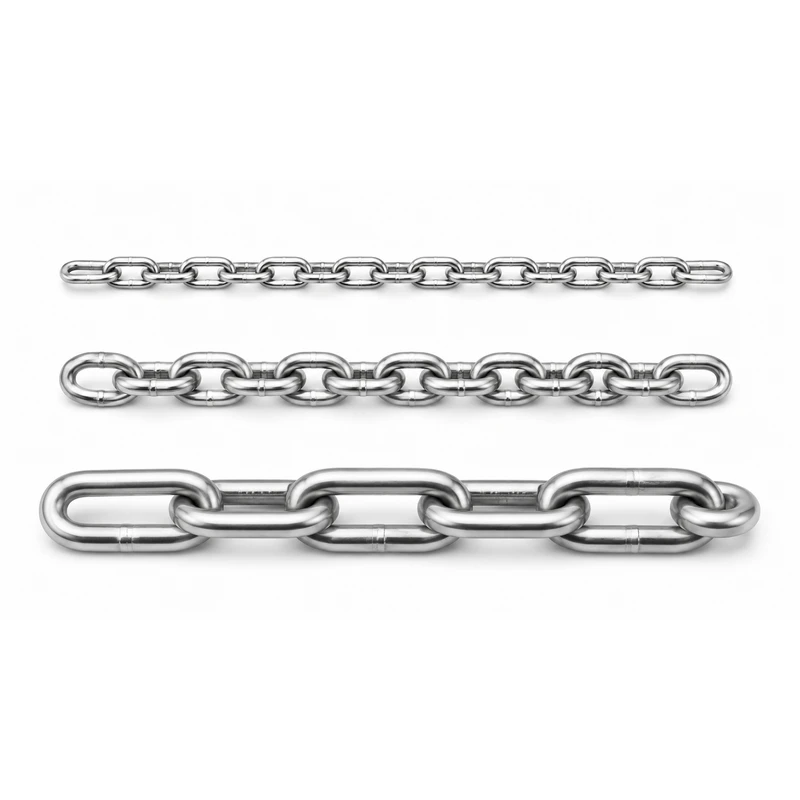
You face unique rules every time you tow a trailer or vehicle. Each state sets its own standards for safety. For example, some states only allow chains during snow or ice, while others require them for certain vehicles or seasons.
The table below highlights a few states with specific towing chain laws:
State | Unique Rule Example |
|---|---|
Utah | Requires chains for commercial vehicles in the winter months. |
Washington | Demands chains for large vehicles on certain routes from November to April. |
Vermont | Sets special rules for vehicles with tandem-drive axles. |
Understanding towing chain requirements helps you stay safe and legal on the road.
Key Takeaways
Always check your state’s towing chain laws before traveling. Each state has unique requirements that ensure safety.
Use safety chains every time you tow a trailer. They act as a backup connection to prevent accidents if the hitch fails.
Invest in high-quality towing chains, like Powerful Machinery Tow Chains. They meet safety standards and provide peace of mind.
Be aware of penalties for not following towing chain laws. Fines can be steep, and non-compliance can lead to serious consequences.
Educate everyone involved in towing about proper practices. Knowledge helps ensure safety and compliance on the road.
Why Towing Chain Requirements Matter?
Safety and Legal Reasons
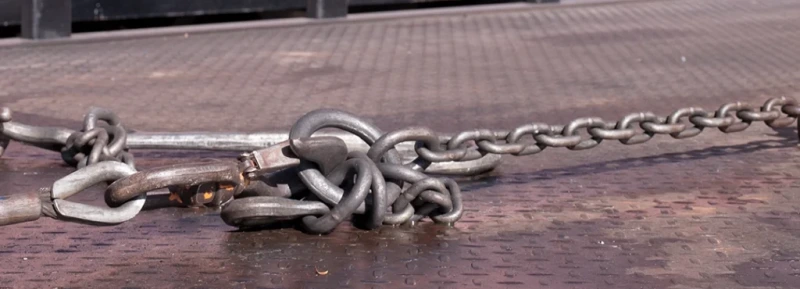
You must understand towing chain requirements before you hit the road. These rules exist because chains are required for safety in many situations. State transportation departments stress that towing chain requirements are required for safety, especially during harsh weather.
When you drive in snow, ice, or heavy rain, chains are required for safety to prevent accidents. Chains keep your trailer attached if the hitch fails. This backup is required for safety and can save lives.
Note: Towing chain requirements are not just suggestions. They are required for safety and legal compliance in every state.
The table below shows how several states describe why chains are required for safety:
State | Safety Reason Cited | Legality |
|---|---|---|
Idaho | Required for safety due to weather conditions | Allowed |
Illinois | Required for safety due to snow, ice, or other conditions | Allowed |
Indiana | Allowed when required for safety due to weather conditions | Allowed, not mandatory |
Iowa | Allowed when required for safety due to weather conditions | Allowed, not mandatory |
Kansas | Allowed when required for safety due to weather conditions | Allowed, not mandatory |
You need chains that meet towing chain requirements and are required for safety. Powerful Machinery tow chains give you peace of mind. Their verified load ratings and high-strength steel construction ensure your equipment is always required for safety and meets all towing chain requirements.
You can trust these chains to keep you compliant and secure.
Common Penalties
Failing to follow towing chain requirements can cost you. States enforce these rules because they are required for safety. If you ignore towing chain requirements, you risk fines and even criminal charges.
Some states issue tickets if you do not use chains when required for safety. Others increase penalties if your actions cause accidents or block highways.
For example, Oregon fines drivers at least $880 for not using chains when required for safety. California fines range from $58 to $750. Colorado charges $50 for not carrying chains, $500 for not installing them, and $1,000 if you block the highway.
Vermont and Wyoming also have steep penalties. These penalties show that towing chain requirements are always required for safety and legal compliance.
General Towing Chain Requirements
What Are Safety Chains?
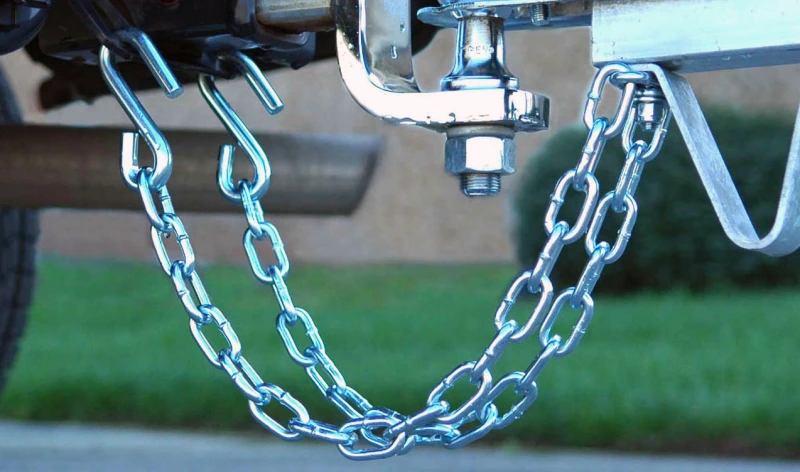
Safety chains act as a critical backup connection between your towing vehicle and trailer. You must use hardware that meets Department of Transportation standards to ensure safety and compliance. The table below outlines common hardware types, their approval status, and best uses:
Hardware Type | DOT Approved | Typical WLL Range | Best Application | Key Requirement |
|---|---|---|---|---|
Clevis Grab Hook w/ Latch | Yes | 3,500-15,000 lbs | Primary safety chain connection | Must have a safety latch |
S-Hook with Safety Latch | Yes | 2,000-8,000 lbs | Light to medium trailers | Latch must be functional |
Quick Link (Properly Rated) | Yes | 1,500-12,000 lbs | Permanent chain connections | Must be fully tightened |
Shackle (Screw Pin) | Yes | 2,000-20,000 lbs | Heavy-duty applications | The pin must be secured |
Open S-Hook (No Latch) | NO | N/A | NOT PERMITTED | Can bounce off during travel |
Carabiners (Non-Rated) | NO | N/A | NOT PERMITTED | Not rated for towing loads |
You should always select hardware with a verified working load limit (WLL) that matches your trailer’s weight.
When Chains Are Required?
Most states have clear rules for when you must use safety chains. You will find chains required in these situations:
Passenger vehicles towing trailers must use chains or approved traction devices on at least two drive wheels. This rule applies even if your vehicle has snow tires or all-wheel drive.
In California, chain control areas often appear in mountain passes during winter. You should carry the chains required for these conditions.
Colorado law requires all vehicles to carry chains or approved traction devices from September 1 to May 31. Commercial vehicles over 16,001 lbs. must follow specific chaining rules based on axle type.
You must check your state’s laws before every trip.
Exceptions and Special Cases
Some states allow exceptions for certain vehicles or weather conditions. For example, you may find relaxed rules for agricultural equipment or local deliveries.
However, most states do not allow open S-hooks or non-rated carabiners as safety chain connections. You should always use chains required by law and choose products that meet or exceed DOT standards.
Powerful Machinery Tow Chains help you meet these requirements. You get high-strength steel, heat-treated links, and verified load ratings. These features ensure your towing setup stays compliant and secure in every state.
State-by-State Towing Chain Requirements
Alabama
In Alabama, you must connect your trailer to your towing vehicle using at least two safety chains or cables. Cross these chains under the trailer tongue and attach them near the bumper points of both vehicles. The chains should allow for free turning and must be securely attached to the tow-bar at the crossing point.
This setup prevents disconnection and ensures safety on the road. The use of tire chains is also permitted during adverse weather, especially in winter. Powerful Machinery Tow Chains provide the strength and reliability you need to meet Alabama’s requirements.
Alaska
Alaska requires you to use safety chains when towing any trailer. The chains must be strong enough to control the trailer if the hitch fails. In winter, the use of tire chains is common due to icy and snowy roads. You should always carry chains and be prepared to install them when conditions demand.
Powerful Machinery Tow Chains, with their verified load ratings, help you stay compliant and safe in Alaska’s challenging environment.
Arizona
Arizona law mandates the use of safety chains for all towed trailers. The chains must be attached securely and crossed under the tongue. The use of tire chains is allowed during snow or icy conditions, especially in northern regions. You should check local advisories before traveling.
Arkansas
In Arkansas, you must use safety chains when towing a trailer. The chains should be strong and properly attached to prevent separation. The use of tire chains is permitted during winter weather. Always ensure your chains meet state standards. Powerful Machinery Tow Chains help you maintain compliance and safety.
California
California enforces strict towing chain laws. You must use safety chains for all trailers. Trailers over 1,500 pounds require brakes and a breakaway switch.
State | Safety Chains Required | Brakes Required for Trailers Over (lbs) | Breakaway Switch Required |
|---|---|---|---|
California | Yes | 1,500 | Yes |
The use of tire chains is mandatory in chain control areas, especially in mountain passes during winter. You should carry chains and be ready to install them when required. Powerful Machinery Tow Chains meet California’s high standards for safety and reliability.
Colorado
Colorado’s towing chain requirements are among the strictest in the country. You must use safety chains for all trailers. The use of tire chains is heavily regulated, especially in mountainous regions.
Colorado’s snow chain laws differentiate between passenger and commercial vehicles.
During severe weather, the Colorado Department of Transportation can require you to use metal snow chains or approved traction devices on certain highways.
From September 1 to May 31, all commercial vehicles must carry chains or approved traction devices on specified routes.
Strict chain and traction laws are enforced on I-70 in mountainous regions during bad weather.
Powerful Machinery Tow Chains help you comply with Colorado’s demanding regulations.
Connecticut
Connecticut requires you to use safety chains when towing a trailer. The chains must be strong and properly attached. The use of tire chains is allowed during snow and ice conditions.
Always check for local advisories before traveling. Powerful Machinery Tow Chains provide the strength and reliability you need for Connecticut roads.
Delaware
Delaware law requires safety chains for all towed trailers. The chains must be securely attached and crossed under the tongue. The use of tire chains is permitted during winter weather. You should always ensure your chains meet state standards. Powerful Machinery Tow Chains help you stay compliant and safe.
Florida
Florida mandates the use of safety chains for all trailers. The chains must be strong and properly attached. The use of tire chains is allowed during adverse weather. Penalties for non-compliance can be severe.
Penalty Type | Description |
|---|---|
Fines | Monetary penalties for non-compliance |
Penalties | Additional charges that may apply |
Vehicle Impoundment | Potential towing and impoundment of the vehicle |
Powerful Machinery Tow Chains help you avoid fines and keep your towing setup secure.
Georgia
Georgia requires you to use safety chains when towing a trailer. The chains must be strong and properly attached. The use of tire chains is permitted during winter weather. Always check for local advisories before traveling. Powerful Machinery Tow Chains provide the durability you need for Georgia’s roads.
Hawaii
In Hawaii, you must use safety chains for all towed trailers. The chains must be strong and securely attached. The use of tire chains is rare due to the climate, but you should always follow state regulations. Powerful Machinery Tow Chains help you stay compliant.
Idaho
Idaho law requires safety chains for all trailers. The chains must be strong and properly attached. The use of tire chains is allowed during snow and ice conditions. You should always check for local advisories before traveling. Powerful Machinery Tow Chains provide the strength and reliability you need for Idaho’s roads.
Illinois
Illinois requires you to use safety chains for all towed trailers. The chains must be crossed under the trailer coupler, forming an ‘X’ beneath the tongue. This pattern helps catch and support the trailer tongue if the coupler separates from the hitch ball.
Safety chains must be crossed under the trailer coupler.
The crossing pattern should form an ‘X’ beneath the tongue.
This pattern is designed to catch and support the trailer tongue if the coupler separates from the hitch ball.
The use of tire chains is permitted during winter weather. Powerful Machinery Tow Chains help you meet Illinois’ requirements.
Indiana
Indiana law requires safety chains for all trailers. The chains must be strong and properly attached. The use of tire chains is allowed during snow and ice conditions. Always check for local advisories before traveling. Powerful Machinery Tow Chains provide the durability you need for Indiana’s roads.
Iowa
Iowa mandates the use of safety chains for all towed trailers. The chains must be strong and securely attached. The use of tire chains is permitted during winter weather. You should always ensure your chains meet state standards. Powerful Machinery Tow Chains help you stay compliant and safe.
Kansas
Kansas requires you to use safety chains when towing a trailer. The chains must be strong and properly attached. The use of tire chains is allowed during snow and ice conditions. Always check for local advisories before traveling. Powerful Machinery Tow Chains provide the strength and reliability you need for Kansas roads.
Kentucky
Kentucky law requires safety chains for all trailers. The chains must be strong and securely attached. The use of tire chains is permitted during winter weather. You should always ensure your chains meet state standards. Powerful Machinery Tow Chains help you stay compliant and safe.
Louisiana
Louisiana mandates the use of safety chains for all towed trailers. The chains must be strong and properly attached. The use of tire chains is allowed during snow and ice conditions. Always check for local advisories before traveling. Powerful Machinery Tow Chains provide the durability you need for Louisiana’s roads.
Maine
Maine requires you to use safety chains when towing a trailer. The chains must be strong and securely attached. The use of tire chains is permitted during winter weather. You should always ensure your chains meet state standards. Powerful Machinery Tow Chains help you stay compliant and safe.
Maryland
Maryland law requires safety chains for all trailers. The chains must be strong and properly attached. The use of tire chains is allowed during snow and ice conditions. Always check for local advisories before traveling. Powerful Machinery Tow Chains provide the strength and reliability you need for Maryland roads.
Massachusetts
Massachusetts mandates the use of safety chains for all towed trailers. The chains must be strong and securely attached. The use of tire chains is permitted during winter weather. You should always ensure your chains meet state standards. Powerful Machinery Tow Chains help you stay compliant and safe.
Michigan
Michigan requires you to use safety chains when towing a trailer. The chains must be strong and properly attached. The use of tire chains is allowed during snow and ice conditions. Always check for local advisories before traveling. Powerful Machinery Tow Chains provide the durability you need for Michigan’s roads.
Minnesota
Minnesota law requires safety chains for all trailers. The chains must be strong and securely attached. The use of tire chains is permitted during winter weather. You should always ensure your chains meet state standards. Powerful Machinery Tow Chains help you stay compliant and safe.
Mississippi
Mississippi mandates the use of safety chains for all towed trailers. The chains must be strong and properly attached. The use of tire chains is allowed during snow and ice conditions.
Always check for local advisories before traveling. Powerful Machinery Tow Chains provide the strength and reliability you need for Mississippi roads.
Missouri
Missouri requires you to use safety chains when towing a trailer. The chains must be strong and securely attached. The use of tire chains is permitted during winter weather. You should always ensure your chains meet state standards. Powerful Machinery Tow Chains help you stay compliant and safe.
Montana
Montana law requires safety chains for all trailers. The chains must be strong and properly attached. The use of tire chains is allowed during snow and ice conditions. Always check for local advisories before traveling. Powerful Machinery Tow Chains provide the durability you need for Montana’s roads.
Nebraska
Nebraska mandates the use of safety chains for all towed trailers. The chains must be strong and securely attached. The use of tire chains is permitted during winter weather. You should always ensure your chains meet state standards. Powerful Machinery Tow Chains help you stay compliant and safe.
Nevada
Nevada requires you to use safety chains when towing a trailer. The chains must be strong and properly attached. The use of tire chains is allowed during snow and ice conditions. Always check for local advisories before traveling. Powerful Machinery Tow Chains provide the strength and reliability you need for Nevada roads.
New Hampshire
New Hampshire law requires safety chains for all trailers. The chains must be strong and securely attached. The use of tire chains is permitted during winter weather. You should always ensure your chains meet state standards. Powerful Machinery Tow Chains help you stay compliant and safe.
New Jersey
New Jersey permits the use of tire chains when necessary for safety due to slippery conditions, including rain, snow, ice, or oil.
State | Towing Chain Laws |
|---|---|
Pennsylvania | Allowed during snow and ice emergencies. |
New Jersey | Permitted when necessary for safety due to slippery conditions, including rain, snow, ice, or oil. |
You must use safety chains for all trailers. Powerful Machinery Tow Chains help you meet New Jersey’s requirements.
New Mexico
New Mexico mandates the use of safety chains for all towed trailers. The chains must be strong and properly attached. The use of tire chains is allowed during snow and ice conditions.
Always check for local advisories before traveling. Powerful Machinery Tow Chains provide the durability you need for New Mexico’s roads.
New York
New York allows the use of tire chains for safety during winter weather.
Snow chains are permitted in New York for safety during winter weather.
They are not mandatory except during snow emergencies or on specific routes in upstate regions.
Drivers must have snow chains or snow tires on designated snow emergency routes when a snow emergency is declared.
You must use safety chains for all trailers. Powerful Machinery Tow Chains help you stay compliant and safe.
North Carolina
North Carolina law requires safety chains for all trailers. The chains must be strong and securely attached. The use of tire chains is permitted during winter weather. You should always ensure your chains meet state standards. Powerful Machinery Tow Chains help you stay compliant and safe.
North Dakota
North Dakota mandates the use of safety chains for all towed trailers. The chains must be strong and properly attached. The use of tire chains is allowed during snow and ice conditions.
Always check for local advisories before traveling. Powerful Machinery Tow Chains provide the strength and reliability you need for North Dakota roads.
Ohio
Ohio requires you to use safety chains when towing a trailer. The chains must be strong and securely attached. The use of tire chains is permitted during winter weather. You should always ensure your chains meet state standards. Powerful Machinery Tow Chains help you stay compliant and safe.
Oklahoma
Oklahoma law requires safety chains for all trailers. The chains must be strong and properly attached. The use of tire chains is allowed during snow and ice conditions. Always check for local advisories before traveling. Powerful Machinery Tow Chains provide the durability you need for Oklahoma’s roads.
Oregon
Oregon mandates the use of safety chains for all towed trailers. The chains must be strong and securely attached. The use of tire chains is permitted during winter weather. You should always ensure your chains meet state standards. Powerful Machinery Tow Chains help you stay compliant and safe.
Pennsylvania
Pennsylvania allows the use of tire chains during snow and ice emergencies.
State | Towing Chain Laws |
|---|---|
Pennsylvania | Allowed during snow and ice emergencies. |
New Jersey | Permitted when necessary for safety due to slippery conditions, including rain, snow, ice, or oil. |
You must use safety chains for all trailers. Powerful Machinery Tow Chains help you meet Pennsylvania’s requirements.
Rhode Island
Rhode Island law requires safety chains for all trailers. The chains must be strong and securely attached. The use of tire chains is permitted during winter weather. You should always ensure your chains meet state standards. Powerful Machinery Tow Chains help you stay compliant and safe.
South Carolina
South Carolina mandates the use of safety chains for all towed trailers. The chains must be strong and properly attached. The use of tire chains is allowed during snow and ice conditions.
Always check for local advisories before traveling. Powerful Machinery Tow Chains provide the strength and reliability you need for South Carolina roads.
South Dakota
South Dakota requires you to use safety chains when towing a trailer. The chains must be strong and securely attached. The use of tire chains is permitted during winter weather. You should always ensure your chains meet state standards. Powerful Machinery Tow Chains help you stay compliant and safe.
Tennessee
Tennessee law requires safety chains for all trailers. The chains must be strong and properly attached. The use of tire chains is allowed during snow and ice conditions. Always check for local advisories before traveling. Powerful Machinery Tow Chains provide the durability you need for Tennessee’s roads.
Texas
Texas has specific exceptions to its towing chain requirements.
Trailers or semitrailers used for agricultural purposes are exempt from safety chain requirements.
Trailers, semitrailers, house trailers, or drawn motor vehicles that comply with Federal Motor Carrier Safety Regulations are also exempt.
Trailers, semitrailers, or house trailers equipped with safety chains installed by the original manufacturer before August 18, 1994, are not subject to these requirements.
Fifth wheel or gooseneck semitrailers are excluded from the towing chain regulations.
For all other trailers, you must use safety chains. The use of tire chains is permitted during winter weather. Powerful Machinery Tow Chains help you meet Texas’s requirements.
Utah
Utah requires you to use safety chains for all towed trailers. The chains must be strong and securely attached. The use of tire chains is mandatory for commercial vehicles in the winter months.
Always check for local advisories before traveling. Powerful Machinery Tow Chains provide the strength and reliability you need for Utah’s roads.
Vermont
Vermont mandates the use of safety chains for all trailers. The chains must be strong and properly attached. The use of tire chains is permitted during winter weather. Special rules apply for vehicles with tandem-drive axles.
You should always ensure your chains meet state standards. Powerful Machinery Tow Chains help you stay compliant and safe.
Virginia
Virginia law requires safety chains for all trailers. The chains must be strong and securely attached. The use of tire chains is allowed during snow and ice conditions. Always check for local advisories before traveling. Powerful Machinery Tow Chains provide the durability you need for Virginia’s roads.
Washington
Washington enforces strict rules for the use of tire chains during the winter months.
Vehicle Weight Category | Chain Requirement During ‘Chains Required’ | Notes |
|---|---|---|
Under 10,000 pounds | Chains required when posted | 4WD/AWD vehicles do not need chains installed, but must carry them |
Over 10,000 pounds | Must chain up regardless of 4WD/AWD | Chains required even if studded tires are used |
You must use safety chains for all trailers. Powerful Machinery Tow Chains help you meet Washington’s requirements.
West Virginia
West Virginia mandates the use of safety chains for all towed trailers. The chains must be strong and securely attached. The use of tire chains is permitted during winter weather. You should always ensure your chains meet state standards. Powerful Machinery Tow Chains help you stay compliant and safe.
Wisconsin
Wisconsin requires you to use safety chains when towing a trailer. The chains must be strong and securely attached. The use of tire chains is allowed during snow and ice conditions.
Always check for local advisories before traveling. Powerful Machinery Tow Chains provide the strength and reliability you need for Wisconsin roads.
Wyoming
Wyoming law requires safety chains for all trailers. The chains must be strong and properly attached. The use of tire chains is permitted during winter weather. You should always ensure your chains meet state standards. Powerful Machinery Tow Chains help you stay compliant and safe.
Tire Chain Laws and Notable Differences
Seasonal and Weather Restrictions
You face a wide range of tire chain laws across the United States. Some states enforce strict chain laws during winter, while others leave the decision to drivers based on hazardous weather.
States like California, Colorado, Nevada, Oregon, Utah, and Wyoming require chains on specific routes or during certain months. The table below shows how these states handle seasonal and weather-based restrictions:
State | Type of Requirement | Details |
|---|---|---|
California | Strict Requirements | Mandatory chain usage on specific routes during winter conditions. |
Colorado | Strict Requirements | Chains required in certain areas from Sept 1 to May 31. |
Nevada | Strict Requirements | Chains required on mountain highways during heavy snow. |
Oregon | Strict Requirements | Chains required on certain roads and mountain passes in winter. |
Utah | Strict Requirements | Traction devices required on canyons and mountain roads during storms. |
Wyoming | Strict Requirements | Chain laws posted on key routes in mountainous areas. |
Most States | Permissive Laws | Driver discretion based on hazardous weather; no specific route rules. |
You should always check for posted signs and local advisories before traveling in winter weather conditions.
Commercial Vehicle Rules
Chain laws often set stricter standards for commercial vehicles. In states with severe winters, commercial vehicles must have chains or approved traction devices on board during the season.
For example, Colorado requires commercial vehicles to carry chains from September 1 to May 31 and to install them on specific axles when the chain law is in effect.
California mandates that at least four drive-axle tires must be chained for semis and tractor trucks when required by signage. Passenger vehicles usually need chains on two drive wheels, but some exemptions apply for four-wheel drive or all-wheel drive vehicles with snow tires.
Vehicle Type | Colorado Regulations | California Regulations |
|---|---|---|
Commercial Vehicles | Must carry chains or ATDs Sept 1–May 31; specific axle rules | Must equip chains when posted; four drive-axle tires for semis |
Passenger Vehicles | Chains or ATDs on two drive wheels unless exempt | Chains or ATDs required unless exempt (4WD/AWD with snow tires) |
You must follow these chain laws to avoid penalties and ensure safety in hazardous weather.
Penalties and Enforcement
States with frequent snow and ice enforce chain law violations with strict penalties. In Oregon, you face a minimum fine of $880 for not using chains when required.
Colorado issues fines for not carrying chains ($50 plus surcharge), not installing them ($500 plus surcharge), and blocking the highway due to non-compliance ($1,000 plus surcharge). These penalties show that states take winter weather safety seriously.
Tip: Powerful Machinery Tow Chains help you comply with chain laws in the toughest winter weather. Their verified load ratings and durable construction give you confidence in hazardous weather and demanding conditions.
Choosing the Right Tow Chains
Powerful Machinery Tow Chains Features
When you choose Powerful Machinery Tow Chains, you invest in safety and compliance. These chains stand out because they meet strict legal requirements and international standards. You can rely on them for every towing job, whether you haul a small trailer or a heavy-duty load.
Powerful Machinery Tow Chains undergo extensive testing and quality control.
Each chain is designed to prevent trailer detachment, keeping you compliant with state laws.
The chains use high-strength steel and heat-treated links for maximum durability.
Verified load ratings give you confidence in demanding conditions.
You can customize chain length, grade, and hook style to match your specific needs.
Note: Powerful Machinery Tow Chains help you meet both state and federal towing regulations, reducing your risk of fines or accidents.
How to Select for Your Needs?
Selecting the right tow chain depends on your vehicle, trailer weight, and towing environment. Always check the working load limit (WLL) before you tow. Never exceed this limit.
The WLL is the maximum weight your chain can safely handle. Manufacturers calculate it by dividing the chain’s breaking strength by a safety factor, usually 4:1.
Consider these factors when choosing your chain:
Vehicle weight and towing capacity
Chain grade (G43 or G70)
Working load limit
Environmental conditions (snow, mud, or highway use)
The table below helps you match your vehicle type to the right towing capacity:
Vehicle Type | Towing Capacity Range | Examples |
|---|---|---|
Subcompact Crossover | 1,500–3,500 lbs | Subaru Crosstrek, Jeep Compass |
Small SUV | 1,500–3,500 lbs | Toyota RAV4, Ford Escape |
Midsize SUV | 3,500–6,000 lbs | Kia Telluride, Nissan Pathfinder |
Large SUV | 7,500–9,300 lbs | GMC Yukon, Ford Expedition |
Midsize Pickup | 6,000–7,700 lbs | Nissan Frontier, Chevy Colorado |
Full-Size Pickup | 9,000–13,300+ lbs | Toyota Tundra, Chevy Silverado |
Heavy-Duty Pickup | 15,000–37,000+ lbs | Ford F-350, Ram 3500 HD |
Full-Size Van | 5,000–7,500 lbs | Ford Transit, Mercedes Sprinter |
You can also request custom specifications from Powerful Machinery to ensure your tow chain fits your exact requirements. Always choose chains with verified load ratings for peace of mind on every trip.
Conclusion
You protect yourself and others when you follow towing chain laws. Many states set rules for towing speeds, trailer length, and brake requirements. Non-compliance can result in fines or even license suspension.
Key steps for safe towing:
Check your state’s regulations before every trip.
Use safety chains every time you tow.
Educate everyone involved about proper towing practices.
Invest in reliable equipment, such as Powerful Machinery Tow Chains, to ensure safety and compliance.
FAQ
What is the difference between safety chains and tow chains?
You use safety chains as a backup connection between your trailer and towing vehicle. Tow chains handle the actual pulling or recovery. Both must meet legal standards, but safety chains focus on preventing trailer separation if the hitch fails.
How do you know if your tow chain meets state requirements?
You should check the chain’s grade, working load limit, and certification labels. Powerful Machinery tow chains display verified load ratings and meet DOT standards. Always match the chain’s capacity to your trailer’s weight.
Can you use the same tow chain in every state?
Most states accept chains that meet federal and DOT standards. You should always review local laws before traveling. Powerful Machinery tow chains offer customization to help you comply with specific state requirements.
What should you do if your tow chain shows signs of wear or rust?
Inspect your chains before every trip. If you see cracks, excessive rust, or bent links, replace the chain immediately.
Tip: Clean minor rust with a wire brush and apply a protective coating to extend the chain’s life.