You rely on self-closing hooks in lifting operations to secure loads and protect jobsite safety. These specialized hooks automatically lock when you attach the load, preventing accidental release and reducing risks.
Over time, industries shifted from traditional hooks to advanced designs that meet strict Occupational Safety and Health Administration standards. Understanding key terms and compliance helps you select the right equipment for safe material handling.
Key Takeaways
Self-closing hooks automatically lock when a load is attached, significantly reducing the risk of accidental release during lifting operations.
Choosing the right self-closing hook involves checking compatibility with chains or slings, ensuring it meets safety standards, and considering environmental conditions.
Regular inspections of self-closing hooks are essential. Always check for wear or damage before each use to maintain safety and compliance.
Self-closing hooks enhance safety and efficiency in various industries, including construction and manufacturing, by providing reliable load handling.
Powerful Machinery offers a range of self-closing hooks designed for strength and safety, ensuring you have the right equipment for your lifting needs.
Self-Closing Hook Overview
Definition and Key Terms
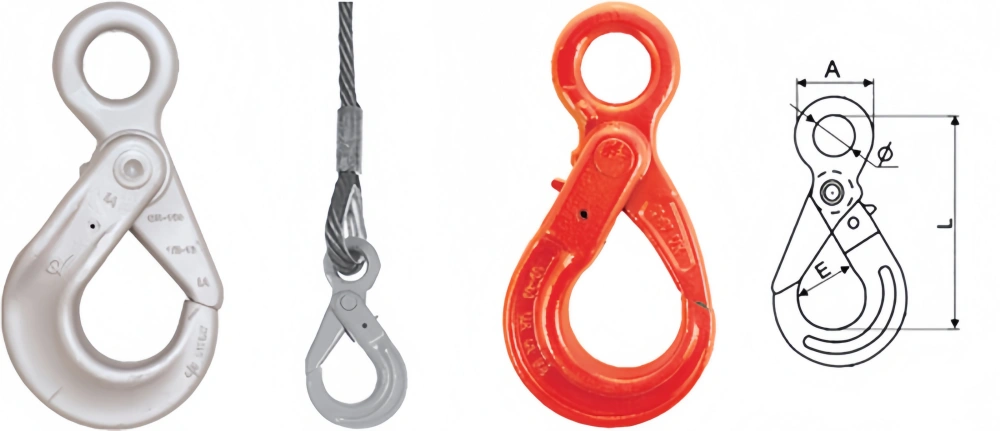
You encounter self-closing hooks in many rigging and lifting operations. These hooks, sometimes called self-locking hooks, safety hooks, or positive-locking hooks, play a vital role in preventing accidental load release. When you attach a load, the hook closes automatically, which increases safety on the jobsite.
You will find several types of self-closing hooks, each designed for specific applications:
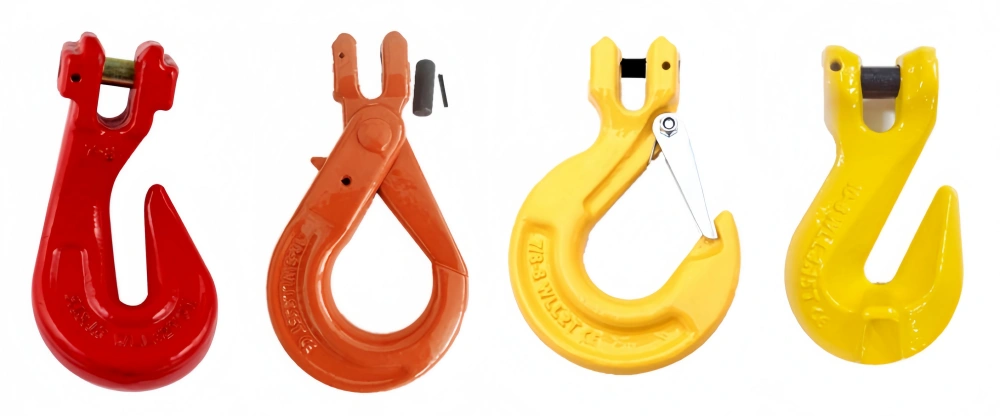
Clevis self-closing hooks: These attach directly to chains and offer a secure connection.
Swivel self-closing hooks: These rotate, which helps prevent twisting of the lifting line.
Eye self-closing hooks: These connect to wire rope or synthetic slings for versatile use.
Tip: Always check the compatibility of your hook with the chain or sling you plan to use. This ensures maximum safety and performance.
Invention and Evolution
The journey of the self-closing hook began with early challenges. Inventors faced skepticism and technical issues as they tried to create a hook that would close automatically under load. Over time, you would have seen many prototypes tested and improved.
The process took years of trial and error. Designers experimented with different materials and locking mechanisms. After about eight years of development, a reliable hook-and-loop configuration emerged.
This breakthrough led to a patented design in 1955, which marked a turning point in fastening technology for lifting and rigging.
Today, you benefit from decades of innovation. Modern self-closing hooks use high-strength materials and advanced safety features. These improvements help you meet strict industry standards and keep your lifting operations safe and efficient.
How Self-Closing Hooks Work in Lifting?
Automatic Locking Mechanism
You rely on self-closing hooks in lifting operations to create a secure connection to the load. These hooks use a spring-loaded gate that opens when you push it, allowing you to attach the hook to chains, slings, or other lifting devices.
Once you release the gate, it snaps shut automatically, locking the connection to the load without extra effort. The elasticity of the hook’s material lets it deform temporarily during assembly, ensuring a tight and reliable grip.
Here is a quick overview of the basic working principle:
Feature | Description |
|---|---|
Spring-loaded gate | Opens when pushed, allowing insertion of items. |
Automatic closure | Snaps shut upon release, securing the item in place. |
Elasticity of material | Utilized for temporary deformation during assembly for secure attachment. |
You benefit from this automatic locking mechanism because it reduces the risk of accidental disengagement. Self-closing hooks in lifting operations provide peace of mind, especially when you work in environments where safety is critical.
Safety Features in Rigging
Self-closing hooks in lifting operations offer advanced safety features that protect you and your crew. These features ensure the connection to the load remains secure throughout the lifting process.
Fail-safe design prevents the hook from dropping suspended loads. You must perform a deliberate action to release the load.
Security torque limit monitors the hook’s operation and cancels it if overload occurs.
Spring-loaded latch keeps slings from slipping off the hook.
Rigid safety latch withstands extreme conditions, maintaining a strong connection to the load.
The button press sequence requires you to follow specific steps to open or close the hook, reducing accidental operations.
Unique radio codes prevent signal duplication, enhancing operational safety.
You also notice visual indicators, such as a red display, that alert you when the auto-locking feature is disabled. Self-closing hooks in lifting operations automatically return to the locked position after use, so you never have to worry about forgetting to secure the connection to the load.
Types of Lifting Hooks and Their Differences
Traditional vs Self-Closing Hook
You often face a choice between traditional hooks and self-closing hooks in your lifting operations. Traditional hooks have an open throat and require you to manually secure the latch. This design can lead to accidental load release if you forget to close the latch or if the latch fails under stress.
Self-closing hooks, on the other hand, use an automatic locking mechanism. When you attach a load, the hook closes and locks by itself. This feature greatly reduces the risk of accidental disengagement and helps you meet strict safety standards.
Feature | Traditional Hook | Self-Closing Hook |
|---|---|---|
Latch Operation | Manual | Automatic |
Risk of Load Release | Higher | Significantly Lower |
Compliance | May not meet all standards | Meets modern safety standards |
Ease of Use | Requires extra steps | Simple, one-handed operation |
Note: Choosing the right type of lifting hook can improve both safety and efficiency on your jobsite.
Types Offered by Powerful Machinery
You can select from several types of lifting hooks designed by Powerful Machinery to match your specific needs. Each hook type is engineered for strength, reliability, and compatibility with Grade 80 and Grade 100 chains. This ensures you always have the right type of lifting hook for your application.
Hook Type | Compatibility with Chains |
|---|---|
Sling Hook | Grade 80 and Grade 100 |
Clevis Grab Hook | Grade 80 and Grade 100 |
Cradle Grab Hook | Full working load capacity |
Sling hooks provide a secure connection for lifting slings.
Clevis Grab Hooks are designed for use with specific chain grades, giving you flexibility in rigging.
Cradle Grab Hooks allow you to use the full working load capacity without reducing the limit.
You benefit from a wide selection of lifting hook types, each offering unique features for different lifting scenarios. Powerful Machinery’s hooks are precision-engineered and tested to meet international standards, so you can trust them for demanding jobs.
Design Features and Brand Innovations
Materials and Grades
You depend on the right materials and grades to ensure your self-closing hook performs safely and reliably. Leading manufacturers use high-strength forged steel for maximum durability. This material resists deformation and maintains integrity under heavy loads.
You benefit from corrosion-resistant finishes, such as hot-dip galvanization, which protect your self-closing hook from harsh weather and marine environments. When you select hooks compatible with Grade 80 and Grade 100 chains, you guarantee optimal strength and safety for demanding lifting tasks.
Unique Features by Leading Brands
You see continuous innovation in self-closing hook design. Top brands introduce features that enhance safety and usability. The table below highlights some of the most notable advancements:
Design Feature | Description |
|---|---|
Enlarged thumb access | Positioned away from pinch points to prevent finger injuries. |
Latch rotation stop | Stops the latch from pivoting down, reducing pinch risk. |
Flat sections | Allow connection with advanced couplers for greater flexibility. |
Recessed triggers | Minimize accidental activation during operation. |
Easily replaceable trigger sets | Simplify maintenance and ensure ongoing safety. |
Handle option | Designed for high-risk environments to minimize pinch risk. |
Double latch hook | Provides redundant safety to prevent load slippage. |
Hot-dip galvanization | Extends product life with a protective zinc coating. |
You also benefit from technological advancements such as self-locking mechanisms, wide throat openings for better load distribution, and swivel bases that prevent twisting of chains or cables.
Powerful Machinery Hook Advantages
You gain a distinct advantage when you choose a self-closing hook from Powerful Machinery. The company uses high-strength forged steel and applies corrosion-resistant coatings to every hook. You receive hooks that are precision-engineered for secure load handling and compatible with Grade 80 and Grade 100 chains.
Powerful Machinery prioritizes safety by integrating robust locking mechanisms and offering hooks in multiple sizes for various applications. You trust their products because they meet or exceed international certifications, including ISO9001, TUV Rheinland, and OSHA standards.
Powerful Machinery’s commitment to quality and reliability ensures your lifting operations remain safe and efficient.
Advantages and Limitations of Self-Closing Hooks
Enhanced Safety in Lifting Operations
You improve safety on every jobsite when you choose a self-locking hook. These hooks close automatically when you apply a load, which prevents accidental opening. You cannot open the hook while it supports weight, so the risk of dropping a load drops sharply.
Many safety hook designs comply with global safety standards, including OSHA and ASME requirements. You meet the ASME B30.9 slings standard when you use certified self-locking hook products.
Self-closing hooks automatically close under load, stopping accidental release.
The hook stays locked during lifting, reducing the chance of a dropped load.
You meet OSHA and ASME safety standards with certified products.
You protect your team and equipment by using hooks that meet strict safety guidelines. You also reduce downtime caused by accidents, which helps you keep projects on schedule.
User Experience and Industry Feedback
You hear positive feedback from professionals who use self-locking hook products in rigging. Many users report that these hooks make lifting tasks easier and safer. You operate the hook with one hand, which speeds up workflow and reduces fatigue.
You notice fewer incidents of accidental disengagement compared to traditional hooks.
Feature | User Benefit |
|---|---|
Automatic closure | Faster, safer operation |
Locked under load | Fewer dropped loads |
One-handed use | Less fatigue |
You see that safety hook designs help you work confidently in demanding environments. You trust the reliability of these hooks, especially when lifting heavy or awkward loads.
Application Considerations
You must consider several factors before selecting a self-locking hook for rigging. You check the load capacity and compatibility with your chains or slings. You confirm that the hook meets OSHA and ASME standards for your industry.
You also think about the environment, such as exposure to moisture or chemicals, which may require corrosion-resistant materials.
Tip: Always inspect your safety hook before each use. Look for signs of wear or damage to maintain safety.
You choose the right hook for each application to maximize safety and efficiency. You rely on certified products to meet industry standards and protect your crew.
Applications of Self-Closing Hooks in Rigging
Industry Use Cases
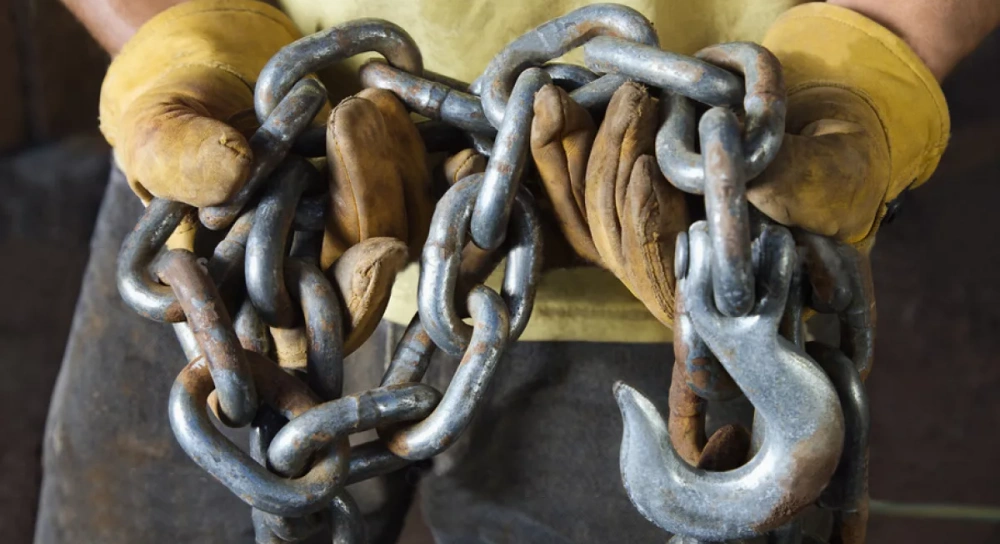
You see self-closing hooks used across many industries where safety and efficiency matter. These hooks play a vital role in connecting loads to lifting points, ensuring secure handling during every lift. The table below shows how different sectors rely on self-closing hooks for their daily operations:
Industry | Typical Applications |
|---|---|
Construction | Lifting and securing heavy materials and equipment. |
Manufacturing | Handling and transporting heavy loads in production. |
Material Handling | Moving and securing loads in warehouses and logistics. |
In the construction industry, you often use self-closing hooks to attach beams, panels, or machinery to lifting points on cranes. You may also combine these hooks with shackles to create flexible rigging setups. Manufacturing plants depend on these hooks to move large components safely between workstations.
In material handling, you use self-closing hooks to connect loads to lifting points on forklifts or hoists, making warehouse operations smoother and safer.
You must always consider the number of lifting points required for each load. This ensures balanced lifting and prevents accidents. When you select the right hook and combine it with shackles, you create a secure connection that meets industry standards.
Compliance and Safety Standards
You must follow strict compliance and safety standards when using self-closing hooks in rigging. OSHA and ASME regulations require you to use self-locking hooks for overhead lifting, especially in the construction industry and manufacturing. These standards help you prevent accidental load release and protect your team.
ASME B30.10 outlines inspection criteria for self-closing hooks. You need to inspect your hooks regularly to ensure they remain safe for use. Look for signs of wear, deformation, or damage at the lifting points. Regular inspections help you maintain compliance and avoid costly incidents.
Proper training is essential for anyone operating lifting equipment with self-closing hooks. You should receive instruction on equipment usage, workplace conditions, crane operation, load types, and your responsibilities as an operator.
Training must meet OSHA and ASME requirements and include both classroom and hands-on learning. Rigging knowledge, including the use of shackles and lifting points, should be part of your training.
Employers must provide certification or qualification at no cost to you if you were employed as of November 8, 2010. Accredited organizations must handle testing and certification to ensure you meet all safety criteria.
Tip: Always inspect your self-closing hooks and lifting points before each use. Proper training and regular checks keep your rigging operations safe and compliant.
Selecting the Right Self-Closing Hook
Key Selection Criteria
You need to choose the right self-closing hook to ensure safety and efficiency in your lifting operations. Start by evaluating the most important criteria for your application. The table below outlines the key factors you should consider:
Criteria | Description |
|---|---|
Load Weight & Working Load Limit | Can the hook handle the required load? |
Lifting Application | Is the hook designed for overhead lifting or a different purpose? |
Connection Type | How does the hook attach to a sling, crane block, or other hardware? |
Industry & Environmental Conditions | Will the hook be used in high-heat environments or harsh outdoor conditions? |
You must always verify the working load limit (WLL) of the hook. This ensures the hook can safely handle the total weight of your load. Match the hook to your sling and rigging equipment to avoid compromising capacity. Consider the environment where you will use the hook.
For example, outdoor or marine settings require corrosion-resistant material to prevent degradation. Choose a self-locking hook for critical lifts to avoid accidental release.
Tip: Always check that your hook meets the compliance standards required for your industry, such as OSHA or ASME.
Matching Hooks to Application Needs
You must match the hook to your specific lifting needs. Follow these steps to make the right choice:
Verify the working load limit. Make sure the hook can handle the total calculated load.
Match the hook to your sling and hardware. The hook should fit the sling without reducing its capacity.
Assess the environment. Use hooks made from corrosion-resistant material for outdoor or chemically active environments.
Select the right latch. For overhead or critical lifts, choose a self-locking hook to prevent accidental disengagement.
Environmental factors play a big role in your decision. For example, if you work in high-temperature areas above 400°F or in freezing conditions below -40°F, you need hooks designed for those extremes.
Chemically active environments, such as those with caustic or acidic substances, can weaken standard hooks. In these cases, consult with a manufacturer or qualified expert to select the right hook.
The table below shows how different material grades perform in harsh environments:
Material Grade | Corrosion Resistance | Notes |
|---|---|---|
T316 | Superior | Contains molybdenum for enhanced resistance to saltwater |
T304 | Moderate | More cost-effective but less resistant to harsh environments |
G50, G60, G63 | Approved for lifting | Specific grades for overhead lifting applications |
You can also improve hook performance by using protective coatings, such as galvanization or epoxy, and by selecting lubricants that work in low temperatures. Insulate critical components or use heating systems to prevent freezing when necessary.
Note: Always inspect your hooks before each use. Look for cracks, wear, or deformation to maintain safety.
Powerful Machinery’s Custom Solutions
You can rely on Powerful Machinery for custom-engineered self-closing hook solutions. The company specializes in hooks with advanced locking mechanisms and unique shapes to enhance safety and efficiency for any lifting challenge.
If you have a unique application, Powerful Machinery can design a hook that fits your exact requirements.
You benefit from expert consultation throughout the selection process. Industry professionals at Powerful Machinery help you evaluate load requirements, environmental factors, and compliance needs. They guide you in choosing the right hook for your sling and rigging equipment, ensuring you meet all safety regulations.
Powerful Machinery supports you with ongoing maintenance advice. The company recommends visual inspections for cracks, wear, or deformation before each use. Schedule annual inspections for self-locking hooks and remove any hooks with wear over 10%.
For hooks used under frequent load cycles, periodic advanced inspections are necessary.
Maintenance Requirement | Frequency/Condition |
|---|---|
Visual inspection for cracks, wear, or deformation | Before each use |
Annual inspection for self-locking hooks | At least once a year |
Immediate removal of hooks with wear over 10% | Required |
Inspection for hooks under frequent load cycles | Periodically, advanced methods |
All products from Powerful Machinery comply with ISO9001, TUV Rheinland, and other major certifications. You can trust their self-locking hooks and rated shackles to minimize risk during lifting operations.
The company’s customer support team stands ready to answer your questions and help you maintain safe, reliable lifting practices.
Callout: For custom solutions or expert advice, visit Powerful Machinery’s official website and connect with their team.
Conclusion
You gain significant safety and operational advantages by using self-closing hooks in your lifting and rigging work.
Benefit Type | Description |
|---|---|
Self-closing design | Closes automatically to prevent accidental opening during lifts. |
Robust latch | Offers greater durability and reduces the risk of failure. |
Versatile applications | Performs reliably in construction, manufacturing, and offshore operations. |
To maintain safety, always follow best practices:
Keep written records of inspections.
Remove hooks showing wear, deformation, or locking issues.
Store hooks properly and ensure clear markings.
Consult experts for extreme conditions.
Choose Powerful Machinery’s certified hooks for dependable performance. Stay informed and seek expert advice to keep your lifting operations safe.
FAQ
What is the main advantage of using self-closing hooks in lifting operations?
You increase safety when you use self-closing hooks. These hooks automatically lock when you attach a load. You prevent accidental release and protect your team during lifting. You meet strict industry standards for lifting and rigging.
How do you determine the correct hook for the total weight of the load?
You must check the working load limit on each hook. You calculate the total weight of the load before lifting. You select hooks rated for the total weight of the load. You ensure safe lifting and avoid overloading.
Can you use self-closing hooks for overhead lifting in harsh environments?
You can use self-closing hooks in outdoor, marine, or chemically active environments. These hooks feature corrosion-resistant finishes and high-strength steel. You maintain safety and reliability during lifting, even in extreme conditions.
What is a positive-locking hook, and how does it differ from traditional hooks?
You use a positive-locking hook to secure loads automatically. This hook locks itself when you attach a load. You do not need to close the latch manually. You reduce the risk of dropped loads during lifting.
How often should you inspect hooks used for lifting heavy weights?
You inspect hooks before each lifting operation. You look for cracks, wear, or deformation. You schedule annual inspections for hooks used with heavy weights. You remove any hooks with visible damage to maintain safety.