Powerful Machinery manufactures forged lifting hooks for chain slings, wire-rope assemblies, hoists and material-handling systems. Choose eye, clevis, swivel, shank, grab, slip, foundry and self-locking designs in Grade 80 and Grade 100 configurations. We support standard production, private-label programs and made-to-drawing orders for distributors, sling shops and equipment manufacturers.
Send us the load, connection, chain size, required standard and order quantity. Our team will match the hook to the job and return a clear quotation with the available drawings, test documents and lead time.
Tell us what the shackle must connect, the load it must carry, and the standard your customer expects. Attach your size list or drawing, and our team will reply with the matching product options and the details that still need confirmation.
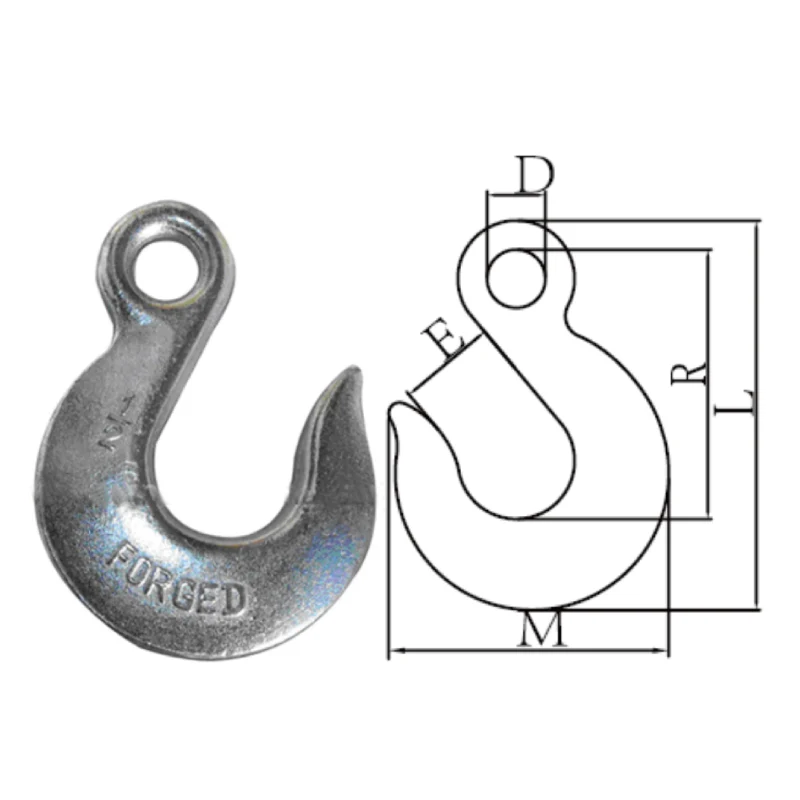
An eye gives you a flexible connection to a coupling link, shackle, wire-rope sling or synthetic sling hardware. Eye sling and eye grab hooks are useful when the hook must work across more than one assembly style.
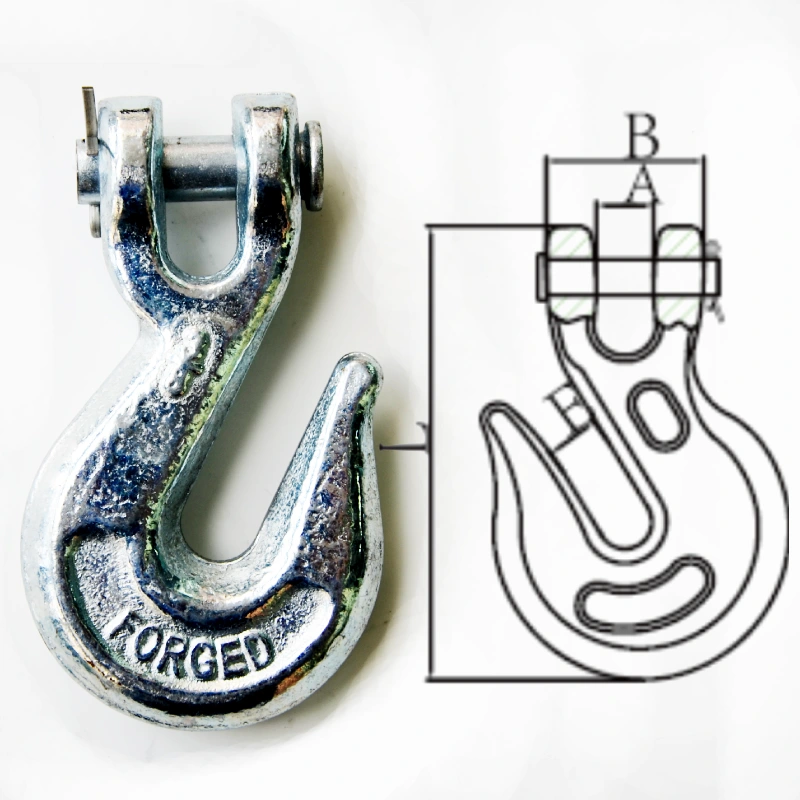
A clevis pin connects directly to compatible chain, keeping the assembly compact and reducing separate fittings. Match the clevis to the chain grade and link dimensions; a pin that fits is not proof that the components are compatible.
Swivel hooks help align the hook with the load and reduce twist during handling. Some models are intended only for positioning before the lift, while bearing-equipped models may rotate under load. Confirm the model rating before ordering or using it that way.
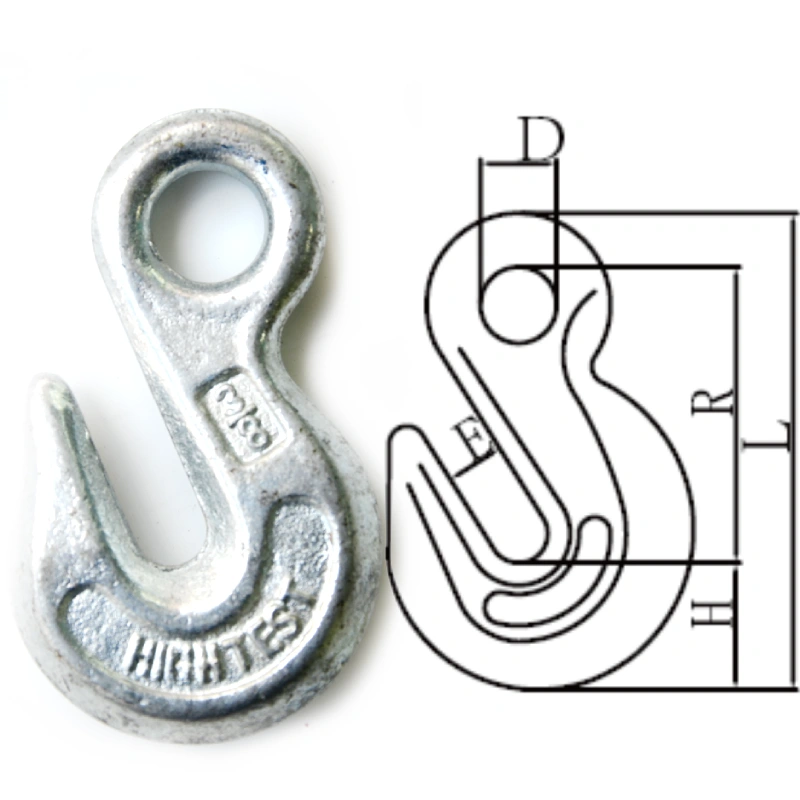
Grab hooks engage a specific chain link to shorten or adjust a chain assembly. Cradle-style designs support the link more fully and may preserve more of the chain’s rated capacity. Use only the chain size and grade stated by the hook manufacturer.
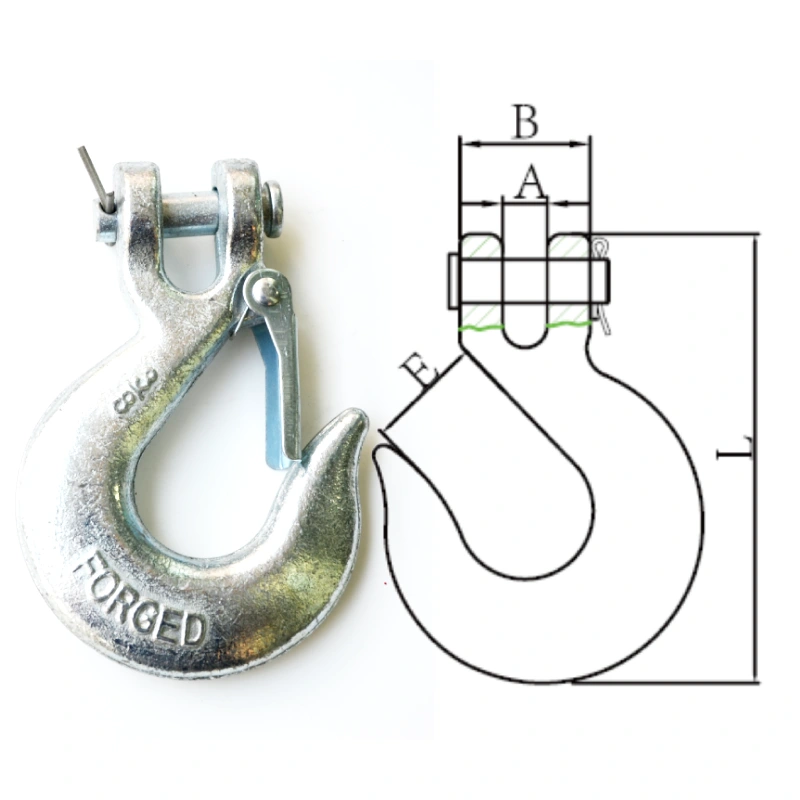
The wider throat on a slip hook or sling hook makes connection quick and accommodates suitable lifting points. A latch helps retain slack rigging, but it does not carry the load or increase the hook’s WLL.
The locking mechanism closes positively as the hook takes load, giving better retention than a simple latch in many overhead-lifting applications. Eye, clevis and swivel versions are available for different assembly layouts.
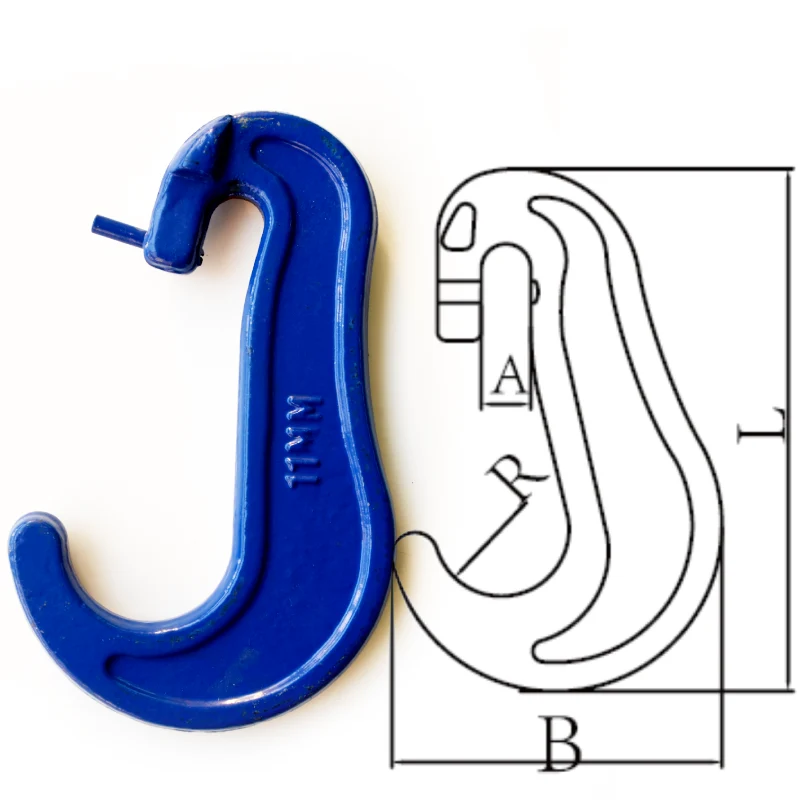
Open-throat hooks make it easier to handle trunnions, scrap and bulky or irregular loads. Their open design is application-specific, so the lift plan must control how the load can disengage when the rigging goes slack.
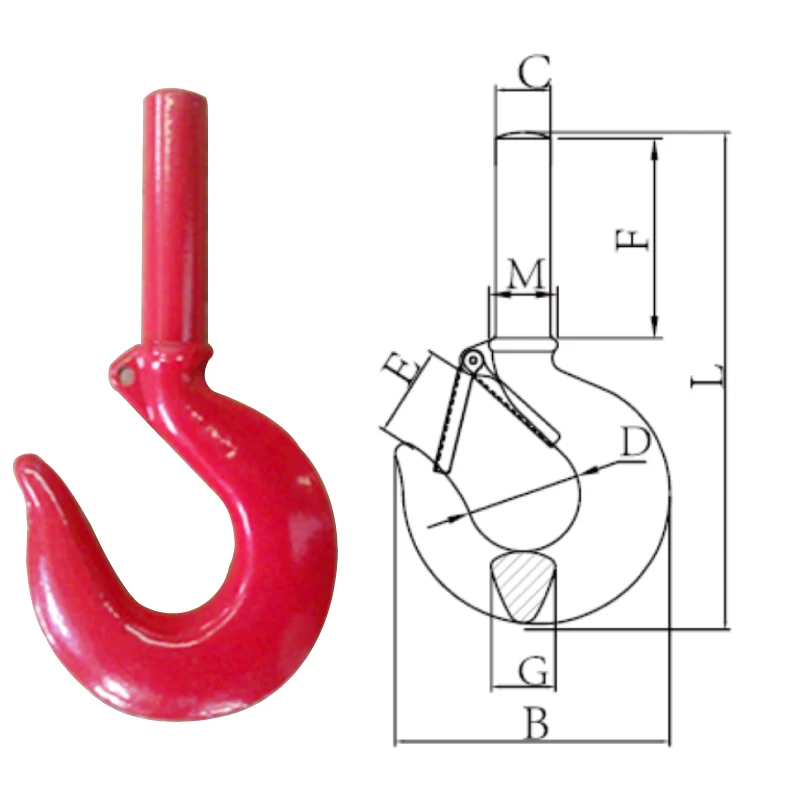
Shank hooks mount into blocks, swivels or purpose-built equipment. Shank dimensions, thread, nut retention and machining details must be agreed before production; these hooks should not be substituted by appearance alone.
| Hook Type | Typical Use | Main Advantage | Check Before Use |
|---|---|---|---|
| Eye Hook | Coupling links, shackles and sling assemblies | Flexible assembly options | Eye size and connecting hardware |
| Clevis Hook | Direct connection to alloy chain | Compact assembly | Chain size, grade, pin and retainers |
| Swivel Hook | Hoists and assemblies needing alignment | Manages twist and positioning | Whether loaded rotation is permitted |
| Grab Hook | Chain shortening and control | Engages a selected link | Capacity reduction and compatibility |
| Slip or Sling Hook | General lifting and quick connection | Wide throat | Load the bowl, not latch or tip |
| Self-Locking Hook | Overhead lifting | Positive closing action | Trigger and lock function |
| Foundry Hook | Trunnions and specific hot-work handling | Large open throat | Use only as designed |
| Shank Hook | Hook blocks and machinery | Mounted connection | Engineering and retention details |
State the maximum gross load, pick method, sling-leg count, operating angle and expected shock, vibration or rotation.
Give chain size and grade, sling or shackle dimensions, bearing-point width and required throat opening. A marked drawing prevents avoidable back-and-forth.
Choose a wide-throat sling hook, chain-shortening grab hook, alignment swivel, positive self-locking hook or purpose-built foundry/shank hook.
Ask for WLL, design factor, proof-test basis, temperature limits and assembly reductions. Sling angle changes leg tension even when the stamped hook WLL does not change.
Specify low temperature, heat, seawater, chemicals, abrasion or outdoor exposure.
State whether you need drawings, material or proof-load certificates, a declaration, third-party inspection or custom marking.
Grade 80 and Grade 100 alloy-steel hooks cover most chain-sling and industrial lifting requirements. Grade 100 components can offer a higher WLL at a comparable chain size, but every part in the assembly must be compatible with the selected grade. Carbon-steel, stainless-steel and special-alloy options suit different load and corrosion requirements; matching dimensions do not make them interchangeable.
Common finishes include powder coating, paint, zinc plating and hot-dip galvanizing. Finish selection should follow the environment and product specification. For marine, offshore, food, chemical or high-temperature service, send the operating conditions before choosing a material or coating.
A lifting hook is small compared with the load it carries, so production control matters. For each quoted model, we can confirm the manufacturing route and available records. Typical controls include material verification, forging inspection, heat-treatment monitoring, dimensional checks, surface inspection, magnetic-particle testing where specified, proof-load testing, latch or lock function checks, and final marking review.
Testing and certification are product- and order-specific. State the market, governing standard and document package in your inquiry. We will confirm what applies to the exact hook rather than make a blanket compliance claim across the entire range.
Include the hook type or reference model, required WLL, chain size and grade, connection dimensions, quantity, finish, application, operating temperature, required standard, testing and certificate needs, custom marking, packaging and delivery destination. If you are replacing an existing hook, add clear photos of the markings and critical dimensions. Never select a replacement from overall appearance alone.
An eye hook connects through a coupling link, shackle or compatible fitting, giving the sling designer more assembly options. A clevis hook pins directly to compatible chain for a shorter, compact connection. Choose by chain grade, link size, headroom and assembly method.
A grab hook captures a selected chain link and normally shortens or controls a chain. A slip or sling hook has a wider throat for connecting to a lifting point or suitable load attachment. They do different jobs and are not substitutes.
No. Some swivel hooks align before lifting but are not designed for continuous loaded rotation. A bearing-equipped model may be rated to rotate under load. Check the exact model instructions and rating.
No. The hook bowl carries the load. A latch helps retain slack rigging and reduce accidental disengagement, but it must not be loaded and does not increase WLL.
Choose the grade as part of the complete sling or lifting system. Grade 100 can provide more capacity for a given chain size; Grade 80 remains widely used and may fit existing fleets. Do not mix grades unless the assembly manufacturer confirms compatibility and rates the finished system.
Markings vary by product and standard, but commonly include a manufacturer or traceability code, size or grade, and WLL or model reference. Stop and check hooks with missing or unreadable identification against the manufacturer’s instructions.
Remove and assess the hook if you find cracks, twisting, throat spread, heat damage, severe corrosion, deep nicks, excessive wear, damaged threads, an inoperative lock or latch, or missing identification. Use the model instructions and governing inspection standard; do not copy a generic rejection percentage from another hook.
Yes. We can review custom geometry, material, finish, markings, testing, packaging and batch quantities. Send a drawing or sample details with the load case and applicable standard. Custom lifting hardware requires engineering review before pricing and production.
After downloading the product catalogue, our dedicated technical experts will provide you with one-on-one service.