When you compare carabiners vs shackles for lifting, you find that shackles usually offer superior safety and higher load ratings. Most industrial shackles meet strict standards and provide reliable connections under heavy loads. Carabiners, while versatile, sometimes face safety issues in demanding lifting scenarios.
In 2014, an accident involving a tower technician highlighted how both connectors can fail, but the investigation pointed to a carabiner failure as the cause. You should also know that the working load limit and minimum breaking strength are critical for safe lifting. Each connector brings unique strengths to specific applications.
Key Takeaways
Shackles provide higher load ratings and safety, making them ideal for heavy-duty lifting tasks.
Carabiners are lightweight and quick to use, perfect for temporary connections and lighter loads.
Always check the load rating and certification of connectors before use to ensure safety.
Inspect shackles regularly for signs of wear or damage to maintain their reliability during lifting operations.
Choose the right connector based on your specific lifting needs, considering both safety and efficiency.
Carabiner vs Shackle Comparison
Key Differences Table
You need to understand the main differences when you compare a carabiner vs shackle for lifting. The table below highlights the most important features for each connector:
Feature | Carabiner | Shackle |
|---|---|---|
Typical Use | Quick connections, light loads | Heavy-duty lifting, rigging |
Load Rating | Lower (varies by type) | High (certified for lifting) |
Safety Mechanism | Spring gate, screw lock, auto-lock | Screw pin, bolt-type, nut & cotter |
Material | Aluminum, steel, stainless steel | Drop-forged steel, stainless steel |
Compliance | Sometimes meets standards | Meets international standards |
Durability | Moderate | Very high |
Ease of Use | Fast, tool-free | Requires tools for some types |
Common Industries | Climbing, rescue, light rigging | Construction, marine, cargo handling |
Tip: Always check the load rating and certification before using any connector for lifting.
Quick Pros and Cons
You want to make the right choice for your lifting needs. Here is a quick overview of the pros and cons of each option:
Carabiner Pros:
Quick to open and close
Lightweight and easy to carry
Useful for temporary or light-duty connections
Carabiner Cons:
Lower load capacity
Not always certified for lifting
Can accidentally open under load
Shackle Pros:
High load-bearing strength
Designed for permanent or semi-permanent connections
Meets strict safety standards
Shackle Cons:
Heavier and bulkier
Takes more time to secure
May require tools for installation
You should always match the connector to the job. Carabiner vs shackle decisions depend on your safety needs, load requirements, and industry standards.
Carabiner for Lifting

Carabiner Pros
You gain several advantages when you choose carabiners for lifting. Carabiners stand out for their lightweight construction, which makes them easy to handle and transport. You can quickly attach or detach them, saving time during setup and breakdown.
Their simple design reduces the risk of jamming, even when exposed to grit or dirt. The gate mechanism remains secure and does not flutter open during use, providing peace of mind in fast-paced environments.
Here is a quick look at how carabiners compare in terms of weight, speed, and versatility:
Carabiner Model | Major Axis Rating (kN) | Minor Axis Rating (kN) | Applications |
|---|---|---|---|
Grivel Lambda 7G | 30 | 11 | Lifting, rigging, and safety uses |
Standard Carabiners | 20 | Varies | General lifting, climbing |
You can use carabiners for a wide range of tasks. Many professionals rely on them for lifting tenders on davits, hoisting outboards from dinghies, and setting up temporary rigging. Their ease of use gives you an advantage in challenging conditions where speed and adaptability matter.
Tip: Carabiners are ideal when you need a connector that is both fast and efficient for lighter loads.
Carabiner Cons
You should also consider the limitations of carabiners in lifting applications. The most common risk involves the gate opening accidentally if you do not close it properly or if equipment presses against it.
Carabiners can break if you position them incorrectly, especially during falls or sudden impacts. The locking sleeve, found on both locking and non-locking types, can suffer damage over time.
Risk of unclipping if the gate is not fully closed
Potential for breakage under dynamic or off-axis loads
Locking sleeves may wear or become damaged
Carabiners perform best under static loads, where forces remain constant. Under dynamic loads, such as sudden drops or impacts, the forces can exceed the rated strength of the carabiner. You must always check the orientation and ensure proper closure before lifting.
Load Type | Description | Implications for Carabiners |
|---|---|---|
Static Load | Forces remain constant, such as a hanging weight. | Carabiners handle the rated weight without extra stress. |
Dynamic Load | Forces vary due to motion or falls. | Carabiners must withstand higher forces than their static ratings. |
Best Uses for Carabiners
You will find carabiners most useful in situations that require speed, flexibility, and efficiency. Many industries use carabiners for lifting tools, personal protective equipment (PPE), and items under 100 lbs.
Carabiners excel in applications where you need to connect and disconnect quickly, such as in rescue operations, climbing, and temporary rigging setups.
Carabiners are preferred for lighter loads due to their ease of use.
You can work faster and safer for loads under 250 lbs.
Proper training and adherence to safety standards are essential for safe operation.
A recent survey showed that 94% of professionals use carabiners for lifting tools and PPE, while 96% receive carabiners from their employers. Training plays a key role, with 83% reporting they have learned how to use carabiners safely.
When you compare carabiner vs shackle, you see that carabiners offer unmatched speed and convenience for light-duty tasks. You should always match the connector to the job, considering both the load and the environment.
For heavy-duty lifting, shackles often provide greater safety and strength. For quick, temporary, or light connections, carabiners remain a top choice.
Shackles by Powerful Machinery
Shackle Pros
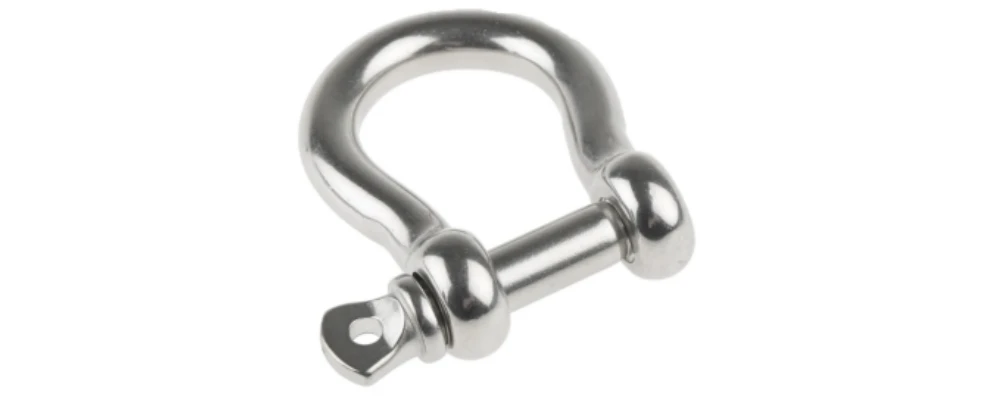
You gain significant advantages when you choose shackles from Powerful Machinery for lifting operations. These shackles deliver high load-bearing strength and unmatched durability. You can rely on them for the most demanding tasks in construction, marine, and cargo handling.
Powerful Machinery shackles are forged, quenched, and tempered from high-quality steel, which ensures maximum toughness and resistance to wear.
Powerful Machinery shackles meet or exceed international safety standards, including OSHA, ASME B30.26, ISO, and CE. You can trust these certifications to guarantee safe and reliable performance in every lift.
Here is a quick overview of the key strengths:
Specification | Details |
|---|---|
Working Load Limit | 1/3 to 55 metric tons |
Material | |
Safety Factor | 6 times the working load limit |
You can use these shackles for towing, tie-down, hoisting, and pulling. Stainless steel options provide excellent corrosion resistance, making them ideal for marine and industrial environments. The robust design and strict quality control ensure that each shackle performs under extreme conditions.
High load capacity for heavy lifting
Certified to international standards
Durable construction for long service life
Corrosion-resistant options for harsh environments
Shackle Cons
You must inspect shackles regularly to maintain safety and performance. Even the strongest shackles can fail if you overlook signs of damage or wear.
Common issues include missing identification, heat damage, bending, cracks, or excessive wear. You should always check for proper pin engagement and ensure all components are present before use.
Defect Type | Description |
|---|---|
Missing or illegible identification | Identification is crucial for safety compliance. |
Heat damage | Can weaken the shackle’s integrity. |
Bent, twisted, elongated, cracked | Structural integrity is compromised. |
Excessive nicks or gouges | Can lead to failure under load. |
10% reduction in dimensions | Indicates wear and potential failure risk. |
Incomplete pin engagement | Can lead to accidental disconnection. |
Missing Nut | Common in bolt-type shackles increases risk. |
Excessive Wear | ≥10% reduction of original size indicates failure. |
Corrosion / Severe pitting | Weakens material and can lead to failure. |
Small defects can reduce the safe working load and increase the risk of sudden failure. You should remove any shackle from service if you find these issues.
Best Uses for Shackles
You should use shackles when you need a secure, permanent connection for heavy loads. Shackles excel in scenarios where safety and strength are critical. They outperform carabiners in most industrial lifting applications due to their higher load ratings and robust construction.
Feature | Shackles | Carabiners |
|---|---|---|
Strength | A lot stronger than carabiners | Weaker than shackles |
Connection Type | Permanent connections recommended | Quick/temporary connections |
Height Loss | Average 3″ height loss | Average 5″ height loss |
Load Direction | Load only in one direction | N/A |
Safety | Considered safer for permanent use | Less safe for permanent use |
You will find shackles essential for:
Lifting and rigging in the construction and marine industries
Securing loads for transportation and cargo handling
Hoisting heavy machinery and structural components
Applications where you need certified, permanent connections
When you compare a carabiner vs shackle, you see that shackles provide the reliability and safety required for critical lifting tasks. Powerful Machinery shackles give you peace of mind, knowing your equipment meets the highest standards and performs under pressure.
Key Factors in Carabiner vs Shackle Choice
Safety and Load Rating
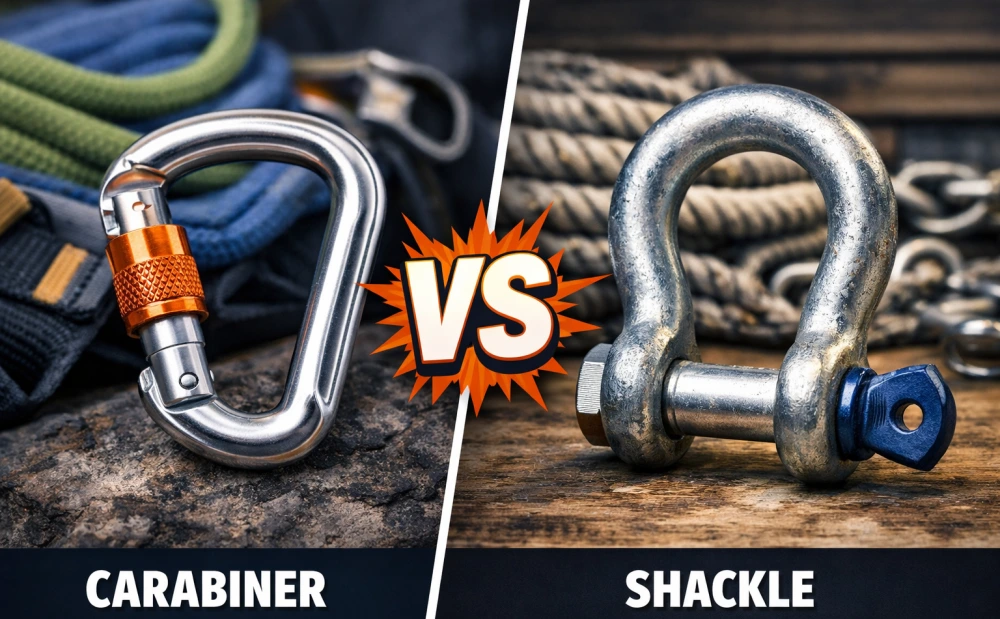
You must always prioritize safety and load rating when selecting connectors for lifting. Carabiners and shackles have different standards and ratings. Carabiners often display both Minimum Breaking Strength (MBS) and Working Load Limit (WLL), while shackles focus on WLL.
The following table shows how these ratings compare:
Equipment Type | Standard Reference | Load Rating Type | Example Rating |
|---|---|---|---|
Carabiners | ANSI 10.48 | MBS, WLL | 12,500 lbs (MBS), 2,500 lbs (WLL) |
Shackles | ASME B30.10 | WLL | Varies by model and size |
You should always check for clear markings and certifications. Powerful Machinery shackles meet or exceed international standards, giving you confidence in every lift.
Ease of Use
Ease of use can impact both efficiency and safety. You will find that soft shackles are lightweight and flexible, which makes them easy to handle. They require no tools, so you can make quick connections.
Hard shackles, on the other hand, are bulkier and may be harder to transport. The screw-in pin can sometimes bind or seize, which complicates use. However, shackles allow you to hook loads to cranes or other equipment with ease.
Tip: Always inspect your equipment before use. Make sure all moving parts operate smoothly and nothing is seized or damaged.
Compatibility and Standards
You need to ensure compatibility between your connectors and lifting slings or hardware. Shackles come in several types, each designed for specific applications and sling types:
Shackle Type | Description | Compatibility with Slings |
|---|---|---|
Bolt Type Shackles | Secure, fatigue-rated, forged for heavy loads | Suitable for various lifting slings |
Screw Pin Shackles | Easy to use, secure connection | Compatible with most slings |
Anchor Shackles | High strength, designed for anchoring | Works with heavy-duty slings |
You should also match master link sizes to your application:
Master Link Size | Application Type | Compatibility with Slings |
|---|---|---|
Small Links | Light-duty, shop, and maintenance lifts | Compatible with light slings |
Medium-sized Links | General industrial lifting and construction | Works with standard slings |
Large Master Links | Heavy-duty and offshore applications | Suitable for heavy-duty slings |
Regulations require you to use compatible and suitable components. Carabiners and shackles must meet minimum load capacities and be clearly marked.
You must inspect all equipment before each use and keep it free from substances that could cause deterioration. Powerful Machinery’s products are rigorously tested and certified, ensuring you meet all safety and regulatory requirements.
When you compare a carabiner vs shackle, always consider these key factors to make the safest and most effective choice for your lifting operations.
Lifting Recommendations
When to Use Carabiners?
You should choose carabiners for lifting tasks that require speed, flexibility, and light loads. Carabiners work best in environments where you need to connect and disconnect equipment quickly. You often see them in rescue operations, climbing, and temporary rigging. To ensure safe use, follow these best practices:
Always load the carabiner along its major axis. Keep the gate closed and locked to maintain maximum strength.
Make sure nothing presses against the gate. Ropes or anchors pushing on the gate can cause accidental openings.
Inspect the locking mechanism before each use. For screw-lock carabiners, check that the sleeve is tight and secure.
Watch for signs of wear, such as grooves, corrosion, or a weak gate spring. Retire any carabiner that shows damage.
Tip: Carabiners are not suitable for heavy-duty or permanent lifting. Use them only for light loads and temporary setups.
When to Use Shackles?
You should select shackles for heavy lifting, permanent connections, and critical rigging tasks. Shackles provide high strength and reliability in construction, marine, and industrial settings. Before each lift, follow these guidelines:
Verify the Working Load Limit (WLL) matches your lifting requirements.
Check that the shackle is clearly marked, certified, and traceable.
Inspect for cracks, corrosion, or any signs of wear.
Choose the correct shackle type for your load and conditions.
Align the load along the shackle’s centerline. Avoid side loading, which can reduce capacity by up to 50%.
Assemble shackles properly, especially when using multi-leg slings. Keep sling angles below 120°.
Common mistakes include using the wrong shackle type, ignoring the WLL, and skipping inspections. You can prevent failures by following these steps every time.
When you compare carabiner vs shackle, remember that carabiners offer speed for light tasks, while shackles deliver safety and strength for demanding lifts.
Conclusion
When you compare carabiner vs shackle for lifting, you see that shackles offer greater safety and reliability. Choose shackles for heavy-duty, permanent lifts and carabiners for quick, light tasks.
Always check load ratings and certifications. Industry professionals recommend shackles with fixed working load limits. Powerful Machinery’s certified shackles reduce costs, improve safety, and boost productivity.
Benefit | Description |
|---|---|
Enhanced Safety | Certified shackles lower accident risk and meet global standards. |
Cost Reductions | Efficient solutions cut operator training costs by over 60%. |
Improved Productivity | Reliable products minimize downtime and streamline lifting. |
FAQ
What is the main difference between a carabiner and a shackle?
You use carabiners for quick, light connections. You use shackles for heavy-duty, permanent lifting. Carabiners offer speed and flexibility. Shackles provide higher strength and safety for industrial tasks.
Can you use carabiners for overhead lifting?
You should not use carabiners for overhead lifting unless they are rated and certified for that purpose. Most carabiners do not meet the strict standards required for critical lifts.
How do you inspect a shackle before use?
You check for cracks, corrosion, and wear. You verify the pin is secure and the identification is clear. You remove any shackle that shows damage or missing parts.
Why choose Powerful Machinery shackles for lifting?
Feature | Benefit |
|---|---|
Certification | Meets global safety standards |
Durability | Withstands harsh environments |
Load Capacity | Handles heavy industrial loads |
You trust Powerful Machinery for reliable, certified lifting solutions.