You face a critical decision for your warehouse or facility: which one should you choose for your material handling needs? When you look for a comparison at a glance, pallet jacks vs forklifts offer distinct advantages. Forklifts handle heavy, tall, or frequent lifts.
Pallet jacks excel in lighter, shorter, or tight-space moves. You must evaluate your unique environment and trust Powerful Machinery to deliver reliable solutions tailored to your operation.
Key Takeaways
Forklifts are ideal for heavy lifting and high stacking, while pallet jacks excel in moving lighter loads over short distances.
Consider your workspace: Forklifts operate on uneven terrain and longer distances, whereas pallet jacks are best for smooth surfaces and tight spaces.
Evaluate your budget: Pallet jacks typically have lower purchase and maintenance costs compared to forklifts, making them a cost-effective choice for smaller operations.
Safety training is crucial: Forklift operators need certification, while pallet jack users should still learn safe operation techniques to prevent accidents.
Match the equipment to your needs: Assess load capacity, lifting height, and frequency of use to choose the right machine for your material handling tasks.
Forklift vs Pallet Jack: Key Differences
What Sets Them Apart
When you compare pallet jacks vs forklifts, you notice clear engineering and operational differences. Each machine serves a unique purpose in your material handling process. The table below highlights the key differences between these two essential tools:
Feature | Forklifts | Pallet Jacks |
|---|---|---|
Load Capacity | 1 ton to over 50 tons | 1,000 to 3,500 kg |
Operational Range | Indoor and outdoor, uneven terrain | Smooth, level surfaces only |
Maneuverability | Greater versatility, longer distances | Limited turning radius, short distances |
Safety Features | Advanced safety and stability controls | Basic safety features |
Lifting Mechanism | Hydraulic lifting system | Manual or electric lifting mechanism |
You use a forklift when you need to move heavy loads, often between 5,000 and 40,000 pounds. Some models handle even more. A pallet jack, on the other hand, typically lifts between 2,000 and 5,500 pounds. Heavy-duty pallet jacks can reach up to 15,000 pounds, but most jobs require less.
A forklift gives you the power to operate both indoors and outdoors. You can handle uneven surfaces and longer distances. You also benefit from advanced safety features and a hydraulic lifting system.
A pallet jack works best on smooth, level floors. You use it for short distances and in tight spaces where maneuverability matters most.
Tip: If your workspace has narrow aisles or crowded stockrooms, a pallet jack offers a compact and efficient solution.
Core Roles in Material Handling
You must choose the right equipment for your specific tasks. The pallet jack vs forklift debate centers on the type of load, the distance, and the environment. Forklifts excel in large warehouses, construction sites, and outdoor yards.
You rely on them for stacking pallets high, loading trucks, and moving bulky items across uneven ground.
Pallet jacks shine in smaller spaces. You use them to move goods in retail stockrooms, small warehouses, and loading docks. They are easy to operate and require minimal training. You can quickly transport light to medium loads over short distances. The table below shows where pallet jacks provide the most value:
Task Type | Benefits of Pallet Jacks |
|---|---|
Navigating tight warehouse aisles | Cost-effective option for smaller businesses |
Moving light to medium loads | Easy to operate, with minimal training required |
Short-distance transport of goods | Low maintenance compared to larger equipment |
Settings with limited space | Particularly valuable in retail stockrooms and small warehouses |
When you compare pallet jacks vs forklifts, you see that each tool has a clear role. Forklifts handle heavy lifting, high stacking, and outdoor work. Pallet jacks offer simplicity, cost savings, and easy movement in confined areas. You make the best choice by matching the machine to your daily tasks and workspace.
Pallet Jack vs Forklift: Overview & Applications

Pallet Jacks by Powerful Machinery
You need a reliable tool for moving pallets in your warehouse or retail space. Powerful Machinery’s pallet jack stands out for its robust steel construction and ergonomic design. You can lift loads ranging from 2,000 to 5,500 pounds with ease. The hydraulic system allows you to raise and lower pallets smoothly.
Polyurethane wheels protect your floors and help you maneuver in tight spaces. You do not need electricity or fuel, which keeps your costs low and maintenance simple.
You will find pallet jacks essential for many daily tasks:
Move goods from receiving docks to storage racks.
Restock shelves quickly in retail environments.
Support manufacturing lines by transporting materials.
Speed up cross-docking operations.
Organize and dispatch orders in e-commerce fulfillment centers.
Note: You can count on Powerful Machinery’s pallet jacks for durability and efficiency in every shift.
Forklifts in Modern Warehousing
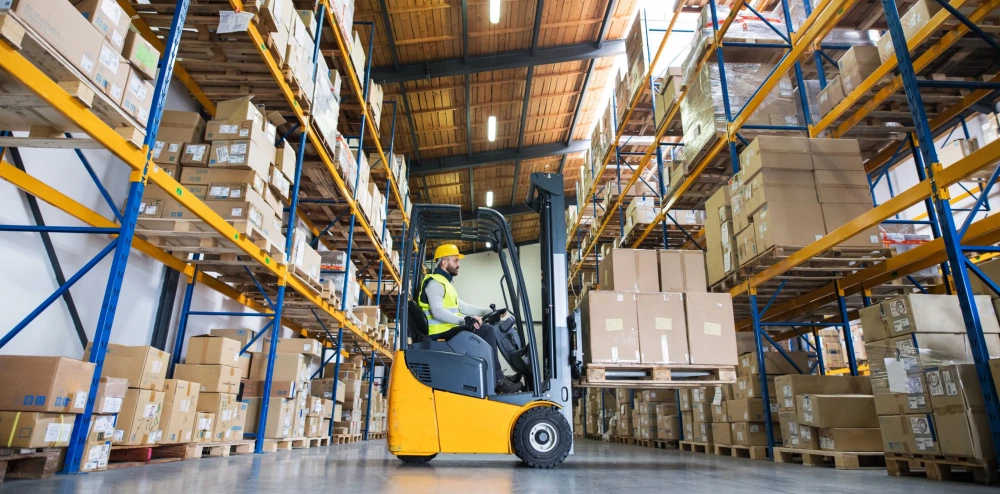
You see forklifts transform warehouse operations every day. These machines handle heavy loads and reach high shelves with precision. Forklifts deliver materials directly to workstations, which prevents delays and boosts productivity.
Modern forklift applications include automated guided vehicles that complete tasks in minutes, not hours. Facility managers use advanced forklifts to improve efficiency and keep employees safe. You benefit from faster order fulfillment and safer material handling.
Where Each Excels?
You must match the right equipment to your environment. The table below shows how pallet jacks vs forklifts compare in different settings:
Feature | Forklifts | Pallet Jacks |
|---|---|---|
Load Capacity | Handles heavier loads | Best for lighter loads |
Terrain Capability | Works on rough terrain and outdoors | Ideal for smooth surfaces |
Efficiency in Warehousing | Reaches high shelves, covers long distances | Quick moves in tight spaces |
Versatility | Adapts to various load sizes | Limited to palletized loads |
You use a forklift in warehouses, construction sites, and industrial settings. Forklifts move heavy products on high racks and across rough terrain. You choose a pallet jack for short distances, smooth floors, and confined areas. Each tool excels in its own space, so you should evaluate your needs before making a decision.
Types of Pallet Jacks and Forklifts
Pallet Jack Types
You have many options when choosing a pallet jack for your facility. Each type serves a specific purpose and fits different environments. The table below shows the most common types and their typical use cases:
Type of Pallet Jack | Typical Use Cases |
|---|---|
Weighing Scale Pallet Jack | Track cargo weights in shipping and logistics operations. |
Low Profile Pallet Jack | Move pallets with low clearance and heavy machinery or appliances. |
All-Terrain Pallet Jack | Handle outdoor tasks, such as moving landscaping materials. |
Adjustable Pallet Jack | Adapt to various pallet sizes in warehouses with mixed inventory. |
Narrow Pallet Jack | Navigate tight spaces in retail environments and small warehouses. |
Mini Pallet Jack | Carry lighter loads in limited spaces, like small retail stores. |
Multi-directional Pallet Jack | Move in multiple directions, ideal for unloading awkwardly shaped pallets in busy environments. |
Tip: You can select a pallet jack based on your space, load type, and the need for maneuverability. For example, a narrow pallet jack works well in crowded aisles, while an all-terrain model supports outdoor projects.
Forklift Types
You will find that forklifts come in several classes and designs, each built for specific tasks and environments. The table below outlines the main forklift classes, their lifting capacity, and where you can use them:
Class | Load Capacity | Application | Power Type |
|---|---|---|---|
Class I | 2,500 – 12,000 lbs | Indoors, manufacturing facilities, warehouses | Electric (various battery types) |
Class II | 1,500 – 5,500 lbs | Large storage warehouses, high shelves, narrow aisles | Electric (various battery types) |
Class III | 2,000 – 10,000 lbs | Loading areas, indoors, long distances | Electric (various battery types) |
Class IV | 3,000 – 15,500 lbs | Indoors, smooth floors, loading docks | Diesel, LP Gas, Gasoline, Compressed Natural Gas |
Class V | 3,000 – 36,000 lbs | Outside, lumberyards, construction sites, warehouses | Diesel, LP Gas, Gasoline, Compressed Natural Gas |
You can also choose from specialized forklift designs:
Counterbalance forklifts handle most indoor pallet movements.
Reach trucks lift loads to high shelves in narrow aisles.
Order pickers help you retrieve items for order fulfillment.
Side loaders work well in tight spaces and allow side access to loads.
Telescopic handlers reach high places on construction sites.
Rough terrain forklifts operate on uneven outdoor surfaces.
Electric forklifts suit indoor operations with strict emissions standards.
Pallet jack forklifts offer a lightweight solution for moving pallets.
Note: When you need high load capacity or advanced maneuverability, you should match the forklift type to your specific application. Always consider the lifting capacity and environment before making your selection.
Strengths and Limitations
Pallet Jack Strengths (Powerful Machinery)

You gain several advantages when you choose a pallet jack from Powerful Machinery. These pallet jacks stand out for their certified quality and advanced manufacturing. You can see the main strengths in the table below:
Key Strengths | Description |
|---|---|
Certified Products | Meet or exceed international standards like ISO9001, TUV Rheinland, and OSHA. |
Advanced Manufacturing | Use automated welding and precision forging for maximum performance and safety. |
Global Support Network | Simplifies international shipping and customs clearance, trusted by customers worldwide. |
Custom-Engineered Solutions | Tailored to meet your specific needs with strict quality standards. |
You benefit from reliable performance and safety every day. You can trust these pallet jacks to handle demanding tasks in warehouses, retail, and logistics. The ergonomic design and robust construction help you move loads efficiently without extra effort.
Forklift Strengths
You rely on forklifts for heavy lifting in large warehouses and industrial sites. Forklifts give you the power to move bulky items and stack pallets high. You can operate them on rough terrain and over long distances. Modern forklifts come with advanced safety features and precise controls.
You can use them for both indoor and outdoor applications. Forklifts help you complete heavy lifting tasks quickly and safely, making them essential for high-volume operations.
Limitations of Each
You should understand the limitations of both pallet jacks and forklifts before making a decision.
Every pallet jack has a weight capacity that you should not exceed.
You must maintain visibility to avoid accidents.
Pallet jacks often operate in high-traffic areas, so you need to stay aware of your surroundings.
Forklifts require trained and certified operators because of their size and power.
You should keep loads low for stability and drive at safe speeds.
Designated walkways for pedestrians are necessary to ensure safety in busy environments.
Note: You improve safety and efficiency when you recognize these limitations and follow best practices.
Operational Capabilities
Load Capacity & Lift Height
You must consider both load capacity and lift height when selecting material handling equipment. These two factors determine how much you can move and how high you can stack your goods. Standard pallet jacks from Powerful Machinery handle up to 5,500 pounds and lift pallets between 6 and 8 inches.
High-lift pallet jacks reach up to 32 inches, but their load capacity varies by model. Forklifts support much heavier loads and can lift materials to greater heights, making them ideal for stacking in tall warehouse racks.
Equipment Type | Lift Height | Load Capacity |
|---|---|---|
Standard Pallet Jack | 6 to 8 inches | Up to 5,500 pounds |
High-Lift Pallet Jack | 20 to 32 inches | Varies by model |
Forklift | Much higher | Heavier loads |
Tip: If you need to move heavy items to high shelves, you should choose a forklift. For ground-level transport, a pallet jack offers a simple and efficient solution.
Maneuverability & Space
You often work in environments where space is limited. Maneuverability becomes a key factor in your decision. Pallet jacks excel in tight spaces, such as narrow aisles and crowded stockrooms. You can turn and position them with minimal effort. Forklifts require more room to operate and have a larger turning radius.
This makes them better suited for open warehouse layouts or outdoor yards.
Feature / Characteristic | Forklift | Pallet Jack |
|---|---|---|
Maneuverability | Moderate; needs more space | Excellent for tight spaces |
Note: If your facility has narrow aisles or frequent congestion, you will benefit from the compact design of a pallet jack.
Versatility & Technology
You see rapid advancements in material handling technology. Modern pallet jacks and forklifts now offer features that boost productivity and reduce downtime:
Advanced battery technology, such as lithium-ion, extends runtime and shortens charging times.
New batteries require less maintenance, saving you time and costs.
Regenerative braking systems capture energy during use, improving efficiency.
Integrated telematics provides real-time data, helping you optimize your workflow.
Improved navigation systems, like laser guidance, make it easier to maneuver in tight spaces.
Electric forklifts operate quietly and produce no emissions, making them ideal for indoor use and sustainable operations.
With these innovations, you can choose equipment that fits your needs today and adapts to future demands.
Cost and Maintenance
Purchase & Rental Costs
You need to consider both purchase and rental costs when selecting material handling equipment. Forklifts usually require a higher initial investment than pallet jacks. You may find that renting offers flexibility for short-term projects or seasonal demand. Here is a quick overview of average rental costs for forklifts in 2024:
Average daily rental cost for a forklift: $150 to $500
Weekly rental costs: $500 to $1,500
Monthly rental costs: $1,500 to $5,000
Pallet jacks, especially manual models, have a much lower upfront cost. You can often purchase a high-quality manual pallet jack for a fraction of the price of a forklift.
This makes pallet jacks a smart choice for businesses with tight budgets or less frequent lifting needs. When you compare the cost of ownership, pallet jacks help you save on both purchase price and ongoing expenses.
Tip: Always perform a cost comparison based on your expected usage, load requirements, and available capital before making a decision.
Maintenance & Lifespan
You must factor in maintenance and expected lifespan when evaluating material handling equipment. Forklifts have more complex systems, which means you will spend more time and money on regular maintenance.
Pallet jacks, especially manual and electric models, require less frequent service and have fewer parts that can fail. The table below summarizes the differences:
Equipment Type | Average Lifespan | Maintenance Complexity |
|---|---|---|
Forklifts | 5 years (10,000 hours) | More complex |
Electric Pallet Jacks | 5 to 8 years | Less complex |
You can extend the life of your equipment with regular inspections and proper care. Pallet jacks from Powerful Machinery are built for durability, which helps you reduce downtime and lower your total cost over time.
Note: Choosing the right equipment based on maintenance needs can help you avoid unexpected expenses and keep your operation running smoothly.
Safety and Training
Pallet Jack Safety (Powerful Machinery)
You must prioritize safety every time you use a pallet jack. Powerful Machinery designs pallet jacks with worker safety in mind. The ergonomic handles and smooth hydraulic systems help you avoid strain and reduce the risk of injury. You should always check the load capacity before lifting.
Never exceed the recommended weight. This simple step prevents accidents and protects your team.
You need to follow safety best practices, such as keeping aisles clear and wearing proper footwear. Always inspect the pallet jack for damage before use. If you notice worn wheels or leaks, report them right away. These safety considerations help you maintain a safe work environment and reduce downtime.
Tip: Move slowly in crowded areas and stay alert to your surroundings. This habit keeps you and others safe.
Forklift Safety
You face more complex safety factors when operating forklifts. Forklifts cause nearly 25% of warehouse accidents each year. In the United States, they lead to about 7,500 injuries and almost 100 fatalities annually. Forklift overturns make up 25% of these accidents, and nearly a quarter of overturns result in fatalities.
The main causes of forklift accidents include:
Human error, such as fatigue, distraction, or lack of operator training.
Equipment problems, like worn-out tires or faulty brakes.
Unsafe environments, including cluttered aisles, poor signage, or cramped spaces.
You can reduce risks by following safety best practices. Always inspect your forklift before use. Keep your speed low and your load stable. Make sure you have clear visibility and use warning signals in busy areas. These safety considerations protect both operators and pedestrians.
Training & Certification
You must complete operator training before using powered equipment. OSHA requires forklift operators to receive certification, which includes formal instruction, hands-on practice, and a performance evaluation.
Certification remains valid for three years, after which you need a re-evaluation. You must be at least 18 years old to operate a forklift in non-agricultural settings.
Electric pallet jack operators also require training and evaluation under OSHA standards. Manual pallet jacks do not require formal certification, but you should still learn safe operation techniques. Your employer will often provide this training to ensure worker safety.
Note: Regular operator training and a focus on safety best practices help you prevent accidents and keep your workplace productive.
Selecting the Right Machine
Assessing Your Needs
You must start by understanding your material handling needs before selecting the right machine. Every facility has unique requirements. You should look at several factors to make the best choice for your operation. Consider the following:
Load capacity: How much weight do you need to move at one time?
Lifting height: Do you need to stack goods on high shelves or only move them at ground level?
Operational environment: Will you work indoors, outdoors, or both?
Frequency of use: How often will you use the equipment each day?
Budget considerations: What is your available capital for equipment?
Ergonomics: Will your team benefit from walk-behind or ride-on operation?
The table below compares the main features of forklifts and pallet jacks. Use it as a quick buying guide to match your needs with the right equipment for your business.
Feature | Forklift | Pallet Jack |
|---|---|---|
Power Source | Fuel, battery | Manual or battery-powered |
Lifting Capacity | Up to 15,000+ kg | 1,000–3,000 kg |
Stack Height | Up to 30 ft | Ground-level or low shelves |
Operation Mode | Ride-on | Walk-behind |
Ideal Use Case | Heavy-duty, long-term lifting | Short-distance pallet movement |
Cost | High upfront investment | Low to moderate cost |
Training Programs | Mandatory | Minimal |
Tip: If you need to move heavy loads to high racks, a forklift is your best option. For quick moves on the ground or in tight spaces, a pallet jack offers simplicity and value.
Decision Guide
You can use a simple buying guide to help you select the right equipment for your business. Ask yourself these questions:
Do you lift above 5 feet regularly? If yes, choose a forklift.
Do you need to save space and money? A manual or electric pallet jack is the better option.
Do you handle high-frequency stacking tasks? Go with an electric stacker or forklift.
Are you limited by budget and space? A semi-battery stacker can be a cost-efficient middle ground.
You should also evaluate your operation using these factors:
Factor | Description |
|---|---|
Pallet quantity | How many pallets do you move in a typical shift? |
Pallet-related labor costs | How much time and labor do you spend moving inventory? |
Heavy machinery costs | What are your annual expenses for fuel, maintenance, and equipment replacement? |
You can reach out to Powerful Machinery for expert advice. The team offers custom solutions and product support to help you with selecting the right machine. You will also benefit from comprehensive training programs that ensure safe and efficient operation.
Powerful Machinery’s specialists can guide you through every step, from initial consultation to after-sales support.
Note: You improve productivity and safety when you choose equipment that matches your workflow and invest in comprehensive training for your team.
Renting vs Buying
You must decide whether to rent or buy your equipment. Each option has unique advantages. Review the table below to compare the main points:
Aspect | Renting Forklifts/Pallet Jacks | Buying Forklifts/Pallet Jacks |
|---|---|---|
Cost | Predictable costs, no large upfront fees | High initial investment, long-term savings |
Usage | Limited by rental terms | Unlimited use, no restrictions |
Maintenance | Covered by the rental company | The owner is responsible |
Depreciation | No concern for depreciation | Asset value decreases over time |
Flexibility | Adjust equipment as needs change | Less flexible if needs shift |
Asset Value | No ownership | Equipment is a business asset |
Customization | Limited options | Full control over customization |
Renting offers predictable costs and avoids large upfront investments.
Buying can lead to long-term savings and potential returns if you resell the equipment.
Ownership provides tax benefits through depreciation.
Renting eliminates maintenance costs, while buying means you handle all upkeep.
You should choose the option that fits your budget, usage frequency, and long-term plans. If you need help with your buying guide or want to discuss rental options, Powerful Machinery’s team can provide detailed recommendations and support.
You will also receive access to comprehensive training programs, ensuring your staff operates every machine safely and efficiently.
Tip: Review your current and future needs before making a final decision. The right equipment for your business will help you save money, improve safety, and boost productivity.
Best Practices for Efficiency & Safety
Maintenance Routines
You can maximize the lifespan and reliability of your forklifts and pallet jacks by following a consistent maintenance schedule. Planned maintenance not only improves safety but also keeps your equipment running at peak performance.
Planned maintenance is crucial for safety and efficiency. Regular inspections help prevent accidents caused by equipment failure and extend the lifespan of forklifts. By addressing potential issues early, businesses can avoid costly repairs and ensure that their equipment operates at peak performance.
You should incorporate these essential maintenance steps into your routine:
Inspect pallet jacks and trucks regularly for cracks and wheel wear.
Check forks daily for signs of chipping or bending.
Verify the position of chains frequently to ensure proper function.
Examine hydraulic parts every day for leaks or damage.
Check and refill oil every six months.
Lubricate bearings and axles monthly.
Charge batteries of electric pallet trucks before each use.
Operate equipment safely by avoiding slopes and adhering to weight limits.
You should also schedule preventative maintenance every 250 hours of operation. During service checks, inspect brakes, hydraulics, and steering. Always check fluids, filters, and tires for optimal performance. Regular inspections help you comply with safety standards and prevent unexpected breakdowns that can halt production.
Safety Protocols
You can reduce workplace accidents by implementing structured safety protocols. Start with a skills verification process that includes written exams, practical tests, and periodic performance reviews. Make sure every operator understands OSHA safety regulations for material handling equipment.
Verify operator skills through written and practical assessments.
Ensure all operators know key OSHA safety rules.
Maintain detailed training records, including certifications and renewal dates.
You should inspect pallets regularly to confirm they are not damaged. Use a pallet inspection form to streamline this process. Continuous inspection helps prevent accidents and improve compliance with OSHA regulations.
Forklift operators must check load weights and keep loads centered. Overloading or improper load placement can cause tipping. Proper training ensures safe operation and protects both workers and equipment.
Tip: Consistent training and routine inspections create a safer, more efficient workplace for everyone.
Conclusion
You must weigh several factors when choosing between a forklift and a pallet jack. Review the table below to compare key decision points:
Decision Point | Forklift | Pallet Jack |
|---|---|---|
Initial Investment | Higher cost | Lower cost |
Maintenance Costs | More complex | Simpler, less expensive |
Training Requirements | Certification needed | Minimal training |
Safety | Higher risk | Easier to operate |
Analyze your load size, lift height, space, and budget. For reliable, cost-effective solutions, consider Powerful Machinery’s Pallet Trucks. Consult their specialists for expert advice tailored to your operation.
FAQ
What is the main difference between a forklift and a pallet jack?
You use a forklift for heavy loads and high stacking. You use a pallet jack for moving lighter pallets over short distances. Forklifts offer more power and reach. Pallet jacks provide simplicity and easy maneuvering in tight spaces.
How do I choose between a manual and an electric pallet jack?
You should choose a manual pallet jack for occasional use and lighter loads. Select an electric pallet jack if you move pallets frequently or need to reduce operator fatigue. Electric models increase efficiency in busy warehouses.
Do I need certification to operate a pallet jack?
You do not need formal certification for manual pallet jacks. You must receive training for electric pallet jacks. Forklift operation always requires certification. Proper training ensures safe and efficient material handling.
How much weight can a Powerful Machinery pallet jack handle?
You can move loads from 2,000 to 5,500 pounds with Powerful Machinery’s manual hydraulic pallet jacks. Always check the model specifications before use. Never exceed the recommended weight limit to maintain safety.
Can I use a pallet jack outdoors?
You can use a pallet jack outdoors on smooth, level surfaces. Avoid rough or uneven ground. For outdoor tasks on challenging terrain, consider an all-terrain pallet jack or a forklift.