Imagine you start a lift, confident in the number stamped on your hook, but overlook other critical factors. This simple mistake can lead to costly accidents and equipment damage.
To accurately determine the safe working load of lifting hooks, you must consider not only the manufacturer’s marking but also real-world conditions. Safety and compliance protect your team and extend equipment life in lifting operations.
Certified products like Powerful Machinery Lifting Hooks help you manage these risks. Review the table below to see what often causes hook failures:
Factor | Description |
|---|---|
Design Flaws | Non-standard designs or weak axle strength can compromise lifting safety. |
Manufacturing Defects | Poor material choice and processing cause hidden dangers. |
Improper Maintenance | Worn parts and a lack of safety checks raise risk. |
Human Error | Mistakes in rigging or operation result in loss of control. |
Environmental Conditions | Weather or surroundings can affect lifting hook performance. |
Key Takeaways
Always check the hook’s rated capacity before use to ensure safety.
Consider real-world factors like sling angle and load dynamics to avoid overloading.
Inspect hooks regularly for wear, damage, and compliance with safety standards.
Maintain proper D/d ratios to protect slings and ensure lifting capacity.
Use certified hooks to meet international safety standards and prevent accidents.
Rated Capacity & Safe Working Load of Lifting Hooks
Manufacturer Markings and WLL
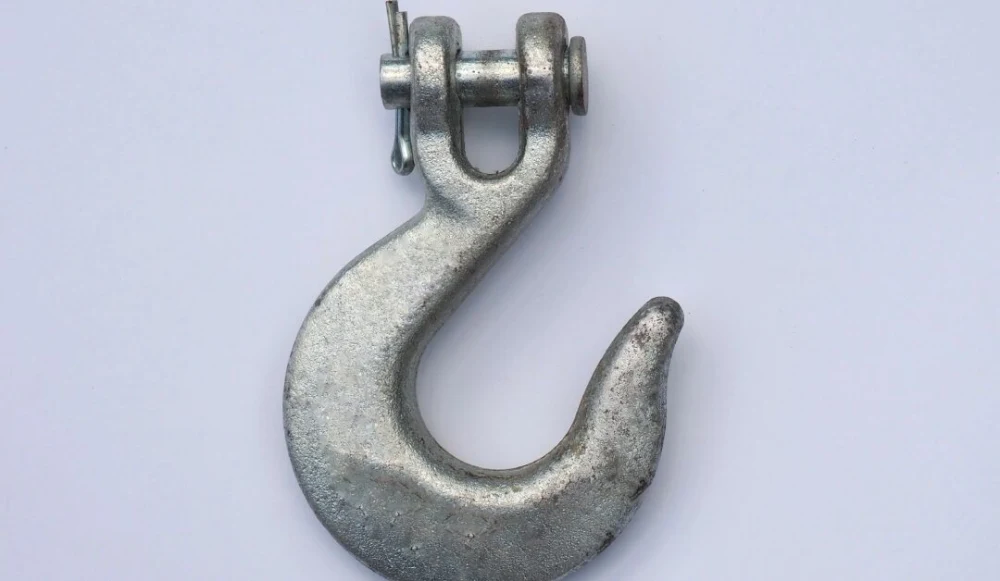
When you select a lifting hook, you will notice a marking that shows its rated capacity or working load limit. This marking is not just a number—it represents the maximum load the hook can safely handle under ideal conditions. Manufacturers determine the safe working load of lifting hooks through a careful process:
Material strength: Manufacturers choose materials with high tensile and yield strength to ensure durability.
Design factors: The shape, size, and intended use of the hook influence its lifting capacity. Safety factors are built into the design to account for dynamic forces and possible misuse.
Testing: Each hook undergoes static and dynamic tests to confirm it can withstand the specified load.
Safety factors: Manufacturers apply a safety margin to the theoretical maximum to create a buffer against unexpected stresses.
Note: The working load limit is calculated by dividing the minimum breaking strength by a safety factor, which usually ranges from 4:1 to 7:1. For example, if a hook has a minimum breaking strength of 10,000 pounds and a safety factor of 5:1, the safe working load will be 2,000 pounds.
Powerful Machinery Lifting Hooks are marked and certified according to strict international standards. These markings follow regulations such as ASME B30.20, ASME BTH-1, and OSHA 2232, which require proof testing and clear identification for every hook. The table below summarizes some of the key standards:
Standard | Description |
|---|---|
ASME B30.20 | Governs the marking, construction, inspection, and operation of lifting devices. |
ASME BTH-1 | Outlines design, manufacture, and inspection requirements for lifters. |
OSHA 2232 | Provides safety regulations for lifting devices. |
Manufacturers also verify the accuracy of marked values through proof load testing. For example, hardware like hooks must withstand 110% of their rated capacity during testing. This process helps identify hidden flaws and ensures the hook meets its rated capacity before it reaches your job site.
Why Marked Capacity Is Only the Start?
You should always start with the marked safe working load of lifting hooks, but never stop there. The number on the hook assumes perfect conditions—something rarely found in real-world lifting operations. Several factors can reduce the actual lifting capacity:
Sling angle: Lower sling angles increase the force on each leg, which can overload the hook.
Load dynamics: Sudden movements or shifting loads can create forces greater than the marked capacity.
Wear and fatigue: Over time, repeated use and exposure to harsh environments can weaken the hook.
Inspection practices: Missed signs of wear, cracks, or deformation can lead to unexpected failures.
⚠️ Tip: Never exceed the safe working load marked on your hook. Exceeding the rated capacity can result in catastrophic failure, injuries, equipment damage, and costly downtime. In one documented case, overloaded slings led to a fatal accident and significant financial loss.
You must consider all real-world factors—such as sling angle, load movement, and equipment condition—when determining the safe working load of lifting hooks.
Powerful Machinery Lifting Hooks are designed and tested to meet or exceed international standards, but your safety depends on using them within their limits and following best rigging practices. Always inspect your rigging hardware before each lift and remove any hook that shows signs of damage.
By understanding both the manufacturer’s markings and the real-world influences on lifting capacity, you protect your team, your equipment, and your reputation. Start with the marked value, but always account for the conditions of your specific lifting operation.
D/d Ratio & Lifting Hook Capacity
What Is the D/d Ratio?
You must understand the D/d ratio to ensure safe and efficient lifting operations. The D/d ratio refers to the relationship between the diameter of the load or hook (D) and the diameter of the sling (d). You calculate this ratio by dividing the diameter of the hook or load over which the sling passes by the diameter of the sling itself.
This ratio plays a critical role in lifting hook capacity because it determines how much bending stress the sling experiences during a lift. If you use a low D/d ratio, you increase the risk of damaging the sling and reducing its strength.
Excessive bending can compromise the fibers or wires, leading to a significant loss in capacity and safety.
Calculating Capacity Adjustments
Industry guidelines set minimum D/d ratio standards to protect both your equipment and your team. Review the table below for common recommendations:
Source | Minimum D/d Ratio |
|---|---|
OSHA Safe Sling Use | 25:1 |
iRopes Blog | 5:1 |
If your actual D/d ratio falls below these standards, you must adjust the lifting hook capacity. A low D/d ratio can reduce a rope’s efficiency by as much as 50%. You can use padding or specially designed saddles at sharp corners to increase the effective D value.
This adjustment creates a gentler bend, preserving the sling’s structural integrity and maintaining capacity. For example, if you use a wire rope sling with a D/d ratio of 10:1 instead of the recommended 25:1, you may need to reduce the rated capacity by up to half to ensure safety.
Always size your rigging hardware to provide a suitable D/d ratio for the sling you use.
For choker hitches, aim for a minimum D/d ratio of 15–25 to avoid excessive bending.
Remember, a smaller ratio can significantly compromise strength and lifting hook capacity.
Powerful Machinery hooks are engineered for compatibility with a wide range of sling types and diameters. This design ensures you can maintain proper D/d ratios and maximize both safety and performance in every lifting operation.
Sling Angles, Forces & Lifting Capacity
Sling Angle Effects on Load
You must pay close attention to sling angles when you plan any lifting operation. Sling angles have a direct impact on the force applied to each sling leg and the hook. As the sling angle decreases from vertical, the tension in each leg increases. This rise in tension can quickly reduce the lifting capacity of your setup.
For example, at a 60-degree angle, each sling leg carries about 15% more tension than if it were vertical. At 45 degrees, the tension jumps by 41%. When the angle drops to 30 degrees, the tension doubles. This means the hook and sling must handle much more force than the actual load weight.
If you select an improper sling angle, you risk overloading the hook or the attachment points. Many rigging failures happen because the increased tension is not calculated or matched to the working load limit. You should always keep sling angles above 30 degrees to maintain safety.
Industry guidelines recommend a minimum sling angle of 30 degrees and a maximum of 45 degrees for most lifting tasks. Staying within this range helps you avoid dangerous failures and ensures proper load distribution.
Calculating Forces on Hooks
You can calculate the force on each sling leg using a simple formula. Divide the load weight by the number of sling legs, then multiply by the tension factor. The tension factor is the length of the sling leg divided by the height from the hook to the load.
For example, if you lift a 1,000 lb load with two slings, each 10 feet long and 8 feet high, the tension per sling is (1000/2) × (10/8) = 625 lbs. This calculation helps you check if your hook and sling can handle the increased force.
Tip: Always verify that the calculated tension does not exceed the rated capacity of your hook or sling. Powerful Machinery Lifting Hooks are engineered for high performance, but you must use them within their limits.
Keep sling angles between 30 and 45 degrees for best results. This practice protects your lifting capacity and extends the life of your equipment.
By understanding how sling angles affect lifting capacity, you make safer choices and prevent costly accidents. Always check your rigging setup, calculate the forces, and use certified hooks for every lift.
Dynamic Forces & Load Stability
Shock Loading Risks
You face serious risks when dynamic forces act on your lifting hook. Shock loading happens when a load moves suddenly or drops, causing a rapid increase in force. This surge can magnify the weight far beyond the expected lifting capacity. Even a small slip or jerk can push the hook past its safe limit.
You must understand these risks to protect your team and equipment.
Here is a summary of the main dangers:
Risk Type | Description |
|---|---|
Exceeding Load Limit | Shock loads can exceed the working load limit due to sudden accelerations. |
Equipment Failure | Magnified forces can lead to equipment failure. |
Potential Injuries | Sudden movements can result in injuries to personnel. |
You should always lift smoothly and avoid sudden starts or stops. Never allow a load to swing or drop freely. Powerful Machinery hooks are engineered to handle demanding conditions, but you must use proper lifting techniques to maintain lifting capacity and safety.
Managing Unstable Loads
Unstable loads create unpredictable forces on your hook and sling. Common causes include uneven load distribution, unsynchronized hoisting, or weak equipment parts. Off-center lifts and shifting loads can reduce lifting capacity and lead to dangerous situations.
To manage these risks, follow these best practices:
Plan every lift, especially if the load approaches 80% of your crane’s capacity. Include rigging details and the load’s path.
Identify hazards on site, such as power lines, unstable ground, or nearby workers.
Calculate the weight of the load accurately and ensure even distribution across each sling.
Adjust your rigging strategy for wind, rain, or other environmental factors.
Inspect your lifting hook and sling before each use for signs of wear or damage.
Powerful Machinery lifting hooks support stable operations with their robust design and certified strength. When you combine proper planning with reliable equipment, you maximize lifting capacity and reduce the risk of accidents.
Inspection & Safety Compliance
Regular Hook Inspection Steps
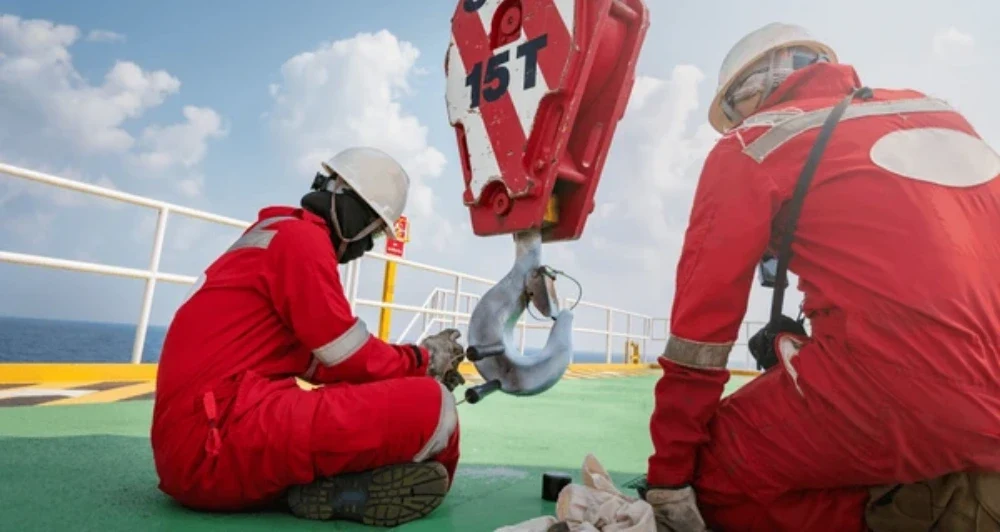
You must perform a thorough inspection before every lift to ensure safe operation. Follow these steps for a critical inspection of each hook:
Examine for wear and corrosion. Remove the hook from service if wear exceeds 10% of the original section dimension.
Check for nicks or gouges. If you can fit a fingernail into any mark, the hook is unsafe.
Test the latch. The latch must close fully and bridge the throat of the hook.
Inspect all bolts and pins. They should be secure, and the hook should swivel freely when unloaded.
Verify that all manufacturers’ markings are present and legible.
Look for unauthorized modifications, such as welding or grinding.
For hooks used in frequent load cycles, use non-destructive testing methods like magnetic particle or dye penetrant. Disassemble the hook block to inspect critical parts, including the shank and nut, where most fatigue failures start.
Service Condition | Inspection Interval |
|---|---|
Normal Service | Monthly |
Heavy Service | Weekly to Monthly |
Severe Service | Daily to Weekly |
Periodic Inspection | Minimum 12 months |
Recognizing Wear and Damage
You must recognize the signs of damage that require immediate removal of a hook from service. Watch for these common issues:
Deformation, such as a widened opening or twist
Cracks or severe wear at the saddle
Latch missing, broken, or not closing fully
Evidence of shock loading, including distortion or visible damage
Corrosion significantly impacts the structural integrity of lifting hooks by weakening the steel, leading to potential failures. It occurs when steel reacts with moisture and oxygen, forming rust, which can flake off and reduce the material’s strength.
Different types of corrosion, such as uniform, pitting, and galvanic corrosion, present unique challenges that can compromise the safety and longevity of steel structures, including lifting hooks.
Always remove any hook showing these signs from service. Never attempt to repair a damaged hook without manufacturer’s approval.
Meeting International Standards
You must use hooks that comply with recognized safety standards. Powerful Machinery Lifting Hooks meet or exceed the following requirements:
Standard | Description |
|---|---|
ASME BTH-1 | Design criteria for below-the-hook lifting devices, including load stresses. |
ASME B30.9 | Guidelines for lifting slings, covering design, construction, and marking. |
ASME B30.20 | Standards for structural and mechanical lifting devices and service classes. |
Powerful Machinery provides EN10204-3.1 or 3.2 certificates for every hook, confirming strict quality compliance. You receive full traceability from raw material to finished product. These hooks also meet OSHA and EN13001-3.5 requirements, ensuring global acceptance for regulated industries.
You must always remove damaged hooks from service and follow all regulations. Proper inspection and compliance protect your team, your equipment, and your reputation in every lifting operation.
Conclusion
To accurately determine the safe working load of each hook, you should follow these steps:
Check the hook’s rated capacity.
Calculate the D/d ratio for the hook and sling.
Assess the sling angle and the resulting force on the hook.
Evaluate load stability and dynamics.
Inspect the hook for wear or damage.
Regular inspection and compliance with safety standards reduce accidents and extend hook life. Using certified hooks from Powerful Machinery ensures your lifting operations remain safe and reliable.
Safety Practice | Description |
|---|---|
Routine Hook Inspections | Identify wear or damage before every lift |
Never Exceed Hook Limits | Prevent overload and equipment failure |
Use Certified Hooks | Meet industry standards for every lifting task |
Prioritize safety and compliance in every hook operation to protect your team and equipment.
FAQ
What is the best way to choose the right lifting hook for your job?
You should match the hook type and size to your load, sling, and lifting method. Always check the working load limit and ensure the hook meets international safety standards.
How often should you inspect your lifting hook?
Inspect your hook before every use. For heavy or frequent lifting, perform weekly or monthly checks. Remove the hook from service if you find any signs of wear, cracks, or deformation.
Can you use a hook with a missing or damaged safety latch?
Never use a hook with a missing or damaged latch. The latch prevents accidental load release. Replace or repair the latch only with approved parts from the manufacturer.
What should you do if your hook shows signs of corrosion?
Remove the hook from service immediately. Corrosion weakens the metal and can cause sudden failure. Always store your hook in a dry place and follow maintenance guidelines to prevent rust.