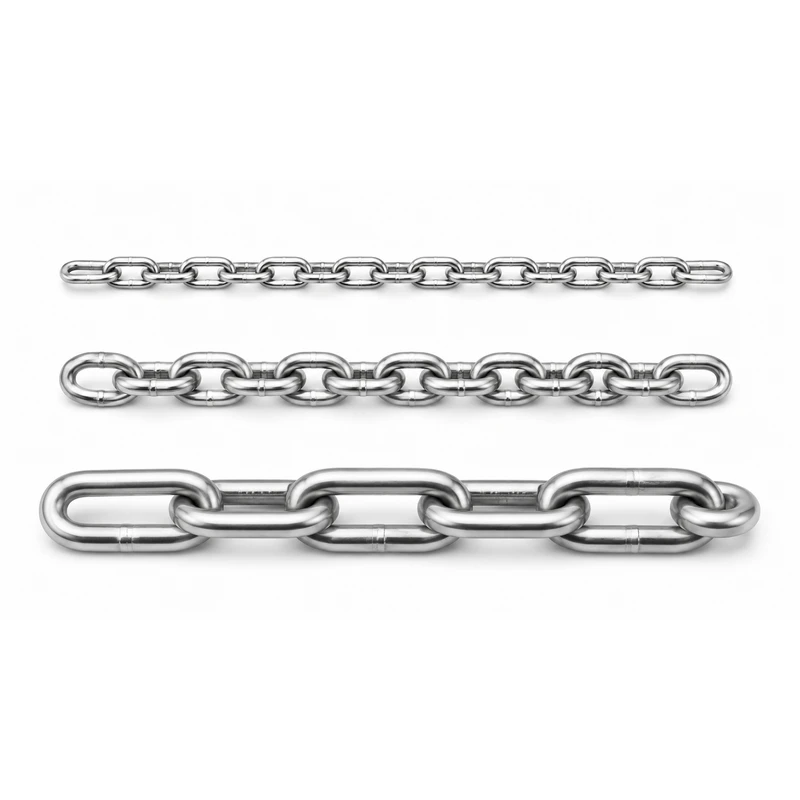
When you ask what a grade 30 chain is, you want a straightforward answer. This chain is made from low-carbon steel and is utilized for various everyday tasks. You can find it in light construction work, on farms, and in boating applications.
Powerful Machinery is a reliable provider of chain solutions, ensuring that their products adhere to strict industry standards. Choosing the right chain grade is essential for maintaining safety and efficiency in your work.
Key Takeaways
Grade 30 chain uses low-carbon steel. It works well for light jobs like towing and holding cargo.
Always look at the chain’s marks and weight limits. This helps you use it safely and the right way.
Grade 30 chain should not lift things above your head. Only use it for regular tasks.
Galvanized finishes stop rust. This makes the Grade 30 chain good for outside use.
Picking the right chain grade keeps you safe and helps you work better.
What is Grade 30 Chain?
Definition and Standards
You might ask what grade 30 chain means for your work. This chain is a welded link chain made from low-carbon steel. It is used for jobs that do not need high strength. You can spot markings like “3,” “30,” or “300” on the links. These marks are stamped about every foot to help you know the chain grade fast.
Industry rules help explain what a grade 30 chain is. ASTM and NACM set the rules for these chains. ASTM80 Grade 30 Proof Coil Chain follows ASTM rules from 1980 and NACM rules from later years. These rules make sure each chain is safe and of good quality. Chains that meet these rules will work well for general use.
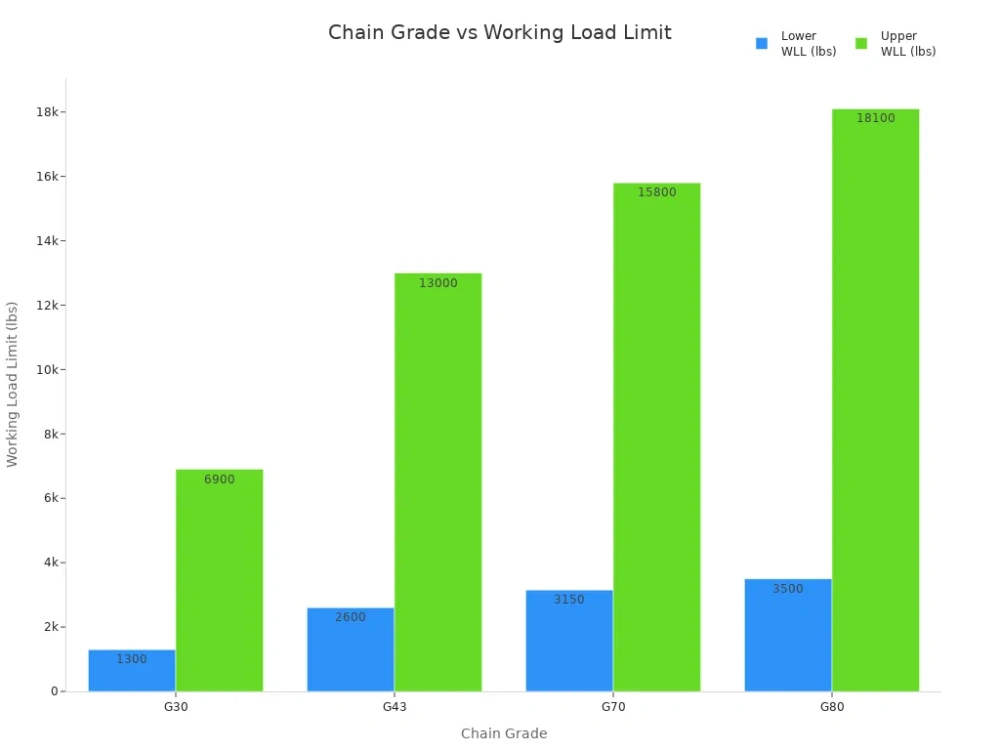
When you look at different chain grades, you see they have different load limits and design factors. The table below shows how grade 30 compares to other chain grades:
Chain Grade | Working Load Limit (WLL) | Design Factor | Description |
|---|---|---|---|
G30 | 1,300 – 6,900 lbs | 3:1 | Used for general jobs, not for lifting overhead. |
G43 | 2,600 – 13,000 lbs | 3:1 | Used for medium jobs, not for lifting overhead. |
G70 | 3,150 – 15,800 lbs | 4:1 | Strongest carbon-steel, used for heavy jobs. |
G80 | 3,500 – 18,100 lbs | 4:1 | Good for heavy towing and lifting overhead. |
G100 | N/A | N/A | Best for heavy jobs, very strong. |
Tip: Always look for chain markings and check the standards before you pick a chain. This helps you choose the right chain and keeps your work safe.
Material and Construction
If you want to know what a grade 30 chain is, look at what it is made of and how it is built. Makers use low-carbon steel to make grade 30 chains. This steel gives the chain enough strength for light jobs.
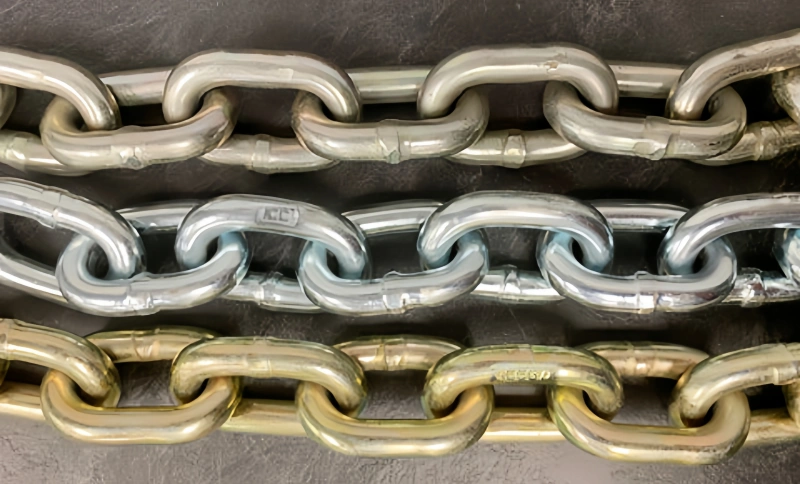
It also makes the chain easy to bend and use. You can get these chains with a plain finish or a galvanized finish. Galvanized chains do not rust easily, so they are good for outdoor use.
Each link in a grade 30 chain is welded to make it strong. Welding joins the links tightly, so you can use the chain for towing, holding cargo, and other jobs. The chain grade mark helps you check if the chain is right for your job. Always pick the chain grade that matches your job to stay safe and work well.
Note: Grade 30 chain is not made for lifting things overhead. Use it for towing, farm work, and holding loads when you do not need high strength.
Now you know what grade 30 chain is, how rules define it, and what it is made of. This helps you pick the right chain and follow safe work habits.
Grade 30 Chain Applications
Industrial and Farm Uses
Grade 30 chain is used a lot on farms and in factories. This chain is strong because it is made from carbon steel. People use it for simple jobs like building or farming. Farmers use a grade 30 chain to close gates and tie equipment. They also use it to hold things together.
You do not need super strong chain for these jobs. Grade 30 chain works well for them.
Note: Grade 30 chain is called proof coil chain too. It is good for daily jobs but not for heavy work.
Here are ways people use a grade 30 chain on farms and in factories:
Hold loads on trailers or wagons
Tie down tools and supplies
Bundle pipes, wood, or fencing
Fasten gates and barriers
Support small structures
You should check the chain’s marks and details before using it. This helps you pick the right chain and keeps you safe.
Towing and Cargo Securement
Sometimes you need to tow small things or hold cargo. Grade 30 chain is good for these easy jobs. It is strong enough to pull garden tools, ATVs, or small trailers. You can use it to keep cargo safe on trucks or boats.
When picking a chain, make sure it meets the rules. Powerful Machinery sells chains that follow ASTM and NACM rules. This means you can trust their chains to work well. Always look at the working load limit before using any chain for towing or holding cargo.
Tip: Use galvanized grade 30 chain outside. It does not rust and lasts longer in wet places.
Grade 30 chain helps you do many jobs on farms, in factories, and when moving things. It is a handy tool that helps you work safely and easily.
Powerful Machinery Grade 30 Proof Coil Chain
Product Features and Benefits
When you choose the Powerful Machinery Grade 30 proof coil chain, you get a product built for reliability and versatility. This chain uses high-quality carbon steel, which gives you strength for many daily tasks. You can use it for towing, securing cargo, or general utility work on farms and in industrial settings.
The chain comes in both self-colored and galvanized finishes. The galvanized finish helps protect against rust, making it a smart choice for outdoor use.
You will find that this chain meets strict industry standards. It follows ASTM, OSHA, and NACM requirements. These standards help ensure your safety and the chain’s performance. You can buy the chain by the foot, so you only get what you need for your project. This flexibility helps you save money and reduce waste.
Tip: Always check the chain’s markings before use. This helps you confirm you have the right grade for your job.
The chain’s welded links provide extra durability. You can trust it to hold up under repeated use. Many users appreciate how easy it is to handle and install. The chain’s design makes it simple to cut to length or attach to hooks and fittings.
Specifications and Compliance
You need to know the exact specification before you select a chain for your job. Powerful Machinery provides clear details so you can make the right choice. The table below shows the main specifications for the most common sizes:
Chain Size (Inch) | Working Load Limit (lbs) | Weight Per Foot (lbs) | Material Diameter (in) |
|---|---|---|---|
1/4″ | 1,300 | 0.55 | 0.275 |
5/16″ | 1,900 | 0.79 | 0.308 |
3/8″ | 2,650 | 1.15 | 0.367 |
Each chain size has a specific working load limit. You should always match the chain’s specification to your task. This helps prevent accidents and keeps your work safe.
The chain’s compliance with ASTM, OSHA, and NACM standards means you can trust its quality. These standards require strict testing and inspection before the chain reaches you.
Note: This chain is not for overhead lifting. Use it for towing, cargo securement, and general utility work.
When you follow the correct specification, you get the best performance from your chain. Powerful Machinery’s commitment to compliance gives you peace of mind on every job.
Safety and Limitations of Grade 30
Working Load Limits
You need to understand the working load limit before you use any chain. The working load limit tells you how much weight a chain can safely handle. For grade 30, this number is lower than other chain grades.
If you compare chain grade options, you see big differences in strength. The table below shows how grade 30 stacks up against grade 43 and grade 70 at two common sizes:
Chain Grade | Working Load Limit (1/4″ chain) | Working Load Limit (5/8″ chain) |
|---|---|---|
Grade 30 | 1,300 lbs | 6,900 lbs |
Grade 43 | 2,600 lbs | 13,000 lbs |
Grade 70 | 3,150 lbs | 15,800 lbs |
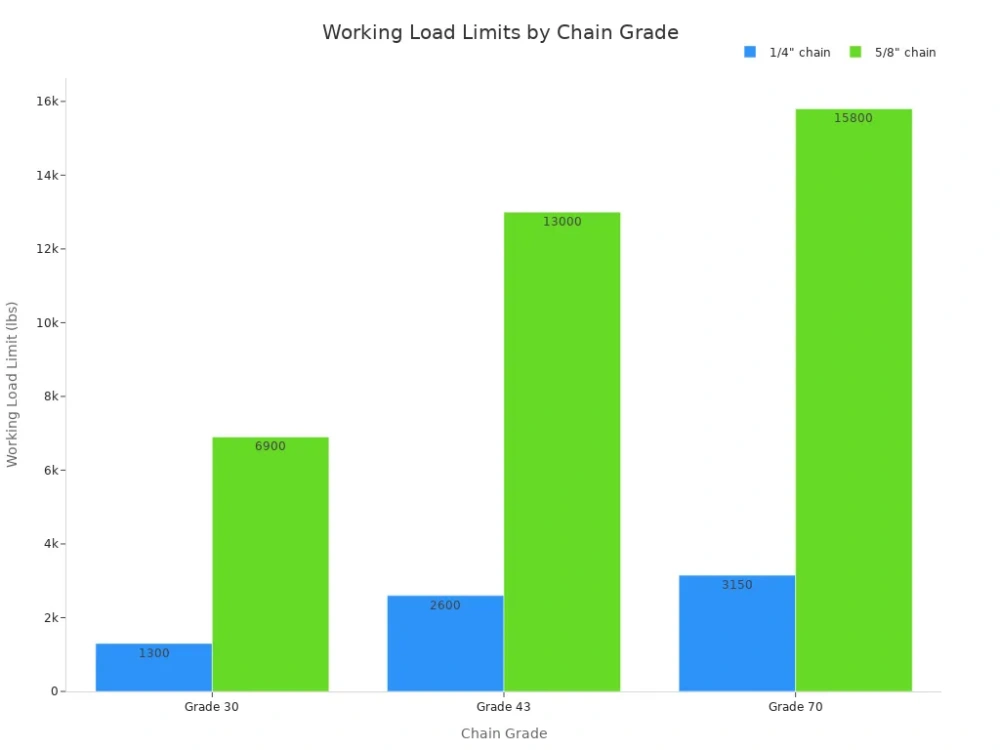
Grade 30 is suitable for lighter-duty applications. Grade 43 offers about twice the working load limit of grade 30. Grade 70 provides even higher limits, making it better for heavy-duty jobs.
Always check the chain grade and working load limit before you start your project. This step helps you avoid accidents and keeps your work safe.
Tip: Never guess the strength of a chain. Use the manufacturer’s specifications and markings to confirm the working load limit.
Overhead Lifting Warning
You must never use grade 30 chain for overhead lifting. This chain grade is designed for towing, securing cargo, and general utility tasks. It does not meet the strength or performance standards needed for lifting loads above ground. Using grade 30 for lifting introduces serious safety hazards.
The chain can fail under stress, causing dropped loads and injuries.
Industry guidelines make this rule clear:
Grade 30 chains are not suitable for overhead lifting or other high-stress applications.
Using a grade 30 chain for lifting at a job site can lead to penalties from OSHA.
⚠️ Always select a chain grade that matches your lifting needs. For overhead lifting, choose a chain with higher strength and proper certification.
You protect yourself and others when you follow these safety rules. Understanding the limitations of grade 30 chain helps you make smart choices and maintain a safe work environment.
Chain Grades Guide and Comparison
Grade 30 vs Other Grades
When you check the chain grades guide, you learn that each grade has a special use. Grade 30 chain is a basic and cheap choice. It works for small building jobs, farm tasks, and boats. Other chain grades are stronger and work better for tough jobs.
Here is a table to help you compare the most common chain grades:
Chain Grade | Description | Strength Comparison | Applications |
|---|---|---|---|
Grade 30 | General-purpose, low tensile strength | Lower than Grade 43 | Light construction, agriculture, and marine |
Grade 43 | Stronger, better wear resistance | Higher than Grade 30 | Towing, logging, and container securement |
Grade 70 | Heat-treated, high-strength | Higher than Grade 43 | Trucking, load securement, highway use |
Grade 80 | Alloy, overhead lifting approved | Higher than Grade 70 | Lifting slings, heavy-duty towing |
Grade 100 | Highest strength, alloy | Highest | Rigging, construction, manufacturing |
As you go up in chain grades, the chains get stronger. They can do more jobs and handle bigger loads. Grade 43 and Grade 70 chains are good for pulling and moving heavy things. Grade 80 and Grade 100 chains are made for lifting and hard work in factories.
Powerful Machinery gives you a full chain grades guide. You can pick Grade 30 for easy jobs. Grade 43 and Grade 70 are for moving and towing. Grade 80 and Grade 100 are for lifting and rigging. This helps you find the best chain for your job.
Choosing the Right Chain Grade
Picking the right chain grade keeps you safe and helps you work better. You should think about what the chain is made of, if it is heat-treated, and how strong it is. These things help you know if the chain fits your job.
When you use the chain grades guide, remember these tips:
Each chain grade works best for certain jobs.
Knowing the differences helps you pick the right chain.
Never use Grade 70 or lower to lift things overhead.
Always check your chain and use parts that match.
Some people use the wrong chain grade or mix up chain parts. Do not use hoist load chain for lifting or Grade 70 for overhead lifts. Check your chain often and take care of it so it lasts longer.
Powerful Machinery’s guide makes picking easy. You can choose from many chain grades. Each chain is tested to meet world standards. This means you get the right chain for your job, whether you need to tie down cargo, tow things, or lift heavy stuff.
Tip: Always look at the chain grades guide before you start a new job. The right chain grade helps you work safely and quickly.
Identification and Compatibility
Markings and Finishes
You need to identify the right chain for your job. Industry standards require clear markings on each chain. These markings help you know the chain grade and if it meets safety rules. Look for these features:
Grade numbers stamped on the chain, such as G30.
Tags attached to the chain that show unique identification and inspection status.
Proprietary tags that display the Working Load Limit (WLL) and certificate number.
These markings make it easy for you to check if the chain is safe to use. You should always inspect the chain before starting any task.
You also need to choose the right finish for your chain. The finish affects how well the chain resists rust and corrosion. Common finishes include:
Zinc plated
Hot-dip galvanized
Self-colored
Yellow chromate
A galvanized finish works best for outdoor jobs because it protects the chain from moisture. If you work indoors, a self-colored chain may be enough. Always match the finish to your work environment for the best results.
Fittings and Accessories
You must use the correct fittings and accessories with your chain. This ensures safety and makes your work easier. Manufacturers recommend these compatible options:
Chain connectors
Hooks
Shackles
Quick links (1/4 in)
HDG load-rated screw pin anchor shackles (5/16 in)
High test clevis grab hooks (1/4 in)
High test clevis slip hooks (1/4 in)
These accessories help you connect, secure, or adjust your chain quickly. Always check that the fittings match the chain size and grade. Using the right accessories keeps your setup strong and reliable.
Tip: Check all markings and use only approved fittings for your chain. This step helps you avoid mistakes and keeps your work safe.
Conclusion
You now know a grade 30 chain is a cheap choice for easy jobs. People use it for building, farming, and on boats. Look at the table below for a quick summary:
Uses | Limitations |
|---|---|
General-purpose economical chain | Low tensile strength |
Used in light construction | Prone to stretching under heavy loads |
Applicable in agricultural applications | |
Utilized in the marine industry |
Powerful Machinery has more than 20 years of experience. They check their products carefully. Every chain is safer than the world safety rules.
When you pick a chain, ask experts for help. Use load charts to find the right grade for your job. This helps you stay safe and work well.
FAQ
What is the main use of Grade 30 chain?
You use Grade 30 chain for light-duty tasks. It works well for securing cargo, towing small loads, and general utility jobs on farms or in workshops.
Can you use a Grade 30 chain for overhead lifting?
Warning:
You must never use Grade 30 chain for overhead lifting. It does not meet the strength or safety standards required for lifting loads above ground.
How do you identify a Grade 30 chain?
You find markings like “3,” “30,” or “300” stamped on the links. These marks help you quickly confirm the chain’s grade before use.
Does Powerful Machinery offer custom chain lengths?
Yes, you can order Grade 30 proof coil chain by the foot from Powerful Machinery. This lets you get the exact length you need for your project.