You can identify and match the eyebolts with ease when you know what to look for. Simple steps help you avoid common mistakes and keep your workplace safe. Improper eyebolt selection can lead to serious incidents, including neck loading or unsafe anchor points. Take a look at reported cases:
Incident Type | Description |
|---|---|
Eyebolts as anchor devices | Eyebolts that are improperly used can lead to significant safety hazards. |
Neck loading on eyebolts | Improper usage can cause neck loading, a critical failure point in safety. |
Powerful Machinery provides certified, high-quality eye bolts designed for safety in every application. You do not need advanced knowledge—just a few practical tips.
Key Takeaways
Identify eyebolts by examining their shape and construction. Look for unique features like shoulders or loops to match them to your lifting needs.
Check the markings on eyebolts for safety. Ensure they display the manufacturer’s mark, working load limit, and compliance with international standards.
Select the right type of eyebolt for your application. Use forged eyebolts for heavy loads and bent eyebolts for lighter tasks to ensure safety.
Inspect eyebolts regularly for damage. Look for cracks, corrosion, or deformation before each use to maintain safety during lifting operations.
Follow a checklist for eyebolt selection and installation. This helps avoid common mistakes and ensures you choose the right product for your project.
Identify and Match the Eyebolts: Quick Guide
When you want to identify and match the eyebolts for your project, you need to focus on a few key features. This quick guide will help you make the right choice every time. You will learn how to spot the differences in shape, construction, and markings.
You will also see how Powerful Machinery ensures every product meets strict international standards.
Eye Shape and Construction
Start by looking at the overall shape and build of the eye bolts. Each type has unique visual features that make identification simple. Use the table below to compare the most common types:
Type of Eyebolt | Visual Features |
|---|---|
Forged Eyebolts | One-piece fasteners with higher load ratings. |
Screw Eyes | Screws with a head shaped into a loop or eye, used in lifting and rigging. |
Shoulder Eyebolts | Have a shoulder under the eye, installed flush with the mounting surface. |
Thimble Eyebolts | Designed with an opening that acts as a thimble for wire or rope. |
Pivoting Eyebolts | Designed to pivot 180°, the base swivels 360°. |
You can identify and match the eyebolts by checking these visual cues. Forged eye bolts work best for heavy-duty lifting. Bent eye bolts suit lighter tasks. If you see a shoulder under the eye, you have a shoulder eyebolt, which provides extra stability.
Shank, Shoulder, and Thread
Next, examine the shank, shoulder, and thread. These physical features affect the strength and application of the eye bolts. The table below highlights the main differences between forged and bent eye bolts:
Type | Fabrication Process | Strength Characteristics | Applications |
|---|---|---|---|
Forged Eye Bolts | Hammered or pressed into form | Stronger, harder, and more durable; suitable for heavy loads | Heavier-duty lifting applications |
Bent Eye Bolts | Made from a solid rod that is bent | Weaker; not suitable for heavy or angular loads | Lighter-duty applications |
Shouldered eye bolts have a flat shoulder under the eye. This design allows you to use them for angular lifts. Non-shouldered eye bolts should only be used for straight lifts. Always check the thread size and length to ensure a secure fit.
Powerful Machinery offers a wide range of eye bolts with precise threads and robust construction, making it easy to identify and match the eye bolts for any task.
Markings and Standards
Proper markings help you identify and match the eyebolts with confidence. Certified eye bolts display important information that guarantees safety and traceability. Look for these markings:
Manufacturer’s mark or symbol
Working load limit (e.g., 2.5 t)
Traceability code
Nominal size (thread diameter)
Grade (for alloy eye bolts)
Regulatory marking (such as CE marking)
You should also check for compliance with international standards. The most frequently cited standards for eye bolts include:
ISO 3266
ASME B18.15
DIN 580
These standards cover chemical composition, heat treatment, mechanical properties, and product marking. Powerful Machinery tests every product to meet or exceed these requirements. The company’s commitment to quality and safety ensures you always receive certified eye bolts that perform reliably.
Tip: Always inspect the markings before use. Legible and complete markings mean the eye bolts meet industry standards and can be traced back to the manufacturer.
When you follow these steps, you can identify and match the eyebolts quickly and accurately. You reduce the risk of errors and ensure safe lifting operations. Powerful Machinery stands behind every product with rigorous testing and full certification, so you can trust the eye bolts you select for your next project.
Types of Eye Bolts from Powerful Machinery
Forged and Bent Eye Bolts
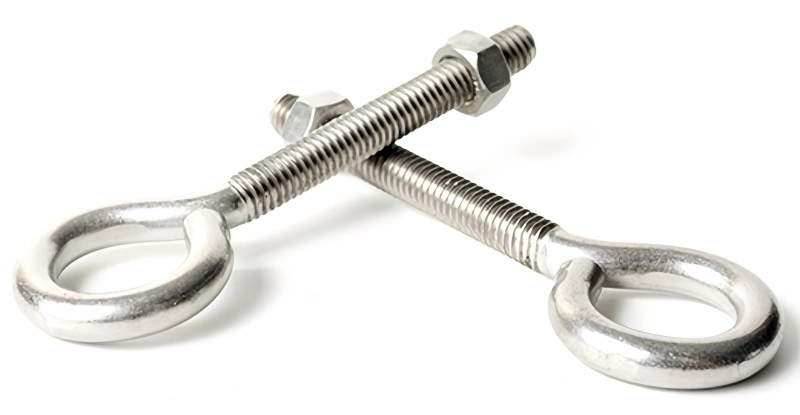
You will find two main types of eye bolts for most lifting and rigging tasks: forged and bent wire eye bolts. Forged eye bolts offer high strength and a certified rated capacity. You can use them for multidirectional stress and critical applications.
Bent wire eye bolts are suitable for light, static loads and non-critical uses. They often lack a rated capacity and should not be used for heavy lifting.
Here is a quick comparison:
Type of Eye Bolt | Load Capacity | Working Load Limit (WLL) | Suitable Applications |
|---|---|---|---|
Forged Eye Bolt | High | Certified WLL | Multidirectional stress, critical applications |
Bent Wire Eye Bolts | Low | Often lacks WLL | Light, static loads, non-critical applications |
Forged eye bolts have a shoulder that helps distribute load stress. This feature increases safety during general eye bolt installation. Bent wire eye bolts do not have this advantage.
Shouldered and Non-Shouldered Eye Bolts
You need to choose between shoulder pattern eye bolts and plain pattern eye bolts based on your lifting needs. Shoulder pattern eye bolts handle heavy lifting and resist twisting. You can use them for angular lifts and demanding environments.
Plain pattern eye bolts, also called non-shouldered, work best for straight lifts and lighter loads.
Feature | Shoulder Eye Bolt | Non-Shoulder Eye Bolt (Plain Pattern) |
|---|---|---|
Load Capacity | High, for heavy lifting | Medium, for lighter loads |
Twisting Resistance | Yes, prevents twisting | No, can twist under load |
Ideal Use | Heavy-duty applications | Light-duty, static applications |
General eye bolt installation requires you to match the right type to the job. Always check the rated capacity before use.
Stainless Steel Eye Bolts and Eye Nuts
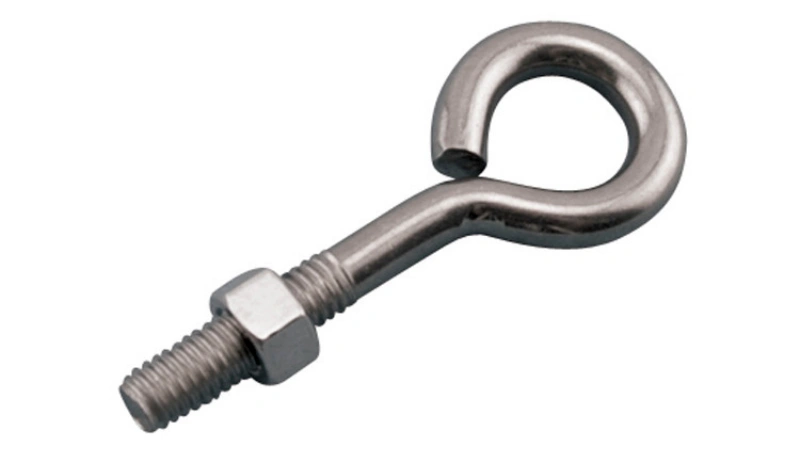
Powerful Machinery offers a full range of steel eye bolts and eye nuts. You can select from type 304 for general corrosion resistance or type 316 for marine-grade durability. Steel eye bolts provide higher corrosion resistance than galvanized options.
You will find these products ideal for marine, outdoor, and chemical environments. The steel construction ensures long service life and reliability.
Type 304: Good corrosion resistance for most uses.
Type 316: Superior corrosion resistance, perfect for saltwater and harsh chemicals.
High durability in tough conditions.
Available in sizes from M6 to M20.
Steel eye bolts and eye nuts from Powerful Machinery meet strict standards, including DIN 580 and JIS 1168.
Specialty and Lifting Eye Bolts
You may need specialty eye bolts for unique lifting challenges. Powerful Machinery supplies welded and lifting eye bolts that comply with DIN 580, JIS B1168, and JIS B1169.
These steel products come in sizes like M8, M42, and 1-1/2″. You can also choose blue zinc-plated or stainless steel finishes for extra protection. Specialty eye bolts deliver reliable performance in construction, marine, and industrial settings.
Specification | Description |
|---|---|
Type | Welded Bolt Ss Lifting Inch JIS B 1168 |
Material | SS304, Carbon Steel |
Size | M8, M42, 1-1/2″ |
Standards | DIN 580, JIS B1168, JIS B1169 |
You can trust Powerful Machinery for certified steel eye bolts that meet international standards and deliver consistent strength.
Match Eye Bolts to Applications
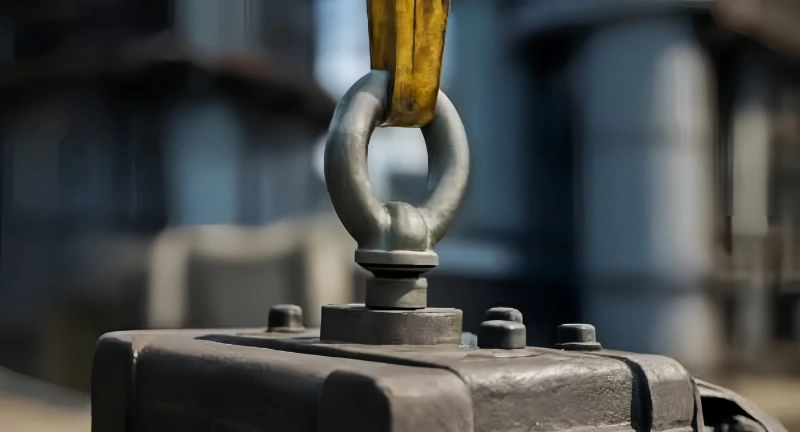
Choosing the right eye bolts for your lifting, rigging, and securing tasks ensures safety and effectiveness in every project. You must match the lifting eye bolts to the specific load, environment, and application. Powerful Machinery offers a full range of certified products that meet international standards for all major industries.
Lifting Eye Bolts for Rigging and Hoisting
You need to select lifting eye bolts with the correct load capacity for rigging applications. The shank diameter determines the weight each bolt can handle. Use the table below to match the right lifting eye bolts to your load requirements:
Shank Diameter (in) | Weight Capacity (lbs) |
|---|---|
1/4 | 600 |
5/16 | 900 |
3/8 | 1,300 |
1/2 | 2,500 |
5/8 | 4,500 |
3/4 | 5,200 |
7/8 | 7,200 |
1 | 10,000 |
1-1/4 | 15,000 |
1-1/2 | 22,000 |
2 | 35,000 |
A 3/8-inch lifting eye bolt supports up to 1,300 pounds for vertical lifts. If you lift at an angle, the working load limit drops. Always check the sling angle to avoid exceeding the limit. The chart below shows how the working load limit decreases as the sling angle increases:
You should always follow general safety precautions and inspect each lifting eye bolt before use. Powerful Machinery’s lifting eye bolts meet all major standards, ensuring reliable performance in rigging and hoisting.
Marine and Outdoor Uses
For marine and outdoor applications, you must choose eye bolts with high corrosion resistance and proper certification. Stainless steel lifting eye bolts, especially type 316, resist rust and saltwater damage.
These bolts maintain their load capacity even in harsh environments. Review the table below for key safety certifications:
Standard | Description |
|---|---|
ASME B30.26 | Rigging hardware for below-the-hook lifting devices |
OSHA 1910.184 | Slings and rigging hardware regulations |
ASME B18.15 | Forged eyebolts dimensional and strength standards |
Federal Spec FF-B-575E | Bolt, hook, and forged eyebolt specifications |
You should inspect for cracks, corrosion, or deformation before every use. Apply moisture-resistant lubricants and replace any lifting eye bolts that show wear. These safety tips extend the life and reliability of your rigging hardware.
Construction and Industrial Applications
In construction and industrial applications, you must match the eye bolts to the environment and load requirements. Stainless steel works best in wet or marine settings. Galvanized steel suits moderate outdoor conditions.
Carbon steel is not recommended for humid areas due to rust risk. Titanium serves extreme environments with high corrosion or temperature.
Material | Suitable Environment | Notes |
|---|---|---|
Stainless Steel | Wet or marine environments | Rust-resistant, ideal for long-term exposure |
Galvanized Steel | Outdoor use in moderate conditions | Cost-effective for general outdoor applications |
Carbon Steel | Humid areas | Not recommended due to rust susceptibility |
Titanium | High-corrosion/high-temp settings | Specialty material for extreme conditions |
You can use lifting eye bolts for hoisting engines, securing equipment, or heavy-duty rigging. Always verify the load, limit, and capacity before installation. Powerful Machinery provides certified lifting eye bolts for all industrial and construction needs, ensuring safety and compliance with every application.
Remember: Matching the right lifting eye bolts to your application protects your team and equipment. Always check the load, limit, and certification for every job.
Eyebolt Checklist for Safe Selection
Step-by-Step Identification
You can follow a simple checklist to ensure you select and install the right eye bolts for your project. This process helps you maintain safety and avoid costly errors. Use the table below to guide your inspection and selection:
Essential Steps | Description |
|---|---|
Check that all identification markings are present and easy to read. | |
Check threads and holes | Make sure threads are clean, undamaged, and free from rust or corrosion. |
Look for deformation | Examine the eyebolt for bending, cracks, or excessive wear. |
Verify alignment | Confirm the eyebolt aligns with the load direction and the surface is sound. |
Match threads | Always match the eyebolt threads with the receiving hole or nut. |
Avoid over-tightening | Hand-tighten and follow the manufacturer’s torque guidelines. |
Inspect for damage | Regularly check for cracks, corrosion, or other signs of damage. |
Tip: Always select the proper size and use washers to distribute the load evenly. This is one of the most important installation best practices.
You should also check that every eyebolt meets international certifications and standards. Powerful Machinery provides products with clear markings and full compliance, making your selection process easier.
Common Mistakes to Avoid
Many users make the same errors during eyebolt selection and installation. You can prevent these issues by following installation best practices:
Choose the correct hole size and inspect threads before installation.
Ensure the shoulder sits flush with the surface. Use washers or shims if needed, but keep minimum thread engagement.
Avoid angular loading, especially at angles less than 45 degrees.
Use spreader bars or lifting yokes when using multiple eyebolts to eliminate angular loading.
Apply the load in the plane of the eye to reduce bending forces.
Use a shackle if the hook does not fit completely into the eyebolt.
Never reeve slings through eyebolts; attach only one leg to each eyebolt.
You should always plan your lifts and review procedures before starting. Pre-lift planning and regular inspection are key installation best practices that help you maintain safety and prevent accidents.
Remember: Following these installation best practices protects your team and equipment during every lift.
Conclusion
You can identify and match eye bolts by checking shape, construction, and markings. Choosing certified, high-quality products from Powerful Machinery gives you these proven benefits:
Benefit | Description |
|---|---|
High Load Carrying Capacity | Safely handles heavy loads, especially with high tensile eye bolts. |
Corrosion Resistance | Stainless steel and anti-corrosive materials ensure long-lasting use. |
Diversity | Many sizes and types fit different applications. |
Ease of Installation | Simple mounting and removal save you time and effort. |
Following a checklist reduces workplace accidents by helping you:
Select the correct type and material for each job.
Consider load capacity and installation needs.
Maintain and inspect eye bolts regularly.
If you need more guidance, Powerful Machinery offers expert resources and personal assistance. Visit Powerful Machinery’s website for more information and support.
FAQ
What are the main types of eye bolts?
You will find forged, bent, shouldered, non-shouldered, and specialty eye bolts. Each type fits specific lifting or securing tasks. Always check the application before you choose the right type.
How do I know which size to select?
You should match the thread diameter and length to your load and mounting surface. Review the manufacturer’s specifications and use a sizing chart for guidance.
Can I use eye bolts outdoors or in marine environments?
Yes. Stainless steel eye bolts resist corrosion and work well in outdoor or marine settings. Choose type 316 for the best protection against saltwater.
How often should I inspect eye bolts?
Inspect before each use. Look for cracks, corrosion, or deformation. Replace any damaged hardware immediately to maintain safety.
Where can I buy certified eye bolts?
You can purchase certified eye bolts directly from Powerful Machinery. Visit their official website for product details and support.