Store your pallet jack by lowering the forks completely, placing it in a clean, dry area, and performing regular maintenance to prevent wear. You protect your team from accidents and help your equipment last longer when you follow these steps.
Keeping the pallet jack clean stops dirt from wearing out parts, and routine checks keep everything running smoothly. Efficient pallet jack storage improves workplace safety and extends the life of your investment.
Key Takeaways
Store your pallet jack properly by lowering the forks and keeping it in a clean, dry area. This practice prevents accidents and extends the equipment’s life.
Follow OSHA regulations for safe pallet jack storage. Clear aisles and secure storage prevent workplace hazards and ensure compliance.
Choose the right storage method for your facility. Vertical storage maximizes space, while floor stacking is simple and cost-effective.
Perform regular maintenance checks on your pallet jack. Daily inspections and routine upkeep keep your equipment in top condition and reduce repair costs.
Avoid common storage mistakes like overloading racks and climbing them. These errors can lead to accidents and increased maintenance expenses.
Why Pallet Jack Storage Matters?
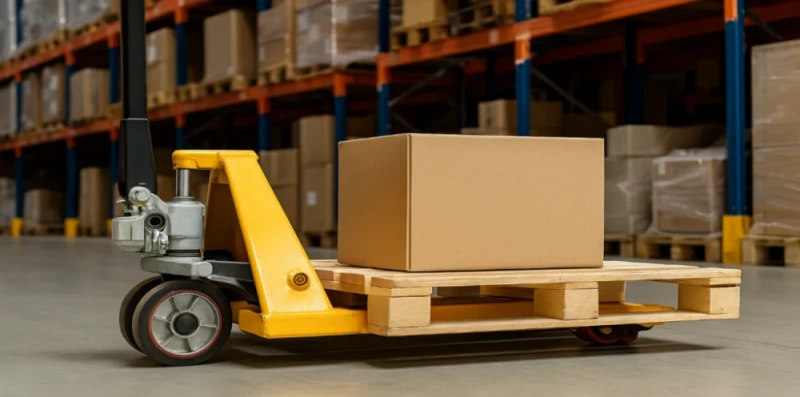
Safety and Compliance
You protect your team and your business when you follow safe pallet jack storage practices. Unsafe storage creates risks in your workplace. Common problems include:
Unsafe forklift operation
Pallet storage issues
Dust accumulation
Poor housekeeping
Supply chain problems
You must also avoid overloading racks and uneven weight distribution, which can strain beams and supports. Regulatory agencies set clear standards for safe storage. The table below shows some important guidelines:
Regulation/Standard | Description |
|---|---|
29 CFR 1910.176(b) | Requires secure storage to prevent objects from falling. |
29 CFR 1910.178 | Outlines safety standards for powered industrial trucks, including forklifts. |
ANSI MH16.1 | Provides standards for the design, installation, and use of industrial steel storage racks. |
OSHA regulations require you to keep aisles clear and store materials to prevent sliding or collapse. You must train operators to meet OSHA guidelines. Inadequate training, unsafe load handling, and cluttered aisles often lead to violations.
Non-compliance can result in heavy fines, higher insurance costs, and even workplace shutdowns.
Efficiency and Equipment Life
You improve workflow and reduce downtime when you organize your pallet jack storage. Proper storage keeps equipment accessible and prevents damage. A well-maintained pallet jack can last five to ten years. With light use and excellent care, you may see even longer service life.
If you store your equipment in harsh conditions or use it heavily, you may need to replace it in as little as two to three years.
You extend the life of your pallet jack by keeping it clean, dry, and in a designated area. You also reduce the risk of accidents and keep your team productive. Good storage practices help you avoid costly repairs and replacements.
Pallet Jack Storage Solutions
Floor and Vertical Storage
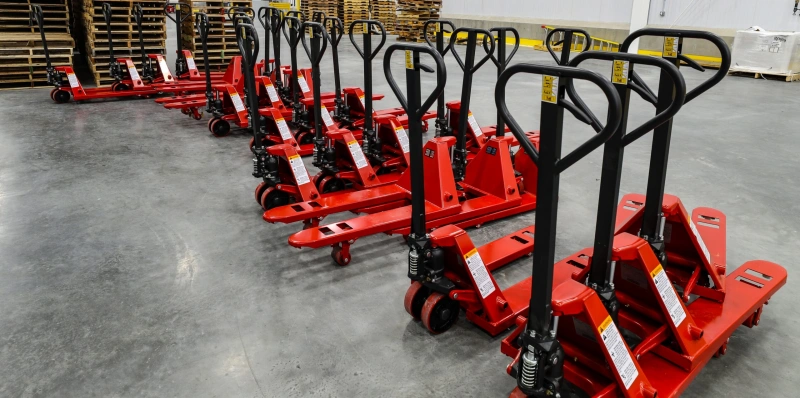
You can choose between floor and vertical storage methods based on your facility’s layout and workflow. Floor stacking remains a popular option because it is simple to set up and requires little investment. You can easily implement First-In, First-Out (FIFO) inventory management with this method.
However, floor stacking uses more space and can create accessibility issues if you have a busy warehouse.
Vertical storage maximizes your available space by using racks or shelving to store pallet jacks above ground level. This method improves organization and frees up valuable floor space, making it easier for your team to move around.
You should use vertical storage if you want higher storage density and better inventory management. Many large distribution centers rely on vertical systems to keep equipment organized and accessible.
Here is a comparison of these two methods:
Storage Method | Advantages | Disadvantages |
|---|---|---|
Vertical Storage | Maximizes vertical space, improves organization, and frees floor space | Less accessible, increased risk of falls if not secured |
Floor Stacking | Simple setup, low cost, easy FIFO management | Uses more floor space, which can cause accessibility problems |
When you use vertical storage, always install steel mesh containment panels. These panels prevent items from falling and protect your team from injuries. Follow ANSI MH31.1 guidelines to ensure your panels meet safety standards. For best results, store your pallet jack with the forks lowered and in a dry, clean area.
Powerful Machinery’s pallet jacks feature robust steel construction and ergonomic handles, making them easy to position and secure in both floor and vertical storage systems.
Wall Racks and Caddies
Wall racks and caddies offer efficient solutions for pallet jack storage in smaller spaces or high-traffic areas. You can mount wall racks to keep pallet jacks off the floor, which reduces clutter and improves safety. Caddies provide mobile storage options, allowing you to move equipment where you need it most.
These solutions help you organize your workspace and prevent accidents caused by misplaced equipment.
You should select racks and caddies that match the size and weight of your pallet jack. Powerful Machinery’s manual and electric pallet jacks fit most standard wall racks and caddies due to their compact design and durable build.
Always secure the pallet jack with the forks lowered to prevent accidental movement. Place racks and caddies in dry, well-lit areas to protect your equipment from moisture and dust.
Tip: Use wall racks near loading docks or workstations for quick access during busy shifts.
Accessories and Tool Organization
You can enhance your pallet jack storage system with the right accessories. Magnetic containers, shelf dividers, and tool caddies keep your workspace organized and your tools within reach. Accessories like wire decking and pallet support bars add stability and safety to your storage racks.
These components help you comply with fire regulations and prevent inventory mixing.
Here is a list of recommended accessories for organizing your pallet jack tools and components:
Accessory | Description |
|---|---|
Pallet Rack Accessories | Maximize efficiency and safety, customizable for your needs |
Shelf & Load Support | Secure storage for diverse inventory complies with fire regulations |
Wire Decking | Durable mesh platform promotes fire safety and air circulation |
Pallet Support Bars | Reinforce beams for oversized pallets, prevent fall-through incidents |
Cross Bars | Stabilize smaller or irregular pallets, enhance load distribution |
Skid Channels | Optimize storage for non-palletized goods, with easy forklift access |
Drum Storage Accessories | Securely hold drums, prevent spills, and ensure safe storage of hazardous materials |
Shelf Dividers | Organize compartments, prevent inventory mixing, simplify picking |
You should keep your pallet jack tools and accessories in designated containers or caddies. This practice reduces time spent searching for parts and improves overall efficiency. Powerful Machinery’s pallet jacks work seamlessly with these accessories, supporting a safe and organized workplace.
How to Store a Pallet Jack?
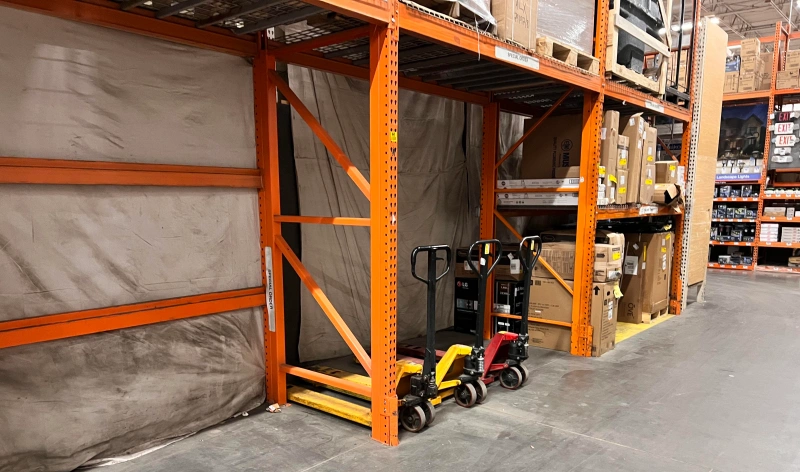
Preparation and Positioning
You must prepare your pallet jack before placing it in storage. Follow these steps to ensure safety and equipment longevity:
Inspect the pallet jack for visible damage or leaks. Address any issues before storage.
Clean the forks, wheels, and handle. Remove dust, debris, and any spilled materials.
Lower the forks completely to the ground. This prevents accidental movement and reduces pressure on the hydraulic system.
Move the pallet jack to a designated storage area. Choose a location away from high-traffic zones to reduce the risk of accidents.
Perform routine maintenance. Lubricate moving parts and check the hydraulic system for smooth operation.
Store the pallet jack in a dry, clean environment. Moisture can cause rust and damage to steel components.
Proper positioning plays a critical role in pallet jack storage. Place the equipment within a flow rack system or against a wall, ensuring clear access for operators. You should consider the movement of forklifts, robots, and other pallet jacks in your layout.
Features like rubber-coated rollers and speed controllers help manage pallet movement and reduce the risk of injury. When you store manual pallet jacks or motorized pallet jacks, always keep the forks lowered and handles secured.
Tip: Mark the storage area with floor tape or signage. This keeps the space organized and reminds your team to return equipment after use.
Securing and Organizing Multiple Units
You can maximize space and maintain order by organizing several pallet jacks together. Use high-density storage systems such as drive-in racks, push-back racks, or gravity flow pallet racks. These systems allow you to store multiple units efficiently and keep aisles clear for safe movement.
Drive-in racks let you store pallet jacks in deep lanes, making full use of available space. This method works well for identical products and equipment.
Push back racks combine dense storage with easy selection. You can move pallets or powered pallet jack units forward and backward as needed.
Gravity flow pallet racks use rollers to move pallets automatically. This system improves cube utilization and reduces labor.
When you store more than one pallet jack, position each unit with enough space for safe access. Avoid blocking emergency exits or fire equipment. Secure each jack by lowering the forks and locking the handle if possible. You should also assign specific spots for each unit to prevent confusion and improve accountability.
Note: Regularly review your storage layout. Adjust as your needs change to maintain safety and efficiency.
You support a safer workplace and extend the life of your equipment when you follow these pallet jack storage best practices. Powerful Machinery’s pallet jacks and trucks are designed for easy handling and secure storage, whether you need to move pallets daily or organize a large fleet of equipment.
Safety and Maintenance Tips
OSHA and Industry Standards
You must follow OSHA and industry standards to keep your workplace safe and compliant. OSHA requires you to store equipment so that nothing blocks aisles or emergency exits. You must also train your team to handle both manual and electric pallet trucks safely.
Before each use, operators should check for visible damage or leaks. You should never overload a pallet jack or a forklift, as this can cause tipping or dropped loads. Powerful Machinery designs its pallet jacks to meet or exceed international safety standards, giving you peace of mind during daily operations.
Tip: Always review the manufacturer’s guidelines and schedule regular professional inspections to maintain compliance.
Routine Checks and Upkeep
You extend the life of your pallet jack storage system by performing routine checks and maintenance. Industry standards recommend the following schedule:
Maintenance Type | Frequency |
|---|---|
Daily Inspections | High-use environments |
Weekly Inspections | High-use environments |
Monthly Inspections | Less frequently used |
Before each use |
You should follow these steps for upkeep:
Inspect your pallet jack daily before each shift.
Schedule a full check every six months to examine critical parts.
Arrange for annual servicing by a trained technician.
Key maintenance tasks include lubricating moving parts, checking for wear, and following the battery maintenance schedule for electric pallet trucks. Regular upkeep prevents breakdowns and keeps your equipment ready for transport tasks.
Common Storage Mistakes
You avoid many hazards by steering clear of common storage mistakes. The most frequent errors include:
Climbing racks, which can lead to falls.
Overloading racks, risking collapse.
Damaging racks through collisions or misuse.
Ignoring the height-to-depth ratio causes instability.
Using incorrect loading practices creates unsafe conditions.
Mistakes like overloading or improper storage can strain your equipment, disrupt workflow, and increase maintenance costs. You protect your team and your investment by following best practices and using certified solutions from Powerful Machinery.
Conclusion
You gain many advantages when you store pallet jacks correctly. These include:
Maximizing space and improving workflow.
Reducing injuries and boosting employee satisfaction.
Lowering operational costs through better inventory accuracy and faster order cycles.
Regularly review your storage methods. Track key metrics like dock-to-stock time and order cycle time to find new ways to improve safety and productivity. Choose Powerful Machinery’s pallet jacks for reliable, efficient storage that supports your team and your business.
FAQ
How do you store a pallet jack in a shipping container?
You should lower the forks and place the pallet jack near the container wall. Secure the handle to prevent movement during transport. This method keeps your equipment safe and ready for unloading.
Can you use a pallet jack inside a shipping container?
Yes, you can use a pallet jack inside a shipping container if the floor is level and the entry allows for easy access. Always check the container’s condition before moving heavy loads.
What is the best way to clean a pallet jack before storage?
You should wipe down the forks, wheels, and handle with a damp cloth. Remove all debris and check for leaks. Dry the equipment completely to prevent rust.
How often should you inspect your pallet jack?
You should inspect your pallet jack daily before use. Look for visible damage, leaks, or worn parts. Schedule a full maintenance check every six months.
Where should you store a pallet jack for maximum safety?
You should store your pallet jack in a dry, designated area with the forks lowered. Mark the storage spot with floor tape or signage to keep the workspace organized.