You encounter different d-rings in safety, lifting, and cargo control tasks. Choosing the right type of d-ring matters for your safety and efficiency. Many industries use round lifting rings, oval lifting rings, and other types of D rings, including swivel rings.
Round lifting rings hold over 60% of the market, while swivel rings grow quickly. Improper selection or use of D-rings can lead to serious accidents. Nearly 60% of fatal falls involve workers wearing fall protection equipment, and improper equipment use ranks high among causes.
Powerful Machinery supplies certified, reliable solutions. Always match the types of D-rings to your task.
Key Takeaways
Choose the right type of D-ring for your task to ensure safety and efficiency.
Inspect D-rings regularly for damage to prevent accidents and maintain safety.
Use dorsal D-rings for fall protection and side D-rings for work positioning only.
Select cargo control D-rings based on your cargo type and transport conditions.
Consult experts for tailored solutions and ensure compliance with safety standards.
Types of D Rings for Fall Protection
When you select fall protection d-rings, you need to understand the main types and their specific uses. Each type plays a unique role in keeping you safe while working at height. The right choice can make a significant difference in both comfort and safety.
Dorsal D-Rings
Dorsal d-rings sit on the upper back of your harness. You use this attachment point for fall arrest systems. When a fall occurs, the dorsal d-ring holds you and connects to lanyards, lifelines, or retractable devices.
The dorsal D-ring is the main attachment point for lanyards, vertical lifelines, and retractables. So when a fall occurs, the D-ring on your back will be the one holding you.
You will find dorsal D-rings marked with an “A” on most harnesses. These d-rings or loops must meet strict safety standards. Manufacturers use strong materials like polyester, nylon, zinc-plated steel, and stainless steel hardware. The table below shows the typical specifications for dorsal d-rings:
Specification | Details |
|---|---|
Materials | Polyester, nylon, EVA, NBR foam, zinc-plated steel, EP-coated steel, stainless steel hardware |
Dorsal D-ring Attachment | 1 dorsal D-ring |
ANSI Weight Capacity | 130-310 lbs. (59-141 kg) |
OSHA Weight Capacity | Up to 420 lbs. (191 kg) |
ANSI Standards | Z359.11-2021 |
OSHA Standards | 1926.502, 1910.140 |
You should always use the dorsal d-ring for fall arrest. Never attach more than one snap hook to this d-ring. This prevents interference during a fall and keeps you safer.
Sternal D-Rings
Sternal d-rings are located at the center of your chest. You use these for specific fall protection tasks, especially when climbing ladders or working in areas with limited free-fall distance. Sternal d-rings provide a secure and stable attachment point, which is essential for vertical climbing systems.
The sternal d-ring is positioned at the center of the chest, providing a secure attachment point.
It is specifically designed for ladder climbing systems and fall arrest systems with limited free-fall, enhancing safety in these applications.
Compared to other d-ring placements, the sternal d-ring is regarded as more secure and stable, particularly in climbing scenarios.
Harnesses with sternal D-rings often use a cross-over style, which increases stability. You will see these d-rings marked as “A” or “A/2.” For fall arrest, you must use both sternal d-rings together if the harness has two.
Side D-Rings
Side d-rings are found at the hips. You use these for work positioning, not for fall arrest. When you need to work hands-free on a pole or structure, you connect your positioning lanyard to the side D-rings. This setup allows you to lean back and use both hands safely.
D-ring Type | Application Description |
|---|---|
Dorsal D-ring marked “A.” | Used for fall arrest; located on the upper back. |
Sternal D-ring(s) marked “A” or “A/2” | Used for fall arrest; front-facing, single or both must be used together. |
Side D-rings (unmarked) | Used for work positioning or controlled movement; not for fall arrest. |
You should never use side d-rings for fall arrest. They do not provide the same level of protection as dorsal or sternal d-rings.
Safety Tips
To keep your fall protection d-rings in top condition, you need to inspect them regularly. Look for any signs of damage or wear before each use.
Inspection Tips for D-Rings in Fall Protection Harnesses |
|---|
Check for distortion, cracks, breaks, corrosion, and rough or sharp edges. |
Ensure D-rings pivot freely. |
Inspect D-ring back pads for damage. |
Always follow the manufacturer’s instructions for use and inspection.
Never connect more than one snap hook to the dorsal d-ring.
Replace your harness if you find any damage to the d-rings or loops.
Tip: Personal fall arrest systems must comply with safety standards such as OSHA regulations and ANSI Z359. These standards ensure that every component, including d-rings, meets strict requirements for strength and reliability.
Powerful Machinery designs and tests all fall protection d-rings to meet or exceed international safety standards. Each product features certification markings and undergoes rigorous in-house and third-party testing. You can trust Powerful Machinery to deliver reliable, certified solutions for your safety at height.
Types of D Rings for Rigging and Lifting
When you work in rigging and lifting, you need to understand the main types of d-rings and their specific uses. Choosing the right d-ring ensures safety and efficiency on every job site. Powerful Machinery stands out as a trusted provider of certified rigging hardware and lifting solutions.
You can rely on their products to meet strict international standards for strength and reliability.
Weld-On D-Rings
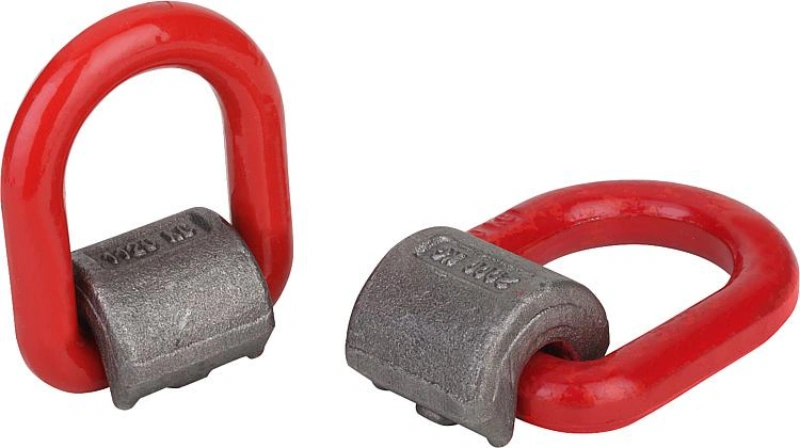
Weld-on d-rings are a popular choice for heavy-duty rigging and lifting tasks. You weld these rings directly onto equipment, trailers, or structural steel. This creates a permanent and stable anchor point. Weld-on d-rings use high-strength steel, with diameters ranging from 1/2 inch to 1 inch.
Some models offer a maximum breaking strength of up to 47,000 pounds and a safe working load limit of 15,500 pounds. These rings are ideal for securing loads but are not intended for overhead lifting.
Made from durable steel for maximum strength
Provide a permanent attachment point
Offer superior stability with minimal movement
Tip: Always have a qualified welder install weld-on d-rings. Proper installation ensures the anchor point will not fail under load.
You can compare weld-on and bolt-on d-rings using the table below:
Type | Advantages | Disadvantages |
|---|---|---|
Weld-on | Permanently attached, superior stability, minimal wobble | Not removable, requires welding |
Bolt-on | Easy installation and removal, suitable for temporary setups | Can compromise safety if improperly installed |
Bolt-On D-Rings
Bolt-on d-rings give you flexibility for temporary or adjustable setups. You attach these rings using bolts, which makes installation quick and easy. You can remove or replace them as needed.
Bolt-on d-rings are widely available and suit many rigging and cargo control applications. However, they may not offer the same rigidity as welded rings, and bolts can loosen over time if not checked regularly.
Type | Pros | Cons |
|---|---|---|
Bolt-On D-Rings | Removable, easy to replace, and widely available | Less rigid than welded; bolts can loosen over time |
Welded D-Rings | Maximum strength and stability | Requires professional installation; permanent |
Note: Always inspect bolt-on d-rings before use. Tighten bolts and check for signs of wear or damage to maintain safety.
Forged D-Rings
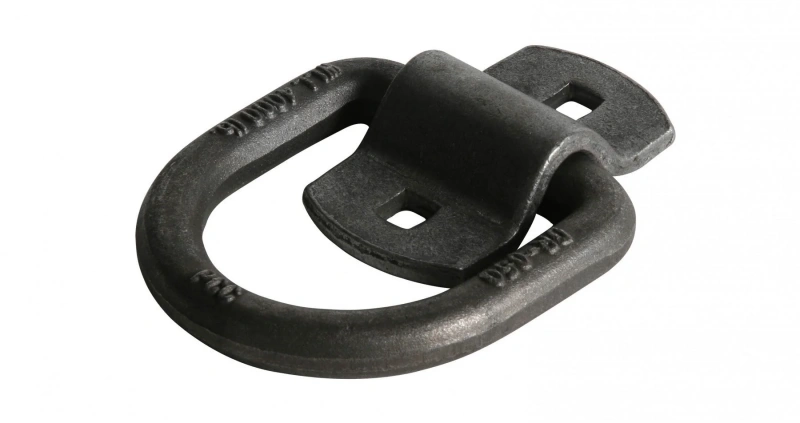
Forged d-rings are essential in industrial lifting. Manufacturers use a forging process to create these rings, which increases their strength and durability. You will find forged d-rings in many sectors, including marine, construction, transport, and renewable energy.
These rings serve as anchor points for lifting slings, hoists, and chains. They also help secure heavy equipment and provide safety anchors for rigging operations.
Sector | Applications |
|---|---|
Marine and Offshore | Securing heavy equipment, attachment points for slings, and safety anchors |
Industrial and Construction | Lifting machinery, positioning steel beams, and temporary load handling |
Transport and Logistics | Load restraint in trucks, trailers, and shipping containers |
Renewable Energy | Anchoring components during wind turbine installation, supporting lifting operations |
You should always select forged d-rings that meet or exceed international safety standards. Powerful Machinery offers lifting d-rings that undergo rigorous testing for strength and reliability.
Shackles and D-Rings: Key Differences
You often see shackles used alongside d-rings in rigging and lifting. Both serve as connection points, but they have important differences. Shackles, like those from Powerful Machinery, come in various shapes, such as Dee and Bow. They use high-strength materials and offer secure closures with screw pins or bolts.
Feature | D-Ring Shackles | Traditional Shackles |
|---|---|---|
Design | Available in various sizes (1/2″ and 3/4″) with specific applications | Typically a single loop design with varying sizes |
Load Capacity | 3/4 d-ring for heavy-duty tasks; 1/2 d-ring for lighter tasks | Varies widely based on type and size |
Safety Considerations | High-strength materials; regular inspections recommended | Depends on material and usage; safety practices vary |
You use d-rings as fixed anchor points, while shackles provide a removable connection between lifting components. Shackles offer flexibility and can handle a wide range of loads. Both products require regular inspection and must meet international certifications for safe use.
Powerful Machinery supplies both lifting d-rings and shackles that comply with ISO, ASTM, and other global standards. You can trust their products for demanding rigging and lifting applications.
By understanding the types of d rings and their uses, you can select the right hardware for your lifting needs. Always check product specifications and certifications before use to ensure maximum safety.
Types of D Rings for Cargo Control
When you secure cargo for transport, you need to choose the right types of d-rings. Cargo control d-rings play a vital role in keeping loads stable and safe during transit. Powerful Machinery offers a full range of certified solutions for cargo handling, trusted by professionals worldwide.
Surface Mount D-Rings
Surface-mount cargo control d-rings attach directly to the floor or wall of your trailer or truck. You can install them quickly with bolts or mounting brackets. These d-rings sit above the surface, making them easy to access when you need to tie down cargo. They work well for general freight, pallets, and equipment.
D-Ring Type | Description | Installation Considerations |
|---|---|---|
Surface Mount D-Rings | Mounted on top of the surface, easy to reach and use. | Simple bolt-on installation, check for a tight fit. |
Flush Mount D-Rings | Sits level with the trailer surface, reducing tripping hazards. | Ideal for lightweight vehicles and wheeled cargo. |
Tip: Always inspect your cargo control d-rings before each trip. Tighten bolts and check for any signs of wear.
Recessed D-Rings
Recessed cargo control d-rings sit inside the floor or wall, lying flat when not in use. You insert them into cutouts, which keeps the surface clear for loading and unloading. These d-rings prevent cargo from shifting and reduce the risk of accidents.
They also improve efficiency by keeping loads stable, so you spend less time adjusting straps on the road.
Recessed d-rings do not stick out, so you avoid tripping or damaging cargo.
They work with chains, straps, and ropes for versatile cargo control.
Built for durability, they handle tough transport conditions.
Benefit | Description |
|---|---|
Versatility | Works with many securing methods, such as chains and straps. |
Durability | Withstands harsh transport and industrial use. |
Safety | Stops cargo from moving, lowering accident risk. |
Efficiency | Keeps loads stable, reducing the need for frequent adjustments. |
Swivel D-Rings
Swivel cargo control d-rings rotate to match the direction of your load. You can use them for dynamic cargo that shifts or moves during transport. These d-rings offer 360-degree flexibility, making them ideal for securing irregular or heavy items. When not in use, many swivel d-rings fold away to save space.
Swivel d-rings adapt to changing load angles.
They help prevent strap twisting and uneven tension.
You can use them in tight spaces or on trailers with limited mounting options.
Choosing the Right D-Ring
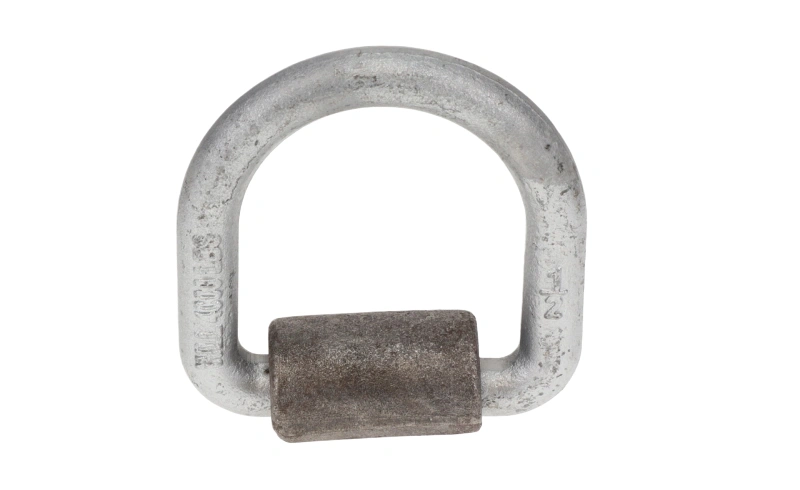
Selecting the best cargo control d-rings depends on your cargo, vehicle, and environment. Use this table to guide your choice:
Factor | Description |
|---|---|
Cargo Type and Weight | Heavy equipment needs high-strength or weld-on d-rings. Lighter loads suit standard D-rings. |
Vessel Type | Flush or recessed d-rings fit trailers with limited space. Swivel d-rings work for loads that move. |
Environmental Conditions | Use insulated d-rings for cold storage. Choose corrosion-resistant types for marine or outdoor use. |
Lashing Technique | Match the d-ring to your lashing method—diagonal, transverse, or longitudinal. |
Powerful Machinery provides cargo control d-rings that meet strict international standards. You can rely on their products for strength, safety, and long-term performance in any cargo control application.
Conclusion
Selecting the correct D-ring for your application ensures safety and efficiency. You protect your team and equipment by matching the D-ring to the task. Powerful Machinery stands as your trusted partner for certified rigging and lifting products. Review product specifications and safety standards before every use.
For expert advice or custom solutions, reach out to the Powerful Machinery team.
Service Type | Contribution to Safety and Efficiency |
|---|---|
Risk Identification | Detect hazards early and reduce accident risks |
Auditing Services | Ensure compliance and boost operational safety |
Lifting Coaching and Mentoring | Improve knowledge and safety standards |
Choosing certified shackles gives you confidence in demanding environments.
For tailored solutions, consult Powerful Machinery’s experts.
FAQ
What is the main difference between a D-ring and a shackle?
You use a D-ring as a fixed anchor point. A shackle connects the lifting components and can be removed easily. Both play key roles in rigging and lifting, but their functions differ.
How do you know which D-ring to choose for your task?
Check the load requirements, environment, and application. Use certified D-rings that match your cargo or lifting needs. Always review product specifications and safety standards before making a selection.
Can you use the same D-ring for both fall protection and lifting?
You should never use a fall protection D-ring for lifting tasks. Each D-ring type has a specific design and safety rating. Always use the correct D-ring for each application.
How often should you inspect D-rings?
Inspect D-rings before every use. Look for cracks, corrosion, or deformation. Regular checks help you prevent accidents and maintain safety on the job.