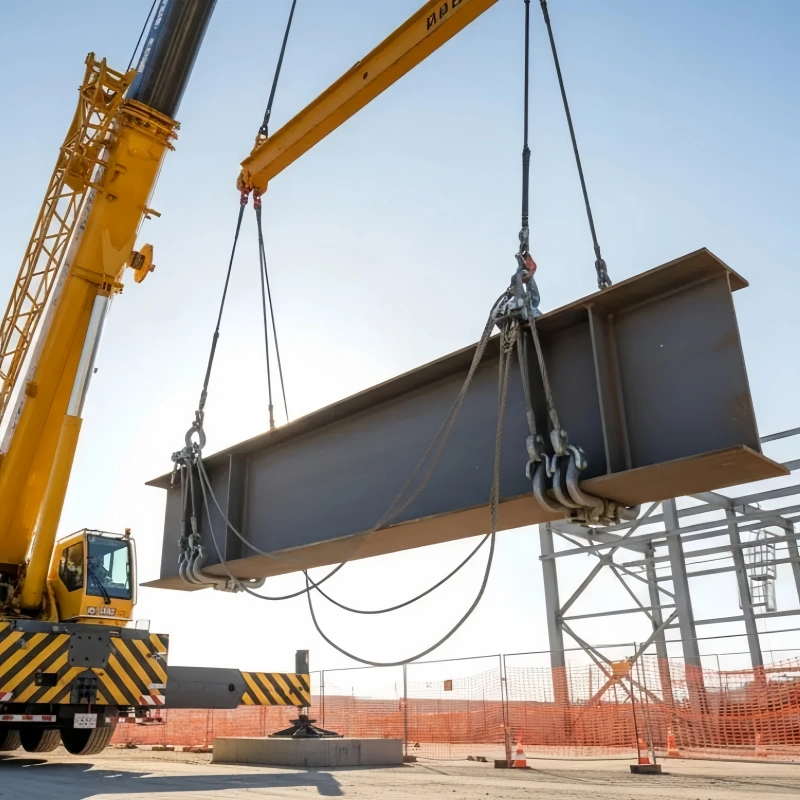
When you compare crane scales vs dynamometers, you see clear differences in how each device supports industrial operations. Crane scales work well for straightforward lifting tasks, giving you immediate weight feedback.
Dynamometers fit complex load monitoring and testing needs, with advanced models offering real-time data through Bluetooth and app integration. Choosing the right tool impacts safety, efficiency, and compliance. Powerful Machinery delivers certified crane scales trusted by industries worldwide.
Feature | Crane Scale | Dynamometer |
|---|---|---|
Configuration | Vertical use, suspended from a hook | Inline with the direction of force |
Application | Immediate feedback for lifting | Complex monitoring and testing |
Connectivity | Simple, non-connected | Advanced, real-time data options |
Key Takeaways
Crane scales provide immediate weight feedback for lifting tasks, ensuring safety and preventing overloads.
Dynamometers measure tension and force, making them ideal for testing applications in various industries.
Choose the right tool based on your needs: crane scales for weight and dynamometers for force measurements.
Regular calibration and compliance with safety standards are essential for both devices to maintain accuracy.
Powerful Machinery’s crane scales are durable and certified, ensuring reliable performance in demanding environments.
Crane Scales vs Dynamometers Overview
Crane Scales Definition
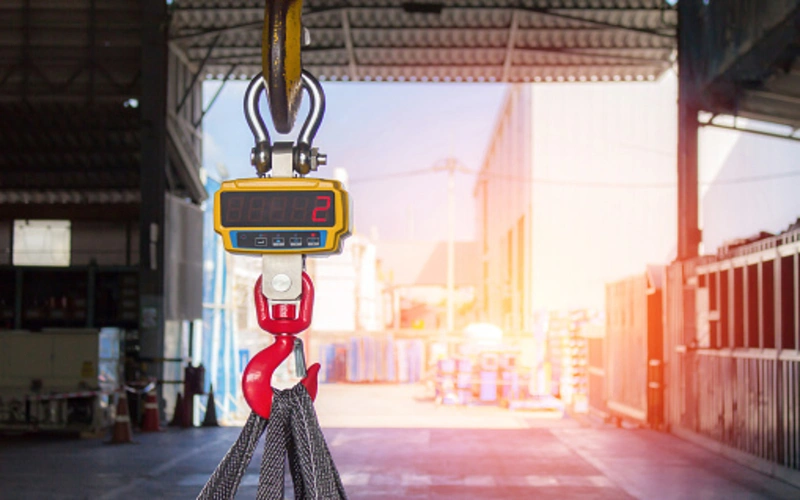
You encounter crane scales in many industrial environments. These devices measure the weight of suspended loads, giving you immediate feedback during lifting operations. Crane scales attach directly to a crane hook and display real-time weight measurements, helping you prevent overloads and optimize workflow.
Powerful Machinery’s crane scales offer capacities from 100 kg up to 12 tonnes, making them suitable for heavy-duty tasks in construction, manufacturing, and shipping. You benefit from digital displays, robust designs, and industry certifications that ensure safety and compliance.
Crane scales have evolved from analog to digital, providing real-time data and advanced connectivity. You can rely on these scales for accurate weight measurements, which improve efficiency and protect workers and equipment.
Feature | Crane Scales | Dynamometers |
|---|---|---|
Primary Function | Weighing suspended loads | Measuring tension force between two points |
Design | Specialized for weighing heavy loads | Smaller, lighter, and more compact |
Usage | Only vertical use | Can be used horizontally or vertically |
Load Capacity | 100 kg to 225 tonnes | Varies, typically lower than crane scales |
Applications | Weighing large objects in industrial settings | Testing tension in wires and cables |
Efficiency | Increases efficiency and safety at job sites | Used for specific tension measurements |
Dynamometer and Crane Scale Functions
You use dynamometers to measure tension force between two points. These devices excel in applications where you need to monitor cable tension or test force in manufacturing.
Dynamometers offer versatility, allowing you to measure tension both horizontally and vertically. You find them in industries like aerospace, energy, and military, where precision and sensitivity matter.
Crane scales vs dynamometers serve different roles. Crane scales focus on weight measurements for suspended loads, while dynamometers specialize in force measurements.
Both devices require regular calibration and compliance with safety standards such as OSHA and ANSI. You must choose the right tool based on your operational needs and industry regulations.
Crane scales deliver accurate weight measurements for heavy lifting.
Dynamometers provide high precision in tension and force measurements.
Both devices support industrial applications, ensuring safety and certification.
Powerful Machinery’s crane scales stand out for their durability, real-time data, and compliance with international standards. You gain peace of mind knowing your equipment meets rigorous safety requirements and delivers reliable performance in demanding environments.
Key Differences
Functions and Features
When you compare crane scales vs dynamometers, you notice that each device serves a unique purpose in industrial weighing and force measurement. Crane scales focus on providing real-time weight measurements during lifting operations.
You attach a crane scale directly to a crane hook, which allows you to monitor the weight of suspended loads instantly. This feature helps you prevent overloads and maintain safety on the job site.
Dynamometers, on the other hand, measure tension and compression forces between two points. You often use dynamometers for testing cable tension, verifying load limits, or monitoring force in both horizontal and vertical directions.
These devices offer more versatility in practical applications, especially when you need to measure force rather than just weight.
Here is a quick comparison of their main features:
Features | Crane Scales | Dynamometers |
|---|---|---|
Main Function | Weighing suspended loads | Measuring tension, compression, and force |
Display | Digital or mechanical, easy-to-read | Digital, often with advanced connectivity |
Use Case | Lifting, shipping, and construction | Testing, calibration, research |
Data Output | Real-time weight measurements | Real-time force and tension data |
Safety Integration | Overload alerts, compliance certifications | High-precision force monitoring |
Tip: Powerful Machinery’s crane scales offer robust features for industrial weighing, including overload protection and real-time data, making them ideal for heavy-duty lifting tasks.
Measurement and Accuracy
You rely on precise measurements to ensure safety and efficiency in industrial environments. Crane scales deliver accurate weight measurements, even when you work with dynamic loads. High-quality digital crane scales, such as those from Powerful Machinery, typically provide an accuracy margin between 0.1% and 0.5%.
The resolution depends on the weighing range. For example, a 1500 kg crane scale often has a resolution of 0.5 kg, which means you can trust the readings for critical lifting operations.
Dynamometers excel in force measurement, offering high precision for small force variations. You use them when you need meticulous accuracy, such as in laboratory testing or cable tension monitoring. Test-retest reliability for crane scales is excellent, with ICCs of 0.90 or higher.
However, dynamometers are preferred for applications that demand the highest level of precision in force measurements.
Here is a table summarizing their measurement capabilities:
Feature | Crane Scales | Dynamometers |
|---|---|---|
Measurement Type | Real-time weight measurements during lifting | Tension and compression forces |
Accuracy | Accurate even with dynamic loads (0.1%–0.5%) | High precision for small force variations |
Reliability | Reliable for operational safety in construction | Preferred for meticulous precision in testing |
Regular calibration and maintenance are essential for both devices. You should inspect the housing and cables, and clean the scale regularly to maintain accuracy and performance.
Design and Portability
Design differences play a significant role in your selection process. Crane scales are generally heavier and designed for fixed installation on cranes or hoists. You find them best suited for environments where you need to weigh large, suspended loads. Their robust construction ensures durability in harsh industrial settings.
Dynamometers are more portable and lightweight. You can easily carry them to different locations, making them suitable for field use and a variety of force measurement tasks. Some dynamometers can handle capacities up to 300 tonnes, but most are used for smaller, precise measurements.
Here is a side-by-side look at their design aspects:
Feature | Crane Scales | Dynamometers |
|---|---|---|
Function | Weighs loads lifted by a crane | Measures force, tension, and weight |
Portability | Heavier, fixed installation | More portable, suitable for field use |
Capacity | Up to 30t | Up to 300t |
Note: Powerful Machinery’s crane scales are engineered for durability and reliability, making them a trusted choice for demanding industrial applications.
You should consider your specific needs, such as portability, capacity, and the type of measurements required, when choosing between these two devices. Both crane scales and dynamometers offer unique features that support safety and efficiency in industrial environments.
Force Measurement Applications
Industrial Use Cases
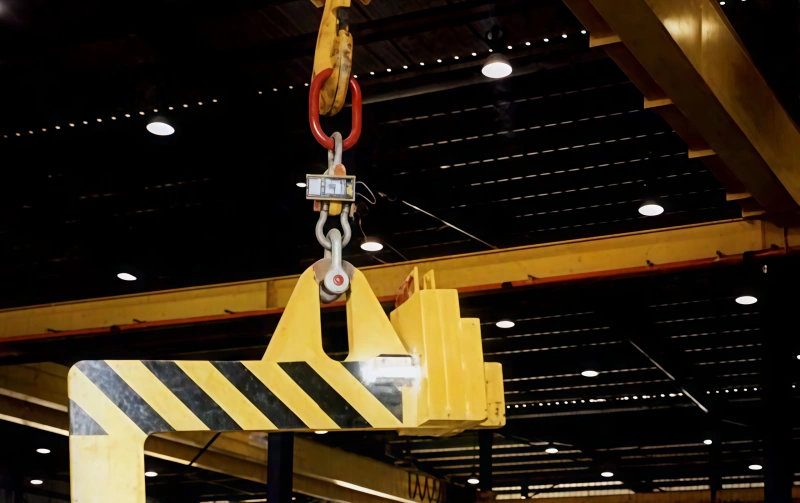
You encounter crane scales vs dynamometers in many industrial settings. Crane scales play a vital role in logistics, manufacturing, and construction. You use a crane scale to weigh heavy loads during lifting operations. This process helps you maintain operational efficiency and meet safety standards.
In construction, crane scales assist you in lifting and positioning materials like steel beams. You rely on these devices to ensure compliance with weight limits and prevent overloading.
Dynamometers support you in testing tension and compression forces. You use them for cable tension monitoring and verifying load limits in engineering projects. Both tools deliver precise measurements and enhance safety in your workplace.
Crane scales help you weigh goods and shipping containers in warehouses.
You use crane scales for inventory management and quality control in manufacturing.
Dynamometers allow you to test the force in wires and cables during production.
Crane scales from Powerful Machinery offer features such as real-time weight measurements and a robust design. You benefit from their accuracy and reliability in demanding industrial weighing applications.
Real-World Scenarios
You see practical applications for crane scales and dynamometers across various industries. In shipping and transportation, you use crane scales to determine cargo weight for efficient loading and compliance with regulations. Commercial fishing relies on crane scales for weighing large catches.
Aviation uses dynamometers to test aircraft components and verify weight and performance. Mining operations depend on crane scales for weighing raw materials during extraction. You trust these devices to provide accurate measurements and support safety protocols.
Material handling and logistics require crane scales for weighing heavy loads.
Construction and engineering projects depend on dynamometers for force measurement.
Manufacturing uses crane scales to ensure precise measurements and maintain quality.
You choose Powerful Machinery crane scales for their durability and certified safety features. These scales deliver reliable weight measurements and support your industrial needs.
How to Choose a Dynamometer and a Crane Scale?
Application and Capacity
You need to match the device to your operational requirements. Crane scales vs dynamometers serve different practical applications. Crane scales excel at weighing heavy loads during lifting, while dynamometers specialize in force measurement for tension and compression tasks.
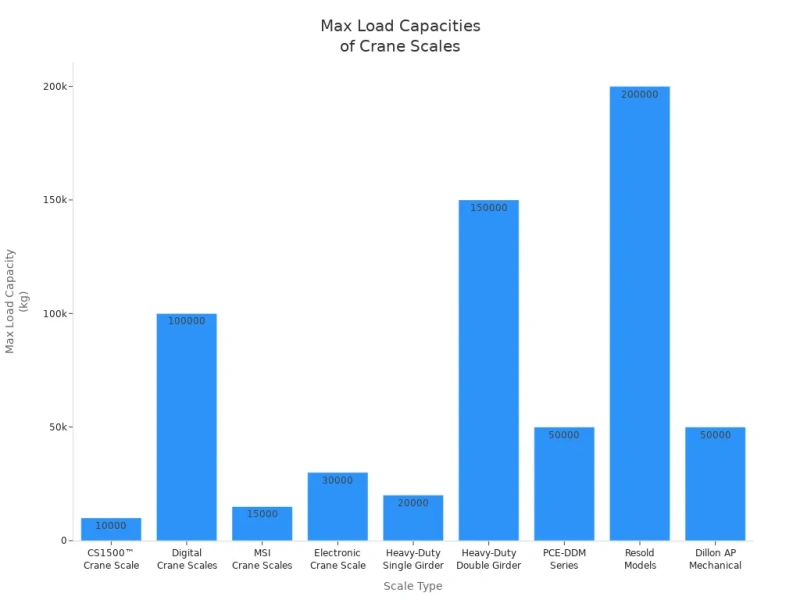
Consider the maximum weight capacity for your project. For example, digital crane scales can handle loads from 50 kg up to 100 metric tons. Heavy-duty models reach 150 tons or more.
Dynamometers, such as the Dillon AP Mechanical Dynamometer, measure from 500 lbs to 50,000 lbs. Review the following table to compare typical capacities:
Type of Scale | Load Capacity Range |
|---|---|
Digital Crane Scales | 50 kg to 100 metric tons |
Heavy-Duty Double Girder Scale | Up to 150 tons |
Dillon AP Mechanical Dynamometer | 500 lbs to 50,000 lbs |
Tip: Powerful Machinery offers high-quality crane scales with a wide range of capacities, ensuring you find the best scale for your application.
Accuracy and Display
You rely on accurate weight measurement for safety and efficiency in industrial operations. Digital displays provide immediate weight readings, reducing human error. Choose a device with the right resolution for your needs.
Crane scales deliver weight measurements with an accuracy margin between 0.1% and 0.5%. Dynamometers offer high precision for force measurement. The table below highlights display features and their impact:
Feature | Impact on Usability |
|---|---|
Digital Displays | Provide immediate weight readings, reducing human error. |
Connectivity Options | Enable seamless data transfer for real-time monitoring. |
Software Integration | Streamline operations and reduce manual errors. |
Note: Powerful Machinery crane scales feature easy-to-read LED and LCDs, supporting accurate measurements in demanding environments.
Connectivity and Certification
Modern crane scales and dynamometers include advanced connectivity features. Wireless connectivity enables remote monitoring and data logging. Integration with management systems streamlines operations.
Devices like the MSI-4260C Crane Scale offer RF remote controllers, while the MSI-7300 Dyna-Link 2 provides wireless connectivity up to 300 feet. Certification is essential for safety and compliance.
Powerful Machinery crane scales meet international standards, including ISO9001, TUV Rheinland, and OSHA. You ensure your equipment meets industry regulations by choosing certified products.
Wireless connectivity improves functionality and supports remote readout.
Certification guarantees safety and compliance in industrial applications.
Powerful Machinery delivers certified crane scales for reliable weight measurement.
Choose a device with the features, capacity, and certifications that fit your operational needs. You optimize safety and performance by selecting the right tool for your measurements.
Benefits of Powerful Machinery Crane Scales
Safety and Efficiency
You depend on crane scales to keep your lifting operations safe and efficient. Powerful Machinery crane scales give you real-time weight measurements, which help you make quick decisions and avoid overloading.
When you check the weight before lifting, you prevent equipment failure and reduce risks for your team. These scales add a critical safety check to every lift, making your workplace safer.
Digital crane scales improve productivity by providing accurate weight data. You manage inventory better and reduce handling errors. This leads to smoother warehouse operations and supports safer lifting practices.
Operators use these scales to verify weights, which ensures compliance with safety standards. You see improved quality and repeatability in your processes because you rely on precise measurements.
Real-time weight measurements optimize lifting operations.
Accurate weight data prevents overloading and equipment damage.
Enhanced safety checks protect workers and assets.
Improved inventory management reduces errors and increases efficiency.
Crane scales from Powerful Machinery support a wide range of applications, including construction, manufacturing, and shipping. You trust these devices to deliver reliable performance in demanding environments.
Durability and Compliance
You need equipment that withstands tough industrial conditions. Powerful Machinery crane scales feature rugged designs that handle harsh environments.
Unlike traditional stationary scales, these crane scales allow you to measure heavy objects while suspended, known as overhead weighing. You benefit from direct measurement, which increases accuracy and reliability.
Compliance matters in every industry. Powerful Machinery crane scales meet international standards and certifications. You find these certifications in the table below:
Certification | Description |
|---|---|
CE Certification | Meets EU health and safety requirements for rigorous testing. |
OIML Certification | Ensures accuracy and fairness in weighing for commercial applications. |
IP Rating | Provides protection against dust and water for harsh environments. |
UL Certification | Guarantees electrical safety and fire resistance. |
ISO Certification | Supports quality management and customer service excellence. |
You use software-integrated crane scales to log data for audits, which helps you meet compliance requirements. Regular calibration ensures accuracy and prevents accidental overloading. You establish clear communication protocols among your team, which enhances safety and compliance.
In industries like aerospace and automotive, precise weight measurements are essential for quality control and meeting industry standards.
Powerful Machinery crane scales deliver durability, reliability, and compliance. You gain peace of mind knowing your equipment meets the highest safety standards.
Conclusion
You see that matching the right force measurement tool to your industrial task is essential. Accurate measurement methods improve safety and job evaluations. Powerful Machinery’s crane scales deliver reliable performance for weight and force measurement in demanding applications.
You benefit from certified equipment that supports efficiency and compliance. Consult industry experts to select the best device for your needs and ensure your operations run smoothly.
Choose tools that fit your task.
Rely on certified crane scales for safety.
Seek expert advice for optimal results.
FAQ
What is the main difference between a dynamometer and a crane scale?
You measure tension with a dynamometer and weight with a crane scale. This difference helps you select the right tool for your project. You improve safety and efficiency when you match the device to your specific needs.
How do crane scales ensure force measurement accuracy with heavy loads?
You rely on crane scales for precise readings. These devices use advanced sensors to deliver force measurement accuracy, even when you handle heavy loads. You prevent overload incidents and maintain compliance in industrial environments.
Where do you use dynamometers and crane scale devices in the construction industry?
You use crane scales to weigh materials like steel beams. You use dynamometers to test cable tension. Both devices support safety and quality in the construction industry. You optimize operations by choosing the right tool for each task.
What are common applications for crane scales and dynamometers?
You find crane scales in shipping, manufacturing, and logistics. You use dynamometers for testing tension in wires and cables. Both devices serve critical applications that require reliable measurements and support operational safety.
How do you select the right device for your needs?
You review your project requirements. You consider capacity, accuracy, and display features. You choose a crane scale for weighing heavy loads. You select a dynamometer for tension testing. You ensure your equipment meets industry standards and certifications.