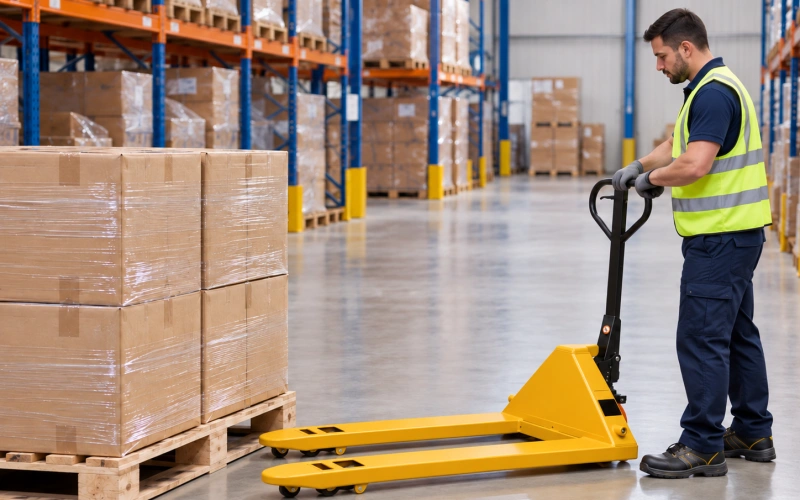
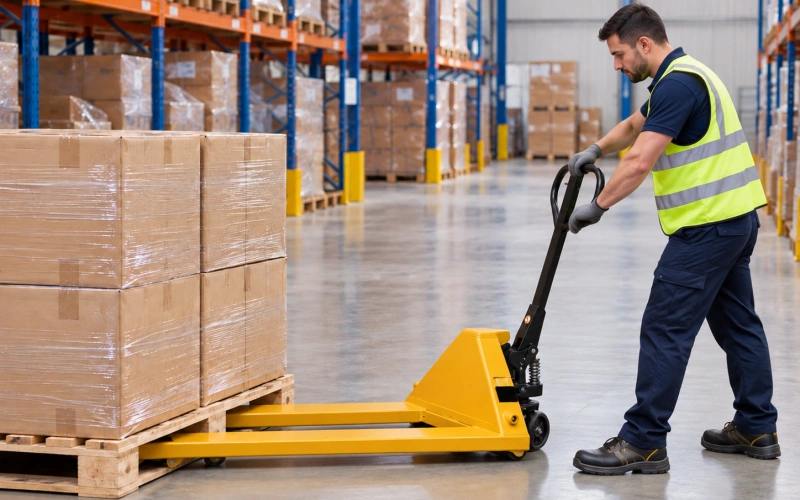
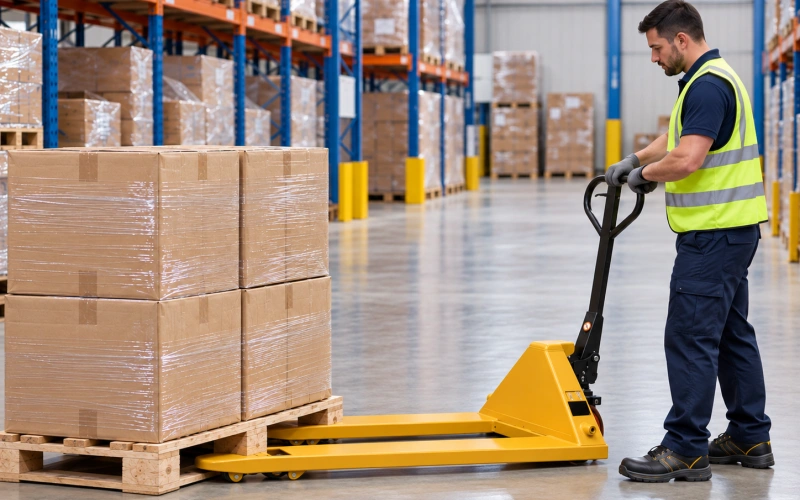
You play a big role in keeping hand pallet truck safety at the center of every warehouse operation. When you engage in manual pallet jack operation, you need to focus on pre-use checks, proper loading, safe movement, and careful unloading.
Common risks like operator error, poor floor conditions, and mechanical failures can turn a simple pallet jack task into a dangerous situation. Ongoing training and daily maintenance help you spot hazards early and keep everyone safe.
Powerful Machinery delivers high-performance hand pallet truck solutions trusted by professionals who care about safety.
Key Takeaways
Always perform pre-use checks on your hand pallet truck. Inspect for damage, leaks, and ensure the load capacity is visible. This habit keeps you and your equipment safe.
Use proper lifting techniques to avoid injuries. Bend your knees, not your waist, and distribute loads evenly to maintain balance and prevent strain.
Stay alert for hazards in the warehouse. Look for obstacles, uneven surfaces, and crowded areas before moving. A clear path reduces the risk of accidents.
Participate in regular training sessions. Hands-on practice and ongoing safety education help you recognize risks and improve your skills.
Choose ergonomic equipment, such as Powerful Machinery’s hand pallet truck. It enhances comfort and reduces fatigue, allowing you to work more efficiently.
Hand Pallet Truck Overview
What Is a Hand Pallet Truck?

You see a hand pallet truck in almost every warehouse. This tool helps you lift and move pallets with ease. You operate it by sliding the forks under a pallet and using the handle to pump and raise the load. If you want a reliable solution for moving heavy goods, a hand pallet truck is your go-to choice.
Powerful Machinery’s hand pallet truck stands out because of its high-strength welded frame and hydraulic system. You get a comfortable grip and smooth control, which means less strain during long shifts. The ergonomic handle and adjustable height make your work easier and safer.
Manual vs Electric Pallet Jacks

You might wonder about the difference between a manual pallet jack and an electric model. A manual pallet jack relies on your strength and skill to move loads. You pump the handle to lift and steer the truck.
Electric pallet jacks use a motor, so you can move heavier loads with less effort. Some electric models offer features like power steering and safety buttons. Here’s a quick look at the main types and their safety features:
Type of Hand Pallet Truck | Safety Features |
|---|---|
Standard Hand Truck | Simple operation but requires manual effort, which can lead to fatigue. |
Low Profile Pallet Jack | Designed for low clearance, ensuring safety when handling low-profile pallets. |
Stainless Steel Pallet Truck | Corrosion-resistant, ideal for hygienic environments, enhancing safety in sensitive industries. |
Hot Dipped Galvanized Pallet Truck | Cost-efficient and corrosion-resistant, suitable for wet environments, ensuring durability and safety. |
Weight Scale Hand Pallet Truck | Built-in scale for weighing cargo, enhancing operational safety by preventing overloading. |
Electric Hand Pallet Truck | Features like forward/reverse speeds and safety buttons improve operational safety. |
Walkie Electric Pallet Truck | Power steering and stability features enhance safety during operation. |
Battery-Powered Pallet Jack | Equipped with side protection and a platform for operator safety while moving heavy loads. |
Key Components and Mechanism
You want a hand pallet truck that lasts and feels good to use. Powerful Machinery’s model gives you just that. Here’s what makes it special:
The ergonomic handle has a comfortable grip and smooth lowering control.
Adjustable handle height helps you avoid fatigue.
Cast pumps resist leaks and extend service life.
PU wheels and quality bearings reduce wear and make movement smooth.
Overload protection keeps you safe by limiting load capacity.
Steer wheels with low rolling resistance make maneuvering easy.
The control lever design lets you move the truck with less tension.
If you choose Powerful Machinery, you get a hand pallet truck that combines durability, safety, and comfort. You can trust it for daily warehouse tasks and heavy-duty jobs.
Hand Pallet Truck Safety Essentials
Common Hazards in Warehouses
When you step into a busy warehouse, you face many risks during manual pallet jack operation. Staying alert helps you avoid accidents and keeps your team safe. Here are the most common hazards you might encounter while operating hand pallet trucks:
Overloading: If you load more than the hand pallet truck can handle, you risk tip-overs and broken parts. This can lead to serious injuries.
Uneven surfaces: Cracks, bumps, or debris on the floor can make the pallet jack hard to control. You might lose balance or damage the truck.
Pinch points: Watch out for spots where your hands or fingers can get caught. These areas can cause painful crush injuries.
Collisions: Fast movement or crowded aisles can lead to accidents with shelves, equipment, or other workers.
Improper lifting techniques: Even with a manual pallet jack, poor posture or lifting can cause back strain and increase the risk of injury.
Tip: Always follow safety measures and inspect your path before you move a load. Good habits help you safely operate a manual pallet jack and protect yourself from harm.
Benefits of Safe Operation
You gain a lot when you focus on hand pallet truck safety. Safe operation does more than prevent injuries—it boosts your workplace efficiency and morale. Here’s how:
You lower the risk of injury for yourself and your coworkers. Fewer accidents mean less downtime and fewer medical costs.
Using ergonomic equipment, like Powerful Machinery’s hand pallet truck, helps you work faster and with less fatigue. You can move more pallets in less time.
Companies that use powered pallet jacks and follow safety protocols see up to 50% fewer workplace accidents. That means a safer environment for everyone.
Ergonomic improvements can increase productivity by 15-20%. You get more done and feel better at the end of your shift.
When you operate a hand pallet truck with care, you help create a safer, more productive warehouse. Following safety protocols and using the right equipment makes a big difference. Remember, hand pallet truck safety is not just about rules—it’s about protecting yourself and your team every day.
Pre-Use Safety Checks
Visual Inspection
Before you start using a hand pallet truck, you need to look it over. Check for dirt, damage, or missing warning labels. Make sure the forks are straight and free from cracks. Look at the wheels and see if they roll smoothly. If you spot anything unusual, report it right away. Clean equipment works better and keeps you safe.
Hydraulic System and Wheels
Next, focus on the hydraulic system and wheels. Lower the forks all the way down, then pump the handle to raise them. The movement should feel smooth, without any jerks or leaks. If the forks drift down on their own, the hydraulic system might need attention.
Check the wheels for wear and tear. PU wheels on Powerful Machinery’s hand pallet truck help you move quietly and easily. Worn wheels can make the pallet jack hard to steer and increase the risk of accidents.
Handle and Controls
Test the handle and controls. Move the handle up and down to see if it works smoothly. Try the release lever and make sure it lowers the forks gently. Check for any cracks or loose parts.
Controls should respond quickly and not stick. If you use a manual pallet jack, you want the handle to feel sturdy and comfortable. Powerful Machinery’s ergonomic handle helps you avoid fatigue during long shifts.
Daily Checklist
You should follow a daily checklist before every shift. These pre-operational checks keep your hand pallet truck in top shape:
Inspect forks for damage or bending
Test the hydraulic system for leaks and smooth lifting
Check wheels for wear and easy rolling
Verify handle and controls work properly
Confirm load capacity markings are visible
Lubricate moving parts if needed
Powerful Machinery’s hand pallet truck includes overload protection and a high-strength frame. These features help prevent accidents and extend the life of your equipment. Here’s a quick look at how they keep you safe:
Feature | Description |
|---|---|
Overload Protection | Built-in system stops you from lifting too much weight |
High-Strength Frame | Strong steel frame resists bending and damage |
Structural Design | Durable build stands up to tough warehouse conditions |
Tip: Make these checks part of your routine. You’ll spot problems early and keep your pallet jack running smoothly.
PPE and Preparation for Manual Pallet Jack Operation
Recommended Footwear and Clothing
You need the right gear before you start moving loads in the warehouse. The right personal protective equipment keeps you safe and comfortable. Here’s a quick guide to what you should wear:
Personal Protective Equipment | Purpose |
|---|---|
Steel-toed Shoes | Protects feet from injuries caused by pallet jack wheels. |
High-Visibility Vest | Ensures visibility in busy warehouse environments. |
Gloves | Protects hands during handling tasks. |
Ear Protection | Safeguards hearing in noisy environments. |
Steel-toed shoes help you avoid foot injuries if a manual pallet jack rolls over your toes. A high-visibility vest makes sure others see you, even in crowded aisles. Gloves protect your hands from scrapes and pinches.
If your warehouse is loud, ear protection keeps your hearing safe. Dressing right is your first step toward a safer workday.
Operator Training and Risk Assessment
You can’t skip training if you want to use a pallet jack safely. Good training teaches you how to balance loads, drive at a safe speed, and keep your limbs clear of moving parts. Here are some key things you’ll learn:
Balance the load so it doesn’t tip or slip.
Drive at a safe speed and avoid sharp turns.
Keep your hands and feet away from pinch points.
Use mirrors or spotters in busy areas to avoid accidents.
Never overload the pallet jack.
Check for damage or wear before each use.
Stay alert—don’t assume slow-moving equipment is risk-free.
Regulations require you to get proper training before you operate any equipment. You need to know how the pallet jack works, spot risks, and follow safety steps. Powerful Machinery supports your safety by offering guidance and resources for operator training.
Documenting inspection findings represents the final and critically important stage of your pallet jack safety assessment.
This comprehensive documentation serves as an official record of the equipment’s condition, potential risks, and recommended actions, creating a crucial paper trail for workplace safety and regulatory compliance.
When you prepare with the right PPE and training, you help create a safer warehouse for everyone. Powerful Machinery stands with you, making sure you have the tools and knowledge to work with confidence.
Manual Pallet Jack Operation Steps

When you step up to a hand pallet truck, you want every move to be smooth and safe. Powerful Machinery’s ergonomic handle and PU wheels make manual pallet jack operation easier, but you still need to follow the right steps. Let’s break down each part of the process so you can operate a manual pallet jack with confidence.
Using the Release Lever
You start by finding the release lever. It sits near the handle and gives you control over the prongs. Here’s how you use it:
Locate the release lever close to the handle.
Pull the lever inward to lower the prongs all the way down.
Make sure the prongs rest flat on the ground before you move forward.
This step sets you up for safe operation. The hydraulic lock and contoured surface on Powerful Machinery’s hand pallet truck make this action comfortable and precise.
Positioning the Prongs
Next, you need to position the prongs under the pallet. This part is all about accuracy and stability:
Slide the prongs into the pallet’s fork pockets.
Check that the wheels are fully on the ground.
Make sure the prongs are centered and not sticking out from the sides.
Fork tip entry wheels on Powerful Machinery’s hand pallet truck help you guide the prongs smoothly into place. You avoid jams and keep the load balanced.
Lifting the Load
Now you’re ready to lift. You want to raise the pallet just enough to clear the floor, but not too high:
Pull the handle toward you to pump and lift the prongs.
Watch the load as it rises. Stop when the pallet is off the ground.
Double-check that the load sits evenly on the prongs.
The diamond-shaped handle on Powerful Machinery’s hand pallet truck reduces fatigue and helps you keep a steady grip. You stay comfortable even during long shifts.
Ergonomic Feature | Description |
|---|---|
Diamond-Shaped Handle | Designed for ease of use and to reduce operator fatigue, enhancing productivity. |
Hydraulic Lock / Release Lever | Offers maximum operational control with a hand-contoured surface for comfort. |
Fork Tip Entry Wheels | Facilitates easy insertion into pallet fork pockets, improving maneuverability. |
Moving and Maneuvering
You’ve got the load up—now it’s time to move. Safe movement is key to manual pallet jack operation:
Check your path for obstacles or spills.
Push the hand pallet truck forward using the ergonomic handle.
Keep your speed steady and avoid sudden turns.
Use both hands for better control, especially in tight spaces.
Powerful Machinery’s PU wheels roll smoothly and quietly, making it easier to maneuver around corners and through busy aisles. You reduce noise and glide over small bumps with less effort.
Tip: Always look ahead and keep your hands and feet clear of moving parts. If you need to stop, lower the prongs gently using the release lever.
Handling Slopes and Obstacles
Operating hand pallet trucks on slopes or uneven surfaces takes extra care. Here’s what you should do:
Distribute the load evenly on the forks to keep the hand pallet truck stable.
Place heavier items at the bottom and close to the jack to lower the center of gravity.
Check the surface before moving. Avoid slippery or rough slopes.
Push the jack slowly and use your body weight for balance when going uphill.
Control your speed when going downhill. Pull the jack gently to slow it down.
If you follow these tips, you keep manual pallet jack operation safe, even on ramps or uneven floors. Powerful Machinery’s stable frame and PU wheels help you handle these challenges with confidence.
Note: Never rush when you operate a manual pallet jack on a slope. Take your time and keep the load secure.
You now know the step-by-step process for manual pallet jack operation. With the right equipment and careful technique, you make every move safer and more efficient.
Loading and Lifting Safety
Assessing Load Weight
You need to know the weight of every pallet before you lift it. Guessing can lead to accidents or damage. Most standard hand pallet trucks handle loads between 4,400 and 6,600 pounds. Heavy-duty models go up to 11,000 pounds. Always check the weight label on your pallet jack.
If you’re unsure about the weight, use a scale or ask for help. This step keeps you safe and protects your equipment. When you work with palletised loads, you want to avoid surprises. Powerful Machinery offers custom options for heavy-duty tasks, so you can match your truck to your workload.
Standard manual pallet jack: 4,400–6,600 lbs
Heavy-duty manual models: up to 11,000 lbs
Electric pallet trucks: 3,300–10,000 lbs
Always check the weight label
Use a scale or get assistance if unsure
Tip: Never lift palletised loads that exceed your truck’s rated capacity. This habit prevents breakdowns and injuries.
Fork Placement and Load Distribution
You need to position the forks flat before entering the pallet. This step helps you handle palletised loads safely. Proper fork placement keeps the load stable and reduces the risk of tipping. When you distribute the weight evenly, you make lifting easier and safer.
Distribute the load across both forks.
Avoid placing heavy items on one side.
Keep the center of gravity close to the middle of the forks.
If you carry irregular palletised loads, keep the weight balanced and centered. This practice protects your goods and your pallet jack. You lower the risk of drops and damage. Powerful Machinery’s tough steel forks support even the heaviest palletised loads, giving you confidence every time you lift.
Overload Protection
You want to avoid lifting more than your pallet jack can handle. Powerful Machinery’s hand pallet trucks include advanced overload protection. This feature keeps you safe and extends the life of your equipment.
Hand pallet trucks often include safety features such as an overload valve, which prevents excessive loads from being lifted beyond the truck’s capacity.
When you work with palletised loads, overload protection gives you peace of mind. You know your manual pallet jack will stop you from making a costly mistake. If you need to move heavier palletised loads, Powerful Machinery offers custom solutions built for tough jobs.
Safe Movement and Unloading
Clear Path and Speed
You want every trip with your pallet jack to be smooth and safe. Before you start moving, take a moment to scan your route. Look for obstacles, spills, or crowded areas.
Pre-planning your path helps you avoid sudden stops and risky detours. Keep your head up and your eyes scanning ahead. This habit lets you spot trouble before it happens.
Here are some tips for safe operation:
Walk at a brisk but controlled pace. You should never run or rush.
Make sure you have enough stopping distance. Sudden stops can cause the load to shift.
Follow the three-point rule. Keep a safe distance from other equipment and people.
Stack items carefully. Place heavier boxes at the bottom for stability.
Avoid ramps and uneven surfaces unless you know they are safe to cross.
Powerful Machinery’s stable frame and smooth PU wheels help you glide over warehouse floors with less effort. You get reliable movement, even when the path gets busy.
Controlled Lowering
When you reach your destination, you need to lower the pallet safely. Don’t just drop the load—controlled lowering protects both you and your cargo. Use the handle or release lever to bring the pallet down slowly. Make sure the area around you is clear. You don’t want anyone’s feet or hands near the descending load.
Follow these steps for safe unloading:
Position the pallet jack in the designated spot.
Gently release the handle or lever to lower the forks.
Watch the load as it settles to the ground. Stay alert for shifting boxes.
Confirm that the area is secure before you step away.
The hydraulic system on Powerful Machinery’s hand pallet truck gives you smooth, precise control. You can operate a manual pallet jack with confidence, knowing the load will lower safely every time.
Parking and Storage
After unloading, you need to park your pallet jack in a safe place. Don’t leave it in walkways or near exits. A parked truck should never block emergency routes. Lower the forks all the way down to prevent tripping hazards.
Here’s how to finish up:
Move the pallet jack to a designated parking area.
Lower the forks completely.
Make sure the truck does not block aisles or exits.
If you use an electric model, plug it in for charging.
Proper parking keeps your warehouse organized and safe. Powerful Machinery’s compact design makes storage easy, even in tight spaces.
Tip: Always check your surroundings before you leave the pallet jack. A clear path and careful parking help everyone stay safe.
Daily Maintenance and Inspection
Lubrication and Wear Checks
You want your hand pallet truck to last and work smoothly every day. Regular lubrication and wear checks help you spot problems early and keep your equipment running strong. Start by cleaning your pallet truck to remove dust and debris.
This simple step prevents parts from wearing out too soon. Check the hydraulic system for oil level and cleanliness. Make sure the wheels and bearings turn easily and show no signs of damage.
Powerful Machinery recommends you lubricate moving parts often, following the manufacturer’s instructions for the right type and schedule. Here’s a quick routine you can follow:
Inspect and lubricate moving parts at least once a month.
Increase checks if you use your pallet truck more often.
Always use the recommended lubricant.
Tip: Clean equipment works better and lasts longer. Don’t skip your daily checks!
Damage and Repairs
You need to catch damage before it gets worse. Look for bent forks, cracked frames, or worn wheels during your inspection. If you find a problem, fix it right away or call a qualified technician for bigger repairs. Here’s a table to help you spot common issues and know what to do:
Type of Damage | Repair Guidance |
|---|---|
Fork Damage | Straighten minor bends; replace forks if cracked or severely bent. |
Frame Cracks | Weld small cracks; get professional help for major damage. |
Hydraulic Issues | Check fluid levels; bleed or refill the system as needed. |
Wheel Wear | Replace the load and steering wheels when worn. |
Always test the lifting and lowering functions. If something feels off, don’t ignore it. Reliable repairs keep your pallet truck safe and ready for work.
Routine Maintenance Importance
Routine maintenance gives you peace of mind. When you take care of your hand pallet truck, you avoid costly repairs and downtime. Daily inspections help you catch small issues before they become big problems. Regular upkeep extends the life of your equipment and keeps your warehouse running smoothly.
Powerful Machinery designs its hand pallet trucks for durability, but your attention to maintenance makes all the difference. Reliable equipment means you get more done and protect your investment.
Remember: A well-maintained pallet truck is safer, lasts longer, and saves you money in the long run.
Preventing Hazards and Promoting Safety
Foot Injuries and Back Strain
You face real risks when you move pallets in a warehouse. Foot injuries and back strain happen more often than you think. If you bend at the waist or lift heavy loads without using your legs, you put your back in danger.
Slips, trips, and falls can occur when you handle broken pallets or work in cluttered spaces. Careless handling leads to cuts or crushed toes. You can avoid these problems by using proper lifting techniques and keeping your workspace clean.
Powerful Machinery encourages you to follow safety protocols and use equipment designed to protect you from these common injuries.
Bend your knees, not your waist, when lifting.
Wear steel-toed shoes to shield your feet.
Keep aisles clear and pallets in good condition.
Handle pallets with care to prevent cuts and crush injuries.
Collisions and Environmental Risks
Collisions can slow down your productivity and put everyone at risk. You need to watch out for busy aisles and crowded work zones. Environmental risks, like falling products or blocked walkways, also threaten your safety. You can reduce these dangers by setting up clear walkways and using guardrails.
Install LED floor projectors to highlight hazard zones. Real-time communication tools help you stay connected with other operators. Powerful Machinery’s certified products support a safer work environment, so you can focus on your tasks.
Define and protect walkways to separate people and vehicles.
Use guardrails and safety gates for safe access.
Install rubber rails in narrow aisles to prevent damage.
Keep loose products secure with barriers or netting.
Hazard Prevention Strategies
You boost productivity and keep your team safe when you use smart hazard prevention strategies. Enforce a no-distraction policy so everyone stays focused. Map out traffic patterns during busy seasons to avoid crowding. Foster individual accountability by setting personal safety goals.
Train employees to spot hazards and inspect racking often. Equip your warehouse with pallet load stop beams to prevent falling pallets and improve fire safety. Powerful Machinery’s safety culture and certified standards help you build a workplace where safety and productivity go hand in hand.
Tip: When you make safety a priority, you protect your team and keep your warehouse running smoothly.
Communicate in real time to respond quickly to hazards.
Set personal safety goals for every worker.
Inspect racks and equipment regularly.
Use barriers to prevent inventory loss and injuries.
Training and Safety Culture
Hands-On Training
You get the most out of pallet truck training when you learn by doing. Hands-on practice helps you build confidence and skill. Powerful Machinery supports you with practical pallet truck training programs that cover every step. You start with pre-operational checks.
You inspect the pallet truck for damage, look for hydraulic oil leaks, and make sure the load is stacked securely. Next, you learn safe operation procedures. You align the forks with the pallet, grip the handle firmly, and check your route before moving.
Maintenance is part of every pallet truck training session. You check grease points and keep the truck in good condition. Here’s what you can expect from a solid pallet truck training program:
Pre-operational checks for damage and leaks
Safe operation procedures for moving loads
Maintenance tips for longer equipment life
You practice these steps until they become second nature. This approach makes pallet truck training effective and keeps you safe on the job.
Safety Awareness
You need more than just basic pallet truck training. Ongoing safety training helps you spot hazards before they cause trouble. Powerful Machinery encourages you to take part in safety training that uses online modules, role-playing, and group discussions.
These methods make safety training engaging and easy to remember. You learn how to follow safety protocols, use equipment properly, and recognize risks in your workspace. When you join safety training, you help build a culture where everyone looks out for each other.
Safety Training Method | How It Helps You Stay Safe |
|---|---|
Online modules | Give you consistent instructions |
Role-playing exercises | Let you practice real-life scenarios |
Gamification | Makes learning fun and memorable |
Group discussions | Share safety insights with your team |
You see safety as part of your daily routine. When you combine pallet truck training with ongoing safety training, you create a safer warehouse for everyone. Powerful Machinery stands behind you with resources and support for every step of your training journey.
Conclusion
You keep your warehouse safe when you focus on hand pallet truck safety every day. Remember these key practices:
Use proper lifting techniques and distribute loads evenly.
Complete a daily checklist for your hand pallet truck.
Stay alert for hazards and keep your workspace clear.
Take part in regular training and refresh your skills.
Choosing Powerful Machinery means you get a hand pallet truck with ergonomic features and certified safety. Share your knowledge and help others make hand pallet truck safety a priority.
FAQ
How do you check if a hand pallet truck is safe to use?
You look for cracks, leaks, or worn wheels. Test the handle and release lever. Make sure the load capacity label is clear. If you spot damage, report it before using the truck.
Can you use a hand pallet truck on ramps?
You can, but you need to move slowly and keep the load balanced. Always check that the ramp is smooth and not too steep. Never overload the truck on a slope.
What’s the difference between a manual and an electric pallet jack?
Manual Pallet Jack | Electric Pallet Jack |
|---|---|
You pump and steer | Motor does the work |
Good for short moves | Handles heavy loads easily |
How do you avoid accidents with a hand pallet truck?
Stay alert. Wear steel-toed shoes. Keep your path clear. Don’t rush. Always follow safety steps and check your equipment before each use.