Different wire rope cores suit specific tasks. IWRC excels in heavy-duty environments where strength and durability matter most. Fiber core offers greater flexibility, making it ideal for lighter lifting and applications requiring more pliability.
Choosing the right wire rope core impacts safety and operational efficiency. Powerful Machinery supplies certified wire rope solutions trusted by professionals worldwide.
Key Takeaways
IWRC wire ropes are best for heavy-duty tasks due to their high strength and durability.
Fiber core ropes offer greater flexibility, making them ideal for light-duty lifting and applications requiring frequent movement.
Regular maintenance, including lubrication and inspections, is crucial for extending the life of wire ropes and ensuring safety.
Choosing the right wire rope core impacts safety and efficiency; consider the specific needs of your application.
Understanding the differences between IWRC and fiber core helps operators make informed decisions for their lifting needs.
Wire Rope Cores Overview
What Are Wire Rope Cores?
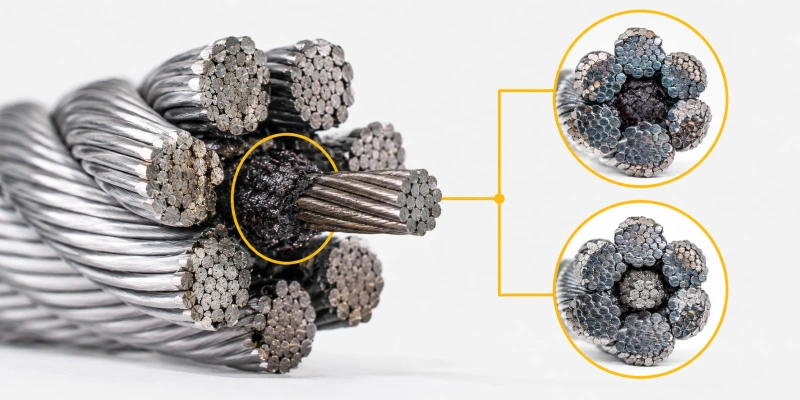
Wire rope cores form the central support structure within a wire rope. They provide stability, maintain the rope’s shape, and influence its mechanical properties. The core type determines how the wire rope performs under different loads and environments.
In the construction and heavy machinery industries, three primary wire rope cores are commonly used: fiber core, independent wire rope core (IWRC), and wire strand core (WSC).
The table below summarizes the main features and applications of each core type:
Core Type | Key Features | Applications |
|---|---|---|
Fiber Core (FC) | Lightweight, high flexibility, good internal lubrication retention | Light-duty lifting, marine, flexible hoisting |
Up to 15% higher breaking strength, superior resistance to crushing and heat, enhanced durability | Cranes, mining, offshore, construction, high-load | |
Wire Strand Core (WSC) | Balanced flexibility and strength, better resistance to elongation, compact design | Control cables, small winches, pulleys |
Fibre Core Structure and Materials
A fiber core consists of natural or synthetic fibers twisted together to form a flexible center. This structure allows the wire rope to bend easily, making it suitable for applications that require frequent movement. Fiber core wire ropes retain internal lubrication well, which helps reduce friction and wear.
Common materials for fiber core include sisal, polypropylene, and manila. These materials offer good flexibility and help the wire rope core absorb shock loads. Fiber core wire ropes are often used in marine environments and light-duty lifting equipment.
IWRC Structure and Materials
An independent wire rope core uses a steel core made from a separate wire rope. This steel core increases the overall strength and durability of the wire rope. The construction provides up to 15% higher breaking strength compared to fiber core options.
The steel core also improves resistance to crushing and high temperatures, making IWRC wire ropes ideal for demanding environments such as construction, mining, and offshore operations. The steel core enhances stability and ensures reliable performance under heavy loads.
IWRC vs Fiber Core: Key Differences
Structure and Material Comparison
IWRC and FC wire rope cores differ significantly in their internal structure and materials. IWRC uses a steel core, which consists of a separate wire rope placed at the center.
This design provides robust support and maintains the rope’s shape under heavy loads. FC, or fibre core, uses natural or synthetic fibres twisted together. These fibers offer cushioning and flexibility but less structural support.
The table below highlights the main structural and material differences between IWRC and FC wire rope cores:
Feature | IWRC (Independent Wire Rope Core) | Fiber Core (FC) |
|---|---|---|
Core Material | Steel | Natural/Synthetic Fibers |
Load Capacity | Higher supports heavier loads | Lower, less strength |
Crush Resistance | Better, maintains shape under load | Poor, susceptible to crushing |
Flexibility | Less flexible, more rigid | More flexible, easier handling |
Heat Resistance | Higher, withstands elevated temps | Lower can deteriorate in heat |
Applications | Heavy-duty lifting, construction | General utility, lighter applications |
Powerful Machinery’s Steel Wire Rope features a multi-layered steel core, ensuring maximum stability and reliability for demanding environments.
Strength and Durability
IWRC wire rope cores deliver superior strength and durability compared to FC. The steel core increases the rope’s breaking force, making it suitable for heavy-duty lifting and high-load applications.
For example, a 1-inch IWRC wire rope has a nominal strength of 51.7 tons, while a fiber core rope of the same diameter reaches only 45.9 tons. This difference in tensile strength can be critical in construction, mining, and offshore operations.
IWRC also resists wear and deformation over time, maintaining its performance even after repeated use. FC wire rope cores, while adequate for lighter tasks, cannot match the long-term durability of steel core designs.
Flexibility and Weight
Flexibility and weight represent key performance differences between IWRC and FC wire rope cores. FC wire rope cores provide greater flexibility due to their fiber construction. This flexibility allows for a lower minimum bend radius, making FC ropes easier to handle and install in tight spaces.
Wire Rope Type | Flexibility | Minimum Bend Radius |
|---|---|---|
Fiber Core | More flexible due to cushioning bends and reduced internal friction | Lower minimum bend radius |
IWRC | Less flexible, adds strength | Higher minimum bend radius |
However, IWRC wire rope cores add weight because of the steel core. This increased self-weight can place more load on lifting equipment. The table below compares the self-weight of each type:
Aspect | Fiber Core Wire Rope | Steel Core Wire Rope (IWRC) |
|---|---|---|
Self-Weight | Light reduces equipment load | Heavy increases the mechanical load |
Operators must consider these factors when choosing between IWRC and FC wire rope cores for specific applications.
Crush and Heat Resistance
Crush resistance is another area where IWRC wire rope cores excel. The steel core maintains its shape under high pressure, making IWRC ideal for heavy-duty applications such as cranes, winches, and mining.
FC wire rope cores, in contrast, are more susceptible to crushing and deformation, which can compromise safety and performance.
Heat resistance also distinguishes IWRC from FC. Industry standards show that steel core wire ropes can withstand temperatures up to 200°C. Fiber core ropes, however, should not exceed 100°C, as their fibers can degrade and lose strength at higher temperatures.
This makes IWRC the preferred choice for environments with elevated heat or where friction generates significant warmth.
Powerful Machinery’s Steel Wire Rope, with its non-rotating design and high tensile strength, offers outstanding crush and heat resistance. These features ensure reliable operation in the most challenging conditions, supporting safety and efficiency across industries.
In summary, the choice between IWRC and FC wire rope cores depends on the required balance of strength, flexibility, weight, and resistance to crushing and heat. Understanding these performance differences helps operators select the right wire rope core for each application.
Advantages and Disadvantages of Wire Rope Cores
Fibre Core Pros and Cons
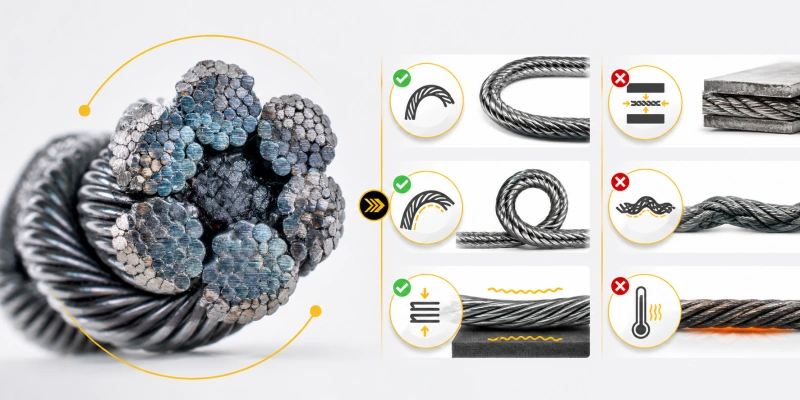
Fiber core wire rope offers several advantages that make it a popular choice for many industries. Operators value its high flexibility, which allows for easy handling and installation. The lightweight design reduces the load on equipment and supports applications where frequent movement is required.
Fiber core ropes also provide a high strength-to-weight ratio and a superior breaking load for their class. Many users appreciate the good fatigue life, which means the rope can withstand repeated bending and flexing without rapid wear.
High flexibility
High strength to weight ratio
Superior breaking load
Good fatigue life
However, fiber core wire rope has some limitations. It does not resist crushing as well as steel-core designs. Exposure to high temperatures can cause the fibers to deteriorate, reducing the rope’s lifespan.
Fiber cores also offer only moderate resistance to abrasion and corrosion compared to steel alternatives. These factors make fiber core ropes less suitable for heavy-duty or high-heat environments.
Note: Fiber core ropes work best in light-duty lifting, marine settings, and situations where flexibility is more important than maximum strength.
IWRC Pros and Cons
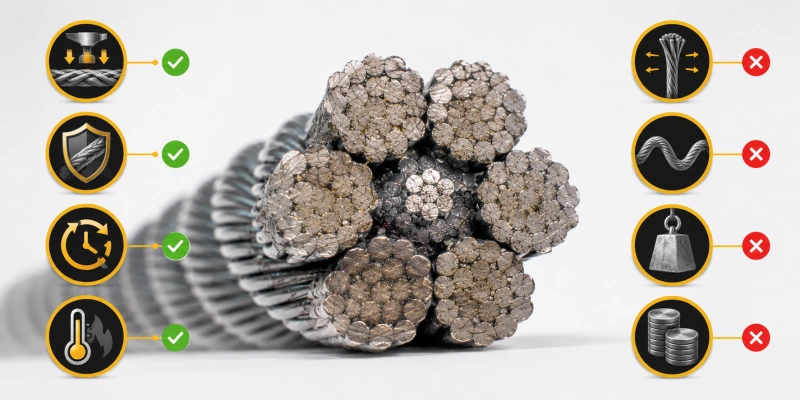
IWRC wire rope stands out for its enhanced crush resistance and superior strength. This design makes it ideal for heavy-duty applications, including cranes, excavators, and drilling lines. The steel core provides durability and ensures reliable performance under high loads and harsh environments.
IWRC ropes maintain their shape and structural integrity even when subjected to intense pressure or elevated temperatures.
The following table compares IWRC and fiber core ropes in terms of flexibility and corrosion resistance:
Aspect | IWRC Wire Rope | Fiber Core Wire Rope |
|---|---|---|
Flexibility | Less flexible, needs a larger bending radius | Excellent, bends easily |
Corrosion Resistance | Excellent resistance to abrasion and corrosion | Moderate resistance compared to IWRC |
Despite these strengths, IWRC wire rope is less flexible than fiber core options. It requires a larger bending radius during installation and use. While IWRC offers excellent resistance to abrasion and corrosion, its increased weight can add to the load on lifting equipment.
Tip: IWRC wire rope suits demanding environments where strength, durability, and resistance to crushing are critical.
Application Guidance for IWRC and Fiber Core
Fiber Core Applications
Fiber core wire rope serves industries that require flexibility and ease of handling. Operators in elevator maintenance often select fiber core for counterweight cables. Construction teams use fiber core in crane wire ropes for luffing operations, where frequent bending is necessary.
Civil engineering projects rely on fiber core for lifting tasks that demand flexible bending.
Industry | Application Scenario |
|---|---|
Elevators | Counterweight cables |
Construction | Crane luffing ropes |
Civil Engineering | Lifting applications requiring flexible bending |
Several environmental conditions favor fiber core wire rope:
Enhanced flexibility and lubricant retention support frequent bending.
Lightweight and high-flexibility suit applications with smaller sheaves.
Good internal lubrication retention reduces wear between strands.
Fiber core performs well in light-duty lifting equipment, marine environments, and flexible hoisting systems.
Operators choose fiber core when they need ropes that bend easily and retain lubrication. These ropes excel in environments where equipment moves often and space is limited.
IWRC Applications
IWRC wire ropes deliver high strength and durability for demanding tasks. Construction crews use IWRC for lifting heavy steel beams and concrete panels. Marine and offshore operators depend on IWRC for mooring, towing, and cargo handling.
The mining industry relies on IWRC for excavation, haulage, and shaft hoisting.
IWRC wire ropes support heavy-duty industrial applications.
They provide higher strength and improved crush resistance, which are critical in offshore drilling and mining.
The mining sector invests steadily in steel wire ropes to ensure reliable performance in challenging environments.
Powerful Machinery’s Steel Wire Rope stands out in these scenarios. Its non-rotating design and high tensile strength make it ideal for bridge crane main hoisting ropes, offshore drilling, and mining operations. The steel core ensures maximum load capacity and resistance to crushing, supporting safety-critical tasks.
Choosing the Right Core for Your Needs
Selecting the correct wire rope core depends on several factors. Operators must evaluate strength, flexibility, resistance to crushing, environmental conditions, and cost.
Core Type | Key Features | Advantages | Typical Applications |
|---|---|---|---|
IWRC | High strength, heat, and crush resistance | Excellent resistance to compression and superior load capacity | Heavy-duty lifting equipment, e.g., bridge crane main hoisting ropes |
Fiber Core | Good elasticity, internal lubrication | Low cost, excellent flexibility | General environments, light to medium-duty use |
Industry standards guide core selection for safety-critical operations:
Feature | Fiber Core | Steel Core |
|---|---|---|
Load Capacity | Lower | Higher |
Fatigue Resistance | High | Moderate |
Operators should consider the following:
Strength requirements for the task
Flexibility needed for installation and operation
Resistance to crushing in the working environment
Environmental factors such as heat and moisture
Cost constraints
Powerful Machinery offers certified wire rope solutions for both core types. Their Steel Wire Rope provides unmatched reliability for heavy-duty and specialized applications. Operators can consult with Powerful Machinery experts to ensure optimal safety and performance in every project.
Tip: Always match the wire rope core to the demands of the application. Proper selection improves safety, extends service life, and maximizes operational efficiency.
Maintenance, Safety, and Common Misconceptions
Lubrication and Inspection Tips
Proper lubrication plays a vital role in maintaining wire rope performance. Regularly applying a high-quality lubricant reduces internal friction, minimizes corrosion, and extends the rope’s service life. Operators should focus on lubricating the entire length of the wire rope, especially the core area, to ensure even coverage.
Inspection remains equally important. Visual checks should identify external signs of wear, corrosion, broken wires, or deformation. However, internal damage often occurs before visible signs appear.
Techniques such as measuring the rope diameter can reveal internal deterioration; a noticeable reduction indicates internal wire breakage or corrosion. Additionally, non-destructive testing methods like magnetic particle inspection can detect internal corrosion or fatigue, especially in IWRC ropes.
Severe rusting or a significant decrease in diameter warrants immediate removal from service. Regular inspections, combined with proper lubrication, help prevent accidents caused by unnoticed internal damage.
Safety Best Practices
Safety begins with selecting the right wire rope for each application. Always choose slings and ropes based on their rated load capacities, considering the specific environment and operational demands. Routine inspection of slings and ropes is essential; remove any that show signs of wear, corrosion, or broken wires.
Operators must follow safe rigging practices, ensuring the load remains controlled during lifting. Properly rigging the wire rope prevents slippage and uneven load distribution.
It is crucial to avoid environments that could cause mechanical damage or accelerate corrosion, such as exposure to chemicals or extreme weather conditions.
Training personnel on correct handling and inspection procedures enhances safety. Using certified equipment from trusted manufacturers like Powerful Machinery ensures compliance with international standards and reduces risk.
Myths About IWRC and Fiber Core
Many misconceptions cloud the understanding of wire rope cores. For example, some believe “IWRC is always better,” but this is not true. Fiber core ropes excel in applications requiring flexibility and frequent motion, such as in elevators or small cranes.
Conversely, fiber core ropes cannot lift heavy loads safely within their rated limits, contrary to popular belief.
Another misconception suggests that “you can replace FC with IWRC anytime,” but this overlooks the importance of groove shape and machine design. Compatibility issues can compromise safety and performance.
Some assume fiber core ropes are outdated; however, they remain widely used in elevators and small cranes due to their flexibility.
Finally, many think all ropes perform equally under heat. In reality, fiber cores degrade quickly in high-temperature environments, while IWRC ropes maintain their integrity better under such conditions. Recognizing these truths helps ensure safe and effective use of wire ropes in demanding industries.
Conclusion
Selecting IWRC or fiber core depends on the job’s strength, flexibility, and environment. IWRC suits heavy-duty tasks, while fiber core works best for flexible, lighter applications. Regular maintenance improves safety, extends rope life, and lowers costs, as shown below:
Benefit | Description |
|---|---|
Better workplace safety | Regular maintenance helps prevent accidents and ensures a safer working environment. |
Extended rope service life | Systematic inspections and care prolong the lifespan of wire ropes. |
Lower operational costs | Preventing unexpected failures reduces costs associated with repairs and downtime. |
Improved performance | Well-maintained ropes perform better, enhancing overall operational efficiency. |
For expert guidance, operators can consult:
Powerful Machinery offers tailored solutions and certified products for lifting needs. Visit their website.
Mazzella Companies: Shares educational resources on wire rope best practices in their learning center.
FAQ
What is the main difference between IWRC and fiber core wire ropes?
IWRC uses a steel core for higher strength and durability. Fiber core uses natural or synthetic fibers for greater flexibility. Each core type suits different applications based on load and environment.
When should operators choose fiber core wire ropes?
Operators should select fiber core when flexibility and easy handling matter most. These ropes work well in light-duty lifting, marine environments, and applications with frequent bending.
How often should wire ropes be inspected?
Operators should inspect wire ropes before each use. Regular monthly inspections help identify wear, corrosion, or broken wires. Immediate removal is necessary if any serious damage appears.
Does Powerful Machinery offer custom-engineered wire ropes?
Powerful Machinery provides custom-engineered wire ropes for unique project requirements. Their team collaborates with clients to deliver certified solutions that meet international safety standards.