When you select a pallet jack, you often see the standard width listed as 27 inches. However, narrow and Euro models also exist, measuring 20 and 22 inches wide. The table below shows these common options:
Type of Pallet Jack | Width (inches) |
|---|---|
Standard Pallet Jack | 27 |
Narrow Pallet Jack | 20 |
Euro Pallet Jack | 22 |
Choosing the right pallet jack dimensions matters. You improve safety and efficiency when your equipment fits your pallet type, workspace, and load. Proper selection reduces injury risks and keeps your operation running smoothly.
Key Takeaways
Standard pallet jacks are typically 27 inches wide, fitting most North American pallets. Choose the right width to ensure compatibility and safety.
Narrow pallet jacks, measuring 20 to 22 inches, are ideal for Euro pallets and tight spaces. Assess your workspace before making a selection.
Always measure your pallets and aisles before purchasing a pallet jack. Accurate dimensions prevent bottlenecks and improve efficiency.
Proper fork length and width enhance load stability. Ensure your pallet jack dimensions match your load requirements for safe transport.
Regular maintenance and operator training are crucial for safe pallet jack operation. Follow best practices to protect your team and equipment.
Pallet Jack Dimensions Explained
Standard Sizes and Variations
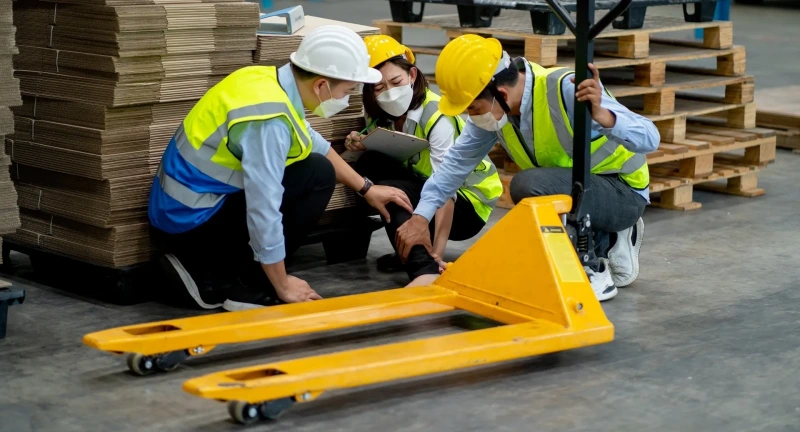
When you evaluate pallet jack dimensions, you notice several key measurements that affect your workflow. The most common size you encounter is the standard pallet jack, which features a fork width of 27 inches and a fork length of 48 inches.
This size fits the majority of North American pallets, especially the 40″ x 48″ GMA pallet. You also find narrow pallet jacks, which measure between 20.5 and 21 inches wide. These models work best with Euro pallets and narrow skids, giving you flexibility in environments with smaller pallets or tighter spaces.
You should pay close attention to the fork length as well. Most pallet jacks offer a standard fork length of 48 inches, which suits most warehouse applications. Some specialized models provide shorter or longer forks to accommodate unique pallet sizes or oversized loads.
Rough terrain pallet jacks feature wider and longer forks, designed for outdoor use and uneven surfaces. These variations allow you to match your equipment to your specific material handling needs.
Powerful Machinery offers a range of pallet jack dimensions to meet diverse requirements. Their standard models feature a fork width of 685 mm (about 27 inches) and a fork length of 1150 mm, which ensures compatibility with standard pallets.
If you need to handle Euro pallets or work in narrow aisles, you can choose models with fork widths as narrow as 520 mm (about 20.5 inches). This flexibility helps you optimize your workflow and maintain safety in your facility.
Tip: Always measure your pallet and workspace before selecting a pallet jack. Matching the dimensions to your environment prevents damage and improves efficiency.
Comparison Table of Common Dimensions
You benefit from comparing pallet jack dimensions side by side. The table below summarizes the most common options, including standard, narrow, Euro, and rough terrain models. This comparison helps you identify which type fits your palette and workspace best.
Dimension Type | Measurement (Inches) | Measurement (mm) | Best For |
|---|---|---|---|
Standard Width | 27 | ~685 | Standard 40″ x 48″ GMA Pallets |
Narrow Width | 20.5 – 21 | ~520 – 540 | Euro Pallets, Narrow Skids |
Euro Width | 22 | ~560 | European Pallets |
Rough Terrain Width | 27 – 32 | ~685 – 810 | Outdoor, uneven surfaces |
Fork Length | 48 | ~1220 | Most common applications |
Powerful Machinery’s pallet jack dimensions cover both standard and narrow models. Their standard pallet jack features a fork width of 685 mm and a fork length of 1150 mm, making it ideal for most warehouse operations.
If you work with Euro pallets or need to navigate tight aisles, you can select a model with a fork width of 520 mm. This range ensures you always find a solution that matches your pallet type and workspace.
When you choose pallet jacks, you must consider both the width and the fork length. These dimensions determine how well the equipment fits your pallets and how easily you can maneuver loads through aisles and doorways.
By understanding the available options and matching them to your needs, you improve safety, efficiency, and productivity in your material handling operations.
Why Width Matters for Pallet Jacks?
Pallet Compatibility
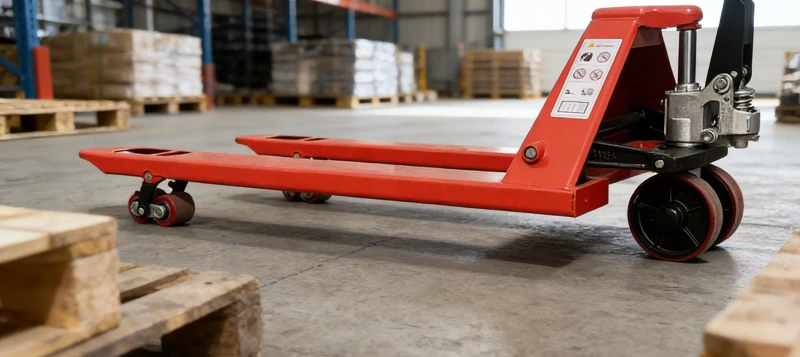
You must match pallet jack dimensions to the pallets you handle. The width of the forks determines if you can lift and move different pallet types. Most warehouses use the standard GMA pallet, which measures 48 inches by 40 inches. A pallet jack with a 27-inch width fits this size perfectly.
If you work with Euro pallets or custom designs, you need to check the dimensions of both the pallet and the jack. The right width ensures you can pick up the load securely and move it without issues.
In fact, 85% of customers choose the standard size because it works for most applications and offers cost savings. You rarely need uniquely sized jacks unless you handle specialized loads.
Pallet Jack Width | Pallet Size Compatibility | Maneuverability | Efficiency |
|---|---|---|---|
27 inches | 48 inches by 40 inches | High | Improved |
Aisle and Doorway Fit
You need to consider the space in your facility when selecting pallet jack dimensions. The width affects how easily you can navigate aisles and pass through doorways. Standard pallet jacks require wider aisles for safe operation. For example, electric pallet trucks need aisles between 2.4 and 2.7 meters wide.
Very narrow aisle forklifts can operate in spaces as tight as 1.8 meters. If your workspace has narrow aisles or small doors, a narrow pallet jack may be the best choice. Standard commercial doors are usually 36 inches wide, so moving a loaded pallet jack through them can be difficult.
You should measure your aisles and doors before choosing a jack.
Forklift Type | Recommended Aisle Width (meters) |
|---|---|
Electric Pallet Truck | 2.4 – 2.7 |
Counterbalance Forklift | 3.5 – 4.0 |
Reach Truck | 2.7 – 3.0 |
Very Narrow Aisle Forklift | 1.8 – 2.2 |
Tip: Always check your workspace layout before purchasing a pallet jack. The right dimensions help you avoid bottlenecks and improve workflow.
Load Stability and Safety
You protect your team and products by choosing pallet jack dimensions that support load stability. The fork width and length affect how the load sits on the jack. Proper dimensions distribute weight evenly, reducing the risk of tipping or shifting during transport.
You must follow manufacturer guidelines to prevent accidents and ensure safe operation. When you use the correct pallet jack dimensions, you maintain stability and keep your workplace safe.
Aspect | Impact on Load Stability and Safety |
|---|---|
Fork Length and Width | Affects stability and load distribution; proper dimensions enhance safety during transport. |
Proper fork length ensures even weight distribution.
Adhering to manufacturer guidelines prevents accidents.
You improve efficiency and safety when you select the right pallet jack for your load and environment. The correct dimensions make every move smoother and more secure.
Types of Pallet Jacks
Choosing the right pallet jack starts with understanding the main types of pallet jacks available. Each type offers unique features and benefits for different applications. You need to match your choice to your workflow, load requirements, and environment.
Manual Pallet Jacks
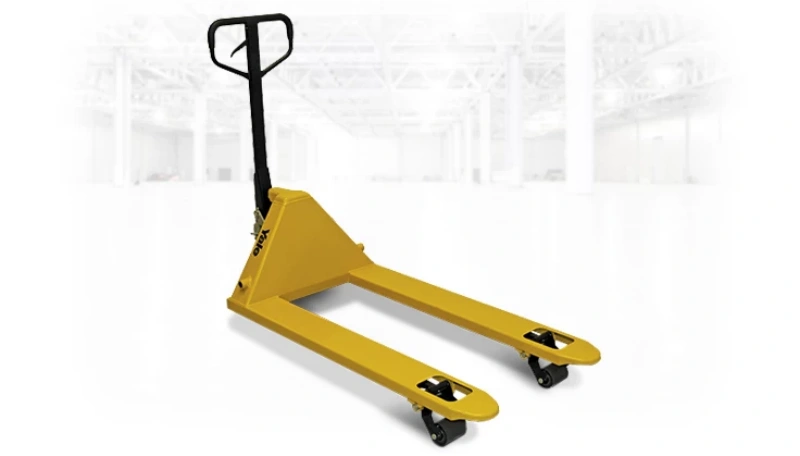
A manual pallet jack, also known as a hydraulic pallet jack, is a classic tool for moving pallets in warehouses and retail spaces. You operate it by pumping the handle, which raises the forks using a hydraulic system.
This type is cost-effective and requires no electricity, making it ideal for small businesses or areas without power access. You can maneuver a manual pallet jack easily in tight spaces. It is always ready for use and needs minimal maintenance.
Tip: Manual pallet jacks from Powerful Machinery feature durable steel frames, ergonomic handles, and polyurethane wheels for smooth movement and floor protection.
Key advantages of manual pallet jacks:
More affordable than electric models
No charging required
Simple operation and low maintenance
Fits well in small warehouses or stockrooms
Electric Pallet Jacks
Electric pallet jacks use a battery-powered motor to move and lift pallets. You control them with a throttle, which reduces physical effort and increases productivity.
These jacks handle heavier loads and cover larger areas quickly. In high-volume operations, electric pallet jacks help you move goods efficiently and reduce operator fatigue.
Feature | Electric Pallet Jacks | Manual Pallet Jacks |
|---|---|---|
Ease of Use | Effortless throttle control | Manual pumping and pulling |
Load Capacity (lbs) | 3,000–8,000 | 1,000–5,500 |
Speed | Fast, covers large areas | Slower, operator-dependent |
Powerful Machinery offers electric pallet jack models with robust construction and ergonomic controls. You benefit from higher efficiency and safety, especially in large facilities.
Specialized and Custom Models
Some applications require specialized types of pallet jacks. Powerful Machinery provides options such as galvanized hand pallet jacks for damp environments, low-profile models for pallets with low clearance, and scissors lift jacks for ergonomic order picking.
You can also choose scale pallet jacks with built-in weighing systems for logistics or stainless steel models for food and pharmaceutical industries.
Specialized types of pallet jacks include:
Rough terrain pallet jacks for outdoor or uneven surfaces
Narrow aisle pallet jacks for tight warehouse spaces
High-capacity models for heavy manufacturing
Note: You should always review pallet jack dimensions and features to ensure compatibility with your pallets and workspace.
By understanding the types of pallet jacks, you can select the best equipment for your needs and improve your material handling efficiency.
Measuring Pallet Jack Dimensions
How to Measure a Pallet Jack?
You need to measure your pallet jack accurately to ensure it fits your pallets and workspace. Use these steps for the best results:
Place the pallet jack on a flat surface.
Use a tape measure to check the fork length from the tip to the back of the fork.
Measure the fork width by spanning from the outside edge of one fork to the outside edge of the other.
Record the overall width, which helps you know if the jack fits through aisles and doorways.
Check the maximum lift height by measuring from the floor to the top of the fork when fully raised.
Tip: Use a spirit level to make sure the pallet jack sits flat during measurement. Mark your points with a pencil for accuracy.
How to Measure Your Pallets?
You must measure your pallets to match them with the right pallet jack. Follow these steps:
Measure the pallet length from one outer edge to the opposite outer edge, including any overhang.
Measure the pallet width across the full deck surface, making sure to include any protrusions.
Measure the pallet height from the bottom to the top of the deck boards.
You need a sturdy tape measure for these tasks. Accurate measurements help you select a pallet jack with the correct fork length and width. This ensures safe lifting and moving of all pallets in your facility.
Checking Manufacturer Specs
You should always review the manufacturer’s specifications before you buy a pallet jack. These details help you confirm that the jack matches your needs. The table below shows what to check and why it matters:
Specification Type | Importance |
|---|---|
Ensures the jack can handle your heaviest pallet safely. | |
Dimensions | Affects how well the jack fits your pallets and workspace. |
Material Construction | Determines durability and suitability for your environment. |
You should match the load capacity to your heaviest pallets. Check that the fork length and width fit your pallet dimensions. Choose the right material construction for your work area, such as steel for heavy-duty use.
Note: Always compare your pallet and pallet jack measurements with the manufacturer’s specs to avoid costly mistakes.
Finding the Right Pallet Jack for Your Needs
Selecting the right pallet jack for your operation requires careful planning. You need to consider pallet jack dimensions, workspace layout, floor conditions, and safety. Follow this step-by-step guide to make the best choice for your warehouse.
Assessing Pallet and Load Size
Start by evaluating the pallets and loads you handle every day. Consider these factors:
Weight capacity: Make sure the pallet jack can safely lift your heaviest load.
Fork size: Match the fork length and width to your standard pallet jack or custom pallet size.
Lift height: Check if you need extra height for stacking or shelving.
Flooring conditions: Choose a model that works well with your floor type.
Maneuverability: Look for a tight turning radius if you operate in small spaces.
Safety features: Prioritize overload protection and reliable brakes.
Brand reputation: Select a trusted manufacturer with strong warranties.
Powerful Machinery offers a wide range of pallet jacks to fit different load sizes and applications.
Evaluating Workspace and Aisle Width
Next, review your facility’s layout. The right pallet jack dimensions help you move efficiently through aisles and doorways. Consider these points:
Compact pallet jacks work best in narrow aisles.
Ride-on models help cover long distances and reduce operator fatigue.
Fork length and width must fit your workspace for smooth maneuvering.
Measure your aisles and doorways before making a decision. This step ensures you avoid bottlenecks and maintain productivity.
Considering Floor Surface and Application
Floor conditions play a big role in finding the right pallet jack. Think about these considerations:
Rough or uneven floors require special wheels for stability.
Outdoor use calls for weather-resistant materials.
Electric pallet jacks suit high-volume warehouses and fast-paced environments.
Choose a model that matches your daily tasks and floor surfaces for the best results.
Safety and Compliance Factors
Safety remains a top priority in any material handling operation. Use this table to review key requirements:
Safety Factor | Description |
|---|---|
Design Standards | Pallet jacks must have visible load capacity labels and functional brakes. |
Operator Training | Only trained staff should operate pallet jacks, following OSHA guidelines. |
Maintenance & Inspections | Daily checks and regular maintenance keep equipment safe and reliable. |
You must follow OSHA regulations and ensure all operators receive proper training. Regular inspections help prevent accidents and keep your equipment in top condition.
Tip: Consult with Powerful Machinery’s experts for custom or unique pallet jack needs. Their team can analyze your workflow, recommend tailored solutions, and help you adapt to changing requirements.
By following these steps, you make finding the right pallet jack simple and effective. Powerful Machinery’s diverse product range and expert support ensure you always have the right equipment for your operation.
Choosing Your Pallet Jack Safely
Inspection and Maintenance
You protect your team and equipment by making inspection and maintenance a priority when choosing your pallet jack. Start each shift with a daily check. Look for fork wear, chain position, and any visible damage. Examine hydraulic parts for leaks or irregularities.
For electric models, recharge batteries before use. Schedule monthly lubrication and refill hydraulic oil every six months. Arrange professional maintenance as needed to keep your pallet jack in top condition.
Maintenance Task | Frequency |
|---|---|
Daily Inspection | Daily |
Check Fork for Wear | Daily |
Verify Chain Position | Daily |
Check Hydraulic Parts | Daily |
Lubricate Pallet Truck | Monthly |
Verify and Refill Oil | Every 6 months |
Recharge Batteries (electric) | Before operation |
Professional Maintenance | As needed |
Tip: Consistent maintenance extends the life of your pallet jack and ensures safe use in every shift.
Operator Training and Best Practices
You ensure safety and efficiency by investing in proper operator training. Only allow trained staff, at least 18 years old, to operate pallet jacks. Provide formal instruction, especially for electric models. Review the manufacturer’s instructions for each model. Before use, inspect the pallet jack for damage or wear.
Always center the load on the forks and keep it low to the ground. Push the load instead of pulling to maintain visibility and reduce strain. Wear personal protective equipment, such as toe-protective footwear and gloves. Never exceed the weight limit and confirm load weights before moving.
Follow these best practices for safe operation:
Plan your route and clear obstacles from movement paths.
Maintain unobstructed aisles for smooth transport.
Never stand or ride on a pallet jack.
Avoid stepping into the path of operating jacks.
Verify operator skills with practical evaluations.
Regulation/Standard | Description |
|---|---|
OSHA Compliance | Operators must be trained to use pallet jacks safely to prevent workplace accidents. |
Age Requirement | Operators must be at least 18 years old. |
Training Requirement | Formal instruction is required for the safe operation of electric pallet jacks. |
Safety Practices | Avoid stepping into the path of operating jacks and keep away from unloading processes. |
You create a safer workplace by choosing your pallet jack carefully and following these guidelines. Regular training and maintenance help you achieve safe use and reliable performance every day.
Conclusion
Selecting the right pallet jack dimensions ensures you support loads evenly, prevent product damage, and boost productivity in your warehouse. Powerful Machinery’s pallet jacks and trucks deliver reliable solutions for diverse needs:
Feature | Benefit |
|---|---|
Load Capacity | Handles maximum weight requirements. |
Construction Material | Stainless steel increases durability in wet conditions. |
Fork Size | Adjustable forks fit different load sizes. |
Maneuverability | Easy navigation in tight spaces. |
Custom Solutions | Tailored for specific warehouse operations. |
Always review manufacturer specifications and consult experts. The right choice streamlines your workflow and enhances safety.
FAQ
What is the standard width of a pallet jack?
You usually find the standard pallet jack width at 27 inches. This size fits most North American pallets and works well in typical warehouse settings.
How do I know which pallet jack width I need?
You should measure your pallets and aisles first. Choose a width that fits your pallet type and allows easy movement through your workspace. Always check manufacturer specifications.
Can I use a narrow pallet jack for standard pallets?
You can use a narrow pallet jack, but it may not support standard pallets securely. For best results, match the fork width to your pallet size to ensure stability and safety.
Does Powerful Machinery offer custom pallet jack sizes?
Yes, you can request custom sizes from Powerful Machinery. Their team helps you select or design a pallet jack that fits your unique requirements.
Tip: Contact their experts for tailored solutions.