You face a choice between pallet stackers and forklifts when optimizing your warehouse operations. Pallet Stackers vs Forklifts depends on your space, load requirements, and budget.
Powerful Machinery offers advanced pallet stackers that deliver efficient, cost-effective indoor material handling. Evaluate your storage method and costs to match your operational needs.
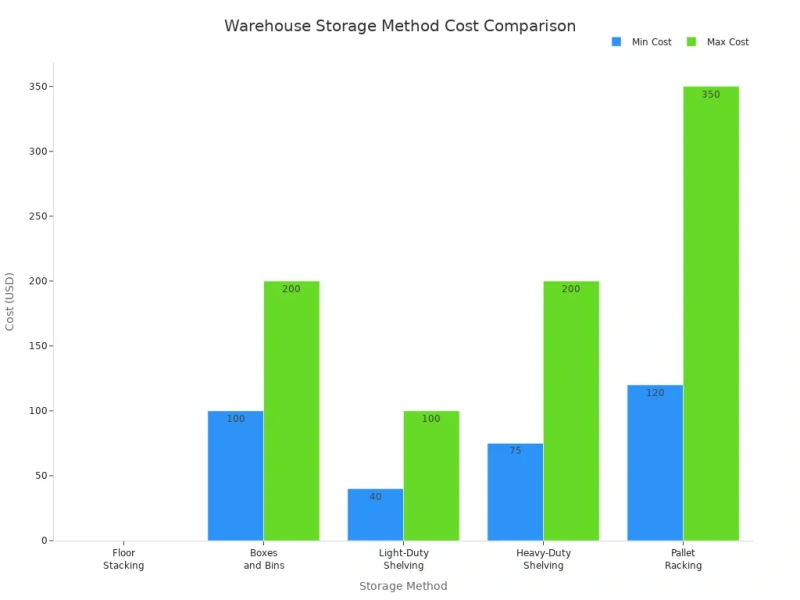
Storage Method | Pros | Cons | Cost Range |
|---|---|---|---|
Floor Stacking | No racking system costs, high storage density | Underutilizes vertical space, high space consumption | 4-feet deep by 8-feet long per unit |
Boxes and Bins | Easy to access, available in various sizes | Can fill the warehouse if over-purchased | $100 to $200 (bulk discounts available) |
Light-Duty Shelving | Cheap, adjustable shelves | Limited height, needs support | $40 to $100 per unit |
Heavy-Duty Shelving | Cheap, adjustable shelves | Limited height, needs support | $75 to $200 per unit |
Pallet Racking | Maximizes space utilization, easy access | Most expensive type of storage | $120 to $350 per set |
Key Takeaways
Pallet stackers are compact and ideal for tight spaces, while forklifts are larger and better for heavy loads.
Choose pallet stackers for moderate loads and indoor use; select forklifts for heavy-duty tasks and outdoor operations.
Evaluate your warehouse layout and load requirements to determine the best equipment for efficiency and safety.
Pallet stackers generally have lower costs and maintenance needs compared to forklifts, making them budget-friendly.
Proper training and safety protocols are essential for both pallet stackers and forklifts to ensure safe operation.
Pallet Stacker vs Forklift: Definitions and Uses
What is a Pallet Stacker?
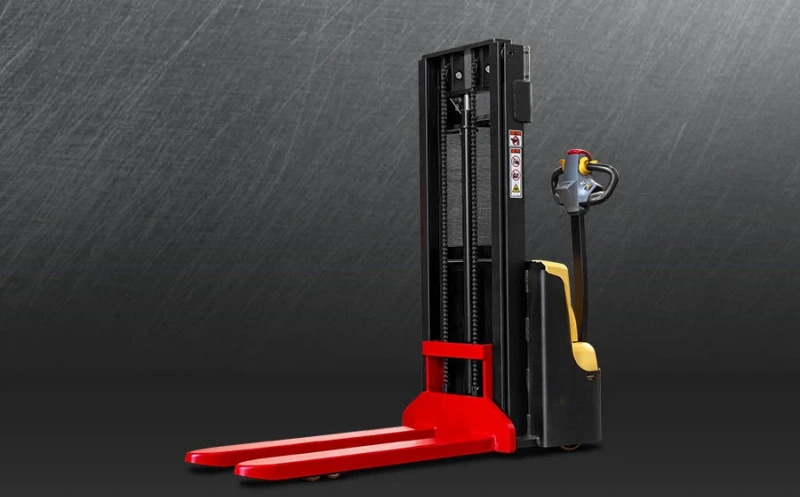
You use pallet stackers to lift, move, and stack pallets in your warehouse. These machines handle small to medium-sized goods, usually between 600 and 2000 kilograms. Pallet stackers give you speed and precision, making your daily tasks easier and safer.
You can find them in manufacturing plants, retail stores, factory floors, and warehouse facilities. Their compact size lets you maneuver quickly, even in tight aisles.
Pallet stackers work well for high-volume or mid-sized commodities.
You can streamline small tasks and reduce manual labor for longer hauls.
They are a smart choice when you want to avoid using larger, heavier forklifts or manual pallet carts.
Pallet stackers vs forklifts often come down to space and efficiency. If you need to maximize your warehouse layout, pallet stackers offer a clear advantage. Powerful Machinery’s pallet stacker stands out as a top solution for tight warehouse spaces.
You get reliable performance, lower operating costs, and simple maintenance. These features make pallet stackers a valuable tool for many warehouse applications.
What is a Forklift?
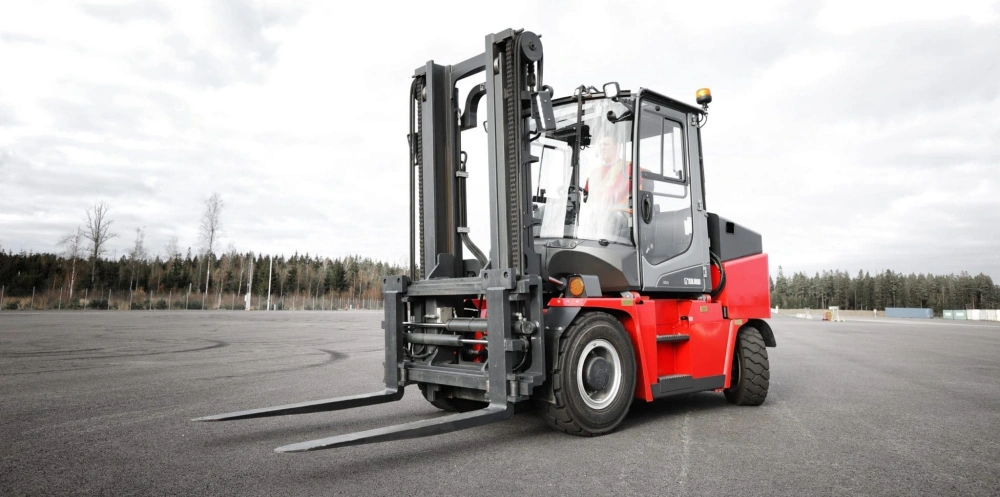
Forklifts are powerful machines designed for heavy lifting and moving large loads. You use them to load and unload trucks or transport goods throughout your warehouse. Forklifts can handle a wide range of weights and heights, making them suitable for demanding tasks.
Function | Description |
|---|---|
Streamlining Operations | Electric forklifts help you move goods quickly, boosting productivity and order fulfillment. |
Optimizing Space Utilization | Their design lets you navigate narrow aisles, maximizing storage and improving inventory. |
Enhancing Safety | Advanced safety features reduce accident risks, creating a safer workplace. |
Reducing Environmental Impact | Electric power lowers your warehouse’s carbon footprint. |
You often choose between pallet stackers vs forklifts based on your specific applications. Forklifts excel in heavy-duty environments, while pallet stackers shine in confined spaces and for moderate loads. Understanding the strengths of each helps you select the right equipment for your warehouse needs.
Key Differences Between Pallet Stackers and Forklifts
Design and Size
When you compare pallet stackers and forklifts, design and size stand out as major differences. Pallet stackers feature a compact build, making them ideal for narrow aisles and tight warehouse spaces. Forklifts have a larger frame and require more room for operation. You can see the contrast in the table below:
Feature | Pallet Stacker | Forklift |
|---|---|---|
Size | Compact, ideal for small spaces | Larger, requires more room for operation |
You benefit from the compact design of Powerful Machinery pallet stackers. These stackers allow for narrower aisles and closer pallet placement, increasing storage capacity by up to 30 percent. Their size enhances maneuverability and operational efficiency without needing a larger facility.
Compact stackers fit in confined spaces.
Forklifts need wider aisles and more clearance.
Pallet stackers are cost-effective for smaller warehouses.
Load Capacity and Lifting Height
Load capacity and lifting height are critical when choosing equipment for material handling. Pallet stackers handle moderate loads and stacking heights, while forklifts excel in heavy-duty applications. The following tables show typical capacities:
Type of Pallet Stacker | Load Capacity (kg) | Load Capacity (lbs) |
|---|---|---|
Manual Pallet Stackers | 500 – 1,200 | 1,100 – 2,600 |
Electric Walkie Pallet Stackers | 1,000 – 2,500 | 2,200 – 5,500 |
Electric Rider Pallet Stackers | 1,500 – 2,000 | 3,300 – 4,400 |
Straddle Pallet Stackers | 1,500 – 2,500 | 3,300 – 5,500 |
Reach Stackers | 1,200 – 2,000 | 2,600 – 4,400 |
Type of Forklift | Load Capacity (lbs) |
|---|---|
Sit-down Electric Forklifts | 3,000 – 10,000 |
Walkie Stackers | 2,000 – 3,000 |
You should select a pallet stacker for moderate loads and medium-height stacking. Forklifts are better for heavy-duty lifting and high stacking requirements.
Maneuverability and Space
Maneuverability is essential in modern warehouses. Pallet stackers offer superior handling in confined spaces. Their small turning radius lets you navigate narrow aisles quickly. Forklifts, with their larger size, require more space and wider aisles.
Equipment Type | Maneuverability Features |
|---|---|
Pallet Stackers | Compact design, superior handling in confined spaces, quick navigation in narrow aisles |
Forklifts | Larger size, robust construction, power steering for easier operation in restricted areas, ergonomic controls for improved precision |
Powerful Machinery’s pallet stackers enhance maneuverability, allowing you to optimize your warehouse layout and increase storage density. You gain efficiency and performance in tight spaces.
Tip: Choose pallet stackers for warehouses with limited space or crowded layouts. Their design improves operational efficiency and storage capacity.
Power Source and Emissions
The power source and emissions profile affect your warehouse environment. Pallet stackers and forklifts come in electric, diesel, and hydrogen fuel cell models. Electric pallet stackers and forklifts produce zero emissions, making them suitable for indoor use.
Diesel-powered forklifts emit pollutants and are best for outdoor work.
Power Source | Emissions Profile | Ideal Use Cases |
|---|---|---|
Electric Forklifts | Zero emissions, suitable for indoor use | Warehouses, grocery distribution centers |
Diesel-Powered Forklifts | Produces emissions, not safe for indoor use | Outdoor work, construction sites |
Hydrogen Fuel Cell Forklifts | Zero emissions, only water as byproduct | Material handling, environmentally friendly environments |
Electric pallet stackers improve air quality and reduce noise pollution. They do not emit harmful gases, creating a healthier workplace. If you charge electric equipment from renewable energy, you further reduce your environmental footprint.
The absence of pollutants from electric forklifts dramatically improves air quality in enclosed spaces, creating a healthier and safer working environment for employees.
Operation and Training
Operating pallet stackers and forklifts requires proper training and certification. OSHA mandates that you must be fully trained and licensed before using either piece of equipment. Certification must be renewed every three years. Employers are responsible for ensuring compliance to avoid penalties.
You will find that pallet stackers have simplified controls and shorter training times. Forklifts require more extensive training due to their complexity and heavy-duty features.
Cost and Maintenance
Cost and maintenance influence your decision when comparing pallet stackers and forklifts. Pallet stackers offer lower upfront investment and operating costs. Their maintenance is simpler, with fewer moving parts and less complexity.
Forklifts have higher initial costs and require more frequent maintenance, especially in industrial settings.
Pallet stackers are cost-effective for daily stacking tasks.
Forklifts are better for heavy-duty operations but come with higher costs.
Automated options, such as stacker cranes, provide savings after two years and eight months.
Self-driving forklifts achieve full ROI within 18–36 months, mainly through labor cost reduction.
Powerful Machinery’s pallet stackers deliver reliable performance and efficiency, helping you maximize your investment and reduce operational expenses.
Note: Industry trends show a shift toward automation and sustainability. Automated guided vehicles based on stacker designs are common in modern warehouses. Electric power is becoming standard for both pallet stackers and forklifts.
By understanding the key differences between pallet stackers and forklifts, you can make informed decisions for your warehouse. Powerful Machinery’s pallet stackers stand out with compact design, cost-effectiveness, and superior performance in material handling.
Pallet Stackers and Forklifts: Applications and Advantages
Ideal Applications for Pallet Stackers
You rely on pallet stackers for efficient material handling in logistics centers and manufacturing facilities. These machines excel at loading and unloading trucks, moving pallets within your facility, and stacking pallets in storage racks. You see a productivity boost of up to 20% when you invest in walkie pallet stackers.
They are ideal for tight spaces and maximize storage density. You choose electric pallet stackers for indoor environments where emissions and noise reduction matter. When to choose a pallet stacker? You select them for moderate loads, medium stacking heights, and operations that demand precision and safety.
Ideal Applications for Forklifts
Forklifts serve a wide range of applications. You use them indoors for handling various materials and load capacities. Outdoor jobs require forklifts that operate on uneven ground. You select counterbalance forklifts for loading trucks and moving pallets in open spaces.
Reach trucks help you access deep racking systems in narrow aisles. Order pickers assist you in collecting items from high shelves. Narrow aisle forklifts increase storage capacity. Articulating forklifts place loads in confined areas. Heavy-duty industrial forklifts handle extremely heavy loads in shipyards and construction.
Cold storage forklifts operate in freezing conditions. You choose LP gas forklifts for both indoor and outdoor use. Diesel forklifts work best outdoors with high load capacity. Electric forklifts are ideal for indoor use, offering quiet operation and environmental benefits.
When to choose a forklift? You select them for heavy-duty tasks, high stacking, and environments requiring speed and versatility.
Advantages of Powerful Machinery Pallet Stackers
You gain several advantages when you choose Powerful Machinery pallet stackers. The key features of pallet stackers include emergency stop controls, overload protection, anti-tip design, and operator protection. Ergonomic features improve comfort and visibility.
Technical specifications cover lifting speed, travel speed, steering, and braking systems. You benefit from lower maintenance requirements and reduced operating costs. These stackers are ideal for tight spaces and offer efficiency in daily operations.
You maximize your investment with reliable performance and safety. The advantages of pallet stackers from Powerful Machinery help you optimize your warehouse layout and boost productivity.
Tip: You improve efficiency and safety by selecting pallet stackers with advanced features tailored to your warehouse needs.
Limitations and Considerations
You must consider the limitations of each equipment type before making a decision. The table below highlights key features of forklifts and pallet stackers:
Feature | Pallet Stackers | Forklifts |
|---|---|---|
Lifting Capacity | 3,000 to 4,500 pounds | Higher capacity for heavy-duty loads |
Maximum Lift Height | 10 to 15 feet | Varies, often higher for tall racks |
Operating Speed | Slower, designed for precision | Faster, suitable for quick operations |
Maintenance | Lower maintenance requirements | Higher maintenance due to complexity |
You evaluate your warehouse requirements, load sizes, and stacking heights. You consider maintenance needs and operating speed. You select the equipment that matches your workflow and budget. The key features of forklifts and pallet stackers guide your decision for optimal material handling.
Choosing the Right Equipment for Your Warehouse
Assessing Space and Layout
You start by evaluating your warehouse space and layout. The width of your aisles, the height of your racks, and the overall floor plan determine which equipment fits best. Pallet stackers excel in narrow aisles and confined spaces, while forklifts require more room to maneuver.
If your warehouse features tight layouts, stackers help you maximize storage density and efficiency. Forklifts suit larger facilities with wide aisles and high racking systems.
Equipment Type | Maneuverability | Lifting Capacity | Ideal Use Case |
|---|---|---|---|
Pallet Stackers | Excellent in narrow aisles | Up to 4,000 lbs | Small warehouses with lighter loads |
Forklifts | Requires more space | Up to 50,000 lbs | Large-scale operations needing heavy lifting |
Tip: Analyze your warehouse layout before choosing the right equipment. Stackers offer a cost-effective solution for tight spaces, while forklifts handle heavy-duty tasks in expansive layouts.
Evaluating Load and Frequency
You must consider the type and volume of materials you handle daily. The weight, size, and frequency of pallet movement influence your equipment selection. If you move lighter loads frequently within short distances, pallet stackers provide reliable performance.
For heavier loads or high-volume operations, forklifts deliver the power and versatility you need.
Identify the materials you handle in your warehousing and distribution process.
Measure the weight and dimensions of your typical loads.
Assess your workflow and the frequency of pallet movement.
Consider the environment—tight spaces or open areas.
You optimize material handling by matching equipment to your operational demands. Stackers suit moderate loads and frequent movement, while forklifts excel in heavy-duty and high-volume distribution.
Budget and Cost Considerations
Budget plays a crucial role in choosing the right equipment. Pallet stackers are generally more affordable, making them ideal for businesses focused on cost efficiency. Forklifts have higher initial purchase costs but offer greater versatility for various warehouse functions.
You also need to factor in long-term maintenance costs. Electric pallet stackers require less maintenance than forklifts, which often need more frequent servicing due to their complexity.
Pallet stackers fit smaller budgets and provide efficient daily operation.
Forklifts require a larger investment but reduce labor costs and improve productivity in large-scale operations.
Consider the total cost of ownership, including purchase price, maintenance, and energy consumption.
Note: Evaluate your pallet quantity, labor costs, and heavy machinery expenses to make an informed decision.
Indoor vs Outdoor Use
You must determine whether your operations occur indoors or outdoors. Pallet stackers are designed for indoor use, operating smoothly on concrete or polished cement floors. Forklifts adapt to both indoor and outdoor environments, handling uneven terrain and inclines.
Factor | Indoor Conditions | Outdoor Conditions |
|---|---|---|
Floor Type | Concrete, polished cement, smooth surfaces | Asphalt, gravel, uneven terrain, inclines |
Wheel Requirements | Polyurethane or rubber wheels | Reinforced or treaded wheels |
Load Stability | High stability with full load capacity | Moderate stability; may require reduced load |
Environmental Factors | Controlled temperature, low moisture | Temperature fluctuations, moisture, debris |
Maintenance Focus | Dust removal, battery monitoring | Wheel wear, lubrication, and electrical care |
You select pallet stackers for indoor material handling and forklifts for outdoor or mixed environments. This ensures safety, stability, and efficiency in your warehousing and distribution operations.
Operator Training and Safety
You must prioritize operator training and safety. Pallet stackers feature simplified controls and shorter training times, making them accessible to warehouse staff. Forklifts require more extensive training due to their complexity and heavy-duty capabilities.
You ensure compliance with safety regulations and provide ongoing training to reduce risks and improve efficiency.
Provide clear instructions and safety guidelines for all operators.
Schedule regular equipment inspections and maintenance.
Monitor floor conditions and enforce safe travel speeds.
Safety first: Proper training and regular maintenance protect your team and your investment.
Step-by-Step Decision Guide
You follow a structured approach when choosing the right equipment for your warehouse:
Assess your warehouse layout and aisle width.
Evaluate your load size, material type, and movement frequency.
Determine your budget and total cost of ownership.
Decide if your operations are primarily indoor or outdoor.
Review operator training requirements and safety protocols.
Consult with Powerful Machinery for tailored pallet stacker solutions that fit your unique needs.
Powerful Machinery offers expert guidance and advanced pallet stackers designed for efficiency, safety, and cost-effectiveness. You improve productivity and optimize your warehouse by selecting equipment that matches your operational demands.
Conclusion
You see clear differences between pallet stackers and forklifts. The table below summarizes their strengths:
Aspect | Pallet Stackers | Forklifts |
|---|---|---|
Efficiency | Compact, ideal for small spaces | Handles heavier loads, larger operations |
Safety | Safer for indoor use | Larger size limits indoor use |
Cost-Effectiveness | Lower acquisition and operating costs | Higher costs due to size and power |
Powerful Machinery pallet stackers help you boost safety, reduce manual handling, and increase productivity in confined spaces. You gain efficient movement and lifting for palletized goods.
Consult Powerful Machinery for expert guidance. You receive tailored advice to optimize warehouse planning, ergonomics, and ongoing improvements.
FAQ
What is the main difference between pallet stackers and forklifts?
You use pallet stackers for moderate loads and indoor stacking. Forklifts handle heavier loads and higher stacking. You choose based on your warehouse size, load requirements, and how high you need to reach.
How high can a pallet stacker reach?
You can reach stacking heights between 1.6 and 5.5 meters with most pallet stackers. Some advanced models reach even higher. Always check your rack height and select a stacker that can safely reach your top shelf.
When should you choose a forklift over a pallet stacker?
You should choose forklifts when you need to reach higher racks, move heavy loads, or work outdoors. Forklifts help you reach greater heights and handle demanding tasks that go beyond the reach of standard stackers.
Can pallet stackers reach deep into racks?
You can reach into standard racks with straddle or reach stackers. For deep racking, you need a reach stacker that extends the forks. Always check your aisle width and rack depth to ensure your equipment can reach the required position.
How do you maintain safe operation when you reach high stacking levels?
You must check load limits before you reach high levels. Always keep the load stable and centered. Move slowly as you reach the top shelf. Regularly inspect your equipment to ensure you reach safe and efficient stacking every time.