
Pallet Stacker Manufacturer for Warehouse Lifting & Stacking
Powerful Machinery manufactures pallet stackers for safe vertical pallet handling in warehouses, factories and distribution centers. Choose manual, semi-electric, electric, straddle, ride-on and counterbalance models according to capacity, lift height and pallet type.
Powerful Manufacturer - Your Reliable Pallet Stacker Manufacturer

We build every pallet stacker in our own factory, control every weld and hydraulic system, and deliver equipment that works hard every day.
Each pallet stacker passes real load testing and full inspection before shipment, so you receive consistent quality across every batch.
Our production lines support large pallet stacker orders with stable lead times, helping you plan inventory and projects with confidence.
Our engineers respond fast with parts and technical guidance, keeping your pallet stacker running and your operations moving.
Pallet Stackers
Our pallet stackers support lifting and rigging operations across diverse applications. Our selection includes:
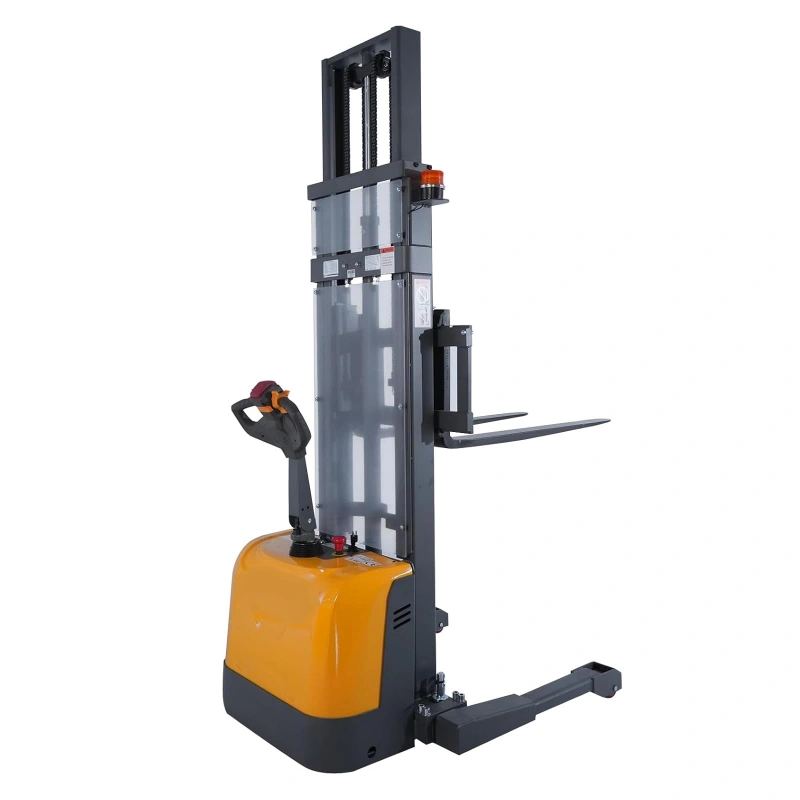
Electric Pallet Stacker
Powered travel and lifting for daily warehouse pallet handling, stacking and short-distance movement.
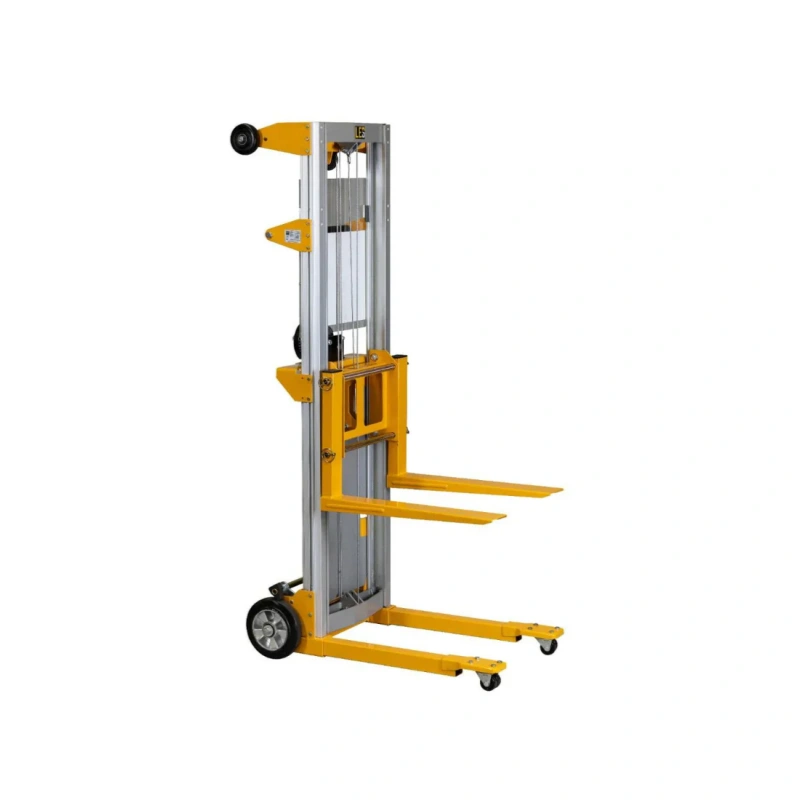
Cost-effective manual lifting for light-duty pallet stacking and occasional warehouse use.

Semi Electric Pallet Stacker
Electric lifting with manual travel for buyers who need easier vertical lifting without a full electric drive system.

Ride on Pallet Stacker
Operator platform design for higher throughput and longer travel distance in warehouse operations..

Straddle Pallet Stacker
Straddle-leg design for many open-bottom pallet applications and stable indoor stacking.

Counterbalance Pallet Stacker
Counterbalance design for applications where support legs cannot enter under the pallet or load.
Warehouse Applications
Receiving Area
Loading Area
Mezzanine Supply
Light Manufacturing
Small Warehouse
Distribution Center
NEED HELP WITH YOUR PALLET LIFT STACKER ORDER?
Let us help! Reach out today and get recommendations on materials and sizing from our experts.


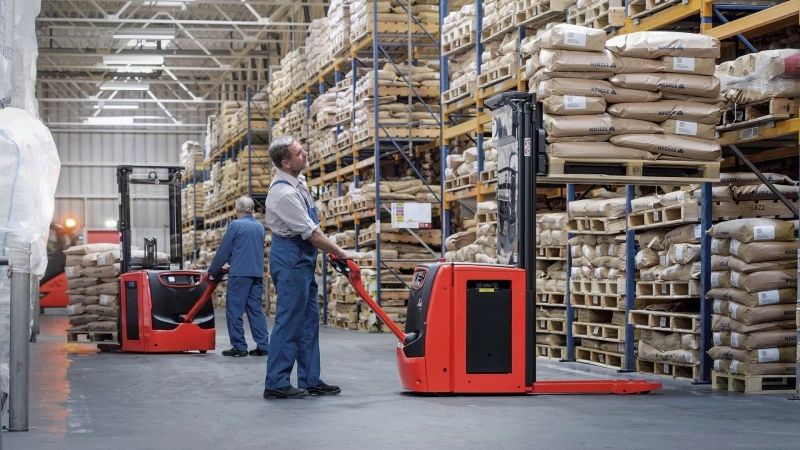
Guide to Pallets Stacker
Our guide to pallet stacker helps you understand pallet stacker types, applications, and selection tips so you can choose safe, reliable lifting euipments.
What is a Pallet Stacker?
A pallet stacker gives you controlled vertical lifting inside tight warehouse space without the size and cost of a forklift. You move pallets forward, raise them to racking height, and place them accurately with stable mast support. You can select manual, semi electric, or fully electric models based on daily pallet volume. When your operation focuses on indoor stacking under medium heights, a pallet stacker delivers reliable lifting with lower operating cost and simpler maintenance. If your project also includes floor-level pallet movement, work-height positioning or other handling tasks beyond stacking, review the broader material handling equipment range.
What Types of Pallet Stackers Are Available?
Common types include manual pallet stackers, semi-electric pallet stackers, electric walkie stackers, ride-on stackers, straddle stackers and counterbalance stackers. The right type depends on load weight, lift height, pallet design, aisle width and daily working frequency.
Pallet Stacker vs Forklift: What is the Real Difference?
When you choose warehouse equipment, you need to match lifting power, space requirements, budget, and operator skill with your daily workload. Understanding the differences between a pallet stacker and a forklift helps you invest in the right solution for your operation.
1. Work Environment
Forklift: Handles outdoor yards, loading docks, uneven ground, and rough surfaces.
Pallet Stacker: Works best in indoor warehouses with smooth, controlled floors and narrow aisles.
2. Lift Height and Load Capacity
Forklift: Lifts heavier loads and reaches higher racking levels, especially in demanding industrial settings.
Pallet Stacker: Manages moderate loads and stacking heights typically used in standard warehouse shelving.
3. Space Efficiency
Forklift: Requires wider aisles and more turning radius.
Pallet Stacker: Operates in tight aisles and compact storage layouts, helping you maximize warehouse space.
4. Investment and Operating Costs
Forklift: Requires higher upfront investment, licensing, fuel or battery systems, and ongoing maintenance budgets.
Pallet Stacker: Reduces equipment cost, lowers energy consumption, and simplifies maintenance.
5. Operator Training and Licensing
Forklift: Often requires certified operators and formal licensing depending on local regulations.
Pallet Stacker: Involves simpler controls and shorter training time for warehouse staff.
6. Application Focus
Forklift: Suits heavy-duty logistics, construction sites, and large-scale industrial operations.
Pallet Stacker: Covers most daily warehouse stacking tasks where extreme height or heavy outdoor work is not required.
Reach Truck vs Pallet Stacker: Which One Fits Your Warehouse?
When you select warehouse lifting equipment, you must evaluate lift height, aisle width, load weight, travel distance, operator skill level, and total investment cost. A reach truck and a pallet stacker serve different operational priorities. The right choice depends on your storage system and workflow intensity.
1. Lift Height Capability
Reach Truck: Handles high racking systems and lifts pallets to significant vertical heights in large warehouses.
Pallet Stacker: Supports moderate stacking heights commonly used in standard shelving systems.
If your warehouse uses very tall racking, a reach truck meets that vertical demand.
2. Load Capacity
Reach Truck: Manages heavier pallet loads and intensive material flow.
Pallet Stacker: Handles standard warehouse pallet weights efficiently.
If your operation moves extreme loads daily, the reach truck provides higher lifting strength.
3. Aisle Width and Space Efficiency
Reach Truck: Requires organized warehouse layout with sufficient maneuvering space.
Pallet Stacker: Operates smoothly in compact aisles and tight storage areas.
If your facility prioritizes maximum storage density, a pallet stacker helps you optimize floor space.
4. Fork Extension and Racking Access
Reach Truck: Extends forks forward into deep racking systems, allowing access without moving the chassis fully forward.
Pallet Stacker: Lifts and stacks pallets directly but does not provide deep reach extension.
Deep racking systems benefit from the forward reach mechanism.
5. Investment and Operating Cost
Reach Truck: Requires higher upfront investment, advanced battery systems, and skilled operator training.
Pallet Stacker: Reduces purchase cost, energy consumption, and maintenance complexity.
If you aim to control capital expenditure and operating cost, a pallet stacker offers stronger budget efficiency.
6. Operator Training and Complexity
Reach Truck: Demands trained operators due to higher lift height and advanced control systems.
7. Travel Distance Inside Facility
Reach Truck: Performs well across large facilities with long travel routes.
Pallet Stacker: Focuses on localized stacking and short-to-medium transport distances.
Large distribution centers may benefit from reach truck mobility.
Pallet Stacker: Features simpler controls and shorter training cycles.
Simplified operation improves workforce flexibility in daily warehouse handling.
If your warehouse depends on high racking, heavy loads, and extended travel routes, a reach truck delivers advanced vertical performance. If your layout prioritizes compact aisles, moderate stacking heights, lower equipment cost, and operational simplicity, a pallet stacker often provides greater value per square meter and stronger return on investment for structured warehouse environments.
Manual vs Electric Pallet Stacker: Which is Better?
Manual stackers can be cost-effective for light, occasional lifting. Electric stackers reduce operator effort and are better for frequent lifting, longer travel, heavier loads or multi-shift warehouse work.
Straddle vs Counterbalance Pallet Stacker: How Do They Differ?
A straddle stacker uses support legs around the pallet and is often suitable for open-bottom pallets. A counterbalance stacker does not need support legs under the pallet, so it can handle some closed-bottom pallets or applications where legs cannot enter.
What Pallet Stacker Parts Require Routine Attention?
Hydraulic cylinders, lifting chains, mast rollers, fork carriage bearings, drive wheels, brake components, and control switches require regular inspection. You should check oil level, chain tension, wheel wear pattern, and electrical wiring integrity. Early detection of wear prevents downtime and protects load stability.
How Do You Maintain Pallet Stacker Safety in Daily Use?
Safe electric pallet stacker operation depends on proper load control, stable travel conditions, and consistent maintenance. Below is a structured checklist to improve clarity, safety compliance, and SEO performance.
Electric Pallet Stacker Safe Operation Guidelines
Match Load Weight to Rated Capacity
Ensure the load weight aligns with the manufacturer’s rated capacity and specified load center distance.Fully Insert Forks Before Lifting
Position forks completely beneath the pallet to guarantee balanced lifting.Avoid Sharp Turns at Elevated Heights
Do not make sudden directional changes when the load is raised.Maintain Controlled Travel Speed
Operate at a steady, safe speed to preserve stability and braking efficiency.Monitor Floor Conditions
Keep surfaces level and free of debris, as floor condition directly impacts stability and stopping distance.Inspect Chains Regularly
Check lift chains for wear, elongation, or damage.Examine Hydraulic Systems
Look for leaks, pressure inconsistencies, and sealing performance issues.Test Braking Response
Confirm braking system reliability before each operation cycle.
Following these safe usage practices protects personnel, maintains rack structure integrity, and reduces operational risks during stacking cycles.
How Do You Choose the Right Lifting Height?
Selecting the correct lifting height for your electric pallet stacker directly impacts warehouse efficiency, structural safety, and investment cost. Before choosing a mast configuration, you need precise layout measurements and load evaluation. Below is a structured checklist for better SEO clarity and operational guidance.
Electric Pallet Stacker Lifting Height Considerations
Align Lifting Height with Rack Beam Levels
Ensure maximum lift height matches your rack beam positions.Confirm Ceiling Clearance
Verify overhead space to prevent contact with ceilings, sprinklers, or lighting systems.Measure Pallet Height
Account for pallet and load dimensions when calculating required lift height.Check Rack Spacing
Evaluate vertical beam spacing to determine accurate stacking levels.Maintain Safe Clearance Margin
Leave sufficient safety clearance above the load during elevation.Evaluate Mast Deflection at Height
Higher lifting heights increase mast deflection under load, requiring stronger structural rigidity.Avoid Excessive Height Selection
Selecting unnecessary lift height raises equipment cost and may reduce stability.
Accurate warehouse layout evaluation ensures balanced investment, controlled mast deflection, and safe stacking performance.
How to Choose a Pallet Stacker?
Choosing the right pallet stacker helps improve handling efficiency, reduce operator strain, and ensure safer storage and transport of palletized goods. For buyers, the most important factors are the weight of the loads, the required lifting height, and the type of pallets used in daily operations.
1. Choose by Load Capacity
Load capacity is one of the first specifications to confirm when selecting a pallet stacker. Buyers should evaluate the maximum weight of the goods handled in daily operations, including the weight of the pallet itself.
For example, if your warehouse regularly handles palletized loads of 800 kg, a pallet stacker with a rated capacity close to the actual working load may not provide enough operating margin in demanding conditions. In many applications, it is more practical to choose a model with a higher rated capacity, such as 1,000 kg or 1,200 kg, depending on load size, lifting height, and working frequency.
When choosing by load capacity, consider:
- The heaviest pallet load handled in normal operation
- Possible changes in product weight during peak seasons or future expansion
- Load stability, load center, and pallet dimensions
- The lifting height required for the load
- Daily working intensity and operating environment
A suitable safety margin is recommended. Loads may not always be evenly distributed, and capacity can be affected by factors such as lift height and load center. Buyers should avoid selecting a pallet stacker based only on average load weight. Instead, confirm the maximum load requirement and match it with the manufacturer’s rated capacity specifications.
For frequent warehouse use, selecting the right capacity helps reduce overload risk, improve equipment service life, and support more reliable material handling performance.
2. Choose by Lift Height
The required lift height depends on where and how the pallet stacker will be used. Buyers should compare the stacker’s lifting range with their racking height, storage layout, loading tasks, and vertical handling requirements.
For low-level pallet transfer or simple stacking, a lower lift height may be sufficient. For warehouses with multi-level racking, mezzanine storage, or elevated work platforms, a higher-lift pallet stacker may be required.
Before purchasing, check the following points:
- The height of the highest rack beam where pallets need to be placed
- The required clearance for safe pallet entry into the rack
- Whether the stacker will be used for truck loading or unloading
- Whether goods need to be lifted to mezzanine floors or production lines
- The available ceiling height and doorway clearance in the working area
For example, if pallets must be stored on racks at 3 meters, buyers should not select a stacker with a lift height that only reaches the rack level exactly. Extra lifting allowance may be needed for smooth placement and removal of pallets.
Lift height should also be considered together with the machine’s mast design and overall lowered height. A pallet stacker used inside containers, through low doors, or under limited ceilings may require a model that balances high lifting performance with suitable travel clearance.
Selecting the correct lift height ensures the pallet stacker can support both current storage needs and practical daily workflows without limiting warehouse efficiency.
3. Choose by Pallet Type
Pallet structure has a direct impact on pallet stacker compatibility. Not every pallet stacker is suitable for every pallet type, so buyers should confirm pallet specifications before selecting equipment.
Common pallet types include:
Open-Bottom Pallets
Open-bottom pallets are generally easier for standard pallet stackers to enter because the forks can move into the pallet openings with fewer restrictions. They are commonly used in warehouses and distribution operations.
Closed-Bottom Pallets
Closed-bottom pallets may limit fork entry depending on their base structure. Some models may require straddle legs, adjustable forks, or a different stacker design to handle them properly.
Single-Faced Pallets
Single-faced pallets usually have one usable deck side and may be compatible with many pallet stacker applications. However, buyers should still check the fork opening size and entry direction.
Double-Faced Pallets
Double-faced pallets can have additional bottom boards or structural features that affect fork insertion. Compatibility should be verified carefully, especially when using stackers with support legs.
Special Pallets
Custom pallets, oversized pallets, plastic pallets, non-standard export pallets, and pallets with unusual openings may require special fork dimensions or customized equipment configurations.
Before purchasing a pallet stacker, buyers should confirm:
- Pallet length and width
- Fork length and fork width
- Inside distance between forks or support legs
- Pallet entry direction, such as two-way or four-way entry
- Bottom structure and clearance of the pallet
- Compatibility with standard or non-standard pallet sizes
For example, a pallet stacker designed for standard open-bottom pallets may not work efficiently with a closed-bottom pallet if the support legs cannot enter the pallet structure. Confirming compatibility in advance helps avoid handling problems after delivery.
For the best selection result, buyers should provide the pallet dimensions, pallet photos or drawings, load weight, and working requirements to the manufacturer. This allows the supplier to recommend a pallet stacker that matches the actual application rather than only the basic specification sheet.
What Information is Needed for a Quotation?
For an accurate quotation, provide capacity, lift height, pallet size, fork size, aisle width, power preference, quantity, destination country and any OEM requirements such as color, branding, battery or packaging.
Can Pallet Stackers Be Customized?
Many pallet stackers can be customized after engineering confirmation. Common options may include fork length, fork width, color, branding, battery configuration, charger type, packaging and documentation requirements.
Is a Pallet Stacker Suitable for Every Pallet?
No. Pallet compatibility depends on pallet structure, opening direction, bottom design, load dimensions and stacker leg/fork configuration. Share pallet photos or drawings before ordering to confirm the correct model type.
Have More Questions of Pallet Stacker?
Have more questions about a pallet stacker? Ask us about pallet stacker capacity, lifting height, battery options, safety features, or maintenance. We help you choose the right pallet stacker for your warehouse and workload. Contact us for clear answers and practical advice.