A chain binder serves as a tool for binding loads and keeping heavy-duty loads secure. You use a chain binder to tighten a tie-down chain after attaching the chain to your cargo. Chain binders deliver the tension needed for cargo securement, which helps you comply with cargo securement rules on the road.
Chain binders are most effective when transporting heavy machinery or equipment. Regular inspection and maintenance keep your binder reliable. When you follow a step-by-step guide, you ensure proper operation and safety.
Key Takeaways
A chain binder secures heavy cargo during transport by applying tension to tie-down chains, preventing shifting or falling.
Choose between ratchet and lever chain binders based on your needs: ratchet binders offer safety and control, while lever binders provide speed.
Always check the working load limit (WLL) of your chain and binder to ensure safe transport and compliance with regulations.
Regularly inspect and maintain your chain binders to extend their life and ensure safe operation during every haul.
Proper storage and cleaning of chain binders and chains prevent rust and damage, keeping your equipment ready for use.
Chain Binder Overview
What is a Chain Binder?
A chain binder is a mechanical device you use to tighten chains that hold heavy cargo in place during transport. You often see chain binders on flatbed trucks, trailers, and industrial vehicles. They play a key role in cargo securing equipment, making sure your load stays stable and safe on the road.
When you ask, “How do chain binders work?” you find that they use leverage or a ratcheting mechanism to apply tension to the chain. This tension keeps your cargo from shifting or falling during transport.
There are two main types of chain binders: ratchet chain binders and lever chain binders. Each type offers unique features for different transport needs. The table below highlights the differences between these two types of chain binders:
Feature | Ratchet Binders | Lever Binders |
|---|---|---|
Safety | Increased safety due to the locking mechanism | Higher risk of injury due to the potential snap back |
Efficiency | Slower to use, allows precise adjustments | Fast operation requires more physical strength |
User Preference | Favored for long-distance transport and safety | Preferred for quick load securing in short-haul |
Physical Effort | Requires less physical effort | Requires more physical strength |
Control | Better control for securing sensitive loads | Less control over tension adjustments |
Weight | Heavier and bulkier | Lightweight and compact |
Key Advantages of Chain Binders
You gain several advantages of using chain binders for cargo securement compared to other cargo securing equipment, like straps or ropes. Here are some key benefits:
Chain binders offer superior strength and weight capacity, making them ideal for heavy-duty transport.
They remain durable in harsh conditions, so you can rely on them for long hauls.
You can use chain binders to secure irregularly shaped loads that other devices cannot handle.
Their longevity and potential for reuse make them a cost-effective choice for frequent transport needs.
Chain binders also help you meet working load limits, which are critical for safe and legal transport. By choosing the right ratchet binder or lever chain binders, you ensure your cargo stays secure and compliant with regulations.
Modern innovations in chain binders, such as corrosion-resistant coatings and smart load sensors, further improve safety and efficiency in cargo securement. When you select chain binders with proper working load limits, you protect your cargo and maintain the highest standards in transport.
Types of Chain Binders
When you secure heavy loads for transport, you need to choose the right load binder for your application. The two main types are ratchet chain binders and lever chain binders. Each type offers unique features for securing heavy loads with a transport chain.
Ratchet Chain Binders
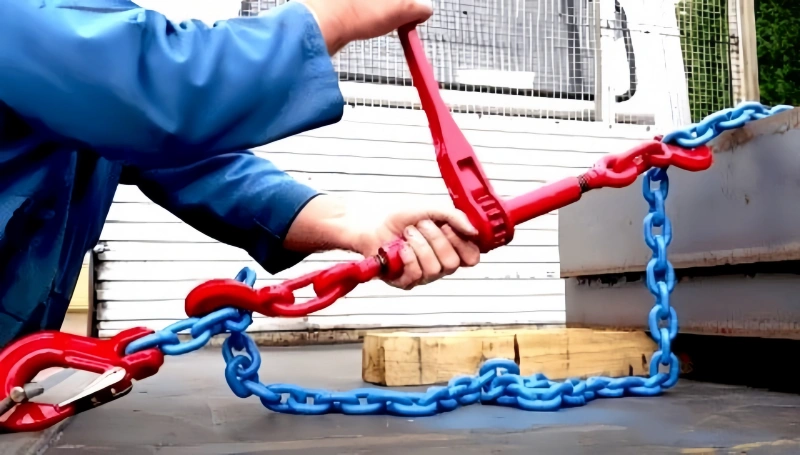
A ratchet binder uses a ratcheting mechanism to tighten your transport chain. You turn the handle back and forth to apply steady tension. This design gives you precise control over the tension and reduces the risk of sudden release.
You can use a ratchet binder for securing heavy loads that require careful adjustment and maximum safety.
Tip: Ratchet chain binders provide safer operation because they have a low recoil risk. You do not need to use as much physical strength, which makes them ideal for long hauls or frequent use.
You will find that Powerful Machinery offers a full range of ratchet binders that meet DOT and international standards. These load binders feature forged, heat-treated hooks and durable finishes for reliable performance. You can use them with different grades of transport chain, including G70, G43, and G80.
Lever Chain Binders
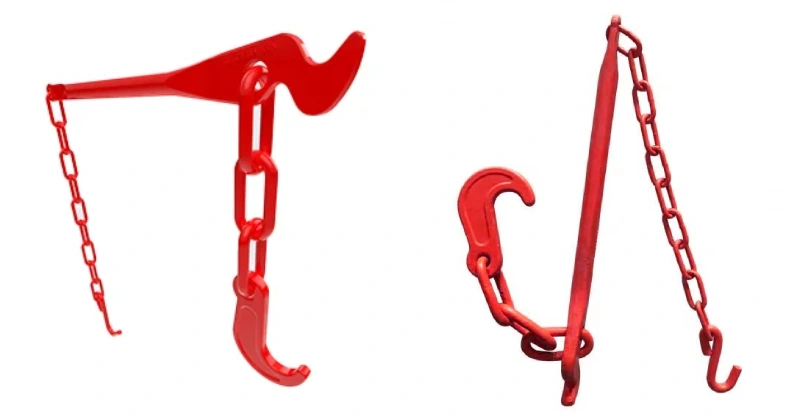
A lever chain binder uses a simple lever and tensioning screw to tighten your transport chain. You pull the handle to apply tension quickly. This method works well when you need to secure heavy loads in less time.
However, lever binders require more physical strength and can pose a kickback hazard if not handled carefully.
Note: Lever binders allow for faster operation but have a higher risk of recoil. You must use caution and proper technique to avoid injury.
Powerful Machinery’s lever load binders are built for durability and speed. They are easy to maintain and work well for short-haul jobs or when you need to secure heavy loads quickly. All load binders from Powerful Machinery comply with the North American Cargo Securement Standard and are proof-tested for safety.
Comparison Table
Feature | Lever Binder | Ratchet Binder |
|---|---|---|
Operation | Quick lever action | Gradual ratcheting |
Speed | Faster to apply | Slower but precise |
Safety | Higher recoil risk | Low recoil risk |
Effort | High physical strength | Less effort required |
Maintenance | Minimal, fewer parts | May need lubrication |
Best Use | Speed, lighter loads | Precision, heavy loads |
When you select a load binder, always check the load limits and make sure your transport chain and binder match your cargo weight. Powerful Machinery provides expert support to help you choose the right load binder for securing heavy loads in any environment.
How Do Chain Binders Work?
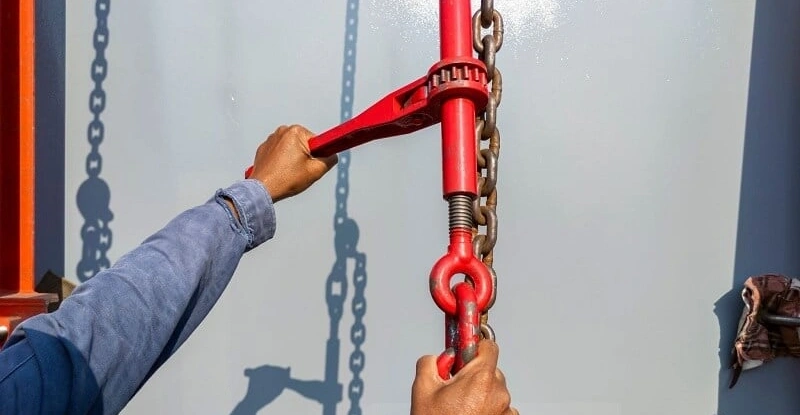
Mechanism and Operation
You use a chain binder to create tension in a transport chain, which holds your cargo securely in place. The binder acts as a mechanical lever or ratchet, depending on the type you select.
Powerful Machinery’s chain binders feature forged, heat-treated hooks and durable finishes, which help you achieve reliable performance in demanding environments.
To operate a chain binder safely and efficiently, follow these steps:
Position your cargo so it sits stable on the trailer or truck bed.
Attach chains over or through anchor points, making sure you avoid sharp edges that could damage the chain.
Select the appropriate binder—ratchet or lever—based on your load and preference.
Tighten the chains with the binder until they are taut, but do not overstress them. You want the chain secure, not strained.
Recheck your tie-downs at regular intervals during transport to ensure everything remains secure.
Tip: Always check the working load limit (WLL) marked on your binder and chain. This ensures you do not exceed the safe force recommended by the manufacturer.
Powerful Machinery’s chain binders comply with DOT and international standards, which means you can trust them for safe and legal cargo securement. Their ratchet binders allow for precise tensioning, while lever binders offer quick operation for time-sensitive jobs.
Typical Applications
You find chain binders in many industries that require secure transport of heavy loads. In trucking, you use chain binders to tighten chains over large equipment, steel beams, or construction materials. These binders help you reduce slack and keep your cargo stable throughout the journey.
In shipping, chain binders secure containers and machinery on flatbeds or industrial trailers. You rely on their strength and versatility to handle different grades of chains and various load requirements. Powerful Machinery’s binders work well with G70, G43, and G80 chains, giving you flexibility for different cargo types.
On construction sites, you use chain binders to hold down tracked equipment like bulldozers or excavators. The binder pulls the chain tight across the load, minimizing movement and preventing accidents.
You benefit from the simplified tightening and releasing process, which saves you time and effort when securing or unloading materials.
Note: Chain binders are invaluable for securing irregularly shaped items and heavy machinery. Their robust design and easy operation make them a preferred choice for professionals in transport, shipping, and construction.
Compliance with DOT and Industry Standards
You must follow regulations when securing cargo with chain binders. The Department of Transportation (DOT) and other industry bodies set rules to ensure safety and reliability. The table below summarizes key aspects of these regulations:
Regulation Aspect | Description |
|---|---|
Securement systems | Vehicle parts that restrain movement, such as headboards, bulkheads, and anchor points. |
Securing devices | Tools that hold cargo in place, including chains, ropes, webbing, and binders. |
Tie downs | Combinations of securing devices that attach and restrain cargo to the trailer bed. |
Working load limit (WLL) | The maximum safe force for any component, as determined by the manufacturer. |
Powerful Machinery’s chain binders meet or exceed these standards, giving you confidence in every haul. You protect your cargo, comply with legal requirements, and maintain safety for yourself and others on the road.
Selecting the Right Chain Binder
Binder Chain Grades and Sizing
You must understand chain grades before you select a binder. Chain grade affects strength, durability, and application. Each grade serves a different purpose in cargo securement.
Grade 70 chains are the transport standard. They offer about 20% more strength than Grade 43 chains and resist wear due to heat treatment.
Grade 80, 100, and 120 chains provide even higher strength. Grade 100 is 25% stronger than Grade 80, and Grade 120 is 50% stronger.
Higher grades resist bending and breaking. They also handle fatigue and abrasion better.
Never substitute a lower-grade chain for transport. Always match the binder and chain grade.
You must select the right chain size for your cargo. Consider the weight, shape, and environment. The binder must fit the chain diameter and meet the load requirements.
Working Load Limit (WLL)
Working Load Limit (WLL) is the maximum load your chain or binder can safely handle. You must never exceed this limit. Exceeding WLL can cause equipment failure and serious accidents.
Always check the WLL markings on your chain and binder.
The combined WLL of all chains must be at least 50% of your cargo’s total weight.
Smart operators choose equipment that exceeds the minimum for extra safety.
Chain Grade | WLL (3/8″) | WLL (1/2″) | Best Applications | Key Characteristics |
|---|---|---|---|---|
Grade 70 | 6,600 lbs | 11,300 lbs | Heavy equipment, machinery | Gold chromate, high visibility |
Grade 80 | 7,100 lbs | 12,000 lbs | Overhead lifting, severe duty | Superior fatigue resistance |
Grade 100 | 8,800 lbs | 15,000 lbs | Ultra-heavy, premium transport | Highest WLL, compact design |
Grade 43 | 5,400 lbs | 9,200 lbs | Light-duty, general towing | Not for heavy transport |
Grade 30 | 2,650 lbs | 4,500 lbs | Non-transport applications | Never use for cargo securement |
Choosing for Your Application
You must match your binder, chain, and cargo for safe transport. Consider these factors:
Load capacity: The binder and chain must meet or exceed your cargo’s weight.
Chain grade: Use the correct grade for your application. Higher grades offer more strength.
Binder type: Choose ratchet binders for control and safety. Select lever binders for speed.
Hardware compatibility: Hooks, binders, and chains must match in grade and size.
Markings: Only use chains and binders with visible grade and WLL markings.
Powerful Machinery offers certified load binders and expert support. Their products meet or exceed international safety standards, giving you confidence in every haul.
Certified Product | Description |
|---|---|
Load Binders | Meet or exceed major international safety standards for reliable performance |
Equipment Selection | Expert tips for choosing the right securement equipment |
Trusted Provider | Powerful Machinery ensures maximum reliability and safety for your cargo |
You protect your cargo and reputation when you choose the right chain binder for your job.
Safe Use and Maintenance
Step-by-Step Usage Guide
You ensure safe cargo securement by following a clear process every time you use a chain binder. Here is a straightforward guide:
Drape and Hook: Run the chain from the trailer to the load and back, keeping it taut but leaving enough slack for the binder.
Set the Binder: Place the binder on the chain between the cargo and trailer. Attach the hooks to separate links without forcing them.
Achieve Tension: Use the ratchet or lever to remove slack and secure the load. Keep your hands clear before the final tightening.
Final Safety Check: Inspect all chains and binders for tightness. Perform a tug test to confirm the load does not move.
Tip: Always use binders and chains that match your cargo’s weight and chain grade. Powerful Machinery’s products are marked for easy identification and compliance.
Safety Tips and Best Practices
You reduce risk and prevent accidents by following industry best practices:
Position chains to maximize restraint and protect your cargo from damage.
Make sure chains are tight but not over-tensioned. Check them regularly during transit.
Wear gloves and safety glasses to protect your hands and eyes.
Avoid using “cheater bars” for extra leverage. Only use tools designed for your binder.
Stay clear of the lever’s arc and release tension slowly to prevent snapback.
Inspect binders and chains before each use for cracks, deformation, or rust.
Note: Improper cargo securement causes over 30% of transport incidents. Regular inspection and correct use help you avoid costly accidents.
Chain Binder Storage
Proper storage extends the life of your chain binders and keeps them ready for use:
Clean binders and chains after each use to remove dirt and debris.
Store everything in a dry, cool place to prevent rust and corrosion.
Use racks or hangers to keep chains organized and untangled.
Lubricate moving parts regularly for smooth operation.
Inspect for damage or rust before every trip and replace any worn components.
Damage Type | Description | Required Action |
|---|---|---|
Stretched or Bent Links | Links elongated or bent from overload | Replace the chain immediately |
Cracks and Gouges | Cracks or deep marks at stress points | Replace the chain immediately |
Hook and Connector Damage | Deformation or latch malfunction in hooks/connectors | Replace the damaged part immediately |
Powerful Machinery’s durable construction and expert support help you maintain safe, reliable equipment for every haul.
Conclusion
Choosing the right chain binder protects your cargo and keeps your team safe. Certified, high-quality binders that meet standards like NACM 2014 and ASTM A413 help you avoid costly accidents and legal issues. You should always:
Inspect chains and binders for damage before use.
Match the working load limit and chain grade to your cargo.
Consult experts for specialized transport needs.
Regular inspection and proper storage extend the life of your equipment and support safe, reliable transport every time.
FAQ
What is the difference between a load binder and a chain binder?
You use both terms interchangeably. A chain binder refers to the tool that tightens chains over cargo. A load binder describes the same device. Both secure heavy loads during transport.
How do you know which size chain binder to use?
You match the binder to your chain’s diameter and your cargo’s weight. Always check the working load limit (WLL) stamped on the binder. Choose a binder that meets or exceeds your load requirements.
Can you use a chain binder in all weather conditions?
You can use Powerful Machinery’s chain binders in rain, snow, or heat. Their corrosion-resistant coatings protect against rust and wear. Always inspect your equipment before use for maximum safety.
How often should you inspect your chain binders?
You should inspect your chain binders before every trip. Look for cracks, bent parts, or rust. Replace damaged components immediately. Regular checks keep your cargo secure and your team safe.
What safety gear should you wear when using chain binders?
You should wear gloves and safety glasses. These protect your hands and eyes from injury. > Tip: Always stand clear of the binder’s handle when applying or releasing tension.