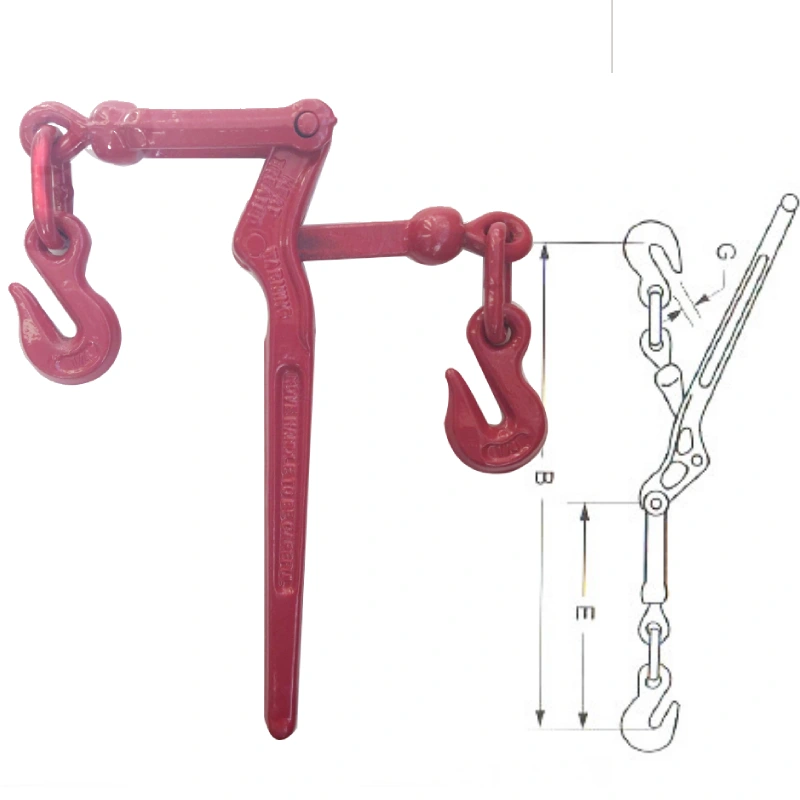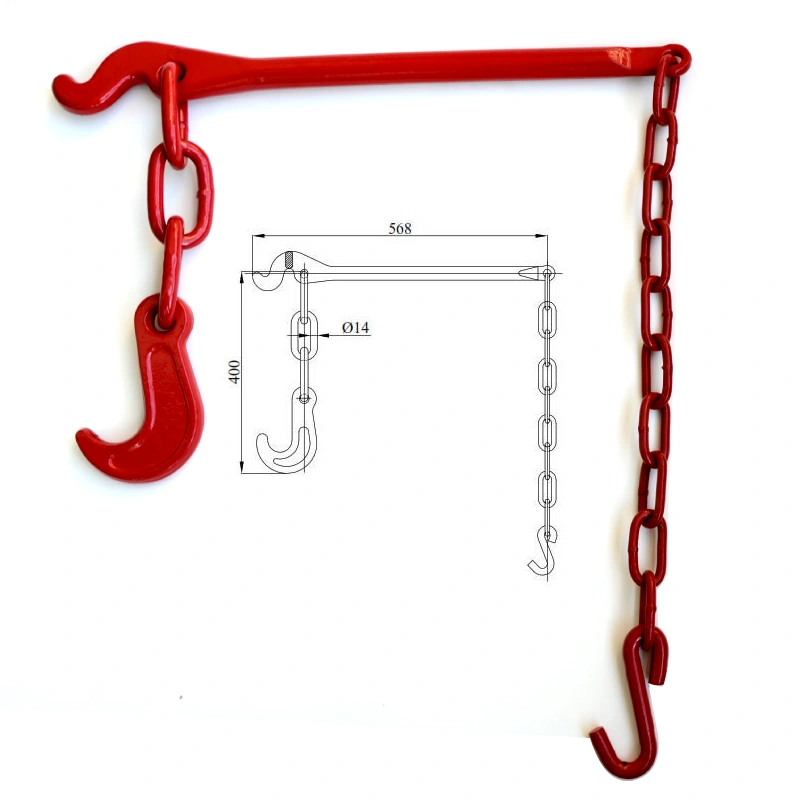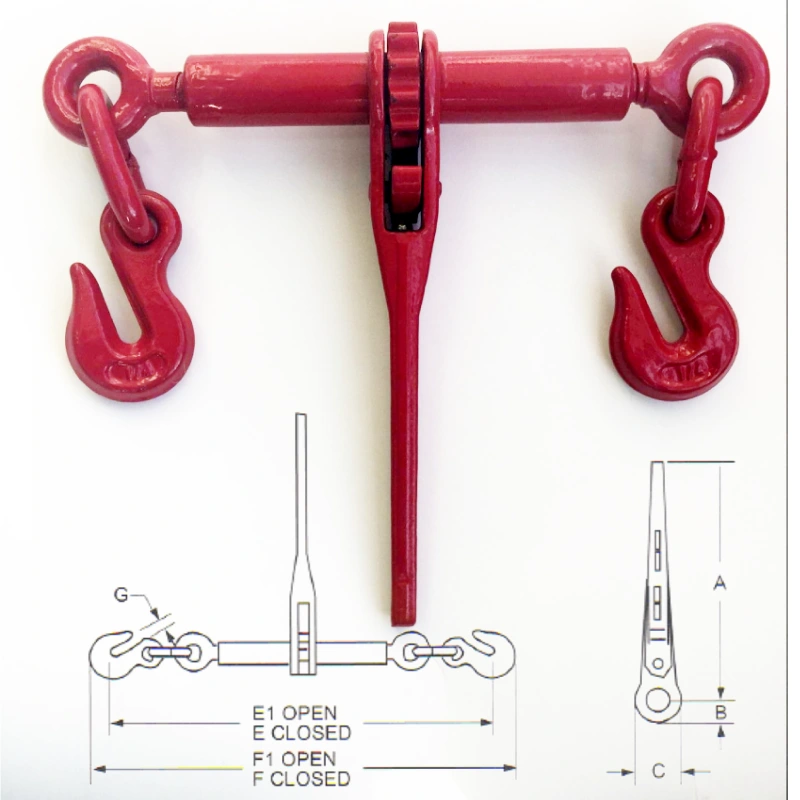
Source ratchet and lever load binders for transport-chain cargo securement, fleet replenishment, wholesale programs and industrial projects. Powerful Machinery supplies standard L-140 ratchet and L-150 lever models across chain-size ranges from 1/4–5/16 in. through 1/2–5/8 in., plus a C-hook and chain lashing assembly for application-specific orders.
To receive a practical recommendation, send the binder type, chain diameter and grade, required working load limit (WLL), quantity and destination market. We can then confirm the suitable model, hook arrangement, finish, markings, packaging and documentation before quotation. Every selection should be checked as part of the complete tiedown system; the lowest-rated component determines the usable system WLL.
Need private markings, custom packaging or repeat bulk supply? Review our capabilities as a chain binder manufacturer, including manufacturing and sourcing support, before sending your specification.
Both styles tension rated transport chain, but they feel different in use. Ratchet binders build tension through repeated handle strokes, giving the operator progressive adjustment and generally storing less energy in the handle.
Lever binders close through an over-center action, so they are fast and mechanically simple, but they need more handle clearance and careful release technique. Choose the operating style first, then confirm the exact chain size, grade, WLL, take-up and hook fit for the model.
A ratchet load binder is best when controlled adjustment is the priority. The ratcheting mechanism takes up chain in small increments, making it easier to fine-tune tension around machinery, steel, construction materials and other heavy cargo. It has more moving parts than a lever binder, so threads, pawl and pivots need routine inspection and lubrication. Allow enough room for repeated handle movement and select by the published model rating—not by appearance.
A lever load binder is best when speed and a simple mechanism are the main priorities and trained operators have adequate working clearance. A lever binder removes slack with a single over-center movement. Because the handle can store energy, operators must follow the model instructions, keep a stable position and control the release path. Never improvise with an unauthorized handle extension or cheater bar.
Start with the three product families below. For each quotation, confirm chain size and grade, required WLL, take-up, hook geometry, quantity, finish, markings, packaging and destination. Product-page values must be rechecked against the final drawing or approved quotation before production or use.
Tell us the binder type, chain size and grade, required WLL, quantity, finish, markings, packaging and destination. Our team will review the specification and return a model recommendation with a commercial quotation.
A controlled, incremental tensioning option for transport chain. The published range covers 1/4–5/16 in. through 1/2–5/8 in. chain-size groups, with listed WLLs from 2,200 to 13,000 lb. Specify the chain grade, take-up, hook fit and working clearance so the selected model suits the complete tiedown assembly.
A C-hook chain load binder is a lever-operated lashing assembly for jobs that require this hook-and-chain configuration. State the chain diameter and grade, assembly length, required WLL, C-hook geometry, connection points and destination market. Because this is an assembly-level choice, final capacity depends on the approved components and configuration.
A fast, mechanically simple lever-action binder for transport-chain tensioning. The published range covers 1/4–5/16 in. through 1/2–5/8 in. chain-size groups, with listed WLLs from 2,200 to 13,000 lb. Confirm the model rating, handle clearance, take-up and release procedure before selection.
A useful request tells us how the binder will be used and what it must match. Include the binder style or model, chain diameter and grade, required binder WLL, take-up or dimensional limits, hook or end-fitting requirements, quantity, finish, markings, packaging, delivery destination and any required standard, certificate or test document. If the current chain or binder is being replaced, attach clear photos of the markings and connection points. Our team will review the inputs, identify missing details and return a model recommendation with a commercial quotation.
| Specification | What to Provide |
|---|---|
| Binder Type / Model | Ratchet binder, lever binder, C-hook assembly, replacement match, or “recommend a model”. |
| Chain Specification | Chain diameter, grade, WLL, identification or applicable standard. |
| Performance & Dimensions | Required binder WLL, take-up range, open/closed dimensions, handle-clearance limits and hook geometry. |
| Commercial Requirements | Quantity, destination, delivery date, finish, private markings, packaging and required documents. |
| Replacement Matching | Photos of existing binder markings, hooks and connection points if replacing an existing product. |
A useful request tells us how the binder will be used and what it must match. Include the binder style or model, chain diameter and grade, required binder WLL, take-up or dimensional limits, hook or end-fitting requirements, quantity, finish, markings, packaging, delivery destination and any required standard, certificate or test document. If the current chain or binder is being replaced, attach clear photos of the markings and connection points. Our team will review the inputs, identify missing details and return a model recommendation with a commercial quotation.
| Chain Size | L-140 Ratchet WLL (lb) | L-150 Lever WLL (lb) |
|---|---|---|
| 1/4–5/16 in. | 2,200 | 2,200 |
| 5/16–3/8 in. | 6,600 | 5,400 |
| 3/8–1/2 in. | 9,200 | 9,200 |
| 1/2–5/8 in. | 13,000 | 13,000 |
Specification note: The values shown are the specifications currently published for Powerful Machinery’s L-140 and L-150 pages. Verify the final model, chain grade, hook fit, take-up, markings and complete securement design before use. Never increase system capacity by assuming the highest component rating applies.
A good binder choice starts with the tiedown system, not the handle style. Work through the checks below and record the details in your RFQ. If any rating, marking or connection is unclear, stop and verify it with the equipment supplier or a qualified cargo-securement professional.
Read the chain markings and documentation. A binder hook must fit the link correctly, and the binder’s rated range must include the chain being used. If the grade or WLL cannot be identified, do not guess from link size or color.
The chain, binder, hooks, connectors and vehicle anchor points work as one system. The usable WLL is no higher than the lowest-rated component or attachment point. Also confirm the aggregate WLL and number of tiedowns required for the cargo, route and jurisdiction.
Choose a ratchet binder for progressive take-up and controlled adjustment. Choose a lever binder when quick operation and fewer moving parts fit the job, operator training and site policy. The comparison does not replace the manufacturer’s instructions for the exact model.
Measure how much slack must be removed and how much space is available around the load, trailer edge and nearby equipment. Compare take-up, handle length, open and closed dimensions, and the path the handle follows during tightening and release.
Hooks should seat as designed without side loading, forced engagement or interference with adjacent links. Keep the binder aligned with the chain pull and follow the approved connection method. A hook that can be pushed into a link is not proof that the combination is compatible.
Tell the supplier where the equipment will be used and which markings, certificates, test reports or traceability records are required. Before each use, inspect the binder for damage or deformation and keep ratchet threads, pawls and pivot points maintained in line with the manufacturer’s instructions.
Match chain diameter and grade to the binder’s rated range, WLL, take-up and hook fit.
Compare lever binders vs ratchet binders for tension control, speed, handle movement, stored energy, maintenance and working clearance.
For guidance on how to use a load binder, review pre-use checks, attachment, tensioning, rechecking, release and storage basics.
For guidance on how to use a ratchet chain binder, follow a ratchet-specific sequence for positioning, controlled take-up and release.
If you are asking “are lever binders illegal?”, review why lever-binder requirements can vary and what to verify before use.
Review transport-chain sizes, ratings and specification points for binder matching.
For guidance on how to loosen a ratchet chain binder, plan a controlled release and keep clear of the chain and handle path.
Powerful Machinery supports distributors, importers, fleet suppliers and industrial buyers with OEM chain binder manufacturing and repeatable specifications for bulk orders. Depending on the model and order requirements, we can discuss private markings, finish color, packaging, traceability and supporting test documents before production.
For a faster quotation, send:
• Binder type and model
• Chain diameter, grade and WLL
• Required binder WLL and take-up
• Quantity and delivery destination
• Finish, marking and packaging requirements
• Required standard, certificate or test document
Load binders are selected with rated transport chain, not as standalone capacity upgrades. Grade 70 transport chain is widely used for road cargo securement, but the binder must be approved for the exact chain diameter, grade and link geometry. Compare the WLL of the chain, binder, end fittings and anchor points, then use the lowest value when evaluating the tiedown. Do not substitute lifting chain or an unidentified chain simply because the hook appears to fit.
Load binders are used with rated transport chain to restrain machinery, steel products, construction materials, agricultural equipment and other heavy cargo on trucks, trailers and transport platforms. They are cargo-securement devices, not overhead lifting devices. Use equipment designed and rated for lifting when a load must be hoisted or suspended.
In cargo securement, the terms usually describe the same tool: a mechanical device used to tension transport chain. “Ratchet binder” and “lever binder” describe the operating mechanism.
Match the binder to the chain diameter and grade, then confirm that its WLL, hook fit, take-up and dimensions suit the complete securement plan. Do not choose from cargo weight or chain diameter alone.
Neither type is best for every job. Ratchet binders give progressive tensioning and controlled adjustment. Lever binders are fast and mechanically simple but require more handle clearance and careful release technique. Choose according to the load, working space, operator training and site policy.
The system WLL is limited by the lowest-rated chain, binder, connector or attachment point in the load path. In the United States, the complete arrangement must also meet the applicable aggregate-WLL, tiedown-count and commodity-specific rules.
Yes, selected models can be quoted with custom markings, finishes and packaging. Send the target model, chain specification, WLL, quantity, destination market and documentation requirements so feasibility can be confirmed before production.
Selected models can be quoted with private markings, finish and packaging options. Send the model, chain specification, WLL, quantity, destination market and documentation requirements so availability and minimum order quantity can be confirmed.
After downloading the product catalogue, our dedicated technical experts will provide you with one-on-one service.