Wire rope certification confirms that your equipment meets strict quality and safety standards. In industries like construction, marine, and transportation, you rely on certified products such as Steel Wire Rope and Galvanized Steel Wire Rope from Powerful Machinery to ensure safe and efficient operations.
Certification protects you legally and helps prevent accidents on the job. You must keep proper documentation and follow international standards like ISO 2408:2017, which covers manufacturing and testing, or IS 2365:2018 for technical requirements.
Meeting these standards keeps your projects compliant and your team safe.
Key Takeaways
Wire rope certification ensures your equipment meets safety and quality standards, protecting your team and assets.
Regular inspections and proper documentation are crucial for compliance and safety; keep records up to date.
Choose certified wire ropes based on load capacity and environmental conditions to prevent accidents and failures.
Understanding minimum breaking strength and working load limits helps you select the right wire rope for your projects.
Maintaining compliance with international standards reduces legal risks and enhances operational reliability.
Wire Rope Certification Overview
What Is Wire Rope Certification?
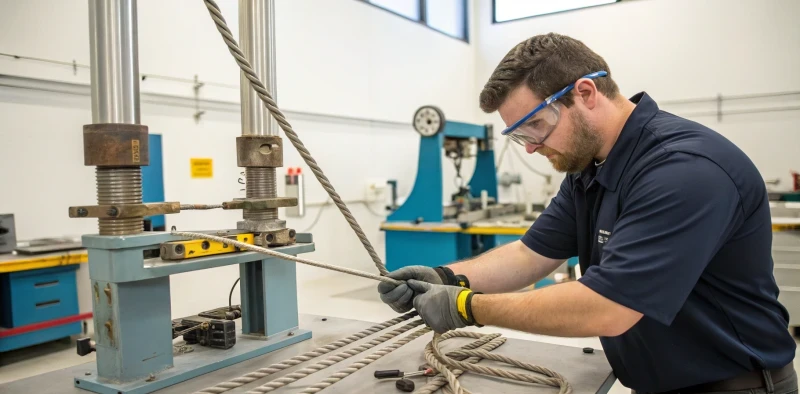
Wire rope certification verifies that your wire ropes meet strict standards for strength and reliability. Industry standards require each batch of wire rope to be graded at a specified Minimum Breaking Strength.
You receive a Mill Certificate with every batch, which documents these specifications and confirms compliance with international or factory standards. This process ensures that your equipment performs safely under demanding conditions.
Powerful Machinery stands out as a trusted provider of certified wire rope solutions. You benefit from their commitment to quality, as every Steel Wire Rope and Galvanized Steel Wire Rope undergoes rigorous testing and certification.
Their products consistently meet or exceed global safety requirements, giving you confidence in every lift and rigging operation.
Why Certification Matters?
Wire rope certification plays a vital role in your daily operations. You rely on certified wire ropes to protect your team and assets. Certification guarantees that your equipment can handle the loads and stresses of construction, marine, and transportation projects.
You avoid unexpected failures and reduce downtime by choosing certified products.
Regular inspections help you identify defects and damage before they become serious problems.
Neglecting inspections can result in accidents, injuries, and costly legal issues.
Routine maintenance and certification keep your wire rope assets safe and compliant.
Legal and Safety Aspects
You must follow legal requirements and safety standards when using wire ropes. Certification helps you meet regulations set by organizations such as ISO and OSHA. You protect your business from liability by maintaining proper documentation and using certified wire ropes.
Powerful Machinery supports your compliance efforts by providing products that meet international standards and by supplying all necessary certificates for traceability.
Tip: Always keep your wire rope certificates and inspection records up to date. This practice ensures you stay compliant and ready for audits or inspections.
Certification Requirements and Documentation
Minimum Breaking Strength Standards
You must verify that every wire rope meets strict minimum breaking strength standards before use. These standards ensure that your equipment can handle the required loads safely. International organizations such as ISO and ASTM set clear guidelines for breaking strength.
The minimum breaking tension depends on the rope’s nominal diameter and tensile strength, or sometimes the manufacturer’s specification.
Here is a table summarizing key standards for minimum breaking strength:
Standard | Description |
|---|---|
ISO 10425:2023 | Specifies minimum requirements for steel wire ropes in the petroleum and natural gas industries. |
ISO 2408 | Lists wire rope grades (1570, 1770, 1960, 2160) and ensures compliance with safety and performance guidelines. |
ASTM | Related standards that ensure wire rope grades meet strict safety and performance guidelines. |
Powerful Machinery’s Steel Wire Rope and Galvanized Steel Wire Rope are engineered to meet or exceed these standards. You can trust these products for demanding lifting, rigging, and marine applications.
Testing methods for breaking strength include destructive testing, which pulls the rope until it fails, and proof load testing, which checks performance under load without damaging the rope. Both methods confirm that your wire rope meets certification requirements.
Testing Method | Description |
|---|---|
Destructive Testing | Determines the actual breaking strength by pulling the rope until it fails. |
Proof Load Testing | A non-destructive test that verifies performance under load without exceeding the elastic limit. |
Mill Certificates and Traceability
You must request a mill certificate for every batch of wire rope. This document proves that your wire rope meets all required specifications and standards. Mill certificates include:
Manufacturer’s name, address, and contact information
Product specifications, standards, heat number, and quantity
Chemical composition analysis
Mechanical properties testing results
Additional testing results, such as hardness or impact testing
Traceability is essential for product safety and compliance. You should maintain detailed records of the manufacturing process, including certifications and inspection reports. Reviewing mill certificates and inspection reports verifies wire rope strength and quality.
This practice ensures that your equipment meets OSHA and ASME standards.
Note: Accurate traceability helps you confirm that every wire rope in your inventory meets industry specifications and safety requirements.
International and Factory Standards
Wire rope certification relies on compliance with international and factory standards. You must reference standards such as ISO 2408, ASTM A1023/A1023M, and EN 12385 when selecting wire ropes for your projects.
These standards cover design, manufacturing, and testing requirements for wire ropes used in construction, transportation, and marine industries.
ISO 2408: Provides a comprehensive framework for the design, manufacture, and testing of wire ropes.
ASTM A1023/A1023M: Specifies requirements for zinc-coated steel wire ropes, including chemical composition and mechanical properties.
EN 12385: Sets safety requirements for steel wire ropes in Europe.
Powerful Machinery manufactures Steel Wire Rope and Galvanized Steel Wire Rope to meet these international standards. You can rely on their products for consistent quality and safety across all applications.
Record Keeping Practices
You must keep thorough records of wire rope inspections and certifications. ASME B30.9 standards require documentation of periodic inspections for wire rope slings. Employers should maintain a record of the latest thorough inspection. Failing to keep these records can lead to compliance issues with OSHA regulations.
Proper load test documentation should include:
Manufacturer’s information
Rope type and construction
Diameter and length
Test type and procedure
Proof load or breaking load achieved
Pass/fail results
Date and location of the test
Signatures of inspectors or certifying bodies
Tip: Consistent record keeping supports compliance, improves safety, and helps you prepare for audits or inspections.
Wire rope certification depends on your commitment to documentation and adherence to standards. By choosing certified products from Powerful Machinery and maintaining accurate records, you ensure safety and reliability in every project.
Wire Rope Certificate Components
Breaking Load
You must understand the breaking load when reviewing a wire rope certificate. This value shows the force at which the wire rope will fail during a controlled test. The certificate uses the minimum breaking strength (MBS) to help you determine the working load limit (WLL) for safe operations.
You calculate the WLL by dividing the MBS by a safety factor, usually 5:1 for general-purpose slings.
The working load limit comes from the minimum breaking strength.
The minimum breaking strength shows the failure point in a test.
You use a safety factor to set a safe working load.
The certificate also documents how the breaking load is measured and defined. Here is a quick reference:
Term | Definition |
|---|---|
Working Load Limit | The maximum load you can safely handle under normal conditions. |
Breaking Strength | The load at which the rope will fail. |
Safety Factor | The ratio between breaking strength and WLL for extra safety. |
Proof Load | A test load higher than WLL but below breaking strength to check integrity. |
Rope Type and Rotation Resistance
You must check the rope type and its rotation resistance. Rotation-resistant ropes are important for lifting and hoisting because they reduce twisting under load.
Standard rotation-resistant ropes include 19 X 7, 18 X 7 FC, and 8 X 19 IWRC. Special types, such as Endurance Dyform® – 18 or Endurance Dyform® – 34LR, offer even more resistance.
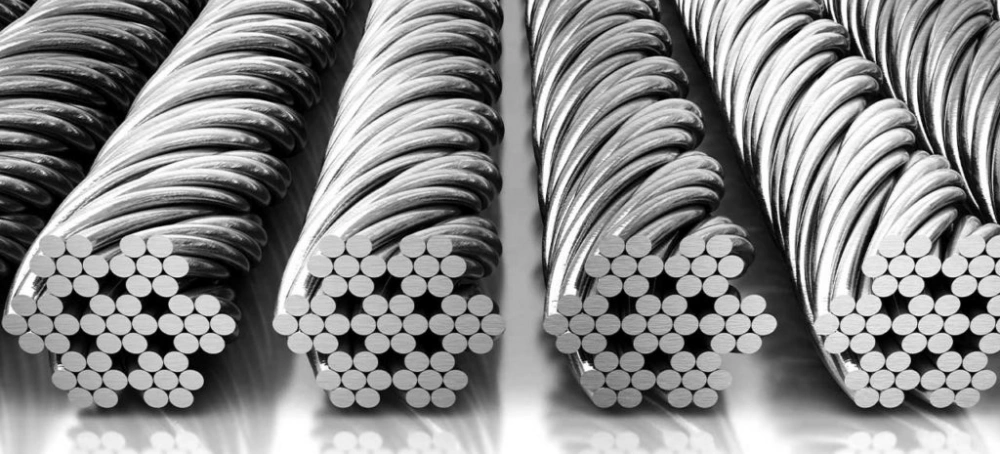
The certificate confirms rotation resistance by describing the rope’s construction. The inner strands lay in one direction, while the outer strands lay in the opposite direction. This design helps balance torque and keeps the rope stable during use.
Lay and Core Type
You should always review the lay and core type on the certificate. The lay describes the direction and pattern of the wire strands. Common types include right regular lay and left lang lay.
The core type can be fiber core (FC), independent wire rope core (IWRC), or wire strand core (WSC). Each type affects flexibility, strength, and resistance to crushing.
Tip: Choose the lay and core type that matches your application for better performance and safety.
Diameter and Tensile Strength
Wire rope certification requires accurate measurement of diameter and tensile strength. The certificate lists the nominal diameter, measured diameter, and sometimes the diameter under tension. You may see:
Nominal diameter: The standard size listed in documents.
Measured diameter: The actual size at inspection.
Off tension diameter: Measured without any load.
Under tension diameter: Measured with a set load, often 5% of the minimum breaking force.
Diameter tolerance: The allowed variation from the nominal size.
Tensile strength shows how much force the wire rope can handle before breaking. You must check these values to ensure the rope meets your project’s requirements.
Certification Process and Compliance

Steps to Obtain Certification
You must follow a structured process to achieve wire rope certification. Each step ensures your wire ropes meet industry standards and legal requirements:
Application Submission: Submit your application with all required details through the official portal.
Document Review: Authorities review your ownership documents and production capacity.
Product Testing: Independent labs test your wire rope for breaking force, tensile strength, and other parameters.
Factory Inspection: Inspectors visit your facility to check manufacturing processes and quality controls.
Grant of License: If your wire rope passes all tests, you receive the certification license.
Renewal and Surveillance: Certification remains valid for two years, with regular audits to ensure ongoing compliance.
Powerful Machinery follows this process and maintains full compliance with ISO, OSHA, and ASME standards.
Maintaining Records
You must keep detailed records for every certified wire rope. Store mill certificates, inspection reports, and test results in an organized system. Accurate record keeping helps you track product traceability and supports compliance during audits.
Consistent documentation also protects your business from legal and financial risks.
Tip: Update your records after every inspection or test to ensure you stay audit-ready.
ISO 4309 Compliance
ISO 4309 sets clear criteria for wire rope inspection and discard. You should monitor your ropes for these conditions:
Condition | Discard Threshold |
|---|---|
Broken wires (general) | 6 or more in one lay length |
Broken wires (end) | 2 or more near termination |
Diameter reduction | 7% or more (IWRC ropes) |
Severe corrosion | Internal or external |
Structural deformation | Kinks, loops, crushing |
Rope elongation | Beyond tolerance |
Following these guidelines helps you maintain safety and avoid premature failures.
Non-Compliance Risks
If you neglect wire rope certification, you expose your business to serious risks:
You may face legal penalties, fines, or operational shutdowns.
Uncertified wire ropes can cause accidents, injuries, or equipment failures.
Financial losses may result from costly repairs and downtime.
Lack of compliance knowledge or postponing necessary actions increases these risks.
Benefits for Professionals
Certified wire ropes protect your team and assets. You ensure safety in lifting, construction, and engineering tasks. Certification maintains uniform quality and shields you from legal liabilities.
Powerful Machinery’s certified products undergo proof testing, load testing, and real-world simulations. These practices reduce workplace incidents and help you meet global safety standards.
Note: Ongoing compliance and record keeping support long-term safety and reliability for your operations.
Conclusion
You must follow wire rope certification requirements to ensure safety and compliance. Regular inspections, proper documentation, and operator training help you prevent accidents and extend equipment lifespan. Powerful Machinery delivers certified wire ropes that meet industry standards for critical applications.
Daily, periodic, and annual inspections are essential.
Keep detailed records of maintenance and inspections.
Select certified wire ropes based on load capacity and environment.
Benefit | Impact |
|---|---|
Reliable performance | Fewer failures and longer equipment life |
Regulatory compliance | Reduced risk of fines and delays |
Peace of mind | Safer operations for your team |
Choose certified products and maintain thorough records for optimal results.
FAQ
What documents do you need for wire rope certification?
You need mill certificates, test reports, and inspection records. These documents prove your wire rope meets safety and quality standards. Always keep them organized for easy access during audits or inspections.
How often should you inspect certified wire ropes?
You should inspect wire ropes before each use and schedule detailed inspections periodically. Follow ISO 4309 guidelines for frequency. Regular checks help you catch wear or damage early.
Can you use uncertified wire rope for lifting?
No, you should never use uncertified wire rope for lifting. Uncertified ropes may fail under load and cause accidents. Always choose certified products from trusted suppliers like Powerful Machinery.
What is the difference between steel wire rope and galvanized steel wire rope?
Steel wire rope offers high strength and durability. Galvanized steel wire rope adds a zinc coating for extra corrosion resistance. Choose galvanized options for outdoor or marine environments.
Tip: Always match the wire rope type to your application for maximum safety and performance.