Synthetic rope is generally safer for winching due to lower snapback risk and easier handling. You must make safety a top priority when working with winching equipment. Choosing the right rope helps you reduce the risk of accidents and protects everyone involved.
The Synthetic Rope vs Wire Rope debate centers on which option provides the best safety for your operations. Powerful Machinery delivers certified lifting solutions that support your commitment to safety.
Tip: Always evaluate your work environment and operational needs before selecting a winching rope.
Key Takeaways
Synthetic rope significantly reduces snapback risk, making it safer during winching operations. If it breaks, it falls harmlessly to the ground.
Handling synthetic rope is easier due to its lightweight and flexibility, which lowers the risk of strain and injuries during use.
Regular inspection and maintenance are crucial for both rope types. Synthetic rope requires less maintenance, while wire rope needs frequent checks for wear and corrosion.
Investing in synthetic rope may have a higher upfront cost, but it leads to long-term savings by reducing maintenance and accident-related expenses.
Choose the right rope based on your specific industry needs and environmental conditions to ensure safety and efficiency in winching operations.
Safety Benefits of Synthetic Rope vs Wire Rope
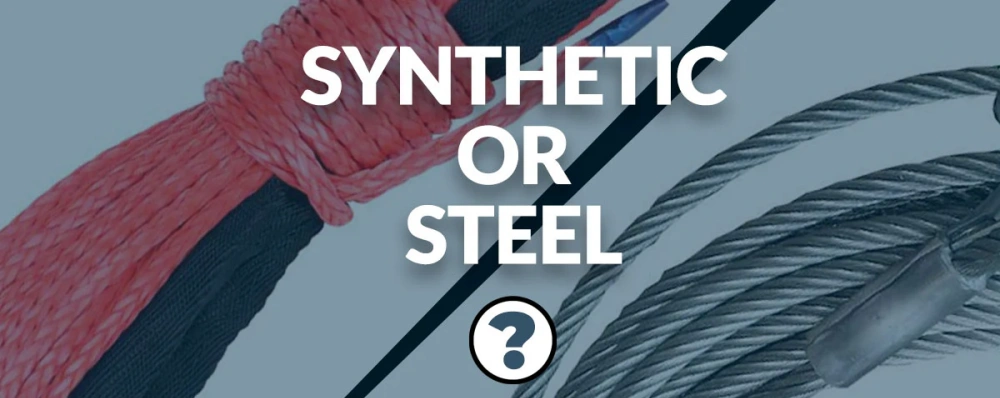
When you compare synthetic rope vs wire rope, safety stands out as the most important factor. Understanding the safety benefits of synthetic rope helps you make informed decisions for your winching operations. Let’s break down the key safety differences between these two options.
Snapback Risk
Snapback is one of the most dangerous hazards in winching. When a rope breaks under tension, it can whip back with tremendous force. In the synthetic rope vs wire rope debate, synthetic rope offers a clear advantage. Synthetic rope does not store as much energy under load.
If it breaks, it usually falls harmlessly to the ground. Wire rope, on the other hand, stores significant energy and can snap back violently, causing severe injuries.
Feature | Synthetic Rope | Wire Rope |
|---|---|---|
Energy Storage | Does not store energy under load | Stores significant energy under load |
Breakage Behavior | Falls harmlessly to the ground | Violently snaps back, causing injury |
Common injuries from a wire rope snapback include amputations, blunt force trauma, spinal cord injuries, and even paralysis. Synthetic rope greatly reduces these risks, making it a safer choice for most winching applications.
Note: Powerful Machinery always prioritizes safety in product design and manufacturing. Our solutions help you minimize snapback risks and protect your team.
Handling Safety
Handling safety is another critical area where synthetic rope vs wire rope shows major differences. Synthetic rope is up to 70% lighter than wire rope. You can move and install it with less effort, which reduces strain and fatigue.
Synthetic rope is also ultra-flexible and conforms easily to loads. Wire rope is heavier, can kink or crush under load, and is more difficult to handle.
Feature | Synthetic Rope | Wire Rope |
|---|---|---|
Weight | ~1/8 the weight of steel wire rope | Heavier than synthetic ropes |
Flexibility | Ultra-flexible, conforms to loads | Can kink and crush under load |
Handling Ease | Easier to handle | More difficult to handle |
Safety on Failure | No whipping or projectiles | Violent reaction when breaking |
Wire rope often develops splinters or burrs, which can cut your hands. Synthetic rope does not have this problem, so you can handle it more safely. Always use gloves and follow proper winching protocols, but you will find synthetic rope much easier and safer to work with.
Tip: Always assess your winching situation, use gloves, and keep a hook strap handy. Powerful Machinery recommends following strict safety protocols for both synthetic rope and wire rope.
Inspection & Maintenance
Inspection and maintenance are essential for safe winching. Synthetic rope vs wire rope requires different approaches. Synthetic rope resists abrasion and corrosion, which extends its lifespan and reduces the chance of sudden failure. It also retains about 90% of its breaking strength over time, making it a reliable choice.
Wire rope needs frequent inspections for broken strands, corrosion, and kinks. You should check the most stressed zones, measure groove diameters, and evaluate lubricant levels.
Synthetic rope maintenance is simpler. Shake or brush off debris, wash with mild soap, rinse, and air dry. In marine or saltwater environments, rinse synthetic rope frequently to prevent salt buildup.
For normal rope service, inspect every 12 months or 2,000 hours.
For heavy service, inspect every 6 months or 1,000 hours.
For severe service, inspect every 3 months or 500 hours.
If you notice broken strands, excessive wear, or the rope diameter drops below the minimum, replace the rope immediately. Powerful Machinery’s commitment to safety means every product is designed for easy inspection and long-term reliability.
Reminder: Regular inspection and proper maintenance keep your winching operations safe and efficient. Trust Powerful Machinery for certified solutions that meet the highest safety standards.
By understanding the safety benefits of synthetic rope, you can reduce risks and create a safer work environment. The synthetic rope vs wire rope comparison shows that synthetic rope offers superior safety in snapback risk, handling, and maintenance.
Powerful Machinery stands ready to support your safety goals with industry-leading products and expertise.
Material Properties Comparison
Strength-to-Weight Ratio
When you evaluate winching ropes, strength and weight play a critical role in your decision. Synthetic rope delivers impressive strength while remaining much lighter than wire rope. You can see the difference in the table below:
Rope Type | Strength (relative) | Weight (relative) |
|---|---|---|
Synthetic Rope | 8-9 times stronger | Much lighter |
Steel Wire Rope | Standard strength | Heavier |
HMPE Synthetic Rope | Same strength | 1/8 to 1/10 of steel wire rope |
Synthetic rope offers a high strength-to-weight ratio, making it ideal for applications where you need maximum strength without excess weight.
You can use synthetic rope for heavy-duty conduit pulling, offshore mooring, winch lines, and even aerospace tasks. Wire rope provides reliable strength for industrial lifting, but its weight can make handling more difficult.
Flexibility & Buoyancy
Flexibility and buoyancy affect how you use ropes in different environments. Synthetic rope is very flexible and floats on water, which improves visibility and handling in marine operations. Wire rope is less flexible and sinks, which can limit its use in water-based winching. The table below highlights these differences:
Characteristic | Synthetic Rope | Wire Rope |
|---|---|---|
Weight | 1/10th of a wire rope | Heavier |
Buoyancy | Floats | Sinks |
Flexibility | Very flexible | Less flexible |
Sharp Burrs | No sharp burrs | Can have sharp burrs |
Repairability | Can be repaired | Requires replacement |
Durability in Abrasion | Degrades quickly | More durable |
Kinetic Energy on Break | Lower, safer | Higher, dangerous |
You will find synthetic rope easier to handle and safer in case of breakage due to its lower kinetic energy. However, wire rope stands out for its durability in abrasion-heavy environments.
Powerful Machinery’s Steel Wire Rope features a non-rotating design and resistance to abrasion and corrosion, making it a dependable choice for tough jobs.
Heat & Chemical Resistance
Heat and chemical resistance determine how long your rope lasts and how safe it remains. Synthetic rope is more affected by heat, UV exposure, and chemicals, which can weaken its fibers and reduce its strength.
Wire rope resists heat and most chemicals, maintaining its strength in harsh conditions. Some modern synthetic materials, such as Kevlar, offer better heat resistance, but most synthetic rope types require careful monitoring.
Synthetic rope is susceptible to abrasion, heat, and chemical hazards.
Wire rope resists heat and offers superior resistance to abrasion and corrosion.
Both rope types need regular maintenance to ensure safety and performance.
You should choose wire rope for environments with high heat or chemical exposure. Powerful Machinery’s Steel Wire Rope provides excellent resistance to abrasion and corrosion, ensuring reliable strength and longevity in demanding settings.
Tip: Always match your rope choice to the specific strength, weight, flexibility, and resistance to abrasion and corrosion requirements of your application.
Durability and Maintenance
Abrasion & Corrosion Resistance
You need to consider abrasion and corrosion resistance when choosing a winching rope. Steel wire rope stands out in environments with heavy abrasion and sharp edges. Its construction gives it superior durability against wear, especially in high-temperature settings.
Powerful Machinery’s Steel Wire Rope uses high-grade steel, which resists abrasion and maintains strength under tough conditions. However, wire rope can suffer from rust and corrosion if exposed to moisture or chemicals. Over time, this can weaken the metal and reduce its reliability.
Synthetic rope, made from advanced fibers like Dyneema®, offers excellent resistance to both abrasion and corrosion. It performs well in wet or salty environments, and you do not need to worry about rust.
Still, sharp edges and rough surfaces can damage synthetic rope, so you should use chafe guards and inspect them regularly.
Maintenance Needs
Proper maintenance extends the life and durability of your winching rope. Synthetic rope requires less maintenance than wire rope. You should inspect it after each use for fraying, cuts, or heat damage.
Clean synthetic rope with mild soap and water, and avoid harsh chemicals. Use protective gear to prevent abrasion, and replace the rope if you see significant wear.
Wire rope needs more frequent attention. You must check for broken strands, corrosion, and kinks. Lubrication helps prevent rust and keeps the rope flexible. Powerful Machinery recommends regular inspections and using galvanized or stainless steel wire rope for improved durability in harsh environments.
Tip: Always spool your winch line correctly and keep both rope types clean to prevent internal damage.
Longevity & Repair
The lifespan of your rope depends on care and the environment. Synthetic rope typically lasts 2-3 years under regular winching conditions. Wire rope can last much longer if you maintain it properly. Regular inspections and lubrication help extend the wire rope’s life, especially in demanding applications.
Repair options differ between the two. You can splice and repair synthetic rope if it suffers minor damage. Wire rope usually requires replacement when damaged, especially if corrosion is present. Moisture, chemicals, and wear contribute to wire rope deterioration, so maintenance is crucial for long-term durability.
Rope Type | Average Lifespan |
|---|---|
Synthetic Rope | 2-3 years |
Wire Rope | Longer with care |
Powerful Machinery’s Steel Wire Rope delivers outstanding durability and reliability for heavy-duty tasks. You can trust it to perform in the most challenging environments.
Cost and Value
Upfront vs Long-Term Costs
When you compare synthetic rope and wire rope, you notice clear differences in both initial and long-term expenses. Synthetic rope usually costs more upfront, with prices ranging from $100 to $300.
Steel wire rope is a more cost-effective option at first, often priced between $30 and $100. However, you should not focus only on the purchase price.
Steel wire rope requires frequent maintenance. You need to check for rust, broken strands, and kinks. Over time, these maintenance needs add up and increase your total costs.
Synthetic rope, as a lightweight and safer alternative, needs less maintenance. It resists corrosion and is easier to clean, which saves you money and time in the long run.
Steel cables, while cheaper at first, often lead to higher expenses over time due to repairs and replacements.
Choosing synthetic rope can help you avoid unexpected costs from accidents, injuries, and downtime. You gain advantages in both convenience and long-term savings.
Safety Investment
Investing in the right rope means you invest in increased safety for your team. Synthetic rope offers superior safety benefits because it is lightweight and flexible, reducing the risk of injuries during handling.
It does not store as much kinetic energy as steel wire rope, so if it breaks, it falls harmlessly to the ground. This feature makes synthetic rope a safer solution for workers and helps prevent serious accidents.
Feature | Synthetic Rope | Wire Rope (Steel Cable) |
|---|---|---|
Weight | Up to 80% lighter | Heavier and harder to handle |
Kinetic Energy Storage | Low, falls to the ground if broken | High, can whip back dangerously |
Safety Risks | Fewer injuries, less snapback | More injuries, sharp strands |
Cost | Higher upfront, lower long-term | Lower upfront, higher long-term |
You should consider the advantages of synthetic rope when you want to reduce liability and insurance costs. Fewer accidents and injuries mean less risk for your business. Over time, the superior safety benefits of synthetic rope can lead to lower insurance premiums and a safer work environment.
Tip: Weigh both the upfront price and the long-term value. Investing in safety today can save you from costly accidents and injuries tomorrow.
Application Suitability by Industry

Industry Recommendations
You need to match your winching rope to the demands of your industry. Many industrial sectors rely on wire ropes for their strength and durability. Construction, mining, and shipping companies often choose wire rope for industrial applications because it handles heavy loads and resists abrasion.
Powerful Machinery’s Steel Wire Rope provides certified solutions for these environments, giving you confidence in every lift.
Some industries prefer synthetic ropes for specific reasons. Off-roading teams use synthetic rope because it is lightweight and easy to handle. It also floats on water, which helps in waterlogged areas. Synthetic ropes do not recoil with the same force as wire ropes, so you reduce injury risk during recovery operations.
Industry | Reasons for Preference |
|---|---|
Off-Roading | Lightweight nature makes handling easier and reduces vehicle weight. Safer as it does not recoil with the same force as steel cables when broken, minimizing injury risk. Floats on water, advantageous in waterlogged situations. More flexible, easier to spool on the winch drum and handle during recovery operations. |
You should consider the specific needs of your industrial sector before choosing between wire ropes and synthetic ropes.
Environmental Factors
Environmental conditions play a major role in rope selection. Wire ropes face challenges in wet or corrosive environments. Moisture increases the risk of corrosion and wear.
Saltwater accelerates metal degradation and failure. Chemicals can reduce the lifespan and reliability of wire ropes. Extreme temperatures affect durability, especially without protective coatings.
Environmental Factor | Impact on Wire Rope |
|---|---|
Moisture | Increases the risk of corrosion and wear |
Saltwater | Accelerates metal degradation and failure |
Chemicals | Can reduce lifespan and reliability |
Extreme Temperatures | Affects durability, especially without protective coatings |
In marine, wastewater, or chemical processing industries, you should use galvanized or stainless steel wire ropes for superior resistance. Mining and heavy construction teams prefer wire rope slings for their toughness.
Synthetic ropes perform well in wet or salty environments, but you must protect them from sharp edges and heat.
Choosing the Right Rope
Selecting the right rope for your industrial application requires careful evaluation. You need to consider diameter, length, pulling force, material, and cost. Larger diameters provide more pulling power and higher breaking strength. You should apply a safety factor of 1.5 to 2 times the weight of the object.
Lighter synthetic ropes allow for longer lengths at the same pulling force.
Criteria | Description |
|---|---|
Diameter | Larger diameters provide more pulling power and higher breaking strength. Consider the weight of the object and apply a safety factor of 1.5 to 2 times. |
Length | Choose a length that connects to the object or vehicle for towing. Lighter synthetic ropes allow for longer lengths at the same pulling force. |
Pulling Force | The breaking strength of the winch line should exceed the winch’s maximum working load to prevent accidents. For example, a 12000LBS winch needs a line with a minimum breaking strength of 18000LBS. |
Material | Steel cables are heavy and rigid, while synthetic ropes are lightweight and safer. Synthetic ropes do not snap violently, enhancing safety. |
Cost | Synthetic lines are more expensive but offer advantages like being lighter and easier to handle. |
Professional Advice | Consult professionals to customize the rope based on specific needs and conditions. |
You should consult experts at Powerful Machinery to help you select wire rope for industrial applications or synthetic ropes tailored to your operational needs. Professional advice ensures you get the safest and most efficient solution for your environment.
Tip: Always match your rope choice to your industry, environment, and safety requirements. The right decision protects your team and improves productivity.
Conclusion
You gain the greatest safety benefits from synthetic rope for winching because it lowers snapback risk, improves handling, and simplifies inspection. You should select wire rope, such as Powerful Machinery’s Steel Wire Rope, for heavy-duty lifting or high-heat environments.
You maximize lifting benefits by matching rope choice to your safety needs, environment, and operational priorities. Review the table below for expert recommendations on lifting benefits:
Feature | Description |
|---|---|
Rope Material | Select for lifting benefits and job demands. |
Rope Construction | Kernmantle ropes offer lifting benefits for safety. |
Breaking Strength | Higher strength provides lifting benefits but can be cumbersome. |
Certifications | Certified ropes deliver lifting benefits and compliance. |
Application | Choose for lifting benefits in specific environments. |
You should consult Powerful Machinery for certified lifting solutions and expert guidance to achieve the best benefits for your operations.
FAQ
What makes synthetic rope safer for winching in construction?
You benefit from synthetic rope because it reduces snapback risk. In construction, this safety feature protects workers during lifting and winching. You also handle synthetic rope more easily, which lowers the chance of hand injuries on busy construction sites.
When should you choose steel wire rope for construction projects?
You should select steel wire rope for heavy-duty construction tasks. It offers high strength and durability. In large-scale construction, steel wire rope delivers reliable performance, especially when you need to lift or move massive loads safely.
How does rope maintenance impact construction safety?
You improve construction safety by inspecting and maintaining your ropes regularly. You prevent accidents by replacing damaged ropes before failure. In construction, proper maintenance ensures consistent performance and reduces downtime on the job site.
Can synthetic rope handle harsh construction environments?
You can use synthetic rope in many construction settings. It resists corrosion and floats on water. However, you must protect it from sharp edges and heat. For the best performance, always follow manufacturer guidelines during construction operations.
Why trust Powerful Machinery for construction lifting solutions?
You trust Powerful Machinery because the company provides certified products for construction. Every steel wire rope meets strict safety standards. You gain peace of mind knowing your lifting equipment delivers top performance and reliability in demanding construction environments.