Choosing hoisting equipment in construction demands your full attention. You need to select the right hoist to keep your team safe and your project efficient. A selection checklist helps you follow safety standards, reduce accidents, and ensure smooth operation.
Overload protection and emergency stop systems protect workers.
Regular maintenance prevents unexpected breakdowns.
Powerful Machinery stands as a trusted partner, offering certified hoisting equipment that meets tough industry standards. Consider equipment type, capacity, safety features, and maintenance for every construction project.
Key Takeaways
Choose hoisting equipment with a load capacity 20-25% above your heaviest anticipated load to ensure safety.
Regularly inspect and maintain hoisting equipment to prevent unexpected breakdowns and extend its lifespan.
Evaluate site conditions and space constraints to select the right type of hoist for your project needs.
Prioritize safety features like overload protection and emergency stop systems to protect your team on-site.
Consider renting hoists for short-term projects to save on costs, while purchasing may be better for long-term use.
Types of Hoisting Equipment in Construction
You encounter many types of hoisting equipment in construction. Each type serves a unique purpose and fits specific project requirements. Powerful Machinery offers certified solutions for every scenario, ensuring you meet safety and performance standards.
Mobile Cranes
Mobile cranes give you flexibility and mobility on construction sites. You can transport them easily and set them up quickly. These cranes handle a wide range of tasks, from lifting steel beams to moving heavy machinery.
Tip: Always check site conditions before using mobile cranes. Uneven terrain or high wind speeds can affect stability and safe working reach.
Advantages of Mobile Cranes | Limitations of Mobile Cranes |
|---|---|
High mobility for easy transport | Requires careful planning due to environmental factors |
Versatility for construction and logistics | Performance can be affected by weather conditions |
Flexibility across varied terrains | Stability risks on uneven terrain |
Tower Cranes
Tower cranes dominate high-rise construction projects. You rely on them for their impressive height and capacity. These cranes reach up to 265 feet unsupported and can lift loads to 18 metric tons.
Note: The closer the load is to the mast, the more weight you can lift safely. Limit switches prevent overload and ensure safe operation.
Specification | Value |
|---|---|
Maximum unsupported height | 265 feet (80 meters) |
Maximum reach | 230 feet (70 meters) |
Maximum lifting power | 19.8 tons (18 metric tons) |
Counterweights | 20 tons (16.3 metric tons) |
Construction Hoists
Construction hoists, also known as buck hoists, move materials and personnel vertically. You use them for high-rise and mid-rise projects. These hoists offer fast travel speeds and high capacity, making them essential for efficient workflow.
Construction hoists feature overload protection, emergency stop buttons, and remote control systems. These safety features reduce accident risks.
Feature | Construction Hoists | Transport Platforms |
|---|---|---|
Travel Speed | Up to 300 ft/min | Up to 40 ft/min |
Lifting Capacity | 6000–8000 lb | Up to 4000 lb |
Typical Use | High-rise | Mid-rise |
Safety Compliance | ANSI/ASSE A10.4-2007 / OSHA 1926.552 | ANSI/SAIA A92.10-2009 |
Impact on Structure | Higher dynamic loads | Lower dynamic loads |
Installation | More complex | Quicker and easier |
Winches and Manual Hoists
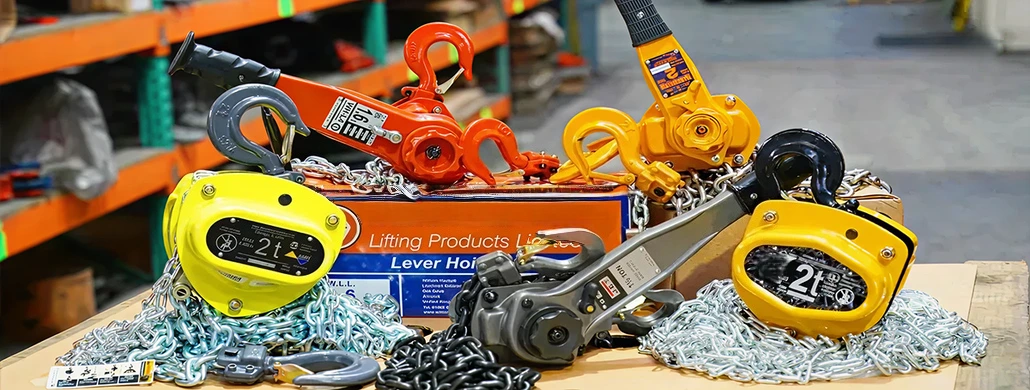
You use winches for pulling or moving heavy loads horizontally or on an incline. Manual hoists lift loads vertically and suit smaller jobs or areas without power. Powerful Machinery provides electric chain hoists, wire rope hoists, manual hoists, and air hoists for diverse construction needs.
Winches: Move materials across job sites or drag equipment into position.
Hoists: Raise materials to scaffolding or upper floors.
Specialized Lifting Tools
Some projects require specialized lifting tools. Scissor lifts, boom lifts, telescopic handlers, and engine cranes help you tackle unique tasks. You use scissor lifts for installing windows or fixing lights. Boom lifts reach hard-to-access areas. Telescopic handlers move bricks, steel, or wood. Engine cranes lift heavy parts.
Lifting Tool | Description | Uses |
|---|---|---|
Scissor Lifts | Platforms that rise and fall using scissor arms | Painting, fixing lights, and installing windows |
Boom Lifts | Long arms that move up, down, and sideways | Tree trimming, building repairs, and installing signs |
Telescopic Handlers | Forklift-like machines with a long boom | Moving bricks, steel, or wood |
Engine Cranes | Cranes designed to lift heavy engines or parts | Lifting engines out of vehicles |
Powerful Machinery’s certified hoisting equipment in construction covers all types of construction hoists and lifting tools. You gain versatility, reliability, and safety for your projects.
Key Selection Criteria for Construction Projects
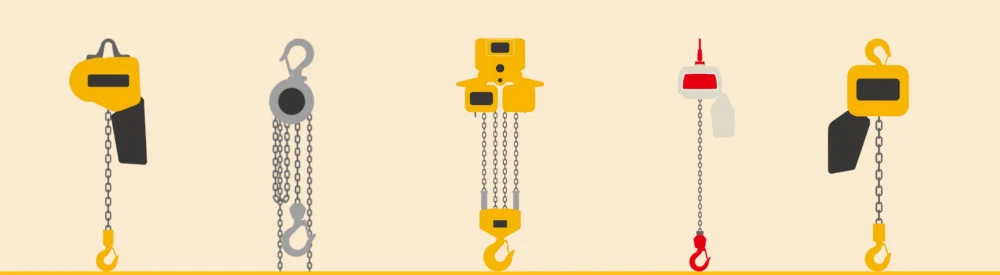
Selecting the right hoisting equipment in construction requires careful evaluation of your project needs. You must consider load weight, lifting height, frequency of use, and site-specific challenges.
Powerful Machinery offers custom-engineered solutions that match unique requirements, ensuring you achieve optimal performance and safety.
Load Capacity and Safety Margin
You need to determine the maximum load your hoists will handle during construction. Always select equipment with a rated capacity that exceeds your heaviest anticipated load. Industry experts recommend choosing a hoist with a capacity at least 20–25% greater than your maximum expected load.
This safety margin protects against unexpected weight increases and ensures reliable operation.
Choose hoists with a capacity 25% to 50% above your heaviest load.
Always verify the rated capacity before use.
Maintain a safety margin to prevent overload and equipment failure.
Standard | Description |
|---|---|
ASME B30 | Details requirements for cranes and hoists, including design and safety. |
FEM 9.511 | Classifies the duty cycle of serial hoist units in Europe. |
ISO 4301 | Provides classification for cranes and hoists based on service conditions. |
Powerful Machinery’s certified hoisting equipment meets these international standards, giving you confidence in every lift.
Site Conditions and Space Constraints
Site conditions play a critical role in selecting hoisting equipment for construction projects. You must assess space limitations, environmental factors, and access points. Compact hoists work well in confined spaces, such as indoor renovations or tight urban sites.
Large-scale hoists suit major infrastructure projects that require high capacity and extended reach. Environmental factors like moisture, dust, and temperature affect material selection and equipment durability.
Hoist Type | Application Description |
|---|---|
Compact Hoists | Maneuverable in confined spaces and urban sites. |
Large-Scale Hoists | Designed for high capacity and extended reach in major projects. |
Environmental Factors | Moisture, dust, and temperature influence material and equipment selection. |
Powerful Machinery can tailor hoisting equipment to fit your site’s unique conditions, ensuring smooth operation and safety.
Lifting Height and Reach
You must evaluate the required lifting height and operational reach for construction hoists. Ensure the hoist can reach the necessary elevation without interference from overhead structures. Adequate clearance between the hoist and ceiling prevents collisions and maximizes operational reach.
Consider the headroom, which is the distance from the mounting point to the highest position of the load hook. Assess vertical space and potential obstacles to guarantee safe and efficient lifting.
Tip: Measure the lift height and check for overhead obstructions before installation. This step prevents delays and ensures your equipment operates safely.
Operation Type: Manual, Electric, or Air
The operation type impacts performance, efficiency, and safety in construction projects. You can choose manual, electric, or air-powered hoists based on your needs.
Hoist Type | Advantages | Limitations |
|---|---|---|
Manual | Ideal for small loads, lightweight, no power needed | Slower speed, manual effort required |
Electric | Fast, efficient, suitable for industrial use | Dependent on power availability |
Air | High lifting capacity, operates in high-heat or hazardous environments | Requires compressed air, specific setup |
Manual hoists work best for infrequent lifting, remote locations, and tight budgets.
Electric hoists suit continuous industrial use where power is available.
Air hoists excel in high-duty environments and hazardous conditions, running continuously without overheating.
Powerful Machinery offers all operation types, allowing you to match equipment to your project’s demands.
Duty Cycle and Frequency of Use
You must consider how often you will use the hoists and the intensity of each operation. Duty cycle classifications help you select equipment that matches your workload.
Duty Cycle Classification | Description |
|---|---|
H1 | Infrequent or standby use |
H2 | Light duty |
H3 | Moderate duty |
H4 | Heavy duty |
H5 | Severe, continuous duty |
FEM 4m-5m | Severe or continuous duty in demanding environments |
For high-frequency construction projects, select hoisting equipment rated for heavy or severe duty cycles. Powerful Machinery provides hoists designed for continuous operation, ensuring reliability and safety.
Power Supply Compatibility
Power supply compatibility is essential for consistent energy delivery to hoisting equipment. Verify whether your site uses single-phase or three-phase systems. Check voltage requirements and plan for voltage drop over long distances, which may require larger gauge conductors.
Use power conditioners or surge protectors in areas with electrical fluctuations. Consider future scalability to avoid replacing equipment as your project grows.
Confirm compatibility with site infrastructure.
Reduce electrical stress on motors to prolong equipment lifespan.
Plan for expansion and changing power needs.
Powerful Machinery’s hoisting equipment in construction adapts to various power supply setups, supporting your projects from start to finish.
You ensure safety, efficiency, and reliability when you follow these selection criteria. Powerful Machinery stands ready to provide custom solutions for your construction hoists and lifting needs.
Safety Features and Compliance
Overload Protection and Emergency Systems
You must prioritize safety features when selecting construction hoists. Powerful Machinery equips each hoist with advanced systems that protect your team and assets. Key safety features include:
An overload protection system that stops operation if the load exceeds safe limits.
An emergency brake system that engages automatically to prevent uncontrolled descent.
An anti-fall safety mechanism that activates if a cable or gearbox fails.
Speed limiters that regulate hoist movement and halt operation if speeds become unsafe.
Strong cage and enclosure design that shields equipment from impacts and harsh weather.
Emergency stop buttons and alarm systems that allow you to halt hoists instantly and alert workers to hazards.
These safety features reduce risks and help you maintain a secure work environment. The table below shows how modern technology enhances safety on your site:
Technology Type | Description |
|---|---|
Load Monitoring Systems | Sensors measure and record weight, preventing overloading. |
Load Limiting Technology | Automatic systems stop machines from exceeding safe limits. |
Telematics and Remote Monitoring | Real-time data enables proactive maintenance and safety measures. |
Integrated Fleet Management | Centralized control ensures adherence to safety protocols. |
Operator Training | Hands-on training reduces human error in load handling. |
Operator Training and Certification
You need skilled operators to maximize safety. Operators must complete hands-on training and pass written and practical tests. Certification and licensing requirements ensure that only qualified personnel operate construction hoists. Operators must also undergo periodic recertification to keep their skills current.
Requirement Type | Description |
|---|---|
Licensing | Operators must be licensed by the state or local government, including written and practical tests. |
Certification | If licensing is not required, operators must be certified by an accredited organization. |
Re-certification | Operators must periodically renew certification to maintain safety standards. |
Regulatory Standards for Construction Hoists
You must comply with strict regulatory standards to ensure safety and legal operation. Standards such as ASME B30 cover the design, installation, operation, inspection, and maintenance of construction hoists. These guidelines help you meet industry requirements and protect your workforce.
Standard | Description |
|---|---|
ASME B30 | American National Standards for lifting equipment, including hoists. |
Routine Inspections and Record Keeping
You should perform regular inspections to maintain safety and equipment reliability. Initial inspection occurs when you receive new or modified hardware. Daily inspection takes place before each shift.
Periodic inspection happens at least once a year, or more often in severe conditions. Keep detailed records of every inspection to track equipment condition and ensure compliance.
Type of Inspection | Frequency of Inspection |
|---|---|
Initial Inspection | Upon receiving the equipment. |
Daily/Frequent Inspection | Before each shift or daily. |
Periodic Inspection | Annually, quarterly, or monthly, depending on usage. |
Regular inspections and accurate record keeping help you identify issues early and extend the life of your hoisting equipment.
Maintenance and Inspection for Hoisting Equipment
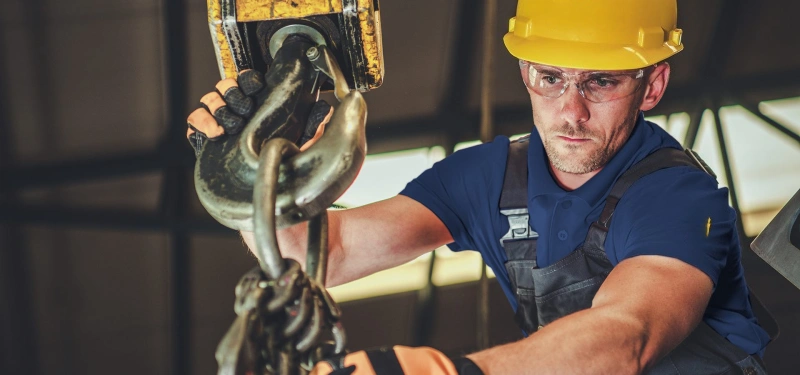
You must treat maintenance and inspection as a top priority for every construction project. Regular care keeps hoists safe, reliable, and ready for demanding tasks. When you follow a structured program, you prevent unexpected failures and extend the lifespan of your equipment.
Powerful Machinery provides expert guidance and certified support, helping you maintain high standards for every lift.
Routine Maintenance Checklist
You need a clear checklist to keep hoists in peak condition. Start with load and functional testing to confirm performance. Record every inspection and repair for future reference. Maintain both manual and electric chain hoists with proper lubrication and cleaning.
Train operators to recognize early signs of wear or malfunction. Make sure your maintenance routines comply with regulatory standards.
Load and functional testing
Documentation and record keeping
Maintenance routines for manual and electric chain hoists
Operator training and certification
Compliance with regulatory standards
Tip: Use a digital logbook to track maintenance activities and schedule reminders for upcoming inspections.
Inspection Frequency and Best Practices
You must inspect hoists at regular intervals to catch issues early. Initial inspection takes place when you receive new or modified equipment. Daily inspection happens before each shift.
Periodic inspection occurs annually or more often, depending on usage and site conditions. Follow industry best practices to ensure thorough checks.
Type of Inspection | Frequency of Inspection |
|---|---|
Initial Inspection | Upon receiving the rigging hardware, regardless of its condition (new, altered, modified, or repaired). |
Daily/Frequent Inspection | Before each shift or daily, depending on usage, as per OSHA, inspect before use on each shift. |
Periodic Inspection | Annually, or more frequently (quarterly/monthly), based on usage and work conditions. |
Preventive Measures for Longevity
You protect your investment when you adopt a proactive approach to maintenance. Regular maintenance ensures that hoists are serviced and inspected on a structured schedule. This helps you identify potential issues before they lead to failures.
Documentation of maintenance activities provides a record of inspections and repairs, supporting better management of equipment lifespan. A predictable maintenance routine transforms care from reactive to reliable, enhancing safety and performance.
Powerful Machinery offers ongoing support and expert advice, helping you maximize the longevity and reliability of your hoists.
You build a safer and more efficient job site when you prioritize maintenance and inspection. Trust Powerful Machinery to help you maintain certified equipment for every project.
Cost Considerations in Construction Hoist Selection
Purchase vs. Rental Options
When you plan a construction project, you must decide whether to purchase or rent hoists. This choice depends on project duration, budget, and infrastructure needs. Renting works best for short-term construction or when you want to reduce risk. You avoid long-term storage and maintenance costs.
Purchasing makes sense if you use hoists for several years or across multiple projects. You gain full control over equipment and always have it available when you need it.
Aspect | Renting Costs | Buying Costs |
|---|---|---|
Additional Costs | Delivery, short-term insurance, fuel | Storage, maintenance, insurance |
Project Duration | Best for short-term projects | More economical for long-term projects |
Equipment Availability | Dependent on the rental company | Always available for the owner |
Risk Exposure | Lower risk, especially for GCs | Higher risk if the equipment fails |
Rental price changes with speed and capacity. The location of your construction site also affects rental costs. Consultative rental companies can help you save money by matching the right hoists to your infrastructure.
Tip: If you need hoists for three years or more, purchasing usually offers better value.
Operating and Maintenance Costs
You must consider all costs that come with operating hoists. These include fuel, maintenance, insurance, and logistics. Transporting equipment to your construction site adds expenses for fuel and permits. If you do not plan for these, you may face delays and higher costs.
Fuel and transport logistics can increase your project budget.
Permit acquisition and logistical planning help you avoid unexpected expenses.
Delays from equipment issues can extend your construction timeline.
Total cost of ownership includes every expense, from fuel to maintenance and depreciation. Understanding this helps you avoid financial surprises and keeps your infrastructure projects on track.
Long-Term Value and Reliability
Certified hoists from Powerful Machinery deliver long-term value for your construction needs. You benefit from equipment that meets strict safety standards and supports your infrastructure goals.
Regular training, inspection, and maintenance keep your hoists reliable and safe. When you evaluate the total cost of ownership, you see the true value of investing in quality equipment.
Compliance with safety standards protects your team and project.
Training and regular inspection ensure safe operation.
Long-term reliability reduces downtime and supports efficient construction speed.
You build a strong foundation for your infrastructure when you choose certified hoists that offer proven performance and durability.
Conclusion
You improve safety and efficiency when you follow a structured checklist for hoisting equipment selection. This approach transforms a complex task into a systematic process, helping you meet safety standards and protect your team.
Avoid common mistakes such as overlooking load characteristics or environmental factors:
Failing to assess load properties and their interaction with equipment
Choosing equipment without considering application needs
Ignoring duty cycle and environmental conditions
Regular maintenance and operator training offer key benefits:
Benefit | Description |
|---|---|
Legal Compliance | Avoid fines and legal action by staying compliant. |
Risk Reduction | Lower the chance of accidents and injuries. |
Operational Efficiency | Prevent downtime and keep operations running smoothly. |
Consult Powerful Machinery experts for tailored solutions and ongoing support.
FAQ
What types of hoisting equipment does Powerful Machinery offer?
Our hoisting equipment range includes manual hoists, electric chain hoists, wire rope hoists, trolleys, winches, and other lifting and load-positioning solutions for different operating requirements. Select the appropriate equipment based on the load, lift height, duty cycle, available power, site conditions, and required movement.
How do you select the right hoisting equipment for your project?
You should assess load weight, lifting height, frequency of use, and site conditions. Consult Powerful Machinery experts for custom recommendations that fit your specific construction needs.
What safety features should you look for in hoisting equipment?
You need overload protection, emergency stop systems, limit switches, and strong enclosures. These features help prevent accidents and keep your team safe on site.
How often should you inspect hoisting equipment?
You must inspect equipment before each shift and perform periodic inspections based on usage. Record all findings to ensure compliance and maintain reliability.
Can you use Powerful Machinery hoisting equipment in hazardous environments?
Yes. You can use air hoists from Powerful Machinery in hazardous or explosive environments. These hoists operate safely where electric models may not be suitable.