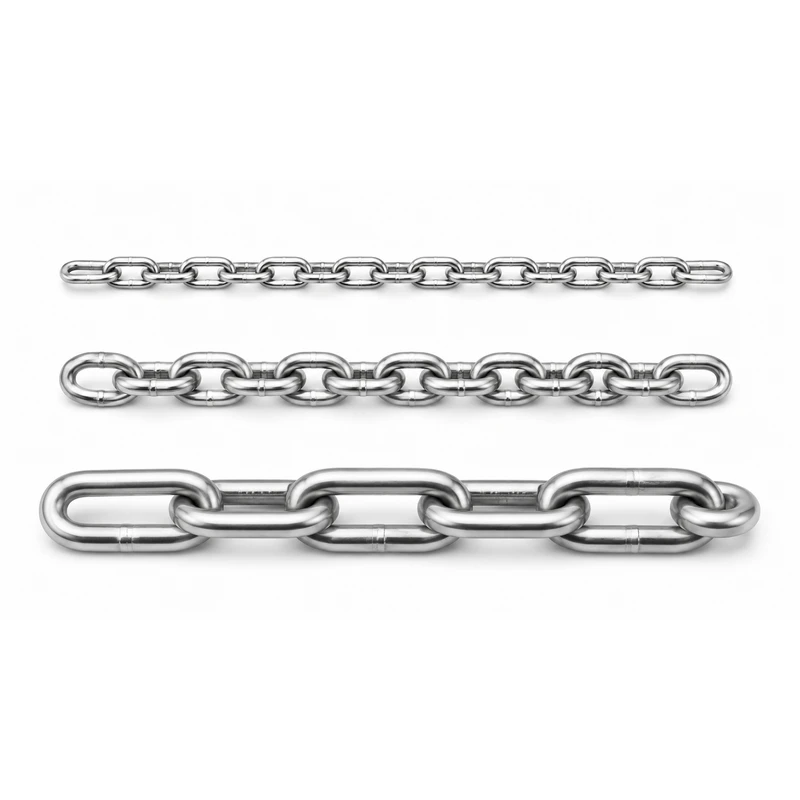
When you ask, ” What size tow chain do I need, always begin by checking your vehicle’s weight and the load you plan to move. Select a chain that matches or exceeds the weight of your trailer and towing requirements.
Powerful Machinery provides certified tow chains trusted by professionals for safety and reliability. Using the correct tow chain helps prevent accidents and protects your equipment every time you tow.
Key Takeaways
Always check your vehicle’s weight and the load you plan to tow. Choose a chain that matches or exceeds this weight for safety.
Understand the different chain grades, like Grade 43 and Grade 70. Higher grades offer more strength and durability for heavier loads.
Know the working load limit (WLL) of your chain. Never exceed this limit to ensure safe towing and prevent accidents.
Inspect your tow chains before each use. Look for wear or damage, and ensure the chains have clear ratings for safety.
Select the right chain size based on your trailer’s weight. Use the provided size chart to find the appropriate chain for your towing needs.
What Size Tow Chain Do I Need? Key Factors
Choosing the right chains for towing is essential for safety and performance. When you ask, ” What size tow chain do I need, you must consider several key factors.
These include your vehicle’s weight, the towing capacity, the grade of the chain, and the working load limit. Each factor plays a critical role in making sure your tow chains are suitable for towing your trailer or vehicle safely.
Vehicle Weight and Towing Capacity
Start by knowing the weight of your vehicle and the trailer you plan to tow. The combined weight determines the minimum strength your tow chains must have. Always select chains that match or exceed the total weight you intend to move.
Environmental conditions, such as rough terrain or extreme weather, can also affect your towing needs. Make sure your chains are compatible with your load binders and attachment points.
Tip: Always check your vehicle’s manual for towing capacity before selecting tow chains.
Here is a quick reference table for typical towing capacities by vehicle type:
Vehicle Type | Towing Capacity Range | Examples |
|---|---|---|
Subcompact Crossover | 1,500–3,500 lbs | Subaru Crosstrek, Jeep Compass |
Small SUV | 1,500–3,500 lbs | Toyota RAV4, Ford Escape |
Midsize SUV | 3,500–6,000 lbs | Kia Telluride, Nissan Pathfinder |
Large SUV | 7,500–9,300 lbs | GMC Yukon, Ford Expedition |
Midsize Pickup | 6,000–7,700 lbs | Nissan Frontier, Chevy Colorado |
Full-Size Pickup | 9,000–13,300 lbs (or more) | Toyota Tundra, Chevy Silverado |
Heavy-Duty Pickup | 15,000–37,000+ lbs | Ford F-350 Super Duty, Ram 3500 HD |
Full-Size Van | 5,000–7,500 lbs | Ford Transit, Mercedes Sprinter |
If you drive a midsize SUV and tow a trailer, you need chains that can handle at least 6,000 lbs. For heavy-duty pickups or commercial trailers, choose chains with much higher ratings. Powerful Machinery offers certified tow chains that meet or exceed these requirements, giving you confidence in every towing situation.
Chain Grades (G43, G70) Explained
Chain grade refers to the strength and intended use of the chain. The most common grades for towing are Grade 43 and Grade 70. Understanding the difference helps you select the right chains for your vehicle and trailer.
Feature | Grade 43 | Grade 70 |
|---|---|---|
Strength | Standard strength | Approximately 20% stronger |
Material Composition | Carbon steel | Heat-treated carbon steel |
Typical Applications | General towing, cargo securing | Transport, load securement |
Durability | Good for most jobs | Enhanced durability |
Finish Options | Self-colored, bright, zinc-plated, galvanized | Gold chromate or yellow zinc finish |
Grade 43 chains work well for general towing and light-duty trailer applications. Grade 70 chains offer higher strength and durability, making them suitable for towing heavier vehicles and commercial trailers.
Powerful Machinery manufactures both grades, using high-strength steel and heat-treated links to ensure maximum performance.
Working Load Limit (WLL)
The working load limit is the maximum weight a chain can safely handle during towing. You must never exceed this limit. Manufacturers calculate WLL by dividing the chain’s breaking strength by a safety factor, usually 4:1. This ensures a wide margin of safety for every tow.
Calculation Method | Description |
|---|---|
WLL | The maximum load a chain can safely carry in a specific application. |
Formula | WLL = Breaking Strength / Safety Factor (e.g., 4) |
Safety Factor | Typically set at 4:1 for most lifting and transport chains. |
Here are the recommended WLL values for common tow chain sizes and grades:
Chain Grade | Working Load Limit (lbs) |
|---|---|
Grade 30 | 1,300 – 6,900 |
Grade 43 | 2,600 – 13,000 |
Grade 70 | 3,150 – 15,800 |
Grade 80 | 3,500 – 18,100 |
Grade 100 | 4,300 – 22,600 |
Grade 120 | 5,200 – 27,500 |
When you ask, ” What size tow chain do I need, always check the WLL stamped on the chain. Make sure it matches or exceeds the combined weight of your vehicle and trailer. Powerful Machinery’s tow chains come with verified load ratings and clear markings, so you can tow with confidence.
Note: Never use chains with unknown ratings or visible damage. Always inspect your tow chains before every towing job.
To sum up, the right chains for towing depend on your vehicle’s weight, the grade of the chain, and the working load limit. Powerful Machinery provides certified, high-strength tow chains suitable for towing any trailer or vehicle, ensuring safety and reliability every time you tow.
Towing Chains from Powerful Machinery
Features and Advantages
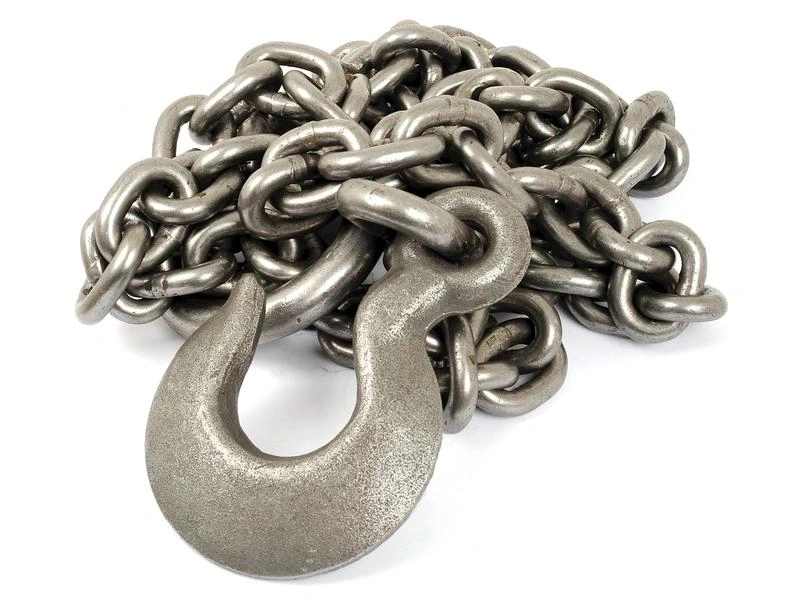
You need towing chains that deliver strength, safety, and reliability every time you tow a trailer. Powerful Machinery designs towing chains with high-strength materials and advanced manufacturing processes.
You can choose from Grade 43 or Grade 70 chains, both engineered for demanding towing and recovery jobs. Each chain features heat-treated links that boost durability and resist wear, even in tough environments.
You can trust the verified load ratings on every chain. These ratings ensure that your towing chains meet or exceed the requirements for your vehicle and trailer.
Powerful Machinery uses strict quality control to guarantee consistent performance. You get peace of mind knowing your chains will not fail when you tow heavy loads.
Here is a quick look at the materials used in Powerful Machinery’s towing chains:
Material Type | Description |
|---|---|
High-strength carbon steel | Known for its strength and durability. |
Alloy steel | Selected for specific applications needing enhanced properties. |
These materials help your towing chains stand up to repeated use and harsh conditions. You can rely on them for every tow, whether you handle a small trailer or a commercial transport job.
Customization and Accessories
You may need towing chains with specific features for your trailer or towing setup. Powerful Machinery offers a wide range of customization options. You can select the chain length, diameter, grade, and even the type of hooks or end fittings.
This flexibility lets you match your towing chains to your exact needs, making every tow safer and more efficient.
You can also choose from a variety of accessories. Grab hooks, slip hooks, J hooks, T hooks, shackles, and master links are available to complete your towing chains. Each accessory is designed to work seamlessly with your trailer and towing equipment.
Section § 393.70(d) requires that every full trailer must be coupled to the frame, or an extension of the frame, of the motor vehicle that tows it with one or more safety devices to prevent the towed vehicle from breaking loose in the event the tow-bar fails or becomes disconnected.
The safety device must be connected to the towed and towing vehicles and to the tow-bar in a manner which prevents the tow-bar from dropping to the ground in the event it fails or becomes disconnected.
You can count on Powerful Machinery to provide towing chains and accessories that meet legal requirements and industry standards. Every product comes with clear markings and documentation, so you know exactly what you are using for each tool.
If you need a custom solution for your trailer, Powerful Machinery’s team will work with you to design and deliver the right towing chains for your application.
Tow Chain Sizes
Common Tow Chain Sizes
You need to select the right tow chain size for your trailer and towing setup. Most tow chains come in standard diameters, which help you match the chain to your load and application. Common sizes include 1/4 inch, 5/16 inch, 3/8 inch, 7/16 inch, and 1/2 inch.
Each size supports a different working load limit, so you must always check the chain’s specifications before you tow your trailer.
Powerful Machinery offers a wide range of tow chain sizes and grades to fit your needs. You can find chains made from heat-treated carbon steel or alloy steel, each meeting strict industry standards. Here is a quick overview of the available grades and materials:
Chain Grade | Material Type | Compliance Standards |
|---|---|---|
Grade 70 | Heat-treated carbon steel | DOT standards |
Grade 80 | Alloy steel | OSHA, ASTM, and ASME requirements |
Grade 100 | Alloy steel | Exceeds global standards |
Grade 70 chains work well for transport and towing jobs.
Grade 80 chains are designed for overhead lifting and meet high safety standards.
Grade 100 chains offer enhanced performance for demanding trailer applications.
You can choose the right tow chain size and grade for your trailer, whether you handle light-duty or heavy-duty towing.
How to Measure Tow Chain Size?
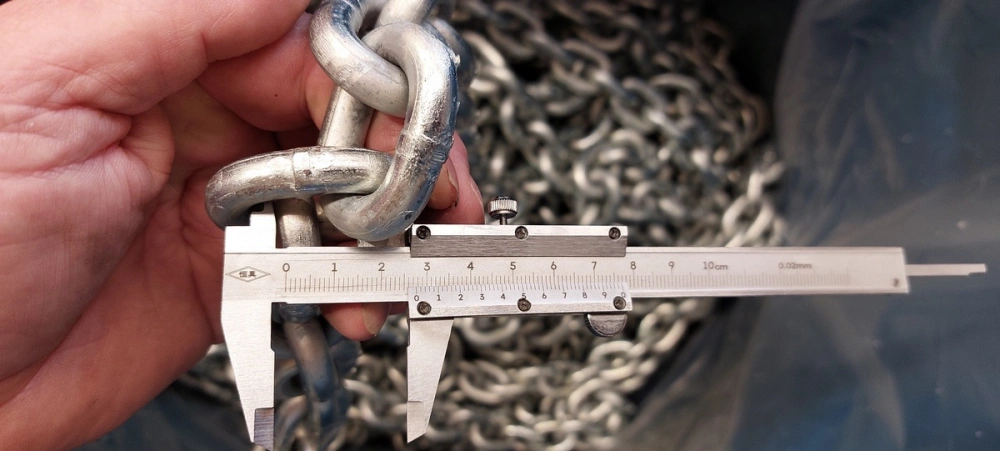
You must measure your tow chain accurately to ensure a safe connection between your trailer and towing vehicle. Follow these steps to get the correct size:
Clean the chain to remove any dirt or grease.
Use a caliper to measure the wire diameter at several points along the chain.
Measure the inner width between the sides of a link.
Measure the pitch from the center of one link to the next.
For roller chains, measure the roller and pin diameters if needed.
Compare your measurements with the manufacturer’s catalog to confirm the size.
For weldless chains, account for any twists during measurement.
Tip: Always measure your tow chain before you attach it to your trailer. This step helps you avoid mismatches and ensures your towing setup meets safety standards.
You can rely on Powerful Machinery’s range of tow chains for accurate sizing and consistent quality. Each chain comes with clear markings, so you know exactly what you are using for every tow.
Tow Chain Size Chart
Matching Vehicle Weight to Chain Size
Selecting the right tow chain size for your trailer is essential for safe towing. You must always match the chain’s strength to the gross trailer weight and the type of vehicle you plan to tow. Using a chain that is too small can lead to failure, especially when handling heavy loads.
Powerful Machinery makes it easy to choose the correct chain by offering a clear size chart that aligns with industry standards.
Below is a helpful chart to guide your selection. Always check your trailer weight and vehicle type before you tow.
Gross Trailer Weight (lbs) | Recommended Chain Size (inches) | Chain Grade | Working Load Limit (lbs) | Typical Application |
|---|---|---|---|---|
Up to 2,000 | 1/4 | G43/G70 | 2,600 – 3,150 | Small utility trailer |
2,000 – 4,700 | 5/16 | G43/G70 | 3,900 – 4,700 | Single-axle trailer |
4,700 – 7,100 | 3/8 | G43/G70 | 5,400 – 6,600 | Car hauler, medium trailer |
7,100 – 11,300 | 7/16 | G70 | 8,700 | Large trailer, RV |
11,300 – 15,800 | 1/2 | G70 | 11,300 – 15,800 | Heavy loads, equipment |
For example, if you need to tow a vehicle weighing 5,000 pounds, you should select a chain with a breaking strength of at least 5,000 pounds. This ensures your towing setup can safely handle the trailer and its load. Always verify the working load limit stamped on the chain before you tow.
Powerful Machinery’s tow chains stand out in the industry. You can choose from G70 and G80 grades, both recognized for their strength and reliability. These chains meet or exceed safety benchmarks set by organizations like NACM, ASTM, and OSHA.
Each chain uses high-quality steel and undergoes rigorous testing, so you can trust it for towing heavy loads or securing your trailer.
Tip: Always use chains that match or exceed your trailer weight. Never use a chain with unknown ratings or visible damage.
Choosing the right tow chain size protects your equipment and ensures every tow is safe and efficient. Powerful Machinery provides a full range of sizes and grades, so you can find the perfect fit for any trailer or heavy loads.
Checking Tow Chain Ratings and Markings
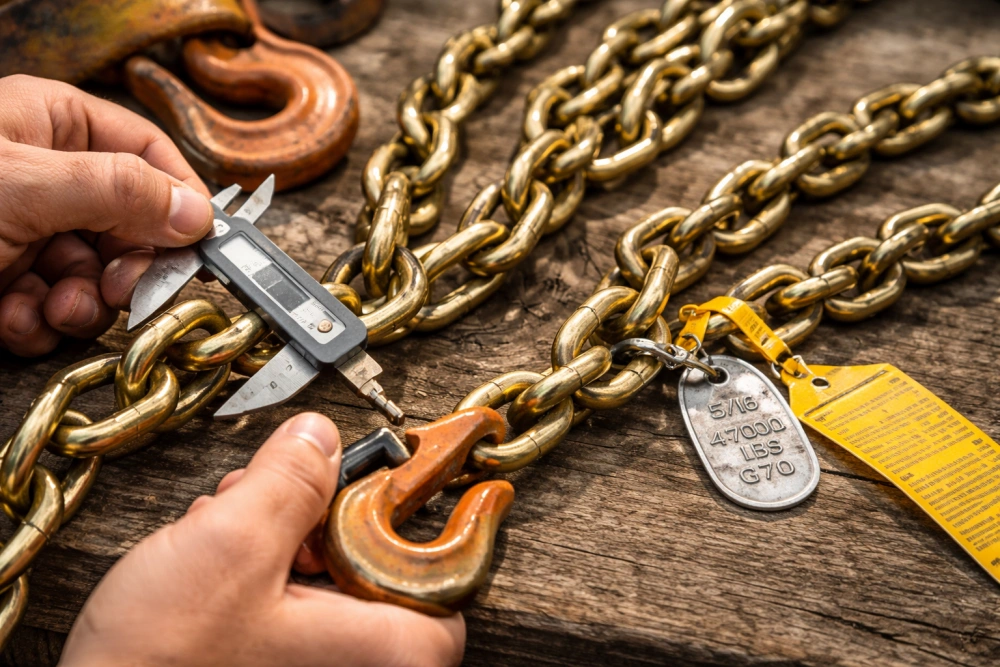
When you select a tow chain for your trailer, you must check the chain’s ratings and markings before every towing job. These markings help you confirm the chain’s grade and working load limit (WLL), which are critical for safe towing.
You should never use a chain without clear, legible markings, as this puts your trailer and equipment at risk.
How to Identify Chain Grade and WLL?
You can find the chain grade and WLL stamped directly on the links or tags attached to the chain. Each grade has a unique marking that helps you identify its strength and proper use.
For example, a Grade 70 chain will show a “7” or “70” on the links, while a Grade 43 chain will display a “4” or “43.” These markings follow industry standards and help you match the chain to your trailer’s requirements.
Tip: Always inspect the markings before you tow. If you see worn or missing markings, replace the chain immediately.
Here is a quick reference table to help you read chain markings:
Chain Grade | Marking | Description |
|---|---|---|
G30 | 3 or 30 | Not typically marked for towing |
G43 | 4 or 43 | High-Test chain for general trailer towing |
G70 | 7 or 70 | Transport chain, yellow chrome coating |
G80 | 8 or 80 | Alloy chain, approved for overhead lifting |
G100 | 10 or 100 | High-strength alloy, higher WLL |
Chains used for lifting, such as G80 and G100, must always have the grade marked on the links. You should avoid using chains without grade markings for towing or trailer applications. Markings also show compliance with safety standards set by organizations like OSHA and ASME.
Powerful Machinery makes it easy for you to verify chain ratings. Every tow chain comes with certified markings and detailed documentation. You receive inspection certificates that confirm compliance with ASME standards. The certificates include the date, inspector’s name, and sling identification.
Powerful Machinery also keeps records of periodic inspections, so you can trust the chain’s history and safety.
When you prepare for your next towing job, always check the chain’s markings and review the documentation. This step ensures your trailer stays secure and your tow setup meets all legal and safety requirements.
Safety and Legal Tips for Towing Chains
Best Practices for Safe Towing
You must follow best practices every time you use trailer safety chains. Proper use keeps your trailer secure and prevents accidents during towing. Always inspect your trailer safety chains before each tow. Look for signs of wear, rust, or damage. Replace any chain that shows weakness.
Use only chains that match or exceed the weight of your trailer and load. Never use chains with unknown ratings.
Industry experts recommend a systematic approach to loading and unloading. Take your time and avoid rushing. Secure your trailer safety chains tightly and use the correct attachment points specified by the manufacturer.
This step prevents failure and keeps your trailer connected. Maintain proper towing angles to avoid damage to your equipment. Regularly check the security of your trailer safety chains during transport, especially on long trips or when carrying a heavy load.
Here is a table of best practices for safe towing:
Best Practice | Description |
|---|---|
Secure Loading | Ensure vehicles are securely fastened, with all trailer safety chains tight. |
Systematic Approach | Follow a step-by-step process for loading and unloading. |
Proper Attachment | Use manufacturer-specified points for trailer safety chains. |
Weight Ratings | Never exceed the chain’s weight rating. |
Towing Angles | Maintain correct angles to prevent damage. |
Regular Checks | Inspect load security and trailer safety chains during transport. |
Common causes of tow chain failure include improper connection, insufficient rating, and lack of maintenance. You can prevent these issues by always checking your trailer safety chains and using the right size for your tow.
Legal Requirements and Compliance
You must follow legal requirements when using trailer safety chains for towing. Laws require you to use trailer safety chains that prevent the trailer from detaching if the main connection fails. Always connect the chains to the frame of both the towing vehicle and the trailer.
Make sure the chains are short enough to keep the trailer from hitting the ground if disconnected, but long enough to allow turning.
Powerful Machinery ensures that every tow chain meets or exceeds international standards. The company uses rigorous testing, traceable heat treatments, and strict quality control. Each tow chain offers reliable performance in harsh environments, making them ideal for heavy-duty towing and regular trailer use.
Certified tow chains from Powerful Machinery meet global manufacturing standards and provide documented proof of compliance. You can trust these trailer safety chains for every tow, knowing they deliver safety and reliability.
Tip: Always keep documentation for your trailer safety chains. This record proves compliance during inspections and helps you track maintenance.
By following these safety and legal tips, you protect your equipment and ensure safe towing every time you use your trailer.
Conclusion
To choose the right tow chain size, you should:
Select chains graded for heavy loads, like G70.
Confirm the chain meets legal and safety standards.
Focus on vehicle weight, chain grade, and working load limit.
Powerful Machinery’s certified chains deliver safety, reduced maintenance, and long-term value for every trailer application.
Always review this checklist before towing:
Checklist Item | Description |
|---|---|
Inspect the Trailer and Tow Vehicle | Check tires, lights, brakes, and fluids for safety. |
Secure the Hitch and Connections | Attach safety chains and test the breakaway system. |
Check Load Distribution | Secure cargo and balance weight properly. |
Verify Electrical Connections | Inspect wiring and battery systems. |
Check Visibility and Mirrors | Adjust mirrors for clear sight lines. |
Test the Braking System | Calibrate the brake controller and test the manual override. |
Review State Laws and Regulations | Confirm compliance with local towing rules. |
Final Walk-Around Inspection | Ensure everything is secure before you drive. |
FAQ
What is the difference between a tow chain and a tow strap?
You use a tow chain for heavy-duty jobs. It resists abrasion and heat. A tow strap works best for lighter tasks. Always check your equipment before you tow any load.
How do I choose the right chain for vehicle recovery?
You must match the chain’s working load limit to your vehicle recovery needs. Select a chain grade and size that handles the weight of your vehicle. Inspect the chain before every use.
Can I use any chain for my trailer?
You should never use just any chain for your trailer. Always select a certified chain with the correct grade and markings. This ensures safety and legal compliance during transport.
How often should I inspect my towing chains?
You need to inspect your chains before each use. Look for signs of wear, rust, or damage. Replace any chain that shows weakness to prevent failure during towing.
What accessories can I add to my towing chain setup?
You can add grab hooks, slip hooks, or shackles to your towing chain. These accessories help you secure loads and improve safety during transport.