You rely on material handling lifting equipment to move heavy loads safely and efficiently in industrial settings. The right equipment improves workflow and protects your team from injury.
Design and material choice affect load-bearing capacity and durability, which means certified equipment supports safe and efficient lifting even in demanding environments. Advanced equipment also helps you shorten picking and transport times, making your operations smoother.
Powerful Machinery delivers certified solutions you can trust for every job.
Key Takeaways
Choose the right lifting equipment based on load capacity, space, and safety features to improve efficiency and protect your team.
Regular inspections and maintenance of lifting equipment are essential to prevent accidents and ensure compliance with safety regulations.
Investing in certified lifting equipment enhances productivity, reduces product damage, and builds a safer work environment.
Tailor your material handling solutions to fit your specific needs, including customization options for better workflow and ergonomics.
Proper training for operators is crucial; ensure they understand safety protocols and equipment operation to minimize risks.
What Is Material Handling Lifting Equipment?
Definition and Key Functions
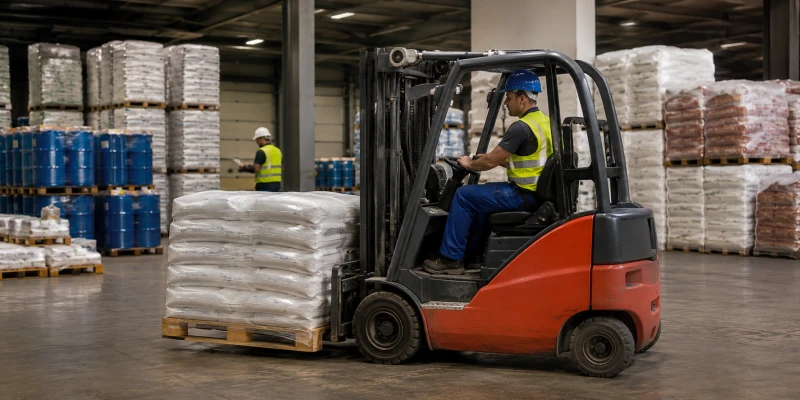
You use material handling lifting equipment to move, store, control, and protect materials throughout your facility. This equipment includes machines, tools, and systems that help you handle heavy or bulky items with less effort. In your daily operations, you may rely on a variety of lifting equipment, such as:
Support structures
Moving skates and hand trucks
Pallet jacks and electric lifters
Forklifts
Vacuum lifting systems
Conveyor belt systems
Engineered systems
Each type of equipment serves a specific purpose. For example, you use cranes to lift building materials to higher floors, while forklifts and pallet jacks move goods across warehouses. The main goal of material handling equipment is to get the right material to the right place, at the right time, and in the right condition.
This process reduces manual labor, improves productivity, and minimizes damage or loss. You also cut down indirect labor costs and maximize space by storing materials properly. Lifting equipment helps you minimize accidents and improve customer service by making materials easier to handle.
Why It Matters in Industry?
You face many risks when lifting heavy loads by hand. Overexertion from lifting causes thousands of injuries every year. Using the right lifting equipment protects your team and keeps your workplace safe.
Routine inspections and preventive maintenance help you spot problems early. You must enforce load limits and train operators to use equipment safely.
OSHA doesn’t care if an incident was ‘just bad luck.’ If equipment was misused, poorly maintained, or operated by an untrained worker, citations and fines can follow.
You need to follow strict safety rules and keep good records to show compliance. Material handling lifting equipment supports your business by reducing downtime, preventing injuries, and meeting industry regulations. When you invest in reliable lifting solutions, you build a safer and more efficient operation.
Main Types of Material Handling Lifting Equipment
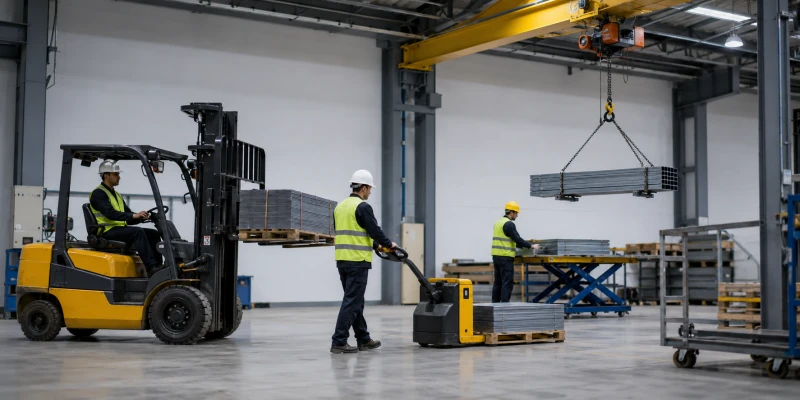
You encounter many types of material handling equipment in your daily operations. Each type serves a unique purpose and helps you move, lift, or position loads safely and efficiently. Understanding these lifting equipment types allows you to select the right tool for your job and improve productivity.
Cranes and Hoists
Cranes and hoists are essential for heavy lifting in industrial environments. You use cranes to move large items like steel beams, machinery, or containers. Overhead cranes work well in factories and warehouses, while gantry cranes handle bulk materials outdoors.
Hoists give you precise control for lifting smaller loads in workshops.
Crane Type | Typical Lifting Capacity |
|---|---|
Tower Cranes | 20 tons to 100 tons |
Mobile Cranes | 10 tons to 60 tons |
Truck Cranes | Up to 175 tons |
Gantry Cranes | Varies widely, some over 1,000 tons |
Workstation Cranes | 150 lbs to 2 tons |
You rely on cranes for construction, manufacturing, and cargo handling. Hoists help you lift engines, tools, or parts with accuracy. Powerful Machinery offers robust hoisting equipment with chain-driven lifts and durable hooks, suitable for both manual and electric operation.
Cranes handle heavy loads, while hoists provide precision for smaller items. You choose based on your lifting needs and workspace.
Forklifts and Material Handling Lift Trucks
Forklifts are one of the most common types of material handling equipment. You use forklifts to lift and transport pallets, crates, and heavy goods across warehouses and job sites. Material handling lift trucks include telehandlers, which help you move pallets and construction materials in challenging environments.
Safety Feature | Description |
|---|---|
Automatic braking | Engages brakes automatically to prevent accidents. |
Load sensors | Alerts if the load exceeds safe limits. |
Operator protection systems | Shields operators from hazards. |
Anti-tip mechanisms | Prevents tipping during operation. |
Emergency stop functions | Allows immediate shutdown in emergencies. |
Speed control settings | Regulates speed for safety. |
Operator visibility enhancements | Improves visibility for safer maneuvering. |
You benefit from these safety features every time you operate forklifts or material handling lift trucks. Powerful Machinery provides forklifts with customizable fork dimensions and secure locking mechanisms, ensuring safe and efficient lifts.
Conduct routine inspections of brakes, hydraulics, and tires.
Provide thorough operator training for safe handling.
Check load capacity before lifts to avoid overloading.
Maintain a consistent maintenance schedule.
Pallet Jacks
Pallet jacks are vital types of lifting equipment for moving pallets within warehouses or distribution centers. You use these tools to transport heavy loads over short distances and maneuver in tight spaces.
Pallet jacks and pallet trucks facilitate the movement of heavy loads.
They reduce manual labor and speed up operations.
These tools optimize workflow for short-distance transport.
Powerful Machinery offers pallet jacks with compact designs, durable steel construction, and ergonomic handles. You can customize platform size and load capacity to fit your needs.
Hydraulic Lift Tables
Hydraulic lift tables help you position materials at ergonomic heights. You use these lifts to raise equipment, parts, or goods for assembly, packing, or maintenance. Scissor lifts and boom lifts are common types that support workers and materials at height.
Hydraulic lift tables feature adjustable height, heavy-duty steel frames, and responsive controls. You improve safety and reduce strain by using these lifts for repetitive tasks. Powerful Machinery provides hydraulic lift tables with customizable options for platform size and lifting height.
Cargo Skates and Skates Systems
Cargo skates and skate systems are specialized types of lifting equipment for moving heavy machinery. You use these tools to transport equipment across floors with minimal effort.
Flexibility: Adjust skates to support various shapes and sizes of machinery.
Stability: Low-profile design maintains the center of gravity and reduces risk.
Easy carrying and positioning: Detachable handles make maneuvering simple.
The ST Steerable Machine Skates offer precise control with a rotating swivel pad and heavy-duty handle. Hevi-Haul Skates feature fully welded steel frames and can be customized for specific moving requirements. Powerful Machinery supplies cargo skates with high-load capacity and smooth floor compatibility.
Lifting Chains, Slings, and Rigging Hardware
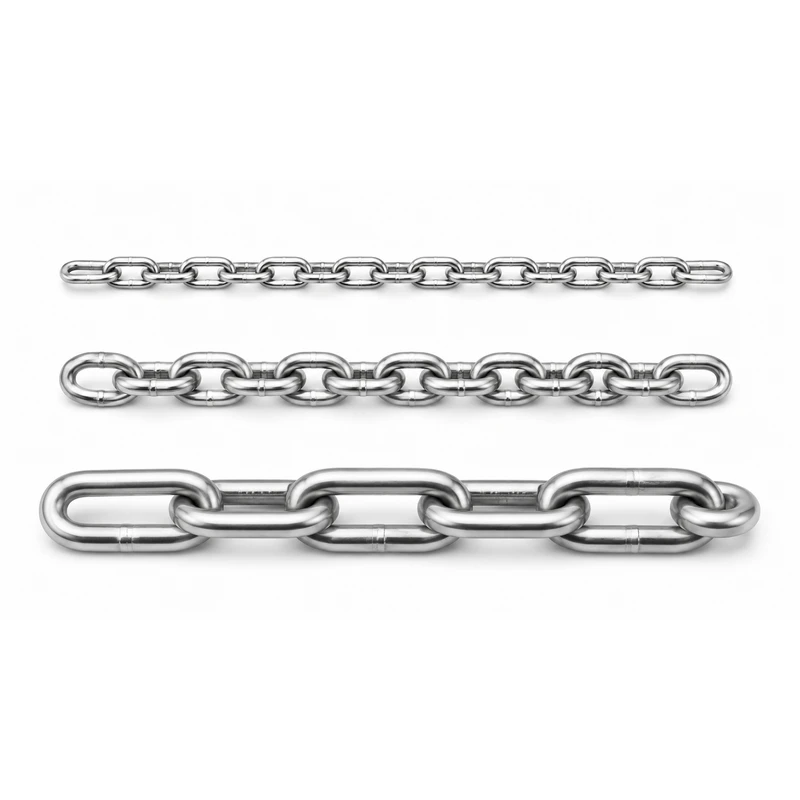
Lifting chains, slings, and rigging hardware are critical for safe and reliable lifting. You use these types in construction, marine, and transportation industries. Powerful Machinery manufactures high-tensile Grade 80 and G100 lifting chains, hooks, shackles, master links, and wire rope fittings.
Lifting chains require certification at least annually according to OSHA and ASME standards.
Proof testing is mandatory for new or repaired gear, with ASME stipulating a test at 125% of the working load limit.
Regular inspections and record-keeping for slings are necessary.
OSHA mandates proof testing for all alloy steel chain slings and their components before use.
You ensure safety and compliance by choosing certified lifting equipment from Powerful Machinery. Each component is tagged with load capacity and manufacturer information.
Forklift Attachments and Accessories
Forklift attachments and accessories expand the capabilities of your material handling lift trucks. You use fork extensions, fork positioners, side shifters, telescopic forks, and weigh forks to handle a variety of loads.
Fork Extensions: Handle longer and larger loads.
Side Shifters: Move loads sideways without repositioning the forklift.
Grippers and Rotators: Expand capabilities in agriculture and food industries.
Fork extensions provide extra reach, while fork positioners allow hydraulic adjustment of fork spacing. Side shifters enable lateral movement, and telescopic forks extend to access double-deep racks.
Powerful Machinery offers a wide range of forklift attachments and accessories, allowing you to customize your equipment for unique material handling tasks.
You improve efficiency and safety by selecting the right types of lifting equipment for each application. Powerful Machinery supports you with certified products and expert advice.
Uses of Lifting Equipment Across Industries
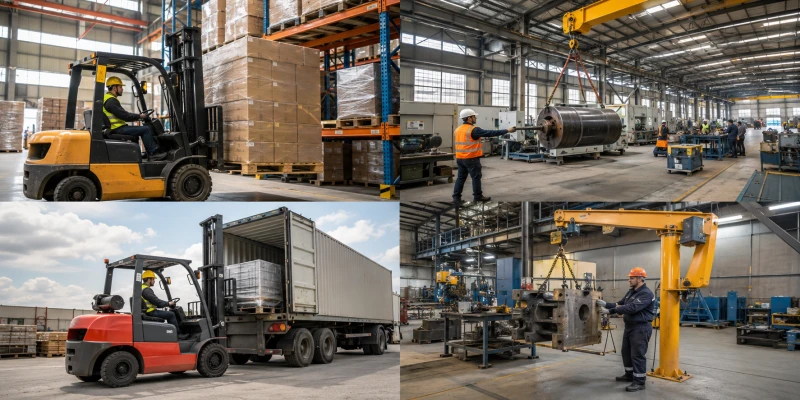
Warehousing and Logistics
You depend on lifting equipment every day to keep warehouse operations running smoothly. Forklifts help you lift, move, and stack heavy pallets. You use pallet jacks to transport goods over short distances, making it easier to organize products.
Hoists and cranes handle extremely heavy loads with precision. Scissor lifts and boom lifts give you safe access to high storage areas. These systems reduce manual labor and improve safety for your team.
Forklifts: Move and stack pallets and materials.
Pallet jacks: Transport pallets across the warehouse.
Hoists and cranes: Lift heavy items with accuracy.
Scissor lifts and boom lifts: Reach high shelves safely.
You rely on material handling equipment to increase efficiency and reduce the risk of injury in warehouse operations.
Manufacturing and Assembly
In manufacturing, you use lifting equipment to speed up production and assembly. Cranes and hoists move heavy parts across the factory floor. Winches and jacks help you position equipment for assembly. These systems boost productivity and help you meet safety standards.
You can adapt material handling lift solutions for different tasks, making your workflow more flexible.
Enhanced efficiency: Lifting equipment reduces manual work and project times.
Improved safety: You lower the risk of injuries and meet regulations.
Versatility: Use the same systems in many industries.
Construction and Heavy Industry
You see cranes, hoists, winches, and jacks on every construction site. These tools lift building materials to higher floors and move heavy loads safely. Slings, shackles, and hardware connect loads to cranes. Lifting beams and clamps help you handle large or awkward items.
Telehandlers give you extra reach and flexibility for tough jobs. You depend on this equipment to keep projects on schedule and maintain safety.
Marine, Transportation, and Cargo Handling
Lifting equipment is essential for moving cargo at ports and on ships. You use ship cranes to load and unload containers quickly. Straddle carriers, tractors, and trailers move goods within terminal areas. Side loaders and stacker cranes help you organize cargo.
Dockside gantry cranes adjust for different container sizes. These systems lower labor costs and improve safety by reducing manual lifting. Efficient cargo handling also helps protect the environment by lowering emissions and energy use.
Proper planning and the right equipment can make cargo handling safer and more efficient.
Specialized Applications for Powerful Machinery Products
You find Powerful Machinery products in some of the world’s toughest environments. You use their lifting solutions to build skyscrapers and handle cargo at busy ports. Their equipment supports you in demanding tasks where reliability and safety matter most.
Powerful Machinery designs systems that meet strict standards, giving you confidence in every lift. You can trust their products for specialized material handling uses in any industry.
Industry | Description of Use |
|---|---|
Construction | Uses cranes to lift building materials to higher floors and move heavy materials. |
Manufacturing | Relies on material handling systems to keep production lines running smoothly. |
Marine | Essential for loading and unloading cargo in shipyards. |
Transportation | Utilizes hoists and winches to secure materials on trucks and trains. |
Warehousing | Depends on forklifts and clamps to organize goods and move materials efficiently. |
How to Select the Right Material Handling Lifting Equipment?
Choosing the right material handling lifting equipment helps you improve productivity, protect your team, and meet industry standards. You need to consider several factors before making your decision. This guide walks you through each step so you can select the best solution for your operation.
Assessing Load and Application Needs
You start by understanding what you need to lift and how you plan to use the equipment. Consider these important factors:
Load Capacity
Check the weight of your materials. Make sure your equipment can handle the load. Overloading leads to equipment failure and safety hazards. Always review manufacturer specifications and add a safety margin.Space and Maneuverability
Look at your warehouse layout. If you have tight spaces or narrow aisles, choose compact forklifts or reach trucks. Assess turning radius and operational flexibility.Power Source
Decide if you need electric, diesel, or manual lifts. Electric options work well indoors and reduce emissions. Manual lifts suit smaller loads and short distances.Safety Features
Select equipment with automatic braking, load sensors, and operator protection systems. These features help you prevent accidents and keep your team safe.Cost and Maintenance
Think about both the initial investment and long-term maintenance. Well-maintained equipment lasts longer and performs better.Technology Integration
Modern lifting equipment includes smart features like telematics and automation. These systems help you track usage and improve efficiency.Compliance and Safety Regulations
Make sure your equipment meets OSHA, ANSI, and ISO certifications. Compliance protects your business and ensures safe operation.
Tip: Always match the equipment to your lifting needs. If you handle heavy loads, cranes or hoists may be best. For pallets and smaller items, forklifts or pallet jacks offer flexibility.
Evaluating Work Environment and Space
Your work environment and available space play a big role in equipment selection. You need to match the equipment to your warehouse layout and operational needs.
Industry Need / Factor | Influence on Equipment Choice |
|---|---|
Type of materials handled | Determines equipment type (forklifts for pallets, cranes for heavy items) |
Volume and weight | Requires equipment with proper load capacity and handling speed |
Operational complexity | Complex operations may need automated or specialized systems |
Space constraints | Equipment must fit the layout; narrow aisle forklifts or high-density storage preferred |
Safety requirements | Equipment with ergonomic design and safety features reduces injury risk |
You must consider space constraints, the nature of the materials, and the complexity of your operations. If you have limited space, choose equipment that fits your warehouse and allows easy movement. For high-volume operations, automated systems or specialized lifts can help you keep up with demand.
Note: The right equipment improves workflow and reduces accidents. Ergonomic designs and safety features protect your team during lifting tasks.
Safety, Compliance, and Certifications
Safety is a top priority when selecting material handling equipment. You must follow compliance and safety regulations to protect your team and avoid penalties.
Compliance with OSHA regulations is mandatory. You need periodic inspections and proper operator certifications.
ANSI standards outline best practices for different types of lifting equipment.
Keep up-to-date documentation for inspections and audits.
Forklift operator certification is essential. OSHA requires classroom instruction and hands-on training.
Operators must show their skills and knowledge of workplace hazards.
Mandatory training includes:
Formal classroom instruction
Practical hands-on training
Performance evaluation
Hazard identification
You ensure safety by choosing certified equipment and training your team. Regular inspections and proper documentation help you stay compliant.
Alert: Never skip training or inspections. Certified equipment and skilled operators prevent accidents and keep your operation running smoothly.
Cost, Customization, and Manufacturer Support
Cost, customization, and manufacturer support affect your decision. You need to look beyond the purchase price and consider long-term value.
Cost Component | Description |
|---|---|
Programming | Software and system setup for automation systems. |
Installation | Expenses for setting up equipment. |
Operation | Ongoing energy and labor expenses. |
Repair and Maintenance | Regular upkeep for safety and performance. |
Disposal | End-of-life removal costs. |
Custom machines help you stay on schedule and improve safety. Automation systems reduce repetitive injuries and increase productivity. Tailored solutions ensure repeatable quality and advanced capabilities.
Custom designs fit your existing systems and improve ergonomics for your team. You save money by reducing waste and maintenance costs.
Manufacturer support is crucial. You need expert advice from consultation to installation. Reliable support ensures your equipment meets operational needs and provides long-term value.
Tip: Choose a manufacturer that offers customization and ongoing support. Powerful Machinery provides tailored solutions and expert guidance for your material handling lift needs.
Step-by-Step Selection Guide with Powerful Machinery
You can follow this step-by-step guide to select the right material handling lifting equipment for your operation:
Identify Your Lifting Needs
List the materials you need to lift. Record their weight, size, and frequency of movement.Evaluate Your Work Environment
Measure your warehouse space. Note aisle widths, ceiling heights, and storage layouts.Choose the Right Equipment Type
Decide if you need forklifts, cranes, pallet jacks, or hydraulic lifts. Match the equipment to your materials and space.Review Safety Features and Certifications
Check for automatic braking, load sensors, and operator protection systems. Confirm compliance with OSHA, ANSI, and ISO standards.Consider Customization Options
Look for equipment that can be customized for your workflow. Powerful Machinery offers platform size, fork dimensions, and specialized attachments.Calculate Total Cost of Ownership
Include installation, operation, maintenance, and disposal costs. Well-maintained equipment reduces downtime and saves money.Consult with Powerful Machinery Experts
Reach out for advice and support. Powerful Machinery helps you select, customize, and maintain your lifting equipment.
Powerful Machinery delivers certified material handling equipment with expert support. You get reliable lifts, cranes, forklifts, and systems designed for your needs.
You improve efficiency, safety, and compliance by following this guide. The right equipment helps you lift, move, and store materials with confidence.
Lifting Equipment Maintenance and Safety
Key Safety Regulations and Standards
You must follow strict lifting equipment regulations to keep your warehouse safe and efficient. These standards protect your team and ensure your material handling equipment works as intended. The table below shows important regulations and standards you need to know:
Regulation | Description |
|---|---|
OSHA 1910.179 | Safety requirements for overhead cranes, including rated load limits and proof testing. |
OSHA 1926 Subpart CC | Regulations for mobile cranes focusing on safety and compliance. |
OSHA 1910.184 | Guidelines for slings and rigging, emphasizing load limits and record-keeping. |
LOLER | European regulations mandate periodic inspections and certified proof tests. |
ISO 9927 | Crane inspection requirements for safety and compliance. |
ISO 4301 | Classification of cranes based on design and usage. |
ISO 4309 | Criteria for discarding wire ropes based on fatigue and damage history. |
ISO 13849 | Functional safety standards for control systems, including load monitoring devices. |
You should always check that your lifting equipment meets these standards. Following lifting equipment regulations helps you avoid accidents and legal issues. You also show your commitment to safety and quality in your warehouse.
Operator Training and Certification
Proper training is essential for anyone using material handling equipment. OSHA requires you to train operators of forklifts, cranes, and aerial lifts. This training covers safe operation, hazard recognition, and emergency response. You must ensure your team understands all lifting equipment regulations and standards.
Equipment Type | Training Requirements |
|---|---|
Crane | Extensive training required, more than for smaller equipment. |
Pallet Jack | Less training required compared to larger equipment. |
Aerial Lift | Comprehensive training covering safe operation, hazard recognition, and emergency procedures. |
Forklift | Mandatory training elements include classroom instruction and practical hands-on training. |
You should include the following in your training program:
Comprehensive theoretical training
Practical equipment demonstration
Hazard identification assessment
Written and performance examinations
Periodic recertification
You keep your warehouse safe by making sure all operators are certified and up to date with the latest standards.
Inspection and Lifting Equipment Maintenance Best Practices
Regular inspection and lifting equipment maintenance keep your systems reliable and safe. You must inspect your equipment often to catch problems early. The table below shows recommended inspection intervals:
Equipment Type | Recommended Interval |
|---|---|
General Lifting Equipment | Every 6 months (minimum) |
Lifting Equipment for People | Every 6 months (minimum) |
Annual Tests | Minimum requirement |
Follow these best practices for inspection and maintenance:
Conduct routine equipment inspections and preventive maintenance.
Enforce strict load limits and weight controls.
Plan and execute safe lifting operations.
Keep comprehensive safety records and documentation.
You should also:
Check for wear and damage during each inspection.
Replace worn parts before they fail.
Review your systems and update your safety procedures as needed.
By following these standards and best practices, you protect your team and keep your warehouse running smoothly.
Conclusion
You improve warehouse efficiency and safety when you match the right material handling lifting equipment to each task. The table below shows how proper lifting equipment boosts productivity and reduces product damage:
Benefit | Description |
|---|---|
Improved load handling | Reduces the time needed to move heavy items. |
Streamlined material transportation | Creates smoother workflows, enhancing overall operational efficiency. |
Enhanced lifting performance | Allows workers to handle more items per shift, increasing productivity. |
Time reduction | A properly chosen lift can cut the time needed to move inventory by up to 50%. |
Reduced product damage | Minimizes damage during transport, saving costs on replacements and returns. |
Regular maintenance and compliance keep your warehouse safe. Investing in certified lifting equipment gives you long-term benefits:
Equipment purchases can provide financial advantages.
High-quality lifting equipment builds equity and serves as reliable collateral.
You can consult Powerful Machinery for expert advice and certified solutions. Their custom lifting equipment improves workflow, increases productivity, and ensures safety in your warehouse.
FAQ
What is the most important factor when choosing lifting equipment?
You should always check the load capacity first. The right equipment must safely handle the weight of your materials. This helps you prevent accidents and keeps your team safe.
How often should you inspect your lifting equipment?
You need to inspect your equipment before each use. Schedule regular checks every six months. Frequent inspections help you spot problems early and keep your equipment in top condition.
Can you customize material handling equipment for your needs?
Yes, you can request custom features. You may need special sizes, attachments, or lifting heights. Custom equipment helps you match your workflow and improve efficiency.
Why is certified equipment important for your business?
Certified equipment meets strict safety standards. You reduce risks and avoid penalties. You also show your commitment to safety and quality in your workplace.
What industries use material handling equipment?
You find this equipment in warehousing, construction, manufacturing, marine, and transportation. Each industry uses equipment to move, lift, or store heavy materials safely and efficiently.