When you select lifting jacks for your operations, you make critical decisions that affect both safety and efficiency. The global market favors hydraulic jacks for their reliability, while mechanical and electric jacks serve distinct user groups.
Type of Jack | Market Share Characteristics |
|---|---|
Hydraulic Jacks | Leading in professional and consumer markets |
Mechanical Jacks | Popular for DIY, but declining |
Pneumatic Jacks | Growing in automotive workshops |
Electric Jacks | Fastest-growing, driven by convenience |
Others | Niche applications persist |
Workplace safety statistics highlight that overload incidents account for 22% of hydraulic jack failures, but modern stability features can reduce tipping by up to 40%. You can trust Powerful Machinery’s certified products for dependable lifting solutions engineered to minimize risk.
Key Takeaways
Choose the right type of jack for your specific task to ensure safety and efficiency.
Always inspect your jack before use to prevent accidents and ensure reliable performance.
Use jack stands for added support after lifting to enhance safety during repairs.
Select a jack with a load capacity at least 25% higher than your heaviest load for a safety buffer.
Follow proper lifting procedures and safety protocols to minimize risks during operations.
Types of Jacks
Choosing the right jack types is essential for safe and efficient lifting in any industry. You will find that the market offers a wide range of lifting jacks, each designed for specific tasks and environments. Understanding the differences between the common types of jacks helps you select the best tool for your needs.
Hydraulic Jacks (Bottle, Floor, Trolley)
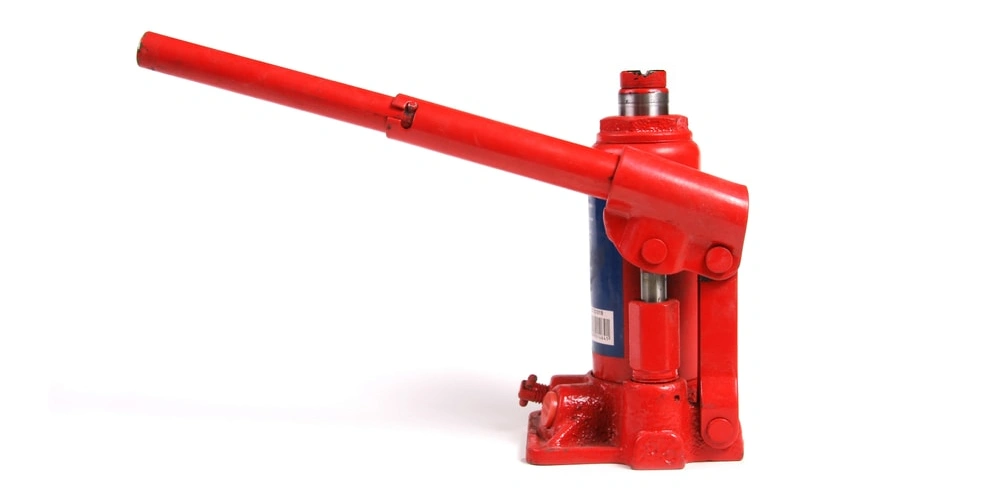
Hydraulic jacks use pressurized hydraulic fluid to generate a lifting force. This mechanism, based on Pascal’s law, allows you to lift heavy loads with minimal effort. These jacks come in several forms, including bottle jacks, floor jacks, and trolley jacks.
Category | Hydraulic Jacks | Mechanical Jacks |
|---|---|---|
Mechanism | Operate using pressurized hydraulic fluid based on Pascal’s law. | Use mechanical components like gears, levers, or screws to lift loads. |
Advantages | Can lift heavier loads with less effort; suitable for various heavy applications. | Simpler mechanisms may require less frequent maintenance. |
Applications | Common in garages, construction, aviation, and mining industries. | Used for changing tires, foundation repairs, and in factories. |
Types | Bottle Jack, Floor Jack, Trolley Jack | Scissor Jack, Rack and Pinion Jack, Screw Jack |
You will often use bottle jacks for automotive maintenance and heavy machinery. Floor jacks and trolley jacks provide stability and mobility, making them ideal for garages and workshops. Trolley jacks, in particular, feature wheels for easy positioning under vehicles or equipment.
Type of Bottle Jack | Lifting Capacity Range | Typical Applications |
|---|---|---|
Light-duty | 2 tons to 6 tons | Automotive maintenance (cars, SUVs, light trucks) |
Medium-duty | 8 tons to 20 tons | Industrial and construction tasks (heavy machinery, equipment) |
Heavy-duty | Over 20 tons | Heavy-duty industrial lifting (large vehicles, industrial machinery) |
Tip: Hydraulic jacks offer high lifting efficiency and portability. You can use them for tire changes, lifting vehicles, and moving heavy equipment. Their compact structure and wide range of applications make them a top choice for professionals.
Mechanical Jacks (Scissor, Screw, Ratchet)
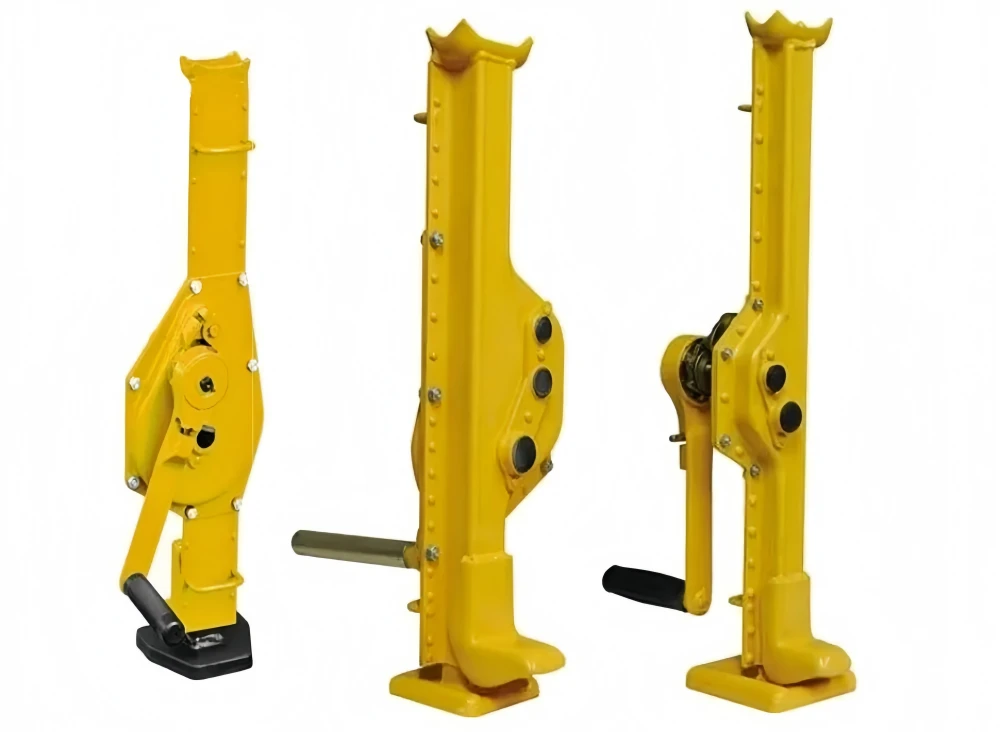
Mechanical jacks rely on gears, levers, or screw mechanisms to lift loads. Scissor jacks use a screw shaft to convert rotational force into vertical movement. You will find these jacks in most automotive toolkits for emergency tire changes.
Screw and ratchet jacks provide precise control and are suitable for both automotive and industrial uses.
Powerful Machinery’s Mechanical Jack stands out for its robust ratchet mechanism and adjustable lifting height. You can depend on it for a wide range of weights and applications, from vehicle repairs to supporting heavy machinery during maintenance.
Note: Always inspect your mechanical jack before use. Check for damage, verify load capacity, and ensure proper placement to maximize safety.
Pneumatic and Inflatable Jacks
Pneumatic jacks use compressed air to lift loads. Inflatable jacks, a subset of pneumatic jacks, expand under pressure to raise objects. These jack types are lightweight and easy to move, making them ideal for high-frequency lifting in warehouses and manufacturing plants.
Operational Principle | Typical Use Cases |
|---|---|
Utilizes compressed air for lifting loads | Ideal for high-frequency lifting in warehouses and manufacturing plants |
Lightweight design for easy mobility | Used in environments requiring quick operations to reduce downtime |
Dependent on a stable air supply | Regular maintenance is essential to prevent performance drops due to air pressure fluctuations |
You will appreciate pneumatic jacks when you need quick, repetitive lifting with minimal downtime. Their design supports fast operations and easy transport.
Electric and Winch-Jack Combos
Electric jacks and winch-jack combos use electric motors to lift loads, reducing the physical effort required. You can operate these jacks with the push of a button, making them perfect for vehicle recovery, lifting building materials, and other tasks where speed and convenience matter.
Electric jacks deliver consistent power and efficiency. You will find them especially useful in situations where manual lifting is impractical or time-consuming.
Specialist Jacks (Transmission, High-lift, Motorcycle, Pallet, Strand, Wheel Bumper)
Specialist jacks address unique lifting challenges. Transmission jacks support and position vehicle transmissions during repairs. High-lift jacks provide extended reach for off-road vehicles and agricultural equipment. Motorcycle jacks stabilize and lift bikes for maintenance.
Pallet jacks move heavy pallets in warehouses. Strand jacks handle synchronized lifting for large structures, while wheel bumper jacks assist with specific vehicle repairs.
You should choose specialist jacks when standard lifting jacks cannot meet your requirements. Each type offers features tailored to its intended application, ensuring safety and efficiency.
Toe Jacks
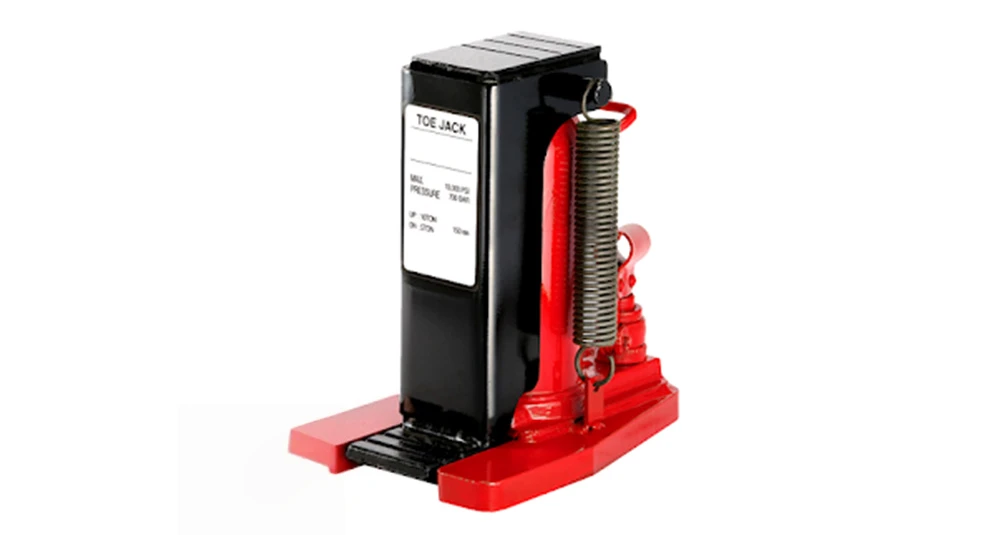
Toe jacks feature a low-profile design that fits under loads with minimal ground clearance. You will find them indispensable for lifting heavy machinery in tight spaces. Powerful Machinery’s Toe Jack combines a robust hydraulic system with a durable steel body, delivering reliable performance in demanding environments.
Low-profile design fits under objects with limited clearance.
Hydraulic operation provides high-capacity lifting.
Precise control allows accurate placement of machinery.
Enhances safety and efficiency by reducing manual lifting.
Toe jacks excel in industrial settings where you need to lift or position equipment without disassembly or floor modifications. Their versatility and reliability protect valuable machinery and streamline your workflow.
Pro Tip: Use toe jacks for machinery moving, maintenance, and any scenario where clearance is limited. Their specialized design ensures you can lift safely and efficiently, even in the most challenging environments.
By understanding the different types of lifting jacks and their uses, you can select the right jack for every job. Powerful Machinery’s certified Toe Jack and Mechanical Jack offer proven solutions for professionals who demand safety, durability, and performance.
Operational Principles of Lifting Jacks
Understanding how lifting jacks work helps you choose the right tool and use it safely. Each type of jack relies on a unique mechanism to generate a lifting force. Let’s explore how these systems operate.
Hydraulic Mechanism
Hydraulic jacks operate based on Pascal’s Law. When you apply force to the pump, it creates pressure in an enclosed fluid. This pressure moves the piston, which lifts the load. The main components include:
Cylinder: Holds the hydraulic fluid and allows the piston to move.
Piston: Moves up and down to create pressure.
Pump: Transfers fluid to build pressure.
Reservoir: Stores hydraulic fluid.
Valves: Control the direction and flow of fluid.
Release Valve: Lets you lower the load safely.
Check Valve: Prevents fluid from flowing backward.
Component | Function |
|---|---|
Cylinder | Houses fluid and piston movement |
Piston | Moves to lift the load |
Pump | Builds pressure in the system |
Reservoir | Stores hydraulic fluid |
Valves | Direct and control fluid flow |
Powerful Machinery’s hydraulic jacks feature precision engineering for smooth operation and reliable performance in demanding environments.
Mechanical Screw and Ratchet Systems
Mechanical jacks use a screw or ratchet mechanism to lift loads. When you turn the handle, the screw converts rotational motion into vertical movement. The self-locking threads keep the load stable, so you do not need to worry about sudden drops.
Ratchet systems allow you to lift with short, repeated movements, making the process efficient and controlled. Powerful Machinery’s mechanical jacks offer robust construction and precise control for a wide range of uses.
Pneumatic and Inflatable Operation
Pneumatic jacks use compressed air to generate a lifting force. Inflatable jacks, a type of pneumatic jack, expand when filled with air to lift or stabilize loads. These jacks work quickly and require minimal maintenance. You will find them lightweight and easy to maneuver, especially in tight spaces.
However, they can be noisier and offer less precise control than hydraulic systems.
Feature | Pneumatic Jacks | Inflatable Jacks |
|---|---|---|
Lifting Mechanism | Compressed air | Expanding airbag |
Advantages | Fast, low maintenance | Slim, lightweight, fits tight spaces |
Limitations | Less precise, noisy | Noisy, limited control |
Electric Power Systems
Electric jacks use a motor powered by an electric source, such as a vehicle battery or wall outlet. When you press a button, the motor activates and drives either a hydraulic pump or a mechanical gear. This system lifts the load smoothly and safely.
Built-in safety features, like overload protection and emergency lowering, ensure reliable operation. Powerful Machinery’s electric jacks deliver consistent performance and meet strict safety standards.
Tip: Always check the power source and safety systems before operating electric lifting jacks.
By understanding these operational principles, you can select the right jack for your application and trust in the engineering behind Powerful Machinery’s certified products.
How to Use a Jack Lift Safely?
Setup and Positioning
You must start every lifting operation by inspecting the area. Remove debris and check for uneven surfaces. Place the jack on a solid, level foundation. This step is vital for all lifting equipment, especially when you handle heavy loads in construction or vehicle repair.
Position the right jack under the recommended lifting point. Always set up jack stands or other supports before you begin lifting.
Inspect the lifting area for hazards.
Position the jack securely on a stable surface.
Set up jack stands for added support.
Using Axle Stands and Supports
Jack stands play a critical role in jack safety. Place them under the correct points, such as axle tubes or frame rails. Always consult your service manual for proper placement. After lifting, perform a jiggle test to confirm stability.
Keep the car lifting jack engaged for extra security. Never use jack stands on soft ground. If you must, place plywood underneath to prevent sinking. Always check the stability before working under the vehicle.
Place jack stands at manufacturer-recommended points.
Use wheel chocks and keep the vehicle in park or gear.
Test stability before starting repairs.
Surface and Vehicle Preparation
Choose a flat, hard surface like concrete or asphalt for all lifting jacks. Avoid grass, gravel, or slopes. Move the vehicle to a safe spot before you begin. Check the ground under the vehicle to ensure it is solid and flat. These safety measures reduce the risk of tipping or sliding during construction projects or vehicle repair.
Lifting and Lowering Procedures
Before lifting, inspect your jack for wear. Place it under the correct lifting point. Raise the load slowly and secure it with jack stands. When lowering, stand beside the vehicle, not under it. Lower the load gradually, using the release valve or handle, depending on the type of lifting equipment.
Stop when the tire or machinery touches the ground.
Tip: Always use the right jack for the lifting capacity and lifting height required by your task.
Risks of Incorrect Usage
Incorrect use of lifting jacks can cause serious injuries. Statistics show that 66% of lifting accidents involve hydraulic jacks, with 34% resulting in crush injuries requiring amputation. Each year, over 4,800 people receive treatment for jack-related injuries, with 40% occurring during extensive vehicle repair.
You must follow all safety precautions and use certified lifting equipment, like Powerful Machinery’s products, to protect yourself and your team.
Risk Type | Statistic |
|---|---|
Hydraulic jack accidents | 66% |
Crush injuries (hydraulic) | 34% |
Annual injuries | 4,822 |
Injuries during repairs | 40% |
By following these steps and using certified lifting equipment, you ensure safe and efficient lifting for construction, vehicle repair, and other heavy load applications.
Jacks in Industry Applications
Automotive Repair and Maintenance
You rely on lifting jacks every day in automotive repair shops and home garages. These tools help you lift vehicles for tire changes, brake repair, and undercarriage inspection. The most popular types include bottle jacks, scissor jacks, trolley jacks, and floor jacks. Each offers unique advantages for different repair scenarios.
Type of Jack | Description |
|---|---|
Bottle Jacks | Upright, compact, ideal for vertical lifting during vehicle repair. |
Scissor Jacks | Portable, classic design, perfect for emergency tire repair. |
Trolley Jacks | Heavy-duty, stable, and easy to maneuver for professional repair tasks. |
Floor Jacks | Wheel-mounted, lever-operated, convenient for frequent repair work. |
Axle stands support vehicles during extended repair, ensuring safety and stability.
Construction and Heavy Lifting
In construction, you use hydraulic jacks for house lifting, steel beam placement, and foundation repair. These jacks provide high capacity, precision, and durability. You can safely position large machinery and structures, such as during bridge repair or building erection.
Their robust design withstands tough site conditions and heavy weights.
Hydraulic jacks handle heavy loads for construction repair.
They offer precise control for safe lifting and positioning.
You depend on their durability for repeated repair tasks.
Manufacturing and Machinery Positioning
Lifting jacks play a vital role in manufacturing. You use them to lift vehicles and trailers for repair, raise heavy equipment for maintenance, and support machinery during installation. They also help you load heavy items onto trucks for transport.
Lift vehicles for tire or brake repair.
Raise equipment like excavators for repair.
Support machinery during component repair or installation.
Load heavy items for transport after repair.
Warehouse and Logistics
In warehouses, you use pallet jacks to move heavy loads efficiently. These tools reduce manual labor and fatigue during repair or routine operations. You must follow OSHA guidelines for safety. Manual and electric pallet jacks suit different repair and handling needs. Regular inspection and training minimize risks.
Key Consideration | Explanation |
|---|---|
Operational Efficiency | Pallet jacks speed up load movement, easing repair and logistics tasks. |
Safety Implications | OSHA compliance ensures safe repair and handling. |
Types of Pallet Jacks | Manual and electric models fit various repair requirements. |
Maintenance Needs | Regular checks keep repair operations safe. |
Hydraulic Mechanism | Simplifies lifting for repair and handling. |
Powerful Machinery Jacks in Critical Sectors
You find Powerful Machinery jacks in construction, marine, transportation, and cargo handling. In construction, you use them for lifting prefabricated structures and steel erection, which speeds up repair and building timelines.
In shipping, you rely on these jacks for port operations, container handling, and ship repair. Their strength and reliability support your repair needs in the most demanding environments.
Powerful Machinery’s certified lifting jacks help you complete repair and maintenance tasks safely and efficiently across every major industry.
Selecting the Right Lifting Jack
Load Capacity and Lifting Range
When you select a lifting jack, you must consider the weight and size of the load. Always choose a jack that exceeds your lifting needs. For safety, pick a jack with a capacity at least 25% higher than the heaviest load you plan to lift.
If you lift one end of a vehicle, use a jack rated for at least 75% of the vehicle’s Gross Vehicle Weight (GVW). For both ends, aim for 150%. Exceeding the rated limit can be dangerous. Opting for a higher capacity provides a safety buffer.
Assess axial and radial forces.
Select a jack with a higher capacity than required.
Check the weight capacity range, from 2 tons to over 50 tons.
Matching Jack Type to Application
You must match the jack type to your specific task. Bottle jacks work best for trucks, SUVs, and industrial machinery. Floor jacks suit low-clearance vehicles and offer stability for auto repairs. Scissor jacks are portable and ideal for emergency tire changes.
Mechanical jacks and toe jacks from Powerful Machinery provide versatility for heavy-duty lifting. Air jacks excel in quick operations and repetitive lifting tasks, especially in automotive workshops and warehouses.
Portability and Storage
Portability matters when you need to move jacks between locations. Scissor jacks and air jacks are lightweight and easy to store. Floor jacks and bottle jacks require more space but offer greater lifting power. Choose a jack that fits your workspace and storage needs.
Powerful Machinery offers compact designs for professionals who value mobility.
Surface Conditions and Stability
Stable lifting starts with the right surface. Place your jack on solid, level ground. Air jacks perform well on flat surfaces and can adapt to uneven terrain. Avoid using any jack on soft or sloped ground. Always check for stability before lifting. Powerful Machinery’s jacks feature wide bases for enhanced safety.
Power Source and Efficiency
Consider the power source for your lifting jack. Manual jacks require physical effort. Electric jacks and air jacks use motors or compressed air for efficient lifting. Air jacks reduce downtime and speed up operations in busy environments. Select a jack that matches your available power source and desired efficiency.
Safety Features and Compliance
Safety features protect you during lifting operations. Look for overload protection, positive stops, and rated capacity markings. Compliance with safety standards ensures reliability. Powerful Machinery’s jacks meet international certifications. Review the table below for key standards:
Safety Standard | Description |
|---|---|
ASME B30.1 | Covers construction, operation, inspection, testing, and maintenance of various jacks, ensuring safety and compliance. |
OSHA 1926.305 | Outlines general requirements for jacks, including rated capacity marking, positive stops, and maintenance protocols. |
Tip: Always verify that your jack meets or exceeds these safety standards before use.
Durability and Maintenance
Durability ensures long-term performance. Choose jacks made from high-quality materials like steel. Air jacks require regular inspection of hoses and seals. Mechanical and hydraulic jacks need periodic lubrication and cleaning.
Powerful Machinery’s certified products offer robust construction and easy maintenance, supporting your lifting needs for years.
Conclusion
Selecting the right jack for your task ensures both safety and efficiency. You should always match the jack type to your specific application and follow strict safety protocols. Powerful Machinery’s certified jacks deliver reliable performance across industries. For best results, follow these steps:
Clear your workspace and define safety zones.
Inspect your equipment before use.
Apply proper loading techniques for stability.
Operate with safe, controlled movements.
Confirm operator training and compliance.
Prioritize safety and choose the right lifting solution for every job.
FAQ
What is the maximum load capacity of Powerful Machinery Toe Jacks?
You can lift loads to several tons with Powerful Machinery Toe Jacks. Always check the product specifications for exact capacity. Select a jack that exceeds your heaviest lifting requirement for safety.
How do you maintain the hydraulic system of a Toe Jack?
You should inspect the hydraulic fluid regularly. Clean the jack after each use. Replace worn seals and check for leaks. Lubricate moving parts to ensure smooth operation.
Tip: Schedule routine maintenance to extend the life of your jack.
Can you use a Mechanical Jack for automotive repairs?
Yes, you can use a Mechanical Jack for automotive repairs. It provides precise control and supports a wide range of vehicle weights. Always verify the jack’s rated capacity before lifting your vehicle.
What safety precautions should you follow when using lifting jacks?
Inspect the jack before each use.
Place it on a stable, level surface.
Use axle stands for added support.
Never exceed the rated capacity.
Safety Step | Why It Matters |
|---|---|
Inspection | Prevents equipment failure |
Stable Placement | Reduces tipping risk |
Axle Stands | Increases safety |
Capacity Check | Avoids overload accidents |