You make the most of your warehouse when you choose the right pallet jack. The right pallet jack selection can increase your space utilization by up to 40%, helping you move products faster and keep costs low. Ergonomic designs reduce workplace injuries by about 25%, so your team stays safe and productive.
Proper training also reduces accidents by nearly 45%. Take time to assess your workspace, load needs, and budget. Your decision shapes daily efficiency and long-term safety.
If you are new to the terminology, start with our guide to what a pallet jack does before comparing the different types.
Benefit | Impact |
|---|---|
Efficiency Boost | Up to 40% more warehouse space utilization |
Injury Reduction | 25% fewer workplace injuries |
Training Impact | 45% fewer accidents |
Key Takeaways
Choosing the right pallet jack can boost warehouse space utilization by up to 40%, enhancing efficiency.
Ergonomic designs in pallet jacks can reduce workplace injuries by 25%, promoting a safer work environment.
Proper training for pallet jack operators can decrease accidents by nearly 45%, ensuring safety and productivity.
Electric pallet jacks can improve material handling efficiency by up to 30%, making them ideal for high-volume operations.
Regular maintenance and inspections of pallet jacks are essential to prevent breakdowns and ensure safe operation.
Why Pallet Jacks Matter?

Productivity and Efficiency
You rely on pallet jacks to move heavy goods quickly and safely. These tools simplify the movement of materials, allowing you to increase productivity in your warehouse. When you use the right types of pallet jacks, you can reposition loads rapidly and reduce manual handling time.
This means your team spends less time on each task and more time getting products where they need to go. Electric pallet jacks can improve material handling efficiency by up to 30% compared to manual options. You also lower worker fatigue, which helps your team maintain high performance throughout long shifts.
Tip: Optimize your workflow by choosing pallet jacks that fit your space. This allows you to organize inventory better and move through tight aisles with ease.
Cost-Effectiveness
You want to keep costs low while maintaining high standards. Selecting the right types of pallet jacks helps you achieve this goal. Companies that upgrade to more suitable pallet jacks often report significant cost savings.
For example, using lithium-ion battery models can save up to 70% of the total cost of ownership within five years. These savings come from lower maintenance costs, longer service life, and fewer replacements. You also reduce downtime, which means your operations run smoothly and efficiently.
Factor | Description |
|---|---|
Maintenance Costs | Lithium-ion batteries require less maintenance compared to lead-acid batteries. |
Lifespan | Lithium-ion batteries have a longer lifespan, reducing replacement frequency and costs. |
Total Cost of Ownership | Companies can save up to 70% of total cost of ownership within 5 years by using lithium models. |
Workplace Safety
You protect your team by choosing pallet jacks designed for safety. Proper selection and training reduce the risk of accidents and injuries. Common challenges include load balancing, equipment maintenance, and maneuverability in tight spaces.
Addressing these issues with the right pallet jacks helps you avoid workplace injuries. Regular inspections and operator training are essential for safe operation.
Load balancing prevents tipping and damage.
Routine maintenance keeps equipment running smoothly.
Training ensures everyone uses pallet jacks correctly.
Accident Involvement | Type of Employee | Contributing Factors |
|---|---|---|
3 | Contractor | Ignorance, Distraction, Negligence |
1 | Company Employee | Production Pressure, Unauthorized Use |
You create a safer environment by focusing on these areas, which leads to fewer injuries and a more productive team.
Types of Pallet Jacks
You face many choices when selecting the right pallet jacks for your operation. The market offers several types, each designed to meet specific needs in warehouses, factories, and distribution centers. The three main types include manual pallet jacks, electric pallet jacks, and specialty pallet jacks.
Understanding these types helps you match the right equipment to your workflow and safety requirements.
Note: Powerful Machinery brings over 20 years of expertise in material handling solutions. You can trust their certified products to deliver strength, reliability, and performance for every application.
Manual Pallet Jacks
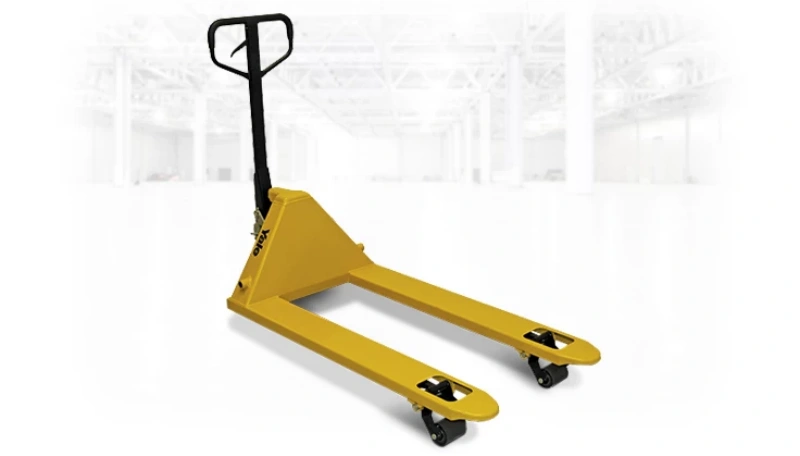
Manual pallet jacks dominate the market because of their low cost and simple operation. You use these types for short-distance transport, especially in tight aisles or compact workspaces. Manual pallet jacks require physical effort to lift and move loads, making them ideal for lighter loads and occasional use.
You benefit from their minimal maintenance and cost-effectiveness, which suits businesses focused on efficiency and budget control.
Model | Load Capacity | Applications |
|---|---|---|
PTH 50 Series | Up to 5,000 lbs | Loading/Unloading, Transport |
PTH 50 S Series | Up to 2,200 lbs | Short Transport, Stockrooms |
Modern hand pallet jacks feature ergonomic handles, cushioned grips, and intuitive controls. These features reduce operator fatigue and help prevent injuries. You often see these types in retail stockrooms, small warehouses, and environments where space is limited.
Short-distance transport in warehouses or retail stockrooms
Tight aisles and compact workspaces
Businesses prioritizing low cost and minimal upkeep
Electric Pallet Jacks
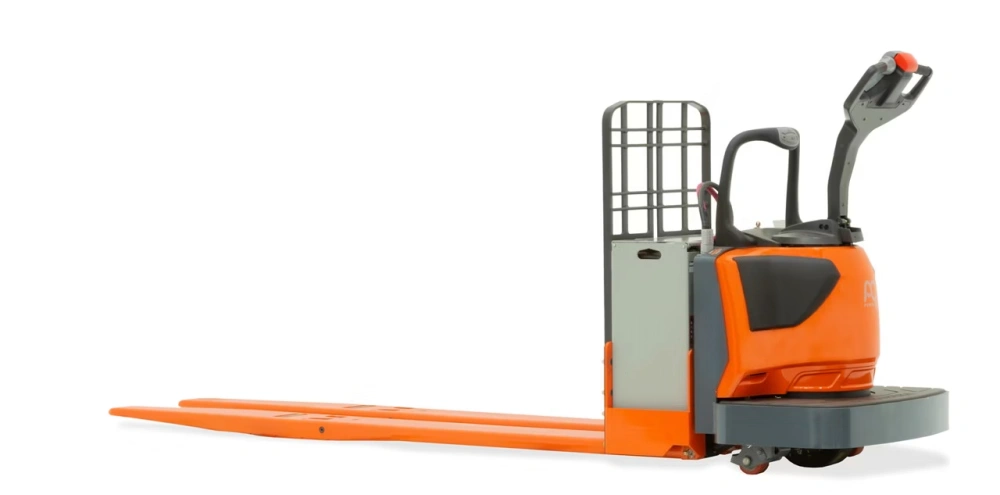
Electric pallet jacks are gaining popularity as you look for ways to boost efficiency and reduce physical strain. These types use motor-assisted movement, which allows you to move heavier loads over longer distances with less effort.
You find electric pallet jacks especially useful in high-volume operations where productivity and operator safety are top priorities.
Feature | Manual Pallet Jack | Electric Pallet Jack |
|---|---|---|
Operation | Manual strength required | Motor-assisted movement |
Load Capacity | 4,400 – 5,500 lbs (up to 15,000 lbs) | 3,300 – 6,600 lbs (up to 7,700+ lbs) |
Best Use | Lighter loads, occasional use | High-volume tasks, longer distances |
Cost | Lower upfront cost | Higher upfront cost, more maintenance |
Safety | Higher risk of injury | Reduced strain, safety features |
You choose electric pallet jacks when you need to move goods quickly and safely across large facilities. These types help you maintain productivity and reduce the risk of operator injuries.
Specialty Pallet Jacks
Specialty pallet jacks address unique material handling challenges. You select these types when standard models cannot meet your requirements.
Specialty pallet jacks include rough-terrain models for uneven surfaces, stair-climbing hand trucks for navigating stairs, high lift pallet jacks for greater lifting heights, and scale pallet jacks for weighing loads during transport.
Rough-terrain pallet jacks for outdoor or uneven surfaces
Stair-climbing hand trucks for multi-level facilities
High lift pallet jacks for elevated storage needs
Scale pallet jacks for weighing and moving loads at the same time
Models with custom fork lengths and configurations
You rely on specialty types to handle both light and heavy-duty applications, enhance order picking, and streamline dock unloading processes. These types ensure you have the right tool for every unique task in your warehouse.
Category | Market Share (%) |
|---|---|
Manual Pallet Jacks | 52.7 |
Total Pallet Jacks | 35.8 |
You see that manual pallet jacks hold the largest market share, but electric and specialty types continue to grow as you seek more efficient and ergonomic solutions.
Manual Pallet Jacks Overview
Key Features and Benefits
When you choose manual pallet jacks, you gain reliable tools that keep your warehouse running smoothly. These pallet jacks offer a range of features that support daily operations and long-term efficiency. You benefit from their compact design, which allows you to move loads through tight aisles with ease.
The ergonomic handles and polyurethane wheels reduce fatigue and make every shift more comfortable. You also save on costs because manual pallet jacks require no power source and have low maintenance needs.
Feature/Benefit | Description |
|---|---|
Typical Capacity | 2,000 to 5,500 lbs, with heavy-duty versions handling up to 10,000 lbs. |
Lift Height | 3 to 8 inches, suitable for various pallet heights. |
Operation | Manually operated, requiring no power source, making it cost-effective. |
Maintenance | Low maintenance requirements are essential for keeping equipment in working order. |
Maneuverability | Compact design allows for easy navigation in tight spaces. |
Ergonomics | Models with cushioned handles and polyurethane wheels enhance user comfort. |
Industry Suitability | Ideal for small to medium-sized warehouses, retail stores, and light-duty applications. |
You see the benefits of pallet jacks in their ability to handle a wide range of loads while keeping your team safe and productive. These features make them a smart investment for many businesses.
Applications and Use Cases
You find manual pallet jacks in many industries because they adapt to different workflows. Here are some common applications:
Material handling in warehousing: Move goods from receiving docks to storage racks quickly.
Retail stock replenishment: Restock shelves by transporting pallets from storage to the sales floor.
Manufacturing line support: Transport raw materials and finished goods between production stages.
Cross-docking operations: Move pallets rapidly in facilities where goods transfer directly from inbound to outbound transport.
E-commerce fulfillment: Organize and dispatch goods efficiently, especially during peak seasons.
You rely on these pallet jacks to improve workflow and reduce manual lifting in every setting.
Product Highlights: Hand Pallet Truck
Powerful Machinery’s hand pallet truck stands out among manual pallet trucks for its durability and ergonomic design. You get a high-strength welded frame that handles heavy loads without bending or breaking.
The hydraulic pressure oil cylinder with a safety valve ensures smooth, safe lifting every time. The ergonomic handle reduces operator fatigue, and the PU wheels provide quiet, stable movement across warehouse floors.
You can customize the hand pallet truck to fit your specific needs, choosing larger or longer sizes for unique applications. Overload protection and tough C-grade steel forks add extra safety and longevity. These advantages give you confidence in daily operations and help you maximize productivity.
When you invest in Powerful Machinery’s hand pallet truck, you secure a reliable solution that delivers long-term value and supports your team’s success.
Electric Pallet Jacks Overview
Features and Operation
You gain a significant advantage when you use electric pallet jacks in your warehouse. These machines carry heavier loads than manual models, which reduces operator fatigue and injury risk. You can move goods over long distances with steady movement and faster acceleration.
This efficiency helps you minimize idle time and keep your workflow smooth. Operators lift heavy pallets with minimal effort, which promotes better posture and reduces body fatigue. Intuitive controls make these pallet jacks easy to use, even for new team members.
You also benefit from better control, which reduces the risk of sudden jerks that can destabilize loads.
Carry heavier loads with less effort
Move products quickly over long distances
Reduce physical strain and promote better posture
Enjoy intuitive controls for smoother operation
Minimize idle time with efficient start and stop motions
Types and Applications
You find several types of electric pallet jacks designed for different warehouse needs. Each type offers unique features that help you match the right equipment to your operation.
Type of Electric Pallet Jack | Key Features and Applications |
|---|---|
Electric Walkie Pallet Jack | Compact design, powered operation, ideal for short to medium-distance transport, reduces operator fatigue. |
Electric Rider Pallet Jack | Seated position for comfort, enhanced productivity for long distances, greater load capacity, and improved visibility. |
Electric Walkie Pallet Stacker | Electric lift mechanisms for stacking, precision height control, suitable for narrow aisles, reduce physical labor. |
Electric Counterbalance Walkie Stacker | Advanced load stabilization, manages heavy and awkward loads, suitable for heavy industrial environments. |
You use electric pallet trucks for high-volume tasks, long-distance transport, and stacking in narrow aisles. These pallet jacks help you boost productivity and handle a variety of materials efficiently.
Safety Considerations
You protect your team by choosing electric pallet jacks with advanced safety features. Modern models include stability control systems that maintain balance and reduce tipping risks. Ergonomic tiller arms lower operator strain and enhance comfort during long shifts.
Neutral braking mechanisms provide immediate stopping power, which prevents accidents in unexpected situations. Hazard recognition sensors detect obstacles and alert operators, minimizing collision risks.
Safety Feature | Description |
|---|---|
Stability Control Systems | Maintains balance and stability, reducing tipping risks, especially in heavy-duty environments. |
Ergonomic Tiller Arms | Reduces operator strain and fatigue, enhancing comfort during extended use. |
Neutral Braking Mechanisms | Provides immediate stopping capability to prevent accidents in unexpected situations. |
Hazard Recognition Sensors | Detects obstacles in the truck’s path, alerting operators to minimize collision risks. |
You lower the risk of workplace injuries and improve operational safety by investing in electric pallet trucks. These features help you create a safer, more productive environment while controlling long-term cost.
Specialty and Custom Pallet Jacks
You encounter unique challenges in material handling that standard pallet jacks cannot always solve. Specialty and custom pallet jacks address these needs, offering solutions for environments with strict hygiene requirements, precise weighing demands, and rough terrain.
You improve efficiency and safety by choosing the right equipment for your operation.
Corrosion-Resistant Models
You work in food processing or pharmaceutical environments where hygiene and durability matter. Corrosion-resistant pallet jacks use stainless steel to prevent rust and bacterial growth. You benefit from an extended operational lifespan, which reduces the need for frequent replacements.
These models withstand daily exposure to moisture and chemicals, ensuring reliable material handling. You clean them easily, maintaining strict sanitation standards and preventing cross-contamination. Adjustable handles promote ergonomic use, reducing strain and supporting a healthier workspace.
Stainless steel construction resists corrosion and bacterial growth.
Smooth surfaces allow for quick sanitization.
Ergonomic design supports operator comfort.
Durable build reduces maintenance costs and downtime.
Scale-Equipped and Low-Profile Options
You streamline shipping and receiving operations with scale-equipped and low-profile pallet jacks. These models weigh loads at ground level, providing swift and accurate measurements. You ensure compliance with weight regulations and reduce errors in inventory control.
Built-in digital scales allow you to lift and weigh pallets simultaneously, saving labor time and improving order fulfillment. Low-profile designs help you maneuver in tight spaces, enhancing material handling efficiency.
Feature | Benefit |
|---|---|
Digital scale accuracy | Reliable inventory and shipping records |
Low-profile forks | Easy access in confined areas |
Entry/exit rollers | Faster loading and smoother handling |
You rely on these pallet jacks for high-volume warehouse operations, where speed and precision drive productivity.
All-Terrain and Custom Solutions
You face demanding material handling tasks in manufacturing, construction, or outdoor settings. All-terrain pallet jacks move loads over uneven surfaces, supporting your workflow in challenging environments. Custom pallet jacks handle loads over 10,000 pounds and feature forks that exceed standard heights.
You optimize performance in confined spaces with designs tailored to your workspace. Unique safety features help you comply with industry guidelines and keep your team alert.
All-terrain models navigate rough surfaces and outdoor areas.
Custom designs support heavy loads and specialized height requirements.
Safety enhancements reduce accidents and improve operator awareness.
Space-saving configurations maximize efficiency in tight locations.
You choose specialty and custom pallet jacks to meet the specific demands of your material handling operations, ensuring safety, accuracy, and reliability every day.
Ergonomic and Rider Pallet Jacks
Center Rider vs. End Rider
You face a choice between center rider and end rider pallet jacks when you want to improve material handling in your facility. Each design offers unique advantages for efficient loading and unloading. Center rider pallet jacks place you in a central position within the truck’s footprint.
This setup gives you better stability and enhanced safety, especially when you move heavy loads across long distances. You also benefit from improved visibility, which helps you avoid obstacles and maintain control.
End rider pallet jacks position you at the end of the jack. This design gives you superior maneuverability, making it easier to navigate busy aisles and tight corners.
You can respond quickly in fast-paced environments, which supports increased efficiency during peak operations. However, the open design means you have less enclosure, so you need to stay alert for safety.
Feature | Center Rider Pallet Jacks | End Rider Pallet Jacks |
|---|---|---|
Operator Positioning | Centrally located, within the truck’s footprint | Positioned at the end of the jack |
Stability | Better stability due to enclosed design | High maneuverability but less stability |
Visibility | Improved visibility for the operator | Good visibility, but can be obstructed |
Safety | Enhanced safety due to enclosed operator area | Safe but less enclosed thanthe center rider |
Maneuverability | Less maneuverable in tight spaces | Superior maneuverability, ideal for busy environments |
You should match the type of pallet jacks to your workspace and workflow. Center rider models work best in large, open areas where stability and safety matter most. End rider models excel in crowded warehouses where quick turns and efficient loading and unloading are essential.
Operator Comfort and Safety
You protect your team and boost productivity when you focus on ergonomic features in rider pallet jacks. These machines are designed to reduce manual effort, which lowers the risk of fatigue and injury.
Adjustable handlebars let you set the right height for comfort, so you maintain proper posture throughout your shift. Cushioned seats provide support during long periods of operation, helping you stay focused and alert.
Intuitive controls make operation simple and safe. You can reach throttle controls easily, which allows you to keep your hands in a natural position. This design reduces strain and helps you react quickly to changes in your environment.
The intuitive control handle is engineered to fit the hand in a neutral, natural position, with easy-to-reach throttle controls, and optional padded controls on the backrest for added convenience when traveling in the forks first direction.
You also benefit from built-in safety features that protect you from musculoskeletal injuries. These features support increased efficiency by allowing you to work longer with less discomfort. When you use ergonomic pallet jacks, you achieve efficient loading and unloading while keeping your team safe and productive.
Adjustable handlebars for personalized comfort
Cushioned seats to alleviate fatigue
Intuitive controls for ease of use
Safety features to promote proper posture
You see that investing in ergonomic rider pallet jacks leads to increased efficiency, fewer injuries, and a more comfortable work environment.
Pallet Jack Selection Guide
Workspace and Layout
You must evaluate your workspace before making a pallet jack selection. The physical layout of your facility determines which pallet jack will deliver the best results. Start by measuring the narrowest aisles and the space between shelving units.
This step helps you avoid purchasing equipment that cannot maneuver efficiently. Compact pallet jacks with tight turning radii work best in narrow aisles. If your operation covers long distances, ride-on models can reduce operator fatigue and improve productivity.
Consider the following factors when assessing your workspace:
Pallet jacks come in different lengths and widths to fit various environments.
Forks that are too short or narrow may slow down material handling.
Forks that are too long or wide can make navigation difficult.
The physical characteristics of your facility, such as aisle width and turning space, impact your choice.
A small turning radius is essential for tight spaces.
Tip: Always compare your facility’s measurements with manufacturer specifications to ensure the pallet jack selection matches your operational needs.
Load Capacity and Fork Length
You must match the load capacity and fork length to your daily tasks. Every industry has unique requirements. Retail environments often use shorter forks, such as 36 inches, to move easily through narrow aisles. Warehousing typically relies on standard fork lengths between 48 and 60 inches for consistent pallet sizes.
Construction and manufacturing may require longer forks to handle oversized materials. You should always assess the weight and size of the pallets you handle most often. A high weight capacity is necessary for heavy items, while the right fork length ensures safe and efficient transport.
When you focus on these details, you avoid operational delays and safety risks. Proper pallet jack selection means you can move goods smoothly, regardless of your industry.
Budget and Cost Comparison
You need to balance performance and cost when making a pallet jack selection. Manual pallet jacks offer a lower upfront cost and minimal ongoing expenses. These models are ideal for small-scale operations that prioritize simplicity and reliability.
Electric pallet jacks require a higher initial investment but provide long-term savings through increased efficiency and reduced physical injuries. Specialty pallet jacks may have unique features that justify a higher price, especially when you face challenging environments or specialized tasks.
Here is a quick comparison to help you evaluate your options:
Type of Pallet Jack | Average Cost | Total Cost of Ownership |
|---|---|---|
Manual | Lower upfront cost, minimal ongoing expenses | Economically ideal for small-scale operations |
Electric | Higher initial investment, long-term savings | Increased productivity and reduced physical injuries |
Note: Consider not only the purchase price but also maintenance, training, and potential downtime. The right pallet jack selection can lower your total cost over time and boost your return on investment.
You make the best decision when you align your pallet jack selection with your workspace, load requirements, and budget. This approach ensures safe, efficient, and cost-effective material handling for your business.
Safety in Pallet Jack Use
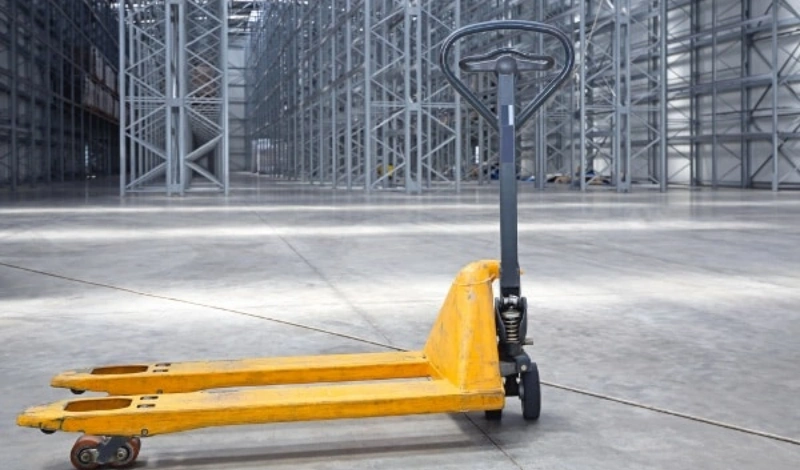
Training and Best Practices
You must prioritize training to keep your team safe and efficient. Proper instruction helps you avoid accidents and ensures everyone understands how to operate pallet jacks correctly. The Occupational Safety and Health Administration (OSHA) sets clear rules for pallet jack operation.
Operators must be at least 18 years old and receive formal instruction before using electric pallet jacks. You should always follow these important regulations:
Regulation/Standard | Description |
|---|---|
OSHA Compliance | Operators must be trained to use pallet jacks safely to prevent workplace accidents. |
Age Requirement | Operators must be at least 18 years old. |
Training Requirement | Formal instruction is required for the safe operation of electric pallet jacks. |
Safety Practices | Avoid stepping into the path of operating jacks and keep away from unloading processes. |
You improve safety by following best practices every day:
Inspect the pallet jack before use to check for damage or wear.
Push the load instead of pulling to maintain visibility and reduce strain.
Prepare the work area by clearing obstacles and marking safe movement paths.
Center the load on the forks and keep it low to the ground.
Use personal protective equipment when needed.
Do not exceed the weight limit and confirm load weights before moving.
Verify operator skills with practical evaluations.
Tip: Always move at a controlled pace and stay alert to your surroundings.
Maintenance and Inspection
You extend the life of your pallet jacks and prevent breakdowns with regular maintenance. Daily checks help you spot problems early. Monthly inspections by trained professionals ensure all parts work as intended.
For electric models, recharge batteries before each shift. Lubricate moving parts every month to keep everything running smoothly.
Maintenance Task | Frequency |
|---|---|
Daily Inspection | Daily |
Check Fork for Wear | Daily |
Verify Chain Position | Daily |
Check Hydraulic Parts | Daily |
Verify and Refill Oil | Every 6 months |
Lubricate Pallet Truck | Monthly |
Recharge Batteries (for electric jacks) | Before operation |
Professional Maintenance | As needed |
You protect your investment and keep your team safe by following these schedules. Modern pallet jacks from Powerful Machinery include advanced safety features that make inspections easier and more reliable.
Conclusion
You improve warehouse efficiency when you align pallet jack selection with your operational needs, safety standards, and budget. Consider the following key aspects:
Aspect | Details |
|---|---|
Initial Costs | Evaluate upfront costs of pallet jacks. |
Long-term Costs | Consider maintenance and operational costs. |
Load capacity supports your daily demands.
Ergonomic design reduces injury risk.
Safety features protect your team.
Maintenance practices ensure reliability.
Consulting with Powerful Machinery’s experts helps you assess your facility and choose solutions that optimize productivity and safety.
FAQ
What is the difference between a manual and an electric pallet jack?
Manual pallet jacks require you to lift and move loads using physical effort. Electric pallet jacks use a motor to assist with lifting and moving, which reduces strain and increases efficiency for longer distances or heavier loads.
How do you choose the right pallet jack for your warehouse?
You should consider your workspace layout, typical load weight, and frequency of use. Evaluate aisle width, turning radius, and the type of pallets you handle. Always match the pallet jack’s capacity and features to your daily operational needs.
Can you use a pallet jack on ramps or uneven surfaces?
You can use certain pallet jacks on ramps or uneven ground. Choose all-terrain or heavy-duty models for these tasks. Always move slowly, keep the load balanced, and ensure the ramp is stable and clear of obstacles.
How often should you inspect and maintain your pallet jack?
You should inspect your pallet jack daily before use. Check for visible damage, worn wheels, and hydraulic leaks. Schedule monthly professional maintenance and lubricate moving parts regularly to ensure safe and reliable operation.
What safety tips should you follow when operating a pallet jack?
Always center the load on the forks.
Push rather than pull for better control.
Move at a steady pace.
Wear appropriate footwear.
Stay alert to your surroundings and avoid overloading.
Tip: Proper training and regular practice help you prevent accidents and injuries.