
Trolley Hoist
We manufacture every trolley hoist for heavy material handling, smooth beam travel, and dependable lifting in real industrial conditions. Our factory handles machining, assembly, and load testing in-house to keep quality steady and supply reliable. Ask Powerful Machinery for a lifting equipment quote today.

Every trolley hoist carries verified load ratings and full test records, meeting strict safety standards for confident lifting.
We run full in-house production and inspection to keep trolley hoist quality stable and performance consistent.
Our trolley hoist uses hardened gears and precision wheels to deliver smooth travel and long-term durability.
Stable production planning and ready spare parts keep your trolley hoist projects moving without delay.
Powerful Machienry - Your Reliable Trolley Hoist
We supply work provide dependable trolley hoists for industry leaders.





TROLLEY HOISTS
Our trolley hoists support lifting and rigging operations across diverse applications. Our selection includes:
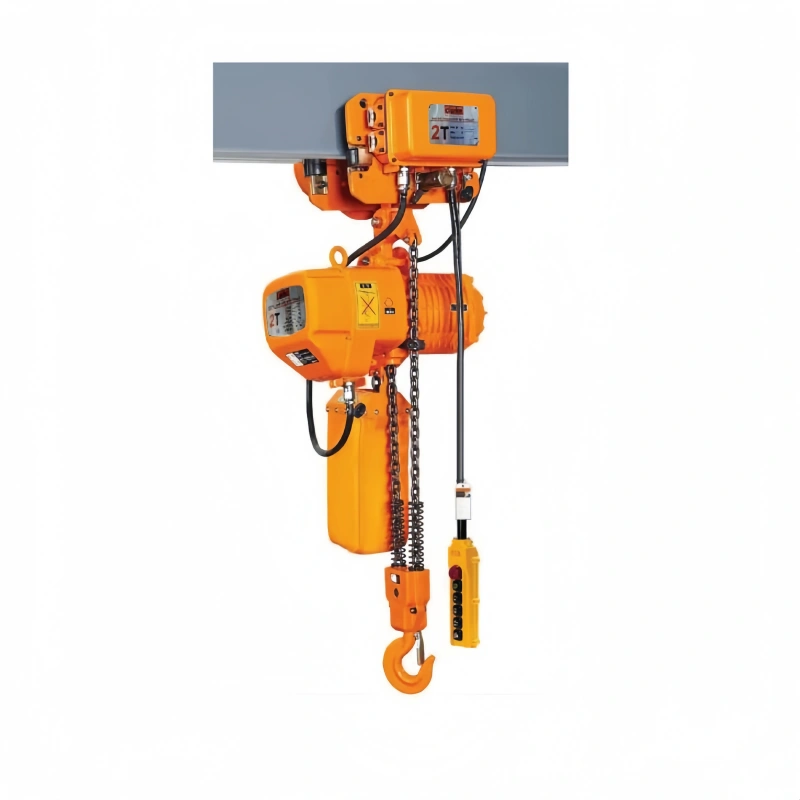
Electric trolley hoist uses electric or air power for heavy-duty lifting and smooth beam travel. It handles high-frequency industrial material handling with stable performance.
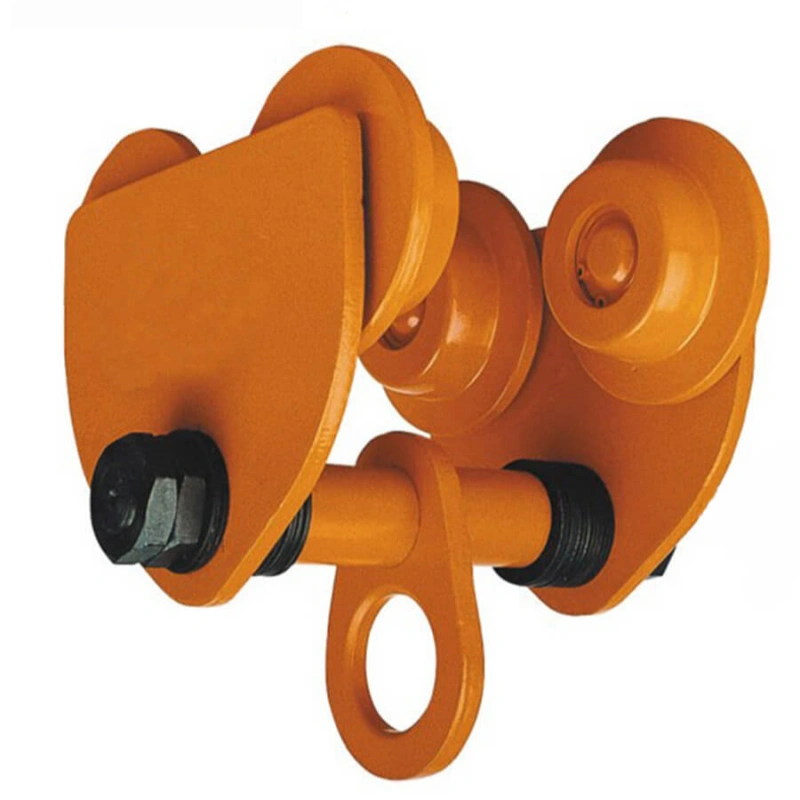
Plain trolley hoist travels along the beam by manual push, delivering controlled movement and accurate positioning. It fits light-duty lifting and short-distance material handling needs.
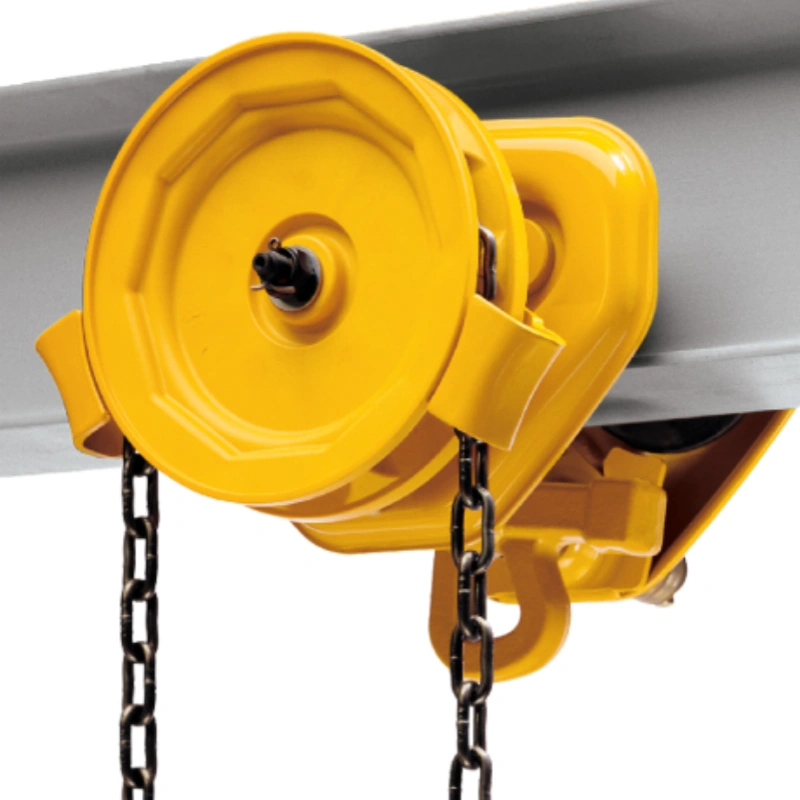
Geared trolley hoist uses a hand chain drive to move loads along the beam with controlled, smooth travel. It handles heavier lifting where precision and safety matter.
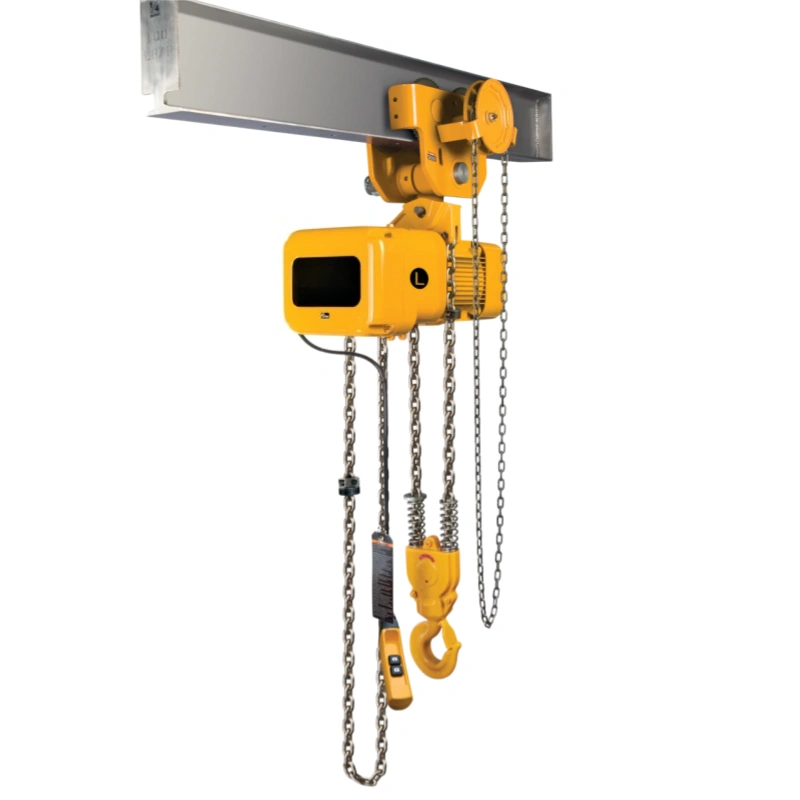
Electric Chain Hoist With Trolley
Electric chain hoist with trolley provides stable vertical lifting and smooth beam travel for heavy-duty material handling. It suits multi-ton loads in manufacturing and workshops.
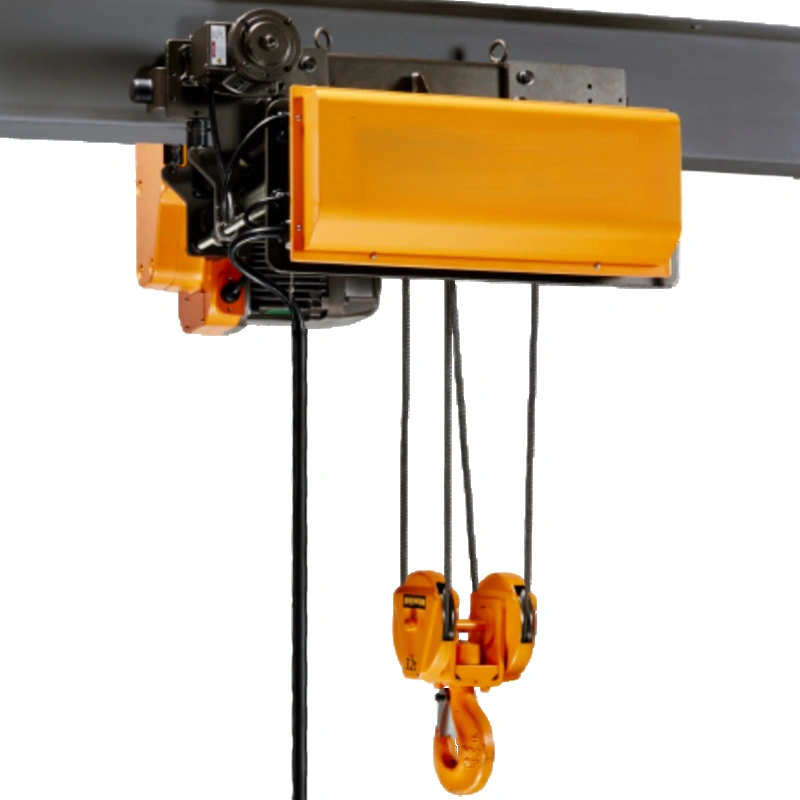
Wire Rope Hoists with Trolley
A long reach shackle features an extended body that allows easy connection to recessed or hard-to-access pick points, making it practical for construction and lifting tasks.
NEED HELP WITH YOUR TROLLEY HOIST ORDER?
Let us help! Reach out today and get recommendations on materials and sizing from our experts.


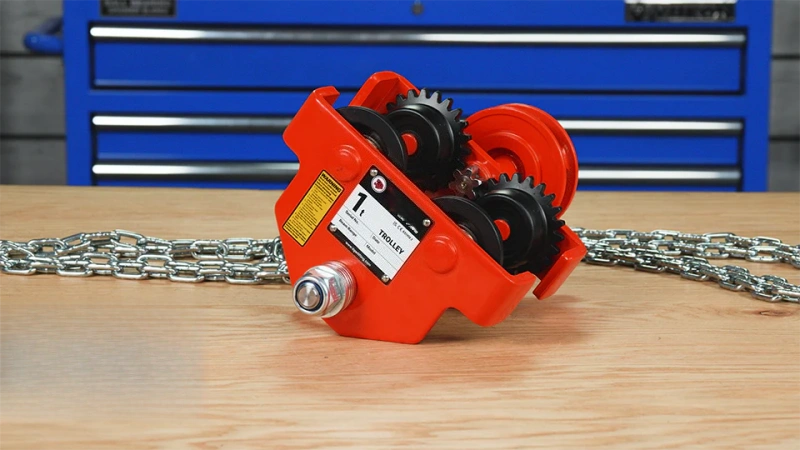
Guide to Trolley Hoist
Our guide to trolley hoists helps you understand trolley hoist types, applications, and selection tips so you can choose safe, reliable lift euipments.
What is a Trolley Hoist?
A trolley hoist combines vertical lifting and horizontal beam travel in one compact lifting system. The hoist unit mounts on an adjustable trolley frame that runs along an I-beam or H-beam, allowing controlled load movement across a workspace while maintaining stable lifting performance. Industrial sites use this system in crane assemblies, production lines, steel plants, warehouses, and maintenance workshops where accurate positioning and safe material handling matter. Manual, geared, and electric travel options match different load weights and duty cycles.
Our factory machines key components in-house, verifies rated load through testing, and controls assembly tolerance to ensure consistent strength, smooth rolling, and long service life under demanding operating conditions.
How Do You Choose the Right Trolley Hoist Capacity?
Selecting the correct trolley hoist capacity ensures safe lifting, long service life, and stable industrial performance. Focus on real operating conditions, not just catalog ratings.
Key factors to evaluate:
Maximum Lifting Load
Define the heaviest load you will handle and include a realistic safety margin.Operating Conditions
Consider shock loading, lifting frequency, and travel distance in daily operations.Beam Specifications
Confirm beam width, flange thickness, and structural strength for proper fit and stability.Lifting Height & Usage Frequency
Higher lifting cycles require stronger internal components and better durability.Duty Cycle Requirements
High-cycle operations demand reinforced gears, premium bearings, and wear-resistant wheels.Engineering Verification
Validate rated load data, beam compatibility, and structural tolerance before production to ensure reliable industrial performance.
What is the Difference Between Plain, Geared, and Electric Trolley Hoist Systems?
Understanding the differences between plain, geared, and electric trolley hoist systems helps you select the right solution for load weight, duty cycle, and travel distance.
Comparison of Trolley Hoist Types:
Plain Trolley Hoist (Push Type)
Moves along the beam by manual push. Ideal for light loads and short travel distances with simple operation.Geared Trolley Hoist (Hand Chain Type)
Uses a hand chain to drive gears on the trolley wheels. Provides better control and safer positioning for heavier loads.Electric Trolley Hoist (Motorized Travel)
Uses motor power for beam travel. Supports high-frequency lifting and longer distances where efficiency and consistency matter.
Selection Considerations:
Load weight
Duty intensity
Travel distance
Required positioning precision
Our factory manufactures all three trolley hoist configurations with precision-machined wheels and tested drive systems to ensure stable and reliable industrial performance.
How Does Proper Installation Affect Trolley Hoist Performance?
Correct installation directly impacts trolley hoist safety, travel smoothness, and long-term durability. Precise alignment and beam compatibility ensure stable lifting and reliable operation.
Key Installation Factors:
Beam Alignment
Straight and properly supported beams ensure smooth trolley travel and balanced load movement.Flange Measurement Accuracy
Correct flange width and thickness allow proper wheel contact and secure fit.Wheel Clearance & Spacing
Proper wheel adjustment reduces rolling resistance and prevents uneven wear.Structural Rigidity
Strong beam structure maintains load stability and prevents deflection under lifting pressure.Load Class Matching
The trolley hoist must match beam capacity and rated load before commissioning.
Our manufacturing process includes adjustable side plates, calibrated wheel spacing, and verified structural balance to support easy crane integration and reduce operational risk.
What Maintenance Ensures Long-Term Trolley Hoist Reliability?
Regular maintenance keeps a trolley hoist operating safely, reduces downtime, and extends service life. A structured inspection plan based on workload and lifting frequency protects performance.
Key Maintenance Practices:
Routine Component Inspection
Check chains, gears, hooks, bearings, and travel wheels according to lifting intensity and operating hours.Lubrication Control
Apply proper grease to gears, bearings, and moving parts to reduce friction and minimize wear.Brake System Verification
Inspect brake response and holding force in electric trolley hoist models to ensure controlled stopping.Wear Monitoring
Replace worn chains, wheels, or bearings before performance declines.Maintenance Scheduling by Duty Cycle
Align inspection intervals with actual usage rather than fixed calendar periods.
Our trolley hoist design uses hardened components, precision assembly, and service-friendly structure to support efficient maintenance and long-term industrial reliability.
How Does Duty Cycle Impact Trolley Hoist Durability?
Duty cycle defines how often lifting and travel occur within a working period. Continuous production lines create higher stress on gears, motors, and bearings compared to occasional maintenance lifting. Equipment selected below required duty class experiences accelerated wear and reduced reliability. Structural design, material strength, and heat resistance must match operational intensity. Our trolley hoist designs account for industrial duty classification, ensuring stable performance under sustained workloads.
What Beam Compatibility Considerations Matter Most?
Correct beam selection ensures stable trolley hoist travel, safe lifting, and long service life. Beam dimensions and structural strength directly affect rolling performance and load control.
Key Beam Compatibility Factors:
Flange Width
Proper flange width ensures secure wheel contact and prevents lateral instability.Flange Thickness
Adequate thickness supports rated load capacity and reduces structural stress.Beam Straightness
Straight beams maintain smooth trolley travel and balanced load movement.Load-Bearing Capacity
The beam must support the hoist rated load plus dynamic lifting forces.Structural Deflection Control
Excessive deflection reduces safety margin and affects travel consistency.Adjustable Frame Fit
Trolley frames should accommodate standard I-beam and H-beam sizes for accurate alignment.
Our controlled manufacturing tolerances ensure precise wheel geometry for smooth and consistent beam travel.
How Do Testing and Quality Control Affect Operational Safety?
Verified load testing confirms structural strength and brake reliability before delivery. Dimensional inspection, welding verification, and material traceability contribute to lifting safety. Lack of controlled production increases failure risk in heavy-duty environments. In-house machining and assembly allow tighter tolerance control and consistent output. Each trolley hoist undergoes inspection procedures designed to maintain dependable lifting capacity and stable movement.
Can Trolley Hoist Systems Integrate With Crane Projects?
Trolley hoist systems integrate into bridge cranes, gantry cranes, jib cranes, and monorail structures. Lifting height, travel speed, voltage configuration, and control system must align with crane design parameters. Structural balance and load distribution determine long-term stability. Our engineering support includes dimension charts, mounting specifications, and production coordination to ensure seamless integration into larger material handling systems.
Why Choose a Direct Trolley Hoist Manufacturer?
Direct manufacturing partnership provides stronger production control, consistent quality standards, and stable lead times. Technical specifications remain clear because communication flows directly to engineering and production teams. Spare parts supply stays consistent across project cycles. Our factory controls machining, assembly, inspection, and testing internally, delivering dependable trolley hoist systems built for demanding industrial environments.
Have More Questions of Trolley Hoists?
Have more questions about trolley hoists? Get clear guidance on selection, installation, and upkeep based on real lifting equipment manufacturing experience.