A structured mooring chain inspection checklist protects your vessel and guarantees compliance with strict marine regulations. You improve safety and prevent costly failures by inspecting mooring chains regularly.
Mooring chain failures cause almost half of all vessel incidents globally, including breaks and integrity issues across many floating production systems.
Mooring chain failures account for 47% of vessel incidents.
At least 20 floating production systems experienced integrity issues, leading to repairs or replacements for 150 mooring lines.
Powerful Machinery delivers certified mooring solutions that help you maintain safety and extend the life of your equipment. Use this mooring chain inspection checklist for routine and scheduled inspections to ensure your vessel remains secure.
Key Takeaways
Regular mooring chain inspections prevent costly failures and enhance vessel safety. Aim for at least annual checks, especially in harsh environments.
Use certified tools and equipment for inspections. This ensures compliance with international standards and improves the reliability of your findings.
Document all inspection results meticulously. Accurate records help track changes over time and support timely maintenance decisions.
Identify and address common issues like corrosion and bent links early. Proactive measures extend the life of your mooring system and reduce risks.
Follow a structured inspection process. This includes visual checks, measuring chain dimensions, and using non-destructive testing methods for thorough evaluations.
Pre-Inspection Steps
Before you begin any mooring chain inspection, you need to prepare carefully. Proper preparation ensures safety, efficiency, and compliance with international standards. Follow these steps to set up your inspections for success.
Tools and Equipment Needed
Gather all necessary tools and equipment before starting. Using certified products, such as those from Powerful Machinery, helps you meet international maritime standards and ensures reliable inspections.
Essential Tools | Purpose |
|---|---|
Calipers and measuring tapes | Measure chain diameter and elongation |
Flashlight or inspection lamp | Illuminate hard-to-see areas |
Hammer | Detect cracks by sound |
Cleaning brushes | Remove debris and corrosion |
Inspection mirrors | View hidden chain sections |
Documentation forms/tablets | Record inspection results |
Powerful Machinery’s mooring chains and accessories hold certifications from organizations like ABS, BV, DNV, and LR. These approvals confirm that your inspections use equipment recognized by the International Maritime Organization and other leading bodies.
Safety Gear and Precautions
Always prioritize safety during mooring chain inspections. Wear the right personal protective equipment (PPE), including gloves, safety glasses, and steel-toed boots. If you work near the vessel’s edge or on elevated platforms, use a safety harness. Clear the area of obstacles and make sure the ship is stable.
Keep all mooring lines under minimal tension to prevent sudden movement. Maintain clear communication with your crew so everyone understands the inspection process and avoids interference.
Tip: Never start an inspection without checking your PPE and confirming that all safety measures are in place.
Reviewing Past Inspection Records
Review previous inspection records before each new inspection. Check the age, condition, and operational history of the mooring chain. Look for any signs of deterioration or past issues. If you find any problems, shorten the interval between inspections to maintain safety and serviceability.
Industry standards require a full visual inspection of all mooring lines, connectors, and jewelry. Major inspections should occur at least every five years, but more frequent checks may be necessary if you detect wear or damage.
By following these pre-inspection steps, you set a strong foundation for thorough and effective mooring chain inspections.
Mooring Chain Inspection Process
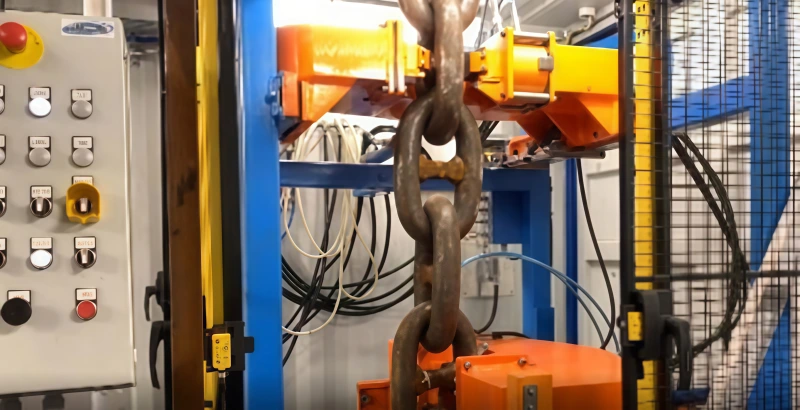
A thorough mooring chain inspection is essential for maintaining the safety and reliability of your mooring system. You need to follow a structured process to identify corrosion, fatigue, cracks, and missing parts.
This section guides you through each step, using benchmarks from Powerful Machinery’s high-tensile steel and corrosion-resistant coatings as reference points.
Visual Checks for Corrosion and Wear
Start your mooring chain inspection by laying out the chain every 100 feet or marking it with spray paint. Clean off marine growth and corrosion scale using a high-pressure gun. This step helps you see the chain surface clearly and spot early signs of corrosion or fatigue.
Follow these steps for a complete visual inspection:
Lay out the chain in manageable sections. Clean each section thoroughly.
Inspect for missing studs, bent links, corrosion, sharp gouges, loose studs, cracks, and visible wear.
For offshore inspections, keep the chain moving at less than 30 feet per minute. Stop to examine any abnormalities closely.
Tap each stud with a hammer. Listen for changes in tone, which can indicate looseness or internal corrosion.
Assign one inspector to check links in the vertical plane and another in the horizontal plane. This ensures you do not miss hidden corrosion or fatigue.
Bring the last portion of the chain on board for a final inspection.
Dismantle connecting links and inspect them using magnetic particle inspection (MPI) or replace them with previously examined links.
Note: Powerful Machinery’s mooring chains use advanced corrosion-resistant coatings and high-tensile steel. These features set a high benchmark for durability and resistance to marine corrosion and fatigue.
You should also measure the diameter on both sides of each connecting link every 100 feet. Focus on areas where corrosion or wear has reduced the cross-sectional area. For dockside inspections, measure each link’s length with a go-no-go gauge if the chain is not under tension.
Identifying Cracks and Deformation
Cracks and deformation can compromise the integrity of your mooring system. During your mooring chain inspection, look for signs of fatigue, such as small surface cracks or bent links. Use both visual and advanced methods to detect these issues.
Method | Description |
|---|---|
Reliability-based inspection | Review previous load histories and monitor for progressive fatigue damage to reduce unexpected failures. |
Digital Image Correlation (DIC) | Use high-resolution monitoring to detect crack initiation and localized stress concentrations on chain surfaces. |
Fatigue crack growth analysis | Investigate crack growth rates at different load levels using full-scale fatigue experiments. |
You should pay special attention to areas where the chain bends or where corrosion is most severe. Fatigue often starts in these locations. If you find any cracks or deformation, mark the area and schedule further testing or immediate replacement.
Checking for Missing or Damaged Parts
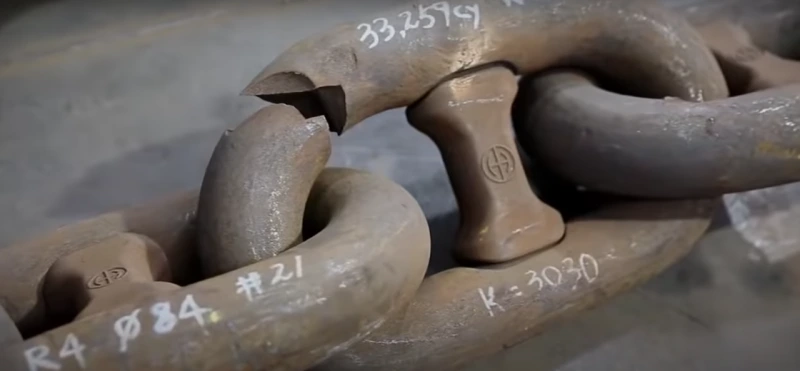
A complete mooring chain inspection includes checking for missing or damaged parts. Inspect all studs, links, and connectors for signs of corrosion, fatigue, or mechanical damage. Look for missing studs, bent or twisted links, and worn connectors.
Check each shackle and connecting link for secure attachment and absence of corrosion.
Ensure all parts move freely without binding or excessive wear.
Replace any component that shows signs of fatigue, corrosion, or deformation.
Factor | Description |
|---|---|
Corrosion Resistance | Prevents degradation from saltwater exposure; coatings are crucial to avoid corrosion. |
Fatigue Resistance | High fatigue limits in alloy steels prevent crack propagation under dynamic loads. |
Tensile Strength | High-strength materials support peak loads during adverse conditions. |
Maintenance Accessibility | Materials should degrade slowly to extend inspection intervals, especially in remote locations. |
Environmental Impact | Eco-friendly materials minimize pollution and heavy metal leaching. |
Powerful Machinery’s mooring chains meet these benchmarks, providing you with confidence in your mooring system’s safety and longevity. Regular inspections help you catch issues early, reduce the risk of failure, and extend the life of your mooring equipment.
By following this step-by-step mooring chain inspection process, you ensure your vessel’s mooring system remains secure, reliable, and compliant with international standards.
Measurement and Testing
Measuring Chain Diameter and Elongation
You must measure the diameter and elongation of your mooring chain to detect early signs of fatigue and corrosion. Accurate measurements help you maintain safety and prevent unexpected failures during inspection. Follow these steps:
Clean the chain thoroughly to remove dirt, grease, and corrosion. This step ensures you get precise readings.
Use calipers to measure the diameter at several points along the chain. Avoid measuring near welds, as these areas may not reflect true wear or fatigue.
Measure the inner width by placing calipers between the inner sides of each link. This helps you spot elongation caused by fatigue or corrosion.
Check the pitch by measuring from the center of one link to the center of the next. This reveals any stretching due to fatigue.
For roller chains, measure the roller and pin diameters if your mooring system uses these types.
Compare all measurements to the manufacturer’s specifications. This step confirms whether the chain meets safety requirements.
For weldless chains, account for any twists that may affect your measurements.
Regular measurement during inspection helps you identify fatigue and corrosion before they threaten safety.
Non-Destructive Testing Methods
You should use non-destructive testing (NDT) methods to detect hidden fatigue and corrosion in your mooring chain. These techniques allow you to find internal or surface defects without damaging the chain. The most common NDT methods include:
Testing Method | Description |
|---|---|
Magnetic Particle Inspection | Detects surface defects using magnetic particles. |
Ultrasonic Testing | Identifies subsurface defects using sound waves. |
NDT methods improve safety by revealing fatigue cracks and corrosion that visual inspection may miss. You should perform these tests during scheduled mooring chain inspections, especially in areas exposed to high stress or harsh marine environments.
Comparing Results to Standards
After you complete your measurements and NDT, compare your results to international standards. The International Association of Classification Societies (IACS) sets requirements for mooring chain equipment and design.
These standards help you ensure your mooring system meets safety and efficiency benchmarks. Powerful Machinery’s mooring chains comply with ISO and IACS standards, so you can trust your inspection results.
If you find measurements outside the recommended range, replace the affected chain section to maintain safety and prevent fatigue or corrosion failures.
Tip: Always document your inspection results and compare them to the latest standards to ensure ongoing compliance and vessel safety.
Functional and Connection Checks
Testing Chain Movement
You need to verify that the mooring chain moves smoothly during inspection. Start by checking the fairleads. Make sure they rotate freely around their pivot axes. Examine the securing bolts for signs of corrosion. If you find corrosion, replace the bolts to maintain safety.
Inspect the windlass holding ability and confirm the chain stopper operates correctly. These steps help you prevent fatigue and ensure the chain functions under dynamic loads. If you notice resistance or abnormal movement, investigate further for hidden corrosion or fatigue damage.
Tip: Always test chain movement with minimal tension to avoid sudden shifts and reduce risk during inspection.
Inspecting Shackles and Links
Follow a systematic approach to inspect shackles and links in the mooring chain assembly:
Examine all machined and ground surfaces of joining-shackle links, especially the curved portions.
Perform a complete inspection of joining-shackle pins.
Focus on fatigue as the main criterion for machined surfaces. Use smooth grinding with a minimum radius of 20 mm.
Avoid sandblasting before magnetic particle inspection. Use alternative cleaning methods to prevent surface corrosion.
Remove links with cracks or surface defects by grinding, ensuring compliance with inspection criteria.
Replace links if defects cannot be ground out.
Use joining shackles that meet IACS W22 or API 2F standards. Confirm they pass through fairleads and windlasses in the horizontal plane.
Minimize the number of joining shackles, ideally separating them by at least 120 meters.
If multiple links meet discard criteria, consider replacing the entire chain.
You should conduct a dockside inspection by cleaning and examining the entire chain. Offshore inspection requires a workboat and fully paying out the chain for examination. These practices help you detect corrosion and fatigue early, maintaining safety.
Ensuring Proper Stowage
Proper stowage of the mooring chain prevents unnecessary fatigue and corrosion. Store the chain in a dry, ventilated area. Avoid contact with water or chemicals that accelerate corrosion. Arrange the chain to minimize slack and prevent tangling. Check that all connections remain secure during stowage.
Use customizable mooring chain solutions from Powerful Machinery to match your vessel’s requirements. These chains offer excellent durability, a high weight-to-strength ratio, reduced elongation, and perform well in dynamic environments.
Advantage | Description |
|---|---|
Excellent durability | Resistant to wear, abrasion, and corrosion in harsh marine conditions. |
High weight-to-strength | Improves system stability for various vessel types. |
Reduced elongation | Minimizes slack and maintains consistent performance under repeated loading. |
Ideal for dynamic areas | Maintains tension during tidal fluctuations and vessel movement. |
By following these functional and connection checks, you enhance safety, reduce fatigue, and protect your mooring chain from corrosion.
Reporting and Follow-Up
Recording Inspection Results
You must record every subsea inspection result to maintain a reliable inspection programme. Use digital forms or logbooks to document chain conditions, corrosion levels, fatigue signs, and mooring system performance. Include measurements from high-accuracy subsea inspections and note any abnormalities.
Consistent monitoring helps you track changes over time and supports risk-based assessment. Update your inspection records after each periodic inspection and mandatory regular inspections. This process ensures you meet safety requirements and supports reliability-based inspection planning.
Tip: Accurate records make late-life mooring inspection easier and help you identify trends in corrosion and fatigue.
Reporting Defects
When you find defects during subsea inspection, report them immediately. List issues such as corrosion, fatigue cracks, or damaged chain links. Use a risk-based inspection approach to prioritize repairs based on the risk of mooring line failure.
Notify your maintenance team and include details about the affected mooring components. Reporting defects quickly reduces operational risks and improves safety. You should also document the severity of corrosion and fatigue, which supports reliability-based inspection planning and risk-based assessment.
Report corrosion on chain links and connectors.
Highlight fatigue cracks and areas needing repair.
Record missing or damaged mooring parts.
Scheduling Repairs and Next Inspections
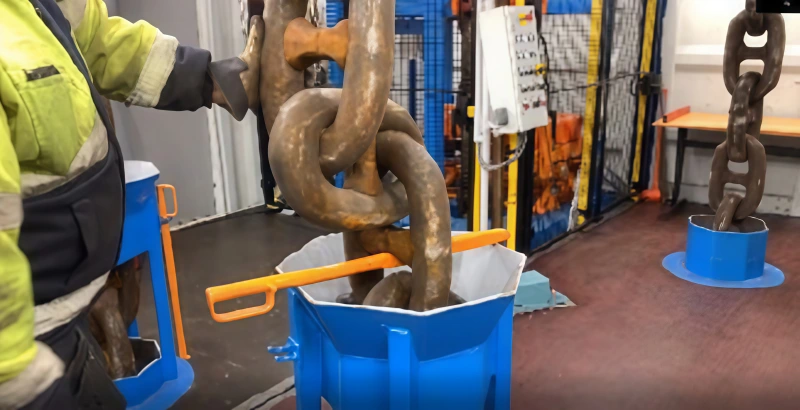
Plan repairs and schedule your next subsea inspection to maintain vessel safety and reliability. Use your inspection programme to set dates for periodic inspections and maintenance.
Assign tasks based on the severity of corrosion and fatigue. Certified mooring chains from Powerful Machinery simplify maintenance and repair planning, as their durability reduces the frequency of repairs.
Maintenance Task | Description |
|---|---|
Inspect hold coatings, tank tops, and bilge wells | Ensure structural integrity and safety. |
Examine cranes, derricks, and winches | Test operational safety features. |
Check fire protection systems | Verify functionality and compliance. |
Inspect lifeboats and rafts | Ensure readiness for emergencies. |
Update official logbooks | Maintain accurate records of maintenance. |
You improve safety and extend the life of your mooring system by following a structured inspection programme. Certified products offer enhanced resistance to corrosion, increased strength, and reduced maintenance costs. Regular monitoring and timely repair keep your chain and mooring system in top condition.
Common Issues and Solutions
Frequent Problems Found
You encounter several recurring issues during mooring chain inspection. Addressing these problems early improves vessel safety and extends the life of your mooring system. Industry surveys highlight the following frequent problems:
Missing studs increase the risk of link failure due to high bending stresses.
Bent links result from improper handling and compromise chain integrity.
Corrosion reduces the cross-sectional area, raising the risk of failure.
Sharp gouges cause physical damage and promote fatigue.
Loose studs lead to excessive stretching and higher bending stresses.
Cracks propagate under cyclic loading, causing premature failure.
Wear reduces chain diameter and load-carrying capacity.
Elongation causes improper functioning in the wildcat, leading to further wear.
Regular inspection helps you detect these issues before they threaten mooring safety.
Recommended Actions
You must take corrective actions to maintain mooring chain performance and vessel safety. The following table outlines practical solutions for common problems:
Key Findings | Description |
|---|---|
Life Prediction | Implement a policy of life prediction, inspection, and replacement for mooring chains. |
Zinc Coating | Use zinc wires and ensure proper zinc coating weight for corrosion resistance. |
Local Conditions | Consider local conditions, such as seawater temperature, when planning maintenance. |
Localized Corrosion | Monitor for localized corrosion, which can cause stress concentration and cracks. |
Influencing Factors | Assess local electrochemical and microbiological environments to manage corrosion rates. |
Failure Mechanisms | Identify localized corrosion as a primary failure mechanism and apply mitigation strategies. |
Powerful Machinery offers support and product customization to address recurring mooring chain issues. You can request chains with enhanced corrosion-resistant coatings or tailored specifications to match your operational needs. Their certified solutions help you maintain inspection schedules and improve overall safety.
Tip: Schedule routine inspection and use certified mooring chains to reduce maintenance costs and prevent unexpected failures.
Conclusion
You protect your vessel and improve safety by following a structured mooring chain inspection checklist. Certified mooring chains from Powerful Machinery deliver enhanced safety, cost efficiency, and operational reliability. Download or print your checklist to support ongoing mooring maintenance.
Proactive mooring inspections help you detect wear, reduce repair costs, and prevent operational disruptions. Regular mooring assessments and updates keep your vessel secure and compliant.
Inspection Method | Description | Implications for Safety and Compliance |
|---|---|---|
Dockside Inspection | Thorough cleaning and inspection of the entire chain while not under tension. | Allows for accurate measurement and identification of potential failures. |
Offshore Inspection | The chain is inspected while being paid out from the chain locker. | Difficulties in inspecting the last 200ft and performing MPI on links may lead to missed defects. |
Schedule frequent mooring inspections and maintain your checklist for reliable vessel safety.
FAQ
How often should you inspect mooring chains?
You should inspect mooring chains at least once every year. Increase the frequency if you operate in harsh marine environments or notice early signs of wear. Follow industry standards to maintain vessel safety.
What signs indicate mooring chain replacement is necessary?
Look for missing studs, bent links, corrosion, cracks, or elongation. If you find any of these during mooring chain inspection, replace the affected section immediately to prevent failure.
Which tools help you perform a mooring chain inspection?
Use calipers, measuring tapes, inspection mirrors, and cleaning brushes. These tools help you check mooring chain diameter, wear, and corrosion. Always use certified equipment for accurate results.
Can you customize mooring chains for different vessel types?
You can request mooring chains in various lengths, materials, and link types. Powerful Machinery offers customizable solutions to fit your vessel’s unique requirements and ensure reliable performance.
What benefits do certified mooring chains provide?
Certified mooring chains offer superior strength, corrosion resistance, and compliance with international standards. You improve safety and reduce maintenance costs by choosing certified products for your mooring system.