You want the most efficient tools for your warehouse. Forklifts, reach trucks, stackers, dollies, and conveyors stand out as the top alternatives to pallet trucks. Each option offers unique strengths. Industry reports show that forklifts handle heavy loads, reach trucks fit tight spaces, and stackers work well for smaller tasks.
The global pallet truck market continues to grow, driven by labor shortages and new automation trends. When you consider pallet trucks vs alternative material handling equipment, you see how important it is to match tools to your needs.
Powerful Machinery provides reliable pallet trucks and solutions trusted by warehouses worldwide.
Key Takeaways
Choose the right equipment based on your load size and warehouse layout. This ensures efficiency and safety in your operations.
Consider both upfront costs and long-term maintenance when selecting material handling equipment. This helps you manage your budget effectively.
Prioritize safety features in your equipment. Training your team on proper usage reduces the risk of accidents and injuries.
Evaluate the specific needs of your warehouse. Matching equipment to your workflow can significantly boost productivity.
Regular maintenance is key to keeping your equipment in good condition. Schedule inspections to prevent breakdowns and ensure safety.
Choosing Material Handling Equipment
Load and Space Needs
You need to match your equipment to the size and weight of your loads. Start by looking at the types of materials you move each day. Heavy or bulky items require strong equipment with a high load capacity. Fragile goods need tools that offer gentle handling.
Your warehouse layout also plays a big role. Wide aisles allow you to use larger machines, while narrow aisles call for compact or specialized equipment. The way you arrange your storage affects how quickly you can move items.
If you use narrow aisles, you increase storage capacity but need equipment that fits tight spaces. Traditional wide aisles let you use bigger machines, but reduce how much you can store.
Tip: Tailor your storage solutions to the size and weight of your items. This approach helps you use your space better and makes your team more productive.
Here is a quick overview of key factors to consider:
Factor | Description |
|---|---|
Operational Needs | How much and what type of material you move |
Material Types | Shape, size, weight, and fragility of items |
Facility Layout | Space constraints and need for flexible movement |
Load Capacity | Equipment strength and safety for your loads |
Features & Technology | Advanced options for better efficiency |
Budget and Safety
You must balance your budget with the need for safe operations. Look at both the purchase price and the long-term costs, such as maintenance and repairs. Renting equipment can help if you run a small operation or need flexibility.
Safety should always come first. Choose equipment with strong safety features to protect your team. Make sure your tools meet all local and national safety standards. Train your staff to use equipment correctly and keep your warehouse free from hazards.
Consider these points:
Total cost of ownership, not just the sticker price
Ergonomics and comfort for your workers
Compliance with safety regulations
Regular safety training and clear signage
By focusing on these areas, you set up your warehouse for efficient, safe, and cost-effective operations.
Pallet Trucks Overview
Features and Benefits
You will find pallet trucks easy to operate, even if you are new to warehouse work. The controls are intuitive, so you can lift and lower loads with little effort. Many models include safety switches that stop movement when you release the handle, giving you more control.
Pallet trucks help you move goods quickly, which boosts productivity in busy environments like e-commerce and manufacturing.
Here is a table showing the main features and benefits of pallet trucks:
Feature/Benefit | Description |
|---|---|
Ease of Use | Intuitive controls for simple operation |
Safety | Safety switches for better operator control |
Productivity | Moves goods efficiently in various settings |
Cost-Effectiveness | Lower maintenance costs than many alternatives |
Environmental Sustainability | Zero emissions with battery-powered models |
You can also enjoy long-term savings because pallet trucks need less maintenance than many other machines. If you want to support green practices, electric pallet trucks run on rechargeable batteries and produce no emissions.
Business Suitability
You can use pallet trucks in many types of businesses. Manual pallet trucks work well in smaller warehouses and retail stores with lower volume needs. High-lift pallet trucks fit warehouse operations, distribution centers, and retail environments.
If your business has unique requirements, custom pallet trucks can meet those needs. Electric pallet trucks are best for larger warehouses and manufacturing facilities. Rough terrain pallet trucks serve construction sites and agricultural operations.
Note: You should always match your equipment to your business size, load type, and work environment. This approach helps you get the most value from your investment.
Safety and Maintenance
You must keep your pallet trucks in good condition to ensure safe operation. Regular maintenance prevents breakdowns and accidents. Check the wheels and hydraulic system often for signs of wear or leaks. Clean your pallet truck to avoid dust and grime buildup.
Schedule professional service at set intervals to catch hidden problems.
Key safety and maintenance tips:
Train all operators before use.
Never exceed the recommended load limit.
Distribute loads evenly for stability.
Use pallet trucks only on level surfaces.
When you compare pallet trucks vs alternative material handling equipment, you see that pallet trucks offer a strong balance of safety, efficiency, and low upkeep.
Forklifts Overview
Capabilities and Use Cases
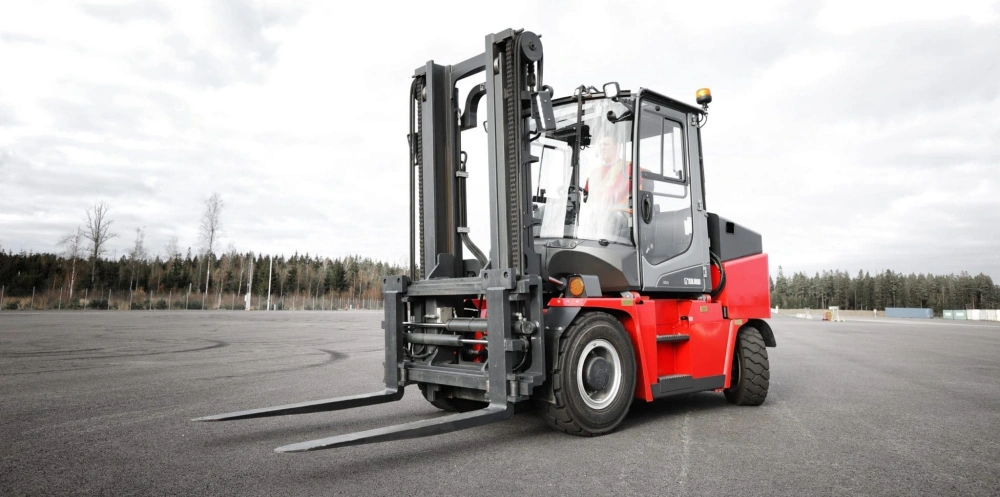
You can rely on forklifts for a wide range of warehouse tasks. Forklifts handle heavy loads, move materials quickly, and reach high shelves. You will find different types of forklifts designed for specific jobs. The table below shows common forklift types, their capabilities, and where you might use them:
Forklift Type | Capabilities | Typical Use Cases |
|---|---|---|
Pallet Jacks | Compact, manual or battery-powered | Moving small loads in tight spaces |
Walkie Stackers | Lifts pallets higher than pallet jacks | Handling materials in narrow aisles |
Order Pickers | Raises the operator to the warehouse racks | Picking items for customer orders |
Reach Forklifts | Extends forks for deep pallet retrieval | Fast retrieval in enclosed warehouse spaces |
Eco-friendly Forklifts | Low emissions and noise | Indoor warehouses, food storage |
Telehandlers | Large capacity for heavy lifting | Repositioning storage racks, heavy-duty tasks |
You can use forklifts for loading and unloading trucks, stacking materials, and managing inventory. Specialized forklifts work well in cold storage, retail, and freight transportation.
Pros and Cons
Forklifts offer many advantages for warehouse operations. You gain efficiency, high load capacity, and improved safety for your team. Forklifts reduce the need for manual labor and help you move goods faster. However, you must consider the costs and maintenance needs. The table below highlights the main pros and cons:
Pros | Cons |
|---|---|
Highly efficient | High upfront cost |
Can lift heavy weights | Requires regular maintenance |
Improved safety for workers | Ongoing maintenance required |
High load capacity and maneuverability | Shorter life expectancy (10-15 years) |
Tip: When you compare pallet trucks vs alternative material handling equipment, forklifts stand out for their power and versatility, but you need to plan for higher investment and upkeep.
Suitability and Safety
You should choose the right forklift based on your warehouse layout, racking system, and load requirements. Counterbalance forklifts work well with selective and push-back racking. Reach trucks fit narrow aisles and high racks.
Side loader forklifts handle long or bulky items, such as steel coils. Order pickers help you retrieve items from high shelves in distribution centers. Walkie stackers suit small warehouses with low to medium racks.
Safety remains a top priority. You must train operators, follow safety guidelines, and inspect equipment regularly. Forklifts can prevent injuries when used correctly, but you need to match the forklift type to your warehouse needs for the best results.
Reach Trucks Explained
Features and Applications
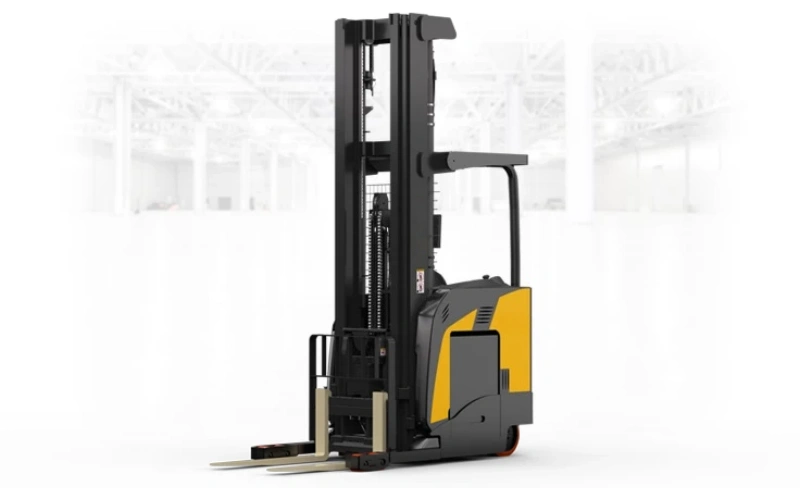
You will find reach trucks essential for maximizing space in modern warehouses. These machines stand out for their ability to work in narrow aisles and reach high shelves. The compact design and advanced control systems let you move pallets with precision.
Operators sit sideways, which improves visibility and comfort during long shifts. The telescoping mast extends forward, so you can pick up or drop off loads without losing stability.
Here is a table that highlights the main features and common applications of reach trucks:
Feature/Application | Description |
|---|---|
Maneuverability | Built for precision, allowing tasks in tight spaces. |
Lift height | Can reach impressive heights, maximizing vertical storage space. |
Telescoping mast | Extends forward to pick up and drop off loads, maintaining stability. |
Operator seating | The driver faces sideways for better visibility in confined spaces. |
Time efficiency | Known for speed and efficiency in pallet movement and order fulfillment. |
Operator comfort | Ergonomically designed cabs reduce fatigue during long shifts. |
Narrow chassis | Compact design ideal for tight spaces and narrow aisles. |
Advanced control systems | Sophisticated systems for precision handling. |
Common Applications | Used for organizing inventory, picking and packing, carrying raw materials, and storing pallets. |
Pros and Cons
When you compare pallet trucks vs alternative material handling equipment, reach trucks offer unique advantages. You gain excellent maneuverability in tight spaces and the ability to reach higher shelves. These trucks reduce aisle width requirements, which helps you increase storage capacity.
However, you need skilled operators, and maintenance costs can be higher. Reach trucks usually work best indoors.
Pros | Cons |
|---|---|
Excellent maneuverability in tight spaces | Generally limited to indoor use |
Capable of reaching higher shelves | Requires skilled operators |
Reduced aisle width requirements | Can be more expensive to maintain |
Tip: You should invest in operator training to get the most value from your reach trucks.
Suitability and Safety
You should choose reach trucks if your warehouse has narrow aisles and high racking. These machines help you make the most of your vertical space. For safety, you must train operators, follow load capacity guidelines, and schedule regular maintenance.
Common risks include tipovers when turning with elevated loads, collisions with racking or pedestrians, and falls from the platform if safety harnesses are not used.
Reach trucks are ideal for:
Narrow aisles and high racking systems
Warehouses that need to maximize storage capacity
Key safety considerations:
Provide proper operator training
Follow load capacity limits
Maintain equipment regularly
You can improve warehouse efficiency and safety by choosing the right equipment for your needs.
Stackers in Warehousing
Features and Use Cases
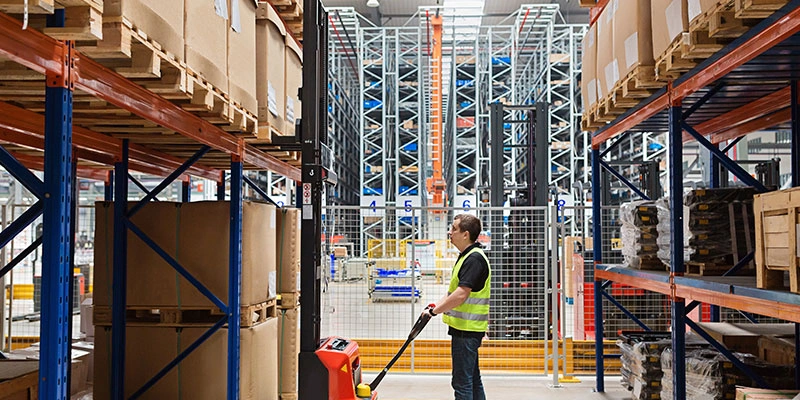
You can use stackers to improve how you store and move materials in your warehouse. Stackers help you make the most of your space by allowing you to stack goods vertically. This means you can fit more items in the same area.
Stackers also boost efficiency because they let you handle materials quickly and safely. You will find many types of stackers, so you can pick one that fits your needs. Some work well in tight spaces, while others handle larger loads.
Here is a table that shows the main features and benefits of stackers:
Feature/Benefit | Description |
|---|---|
Space Utilization | Lets you store more by stacking items vertically |
Efficiency and Productivity | Helps you move materials faster and with less effort |
Safety | Designed to keep workers safe during lifting and moving tasks |
Flexibility and Versatility | Works in many settings and comes in different sizes |
Cost-Effective Solution | Costs less than larger machines like forklifts |
You can use stackers on construction sites, in outdoor warehouses, and for government or utility operations.
Pros and Cons
When you compare pallet trucks vs alternative material handling equipment, stackers offer unique advantages. You get precise control and easy movement in narrow aisles. Stackers use less energy than electric forklifts and work well for lighter loads.
However, stackers move more slowly and cannot handle very heavy items like large forklifts can. Manual stackers cost less but require more effort from you. Electric stackers cost more but handle bigger jobs with less strain.
Equipment Type | Advantages | Disadvantages |
|---|---|---|
Stackers | Precise, maneuverable, energy-efficient, cost-effective | Slower, less powerful, lighter loads |
Electric Stackers | Efficient, high capacity, safe, easy to use | Higher initial cost |
Manual Stackers | Low cost, simple maintenance | More physical effort, less efficient |
Tip: Choose the type of stacker that matches your workload and budget.
Suitability and Safety
You should use stackers if you want to reduce manual lifting and lower the risk of injuries. Stackers let you lift and move pallets without straining your back or arms. They include safety features like emergency stop buttons, anti-rollback brakes, and ergonomic handles.
These features help you avoid accidents and keep your team safe. Stackers also use speed regulation and automatic braking systems to prevent sudden movements. Stability controls keep loads steady, so you do not have to worry about drops.
Stackers work best indoors or on smooth surfaces. They help you handle materials safely and efficiently, making them a smart choice for many warehouse tasks.
Dollies for Small Loads
Features and Applications
You can use dollies to move small or awkward loads with ease. Dollies come in many custom designs, so you can pick one that fits your specific needs. Some dollies have adjustable platforms or special wheels for heavy loads.
You will find them in manufacturing, automotive, and warehousing settings. These tools help you position components accurately and avoid production mistakes.
Dollies also work well in harsh environments because they resist chemicals and impacts. In logistics, you can choose dollies with custom dimensions to fit your aisles and boost efficiency. They often integrate with other material handling systems, so your workflow stays smooth.
Feature/Application | Description |
|---|---|
Custom Designs | Tailored to specific operational needs, enhancing load capacity, durability, and precision in movement. |
Manufacturing & Automotive | Requires heavy-duty precision for accurate component positioning to avoid production errors. |
Heavy Load Capacity Engineering | Customizable features like adjustable platforms and specialized wheels to handle substantial loads. |
Durability in Harsh Environments | Designed to withstand metal shavings, chemicals, and impacts, ensuring extended service life. |
Warehousing & Logistics | Optimized for high-volume efficiency, with custom dimensions for aisle width and durability. |
Material Handling Integration | Ensures compatibility with other systems, preventing workflow disruptions. |
Pros and Cons
Dollies offer several advantages in your warehouse. You can move items faster and with less back strain. Dollies act like an extra set of strong hands, making your job easier.
However, you may find it hard to use them on stairs unless you have a special model. If you do not store dollies properly, they can cause slip or trip hazards.
Pros | Cons |
|---|---|
Less back strain and quicker moving times. | Navigating stairs can be tricky without special models. |
Acts as an extra pair of strong hands. | Can cause slip and trip hazards if not stored properly. |
Tip: Always store dollies in a safe place to prevent accidents.
Suitability and Safety
You should use dollies for heavy, bulky, or irregular-shaped loads, such as furniture or industrial equipment. Dollies work best on smooth surfaces like factory floors or warehouses. To stay safe, check that you do not exceed the load capacity. Secure your load before moving it.
Only use dollies on surfaces that match their design. Dollies provide a stable platform for odd-shaped items and help you reduce physical effort. When you compare pallet trucks vs alternative material handling equipment, dollies stand out for small loads and quick moves, but you must follow safety rules.
Criteria | Details |
|---|---|
Load Types | Heavy, bulky, or irregular-shaped loads, such as furniture and industrial equipment. |
Surface Suitability | Best used on smooth surfaces like factory floors or warehouses. |
Safety Requirements | Ensure load capacity is not exceeded, loads are secured, and dollies are used on appropriate surfaces. |
Advantages | High load capacity, stable platform for irregular shapes, ease of securing loads, and reduces physical effort. |
Note: Always inspect your dolly before use and train your team on proper handling.
Conveyors for High Volume
Features and Use Cases
You can use conveyors to move large volumes of goods quickly and efficiently. These systems automate the flow of materials, which helps you reduce manual labor and speed up warehouse operations. Conveyors come in many types, each designed for specific tasks.
For example, vertical conveyors move items between floors, while pneumatic conveyors use air pressure to transport lightweight goods. You can also find vacuum conveyors that keep materials enclosed, reducing contamination risks.
Here is a table showing key features and typical use cases for conveyors in high-volume warehouses:
Feature/Use Case | Description |
|---|---|
Vertical Conveyors | Move materials between floors, ideal for multi-level warehouses. |
Reciprocating Conveyors | Transfer loads in cycles between different levels. |
Continuous Vertical Lifts | Provide a steady flow of goods without stopping. |
Pneumatic Conveyor Systems | Use air pressure or vacuum for lightweight items. |
Increased Productivity | Automate movement, reducing delays in picking and shipping. |
Lower Labor Costs | Minimize manual handling and workforce needs. |
Improved Safety | Reduce injury risks by limiting heavy lifting. |
Higher Accuracy | Ensure precise movement, lowering errors. |
Scalability | Support future growth and easy integration with other systems. |
Pros and Cons
You gain many advantages when you use conveyors in your warehouse. Automation increases efficiency and reduces manual labor. Conveyors help you use space better, both on the floor and vertically. They also improve safety by lowering the risk of injuries from lifting.
However, conveyors do have some drawbacks. Installation and setup can be expensive. Fixed layouts make it hard to change your facility’s design. You must also perform regular maintenance to keep everything running smoothly.
Advantages | Disadvantages |
|---|---|
Easy, uninterrupted material transport | Not suitable for all scenarios |
Simple structure, less maintenance needed | Fixed installation limits flexibility |
Covers long distances in assembly lines | Loading/unloading may still need manual work |
Tip: When you compare pallet trucks vs alternative material handling equipment, conveyors stand out for high-volume, repetitive tasks but may not fit every warehouse layout.
Suitability and Safety
You should choose conveyors if you need to move large quantities of goods with minimal manual effort. Belt conveyors work well for packaging and sorting. Modular belts are best for food or hygiene-sensitive items. Flexible conveyors help with truck loading and temporary setups.
Slat and spiral conveyors handle heavy or hot items and save space in multi-level warehouses. Pallet conveyors move bulk goods efficiently.
Conveyors reduce manual lifting, which lowers injury risks. They also separate pedestrian traffic from moving products, making your warehouse safer. You must schedule regular maintenance to prevent breakdowns. Automated systems can track inventory in real time, giving you better control over your operations.
Note: Always match your conveyor system to your warehouse needs and keep safety a top priority.
Pallet Trucks vs Alternative Material Handling Equipment
Comparison Table
You need to compare different types of material handling equipment to make the best choice for your warehouse. The table below shows the main strengths and weaknesses of each option. This helps you see how each tool fits different needs, from cost and load capacity to safety and ease of use.
Equipment Type | Strengths | Weaknesses |
|---|---|---|
Manual Pallet Truck | Affordable, easy to use, low maintenance, and improves manual handling | Limited by physical effort, ergonomic risks with heavy loads |
Electric Pallet Truck | Reduces fatigue, boosts productivity, safer for workers | Higher initial cost, needs charging infrastructure |
Forklift | Handles very heavy loads, lifts high, advanced safety features | Expensive, requires training and regular maintenance |
Reach Truck | Works in narrow aisles, reaches high shelves, precise control | Indoor use only, needs skilled operators, higher upkeep |
Manual Stacker | Low cost, safer than manual lifting, good for small warehouses | Not for frequent or heavy lifting |
Electric Stacker | Maneuverable, lifts to 5 meters, ideal for tight spaces | More expensive, needs operator training |
Dolly | Low cost, easy to store, simple to maintain | Labor-intensive, limited load capacity |
Conveyor | Moves goods continuously, reduces manual work, and integrates with systems | High installation cost, not flexible for layout changes |
You can see that manual pallet trucks from Powerful Machinery offer a strong balance of affordability, reliability, and ease of use. They work well for light to medium loads and require little training. Electric pallet trucks increase efficiency and safety, especially for high-volume operations.
Forklifts and reach trucks handle heavier loads and higher shelves, but need more investment and skilled operators. Stackers and dollies suit smaller tasks or tight spaces. Conveyors automate high-volume movement but need more space and planning.
Quick Reference Points
When you compare pallet trucks vs alternative material handling equipment, you should focus on these key points:
Load Capacity: Manual pallet trucks support 1,000 to 3,500 kg. Forklifts can lift from 1 ton to over 50 tons. Electric pallet trucks handle up to 8,000 lbs.
Cost: Manual pallet trucks have the lowest upfront cost. Electric models and forklifts cost more but offer higher efficiency. Conveyors require the highest investment.
Efficiency: Manual pallet trucks work best for short distances and lower volumes. Electric pallet trucks and conveyors suit high-volume, long-distance tasks.
Safety: Forklifts have advanced safety features for heavy loads. Manual pallet trucks are safe for lighter loads but need proper training to avoid injuries.
Space Needs: Reach trucks and electric stackers fit narrow aisles. Forklifts need more space. Conveyors require dedicated layouts.
Workforce Impact: Electric pallet trucks and conveyors reduce operator fatigue and injury risk. Manual equipment needs more physical effort.
Tip: If your warehouse moves more than 80-100 pallets a day or covers long distances, electric pallet trucks or conveyors can boost productivity and reduce injuries. For smaller operations, manual pallet trucks from Powerful Machinery give you reliable performance at a lower cost.
You should always match your equipment to your warehouse size, load type, and workflow. Research shows that choosing the right pallet truck can improve throughput by up to 40% and lower injury rates by 30%.
Many businesses, like a distribution center in New Jersey, saw a 35% productivity jump after switching to electric pallet trucks for longer routes.
Powerful Machinery offers a full range of pallet trucks and material handling solutions. You get certified quality, strong safety features, and options for every warehouse size. This helps you keep your operations safe, efficient, and cost-effective.
Selecting the Right Solution
Matching Equipment to Needs
You want to choose the best material handling equipment for your warehouse. Start by looking at your daily operations. Think about the types of materials you move, their size, and their weight.
Check your warehouse layout. Measure aisle widths, ceiling heights, and look for any obstacles. This helps you pick equipment that fits your space and tasks.
Here is a table to help you compare important selection criteria:
Criteria | Description |
|---|---|
Warehouse Layout | Analyze aisle widths, ceiling height, and obstructions to optimize space utilization. |
Material Properties | Evaluate the size, weight, and fragility of materials to choose appropriate handling equipment. |
Load Capacity and Functionality | Ensure equipment can handle the maximum weight and is suitable for specific tasks. |
Safety Features | Prioritize equipment with stability control, ergonomic design, and automatic braking systems. |
Operator Skill Levels | Match equipment complexity with operator training and skill levels. |
Budget | Balance initial costs with long-term value, including maintenance and energy efficiency. |
Space and Operational Complexity | Choose compact equipment for limited spaces or automation for complex workflows. |
Future Growth | Select scalable equipment that can adapt to changing business needs and integrate new technologies. |
You can follow these steps to match your needs:
Assess your material handling requirements.
Identify the types and sizes of materials you move.
Determine the weight of your loads.
Consider the main tasks, such as stacking, order picking, or loading.
Evaluate your workspace, including aisle width and storage height.
Think about your operating environment—indoor, outdoor, or both.
Tip: Matching the right equipment to your needs improves efficiency and keeps your team safe.
Decision Tips
You face many choices when selecting between pallet trucks and alternative equipment. Use these quick tips to guide your decision:
Key Consideration | Electric Pallet Truck | Legged Forklift Truck |
|---|---|---|
Work Environment | Best for indoor operations | Suitable for outdoor or uneven terrains |
Load Requirements | Ideal for light to medium palletized loads | Designed for heavy or irregular loads |
Operational Costs | Lower maintenance and energy costs | Higher upfront investment, but durable |
Choose electric pallet trucks for indoor use and frequent, lighter loads.
Select forklifts for heavy loads or outdoor work.
Pick compact stackers or reach trucks for narrow aisles.
Consider conveyors for high-volume, repetitive tasks.
Note: Every warehouse is unique. For the best results, consult with Powerful Machinery. You will get expert advice and custom solutions that fit your business now and in the future.
Conclusion
You improve warehouse efficiency and safety when you choose equipment that fits your business needs. The right investment boosts productivity and reduces downtime. Training your team on safe operation lowers the risk of accidents. Routine inspections and preventive maintenance keep your systems reliable.
Powerful Machinery offers certified pallet trucks and custom solutions for every warehouse.
Reach out for expert advice and discover how you can optimize your material handling today.
FAQ
What is the main difference between a pallet truck and a forklift?
You use a pallet truck for moving pallets on the ground. You use a forklift to lift loads to higher shelves. Forklifts handle heavier weights and reach higher places.
How do I choose the right material handling equipment for my warehouse?
You should look at your load size, warehouse space, and budget. Think about how often you move goods. Ask for expert advice if you feel unsure.
Are manual pallet trucks safe for all workers?
Manual pallet trucks are safe when you follow training and safety rules. You must not overload the truck. You should always check the equipment before use.
Can I use a pallet truck on uneven floors?
You can use a pallet truck on slightly uneven floors. Move slowly and keep the load balanced. Avoid large bumps or steep ramps for safety.
How often should I maintain my pallet truck?
You should check your pallet truck every week. Look for worn wheels, leaks, or damage. Schedule a full inspection every few months to keep it working well.