You can move a pallet jack up a ramp if you follow strict safety measures and stay within the equipment’s limits. Manual and electric pallet jacks each handle ramps differently. Always check the manufacturer’s instructions before using a jack on an incline to prioritize pallet jack ramp safety.
Powerful Machinery delivers reliable solutions that keep your material handling operations safe and efficient.
Key Takeaways
Always check the manufacturer’s guidelines before using a pallet jack on a ramp to ensure safety.
Manual pallet jacks are best for gentle slopes, while electric models can handle steeper ramps due to their advanced features.
Maintain load stability by centering the load and keeping heavier items low to prevent tipping on ramps.
Use non-slip surfaces for ramps to enhance traction and reduce the risk of accidents during operation.
Regular training for operators is crucial to ensure safe and efficient use of pallet jacks on ramps.
Manual vs Electric Pallet Jack Ramps
Design and Use Differences
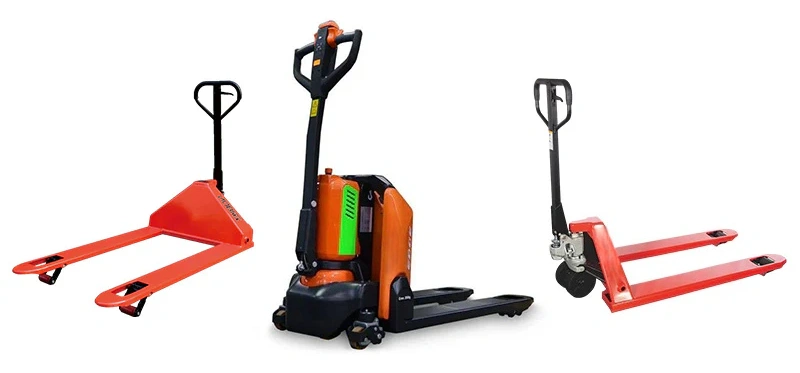
You will notice clear differences between manual and electric pallet jacks when you move loads up a ramp. Manual pallet jacks rely on your physical effort, while electric models use powered mechanisms to boost efficiency.
Electric pallet jacks from Powerful Machinery feature ergonomic controls that reduce operator strain and improve productivity. The table below highlights the main design features that affect ramp navigation:
Feature | Manual Pallet Jacks | Electric Pallet Jacks |
|---|---|---|
Operation | Manual effort required | Powered mechanisms enhance efficiency |
Physical Strain | Higher physical strain on operators | Reduces physical strain on operators |
Speed Controls | Not available | Often includes speed controls |
Braking Systems | Not available | Typically includes braking systems |
Electric models offer advanced safety features, such as speed controls and braking systems. These features help you maintain control and stability on inclines, making electric pallet jacks a preferred choice for ramp use in busy warehouses.
Ramp Performance Limits
Ramp performance depends on the type of pallet jack you use. Manual pallet jacks work best on gentle slopes. Electric pallet jacks can handle steeper ramps due to their powered drive and braking systems. The following table shows the maximum recommended ramp gradients:
Type of Pallet Jack | Maximum Recommended Ramp Gradient |
|---|---|
Manual | 10% – 12% |
Electric | Up to 15% |
You should always check the specifications for your equipment before moving loads up a ramp. Powerful Machinery provides detailed product information to help you select the right model for your needs.
Manufacturer Guidelines
Major manufacturers set strict guidelines for ramp use. You must follow these rules to ensure safety and protect your equipment:
The maximum ramp slope for manual pallet jacks is between 10% to 12%.
Electric pallet jacks can handle slopes up to 15%, depending on the model and load capacity.
Ensure load stability and even weight distribution to prevent tipping.
Use pallet jacks with braking systems to avoid uncontrolled movement.
Operators should proceed slowly and maintain control, especially when pulling loads uphill.
Tip: Proper training helps you operate pallet jacks safely on ramps. Powerful Machinery recommends regular training for all operators to reduce risks and improve efficiency.
You can rely on Powerful Machinery’s expert support and certified products to meet industry standards for ramp safety.
Pallet Jack Ramp Safety and Operation
Recommended Ramp Slopes
You must understand the recommended slope for pallet jack ramp safety before you move any load. Most industry guidelines suggest a ramp slope between 5% and 10%.
The maximum slope for a pallet jack should not exceed 1:12 (8.33%), which matches ADA and OSHA recommendations for commercial warehouse ramps. The average incline angle for pallet truck ramps in these environments is about 10 degrees.
You should always check the guidelines from your equipment manufacturer and your facility’s safety protocols.
Note: Powerful Machinery’s electric pallet jack models are designed to handle slopes up to 15%, but you must never exceed the recommended ramp slope for your specific equipment and load capacity.
Safe Operation on Inclines
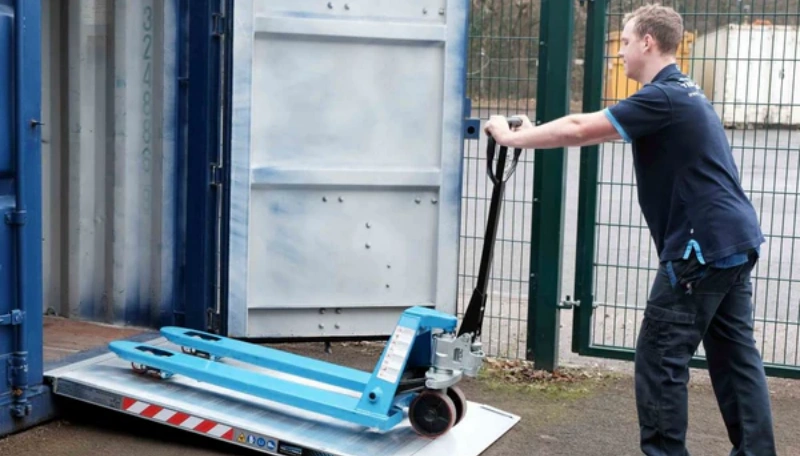
Safe operation on inclines requires you to follow strict safety guidelines. You must move straight up or down the ramp to maintain control. Always keep the load on the uphill side of your body. When you go uphill, push the pallet jack with the front forks.
When you go downhill, walk backward and keep the load behind you. Never stand directly in front of a loaded pallet jack on a ramp. Treat ramps as one-way traffic zones and avoid passing other equipment.
Operator Techniques for Safe Operation:
Move slowly and stay aware of your surroundings.
Push the pallet jack instead of pulling it.
Seek assistance for heavy loads or steep slopes.
Do not stand on or ride the pallet jack.
Keep the path clear and avoid turning on inclines.
You must follow these safety protocols to prevent hazards and injuries. Powerful Machinery’s electric pallet jack models feature ergonomic controls and braking systems that help you maintain safe operation on inclines.
Load Distribution and Stability
Proper load distribution is critical for pallet jack ramp safety. If you place the load unevenly, the pallet jack becomes harder to steer and more likely to tip. You must center the load on the forks and keep heavier items low and between the fork heels.
This keeps the center of gravity stable and reduces the risk of tipping, especially when using a pallet jack on a ramp.
Tip: Always check the load capacity of your manual pallet jack or electric pallet jack before you start. Overloading increases safety hazards and can lead to accidents.
A balanced and low load ensures safe operation and stability. Powerful Machinery’s pallet jacks are engineered for optimal load capacity and stability, supporting your safety considerations on challenging terrains.
Surface Traction and Ramp Materials
Surface traction plays a major role in pallet jack ramp safety. You must inspect ramp materials before using a pallet jack on a ramp. Non-slip surfaces, such as textured concrete or metal grating, reduce the risk of rolling away or losing control.
Manual pallet jack models may roll away on smooth or wet surfaces, so you must use ramps with adequate traction.
Callout: Powerful Machinery’s pallet truck ramps feature non-slip surfaces and robust construction to minimize safety hazards and support safe operation.
Frequent workplace inspections help you identify hazards and maintain a clean, safe environment. You should store pallet jacks safely and keep ramps free of debris to prevent trip hazards. These safety considerations protect you and your team during every shift.
Common Causes of Pallet Jack Accidents on Ramps:
Cause | Description |
|---|---|
Improper load placement | Loads that are not secured or balanced can shift, leading to accidents. |
Overloading | Exceeding the load capacity can cause tipping or loss of control. |
Visibility issues | Limited sight lines can prevent operators from seeing pedestrians and vice versa. |
Operator training deficiencies | Lack of proper training can lead to unsafe operation of pallet jacks on ramps. |
You must follow all safety guidelines and use equipment designed for pallet jack ramps to reduce safety hazards and ensure safe operation.
Equipment Features and Buying Tips
Braking Systems and Controls
When you select a pallet jack for ramp use, prioritize advanced braking systems and intuitive controls. Electric models from Powerful Machinery feature responsive brakes that help you maintain control on inclines.
Modern electric pallet jacks use braking systems that allow you to stop smoothly, even with heavy loads. These systems also reduce speed automatically when you turn or traverse ramps, minimizing the risk of tipping or losing control.
Non-Slip Ramp Surfaces
Non-slip surfaces are essential for safe ramp operation. You should inspect ramp treatments before moving loads. The following table highlights effective solutions for improving traction:
Solution Type | Overview | Ideal For | Key Features |
|---|---|---|---|
Antislip Matting | Portable mats for temporary use | Temporary slip resistance | Quick install, cushioned surface |
Permanent Antislip Treads | Abrasive strips for permanent installation | High-traffic areas | Durable, long-lasting |
Antislip Epoxy Coatings | Textured liquid coatings | Large areas needing full coverage | Customizable grit, chemical-resistant |
Aluminum Antislip Plates | Heavy-duty metal sheets | Extremely high-traffic areas | Rust-resistant, tough |
Antislip Tapes | Adhesive-backed tapes | Precise traction needs | Easy to cut, cost-effective |
Powerful Machinery recommends non-slip surfaces for both ramps and pallet jack wheels to maximize safety.
Weight Capacity and Handling
You must check the weight capacity before purchasing a manual pallet jack or electric model. Select a pallet jack that matches your typical load size and ramp gradient. Powerful Machinery’s pallet jacks offer robust construction and ergonomic controls, supporting safe handling of heavy loads.
Always center the load and keep heavier items low to maintain stability.
Operator Training
Operator training ensures safe and efficient ramp use. You can access training through OSHA-authorized centers, community colleges, workplace programs, or online certification courses.
Local OSHA trainers provide hands-on instruction.
Community colleges offer equipment operator certifications.
Employers may deliver tailored workplace training.
Online courses allow flexible learning, but hands-on evaluation remains essential.
Comprehensive operator training covers safety guidelines, equipment basics, operational techniques, emergency protocols, and practical experience.
Powerful Machinery’s expert support team helps you choose the right pallet jack for your ramp application. You receive guidance based on your space, load requirements, and budget, ensuring you invest in equipment that meets your operational needs.
Alternatives for Challenging Ramps
Rough Terrain Pallet Jacks
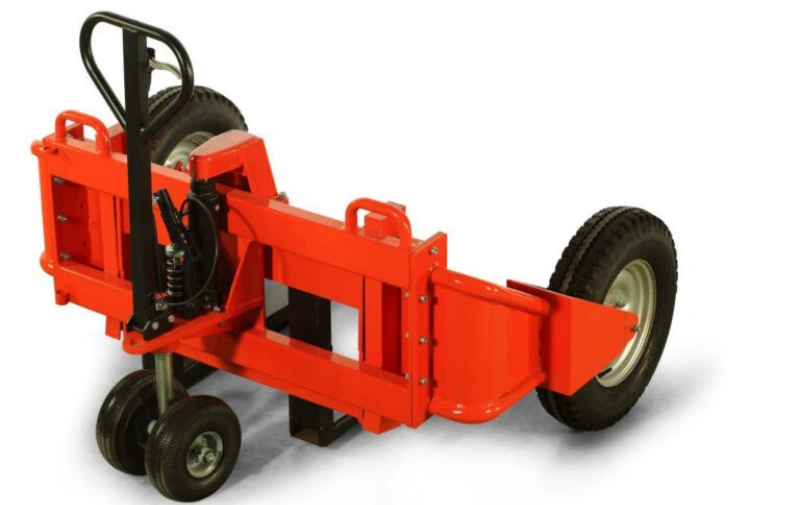
You may encounter ramps with gravel, dirt, or uneven pavement in outdoor or construction settings. Standard pallet jacks struggle on these surfaces, but rough terrain pallet jacks from Powerful Machinery offer a reliable solution.
These specialized models feature a wide base and large, air-filled tires that absorb shocks and grip bumpy ground. You can move loads between 2,200 and 4,400 pounds with confidence, even on soft or irregular terrain.
Key advantages of rough terrain pallet jacks:
Superior traction and stability on uneven surfaces
High ground clearance prevents undercarriage damage
Durable construction withstands harsh environments
All-wheel drive and rugged suspension for tough jobs
Ability to handle heavy loads over challenging terrain
Powerful Machinery’s rough terrain pallet jacks help you maintain safety and efficiency when standard equipment cannot perform.
Forklifts and Other Solutions
You may need to consider forklifts for steep or highly elevated ramps. Forklifts can lift heavier loads and navigate more extreme inclines, but you must recognize their limitations. Loaded forklifts can go off course on ramps, especially after extensive use.
Curbed ramps help prevent accidents by keeping forklifts from driving over the edge. Electric pallet jacks provide safer ramp operation with stability and braking systems, while forklifts require more operator skill and can be less maneuverable in tight spaces.
Comparison Table: Forklifts vs Electric Pallet Jacks
Feature | Forklifts | Electric Pallet Jacks |
|---|---|---|
Load Capacity | Higher | Moderate |
Maneuverability | Lower in tight spaces | High |
Safety on Ramps | Depends on ramp design | Enhanced with braking systems |
Operator Skill Needed | Advanced | Moderate |
Choosing the Right Equipment
You must evaluate several criteria before selecting equipment for ramp use. Consider the following factors to ensure safety and productivity:
Load capacity and maximum weight of goods
Ramp dimensions, including slope and width
Adjustability and material durability
Safety features such as guardrails and edge protection
Surface conditions, ensuring slip resistance and obstacle-free paths
Regular maintenance and inspection routines
Tip: Always match your equipment to the ramp’s slope, surface, and expected load. Powerful Machinery’s expert team can help you assess your needs and recommend the best solution for your environment.
You can rely on Powerful Machinery’s range of pallet jacks and rough terrain models to tackle any ramp challenge with confidence.
Conclusion
You can use pallet jacks on ramps if you follow strict safety guidelines and stay within recommended limits. Always consider alternatives for steep or rough ramps. Remember these key safety tips:
Keep the pallet jack in front of you when descending.
Slow down at intersections and give pedestrians the right of way.
Store unused pallet jacks safely.
Powerful Machinery demonstrates its commitment to quality and safety through the following practices:
Evidence Type | Description |
|---|---|
Rigorous Testing | Every product undergoes extensive testing to surpass international safety standards. |
Advanced Production Equipment | Utilization of state-of-the-art machinery ensures precision and consistency in manufacturing. |
Strict Quality Control System | A comprehensive quality control process is implemented from raw material inspection to the final product. |
You can trust Powerful Machinery for reliable material handling solutions.
FAQ
What is the safest way to use a pallet jack ramp?
You should always inspect the ramp for debris and ensure it has a non-slip surface. Move slowly, keep the load stable, and follow all manufacturer guidelines. Proper training helps you avoid accidents on any pallet jack ramp.
Can you use a manual pallet jack ramp outdoors?
You can use a manual pallet jack ramp outdoors if the surface is even and provides good traction. For rough or uneven terrain, consider a rough terrain model from Powerful Machinery for better safety and performance.
How do you prevent accidents on a pallet jack ramp?
You must center the load, avoid overloading, and keep the path clear. Use equipment with braking systems and non-slip wheels. Regular maintenance and operator training reduce risks on every pallet jack ramp.
Do you need special training for operating a pallet jack ramp?
Yes, you need specific training to operate a pallet jack ramp safely. Training covers proper techniques, load handling, and emergency procedures. This ensures you understand the risks and best practices for ramp use.