You rely on chain blocks when you need to lift heavy loads safely and efficiently. These devices use a simple but powerful mechanism that multiplies your force, making it possible to raise large objects with minimal effort.
Chain pulley blocks convert a low force with high travel input into a high force with low travel output. When you pull the hand chain, a gear system amplifies your effort, lifting the load smoothly. A ratchet and pawl mechanism then holds the load securely in place.
Understanding how chain blocks work helps you choose the right equipment and use it safely. Powerful Machinery delivers high-quality chain block solutions trusted by professionals worldwide.
Key Takeaways
Chain blocks lift heavy loads safely by multiplying your force, making lifting easier and more efficient.
Choose between manual and electric chain blocks based on your lifting needs; manual blocks are portable, while electric hoists are ideal for frequent use.
Always check the working load limit and safety features of chain blocks to ensure safe operation and compliance with industry standards.
Regularly inspect and maintain your chain block to prevent accidents and extend its lifespan; follow a maintenance schedule for best results.
Use chain blocks in tight spaces and low ceilings where larger equipment cannot fit, making them versatile for various industries.
What Are Chain Blocks?
Chain Block Definition and Purpose
You use chain blocks to lift and lower heavy loads with precision and safety. This equipment plays a vital role in construction, manufacturing, and logistics. Chain block compact technology allows you to move large objects with minimal effort, improving both efficiency and safety.
You can rely on chain blocks for tasks that require precise control, such as positioning steel beams or machinery parts. Powerful Machinery offers a full range of certified chain block solutions, trusted by professionals who demand reliability and performance.
Chain blocks are essential for lifting heavy loads safely and efficiently. You can use them in many industries because they provide precise control and versatility.
Types of Chain Blocks: Manual and Electric
You will find two main types of chain blocks: manual chain blocks and electric chain hoists. Each type serves different needs. The manual chain block uses a hand chain hoist mechanism, which you operate by pulling a chain. This type works well in locations without power and offers portability.
The electric chain hoist uses a motor, making it ideal for frequent lifting in industrial settings. You can see the main differences in the table below:
Feature | Manual Chain Block | Electric Chain Hoist |
|---|---|---|
Operation | Hand chain hoist | Electric motor |
Physical Effort | Manual | Minimal |
Portability | High | Lower |
Lifting Capacity | Light to medium | Medium to heavy |
Control Mechanism | Direct manual | Remote or switch |
Application Suitability | No power needed | Frequent, powered environments |
Materials and Shapes of Chain Blocks
You benefit from chain blocks made with high-grade steel and quality alloy steel. These materials give the chain block the strength and durability needed for lifting in tough environments. Powerful Machinery uses advanced manufacturing to ensure every hand chain hoist and electric chain hoist meets strict standards.
The compact shape of the chain block makes it easy to use in tight spaces, while the robust design ensures long service life.
Lifting Capacity and Industry Standards
You must always check the working load limit before using a chain block. Most chain blocks have a safety factor between 3 and 5, which means they can handle several times their rated capacity. Regulatory bodies like OSHA require a minimum safety factor of 5 for general-purpose lifting equipment.
Powerful Machinery’s chain blocks meet or exceed international certifications, including ISO9001, TUV Rheinland, OSHA, EURO CERT, and ASTM. You can trust these products for safe lifting in any industry.
Chain Block Mechanism
Key Components and Structure
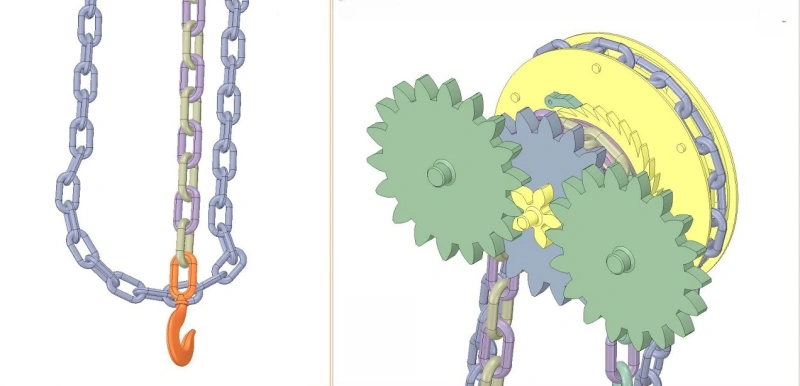
You find that chain blocks rely on a precise arrangement of mechanical parts to deliver reliable lifting performance. Each component plays a critical role in the chain block operation. Here is a breakdown of the main elements and their functions:
Gear Type | Function |
|---|---|
Internal Gears | Wind the chains to lift the load with minimal effort. |
Pinion Gears | Engage with the hand chain to receive your input force. |
Reduction Gears | Multiply your force, allowing you to lift heavier loads efficiently. |
In addition to the gear system, you interact with several other key parts during operation:
Hand chain: You pull this to start the lifting process.
Load chain: This moves upward, raising the load.
Hooks: These secure the load and connect the chain block to a fixed point.
Braking system: This locks the load in place and prevents accidental drops.
Powerful Machinery chain blocks feature high-grade steel construction for both the body and the chains. The hooks use forged steel and include safety latches, which help prevent accidental release. The compact design allows you to use the chain block in tight spaces, making it ideal for construction sites and warehouses.
How Chain Blocks Lift Loads?
You achieve powerful lifting with a chain block by using a simple mechanical advantage. When you pull the hand chain, the pinion gears engage and transfer your force to the internal gears. The reduction gears then multiply your input, so you can lift heavy loads with much less effort.
This gear system transforms a manageable pull into a strong lifting force, making it possible for you to raise objects that would otherwise be impossible to move by hand.
The load chain travels smoothly through the guide, which prevents jamming and ensures consistent operation. You can control the speed and precision of the lift by adjusting your pulling force.
Powerful Machinery chain blocks use advanced gear designs to maximize efficiency and minimize wear, so you get reliable performance every time.
Braking and Safety Features
You must always prioritize safety when using chain blocks. Modern chain blocks, including those from Powerful Machinery, integrate several features to protect you and your load:
Limit switches stop the chain block from over-travel, reducing the risk of accidents.
Load brakes hold the load securely, even if you stop pulling the chain.
Emergency shut-off switches let you halt the device quickly if something goes wrong.
Lifting hooks come with safety catches and special shapes to prevent the load from slipping off.
The braking system in a chain block uses a ratchet and pawl mechanism. This locks the load in place automatically when you stop pulling, so you do not have to worry about sudden drops. Powerful Machinery’s chain blocks meet strict international safety standards, giving you confidence in every lift.
Tip: Always inspect the hooks, chains, and brakes before each use to ensure safe and smooth chain block operation.
You can trust Powerful Machinery chain blocks for robust construction, advanced safety features, and reliable lifting in demanding environments.
Chain Block vs Chain Hoist
Operational Differences
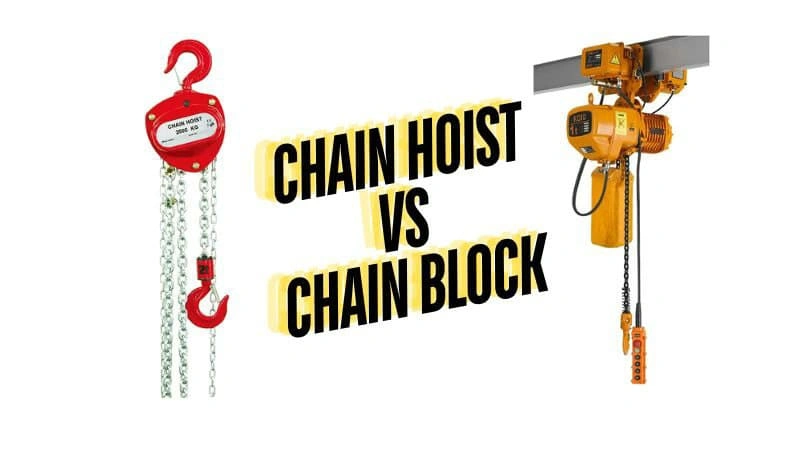
You may often hear the terms chain block and chain hoist used interchangeably, but they have important differences. A chain block operates manually. You pull the hand chain to lift or lower heavy loads. This design does not require electricity or compressed air, making it reliable in any environment.
In contrast, a chain hoist can use manual, electric, or pneumatic power. You get faster operation and higher efficiency with a powered hoist, especially for frequent or repetitive lifting tasks.
Here is a quick comparison to help you understand the main distinctions:
Feature | Chain Hoist | Chain Block |
|---|---|---|
Power Source | Manual, Electric, Pneumatic | Exclusively Manual |
Operation Speed | Faster due to motor assistance | Slower, relies on human strength |
Efficiency | More efficient for heavy loads | Less efficient, manual operation |
You should choose a chain block when you need a simple, portable solution for occasional lifting. If you require speed and handle heavy loads regularly, a powered chain hoist may suit your needs better.
Note: Many people confuse chain blocks with chain hoists. Remember, all chain blocks are manual hoists, but not all hoists are chain blocks.
Use Cases and Environments
You will find that chain blocks excel in specific environments. Their compact, low-headroom design makes them ideal for tight spaces and low ceilings. You can use them in workshops, construction sites, or any location where power is unavailable. Chain blocks work best for occasional lifting tasks where speed is not critical.
Environment Type | Reason for Preference |
|---|---|
Low Ceilings | Chain blocks have a low headroom design, maximizing available working space below. |
Tight Spaces | Their design minimizes vertical space usage, making them ideal for confined areas. |
Occasional Lifting Tasks | Suitable for tasks where speed is not critical, ideal for workshops and construction. |
You should select Powerful Machinery chain blocks when you need reliable lifting in challenging conditions. Their robust construction and advanced safety features ensure dependable performance, even in demanding environments.
Lifting Applications in Industry
Construction and Manufacturing
You see chain blocks as essential tools on construction sites and in manufacturing plants. You use them to lift steel beams, concrete blocks, and heavy machinery. You can move large parts into position with precision and control.
In automotive and aviation maintenance, you rely on chain blocks to lift engines and other heavy components. You also use them in agriculture to handle farm equipment and in mining to move rocks and ore. Warehouses depend on chain blocks for lifting pallets and crates.
You trust Powerful Machinery chain blocks for these demanding tasks because they deliver consistent performance and meet strict safety standards.
Construction: Lift and move steel beams and concrete blocks.
Manufacturing: Handle heavy machinery and parts.
Maintenance: Support lifting in the automotive and aviation industries.
Agriculture: Move heavy farm equipment.
Warehousing: Manage pallets and crates.
Mining: Lift rocks, ore, and equipment.
Logistics and Transportation
You improve your logistics and transportation operations with chain blocks. These devices help you load and unload heavy cargo efficiently. You reduce manual effort and speed up your workflow. Chain blocks also increase transparency and traceability in your supply chain.
You can prevent fraud and ensure secure transactions. You experience fewer delays at customs because chain blocks streamline your processes.
Benefit | Description |
|---|---|
Enhanced Transparency and Traceability | You track product journeys and build trust among stakeholders. |
Increased Efficiency and Reduced Costs | You cut paperwork and speed up lifting, lowering costs and errors. |
Improved Security and Fraud Prevention | You prevent tampering and ensure secure lifting for logistics providers. |
Faster Customs Clearance | You share data in real time and reduce delays in goods processing. |
Enhanced Collaboration and Data Sharing | You coordinate better and access accurate information. |
Versatility and Efficiency
You benefit from the versatility of chain blocks across many industries. You use them in construction to lift building materials and equipment. In warehouses, you move heavy goods and manage inventory. Workshops rely on chain blocks for handling machinery during repairs and assembly.
Manufacturing facilities use them to move raw materials and finished products, especially in tight spaces. Automotive workshops lift engines and transmissions with ease. Mining operations depend on chain blocks for lifting equipment and materials.
You choose Powerful Machinery chain blocks for their durability and value. Each unit passes strict tests, including maintenance certificates, inspection reports, destruction tests, and load tests. These certifications guarantee reliable lifting and safety in the toughest environments.
You trust Powerful Machinery to deliver chain blocks that perform under pressure and keep your team safe.
Tip: Always check certifications and inspection reports before using any hoist for heavy loads.
Chain Block Safety and Maintenance
Selecting the Right Chain Block
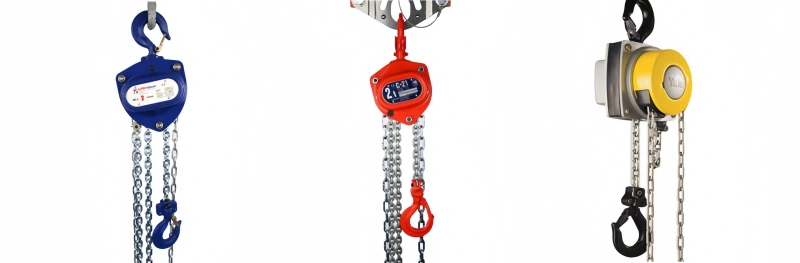
You must select the correct chain block for your lifting task to ensure safety and efficiency. Start by considering the load capacity. Each model supports a specific weight range. Lighter models offer speed and portability, which work well for assembly lines or smaller jobs.
Heavy-duty models handle larger weights, making them ideal for construction or industrial environments. Pay attention to the mechanical advantage and gear ratios. These features affect how much effort you need to lift a load. Choose a chain block with a design that matches your work environment and the frequency of use.
Powerful Machinery provides a range of certified chain blocks, each engineered for durability and high performance. Always check that your choice meets or exceeds industry standards and certifications.
Pre-Use Inspection and Checks
You should inspect your chain block before every use. This step prevents accidents and extends the life of your equipment. Follow these steps for a thorough pre-use inspection:
Examine the hoist to confirm it is in good working condition.
Check the upper and lower hooks. Make sure they are firmly attached and not skewed.
Ensure the lifting chain hangs straight with no twisted links.
Lift the load slowly at first. Watch for kinks or other issues in the chain before proceeding with the full lift.
You also need to look for signs of damage or wear:
Inspect the top hook for bending, twisting, or cracks.
Check the hoist body for dents, cracks, or missing bolts.
Examine the load chain for twists, kinks, nicks, gouges, or corrosion.
Inspect the bottom hook for deformation and proper swiveling action.
Common causes of chain block failure include cracks, corrosion, deformation, cuts, gouges, distortion, nicks, wear, and heat damage. Pay close attention to the hooks for signs of overloading.
Retire the load chain if you see elongation, diameter reduction, cracks, twists, or stiff links. Replace hooks if you notice cracks, increased throat opening, permanent bends, or excessive wear.
Tip: Regular inspection is your first line of defense against equipment failure and workplace injuries.
Safe Lifting Practices
You must follow safe lifting practices to protect yourself and your team. Many workplace injuries result from improper use of lifting equipment. Over 30% of injuries in heavy lifting operations come from misuse, including chain block misuse.
Nearly 8% of all workplace accidents involve lifting equipment, and 1 in 10 injuries in materials handling are due to poor hoisting techniques or equipment failure.
The table below outlines best practices for safe lifting:
Best Practice | Description |
|---|---|
Proper Setup and Inspection | Verify the chain block and all hardware are in good condition before use. |
Regular Maintenance | Lubricate the chain regularly to reduce friction and wear. |
Training and Certification | Ensure all operators receive thorough training and certification. |
Load Balancing | Center and stabilize the load before lifting. |
Clear Work Area | Remove obstructions and hazards from the work area. |
The most frequent safety incidents include overloading, side pulling, weak suspension points, twisted chains, jerking the hand chain, continuous lifting with manual hoists, and lack of inspection or maintenance. Overloading accounts for about 35% of serious accidents.
Side pulling and non-vertical lifting cause 20% of incidents. Weak suspension points and twisted chains also contribute to many failures.
Note: Always position the hoist directly above the load. Never exceed the rated capacity. Avoid jerking the hand chain or using a manual chain block for continuous lifting.
Maintenance Tips for Longevity
You can extend the life of your chain block with proper maintenance. Follow these steps to keep your equipment in top condition:
Inspect the chain block regularly for wear, such as frayed cables or loose bolts.
Lubricate the chain according to the manufacturer’s recommendations to prevent excessive wear.
Train all users to handle the equipment correctly and avoid unnecessary strain.
Never overload the hoist. This prevents damage to internal components.
Clean the chain block after each use to remove dirt and debris. This step helps prevent corrosion.
Store the chain block in a dry, temperature-controlled environment when not in use.
Check the equipment after every use for signs of damage or wear.
Create a maintenance schedule that includes regular lubrication, inspections, and cleaning.
Replace any worn or damaged parts immediately.
Consult a professional if you are unsure about any maintenance procedure.
You should service manual chain blocks at least once a year. In high-use environments, increase the frequency to every one to three months. For electric chain hoists, schedule service at least once a year, or every six months if used frequently.
Powerful Machinery chain blocks are designed for easy maintenance and long service life. Each unit meets strict international safety and quality standards. By following these maintenance tips, you ensure reliable lifting and reduce the risk of accidents.
Callout: Consistent maintenance and proper use are essential for safety and equipment longevity. Never skip inspections or routine care.
Conclusion
You rely on chain blocks as an essential tool for overhead work in many industries. Their ergonomic design, safety features, and wide applications make them a smart choice for lifting. Powerful Machinery stands out with direct-from-manufacturer pricing, advanced production, and custom solutions:
Advantage | Description |
|---|---|
Rigorous safety testing | Guarantees safety for every product |
Fast global shipping | Provides expert logistics support |
Certified chain blocks undergo proof load testing and thorough inspections, ensuring reliability and safety for every lift.
Choose certified equipment and follow best practices to keep your team safe and productive.
FAQ
What is the maximum load capacity of a chain block?
You can choose chain blocks with capacities from 0.5 tons to 5 tons. Always check the rated capacity before lifting any load. Powerful Machinery offers certified models for different requirements.
Is a chain block easy to operate?
You operate a chain block by pulling the hand chain. The gear system multiplies your effort, making heavy lifting simple. You do not need special training for basic use, but proper technique ensures safety.
What materials are used in chain block construction?
You find chain blocks made from high-grade steel. This material provides strength and durability. Hooks use forged steel for extra security. Powerful Machinery uses advanced manufacturing to meet strict industry standards.
Can I use a chain block in confined spaces?
You can use a chain block in tight areas. Its compact design allows you to lift loads where larger lifting equipment cannot fit. Portable models work well in workshops, warehouses, and construction sites.
Are there safety features included with chain blocks?
You benefit from safety latches on hooks, load brakes, and robust construction. These features prevent accidental release and ensure secure lifting. Always inspect the chain block before use for maximum safety.