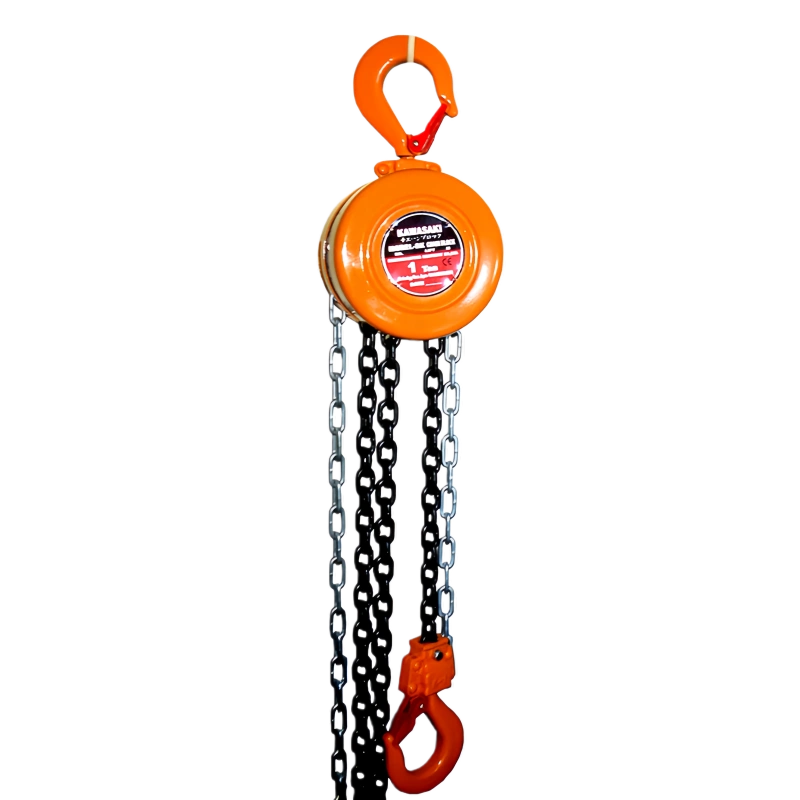
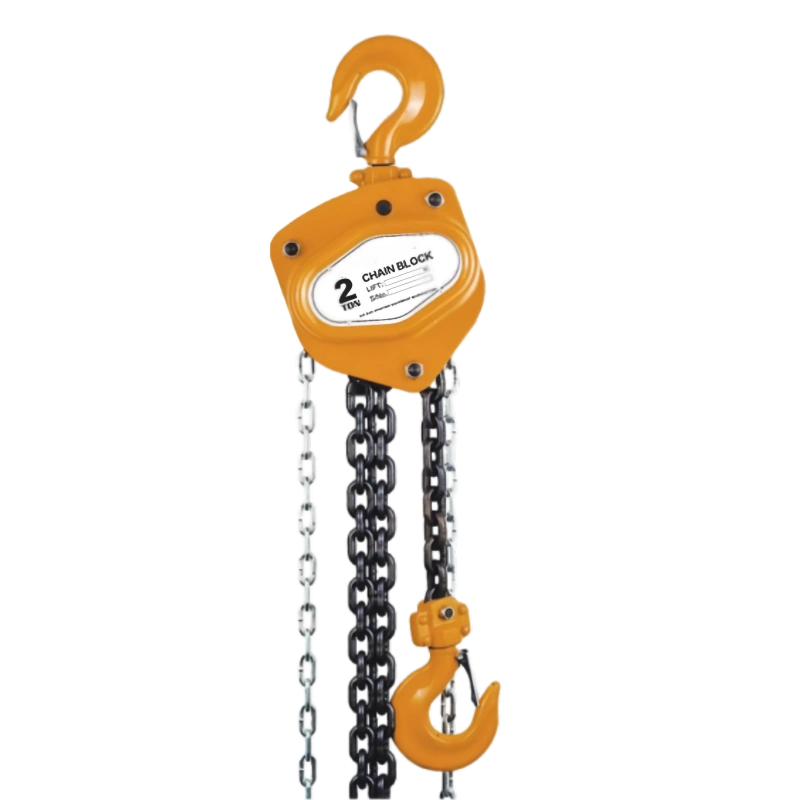
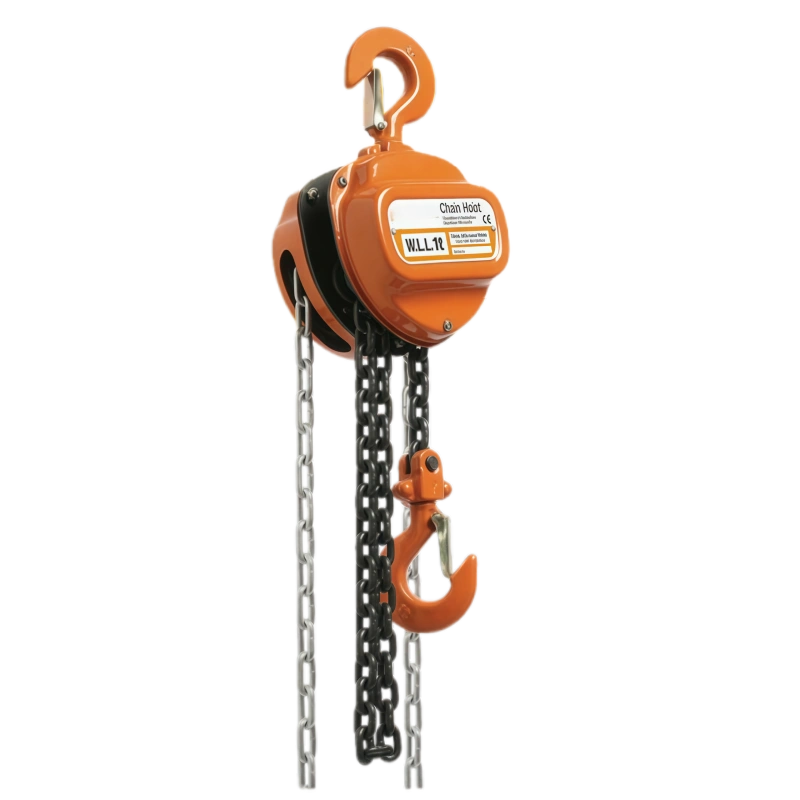
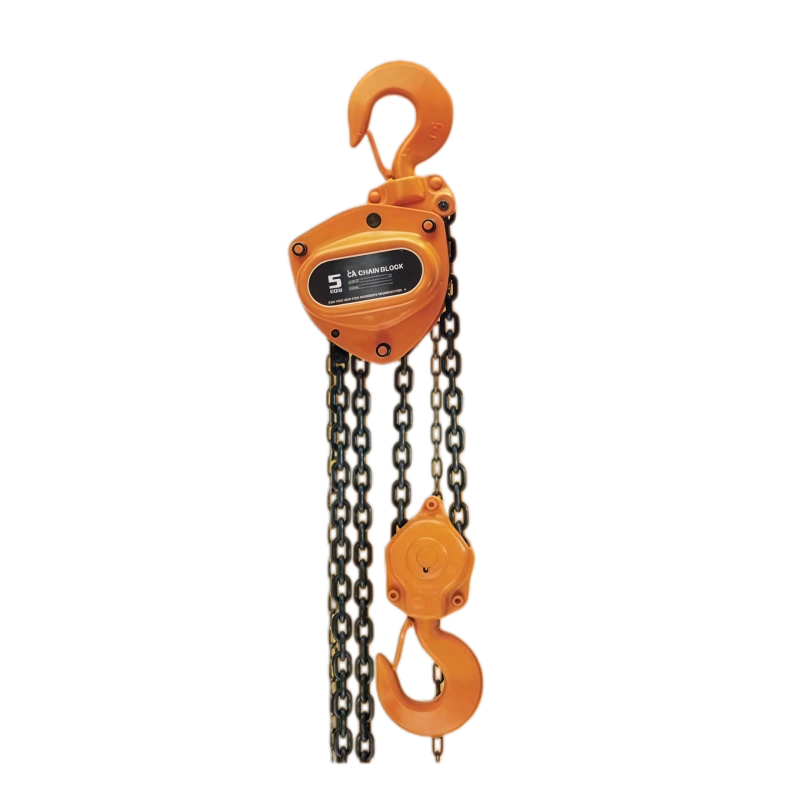
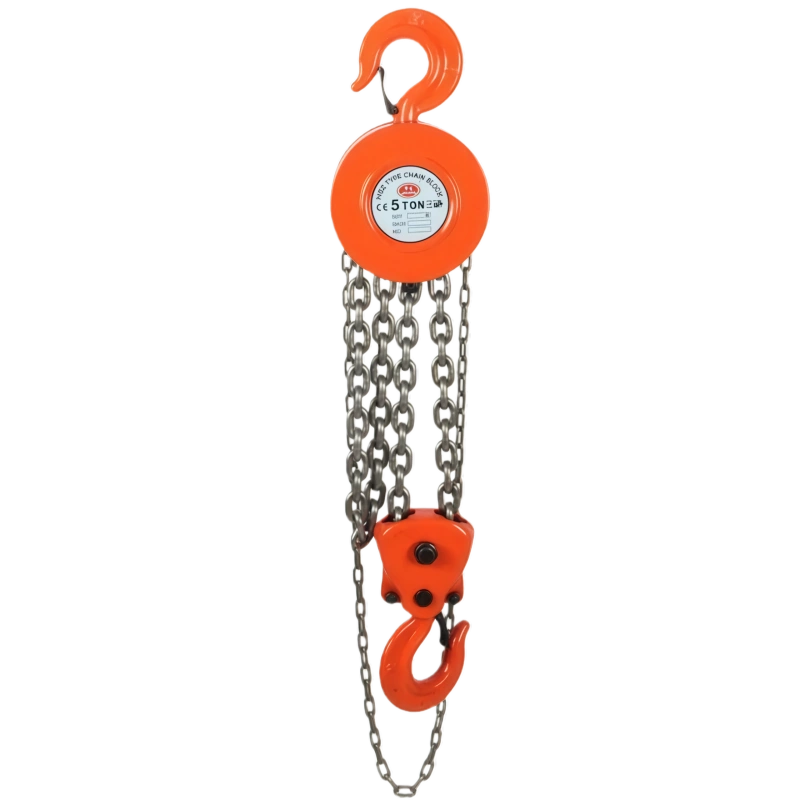
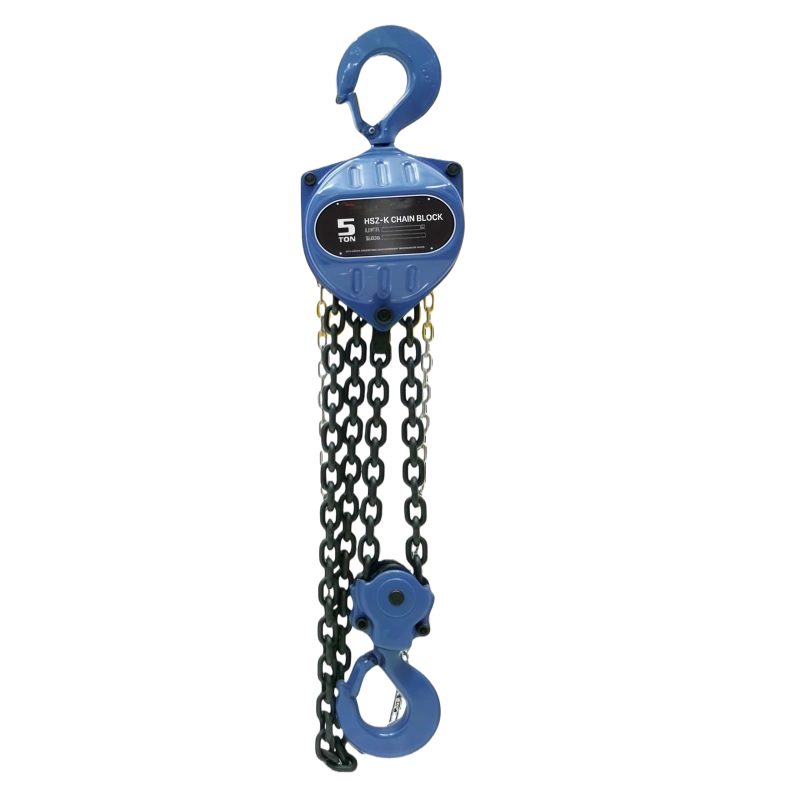
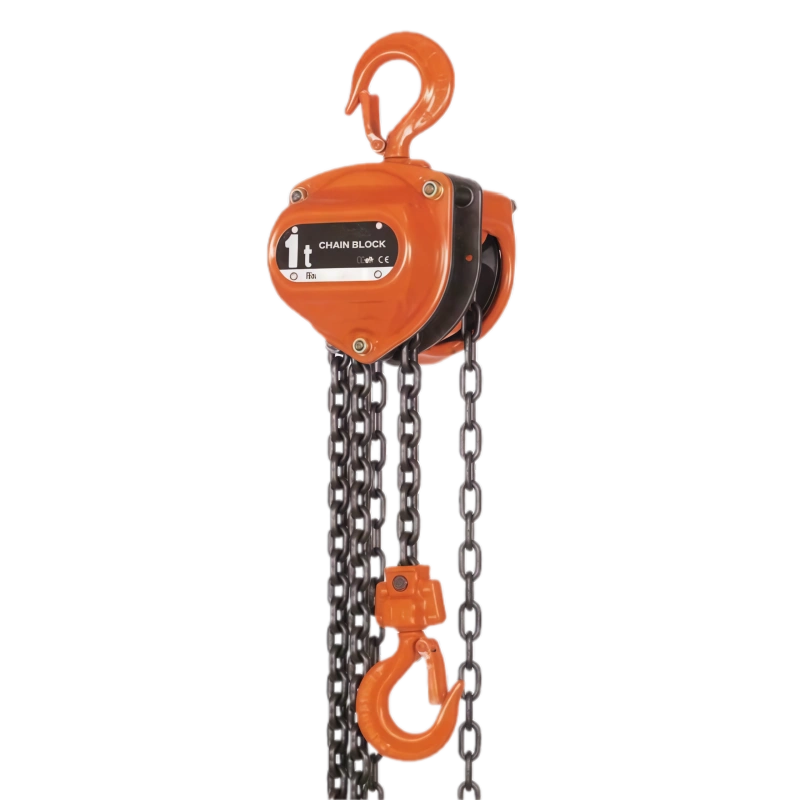
Choose a manual chain block when you need controlled vertical lifting without an electrical or pneumatic power supply. Powerful Machinery supplies a hand chain hoist series for workshops, equipment installation, construction, and maintenance. Compare the available models, then send us the load, lift, headroom, suspension, and working-environment details for a technical quotation.
Start with the required capacity and lift, then open the relevant model page to check headroom, hand pull, load-chain size, hook dimensions and unit weight. If you are comparing several capacities for a distributor or project order, send one schedule showing the quantity and lift required for each capacity.
The tables below are a starting point, not a substitute for the current quotation and approved product data. Capacities are expressed in metric tonnes (t), not US short tons. Confirm the exact model, test load, lift, dimensions, chain configuration, and documents before ordering.
MINI and SK Series
| Model | Capacity (t) | Standard lift (m) | Minimum headroom (mm) | Net weight (kg) |
|---|---|---|---|---|
| MINI-0.25 | 0.25 | 2 | 215 | 3.5 |
| MINI-0.5 | 0.5 | 2.5 | 255 | 4.5 |
| SK-1 | 1 | 2.5 | 270 | 10 |
| SK-2 | 2 | 2.5 | 380 | 14 |
| SK-3 | 3 | 3 | 470 | 24 |
| SK-5 | 5 | 3 | 600 | 36 |
| SK-10 | 10 | 3 | 700 | 68 |
HS-VL Series
| Capacity (t) | Standard lift (m) | Test load (t) | Min. hook distance (mm) | Hand pull at full load (N) | Load-chain falls | Load-chain diameter (mm) | Net weight (kg) | Gross weight (kg) | Packing L×W×H (cm) |
|---|---|---|---|---|---|---|---|---|---|
| 0.5 | 2.5 | 0.75 | 285 | 25 | 1 | 6.3 | 8.4 | 9.4 | 30×17×32 |
| 1 | 2.5 | 1.5 | 315 | 33 | 1 | 6.3 | 11 | 12 | 30×17×32 |
| 1.5 | 2.5 | 2.25 | 340 | 34 | 1 | 7.1 | 13.5 | 14.5 | 30×17×32 |
| 2 | 3 | 3 | 380 | 34 | 1 | 8 | 21 | 22 | 28×19×23 |
| 3 | 3 | 4.5 | 475 | 35 | 2 | 7.1 | 22 | 23 | 30×17×32 |
| 5 | 3 | 7.5 | 600 | 39 | 2 | 9 | 40 | 41.5 | 40×20×34 |
| 10 | 3.5 | 15 | 700 | 41 | 4 | 9 | 77 | 85 | 62×50×26 |
Calculate the complete suspended load, including lifting attachments. State the requested capacity and provide the top and bottom connection dimensions. Capacity alone does not confirm that the hooks or suspension will fit the installation.
Measure the required hook travel and the space available when the load is at its highest position. State the minimum headroom and where the operator will stand. A longer load chain increases travel, but it does not reduce the space occupied by the hoist body.
For a fixed installation, identify the supporting structure and suspension arrangement. If the hoist must travel along a beam, include the beam profile, flange width and thickness, travel distance and required trolley type. Ask us to check the hoist and trolley as one configuration.
Describe the usual load, lifting frequency and working conditions. Identify water, dust, chemicals, unusual temperatures or other site hazards. Do not assume that a finish or a model name makes a hoist suitable for a particular environment.
A useful quotation identifies the exact configuration being offered. Compare suppliers on evidence that can be checked for that model and order, not on general claims.
For a broader framework, use our chain hoist manufacturer evaluation guide. This page remains the product-selection and quotation page.
For bulk, distributor, or repeat orders, send a line-by-line schedule rather than a general request for “chain blocks.” Include the capacity, lift, quantity, and destination for each line. List required markings, manuals, inspection or test documents, packaging, and branding separately.
Our quotation will identify the proposed series and model for each line item, clearly state what is included, and note any deviation from your specification. This gives your purchasing team a transparent basis for comparing product scope, pricing, and lead time, while reducing ambiguity before order confirmation.
A chain block is intended for controlled manual lifting. If the job needs a ratchet handle, limited operating space or a different pulling arrangement, compare our lever hoists and read the lever hoist vs chain block guide. For powered or frequent lifting, review our electric hoists. For applications requiring a wire-rope lifting system, see our wire rope hoists.
If you are also considering a platform-based lifting system, our chain hoist vs hydraulic lift guide compares the two options by lifting method, control, applications, capacity, and maintenance.
If manual vertical lifting remains the better fit, review the advantages of hand chain hoists for a closer look at their portability, power-free operation, load control, and suitability for different work environments.
If you are still deciding which operating method best suits your application, start with our manual hoist category.
Ask which operating instructions, inspection records and spare-parts information are available for the exact model you order. Use the chain block inspection checklist to prepare inspection questions, and review the chain block components guide when identifying assemblies.
Preventive maintenance is covered in the chain block maintenance guide. For storage and return-to-service planning, see the chain block storage guide. If damage or abnormal operation is found, remove the unit from service and follow the supplied instructions and an authorized technical route. The chain block repair guide explains when repair or further technical assessment is required.
Send us the model reference if you already have one. If you are still selecting a chain block, describe the lifting application and attach a drawing or clear installation photo. Please include:
In many markets, “chain block,” “hand chain block” and “manual chain hoist” refer to the same hand-operated lifting device. For a fuller definition and working-principle overview, read what a chain block is.
Yes, subject to current availability and commercial terms. List the quantity and lift required for each capacity, plus the destination, documents and packing arrangement, so the full order can be reviewed together.
Give the required hook travel, hand-chain drop and available headroom. Ask for the complete configuration to be confirmed for the selected model. Do not plan to extend the load chain with unapproved chain or connectors.
Send a clear nameplate photo, rated load, lift, suspension and connection dimensions, plus any change in the job or environment. A similar housing shape does not confirm a suitable replacement.
First, confirm that both quotations use the same capacity units, lift, suspension, and delivery scope. Then compare headroom, hook dimensions, hand pull, weight, included documents, and spare-parts information for the exact models offered.
Use the rated capacity marked for the exact hoist and never exceed it. For capacity terminology and selection factors, see how chain hoist capacity is specified
After downloading the product catalogue, our dedicated technical experts will provide you with one-on-one service.