A chain block is a hand-operated chain hoist used to raise, hold, and lower a freely suspended load. It is also called a hand chain hoist or manual chain hoist. The operator pulls a hand chain; an internal gear train multiplies the input force, and a calibrated load chain travels over a load sheave. A load brake holds the suspended load when the operator stops pulling.
Chain blocks are used for controlled vertical lifting where electricity or compressed air is unavailable or unnecessary. They are common in maintenance, machinery installation, fabrication, construction, warehouses, and other locations with an adequately rated suspension point. The rated capacity marked on the hoist must not be exceeded.
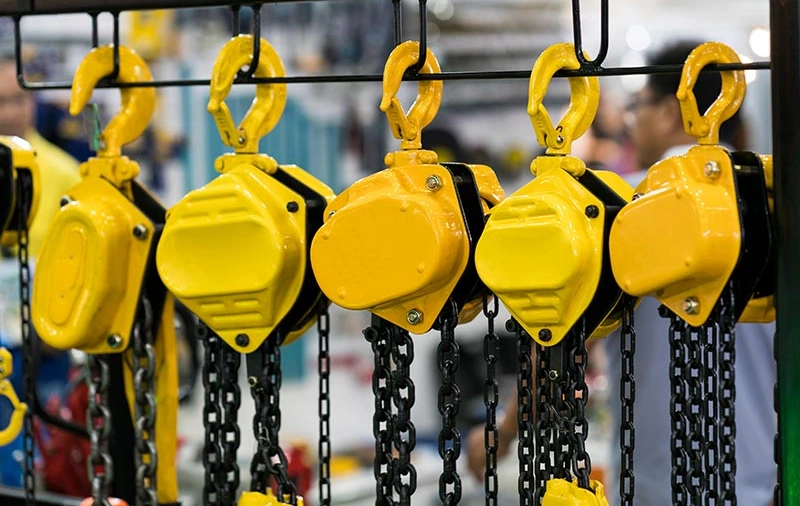
Chain Block Meaning and Industry Terminology
Terminology varies by market, which is why buyers sometimes assume that a chain block and a chain hoist are different products. In most lifting-equipment contexts, chain block, hand chain hoist, and manual chain hoist describe the same basic device. The broader term chain hoist may refer to either a manual unit or a powered unit.
| Term | Meaning in This Guide |
| Chain block | A manually operated chain hoist powered by pulling a hand chain |
| Hand chain hoist | Another common name for a chain block |
| Manual chain hoist | Another regional or catalog term for the same hand-operated device |
| Chain hoist | A general category that may include manual, electric, or pneumatic chain hoists |
| Lever hoist | A separate manual hoist operated with a lever; it is not another name for a chain block |
The practical distinction is therefore manual versus powered operation, not chain block versus manual chain hoist. An electric chain hoist uses a motor and controls, whereas a chain block is operated by pulling the hand chain.
Main Parts of a Chain Block
Design details vary by model, but a conventional hook-suspended chain block normally includes the following parts:
| Part | What It Does |
| Top hook or suspension fitting | Connects the hoist to a supporting structure or compatible trolley. The support and connection must be rated for the complete suspended load. |
| Hand chain and hand wheel | Transmit the operator’s pull to the hoist mechanism and initiate lifting or lowering motion. |
| Reduction gears | Convert hand-wheel rotation into increased torque at the load sheave. |
| Load brake | Controls and holds the suspended load when hand-chain movement stops or reverses. |
| Load sheave or pocket wheel | Engages the calibrated load chain and drives it through the hoist mechanism. |
| Load chain | Carries the suspended load. It must match the hoist and must not be replaced with general-purpose chain. |
| Chain guide and stripper | Guide the load chain into and away from the load sheave. |
| Bottom hook and latch | Connect the hoist to the load or rigging attachment and help retain the connection. |
| Housing and covers | Protect the internal mechanism while allowing required inspection and service access. |
For a more detailed component breakdown, see chain block components and their functions.
How a Chain Block Works?
The lifting cycle is straightforward to describe, but the internal brake and gear assembly should only be serviced by qualified personnel using the correct manufacturer’s service information.
- The operator pulls one side of the hand chain, rotating the hand wheel.
- The gear train reduces speed and increases torque.
- The geared load sheave advances the load chain, raising the bottom hook and attached load.
- When the operator stops pulling, the load brake supports the suspended load.
- Pulling the opposite side of the hand chain lowers the load in a controlled manner through the hoist mechanism.
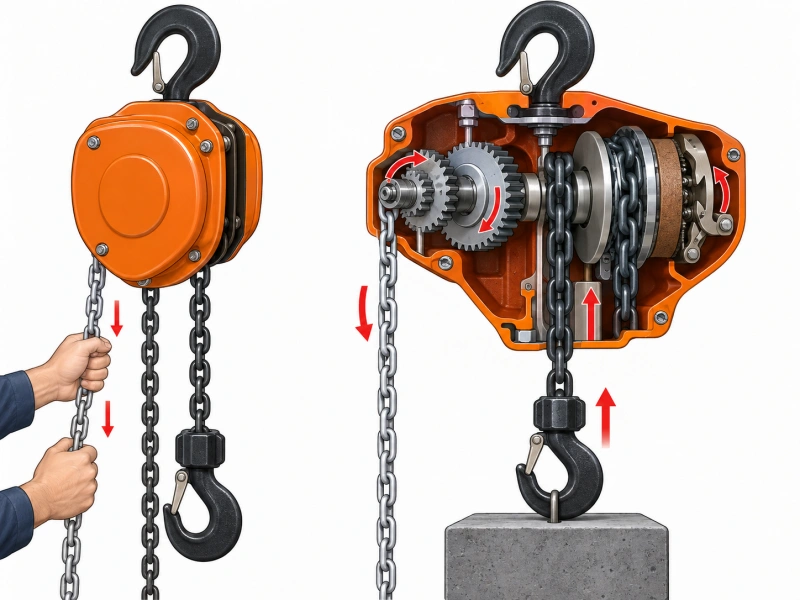
This is the working principle overview. For a focused explanation of the gear train, load sheave, and brake sequence, read how a chain block works.
What Is a Chain Block Used For?
A chain block is suited to controlled vertical lifting from a properly rated suspension point. Typical jobs include:
- Lifting a machine or component during installation and maintenance
- Positioning fabricated parts for assembly or alignment
- Raising materials at construction and repair sites
- Handling loads in workshops, warehouses, and service areas
- Performing occasional lifts where no power supply is available
For a closer look at portability, power-free operation, load control, and other advantages of hand chain hoists, see our dedicated guide.
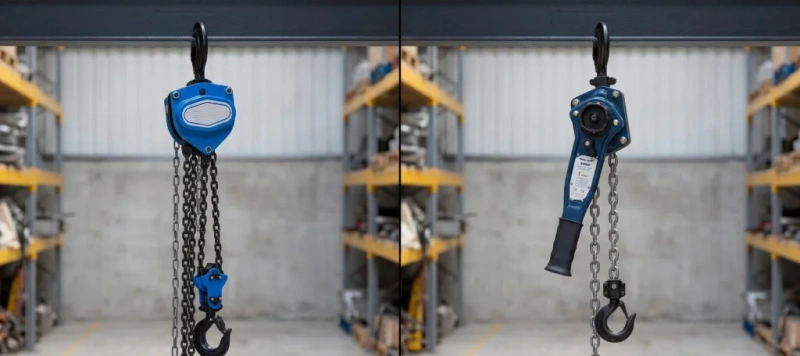
A chain block is not automatically suitable for every lifting direction or environment. Standard units are normally intended for vertical lifting. Do not use one for side pulling, horizontal pulling, lifting people, leaving a suspended load unattended, or service in a hazardous or corrosive environment unless the specific model, manufacturer instructions, and applicable site rules permit that use.
Common Chain Block Configurations
Most chain blocks share the same operating principle, but suspension, headroom, capacity, lift, load-chain fall arrangement, materials, and protective finish can differ. Common configurations include hook-suspended units, units matched to a plain or geared trolley, compact or low-headroom arrangements, and models designed for specific environments.
This page only introduces those options. Use the types of chain block guide for a detailed configuration comparison, or review manual hoists by operating method when the application may also suit a lever hoist.
How to Choose a Chain Block?
Start with the application, not a generic tonnage label. Provide the following information when selecting a hoist or requesting a quotation:
- Complete suspended load: include the load itself and all below-the-hook rigging or attachments. Never exceed the hoist’s rated capacity.
- Required lift: the vertical travel required at the load hook.
- Available headroom: the minimum space available between the suspension point and the load hook in its upper position.
- Suspension: define whether the hoist will use a hook, trolley, or another manufacturer-approved connection, and provide the supporting beam or structure details.
- Hand-chain drop: the operating height required for the user to reach and control the hand chain.
- Operating effort and frequency: occasional maintenance lifts and repeated production lifts place different demands on both the equipment and the operator.
- Environment: specify indoor or outdoor use, temperature, moisture, dust, corrosive exposure, cleanliness requirements, and any hazardous-area classification.
- Required documents and support: specify model-specific instructions, test records, declarations or certificates required by the destination market, spare parts, and service information.
If portability or the operating position makes a hanging hand chain impractical, compare a lever hoist with a chain block. For repetitive lifting, assess a powered hoist rather than assuming that a larger manual unit is the best solution.
If you are comparing different lifting systems, see how a chain hoist differs from a hydraulic lift in operation, load handling, installation, and maintenance requirements.
Basic Safety and Inspection Boundaries
Before Use
At a minimum, confirm that:
- The identification and rated-capacity markings are legible.
- The suspension and load connections are secure.
- The hooks and latches show no visible damage.
- The load chain and hand chain are correctly seated and free from obvious damage, twists, or abnormal wear.
- The hoist operates smoothly and holds the load as expected during the checks required by the manufacturer and site procedure.
Remove the Hoist From Service If
Do not use the hoist if you find:
- Cracks or deformation
- Excessive wear
- An elongated, damaged, or twisted load chain
- Missing or illegible identification or capacity markings
- Irregular or restricted travel
- Unusual noise during operation
- Brake slippage
- Any other condition outside the applicable acceptance criteria
Do not improvise repairs or replace the load chain with a chain that is not specified for the hoist. Provides general guidance only. It does not replace the model-specific manual, the site lifting plan, or inspection by a competent person.
Use the chain block inspection checklist for inspection planning, the chain block maintenance guide for servicing boundaries, and the chain block storage guide for cleaning, corrosion control, storage, transport, and return-to-service checks.
Standards and Documentation
Applicable requirements depend on the market, installation, equipment configuration, and employer or site rules. ASME B30.16 is commonly referenced in North America for overhead underhung and stationary hoists, while EN 13157 addresses hand-powered lifting equipment within its defined scope in the European context. These references do not prove that every model complies.
Confirm the applicable edition, destination-market requirements, product marking, instructions, test documentation, and declarations supplied for the quoted model.
Chain Block Selection from Powerful Machinery
To specify an appropriate unit, send the complete suspended load, required lift, available headroom, suspension or beam details, hand-chain operating height, expected lifting frequency, environment, destination country, and required documents. Review the Powerful Machinery manual chain hoist range or request a model-specific quotation and technical data sheet.
FAQ
Are a Chain Block and a Manual Chain Hoist the Same?
Yes. In normal lifting-equipment usage, chain block, hand chain hoist, and manual chain hoist are commonly used for the same hand-operated device. Always confirm the actual operating method and specification rather than relying on the name alone.
Is Every Chain Hoist Electric?
No. Chain hoist is a broad term that may refer to manual, electric, or pneumatic equipment. A chain block is the manual, hand-chain-operated version.
Can a Chain Block Be Used Horizontally?
Do not assume it can. Conventional hand chain blocks are normally intended for vertical lifting from a rated suspension point. Use another orientation only when the manufacturer explicitly permits it for that model and the lifting plan allows it.
How Much Can a Chain Block Lift?
A chain block must not lift more than the rated capacity marked on the specific hoist. Selection must also account for the complete suspended load, supporting structure, attachments, lift, headroom, environment, and applicable rules.
Can a Chain Block Hold a Load Unattended?
A suspended load should not be left unattended unless an approved procedure, the equipment instructions, and applicable rules specifically permit it and the area is controlled. A hoist is lifting equipment, not a permanent load-support device.
What Information Is Needed for a Quotation?
Provide the complete suspended load, lift, headroom, suspension method, hand-chain drop, operating frequency, environment, destination country, and required documents. These details are more useful than capacity alone.