You need a pallet truck that works safely and efficiently in your daily tasks. Using a pallet jack starts with careful inspection and proper handling. You must check the pallet jack for any visible damage before you operate it. Always use the right technique for lifting and moving a pallet jack.
Manual and electric pallet jack models require you to follow safety rules every time you use them. This guide helps you master pallet jack operation and avoid common mistakes. Trust Powerful Machinery for a pallet jack that meets your needs and keeps you safe.
Key Takeaways
Always inspect your pallet jack before use. Check for damage and ensure it operates smoothly to prevent accidents.
Use the right pallet jack for your needs. Choose manual models for lighter loads and short distances, and electric models for heavier loads and longer routes.
Follow safe operating practices. Keep loads low, push instead of pull, and maintain a clear path to avoid injuries.
Store pallet jacks properly after use. Lower the forks and keep the storage area organized to prevent hazards.
Regular maintenance is key. Clean, lubricate, and inspect your pallet jack to extend its lifespan and ensure safe operation.
Pallet Jack Types and Applications
Powerful Machinery stands out as a trusted provider of pallet jack and pallet truck solutions for your material handling needs. You can rely on their products for durability, ergonomic design, and consistent performance in demanding environments.
Their pallet jack range includes both manual and electric models, each designed to help you move material efficiently and safely.
Manual Pallet Jacks
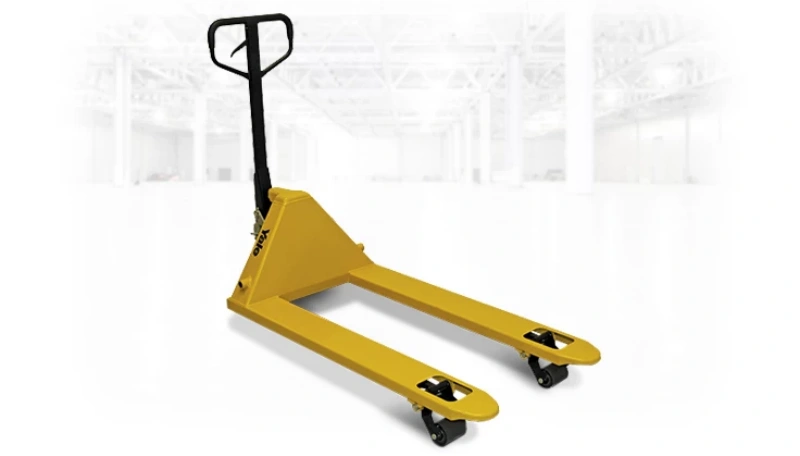
You use a manual pallet jack when you need to move lighter material over short distances. This type of pallet truck requires you to pump the handle to lift the load and push or pull to transport it. Manual pallet jacks are best suited for use in small warehouses, retail stores, and tight spaces where precise control is required.
The robust steel construction and ergonomic handles from Powerful Machinery reduce operator fatigue and ensure long service life.
Electric Pallet Jacks and Their Uses
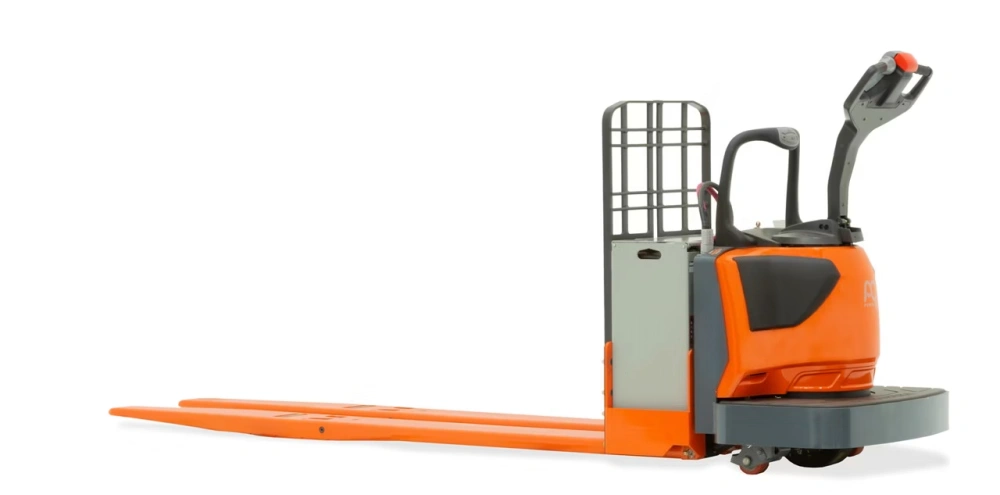
An electric pallet jack helps you move heavier material with less effort. You operate this pallet truck using motor-powered controls, which makes it ideal for larger warehouses and longer transport routes. Electric models reduce physical strain and boost productivity, especially when you handle high-volume material daily.
Powerful Machinery offers electric pallet jacks with advanced safety features and easy-to-use controls, making them a smart choice for busy distribution centers.
Tip: Choose a manual pallet jack for short, quick moves and an electric pallet jack for heavy loads or long distances.
Feature | Manual Pallet Jack | Electric Pallet Jack |
|---|---|---|
Power Source | Hand-powered | Motor-powered |
Load Capacity | Suitable for lighter loads | Can handle heavier loads |
Distance Suitability | Best for short distances (up to 40 feet) | Ideal for longer distances in large facilities |
Operator Strain | Requires physical effort, can lead to fatigue | Reduces strain on operators |
Maintenance | Low maintenance, no electrical components | Requires battery maintenance |
Application | Common in retail and smaller warehouses | Used in larger warehouses and distribution centers |
What Are Pallet Jacks Used For?
You find pallet jack applications in almost every industry that handles material on pallets. Warehouses, factories, retail stores, and logistics companies use pallet jacks to move, load, and unload material efficiently.
Standard manual pallet jacks handle loads from 2,000 to 5,500 pounds, making them perfect for small to medium-sized operations. Electric and specialized pallet trucks serve high-volume distribution centers, food processing, and even hazardous material environments.
You can trust Powerful Machinery to provide the right pallet jack or pallet truck for any material handling challenge.
Pallet Jack Operation Guide
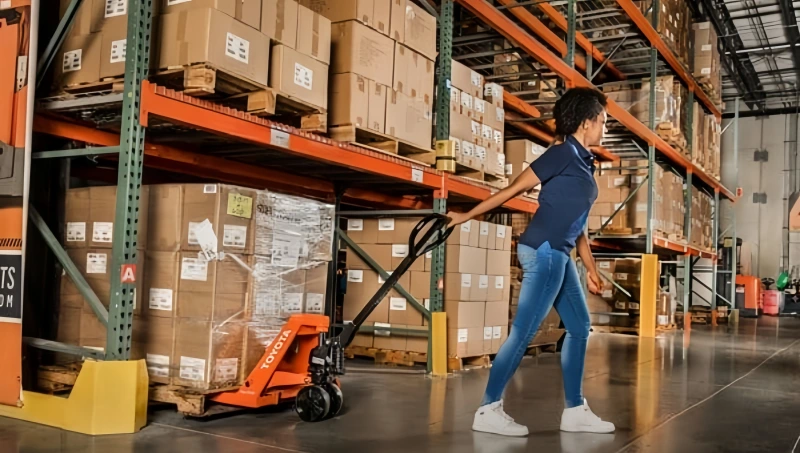
You must follow clear steps for safe and efficient pallet jack operation. This guide gives you step-by-step instructions for both manual and electric models. You will learn how to inspect equipment before using it, operate the controls, and store your pallet jack properly.
These directions help you avoid injuries and keep your workplace safe.
Pre-Use Inspection Steps
Before you start any pallet jack operation, you need to inspect the equipment before using it. This step prevents injury and equipment failure. OSHA recommends the following inspection process:
Visually inspect the pallet jack to confirm it looks ready and functional.
Check for loose prongs or forks.
Ensure the wheels are balanced and roll smoothly.
Verify that charging cords are stowed properly on electric models.
You should also check ergonomic features. Look for comfortable handle designs, anti-slip platforms (for rider models), automatic braking systems, and load backrest extensions. Powerful Machinery’s pallet jacks include these features to support safe and comfortable operation.
Tip: Tag any faulty pallet jack as out of service. Never use damaged equipment.
How to Use an Electric Pallet Jack?
Operating electric pallet jacks requires you to follow specific steps for safety and efficiency. Here are the directions for using an electric pallet jack:
Stand behind the pallet jack and locate the control handle.
Turn on the power switch and check the battery indicator.
Use the controls to lower the forks to the ground.
Slide the forks under the pallet until they reach the far edge.
Raise the forks using the lift button.
Move the pallet jack by using the controls to drive forward or reverse.
Steer carefully, keeping a clear path and watching for obstacles.
Lower the pallet at the destination by pressing the lower button.
Remove the forks and return the pallet jack to its storage area.
You must keep your hands and feet clear of moving parts during pallet jack operation. Powerful Machinery’s electric pallet jacks feature ergonomic handles and automatic braking systems for added safety. Always maintain a safe speed and avoid sharp turns to prevent injury.
Note: Using the controls with smooth, steady motions reduces the risk of accidents.
How to Use a Manual Pallet Jack?
Operating manual pallet jacks involves a simple process, but you must stay alert to avoid common mistakes. Here are step-by-step instructions for how to operate a pallet jack:
Stand behind the manual pallet jack and grip the ergonomic handle.
Lower the forks by squeezing the release lever.
Slide the forks under the pallet until they reach the far side.
Pump the handle to raise the forks and lift the pallet off the ground.
Push or pull the pallet jack to move the load to the desired location.
Lower the forks by squeezing the release lever again.
Pull the manual pallet jack out from under the pallet.
You should always keep the load low to the ground during operation. This improves control and reduces the risk of tipping. Never overload the manual pallet jack. Check the weight before lifting to avoid hydraulic failure and loss of control. Wear steel-toed shoes and keep your feet away from the forks to prevent injury.
Here is a table of common mistakes and how to avoid them during manual pallet jack operation:
Common Mistake | Prevention Strategy |
|---|---|
Improper lifting height | Keep lifts low for better control; raise only to clear obstacles and lower immediately. |
Overloading | Adhere to weight limits to prevent hydraulic failures and loss of control. Check the load weight before lifting. |
Speeding | Maintain a safe walking pace to allow time to react to obstacles. |
Poor foot placement | Avoid positioning feet under or beside the jack to prevent injury from dropped loads. Wear steel-toed shoes. |
Neglecting pre-operation inspections | Conduct a visual check before use to ensure equipment is safe and functional. Tag faulty jacks as out of service. |
Alert: Never skip the pre-use inspection. This step is critical for safe pallet jack operation.
Pallet Jack Storage
Proper storage extends the life of your pallet jack and keeps your workspace organized. Always return the pallet jack to its designated storage area after use. Lower the forks to the ground to prevent tripping hazards. For electric models, plug in the charging cord to maintain battery life.
Store the manual pallet jack in a dry, clean area to prevent rust and wear.
You should keep the storage area clear of debris and obstacles. This practice ensures quick access and reduces the risk of injury. Powerful Machinery designs pallet jacks for easy storage, with compact frames and durable construction.
Tip: Regularly clean your pallet jack and check for signs of wear during storage.
By following these steps, you master pallet jack operation and reduce the risk of injuries. You keep your equipment in top condition and maintain a safe, efficient workplace.
Pallet Jack Safety Precautions
You must follow strict pallet jack safety precautions to protect yourself and your team from injuries. Proper training, regular inspection, and adherence to load limits form the foundation of safe operation.
Powerful Machinery designs every pallet jack to meet or exceed international safety standards, giving you confidence in demanding environments.
Load Limits and Handling
You need to respect the load limits for each pallet jack model. Manual pallet jacks require physical effort and suit lighter loads, while electric pallet jacks handle heavier pallets with ease. Exceeding these limits increases the risk of injury and equipment failure.
Type of Pallet Jack | Load Capacity Range (pounds) |
|---|---|
Manual | 2000 – 4000 |
Electric | 2000 – 10000 |
Always check the manufacturer’s specifications before lifting. You should load the pallet evenly and keep the center of gravity low. Move the loaded pallet slowly and avoid sudden stops or turns. Training helps you recognize safe handling techniques and avoid common mistakes.
Path Clearance and Workspace Safety
You must keep your workspace clear to ensure safe pallet jack operation. Only trained and authorized personnel should operate the equipment. Before moving a load, inspect the floor for hazards like holes, debris, or spills. Make sure the intended route is free of obstructions, and the flooring is in good condition.
Requirement | Description |
|---|---|
Trained Personnel | Only trained and authorized personnel should operate the pallet jack. |
Safety Instructions | Read and understand all safety warnings and operating instructions. |
Surface Checks | Check for hazards like holes and debris before use. |
Clear Path | Ensure the route is free of obstructions. |
Floor Condition | Use only on stable, well-maintained flooring. |
You should store the pallet jack in a secure area when not in use and restrict access to authorized users. This practice reduces the risk of accidents and keeps your workplace organized.
Personal Protective Equipment
You must wear the right personal protective equipment when operating a pallet jack. Work gloves improve your grip and protect against pinch points. Steel-toed boots guard your feet from dropped loads and rolling wheels. High-visibility vests make you easy to spot in busy areas.
For heavy or repetitive lifts, use back supports or lifting belts. Toe guards add another layer of protection for your feet.
Tip: Always check your equipment before use and replace worn-out gear immediately.
Push vs Pull: Safe Practices
You should push the pallet jack instead of pulling it whenever possible. Pushing engages your leg muscles and helps you maintain a straight back, reducing the risk of injury. You also get better visibility and control over the load.
Pulling can twist your spine and increase strain, so only pull when necessary and stay aware of your surroundings.
Remember, proper training and adherence to safety precautions protect you and your team from injuries. Powerful Machinery supports your commitment to safety with certified pallet jacks and comprehensive safety training resources.
Maintenance, Inspection, and Licensing
Routine Maintenance Tips
You keep your pallet jack in top condition by following a few simple maintenance tips. Daily inspections help you avoid unexpected breakdowns and extend the life of your equipment. Clean the wheels often to prevent debris from causing wear. Inspect the forks for signs of damage and report any issues right away.
Check the hydraulic system for leaks and make sure it works smoothly. Lubricate all moving parts every month to reduce friction and wear. If you use an electric pallet jack, recharge the battery before each shift to prevent downtime.
Powerful Machinery designs pallet jacks for reliability and low maintenance, so you spend less time on repairs and more time working safely.
Tip: Never overload your pallet jack. Balanced loads prevent damage and reduce the risk of injuries.
Pallet Jack Inspection Checklist
You should use a checklist to make sure your pallet jack is safe and ready for use. Daily and periodic inspections catch problems early and keep your workplace safe. Here is a simple table you can follow:
Inspection Category | Specific Checks |
|---|---|
Pre-Operational Inspections | Ensure all controls respond correctly to input without delay or malfunctions. |
Operational Checks | – Verify that the forks raise and lower smoothly without jerking motions. |
– Test movement to ensure it moves smoothly without excessive resistance. | |
– Check the steering mechanism for ease of turning and security of the handle. | |
– Test the braking system for effectiveness and inspect components for wear or damage. | |
Post-Operational Inspection | – Clean the pallet jack thoroughly to remove dirt and debris. |
– Document any issues identified during the inspection. | |
– Report significant defects to the supervisor promptly. |
You should schedule a professional inspection every six months if you use your pallet jack often. For less frequent use, annual servicing is enough. Always follow the manufacturer’s guidelines for service intervals.
Licensing and Certification Requirements
You must understand the rules for operating a pallet jack in your workplace. In the United States, OSHA requires operators of motorized or electric pallet jack models to complete formal training and certification. This process includes classroom instruction, hands-on practice, and a performance evaluation.
Operators must be at least 18 years old. Certification remains valid for three years, after which you need retraining. Manual pallet jack operators do not need certification, but employers may require basic safety training. Proper training and certification help you avoid injuries and keep your team safe.
Note: Always stay up to date with your training and certification to meet workplace safety standards.
Choosing or Renting a Pallet Jack
Assessing Your Needs
You must evaluate your workplace before selecting a pallet jack. Start by considering the type and weight of loads you move each day. Think about the power source that fits your workflow. Manual models work well for short distances and lighter loads.
An electric pallet jack suits larger warehouses and frequent use. Maneuverability matters in tight spaces. Durability ensures your equipment stands up to daily demands. Look for extra features like built-in scales or high-lift options if your tasks require them.
Load capacity
Power source (manual or electric)
Maneuverability in your facility
Durability for daily use
Additional features for special tasks
You should match the pallet jack to your specific needs for the best results.
Key Features of Powerful Machinery Pallet Jacks
Powerful Machinery designs pallet jacks for strength and reliability. You get a range of options for every application. When you choose a pallet jack for heavy-duty use, focus on these features:
Load capacity that exceeds your typical load by at least 10-15%
Lift height that matches your stacking needs
Fork dimensions that fit your pallets
Maneuverability for your workspace layout
Power source that fits your workflow
Resistance to tough environmental conditions
Ergonomic controls and safety features
Low maintenance requirements
Compliance with international safety standards
Value for your budget
You also receive a comprehensive one-year warranty on core parts and products. This coverage gives you peace of mind and protects your investment.
Warranty Type | Coverage |
|---|---|
Comprehensive Warranty | 1-year coverage on core parts and product |
Rental vs Purchase Options
You must decide if renting or purchasing a pallet jack fits your business best. Renting gives you flexibility and lower upfront costs. You can adapt quickly to changes in demand. The rental company handles maintenance, which saves you time and money. Purchasing works well for stable operations.
You gain full ownership and long-term value.
Aspect | Renting Pallets | Purchasing Pallets |
|---|---|---|
Upfront Costs | Lower | Higher |
Hidden Fees | Possible | Fewer |
Ownership | Must return after use | Full ownership |
Flexibility | High | Less |
Maintenance Responsibility | Rental company | Owner |
Long-term Investment | Less suitable | Good for longevity |
Rental rates range from $30–$60 per day, while purchasing a pallet jack costs $3,000–$8,000 for standard models. You can request a quick quote from Powerful Machinery’s support team to find the best option for your needs.
Tip: Review your workload and budget before making a decision. The right pallet jack improves efficiency and safety in your operation.
Conclusion
You ensure safe and efficient pallet jack operation by following these key steps:
Check that the pallet jack can handle the load and keep the route clear.
Maintain prongs just above the ground and avoid lifting higher than needed.
Push instead of pull the pallet jack for better control.
Store the pallet jack with prongs down to prevent tripping.
Regular maintenance extends the lifespan of your pallet jack and keeps your workspace productive. Training programs cover safe operation, stability, and hazard awareness for both manual and electric pallet jack models.
Powerful Machinery offers expert support and resources to help you choose the right pallet jack for your needs.
Training Program Component | Description |
|---|---|
Course Structure | Covers safe operations and hazards to avoid. |
Certification Standards | Meets U.S. and Canadian safety standards. |
Contact Powerful Machinery for reliable pallet jack solutions and ongoing support.
FAQ
How do you choose the right pallet jack for your warehouse?
You should consider load weight, aisle width, and floor conditions. Review your daily tasks and select a model that matches your needs. Powerful Machinery offers both manual and electric options for different environments.
What maintenance does a pallet jack require?
You need to clean the wheels, check the hydraulic system, and inspect the forks regularly. Lubricate moving parts monthly. Schedule professional inspections every six months for frequent use.
Can you use an electric pallet jack outdoors?
You can use an electric pallet jack on smooth outdoor surfaces. Avoid rough or uneven ground to prevent damage. Always check the manufacturer’s guidelines before operating outside.
Do you need special training to operate a pallet jack?
You must complete formal training for powered models. Manual pallet jacks usually require basic safety instruction. Employers may set additional requirements for all operators.
What safety gear should you wear when using a pallet jack?
You should wear steel-toed boots, work gloves, and a high-visibility vest. Consider back support for heavy lifting. Proper gear protects you from injuries.