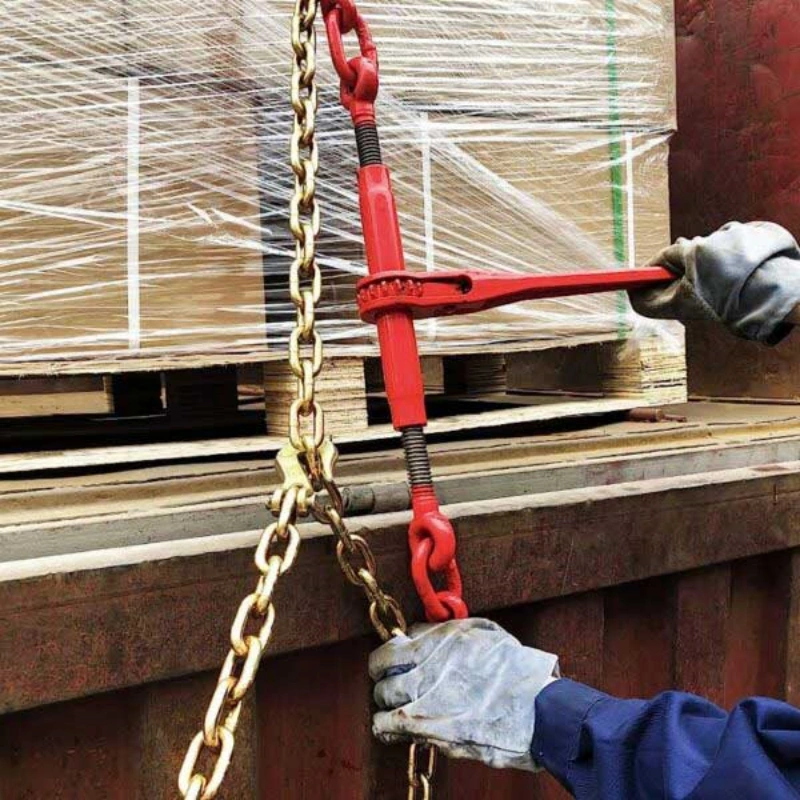
A load chain guide directs the movement of the chain in manual chain hoists, keeping the chain aligned and preventing it from slipping or jamming. When you use a load chain guide, you ensure each link moves smoothly, which is essential for lifting heavy loads safely.
Regular inspection and maintenance of the load chain guide keeps your equipment reliable and helps prevent accidents. The table below shows how these practices improve safety and extend equipment life.
Benefit | Impact |
|---|---|
Mechanical Failure Reduction | Routine checks can reduce failure rates by 30%-40%. |
Equipment Lifespan Increase | Regular maintenance can increase lifespan by 20%. |
Accident Prevention | Inspections help spot hidden damage and ensure proper rigging. |
OSHA Statistics | An average of 44 workers died annually in crane-related accidents (2011-2020). |
Trust Powerful Machinery for certified load chains and components that meet strict safety standards. You can count on their expertise to keep your lifting operations smooth and secure.
Key Takeaways
A load chain guide keeps the chain aligned in manual chain hoists, preventing slips and jams for safer lifting.
Regular inspections and maintenance can reduce mechanical failures by 30%-40% and extend equipment lifespan by 20%.
Always check the load chain guide for wear and debris before use to ensure safe and efficient operation.
Proper lubrication and cleaning of the chain and guide are essential for smooth operation and long-term reliability.
Follow safety tips and training to prevent accidents, including never exceeding the hoist’s rated load and securing every load properly.
What Is a Load Chain Guide in Manual Chain Hoists?
Definition and Function
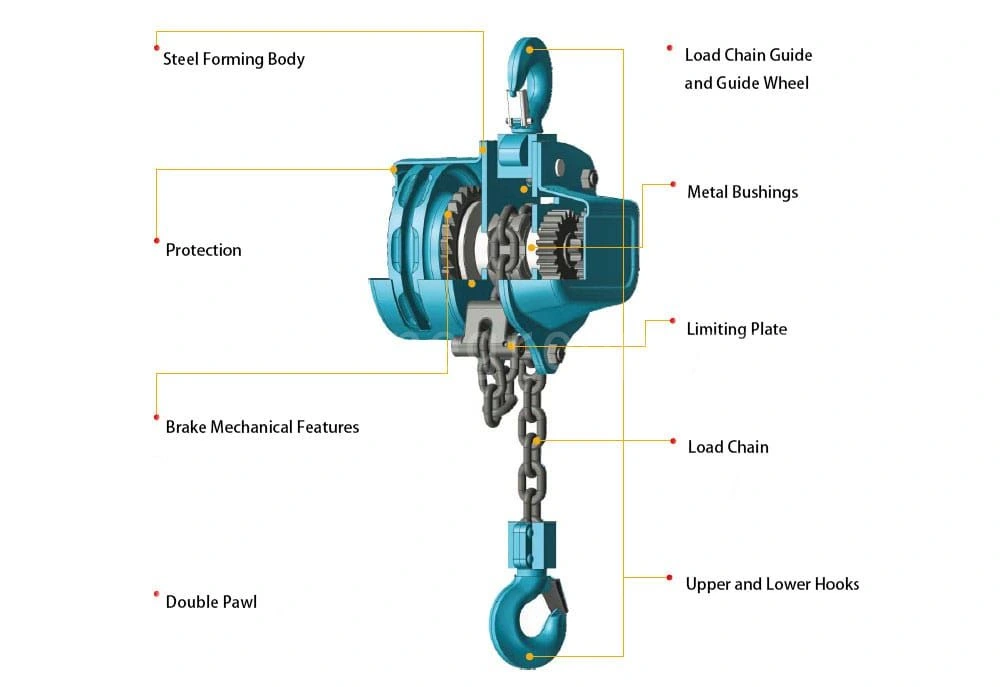
A load chain guide is a critical component inside every manual chain hoist. You will find it positioned along the path where the load chain travels as you operate the hoist. Its main job is to direct the movement of the chain, making sure each link stays aligned with the hoist’s sprocket and gear system.
When you pull the hand chain, the load chain moves through the guide, which keeps it from twisting or jumping out of place.
The guide works with other parts of the chain hoist to create a smooth lifting process. It prevents the chain from snagging or getting stuck, which can happen if the links do not follow the correct path. You can think of the load chain guide as a track that keeps the chain moving straight and true.
This design helps you lift heavy loads with less effort and more control.
Here is a table that shows how the chain guide and related components work together to prevent problems during operation:
Component | Role in Operation |
|---|---|
Chain Guides and Strippers | Ensure smooth operation of the chain, preventing tangling and removing debris that could impair functionality. |
When you use a manual chain hoist, the load chain guide ensures that the chain does not slip off the sprocket or derail. This function is essential for the safe and efficient movement of heavy objects.
Importance for Safe Operation
You rely on the load chain guide to keep your lifting tasks safe. If the guide fails or wears out, the chain can slip, jam, or even derail from the hoist. These issues can lead to sudden drops, equipment damage, or serious injury.
By keeping the chain in the correct position, the guide reduces the risk of accidents and helps you maintain full control over the load.
A well-maintained load chain guide also extends the life of your manual chain hoist. When the chain moves smoothly, there is less friction and wear on both the chain and the sprocket. This means you spend less time on repairs and replacements, and you can trust your equipment to perform when you need it most.
Tip: Always check the load chain guide before using your chain hoist. Look for signs of wear, misalignment, or debris that could block the chain’s path. Regular inspection helps you catch problems early and keeps your lifting operations safe.
Load Chain Guide Components and Operation
Key Parts of the Guide
You need to understand the main components that make up a load chain guide in a chain hoist. Each part plays a specific role in supporting safe and efficient lifting. Here is a breakdown of the essential elements:
Load Chain: Carries the weight and supports the load during operation.
Gear System: Multiplies your force, allowing you to lift heavier objects with less effort.
Drum or Lift Wheel: Winds the load chain to raise or lower the load.
Hook: Secures the load to the chain hoist.
Brake System: Prevents the load from dropping when you release the chain.
Powerful Machinery designs load chains using high-tensile marine-grade alloy steel. This material provides high strength and corrosion resistance, making it ideal for demanding environments. You can choose from blued or galvanized finishes, which offer extra protection against rust and wear.
Type of Chain | Material Used | Corrosion Resistance Effect |
|---|---|---|
High-tensile marine-grade alloy steel | Alloy steel | High strength and corrosion resistance |
Galvanized chains | Hot-dip coated steel | Enhanced corrosion protection in saltwater |
Black chains | Untreated steel | Lower corrosion resistance, suitable for freshwater or cost-sensitive applications |
How Does the Guide Support the Chain?
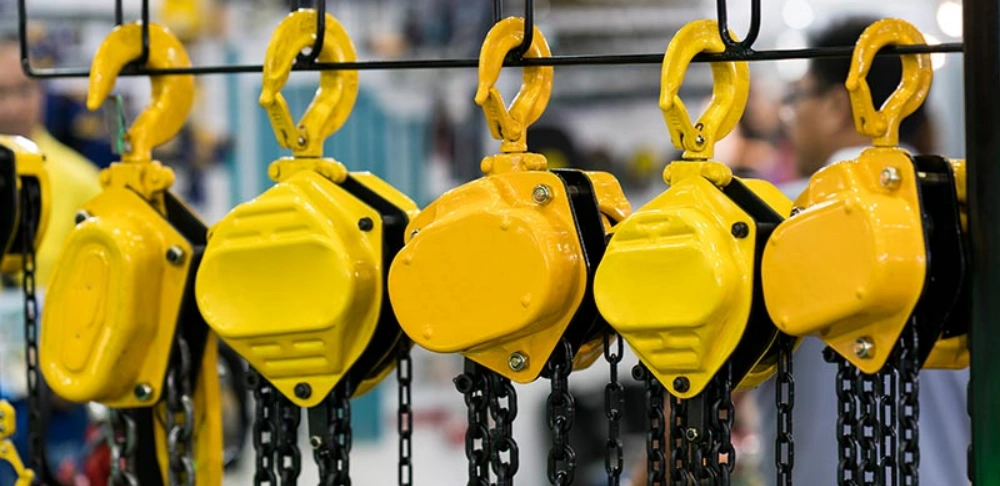
The load chain guide works with other chain hoist components to ensure smooth operation. You see the guide keeping the chain aligned as it moves through the lift wheel and gear train. This prevents slippage and reduces the risk of jams or misalignment.
Mechanism | Description |
|---|---|
Gear Train | Multiplies the operator’s force. |
Lift Wheel | Grips the load chain to prevent slippage. |
Safety | Enhances operational safety for both manual and electric hoists. |
Powerful Machinery’s load chains fit precisely with chain hoist systems. You benefit from features like accurate sizing, wear-resistant coatings, and compliance with DIN EN and JIS standards. Custom production options allow you to match exact specifications, ensuring compatibility with manual chain hoists in various industries.
Feature | Description |
|---|---|
Precise Sizing | Ensures smooth operation and accurate fit for various manual and electric hoists. |
Wear Resistance | Coatings that withstand tough conditions, enhancing durability and compatibility. |
Compliance with Standards | Adherence to DIN EN and JIS standards guarantees reliable performance and quality. |
Custom Production Options | Allows for matching exact specifications, ensuring compatibility with different hoist systems. |
Tip: Always check the fit and condition of your load chain guide before using your chain hoist. Proper alignment and compatibility help you avoid costly downtime and ensure safe lifting.
Inspecting Load Chain Guide for Manual Chain Hoists
Pre-Use Inspection Steps
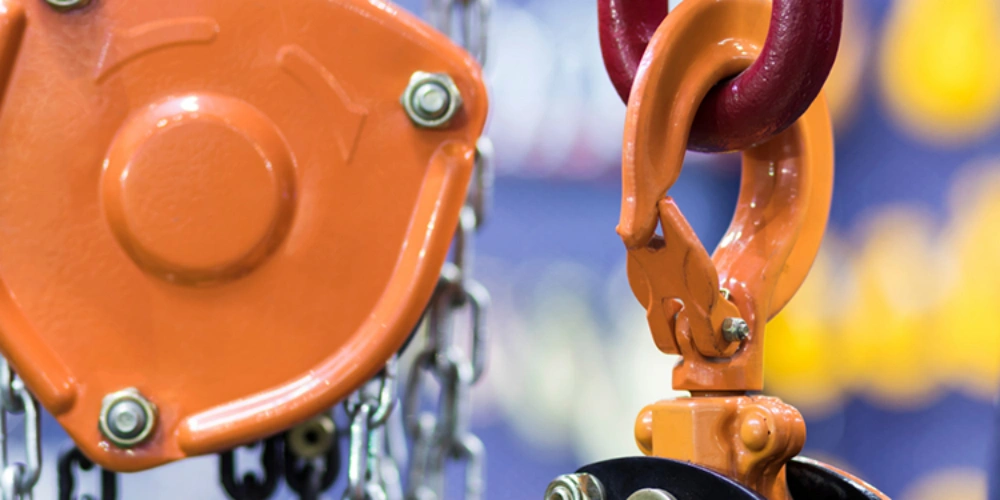
You must perform a thorough pre-use inspection before operating any chain hoist. This step-by-step guide helps you identify potential issues and maintain safety. Start by cleaning the chain. Dirt or debris can hide damage and affect performance.
Next, inspect the chain for inner link wear, bent or broken links, chemical damage, and stretch. Proper lubrication is essential. Lubricate the chain to reduce friction and extend its life.
Follow this step-by-step guide every time you use your chain hoist:
Clean the load chain and guide area.
Inspect the chain for wear, cracks, or deformation.
Check for proper lubrication along the entire chain.
Examine the guide for alignment and smooth movement.
Test the hook and brake system for secure operation.
Powerful Machinery recommends following industry standards for every step-by-step guide. The table below shows the main regulations and standards that support safe chain hoist inspection:
Regulation/Standard | Description |
|---|---|
OSHA Regulations | Establish safety standards for lifting and rigging, including inspection and maintenance protocols. |
ASME B30 Series | Provides guidelines for safe operation and maintenance of lifting machinery. |
ISO 4309 | Addresses wire rope care, maintenance, and inspection procedures. |
ISO 16881 Series | Offers safety recommendations for steel wire ropes. |
Signs of Wear and Damage
You need to recognize early signs of wear and damage to prevent overloading and equipment failure. Use this step-by-step guide to spot common issues:
Look for cracks in the frame or guide.
Check the chain for wear, distortion, or elongation.
Inspect for rust, fraying, or visible stretching.
Ensure the chain is lubricated and free of twists or kinks.
Watch for misalignment or rough movement during operation.
If you notice any of these problems, stop using the chain hoist immediately. Overloading or ignoring damage can lead to serious accidents. Always calibrate your equipment according to manufacturer guidelines. Regular inspection and a reliable step-by-step guide keep your manual chain hoists safe and efficient.
Tip: Schedule routine inspections and keep records. This practice helps you track wear patterns and plan maintenance before issues become critical.
Maintaining Load Chain Guide and Load Chains
Routine Maintenance Tasks
You can keep your lifting equipment in top condition by following a structured maintenance routine. Start with an initial inspection before first use or after any changes. This step confirms that your equipment meets all safety standards.
Next, perform frequent inspections, such as weekly or monthly checks, to spot visible damage or improper operation. Schedule periodic inspections every few months or annually for a detailed review of all components.
Here is a quick reference table for your daily and scheduled maintenance:
Maintenance Task | Description |
|---|---|
Daily pre-use checks | Walk around the hoist to look for cracks, distortion, or missing lubrication. |
Cleaning | Wipe the chain and guide with lint-free rags. Avoid harsh solvents near brakes. |
Lubrication | Apply the recommended lubricant to reduce wear. Adjust frequency as needed. |
Scheduled inspections | Plan regular checks based on how often you use the hoist and its environment. |
Regular maintenance can extend the lifespan of your equipment by up to 30%. Always use manufacturer-approved products for cleaning and lubrication. Powerful Machinery recommends keeping your load chain clean, lubricated, and properly tensioned.
Increase maintenance frequency if you work in harsh or outdoor environments.
Tip: Document your inspections and maintenance activities. This record helps you track wear and plan timely repairs.
Lubrication and Cleaning
Proper lubrication and cleaning are essential for smooth operation and long-term reliability. Begin by inspecting the chain for dirt or contamination. Clean the chain and guide thoroughly with a non-flammable solvent. Let everything dry completely before applying the lubricant.
Use a high-quality, low-viscosity lubricant to flush out contaminants and protect against corrosion. For outdoor or corrosive environments, select lubricants with water displacement and rust prevention properties.
Follow these steps for the best results:
Inspect the chain and guide for visible dirt.
Clean with a non-flammable solvent.
Allow all parts to dry fully.
Apply lubricant to the upper edges of the chain links.
Wipe away excess lubricant to prevent dirt buildup.
Store your manual chain hoists in a clean, dry place with good airflow. Clean the chain before storage to prevent rust. Stable temperatures and low humidity help maintain metal strength and prevent corrosion.
Note: Establish a consistent lubrication schedule and keep detailed records. Adjust your routine based on inspection results and environmental conditions.
Troubleshooting Common Chain Hoist Issues
Preventing Chain Jams and Twisting
You may encounter chain jams or twisting during chain hoist operation. These problems can stop your workflow and damage your equipment. The most common causes include twisting the chain, running the chain into the load, and using excessive force. You can prevent these issues by following a few simple practices:
Always keep the chain straight and untwisted before you start lifting.
Operate the chain hoist slowly and apply only the force needed for the load.
Avoid making any modifications to the chain hoist or its components.
Stay aware of the load limits and never exceed the rated capacity.
Check for obstructions in the path of the chain before each lift.
Inspect the chain hoist regularly for signs of wear or damage.
Tip: Regular inspection and careful operation help you avoid chain jams and twisting. These habits protect your equipment and keep your lifting process safe.
Fixing Misalignment and Binding
Misalignment and binding can cause the chain to move unevenly or get stuck inside the chain hoist. You can resolve these issues by following a step-by-step troubleshooting process:
Perform a visual inspection of the chain path while operating the chain hoist slowly. Look for any lateral drift or contact with fixed parts.
Measure the gaps and heights of the guide rails. Make sure they are uniform to prevent steering forces.
Adjust the rail positions using shims or mountings to re-center the chain if needed.
Check the guide rails for wear. Replace or machine them if you see grooves or damage.
Lubricate the chain and guide to reduce friction. Use a low-friction material at contact points if possible.
Reinforce or replace any sagging support beams to keep the chain hoist level.
Adjust the chain tension according to the manufacturer’s specifications. Make sure the tension is equal across all runs.
Correct any uneven loading or side loads that could cause tracking problems.
Note: Addressing misalignment and binding quickly will extend the life of your chain hoist and improve safety during operation.
By following these troubleshooting steps, you keep your manual chain hoists running smoothly and reduce the risk of costly downtime.
Choosing and Replacing Load Chain Guide
Selection Criteria
When you select a replacement load chain guide for your chain hoist, you must consider several important factors. The right choice ensures safe operation and extends the life of your equipment. Start by checking compatibility with your chain hoist model and Powerful Machinery Load Chains.
Each guide must fit the chain’s size, grade, and calibration. You should also match the guide to the working environment, such as indoor or outdoor use.
Here is a table to help you compare key selection criteria:
Criteria | Description |
|---|---|
Capacity | The rated capacity should match or exceed the weight of the heaviest load to be lifted. |
Suspension Type | Hoists can be fixed or trolley-mounted, affecting their application and flexibility. |
Lift | The lift length is the distance the load hook can travel between its lowest and highest positions. |
Operation Type | Refers to the power source for the hoist, such as manual, electric, or pneumatic. |
Duty Class | Standards for hoists, including duty ratings, are established by organizations like ASME and HMI. |
Safety Features | Look for built-in safety features like overload protection and secure locking mechanisms. |
You should always ensure your equipment meets international safety standards. Look for guides with built-in safety features, such as overload protection and secure locking mechanisms. These features help prevent accidents and protect your investment.
Replacement Process
You can replace a load chain guide by following a few clear steps. First, disconnect the chain hoist from any load and secure it on a stable surface. Remove the outer casing to access the guide. Carefully detach the old guide, noting its position and orientation.
Clean the area to remove debris or old lubricant. Install the new guide, making sure it aligns with the chain path and sprocket. Reassemble the casing and test the chain hoist without a load. Check for smooth movement and proper alignment.
If you use Powerful Machinery Load Chains, you benefit from precise fit and reliable performance. Always follow the manufacturer’s instructions for your specific chain hoist model. Regular replacement of worn guides keeps your lifting operations safe and efficient.
Tip: Keep a maintenance log for your chain hoist. Record each replacement and inspection to track equipment history and plan future service.
Safety Tips for Hand Chain Hoist Operation
Accident Prevention
You must follow important safety tips every time you use a hand chain hoist. Start by evaluating the weight, size, and type of load before you begin. Always secure the load with proper rigging and check that all equipment is in good condition.
Survey the lifting area for hazards and obstacles that could interfere with your lifting tasks. Lift the load smoothly and avoid sudden or jerky movements to keep control.
Inspect the chain and hook for damage before each use.
Test the brakes to confirm they work properly.
Check the working load limit and avoid overloading the hoist.
Schedule routine inspections after heavy jobs.
Maintain clear communication with everyone involved in the lift.
You should always assess the load-lifting capacity and make sure it matches the hoist’s rating. Overloading remains the leading cause of accidents. The table below shows the most common mistakes and their impact on safety:
Mistake | Percentage of Accidents | Typical Behavior | Quantified Impact |
|---|---|---|---|
Overloading the Hoist | ≈35% | Using a 3-ton manual chain hoist to lift 4–5 tons | Brake system load increases by 25–50%, chain fatigue life reduced by over 60% |
Side Pulling or Non-Vertical Lifting | ≈20% | Hoist not positioned directly above the load | Chain and load wheel wear increases 2–3 times |
Insufficient Suspension Point Strength | ≈15% | Hanging the hoist on weak supports | Anchor point failure risk increases 3–5 times |
Twisted or Misaligned Load Chain | ≈10% | The load chain twisted 180° | Local stress on chain links increases by over 40% |
Jerking the Hand Chain | ≈8% | Pulling the hand chain violently | Impact load on gears increases 1.5–2 times |
Continuous Lifting | ≈7% | Long, uninterrupted lifting operations | Brake overheating, significant reduction in service life |
Tip: You can prevent most accidents by following a checklist and never exceeding the hoist’s rated load.
User Training and Responsibilities
You need proper training to operate a hand chain hoist safely. Training should cover operational mechanics, inspection and maintenance, risk assessment, hands-on practice, and emergency procedures. You must understand how the hoist works and how to spot hazards before they cause problems.
Your responsibilities include regular inspection of mechanical parts, lubricating the chain and gears, checking hooks for cracks, tightening bolts, and testing the brake and load limiter. Clean the hoist after each use to prevent rust and keep it in top condition.
Responsibility | Description |
|---|---|
Inspect mechanical parts | Check for damage, rust, or wear regularly. |
Lubricate the chain and gears | Keep moving parts lubricated to prevent friction and corrosion. |
Inspect hooks | Look for cracks or deformation to ensure safety. |
Tighten bolts and fasteners | Make sure all components are secure. |
Test brake and load limiter | Confirm these safety features work properly. |
Clean the hoist after each use | Remove dust and moisture to prevent deterioration. |
Note: You play a key role in keeping your equipment safe and reliable. Proper training and regular maintenance protect you and your team during every lift.
Conclusion
You play a vital role in safe lifting by choosing certified load chain guides and following strict maintenance routines. Regular inspections, proper lubrication, and smooth operation help prevent accidents and extend equipment life.
Always check for damage before use.
Never overload your hoist.
Secure and balance every load.
Operate with steady, controlled movements.
Maintain your equipment as recommended.
For more guidance and certified solutions, visit Powerful Machinery’s website.
FAQ
What is the main purpose of a load chain guide?
You use a load chain guide to keep the chain aligned inside your manual chain hoist. This part prevents twisting, jamming, and derailment, which helps your mechanical lifting device operate safely and efficiently.
How often should you inspect your load chain guide?
You should inspect your load chain guide before every use. Regular checks help you spot wear, misalignment, or damage early. This practice keeps your equipment reliable and extends its service life.
What happens if you exceed the working load limit?
If you exceed the working load limit, you risk damaging your chain hoist and causing accidents. Always check the rated capacity of your mechanical lifting device and never lift more than specified.
How do you clean and lubricate a load chain guide?
You clean the guide with a lint-free cloth and a non-flammable solvent. After drying, apply a high-quality lubricant to the chain and guide. This routine reduces friction and prevents corrosion.
When should you replace a load chain guide?
You should replace the load chain guide if you see cracks, excessive wear, or misalignment. Always use a compatible part to maintain the safety and performance of your manual chain hoist.