SK SERIES OVERVIEW
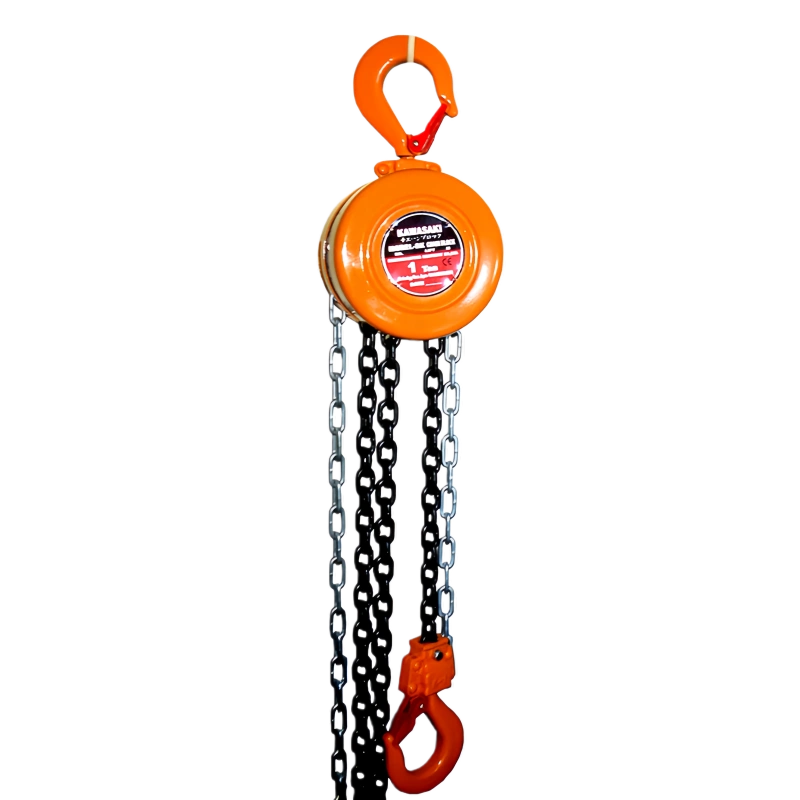
A manual chain hoist provides controlled lifting without a motor, power cable, or battery. It is typically selected for intermittent lifting, installation, maintenance, and positioning tasks where the operator can use the hand chain from a suitable working position. The hoist, suspension point, rigging arrangement, and supporting structure must all be suitable for the planned load and environment.
Do not select an SK unit by rated load alone. Models can differ in lift, headroom, operating effort, load-chain falls, hook dimensions, and unit weight. Confirm the complete model data and application before ordering.
For broader capacity and model comparisons, review our chain block range. If the application may require a lever-operated hoist instead, start with the manual hoist selection range.
WHY CHOOSE A HAND CHAIN HOIST?
Selection Reason | What It Means |
No Electrical Supply | Useful where a powered hoist is unnecessary or no suitable electrical supply is available. |
Direct Manual Control | The operator raises or lowers the load by pulling the hand chain in the intended direction. |
Portable Configuration | A hook-suspended unit can be moved between approved lifting points when its size, weight, and site procedure allow. |
Application-Specific Selection | Rated load, lift, headroom, suspension, and environment can be matched to the actual lifting task. |
HOW TO SELECT THE CORRECT SK MODEL?
Confirm these inputs before choosing a model:
- Maximum total suspended load, including below-the-hook devices and attachments;
- Required vertical lift and hand-chain operating height;
- Available headroom between the suspension point and the load hook;
- Hook suspension, fixed mounting, or a verified trolley interface;
- Expected operating frequency and service conditions;
- Indoor, outdoor, humid, dusty, corrosive, or temperature-sensitive exposure;
- Destination-market documentation, inspection records, and required certificates; and
- Quantity, packaging, marking, and approved OEM requirements.
Do not apply an arbitrary percentage safety margin as a substitute for a lift plan. The selected rated load must be suitable for the actual suspended load, applicable requirements, site procedures, and manufacturer instructions.
SK MANUAL CHAIN HOIST DIAGRAM

SK MANUAL CHAIN HOIST SPECIFICATIONS
| Model | SK-0.5 | SK-1 | SK-1.5 | SK-2 | SK-3 | SK-5 | SK-7.5 | SK-10 | SK-15 | SK-20 | ||
| Capacity(t) | 0.5 | 1 | 1.5 | 2 | 3 | 5 | 7.5 | 10 | 15 | 20 | ||
| Standard lift(m) | 2.5 | 2.5 | 2.5 | 2.5 | 3 | 3 | 3 | 3 | 3 | 3 | ||
| Running test load(t) | 0.75 | 1.5 | 2.25 | 3 | 4.5 | 7.5 | 11.25 | 15 | 18.75 | 25 | ||
| Headroom(drawn close up)Hmin(mm) | 240 | 270 | 347 | 380 | 470 | 600 | 700 | 700 | 820 | 1000 | ||
| Effort required to lift max.load(N) | 221 | 304 | 343 | 314 | 343 | 381 | 392 | 392 | 392 | 392 | ||
| No.of coluns of load chain | 1 | 1 | 1 | 2 | 2 | 2 | 3 | 4 | 6 | 8 | ||
| Load chain dia.(mm) | 6 | 6 | 8 | 6 | 8 | 10 | 10 | 10 | 10 | 10 | ||
| Dimensions(mm) | A | 120 | 142 | 178 | 142 | 178 | 210 | 356 | 358 | 400 | 580 | |
| B | 108 | 122 | 139 | 122 | 139 | 162 | 162 | 162 | 196 | 189 | ||
| C | 24 | 28 | 34 | 34 | 38 | 48 | 64 | 64 | 69 | 82 | ||
| D | 120 | 142 | 178 | 142 | 178 | 210 | 210 | 210 | 210 | 210 | ||
| Net Weight(kg) | 8 | 10 | 16 | 14 | 24 | 36 | 58 | 68 | 112 | 155 | ||
| Gross weight(kg) | 10 | 13 | 20 | 17 | 28 | 45 | 70 | 83 | 127 | 193 | ||
| Packing measurements(L×W×Hi)(m) | 28×21×17 | 30×24×18 | 34×29×20 | 33×28×19 | 38×38×20 | 45×39×24 | 62×50×28 | 55×51×29 | 68×60×34 | 70×46×75 | ||
| Extra weight per meter of extra lift(kg) | 1.7 | 1.7 | 2.3 | 2.5 | 3.7 | 5.3 | 7.3 | 9.7 | 14.1 | 19.4 | ||
Model-specific SK specifications must be taken from the current approved data sheet and dimensional drawing. Before ordering, confirm the exact model, rated load, standard lift, minimum headroom, hand effort at rated load, load-chain falls, and nominal chain size, principal dimensions, net and gross weight, packing dimensions, and additional weight per metre of lift.
Test-load values, breaking-load claims, packing units, and optional features must be verified for the exact model before publication or quotation. Where a value or option varies by order, use the current controlled data sheet and quotation as the governing source rather than treating it as a standard feature.
DIMENSIONS AND HEADROOM
Minimum headroom affects whether the hoist can achieve the required hook travel in a restricted space. Use the approved dimensional drawing to define each dimension and compare the installed suspension point, upper-hook position, and load-hook position. Do not reuse a generic drawing if its housing, hook, or chain arrangement differs from the supplied SK model.
APPLICATIONS AND OPERATING LIMITS
An SK manual chain hoist may be considered for machinery installation, workshop maintenance, fabrication, construction assembly, warehouse handling, and other controlled vertical-lifting tasks. Suitability depends on the selected model, supporting structure, rigging arrangement, duty, and environment.
Use the hoist only in the directions and conditions approved in its manual. Do not side-pull, lift people, exceed the rated load, operate with a twisted or damaged load chain, or use an unverified suspension point. For operating steps, use the chain block operating guide together with the supplied model manual and site procedure.
INSPECTION, MAINTENANCE, AND STORAGE
Inspect the unit before use and keep it out of service if damage, abnormal operation, or missing identification is found. Use the chain block inspection checklist for inspection scope and removal-from-service boundaries, and the chain block maintenance guide for preventive-care responsibilities.
Repairs, brake work, load-chain replacement, and load testing must follow the manufacturer’s instructions and the site’s authorized process. Do not use a general product page as a substitute for model-specific repair procedures.
AVAILABLE OPTIONS AND REQUIRED CONFIRMATION
Confirm the following in the quotation rather than assuming they are standard: alternate lift height, hand-chain drop, hook or suspension arrangement, trolley compatibility, surface finish, nameplate language, documentation, packaging, and OEM marking. Special environmental use also requires written confirmation for the selected model.
WHAT TO INCLUDE IN YOUR RFQ
- SK model, if already selected;
- maximum load and load description;
- required lift and available headroom;
- suspension point or beam/trolley details;
- operating frequency and work environment;
- destination country and required documentation;
- quantity, packaging, and marking requirements; and
- Required delivery date.
Send the completed lifting requirements so the model, technical data, and quotation can be checked against the same application.
SK Manual Chain Hoist FAQ
Is a Manual Chain Hoist the Same as a Chain Block?
In many markets, “manual chain hoist,” “hand chain hoist,” and “chain block” describe the same general equipment type. This page is limited to the SK model series; use the chain block category to compare other models.
How Does a Manual Chain Hoist Work?
Pulling the hand chain turns the internal gearing and moves the load chain to raise or lower the load hook. The brake and load-bearing components must match the model design. See how a chain block works for a fuller explanation of the mechanism.
Can an SK Manual Chain Hoist Pull Horizontally?
Treat the standard hand chain hoist as a vertical-lifting device unless the approved SK manual explicitly permits another orientation. Do not side-pull or use the equipment for an unapproved task.
Can the SK Hoist Be Used With a Trolley?
Only after the hoist suspension, trolley rated capacity, beam-flange range, clearances, and connection method are confirmed as compatible. Do not infer trolley compatibility from a generic product description.
Can It Be Used Outdoors?
Outdoor suitability depends on the model, finish, exposure, and manufacturer instructions. Provide rain, humidity, salt, dust, temperature, and storage conditions in the RFQ and obtain written confirmation for the selected configuration.
What Documents Should I Request?
Request the controlled data sheet, dimensional drawing, operating manual, inspection and maintenance instructions, and any test or certificate documentation required for the destination market and application.