You face significant risks in heavy lifting operations without proper rigging testing methods. The safety of operators depends on rigorous inspection and certified equipment. Powerful Machinery delivers reliability through high-performance rigging hardware and equipment.
Recent studies show that 27% of crane incidents result from dropped loads due to rigging failure, and 90% of crane accidents are linked to poor practices. Regular testing and servicing minimize these risks, extend equipment life, and ensure compliance.
The importance of testing and servicing cannot be overstated, as Rigging Testing Methods play a vital role in accident prevention and operational safety.
44 crane-related fatalities occur annually in the U.S.
27% of incidents involve dropped loads from rigging failure.
37% of cases result in workers being crushed by loads.
Key Takeaways
Regular rigging testing is crucial for safety. It helps prevent accidents and protects workers from harm.
Use certified equipment from trusted sources like Powerful Machinery. This ensures compliance with safety standards.
Conduct thorough inspections before every lift. Check weights, equipment limits, and surroundings to avoid hazards.
Implement load testing and break testing to verify the strength of your rigging hardware. This helps identify potential failures.
Follow industry standards and maintain documentation. This supports compliance and extends the lifespan of your equipment.
Rigging Testing Overview
Purpose Of Rigging Testing
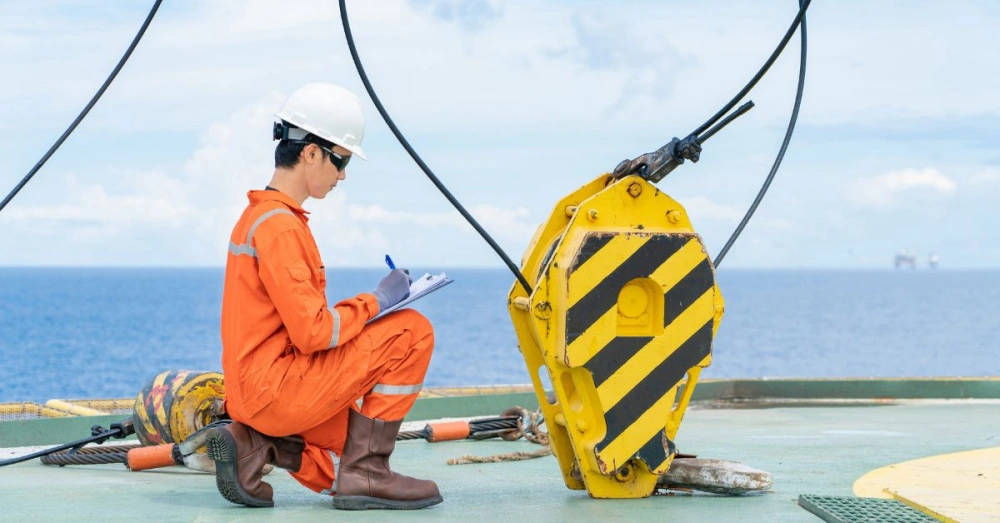
You need to understand why rigging testing matters in every heavy lifting operation. The main objectives focus on safety, efficiency, and compliance. When you use certified equipment from Powerful Machinery, you reduce the risk of accidents and injuries.
Proper training and regular testing help you identify hazards before they cause harm. You also improve productivity by using the right techniques and maintaining your equipment. Meeting international standards ensures you avoid legal issues and keep your workplace safe.
Enhances safety for everyone on site
Improves efficiency by streamlining operations
Basic Rigging Test And Practice
You must follow basic rigging tests and practices to keep your lifting operations safe. Start by double-checking the weight of every load and confirming that your equipment can handle it.
Assign a spotter to oversee the process and use a pre-lift checklist to verify all conditions. Always conduct a test lift to confirm the setup and control of the load. Inspect your hardware for any signs of damage before use. Stay aware of your surroundings to avoid unexpected hazards.
Double-check weights and equipment limits
Designate a spotter for oversight
Use a pre-lift checklist
Perform a test lift
Inspect all hardware
Assess the environment for hazards
Crane Rigging Test
Crane rigging tests require both written and practical assessments. You will answer questions about safe rigging practices and demonstrate your skills in real-world scenarios.
The written test covers theory, while the practical part evaluates your ability to assemble basic setups, control load transfers, and perform pre-use checks. You must show stamina and attention to detail, especially when handling heavy loads in challenging conditions.
Passing these tests proves your readiness to operate with Powerful Machinery’s certified equipment and maintain high safety standards.
Tip: Always review your equipment and procedures before every lift. Consistent practice and adherence to standards help you prevent common mistakes, such as improper sling angles or neglecting tag lines.
Rigging Testing Methods For Safety
You must use the right rigging testing methods to ensure safety and compliance in every lifting operation. These methods help you detect hidden flaws, confirm equipment strength, and prevent accidents before they happen.
Powerful Machinery’s certified rigging hardware and equipment undergo strict testing to meet international standards, giving you confidence in every lift. Regular rigging testing supports reliability and keeps your workplace safe.
Load Testing Methods
Load testing is one of the most important rigging testing methods. You use load testing to check if your rigging hardware and equipment can handle the required weight under real conditions.
This process involves applying a controlled load, often above the normal working load limit, to verify the strength and integrity of each component. Powerful Machinery’s products, such as shackles, hooks, and slings, are designed for rigorous load testing to meet Grade 80 and Grade 100 standards.
You perform horizontal and vertical load testing, depending on the equipment’s function.
You use proof loads, which are higher than the working load limit but below the breaking strength, to confirm safety.
You check for any signs of deformation, cracks, or failure during and after the test.
Concept | Description |
|---|---|
Safety Factor | Typically ranges from 4:1 to 7:1, providing a buffer for unexpected stress or conditions. |
Example | A chain with a WLL of 2,000 pounds and a safety factor of 5:1 has a breaking strength of 10,000 pounds. |
Importance | Critical for dynamic and unpredictable environments to account for potential impacts and wear. |
You must always follow the manufacturer’s guidelines and industry standards during load testing. This ensures your rigging hardware remains compliant and safe for use. Regular load testing helps you identify issues early and avoid costly downtime.
Note: Always record your load testing results. Documentation supports compliance and helps you track the condition of your rigging equipment over time.
Break Testing Methods
Break testing methods allow you to determine the maximum load your rigging hardware can withstand before failure. You use break testing to establish the breaking strength and verify the safety factor of each component.
Powerful Machinery’s certified products undergo break testing to ensure they exceed the required safety margins.
You apply increasing loads until the equipment fails, recording the maximum load reached.
You use both horizontal and vertical break testing, depending on the type of rigging hardware.
You compare the breaking strength to the working load limit to confirm the safety factor.
Common break testing terms include:
Working Load Limit (WLL): The maximum load your equipment can safely handle.
Breaking Strength: The load at which your equipment will fail.
Safety Factor: The ratio between breaking strength and WLL, often 4:1 to 7:1.
Proof Load: A test load higher than WLL but below breaking strength.
Break testing helps you understand the true limits of your rigging hardware. You can remove any equipment that does not meet the required standards, reducing the risk of accidents.
Defect Type | Description |
|---|---|
Broken Wires, Corrosion, and Deformation | Kinking or distortion that does not straighten under load is a cause for removal from service. |
Broken or Damaged Rigging Hardware | Issues include missing latches, bent or broken hardware, and improperly rated pins. |
Non-Destructive Testing (NDT) | Techniques like Magnetic Particle Testing and Ultrasonic Testing help identify hidden flaws in rigging. |
Non-Destructive Testing (NDT)
Non-destructive testing is essential for detecting hidden flaws in your rigging hardware without causing damage. You use non-destructive testing methods to inspect both the surface and internal structure of your equipment.
Powerful Machinery’s rigging hardware and equipment are subject to advanced non-destructive testing to ensure maximum safety and compliance.
The most common non-destructive testing methods include:
Visual Inspections: You look for signs of wear, corrosion, or damage.
Magnetic Particle Testing (MT): You detect surface cracks and breaks in steel components like shackles and hooks.
Ultrasonic Testing (UT): You identify internal flaws and voids by analyzing sound wave reflections.
Dye Penetrant Testing (DPT): You reveal surface cracks or defects using special dyes and ultraviolet light.
You should perform non-destructive testing at regular intervals and after any incident that could affect your rigging hardware. These methods help you find defects that are not visible to the naked eye, such as internal cracks or fatigue.
Tip: Non-destructive testing increases the lifespan of your rigging equipment and supports compliance with updated safety regulations.
Recent advancements in rigging testing methods include the use of sensors and IoT technology for real-time load monitoring. You can now use remote control and automation to improve accuracy and safety during lifting operations.
These innovations help you maintain high standards and adapt to stricter load testing requirements.
By using a combination of load testing, break testing, and non-destructive testing, you ensure your rigging hardware and equipment remain safe, reliable, and compliant. Powerful Machinery’s commitment to rigorous rigging testing methods gives you peace of mind in every lifting operation.
Equipment And Standards In Rigging
Powerful Machinery Rigging Hardware
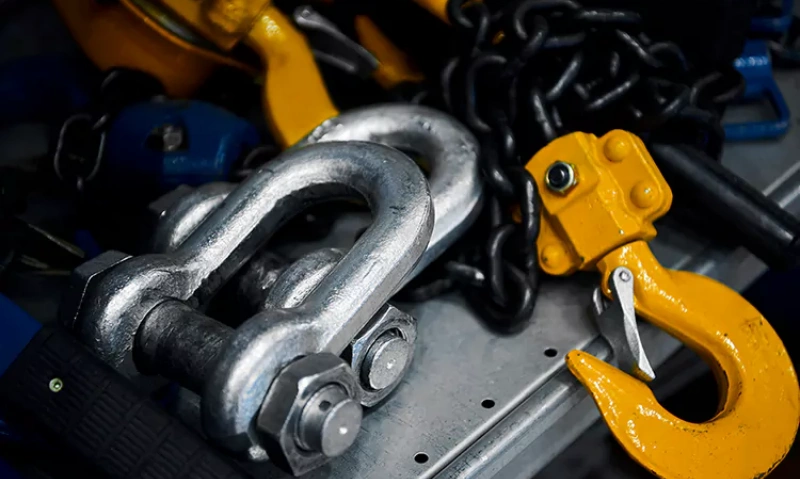
You rely on rigging hardware that meets strict safety and quality standards. Powerful Machinery designs hardware with certified strength, clear load ratings, and robust steel construction. Each component supports heavy lifting operations and provides predictable control.
You benefit from features like corrosion resistance, ductility, and traceability. The hardware includes shackles, hooks, and clamps, each built for specific applications. Regular maintenance and inspections extend the lifespan of your hardware and prevent unexpected failures.
Following a maintenance schedule ensures compliance and enhances the performance of equipment.
Type of Shackle | Description | Typical Load Capacity (WLL) |
|---|---|---|
Round Pin Shackles | For in-line applications, not for overhead lifting | N/A |
Specialty Types | Includes synthetic sling, wide body, long reach shackles | N/A |
Carbon Steel Shackles | Design Factor 6:1, ductile, various designs | N/A |
Alloy Steel Shackles | Design Factor 5:1, stronger, smaller design possible | N/A |
Galvanized Shackles | Corrosion-resistant, for industrial use | N/A |
Stainless Steel Shackles | Best corrosion resistance, ideal for marine use | N/A |
Use only certified, load-rated hardware.
Avoid modified or homemade equipment.
Check for proper identification and condition.
Ensure compliance with industry standards.
Powerful Machinery Rigging Equipment
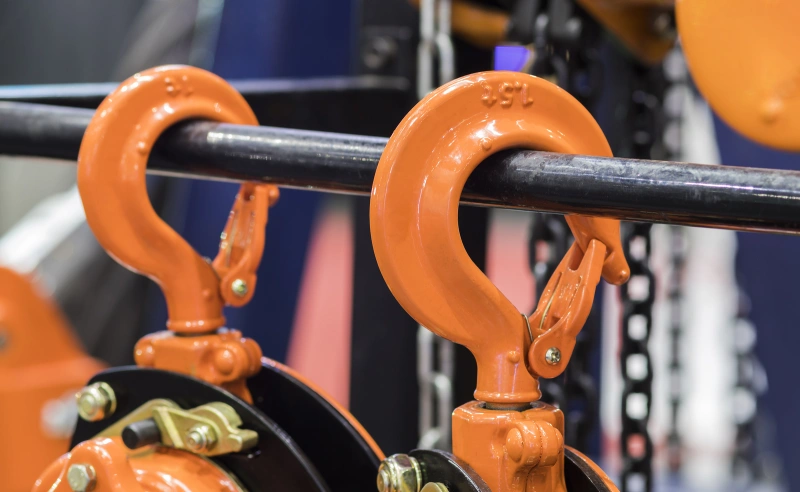
You need equipment that matches the demands of your lifting operations. Powerful Machinery’s rigging equipment meets or exceeds major international safety and quality standards. Every chain, wire rope, and fitting undergoes rigorous testing to ensure reliability and safety.
You gain confidence knowing that each piece of equipment is fully traceable, supporting compliance and simplifying inspections. Certified strength and durability align with industry benchmarks, so you can trust the equipment in critical applications.
Traceability and compliance requirements ensure legal documentation, accountability, and complete equipment history.
Ensures legal compliance with regulatory requirements.
Creates accountability and traceability for equipment history.
Reveals certification gaps, requiring removal from service.
You improve operational efficiency by using certified equipment. Regulatory compliance, worksite safety, and operational readiness all contribute to smoother operations and fewer delays.
Industry Standards And Certifications
You must follow industry standards and certifications to maintain safe and effective rigging operations. Powerful Machinery’s equipment complies with leading standards such as ASME and ISO. These standards define requirements for construction, inspection, and maintenance.
Certification and compliance are critical in today’s regulated industries. Stricter global regulations require fully certified equipment with complete documentation and clear labeling.
Standard | Description |
|---|---|
ASME B30.26-2015 (R2020) | Requirements for detachable rigging hardware in load-handling operations |
ASME B30.2-2022 | Overhead and gantry cranes |
ASME B30.5-2021 | Mobile and locomotive cranes |
ASME B30.9-2021 | Slings |
ASME B30.10-2019 | Hooks |
ASME B30.25-2018 | Scrap and material handlers |
ISO 4309 | Wire rope care, maintenance, inspection, and discard procedures |
ISO 16881 | Safety recommendations for steel wire ropes |
ASME B30 | Safety standards for cranes, hoists, and rigging operations |
Note: Adhering to these standards enhances public safety and ensures your equipment remains compliant with evolving regulations.
Benefits Of Regular Rigging Testing
Safety And Accident Prevention
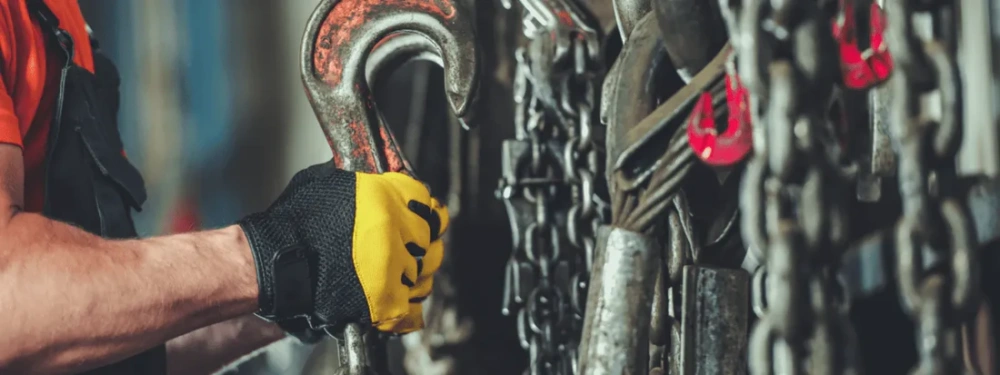
You protect your team and your workplace when you make regular testing and servicing a priority. Safety improves because you catch hazards before they cause harm. Pre-use inspections and routine checks help you spot issues early, which prevents costly mistakes and accidents.
According to OSHA, failing to recognize hazards is a root cause of workplace injuries and incidents. You can see the impact of a strong rigging testing program in the table below:
Key Points | Details |
|---|---|
Regulation | 29 CFR 1910.179 |
Test Load Limits | Max 125% of rated capacity |
When Testing Is Required | New cranes, after repairs or modifications |
Documentation | Keep test reports for the crane’s lifespan |
Identifies weak points, prevents failures | |
Compliance | Regular inspections and recordkeeping |
“One of the ‘root causes’ of workplace injuries, illnesses, and incidents is the failure to identify or recognize hazards that are present, or that could have been anticipated.” – Occupational Safety and Health Administration
Compliance And Longevity
You meet industry standards and extend the life of your equipment through regular testing and servicing. Compliance with OSHA, ASME, and ANSI standards keeps your operation legal and safe. You avoid common violations like skipping pre-use inspections or ignoring minor defects.
Regular testing helps you identify wear and damage early, so you can repair instead of replace. This approach saves money and keeps your rigging equipment in service longer. You also benefit from lower insurance premiums and fewer costly accidents.
Regular inspections help identify early signs of wear.
Proper servicing routines extend equipment life.
Adherence to safety guidelines prevents failures and improves reliability.
Professional Testing Services
You gain peace of mind when you use professional testing services for your rigging operations. Skilled teams use advanced equipment and follow strict safety plans. They carry insurance and take full accountability for every lift. Professional testing and servicing reduce risk, minimize downtime, and keep your projects on schedule.
You avoid expensive equipment investments and training costs. Outsourcing your rigging testing ensures that experts handle every detail, so you can focus on your core business.
Professional teams use hydraulic gantries, spreader bars, and custom rigging gear.
They plan logistics to reduce idle time and improve workflow.
You benefit from fewer incidents, lower liability, and greater operational efficiency.
Regular testing and servicing are essential for safety, compliance, and the long-term reliability of your equipment. Powerful Machinery stands behind every product, supporting your commitment to safe and efficient lifting operations.
Conclusion
Rigging testing plays a vital role in keeping your lifting operations safe and compliant. You avoid costly accidents by using certified equipment and following strict inspection schedules.
Industry case studies show that errors like miscalculating load weights or ignoring ground conditions lead to failures, but regular inspections prevent these risks. Powerful Machinery’s certified hardware supports your safety goals and meets international standards.
Inspection Type | Frequency/Details |
|---|---|
Daily Inspection | Recommended for frequently used equipment |
Periodic Inspection | Required every twelve months; more often if needed |
You should schedule inspections and professional servicing to extend equipment lifespan and maintain safe operations.
FAQ
What is the difference between load testing and break testing?
Load testing checks if your rigging hardware can handle a specific weight safely. Break testing finds the maximum load your equipment can withstand before failure. You use load testing for routine checks and break testing for establishing safety margins.
How often should you inspect rigging hardware?
You should inspect rigging hardware before every use. Schedule periodic inspections at least once a year. Increase inspection frequency if you operate in harsh environments or notice signs of wear.
Why is traceability important in rigging equipment?
Traceability lets you track each component’s history. You can verify certifications, maintenance records, and compliance. This process helps you ensure safety and meet regulatory requirements.
Which standards apply to Powerful Machinery’s rigging products?
Powerful Machinery’s rigging hardware meets standards like ASME B30, ISO 9001, and OSHA. You can trust these certifications for safe and compliant lifting operations.