A pallet truck helps you move heavy loads with ease in warehouses, factories, and stores. You use it to lift and transport pallets quickly, making your daily tasks simpler and safer. Many warehouse managers trust pallet trucks because they boost efficiency and reduce physical strain.
Studies show that using electric pallet trucks can increase operational efficiency by up to 30%. Powerful Machinery stands out as a top provider, offering durable solutions for your material handling needs.
Benefit | Description |
|---|---|
Increased Productivity | Move goods faster and let workers focus on other important tasks. |
Enhanced Safety | Safety features lower the risk of accidents. |
Cost-Effectiveness | Less physical strain means fewer injuries and lower costs. |
Operational Efficiency | Electric models can improve efficiency by 20-30%. |
Key Takeaways
Pallet trucks simplify moving heavy loads, increasing productivity and reducing physical strain in warehouses and stores.
Choose the right pallet truck based on load capacity and environment to ensure safety and efficiency.
Regular maintenance, including daily checks and lubrication, keeps pallet trucks in optimal working condition and extends their lifespan.
Safety training is essential for using pallet trucks correctly, helping to prevent injuries and accidents in the workplace.
Consider renting pallet trucks for flexibility or buying them for daily use, depending on your operational needs.
Pallet Truck Basics
What is a Pallet Truck?
A pallet truck is a type of material handling equipment that helps you move heavy loads on pallets. You may also hear people call it a pallet jack or pump truck. You use a pallet truck to lift and transport palletized goods over short distances.
This tool has changed the way you handle heavy items, making your work faster and safer. You can find a pallet truck in almost every warehouse, factory, or retail store. Its main job is to lift a pallet off the ground and let you move it to another spot with little effort.
You do not need special training to use a pallet truck, so it is a popular choice for many businesses.
You often see a pallet truck in these environments:
Warehouses: You use them to move goods quickly and organize storage.
Retail operations: You unload delivery trucks and restock shelves.
Logistics: You load and unload vehicles, even in tight spaces.
Construction sites: You move heavy materials where big machines cannot go.
Manufacturing units: You transfer materials to production lines.
Food industry: You handle goods in cold storage.
A pallet truck makes your job easier by lifting and moving heavy items. It also keeps you safe by reducing the risk of injury from lifting by hand.
Key Features and Applications
A pallet truck stands out from other tools because of its simple design and easy operation. You can learn to use it in just a few minutes. The handle lets you steer and pump the hydraulic system, which raises the forks under the pallet. You can then push or pull the load to where you need it.
Key features that make a pallet truck unique include:
Simplicity: You do not need much training to use it.
Maneuverability: You can move pallets in tight spaces, such as crowded aisles or small storage rooms.
Cost-effectiveness: You spend less money on maintenance and repairs compared to other machines.
You use pallet trucks in many ways. In a warehouse, you load and unload goods from shelves. In logistics, you transfer items between trucks and storage areas.
In manufacturing, you move raw materials and finished products along the production line. In retail, you restock shelves and move inventory from storage to the sales floor. On construction sites, you transport tools and materials to different locations.
Here is a table showing common applications for pallet trucks:
Application Area | Description |
|---|---|
Warehousing | Load and unload goods from shelves, making storage more efficient. |
Logistics and Distribution | Move goods between vehicles, helping with smooth loading and unloading. |
Manufacturing Plants | Carry raw materials and finished products to keep production lines running. |
Retail Environments | Restock shelves and move inventory from storage to the sales floor. |
Construction Sites | Transport construction materials and tools, improving how you handle heavy items. |
A pallet truck helps you work faster and keeps your workplace organized. You can move large quantities of goods with less effort, which boosts your productivity.
Powerful Machinery’s Pallet Trucks
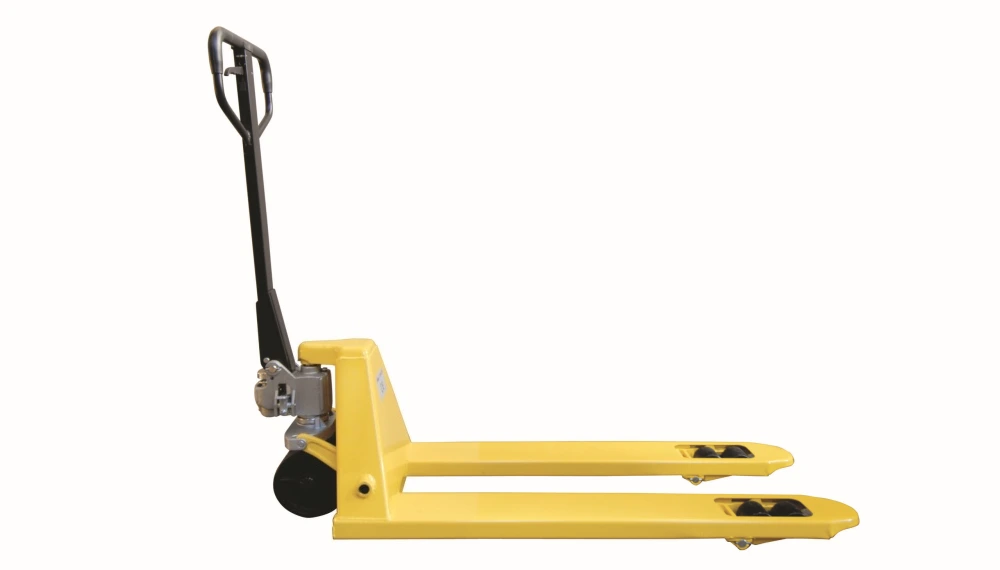
When you choose a pallet truck, you want one that is strong, reliable, and easy to use. Powerful Machinery offers high-quality pallet trucks designed for daily use in tough environments.
The manual hydraulic pallet truck from Powerful Machinery features a robust steel frame that stands up to heavy loads. The hydraulic pump lets you lift pallets smoothly, while the ergonomic handle reduces fatigue during long shifts.
You get polyurethane wheels that glide easily and protect your floors. The compact design helps you move through narrow aisles and crowded spaces.
Powerful Machinery’s pallet trucks can handle loads from 2,000 to 5,500 pounds, so you can use them for many different tasks. You also benefit from a product that meets strict international safety standards, giving you peace of mind.
Tip: Choose a pallet truck with the right load capacity for your needs. This ensures safe operation and longer equipment life.
Powerful Machinery has built a reputation for quality and safety. You can trust their pallet trucks to deliver reliable performance, whether you work in a warehouse, retail store, or construction site. Their products help you move goods efficiently and keep your operations running smoothly.
Types of Pallet Trucks
Manual Pallet Trucks
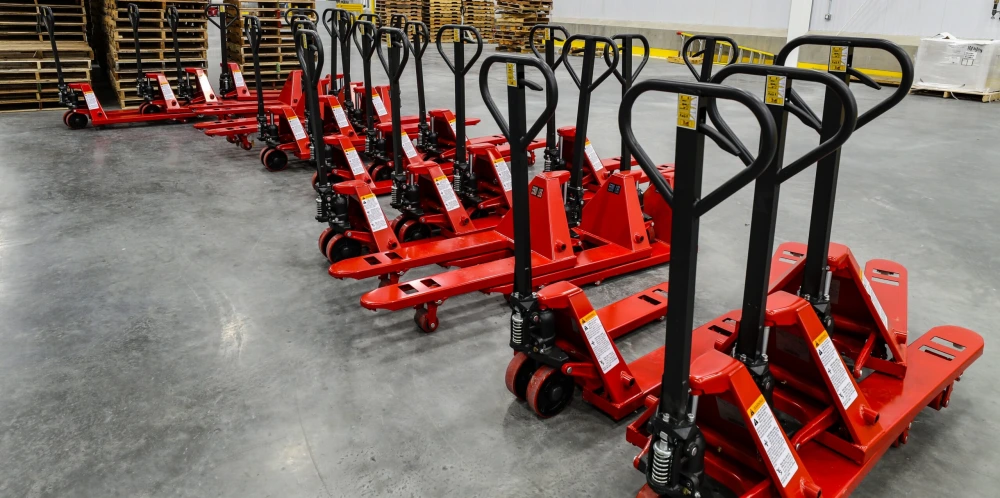
You use a manual pallet truck to move pallets in your warehouse or store. This type of pallet truck relies on your strength and a hydraulic pump. You lift the load by pumping the handle, then steer the truck to your destination. Manual pallet jacks work well for short distances and lighter loads.
You find them easy to operate and maintain. Hand pallet trucks fit into tight spaces and cost less than powered models.
Powerful Machinery’s manual pallet jacks stand out for their durable construction. You get a roll-formed steel frame that lasts for years. The ergonomic grip and three-position handle make your job comfortable. Heavy-duty components, like a one-piece hydraulic pump and ball-type thrust bearing, ensure reliability.
Advantage | Description |
|---|---|
Durable Construction | Roll-formed steel frame for longevity |
Ergonomic Design | Comfortable grip and three-position handle |
Heavy Duty Components | Reliable hydraulic pump and thrust bearing |
Electric Pallet Trucks
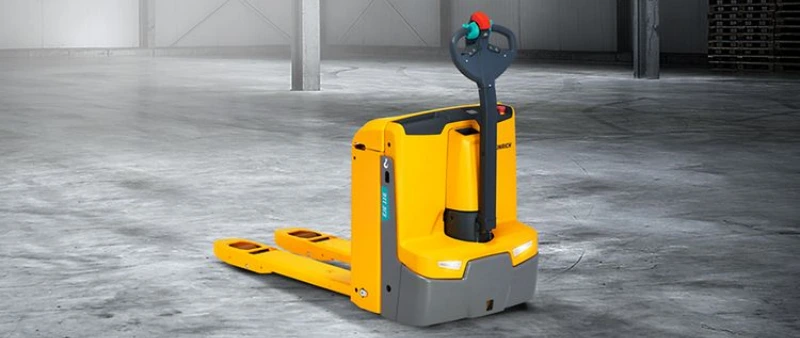
Electric pallet jacks help you move heavier loads with less effort. You operate these pallet trucks using an electric motor. You lift and transport pallets by pressing buttons or switches. Electric pallet trucks offer higher lift heights and faster operation.
You use them in busy warehouses where speed and efficiency matter. Electric pallet jacks reduce physical strain and improve productivity.
Feature | Manual Pallet Trucks | Electric Pallet Trucks |
|---|---|---|
Drive Unit | Manual pumping to lift pallets | Electric motor for lifting |
Lift Height | Lower lift height | Higher lift height |
Accessibility | Cost-effective and maneuverable | Ideal for heavy loads, but more expensive |
Specialized Models
You may need specialized pallet trucks for unique tasks in your warehouse. Some models handle double pallets, low-profile loads, or heavy-duty applications. For example, the Hyster W45ZHD2 model supports up to 4,500 lbs and uses lithium-ion power.
You benefit from ergonomic features and advanced maneuverability. Specialized pallet trucks fit direct store delivery and other specific needs.
Feature | Description |
|---|---|
Model | Hyster W45ZHD2 |
Capacity | 4500 lbs |
Designed for | Direct Store Delivery applications |
Technology | Lithium-ion powered |
Ergonomics | Built for operator comfort |
Maneuverability | Exceptional for various warehouse needs |
Special Features | Exclusive DSD handle design |
You also find single, double, low-profile, and heavy-duty pallet trucks. Each type offers unique advantages for your material handling tasks.
Type of Pallet Truck | Advantages | Disadvantages |
|---|---|---|
Single Pallet Trucks | Cost-effective, versatile, simple operation | Limited load capacity |
Double Pallet Trucks | Increased efficiency, bulk handling | Larger size, higher investment |
Low Profile Pallet Trucks | Improved accessibility protects goods | Limited load capacity |
Heavy-Duty Pallet Trucks | High capacity, durability | Size, weight, cost |
Manual vs Electric Comparison
You choose between manual pallet jacks and electric pallet jacks based on your needs. Manual pallet trucks suit small warehouses and lighter loads. You save money and enjoy easy maneuverability. Electric pallet jacks work best for heavy loads and busy environments.
You get higher lift heights and faster operation. Both types of pallet jacks help you move goods efficiently.
Tip: Assess your warehouse size, load weight, and workflow before selecting a pallet truck. The right choice boosts productivity and safety.
How to Use a Pallet Truck Safely?
Learning how to use a pallet truck safely protects you and your coworkers from injuries. You must follow clear steps and understand the right safety precautions before you start. Whether you use a manual pallet truck or an electric model, you need to know the correct process and the most important safety tips.
Operating Manual Pallet Trucks
You should always start with a risk assessment before using a manual pallet truck. Check your environment, the load you plan to move, and your own experience level. This helps you avoid common hazards and ensures you use the pallet truck correctly.
Follow these steps to operate a manual pallet truck safely:
Risk Assessment: Look around your workspace. Make sure the floor is clear and dry. Check the weight and stability of your load. Confirm you know how to use a pallet truck in your warehouse.
Pre-Operational Checks: Inspect the pallet truck for damage. Test the hydraulic pump and brakes. Check for proper lubrication. Make sure the handle moves smoothly and all emergency features work.
Positioning: Align the forks with the pallet openings. Insert the forks fully under the pallet.
Lifting the Pallet: Pump the handle to raise the forks until the pallet is just above the floor.
Transporting the Load: Push the pallet truck while keeping your path clear. Move at a steady pace and avoid sudden stops or turns.
Lowering the Pallet: Lower the forks slowly when you reach your destination. Make sure the load is stable before you remove the pallet truck.
Parking: Store the pallet truck in a safe place. Lower the forks completely and keep the truck away from walkways.
Tip: Always check the load capacity before lifting. Overloading a manual pallet truck can cause accidents and damage.
Operating Electric Pallet Trucks
Electric pallet trucks help you move heavier loads with less effort, but you must follow the right steps to ensure safety. Start by inspecting the equipment and checking the battery level.
Here is a step-by-step guide for operating electric pallet trucks:
Inspection: Check the electric pallet truck for any damage. Make sure the battery is charged and the brakes work.
Preparation: Assess the load. Confirm it does not exceed the truck’s capacity. Clear your path of obstacles.
Loading the Pallet: Align the forks with the pallet. Slide them under the load and check for even weight distribution.
Lifting: Use the controls to raise the forks until the pallet is off the ground.
Moving: Drive at a steady speed. Avoid sharp turns and keep the load low for better stability. Stay aware of your surroundings at all times.
Unloading: Position the pallet where you want it. Lower the forks gently and remove the pallet truck.
Post-Operation Checks: Inspect the truck for wear or damage. Report any issues to your supervisor.
Note: Never exceed the load capacity. Keep the load low and always clear your path before moving.
Safety Tips and Training
You face several hazards when using a pallet truck. Injuries can happen if you lift incorrectly, move unstable stacks, or use damaged equipment. Common injuries include strains, sprains, lacerations, and foot injuries. Slips, trips, and falls are also frequent risks in a busy warehouse.
Here are some essential safety tips to follow:
Wear proper footwear to protect your feet from heavy loads.
Inspect the pallet truck and the pallet before each use.
Never use a damaged or faulty pallet truck.
Keep your hands and feet clear of moving parts.
Move slowly and avoid sudden changes in direction.
Do not allow anyone to ride on the pallet truck.
Use both hands on the handle for better control.
Always park the pallet truck in a safe area after use.
Safety tip: Always keep your back straight and use your legs to push or pull the pallet truck. This reduces the risk of musculoskeletal injuries.
Proper training is vital for safe operation. Many organizations offer pallet jack safety courses and certifications. These programs teach you how to inspect equipment, understand load limits, and follow safe practices. Some training programs include:
Training Program | Description |
|---|---|
Pallet Truck Safety | Covers safe operation of manual and electric pallet trucks, inspections, and workplace challenges. |
Pallet Jack Safety Training and Certification | Meets OSHA standards and prepares you for practical exams. |
Pallet Jack Safety Certification | Focuses on reducing injuries and incidents for all employees using pallet trucks. |
Powerful Machinery’s pallet trucks include ergonomic design features to help you work safely and comfortably. The ergonomic compartment positions you securely and provides postural relief.
The variable side-stance layout, suspended floorboard, and premium floor mat add comfort during long shifts. The responsive steering system and comfortable controls help reduce operator fatigue, making your job easier and safer.
Remember: Good training and ergonomic equipment help you avoid injuries and keep your warehouse running smoothly.
By following these steps and safety tips, you protect yourself and your coworkers. You also extend the life of your pallet truck and improve efficiency in your warehouse. Always stay alert, follow pallet jack safety guidelines, and use the right equipment for the job.
Maintenance for Optimal Performance
Routine Checks and Troubleshooting
You keep your pallet truck working at its best by following a regular maintenance schedule. Daily checks help you spot problems early and prevent breakdowns. You look for damage, inspect the wheels, and test the hydraulic system.
Weekly cleaning and lubrication keep moving parts smooth. Monthly and quarterly tasks include tightening bolts and topping up hydraulic fluid. Annual maintenance involves replacing hydraulic fluid and inspecting all wear-and-tear components.
Frequency | Maintenance Task |
|---|---|
Daily | General visual check, wheel inspection, fork inspection, hydraulic system check, and operational test. |
Weekly | Comprehensive cleaning, lubricate moving parts, and check hydraulic fluid level. |
Monthly/Quarterly | Tighten nuts and bolts, inspect wheel wear, and top up hydraulic fluid. |
Annual | Replace hydraulic fluid, in-depth inspection of wear-and-tear components. |
If your pallet truck stops working, you can fix many issues with simple troubleshooting steps. You check and adjust hydraulic fluid pressure. You replace seals if you see leaking oil.
You lubricate moving parts to prevent deterioration. You inspect wheels for damage and replace them if needed. You check the braking system and clean or replace parts to restore function.
Check and adjust hydraulic fluid pressure.
Replace damaged or loose seals to fix leaks.
Lubricate moving parts monthly.
Inspect and replace damaged wheels.
Inspect and clean the braking system.
Tip: Regular pallet truck maintenance helps you avoid costly repairs and keeps your equipment safe.
Wheel and Castor Quality
Wheel and caster quality play a big role in optimal performance. High-quality casters make your pallet truck easier to maneuver and more stable. You get smooth operation, even on rough surfaces, which reduces vibrations and operator fatigue.
Well-chosen casters distribute weight evenly, so your equipment lasts longer and you spend less on repairs.
Component | Material Options |
|---|---|
Hubs | Plastic, Cast-Iron, Aluminum, Steel, Other |
Treads | Polyurethane, Nylon, Steel |
You find moldon polyurethane wheels with steel hubs on the CPII Heavy Duty pallet truck. Nylon wheels are available on the CPII Series Pallet Truck. These materials give you durability and protect your floors.
High-quality casters improve maneuverability and stability.
Smooth operation reduces fatigue and vibrations.
Even weight distribution extends equipment life.
Powerful Machinery’s Durability
You rely on Powerful Machinery’s pallet trucks for optimal performance in tough environments. The company uses strict quality assurance at every production stage. You benefit from functional tests, load tests, and safety inspections that guarantee reliability.
These pallet trucks stand up to daily use and heavy loads. You get equipment that lasts, so you spend less time on repairs and more time working.
Rigorous testing protocols ensure quality.
Functional and load tests confirm performance.
Safety inspections protect you and your team.
Note: Choosing a manual pallet truck from Powerful Machinery means you get equipment built for strength and reliability. You keep your operations running smoothly with less downtime.
Choosing a Pallet Truck and Comparison
Selection Criteria
When you choose a pallet truck, you want to match your equipment to your warehouse needs. Start by looking at the load capacity. Make sure your pallet truck can handle the weight of your typical loads.
Next, check the lift height. Standard pallet trucks lift to 7.5 inches, but some electric models reach higher. Think about your environment. Use smooth wheels for indoor spaces and reinforced wheels for outdoor use. Stainless steel works best for hygienic areas.
Consider how often you use your pallet truck. If you use it daily, you may need more than one or an electric model for better efficiency.
Criteria | Description |
|---|---|
Load Capacity | Match the pallet truck’s capacity with your load weight to avoid hazards. |
Lift Height | Standard trucks lift to 7.5 inches; high-lift electric trucks can reach 31 inches. |
Environment | Choose wheels and materials based on indoor, outdoor, or hygienic needs. |
Frequency of Use | Frequent use may require multiple trucks or electric models for efficiency. |
For long-term use, look at the total cost of ownership. This includes purchase price, maintenance, energy use, and downtime. You also want a pallet truck that fits your logistics flow and works with your current systems.
Powerful Machinery offers manual and electric pallet trucks with strong steel frames, ergonomic handles, and reliable hydraulic systems. Their competitive pricing helps you get the best value.
Renting vs Buying
You may wonder if you should rent or buy your pallet truck. Renting gives you flexibility and adaptability. You can adjust your equipment as your needs change. Rental companies handle maintenance, which saves you time and money.
Rental payments often count as business expenses, helping your cash flow. Renting also lets you use the latest electric models without a big investment. If you want to keep your capital free for other needs, renting is a smart choice.
Flexibility and adaptability for changing needs
Maintenance and repairs included
Rental payments may be tax-deductible
Access to the latest electric technology
Lower upfront costs
Buying works well if you need a pallet truck every day. You control your equipment and can choose the exact electric or manual model you want. Over time, buying may save money if you use your pallet truck often.
Pallet Truck vs Forklift
You need to compare pallet trucks and forklifts to find the best fit for your warehouse. Pallet trucks work well for ground-level tasks and tight spaces. Electric pallet trucks boost efficiency in busy logistics centers. Forklifts handle heavier loads and reach higher shelves. They need more space and special training.
Factor | Pallet Trucks | Forklifts |
|---|---|---|
Load Capacity | 5,000 to 5,500 lbs (manual); higher for electric | 3,000 to 25,000 lbs or more |
Lifting Height | Rarely exceeds 8 inches | Can exceed 20 feet |
Maneuverability | Excellent in tight spaces | Requires wider aisles |
Ease of Use | Minimal training needed | Requires specialized training |
Pricing | $250 to $5,000 (electric) | Starts at $15,000, can exceed $35,000 |
Maintenance | Low maintenance costs | Higher maintenance costs due to complexity |
Versatility | Limited to moving pallets | Can handle various attachments |
Pallet trucks suit logistics operations focused on ground-level movement and efficiency. Forklifts work best in warehouses with heavy loads and high stacking needs. Electric pallet trucks offer a balance of efficiency, safety, and cost for most businesses.
Tip: Choose a pallet truck for simple, efficient movement. Pick a forklift if you need to lift heavy loads to high shelves.
Conclusion
You rely on pallet jacks every day to move goods safely and efficiently. These tools come in many types, each designed for specific tasks. You operate pallet jacks with simple steps and follow safety rules to protect yourself and your team. Powerful Machinery’s pallet truck meets CE certification, giving you confidence in its quality.
When you choose or rent pallet jacks, check weight capacity, pallet size, and safety features. You keep pallet jacks working longer by inspecting chains, adjusting valves, and storing them with forks lowered. Regular maintenance and smart selection help you get the most from your pallet jacks.
CE certified for safety and reliability
Inspect chains and hydraulic oil regularly
Choose pallet jacks with ergonomic designs for comfort
Store forks lowered to protect hydraulic systems
Tip: Keep your workspace clean to extend the life of your pallet jacks.
FAQ
How much weight can a manual pallet truck handle?
Most manual pallet trucks from Powerful Machinery can handle loads between 2,000 and 5,500 pounds. Always check the label on your pallet truck for the exact capacity. Never exceed the recommended weight to keep your workplace safe.
Can you use a pallet truck on uneven floors?
You can use a pallet truck on smooth, level surfaces for best results. Polyurethane wheels work well on most indoor floors. For rough or uneven surfaces, choose a model with reinforced wheels for better stability and control.
How do you maintain a pallet truck?
You should inspect your pallet truck daily. Check the wheels, hydraulic system, and handle for damage. Lubricate moving parts weekly. Clean the truck regularly. Replace worn-out parts as needed. Regular maintenance keeps your pallet truck safe and reliable.
What safety gear should you wear when using a pallet truck?
Wear closed-toe shoes or safety boots to protect your feet. Gloves help you grip the handle better. High-visibility vests make you easier to see in busy warehouses. Always follow your workplace safety guidelines.